Seamless Walls: Drywall Over Wood Paneling DIY

This past weekend brought about a project that was truly out of the ordinary, yet incredibly fulfilling. Not only did we achieve a significant amount of progress – a pace not always typical for my usual DIY adventures – but the entire undertaking wasn’t even at my own home. I paused the ongoing renovations at my “Ugg-Duck” house, shifting my focus to lend a hand to my parents, transforming their dining room with a much-needed drywall upgrade.
A Family Project: Giving Back Through DIY
Allow me to elaborate on the heartwarming reason behind this weekend’s whirlwind of activity. Over the years, my dad has been an invaluable pillar of support for my own home renovation projects. From complex tiling work in my bathroom to constructing a sturdy backyard fence and tackling unexpected structural issues, his expertise and tireless effort have saved me countless hours and headaches. My mom, too, has always been there, whether offering moral support, feeding hungry workers, or providing an extra pair of hands for lighter tasks.
So, despite the usual chaos of my own home renovations, like the exciting announcement from last Friday that I’m still in the process of detailing in upcoming posts, it was only a matter of time before the roles reversed. Dad decided it was time for a little home improvement project of his own, and he wanted it to be a surprise for Mom. She was away for the weekend, celebrating a birthday trip with her twin sister, providing the perfect window of opportunity. Dad’s master plan was to finally address the existing wood paneling in their dining room – a feature Mom had been asking to update for what felt like an eternity. His solution? To cover it with fresh 1/4-inch drywall, giving the space a much-needed modern facelift.
In essence: Dad, my long-time DIY mentor, needed assistance, and I gladly pressed pause on my kitchen grouting schedule to dive into drywall installation. It was a clear case of paying it forward, transforming a long-standing eyesore into a beautiful surprise. And it felt great to be able to use the skills I’ve honed (and some new ones I learned on the fly) to give back to the people who’ve given me so much.
Why Install Drywall Over Paneling? Weighing the Options
The decision to install drywall directly over the existing wood paneling was a key strategic point, heavily influenced by my dad’s practical experience. My initial instinct, as with many large renovation projects, would typically be to tear everything down to the studs. This would allow for thicker drywall and a completely fresh start. However, several critical factors led us to embrace the “drywall over paneling” method:
- Condition of Existing Paneling: The wood paneling, while aesthetically outdated, was structurally sound. Over the past two decades, my parents had diligently patched, caulked, primed, and painted it numerous times in attempts to make it presentable. While they had eventually given up on making it look good, the underlying integrity was still there, meaning we weren’t dealing with rotten or unstable surfaces that absolutely required removal. This solid base made installing new drywall over it a viable and efficient option.
- Time Efficiency: As a two-person DIY team, time was a precious commodity. Tearing off all the old paneling would have been a labor-intensive process, likely consuming an entire weekend just for demolition and debris removal. By opting to install 1/4-inch drywall directly on top, we significantly streamlined the project timeline, making it feasible to complete the main installation within a single weekend.
- Minimal Structural Changes: Using thinner 1/4-inch drywall was crucial. This thickness allowed us to avoid significant adjustments to the surrounding trim work, including door and window casings, and the existing crown molding. We carefully considered the existing electrical outlets, light switches, and the crown molding, ensuring that the added thickness would necessitate only minor extensions or adjustments, rather than a complete overhaul. My dad, with his seasoned DIY wisdom, was confident this approach would be less disruptive and more straightforward than a full tear-out, and after witnessing the process, I wholeheartedly agree.
- Learning Opportunity: For me, this project was also a valuable hands-on learning experience. While I’ve done extensive skim coating on drywall, I had never installed full sheets. Understanding the nuances of covering existing surfaces provided insights that will be invaluable for future projects, both at my house and potentially for others.
This method truly showcased how sometimes, working smarter, not harder, can lead to equally impressive results, especially when balancing project goals with available time and resources.
Preparation and Execution: A Weekend Transformation
Dad had meticulously planned this transformation for a while, ensuring all necessary supplies were on hand. From stacks of 1/4-inch drywall sheets to plenty of drywall screws and joint compound, he had thought of everything. I brought over a few specialized tools from my own arsenal, including my trusty drywall sander, which proved incredibly useful. Although I had extensive experience with skim coating, this was my first full drywall installation project. To prepare, I spent some time reviewing various tutorials online, finding these tips from Our Home from Scratch particularly well-timed and insightful.
Step-by-Step Drywall Installation
On Saturday afternoon, we wasted no time. Our first task was carefully removing all the existing trim – baseboards, door casings, and window frames – ensuring they were handled gently for potential reinstallation or as templates for new trim. With the trim cleared, we began hanging the first full panels of drywall. This involved:
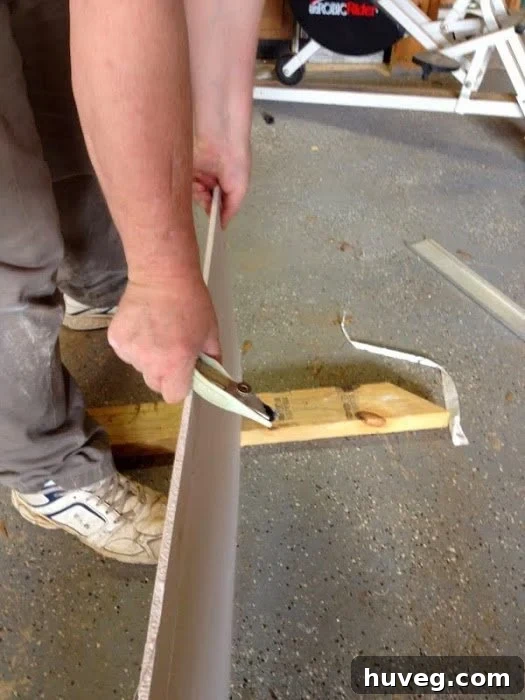
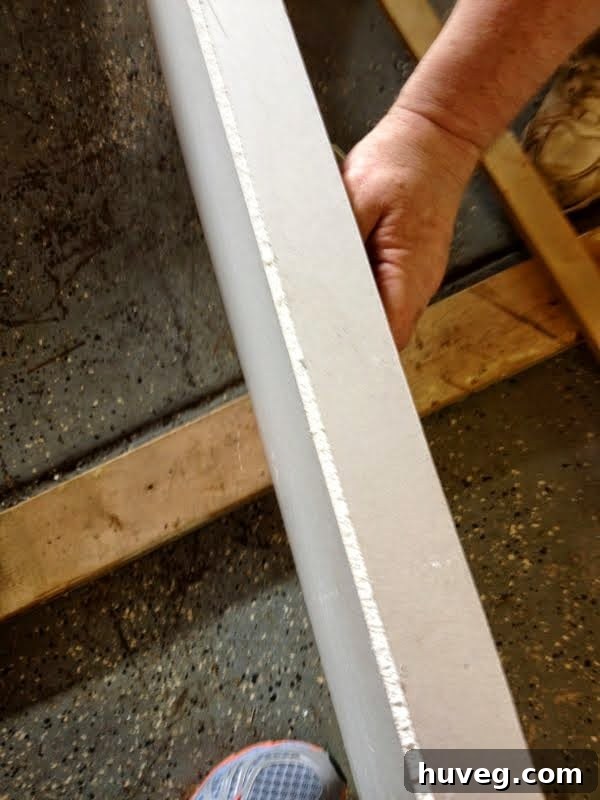
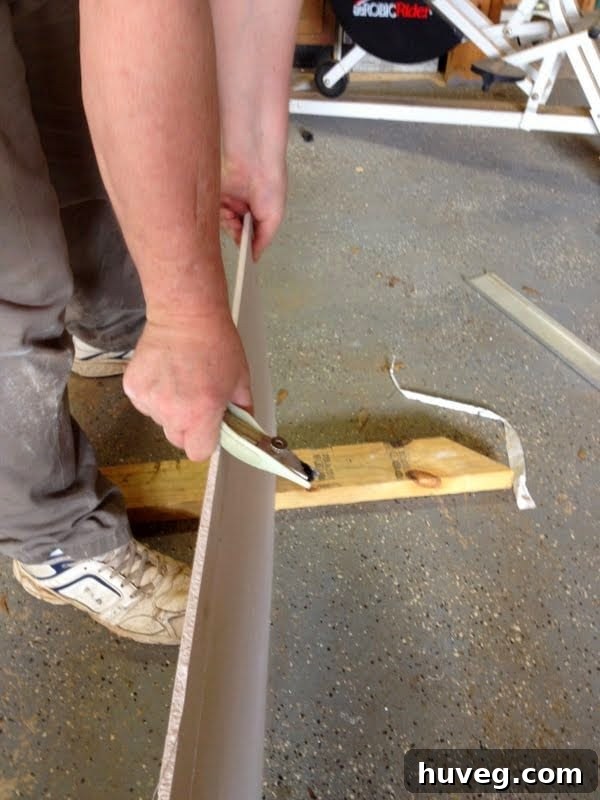
- Measuring and Cutting: Precisely measuring each wall section and cutting the drywall sheets to fit. We used a utility knife and a T-square for clean, straight cuts, snapping the sheets along the score line.
- Positioning and Securing: Carefully lifting and positioning the drywall sheets against the paneled walls. We worked methodically, ensuring tight seams and proper alignment. Drywall screws were then driven through the new sheets and into the underlying wood paneling and studs. The key was to sink the screw heads slightly below the surface without tearing the paper.
- Cutting for Obstructions: Making precise cutouts for electrical outlets, light switches, and windows was perhaps the most challenging part. We used a drywall cutout tool for these intricate shapes, taking our time to ensure clean edges that would eventually be covered by outlet covers and trim.
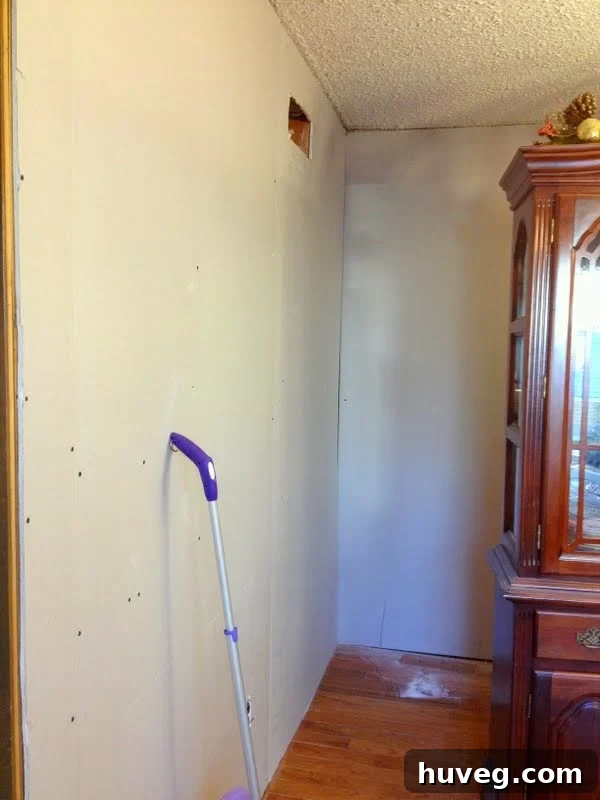
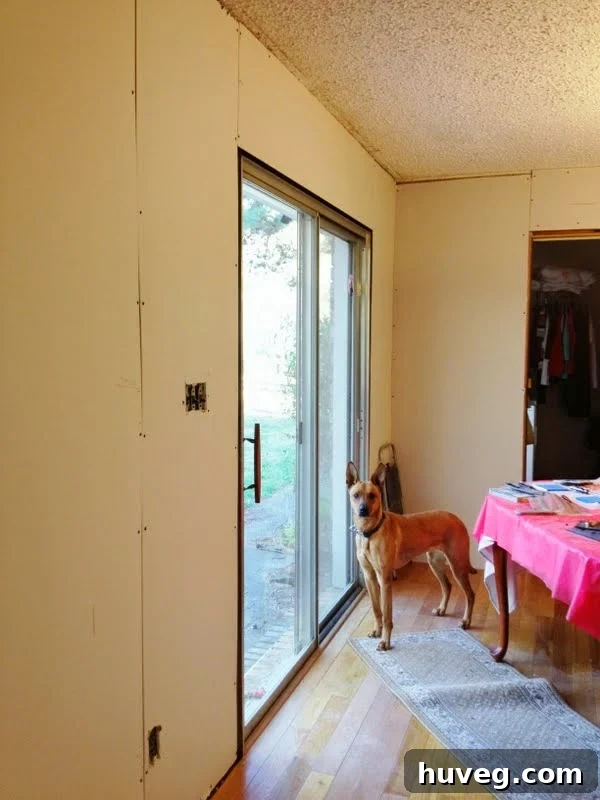
Overall, the installation proceeded remarkably smoothly, a pun I hope doesn’t come back to haunt me! Despite the learning curve for me and the occasional challenge of maneuvering large sheets, our coordinated effort allowed us to make rapid progress. By Sunday evening, the entire dining room was covered in fresh drywall, transforming the space dramatically from its dated paneling look.
Looking Ahead: Taping, Mudding, and Wainscoting
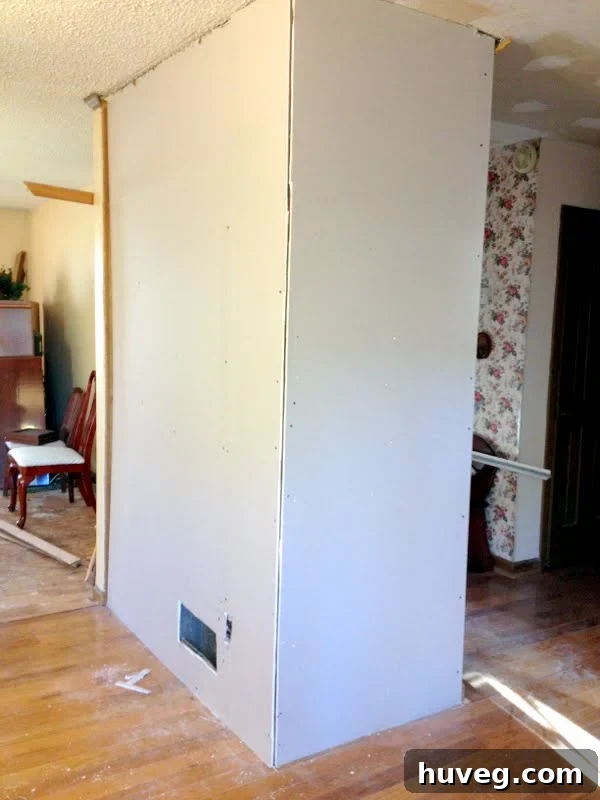
Given that it was just Dad and me, documenting every step with photos wasn’t our top priority – getting the job done was! However, the finished result speaks volumes about the progress we made. I’ll certainly ask Mom to dig up some old pictures of the dining room with its original paneling so you can fully appreciate the transformation. Our primary goal for the weekend was to get all the drywall sheets securely in place, and we achieved that.
One minor challenge we encountered was consistently hitting studs with every screw as perfectly as we’d hoped. The strategy was to get the panels up with strategically placed screws, then go back and properly sink all the necessary screws. Dad plans to tidy up the screw placement and ensure everything is firmly secured before our next phase: taping and mudding. This is where my expertise truly shines; achieving smooth, flawless finishes is my forte, and I’m much more confident in tackling this stage.
Envisioning the Final Details: Trim and Wainscoting
For the trim, we have exciting plans. We’ll be keeping the existing crown molding, which is a unique feature of the dining room in the main part of the house. This means we don’t have to worry about a domino effect, where updating one room’s crown molding would necessitate changes throughout other connected spaces. The most significant update will come at the bottom half of the walls: we’re replacing the old baseboards and opting for a modern, sophisticated Shaker-style wainscoting.
I can hardly wait to see this vision come to life. The wainscoting will add architectural interest, texture, and a sense of refined elegance that will perfectly complement the smooth new drywall. This entire project is more than just a renovation; it’s a profound transformation of a space that holds so many memories. After all, this is the first house I ever lived in, and this paneling has been a constant backdrop throughout my life. Seeing it finally updated feels like an even more significant change than any renovation I undertake at my own home, which I’ve only inhabited for four years.
It’s truly remarkable how a single weekend of focused effort can catalyze such a dramatic change in a room’s character. Despite the ongoing projects at my own home, I’m constantly reminded that my progress has been fueled by countless helping hands. When Dad called, needing my help rather than vice-versa, there was no question of being “too busy.” This dining room is going to look absolutely incredible, and I’m thrilled to share every step of this special family project with you over the coming weeks!
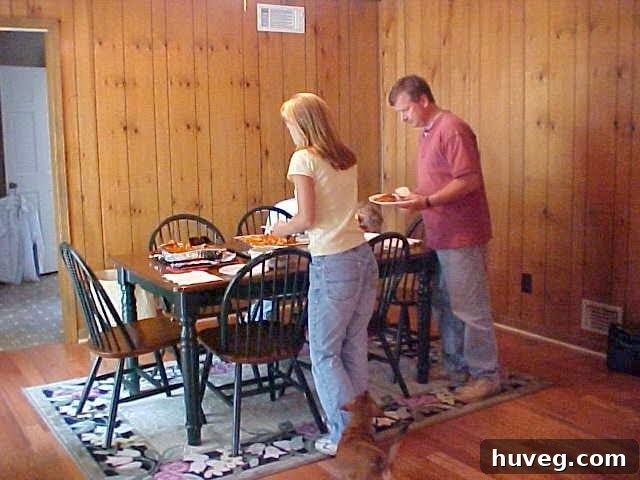
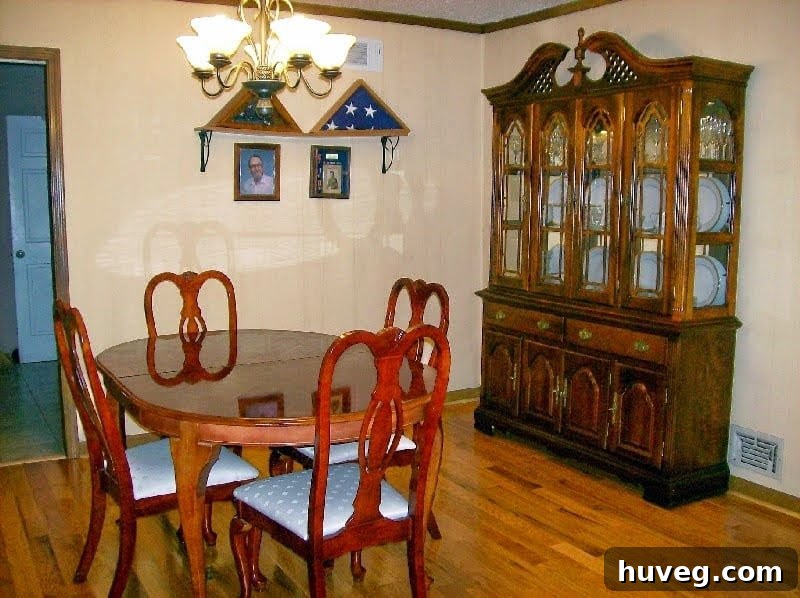
UPDATE: A Glimpse into the Past! Mom recently sent over some fantastic throwback pictures, showing how the dining room looked way back when – first, before it was even painted, and then just before we started hanging the drywall. And yes, that’s indeed me in the earliest picture! Sporting blond hair and, what I can only describe as, the absolute worst jeans I’ve ever seen. They look Photoshopped from two different-sized people! I genuinely hope those pants met a fiery demise.
More Drywall Tips
SEE ALL DRYWALL
Drywall can be intimidating, but with the right guidance, it’s a manageable DIY project. Luckily, I’ve got more posts to help you learn everything you need to know about drywall installation, repair, and finishing techniques. Dive into these additional resources below to tackle your next wall project with confidence!
-
Painting Prep after Drywall Repair
-
Skim Coating Tips: Bubbles, My Favorite Primer, and More
-
DIY Drywall Over Wood Paneling
-
How to Seal Damaged Drywall
-
How to Prep Kitchen Walls for a Tile Backsplash
-
How to Seamlessly Transition Crown Molding Where Tile Meets the Wall