Build Your Own Basket Storage

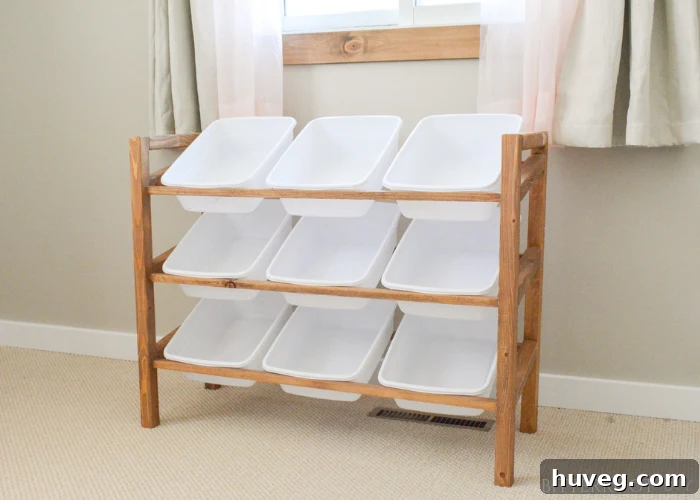
Welcome, fellow DIY enthusiasts, to Ugly Duckling House! Tylynn here from Terrace Place, excited to share a brand-new project that promises to transform your home organization. After tackling several major room makeovers in our own home, I’m thrilled to finally unveil detailed plans for a beautifully crafted and incredibly versatile storage unit. This isn’t just another shelf; it’s a solution designed to bring order and style to any space, perfectly tailored to your unique needs. We understand the value of functional yet aesthetically pleasing furniture, and this project delivers on both fronts, offering free plans for you to build your very own custom piece.
My recent home renovation journey included a complete overhaul of my son’s bedroom, where I embarked on building him a fresh suite of custom furniture. During this process, I designed what was initially intended to be a dedicated toy organizer. However, as often happens with DIY projects, the scale of the original design turned out to be a bit ambitious for his compact 10′ x 12′ room. A 3-foot wide shelving unit, while not massive, commanded a significant portion of his limited floor space. Consequently, I opted to construct a more compact organizer better suited for his space, a project equally rewarding in its own right.
But here’s the exciting part: this original, larger storage shelf proved to be an exceptional solution for a myriad of other organizational challenges! It found its perfect home in our basement, effortlessly corralling a diverse array of “basement things”—from seasonal decorations and holiday supplies to various tools, spare parts, and camping gear. Its robust design is perfectly suited for handling the unique storage demands of a basement, keeping items tidy and accessible. Beyond the basement, its potential applications are truly endless, making it a fantastic addition to almost any room.
Imagine its utility in a dedicated children’s playroom or bedroom, providing easy access and a tidy system for toys, stuffed animals, and board games, precisely as first envisioned. It’s also ideal for neatly storing baby blankets, an extensive collection of books for a home library or reading nook, art supplies like colored pencils, markers, and craft paper, or even specialized craft room essentials like fabrics, yarns, and various tools. For a home office, it can serve as a stylish and efficient system for documents, stationery, and electronic accessories, helping to maintain a clutter-free workspace.
The true beauty of this DIY storage unit lies in its inherent adaptability. It can seamlessly integrate into nearly any area of your home that demands extra storage. Consider its utility in a guest bathroom, offering elegant display and organization for fresh towels, luxury toiletries, and makeup brushes, ensuring your guests feel pampered. Transform a cluttered craft room into an inspiring, organized workspace by neatly organizing paints, brushes, project materials, and works-in-progress. Place it in a spacious pantry to create an organized snack station or to store smaller kitchen appliances and baking supplies. With a bit of creativity, this shelf can become a customized solution for anything from discreetly hiding electronics and their wires (by utilizing lidded bins on the bottom shelf) to an engaging art station, a practical entryway drop zone for shoes and bags, or even a mini library for your favorite reads. The possibilities are truly boundless, making this an invaluable addition to any home striving for better organization and a touch of handmade charm. This project is not just about building a shelf; it’s about creating a personalized solution for your home’s unique storage needs.
Ready to tackle your next woodworking project and bring stylish organization to your home? Dive into these comprehensive, free plans and create your own customizable storage solution today! We’ve made sure to include everything you need to confidently start and finish this build, ensuring a rewarding DIY experience.
TOOLS & SUPPLIES:
Before you begin any woodworking project, ensure you have all the necessary tools and materials on hand. A thorough preparation phase streamlines the building process, prevents frustrating interruptions, and ensures you can focus on precise execution. Always prioritize safety by wearing appropriate protective gear, especially when operating power tools.
- Miter Saw: An essential tool for making precise crosscuts and angled cuts for your shelf components. Accuracy here is crucial for a professional-looking finish.
- Orbital Sander: For achieving a smooth, professional finish on all your wood surfaces. Start with a coarser grit and gradually move to finer grits for the best results before staining or painting.
- Drill: Indispensable for pre-drilling pilot holes to prevent wood splitting and for driving screws, particularly when utilizing pocket hole joinery.
- Kreg Pocket Hole Jig: A game-changer for creating strong, concealed joints. This jig allows you to create angled holes that hide screws, giving your furniture a clean and professional aesthetic.
- 1 1/4″ Pocket Hole Screws: Specifically sized for securing the 1×1 shelf rungs to the main frame, ensuring robust connections.
- 2 1/2″ Pocket Hole Screws: Used for attaching the larger 2×2 end rungs to the legs, providing superior strength and stability for the primary structure.
- Wood Glue: Enhances the strength of every joint significantly. Always apply wood glue to contact surfaces before screwing components together for maximum durability.
- Tape Measure: For accurate measurements, ensuring all your cuts and component placements are precise. “Measure twice, cut once” is a golden rule!
- Pencil: For clearly marking your cuts, drilling locations, and alignment points on your lumber.
- Safety Glasses: Absolutely crucial for protecting your eyes from wood dust, splinters, and any flying debris generated during cutting or drilling.
- Ear Protection: Essential for safeguarding your hearing when operating loud power tools like a miter saw or orbital sander for extended periods.
Lumber List:
Here’s the lumber you’ll need to construct this sturdy and versatile storage shelf. We’ve optimized the list for efficiency. While 1×1 pieces can be purchased ready-made, cutting them from 1×4 scrap wood is a cost-effective and environmentally conscious option for resourceful DIYers.
- 3 | 2 x 2 @ 8′ (These longer pieces will form the main structural elements, including the vertical legs and the robust end rungs of your storage unit)
- 3 | 1 x 1 @ 8′ (You have the option to purchase these, or, as a smart alternative, cut them from 1 x 4 scrap wood. This is often more economical and makes excellent use of leftover materials for the shelf rungs)
Detailed Cut List:
Precision in your cuts is the cornerstone of a successful build. Taking the time to accurately measure and cut each piece will ensure all components fit together snugly, resulting in a square and stable finished product. Always double-check all measurements before making your cuts and use a miter saw for the cleanest and most accurate results.
- 4 | 2 x 2 @ 2’6″ (These four pieces will serve as the sturdy vertical legs of your storage unit, providing the primary support for the entire structure)
- 2 | 2 x 2 @ 11 1/8″ (These two pieces form the top horizontal end rungs, which connect the legs at the very top of each side panel, ensuring rigidity)
- 6 | 2 x 2 @ 1′ with 10 degree parallel miter (These are your angled end rungs, contributing both structural support and a distinctive aesthetic appeal. It is critical to ensure that the 10-degree miter cuts are parallel to each other on each piece for proper fit and alignment with the legs)
- 6 | 1 x 1 @ 3′ (These are the long shelf rungs that will span between the two side panels, providing the platforms that will support your chosen baskets or bins)
Step 1: Assembling the Side Panels
Begin your build by constructing the two identical side panels of your storage unit. Carefully refer to the provided diagram for a clear visual representation of how these components fit together. For each side panel, you will connect two 2×2 legs with the various 2×2 rungs. Start with the top rung (the 11 1/8″ piece), applying a generous amount of wood glue to all joint surfaces before securing it firmly with 2 1/2″ pocket hole screws. The wood glue is a critical component here, as it significantly enhances the strength and long-term durability of your joints, preventing future wobbles.
Once the top rung is securely in place, proceed to accurately mark the positions and attach the remaining three angled end rungs (the 1′ pieces with 10-degree parallel miters) as you work your way down the leg. For a professional and clean finish, it is highly recommended to place the pocket holes on the bottom or least visible side of the rungs. This thoughtful placement effectively hides the screws, giving your finished piece a seamless, high-quality appearance. Ensure each rung is flush and perfectly square with the legs before fully tightening the screws to guarantee a stable and aesthetically pleasing side panel. You will construct two identical end frames using this precise method.
Upon completing both side panels, take a moment to double-check their squareness and ensure all screws are securely tightened. With these two foundational components ready, you’re perfectly prepared to advance to the next stage of connecting them to form the full structure of your versatile storage shelf.
Step 2: Connecting the Side Panels with Shelf Rungs
With your two robust side panels meticulously constructed, the next crucial step is to connect them, thereby forming the main body of your storage shelf. This is achieved by installing the first three long shelf rungs (the 1×1 @ 3′ pieces). Carefully position these three shelf rungs to span horizontally between the two assembled end panels. Prior to fastening, apply a consistent layer of wood glue to all connecting surfaces. This ensures maximum joint strength and longevity for your shelf. Following the glue application, securely fasten each rung using 1 1/4″ pocket hole screws. As emphasized in Step 1, strategic placement of your pocket holes on the bottom, or least visible side, of the rungs will ensure they remain discreet and do not detract from the shelf’s overall aesthetic appeal.
This stage of the assembly can present a bit of a challenge, particularly if you’re working solo or do not possess clamps large enough to span the full 3-foot width of the shelf. However, do not let these common hurdles deter you from your DIY success! Resourcefulness and creativity are hallmarks of great DIYers. If industrial-sized clamps aren’t part of your toolkit, consider improvising. A highly effective trick is to use a sturdy wall as a temporary anchor. Attach the rungs to one end panel first, then carefully push that assembled section firmly against a solid wall. While maintaining steady pressure on this anchored end, you can then hold the other end panel firmly in place and proceed to attach the remaining ends of the shelf rungs. You might also leverage your own body weight, or even enlist the assistance of a friend for an extra set of hands, to hold components steady and aligned during assembly. The paramount goal here is to ensure square, level, and stable connections, allowing ample time for the wood glue to set and the screws to bite securely. Utilize whatever practical methods work best for your setup to achieve strong, reliable joints.
Step 3: Completing the Shelf Structure and Applying Finishing Touches
Once the initial three shelf rungs are securely attached and the foundational frame of your storage unit is firmly established, proceed to install the remaining three shelf rungs. Employ the identical method used in Step 2: apply wood glue generously to all contact points where the rungs meet the side panels, then fasten each rung with 1 1/4″ pocket hole screws. Consistently place the pocket holes on the underside of the rungs to maintain a clean, unobstructed appearance on the visible surfaces of your finished shelf.
For optimal stability, structural integrity, and a visually appealing, professional-grade design, it is imperative to ensure that each shelf rung is meticulously aligned in the precise center of its corresponding angled end rung. This careful and precise alignment contributes significantly to a perfectly square and balanced shelf, guaranteeing that it will stand strong and hold its contents without any unwanted wobbling or instability. Take your time during this critical alignment step, double-checking all measurements and plumbness before fully tightening your screws. Attention to detail here will dramatically impact the quality and longevity of your finished piece.
With the entire frame assembled and all joints secured, it’s time for the crucial finishing steps that will elevate your project from functional to fabulous. Start by thoroughly sanding your entire shelf. An orbital sander equipped with progressively finer grits (e.g., beginning with 120-grit, moving to 180-grit, and finishing with 220-grit sandpaper) will allow you to achieve an exquisitely smooth surface. This meticulous sanding is absolutely essential for a professional-looking finish, as it prepares the wood to absorb stain evenly or to provide a flawless base for paint. After sanding, meticulously remove all sanding dust using a tack cloth or vacuum before proceeding to the next stage. Next, apply your desired finish. I chose a custom blend of Varathane Provincial and Sun-bleached stains to achieve a unique and warm color profile, then sealed it with a semi-gloss spray polyurethane for superior durability and long-lasting protection against wear and moisture. Depending on your personal aesthetic and existing home decor, you might opt for a vibrant paint, a different wood stain to highlight natural grain, or simply a clear protective topcoat to preserve the wood’s raw beauty.
One of the most enjoyable, yet sometimes challenging, aspects of this project is finding the perfect baskets or bins to complement your new, custom-built storage shelf. I candidly admit that sourcing affordable yet stylish baskets that were the right size and, crucially, didn’t have lids (which can sometimes add to clutter rather than reduce it) was a bit of a quest! While countless attractive options exist online and in various home goods stores, a simple and remarkably budget-friendly solution I discovered was using standard 8-quart white utensil trays from Walmart’s kitchen section. These unassuming trays fit perfectly into the shelf compartments, with nine of them filling the entire shelf space flawlessly, offering practical, accessible, and easily washable storage.
However, the true beauty and empowering nature of DIY lies in its boundless customization potential. If you already possess existing baskets or bins that you are eager to utilize, you can very easily adjust the shelf dimensions to perfectly accommodate them. Simply measure your containers’ width, height, and depth, and then modify the length of the 1×1 shelf rungs (and consequently, make minor adjustments to the spacing of your angled end rungs if necessary) to create a bespoke fit. This remarkable flexibility ensures your storage solution is not only incredibly functional but also seamlessly integrated into your personal organizational system and harmonious with your existing home aesthetic. It’s about building a piece that truly works for you and your space.
Should you encounter any questions during your building process, require further clarification on any step, or simply seek additional advice on materials or finishing techniques, please do not hesitate to reach out! I am always delighted to assist fellow DIYers and will make every effort to respond to your inquiries as quickly and comprehensively as possible. Your success with these plans is my priority!
I would absolutely love to see your finished projects come to life in your homes! If you build this versatile storage shelf using these detailed plans, please share your beautiful creation with our community and tag me on Instagram @bitterrootdiy. It’s incredibly rewarding and inspiring to see how you adapt and personalize these designs.
For more inspiring DIY project ideas, comprehensive woodworking plans, and helpful home improvement tutorials, be sure to visit my blog. There, you’ll find a treasure trove of creative solutions for every room in your house. You can also discover a wealth of visual inspiration, save project ideas for later, and organize your next big builds by finding me on Pinterest. And to stay consistently updated with my latest DIY adventures, handy tips, and behind-the-scenes glimpses into upcoming projects, make sure to follow me on Instagram! Let’s build something amazing together.
As Sarah from Ugly Duckling House, I couldn’t agree more with Tylynn – the incredible versatility of this DIY storage shelf is what truly makes it a standout project! While Tylynn eloquently showcased its perfect fit for basement organization and children’s rooms, its potential extends far beyond these spaces. This adaptable design invites you to unleash your creativity and confidently address storage challenges in virtually any room in your home, providing both practical function and undeniable style.
Imagine the possibilities: if you’re blessed with a generous pantry, this build could be transformed into an amazing, dedicated snack station, keeping all your family’s favorite treats neatly visible and accessible. A few strategically placed hooks on the side could even hold lunchboxes, maximizing efficiency and streamlining morning routines. For those grappling with craft room chaos or persistent home office clutter, this unit offers a centralized, elegant solution to organize everything from paints, brushes, and fabric to important documents, stationery, and small electronics. You can cleverly conceal unsightly wires and charging cables on the bottom shelf by utilizing attractive lidded storage boxes, maintaining a streamlined and serene look. For a touch of rustic warmth and added texture, consider incorporating charming wooden crates to store bulkier items like tee shirts, cozy sweaters, or those notoriously difficult-to-organize accessories such as scarves and belts. Or, for a truly bespoke touch in smaller spaces, you could even modify the tutorial to create a charming, tiny spice rack for your kitchen countertop or inside a cabinet.
The profound beauty of this project, which aligns perfectly with our core ethos here at Ugly Duckling House, is how easily and intuitively it can be customized. It’s not just about fitting your specific spatial requirements, but also about harmonizing with your unique personal decor style. It’s a testament to the transformative power of DIY – enabling you to create functional, beautiful, and tailor-made solutions that truly enhance your living environment. Thank you so much, Tylynn, for sharing yet another stellar and endlessly inspiring build with our vibrant community! We can’t wait to see what you create.
If you found these comprehensive plans inspiring and useful, don’t forget to save them for later so you can easily reference them when you’re ready to start building! Pin this project to your favorite DIY, woodworking, or home organization board on Pinterest. This way, you’ll always have these valuable resources at your fingertips and can inspire others with your find!
Explore More Woodworking Plans
VIEW ALL PLANS
Looking for more exciting woodworking projects to enhance your home? Our extensive library of free woodworking plans offers a wide array of ideas, from elegant furniture pieces and clever storage solutions to charming gift ideas and practical home improvement projects. Each plan is meticulously detailed, including comprehensive PDF instructions, precise measurements, and helpful insights to ensure your next DIY endeavor is smooth, enjoyable, and ultimately successful. Explore our collection and find your next inspiring build today!
-
DIY Floating Bookcase | Free Plans
-
How to Build a Better Bee House | Free Plans
-
DIY Desk Organizer | Free Plans
More Inspiring Projects from Tylynn