Stop Wobbly Pegboard Hooks

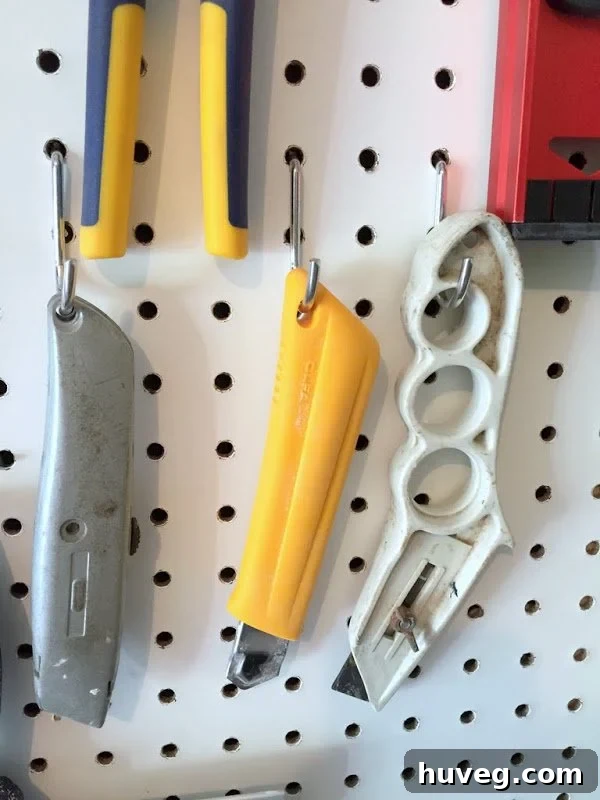
Mastering Your Workspace: The Ultimate Guide to Securing Pegboard Hooks and Tools
Welcome back to the world of DIY and home improvement! After a refreshing break, it’s time to dive into a common workshop woe that many enthusiasts, from seasoned pros to first-time homeowners, encounter: the frustration of loose pegboard hooks. While pegboards offer an unparalleled solution for organizing tools and keeping your workspace tidy, their effectiveness can quickly diminish when hooks fail to stay put, sending your perfectly arranged tools crashing to the floor. Today, we’re tackling this universal problem with practical, easy-to-implement solutions that will transform your chaotic pegboard into a paragon of organization and efficiency.
Every DIYer dreams of a perfectly organized garage or workshop, where every tool has its place and is easily accessible. Pegboards are often the cornerstone of such a dream. They are versatile, customizable, and can dramatically free up precious counter and drawer space. However, this dream can quickly turn into a nightmare if your pegboard hooks consistently fall off when you retrieve a tool. This article will guide you through understanding why this happens, introduce a remarkably simple fix using plastic locking clips, and explore alternative methods to ensure your tools stay exactly where they belong.
The Common Frustration: Why Pegboard Hooks Fail to Stay Put
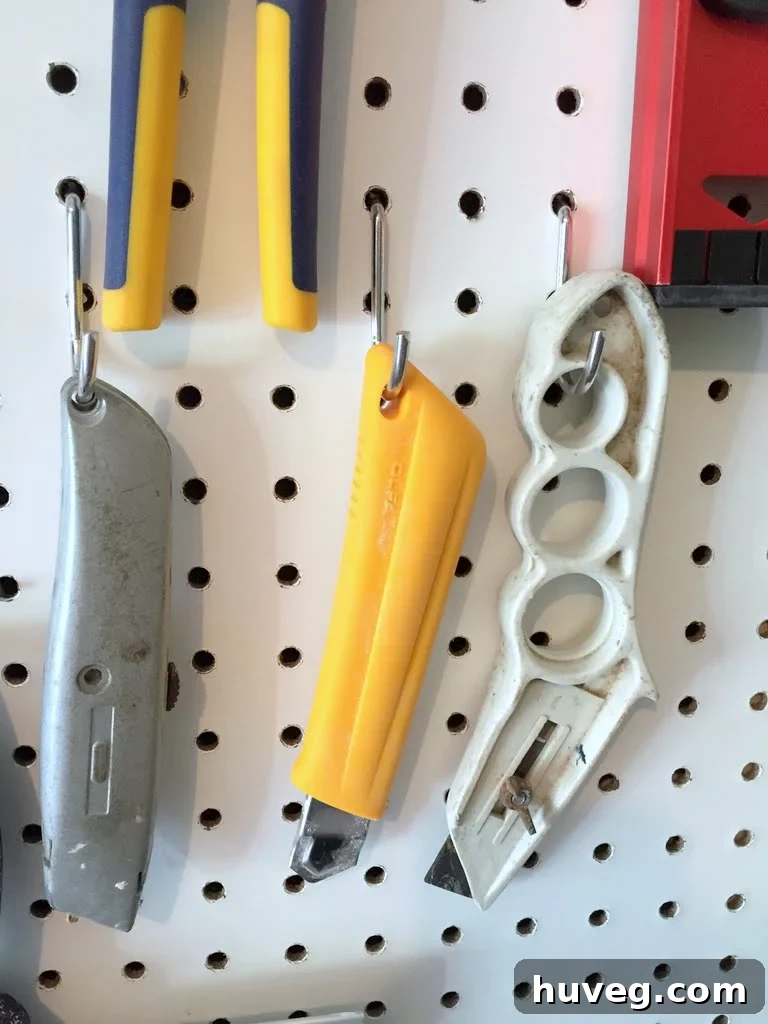
If you’ve ever found yourself bending down to pick up a screwdriver or wrench that just detached along with its hook, you’re not alone. This is a classic challenge for anyone setting up a pegboard for the first time. The allure of inexpensive, assorted peg hook sets can be strong, promising a quick and budget-friendly organizational solution. However, many homeowners, including myself, quickly discover that these seemingly good deals often lead to endless frustration.
The primary culprit is often the design of these cheaper hooks. They might be made from thinner wire, have single prongs, or lack proper locking mechanisms. Even hooks that come with a secondary “locking” piece, designed to engage with more than one peg hole, can prove insufficient against the everyday stresses of a busy workshop. The slightest tug on a tool, the vibration from nearby machinery, or even just the weight of the tool itself can cause these flimsy hooks to wobble loose and detach from the pegboard.
The consequence? Tools that don’t stay organized, wasted time searching for fallen items, and the general feeling of disarray that defeats the entire purpose of having a pegboard. It’s not just an inconvenience; constantly replacing fallen hooks can disrupt your workflow and even pose a safety hazard if heavy tools frequently fall.
Understanding Different Types of Pegboard Hooks
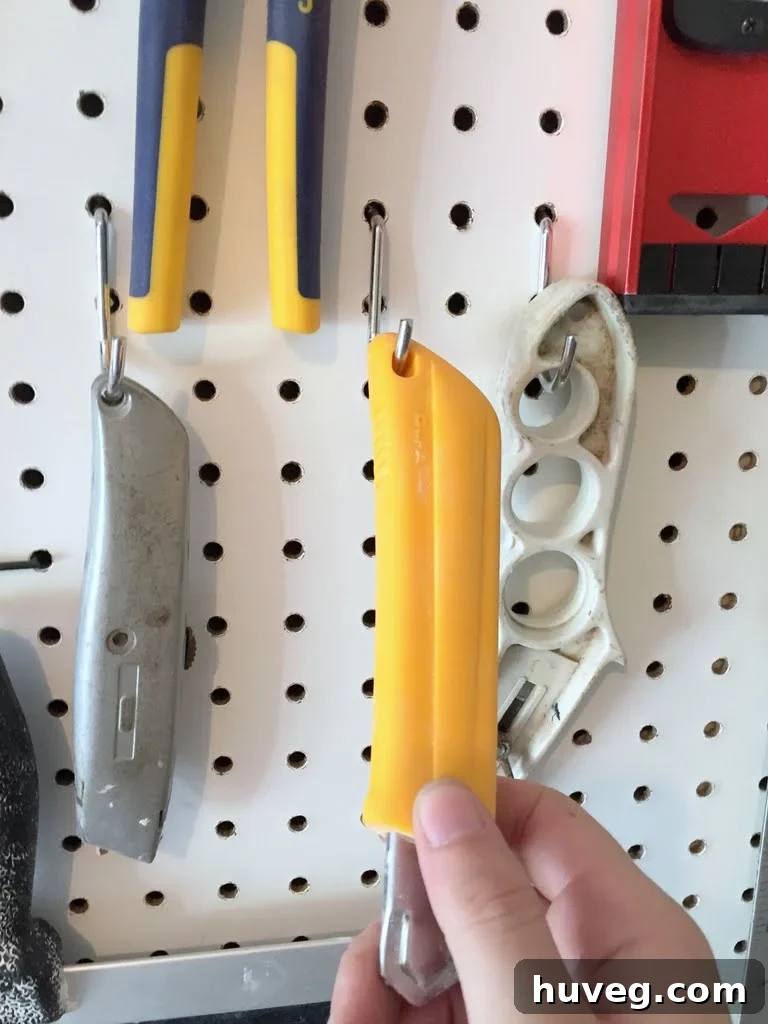
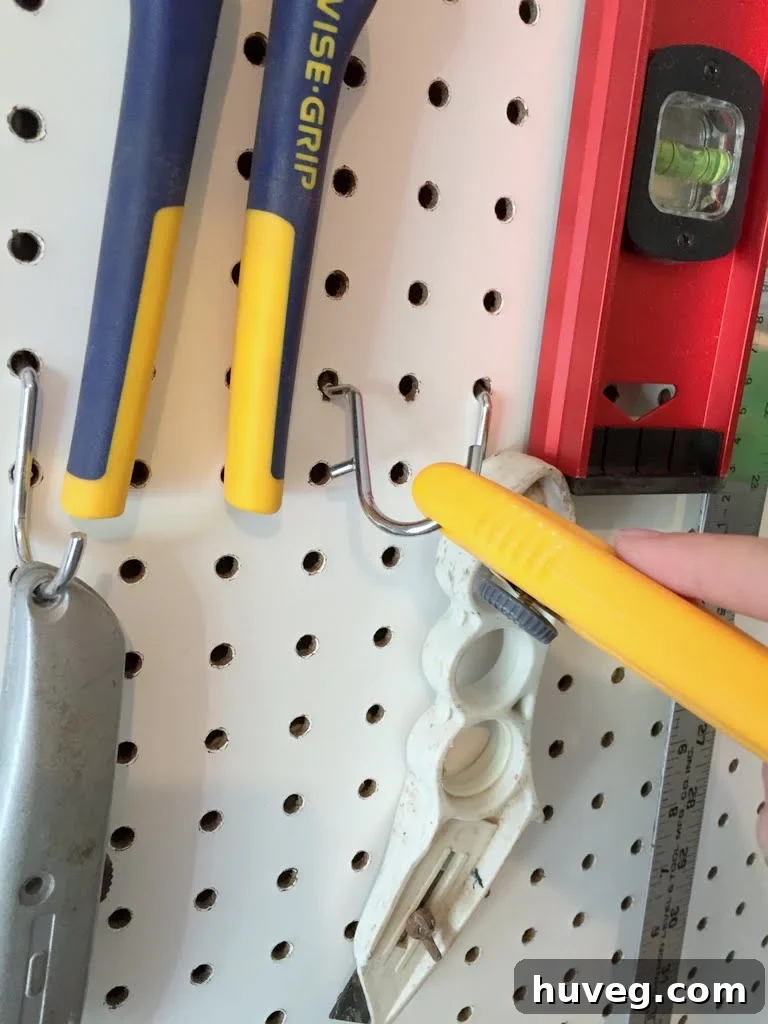
Before diving into solutions, it’s helpful to understand the variety of pegboard hooks available and why some perform better than others. Pegboard hooks come in numerous styles and gauges, each designed for specific purposes:
- Single Hooks: The most basic and common type. Often the weakest link in terms of stability, especially if made from thin wire.
- Double Hooks: Engage with two pegboard holes, offering better stability than single hooks.
- Loop Hooks: Great for hanging larger tools or power cords.
- J-Hooks and Angled Hooks: Specialized for specific items like wrenches or measuring tapes.
- Specialized Holders: For drills, screwdrivers, bins, or shelves.
The material and gauge (thickness) of the hook wire also play a crucial role. Thicker, heavier-duty hooks naturally provide more stability. However, even the best hooks can benefit from an extra layer of security, especially if your workshop sees frequent, hurried activity.
Introducing the Simple Fix: Plastic Locking Pegboard Clips
Fortunately, there’s an ingenious yet incredibly simple solution to this persistent problem: plastic locking clips, often referred to as “doodads” or pegboard hook stabilizers. These small but mighty accessories are designed to snap onto your existing pegboard hooks, providing an extra layer of security that prevents them from lifting out or shifting horizontally. You might even find them included in higher-quality pegboard hook kits, or you can purchase them separately from hardware stores or online retailers.
My own journey to discovery happened during a garage clean-out, where I unearthed an older pegboard kit that came with these fantastic little plastic locks. While the pegs that came with that particular kit were thick enough to fit securely on their own, I realized I had a treasure trove of these leftover clips perfect for securing my collection of flimsier, cheaper hooks. These clips effectively transform an unreliable hook into a secure, dependable tool holder, bringing order and peace of mind to any workspace.
How These Clips Work Their Magic
The design of these plastic locking clips is straightforward yet brilliant. Each clip typically features a small opening that fits snugly over the stem of your pegboard hook, right where it enters the pegboard hole. Once in place, a simple snap mechanism or a tight friction fit secures the clip, effectively “locking” the hook into the pegboard. This horizontal stabilization is key, as it’s the sideways movement and upward lift that primarily cause hooks to detach and tools to fall.
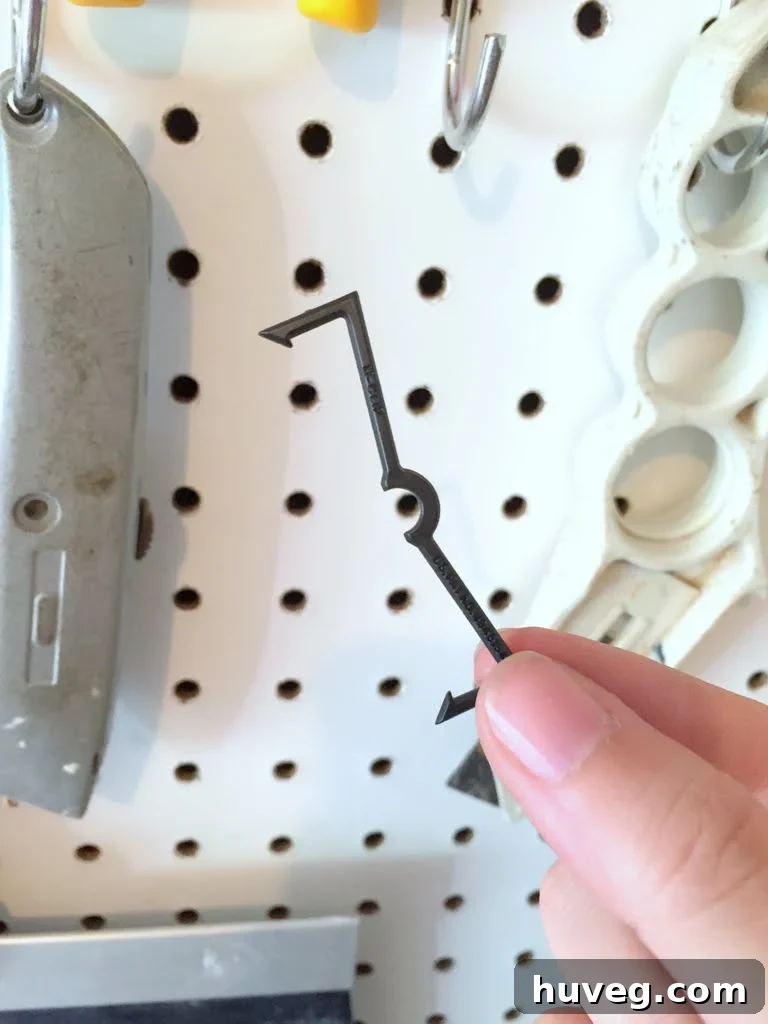
Step-by-Step Installation: Secure Your Hooks in Seconds
Installing these plastic locking clips is as easy as it gets, requiring no tools and only a few moments of your time:
- Attach the Hook: First, place your pegboard hook into the desired holes on your pegboard as you normally would. Ensure it’s firmly seated.
- Position the Clip: Take one of the plastic locking clips. Orient it so that its opening aligns with the stem of the pegboard hook, typically at the base where it meets the pegboard surface.
- Snap into Place: Gently but firmly press the clip onto the hook’s stem. You should feel or hear a satisfying “snap” as the clip engages and secures itself around the hook and against the pegboard.
- Test for Security: Give the hook a gentle tug, similar to how you would when retrieving a tool. You’ll immediately notice the enhanced stability. The hook will stay firmly in place, even with a strong pull.
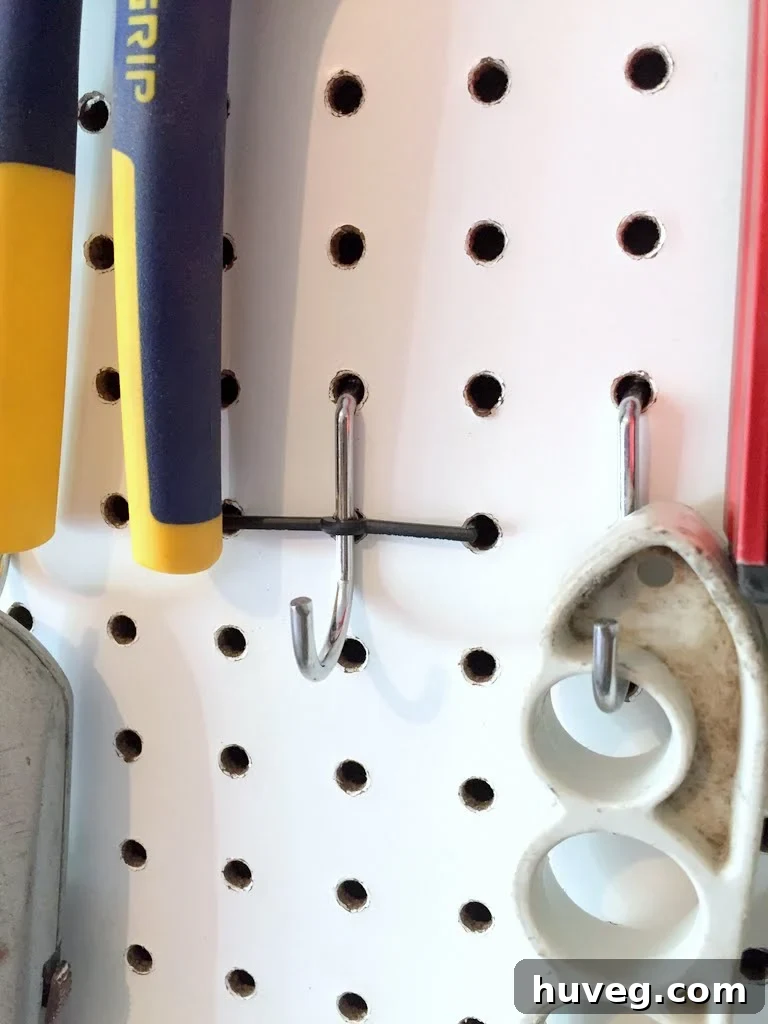
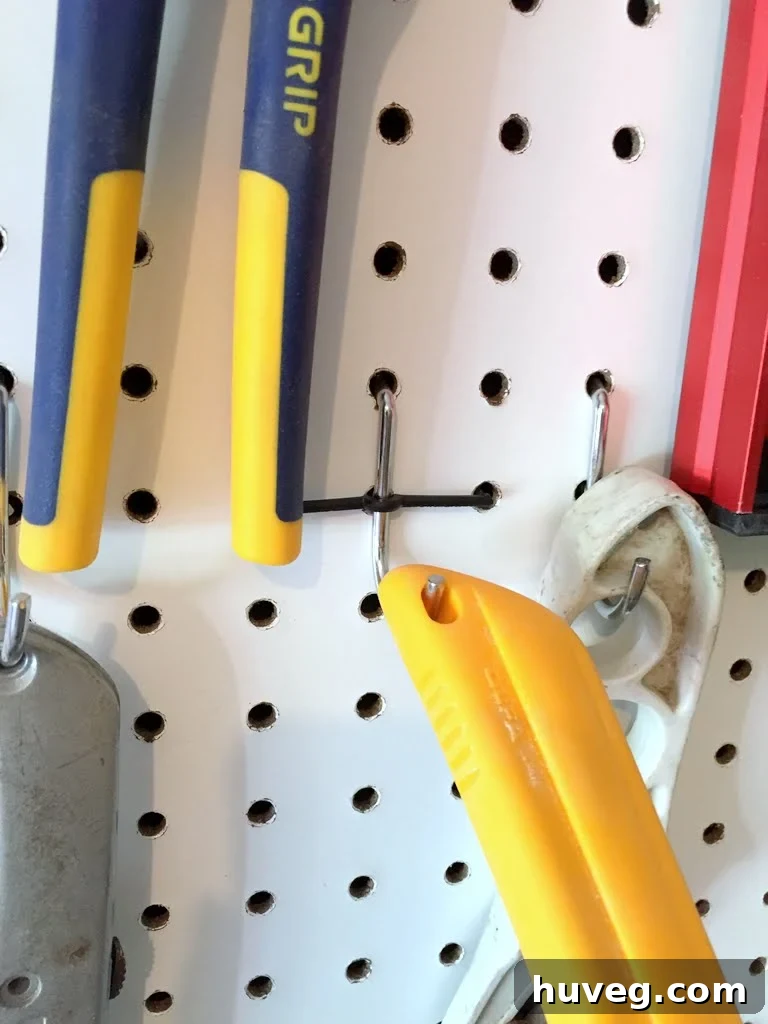
And just like that, your pegboard organization woes are a thing of the past! No more hooks flying off with your tools, no more scattered items on the floor. This simple addition ensures your tools remain exactly where you put them, ready for quick retrieval, especially when you’re in a hurry (which, let’s be honest, is most of the time in a busy workshop!).
The Benefits of Secure Pegboard Hooks
Beyond the immediate relief of not having tools fall, securing your pegboard hooks brings a host of advantages to any workspace, transforming it into a more functional and enjoyable environment:
- Enhanced Organization: The fundamental benefit is that your tools stay neatly organized. This means less clutter, a clearer view of your inventory, and a generally more pleasant working environment, allowing you to quickly locate what you need.
- Increased Efficiency: When tools are secure and visible, you spend less time searching and more time working. Quick retrieval becomes the norm, boosting your productivity on any project and minimizing frustrating interruptions.
- Improved Safety: Falling tools, especially heavier ones, can be a significant safety hazard, potentially causing injury to yourself or others, or damage to other equipment. Secure hooks mitigate this risk significantly, creating a safer workspace.
- Tool Protection: Tools constantly falling onto hard floors can suffer damage, leading to chips, dents, or even functional impairments that compromise their effectiveness and lifespan. Keeping them securely mounted prolongs their lifespan and maintains their condition.
- Peace of Mind: Knowing your setup is reliable and your tools are safe and accessible allows you to focus on your craft without constant interruptions or worries about disarray. This mental clarity contributes to a more productive and enjoyable DIY experience.
Addressing the Downside: Spacing Considerations
While plastic locking clips are incredibly effective, there is one minor consideration to keep in mind: they require a little extra space. Because the clips snap around the hook and brace against the pegboard, they slightly increase the footprint of each hook. This means you might not be able to stack hooks side-by-side as tightly as you would without the clips.
For most applications, this isn’t a significant issue. However, if you’re dealing with a very small pegboard area and need to maximize every square inch, you’ll need to plan your layout strategically. Consider using these clips primarily for frequently used tools or heavier items that are most prone to falling, and perhaps opt for alternative securing methods (discussed below) for areas where super-dense spacing is critical. Careful planning can help you achieve both security and efficient space utilization.
Alternative Methods for Securing Pegboard Hooks
While plastic locking clips are our top recommendation for their ease of use and effectiveness, they might not be suitable for every type of hook or every specific organizational need. Fortunately, there are several other DIY-friendly methods to keep your pegboard hooks firmly in place, offering flexibility for different situations:
1. Wire Threading Method
Inspired by clever DIYers, this method involves threading a thin, sturdy wire through the hole in the pegboard (often the one directly above or beside the hook) and then wrapping it securely around the hook’s stem. The wire acts as a brace, pulling the hook tightly against the board and preventing it from lifting or sliding out. You can use craft wire, picture hanging wire, or even sturdy fishing line, depending on the weight of the tool.
- Pros: Very secure, cost-effective, and can be quite discreet once installed if done neatly. It offers a strong, semi-permanent hold.
- Cons: More time-consuming to set up, and hooks are less easily repositioned once wired in place. It requires a bit more patience and dexterity to thread and secure the wire properly.
- Ideal For: Long-term placements of tools that won’t be moved often, or for securing heavier items where maximum stability is desired. (For a visual guide, consider checking out this Instructables tutorial.)
2. Zip Tie Solution
Zip ties are a versatile and readily available solution for countless household problems, and securing pegboard hooks is one of them. Similar to the wire method, a small zip tie can be threaded through a pegboard hole and then cinched tightly around the hook’s shaft, pulling it flush against the board. This creates a strong, non-slip attachment.
- Pros: Inexpensive, very quick to install, and provides a very strong hold. Zip ties are widely available in various sizes and strengths.
- Cons: Less discreet than plastic clips or wire, and removing or repositioning hooks requires cutting and replacing the zip tie, which generates plastic waste.
- Ideal For: Quick fixes, heavy-duty tools, or situations where aesthetics are less of a concern than pure functionality and strength.
3. Hot Glue or Adhesive (for Semi-Permanent Setups)
For hooks that you absolutely know you won’t be moving for a very long time, a dab of hot glue or a strong adhesive like construction adhesive can provide a permanent lock. Apply a small amount to the back of the hook where it meets the pegboard surface, allowing it to bond the hook firmly to the board.
- Pros: Extremely secure, virtually permanent, and can be very effective for specific, unchanging layouts.
- Cons: Difficult to remove without potentially damaging the pegboard surface or the hook itself, making it unsuitable for flexible layouts or rented spaces.
- Ideal For: Dedicated storage spots for very heavy or infrequently moved items, or custom setups where you’re absolutely certain about the long-term placement of specific tools.
Choosing the Right Pegboard System for Your Needs
While securing hooks is paramount, the quality and type of your pegboard itself also play a significant role in overall organization and durability. Pegboards come in various materials, each with its own advantages and ideal applications:
- Wood Fiberboard (Standard): This is the most common and affordable type. It’s good for light to medium-duty tools and general garage or craft room use. However, it can warp in humid environments and may not withstand very heavy loads over time.
- Metal Pegboard: Extremely durable, rust-resistant, and ideal for heavy tools, power tools, and harsh workshop conditions. Metal pegboards often feature stronger mounting options and sometimes integrated locking systems, providing superior longevity and strength.
- Plastic Pegboard: Lightweight, moisture-resistant, and available in various colors, making it a popular choice for craft rooms, laundry rooms, or lighter-duty garage use where aesthetics might be a consideration. It’s easy to clean but generally not suitable for very heavy items.
Regardless of the material, ensure your hooks are compatible with your pegboard’s hole size (typically 1/4 inch or 1/8 inch diameter) for the best fit. A proper fit will inherently provide better stability even before applying additional locking mechanisms, maximizing the effectiveness of your chosen security method.
Maintenance and Best Practices for a Lasting Organization System
Once your hooks are secure and your pegboard is organized, a few simple maintenance practices will ensure your system remains effective and tidy for years to come:
- Regular Checks: Periodically inspect all your hooks and their locking mechanisms. Ensure everything is still tight and secure, especially after heavy use or if you’ve recently moved tools around. Tighten or re-secure anything that feels loose.
- Weight Distribution: Avoid overloading individual hooks or concentrated sections of the pegboard. Distribute heavier tools evenly across the board to prevent strain on the pegboard itself and maintain the stability of your hooks.
- Keep it Clean: Dust, sawdust, and grime can accumulate on your pegboard and tools. A quick wipe-down now and then with a damp cloth keeps your pegboard looking good and your tools clean and ready for use.
- Reassess and Adapt: As your tool collection grows, your projects change, or your workflow evolves, don’t be afraid to re-evaluate your pegboard layout. The beauty of a pegboard is its adaptability; take advantage of it to keep your system optimized.
Conclusion: Embrace a Tidy and Efficient Workspace
The frustration of falling pegboard hooks is a universal problem, but it doesn’t have to define your workshop experience. By implementing simple yet highly effective solutions like plastic locking clips, wire threading, or even zip ties, you can transform your pegboard from a source of annoyance into a highly efficient, reliable, and visually appealing storage system. A secure pegboard means a more organized workspace, faster project completion, reduced risk of damage or injury, and the immense satisfaction of knowing every tool is right where you need it, whenever you need it. Invest a little time now to secure your hooks, and enjoy the lasting benefits of a perfectly ordered and productive DIY haven.