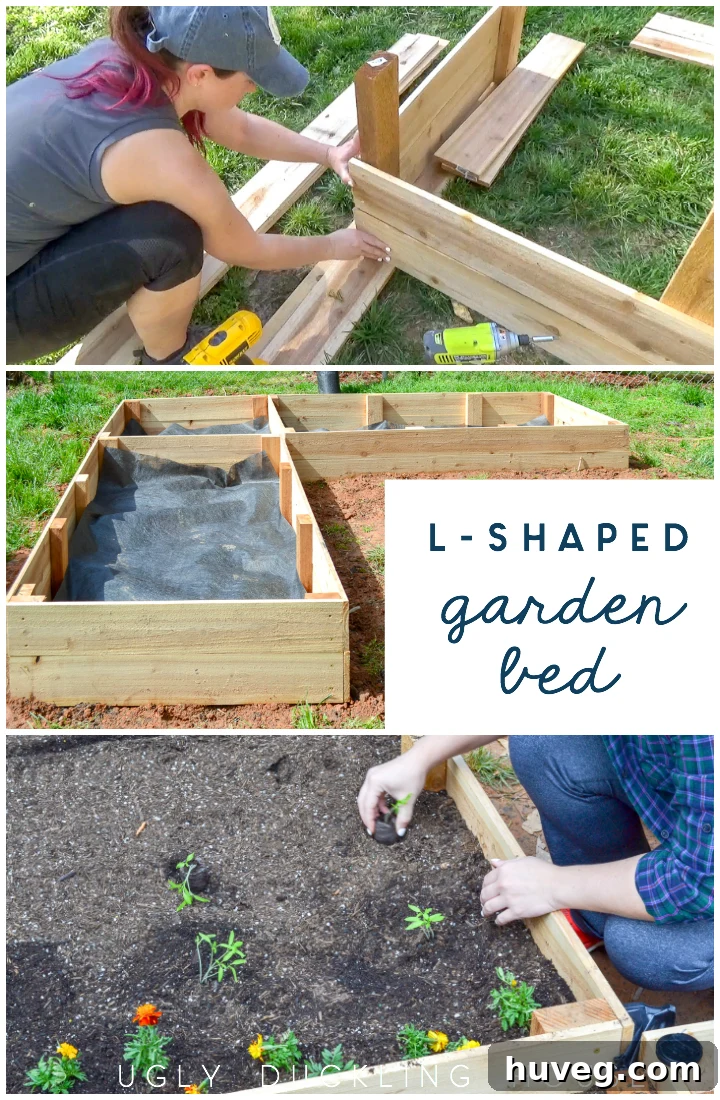
Unlock Your Corner: DIY L-Shaped Garden

DIY L-Shaped Cedar Raised Garden Bed: Build Your Dream Vegetable Garden Fast
Spring arrived with a delightful burst of growth this year, and my vegetable seedlings, sprouting with surprising speed, demanded a new home – and fast! I quickly realized I needed a robust and spacious garden bed to accommodate their eager roots. This urgency led me to embark on a weekend project to construct a cost-effective and simple L-shaped raised garden bed using readily available cedar fence pickets. In just a few dedicated hours, I transformed my backyard into a thriving vegetable haven, ready for planting.
Today, I’m thrilled to share a detailed guide on how you can replicate this project, creating your own L-shaped raised garden bed that’s not only functional but also adds aesthetic appeal to your outdoor space. While these beds have been an integral part of my yard since 2018, enduring various weather conditions and flourishing with produce, the process remains as relevant and rewarding as ever. Alongside this comprehensive post, a video tutorial is also available for those who prefer visual instructions, ensuring you have all the resources you need to get started.
Why Choose a Raised Garden Bed? Benefits for Every Gardener
Before diving into the construction details, let’s explore why a raised garden bed, especially one built with cedar, is an excellent choice for any gardener, whether you’re a seasoned pro or just starting out:
- Improved Soil Quality: Raised beds allow you to create optimal soil conditions from scratch. You can fill them with a rich, custom blend of compost and topsoil, free from the compaction, rocks, and poor drainage often found in native ground soil. This fosters healthier root development and more vigorous plant growth.
- Enhanced Drainage: The elevated structure naturally provides superior drainage, preventing waterlogging that can harm root systems. This is particularly beneficial in areas with heavy clay soils, like my own Georgia backyard, where water retention can be a significant issue.
- Extended Growing Season: Soil in raised beds tends to warm up faster in the spring and stay warmer longer into the fall compared to ground-level gardens. This can extend your planting and harvesting window, allowing for earlier starts and later finishes.
- Weed and Pest Control: The raised sides act as a physical barrier against many common garden weeds and ground-dwelling pests. When combined with a landscape fabric barrier at the bottom, weed maintenance becomes significantly reduced.
- Ergonomic Gardening: The elevated height means less bending and kneeling, making gardening more comfortable and accessible for everyone, especially those with mobility concerns.
- Tidiness and Aesthetics: Raised beds create defined planting areas, contributing to a neat and organized garden space. Cedar, with its beautiful grain and natural appeal, further enhances the visual charm of your backyard.
- Easy Access: The contained nature of a raised bed makes it easy to reach plants from all sides, simplifying tasks like planting, weeding, watering, and harvesting.
My previous experience building gardenia garden beds along my fence several years ago proved invaluable, guiding my decisions for this new project. Those earlier builds taught me some crucial lessons that I incorporated into this design, ensuring a more durable and efficient outcome. Key takeaways included the need for more robust internal support, the undeniable advantages of using cedar for its natural rot resistance, and a continued focus on maximizing garden space while adhering to a budget.
Choosing Cedar for Longevity and Beauty
For this project, I specifically opted for cedar fence pickets and cedar 2x4s, a significant upgrade from the mixed wood and mostly scrap materials used in my earlier garden beds. Cedar stands out as an exceptional choice for outdoor applications, particularly for raised garden beds, due to its inherent qualities:
- Natural Rot and Insect Resistance: Cedar contains natural oils and compounds that make it highly resistant to rot, decay, and insect infestations. This natural durability means your garden bed will last significantly longer, even when exposed to soil and moisture, without the need for chemical treatments that could leach into your soil.
- Stability and Durability: Cedar is known for its stability, meaning it’s less prone to warping, twisting, or shrinking compared to other wood types. This ensures your raised bed maintains its structural integrity over time.
- Aesthetic Appeal: The rich, warm tones of cedar and its distinctive grain patterns add a beautiful, natural elegance to any garden space. It weathers gracefully, developing a silvery-grey patina if left untreated, which many find highly attractive.
- Chemical-Free Option: Unlike pressure-treated lumber, which often contains chemicals to prevent rot, cedar offers a naturally resistant and chemical-free option, making it ideal for growing edible plants. This gives you peace of mind knowing your homegrown vegetables are safe and healthy.
By investing a little more in cedar, you create a garden bed that not only looks fantastic but also provides a safe, stable, and long-lasting environment for your plants. I purchased dog-eared cedar fence pickets and corresponding cedar 2x4s, then precisely cut them down to the required dimensions for assembly.
Materials and Tools You’ll Need
Building this L-shaped raised garden bed is straightforward, especially with the right materials and tools. Here’s a comprehensive list to ensure you’re well-prepared:
Wood Materials:
- 14 Cedar Fence Pickets: These form the side walls of your garden beds. The standard size is usually 5.5 inches wide by 6 feet long. (View on Amazon)
- 4 Cedar 2x4s (8ft length): These will be cut into shorter lengths to create the sturdy internal support posts for the bed walls.
Estimated Cost:
- Based on typical prices, this project comes out to approximately $82 for the raw wood. (e.g., $3 per picket x 14) + ($10 per 8ft 2×4 x 4).
- Most other essential supplies were already on hand, demonstrating the budget-friendly nature of this DIY approach.
Essential Supplies and Tools:
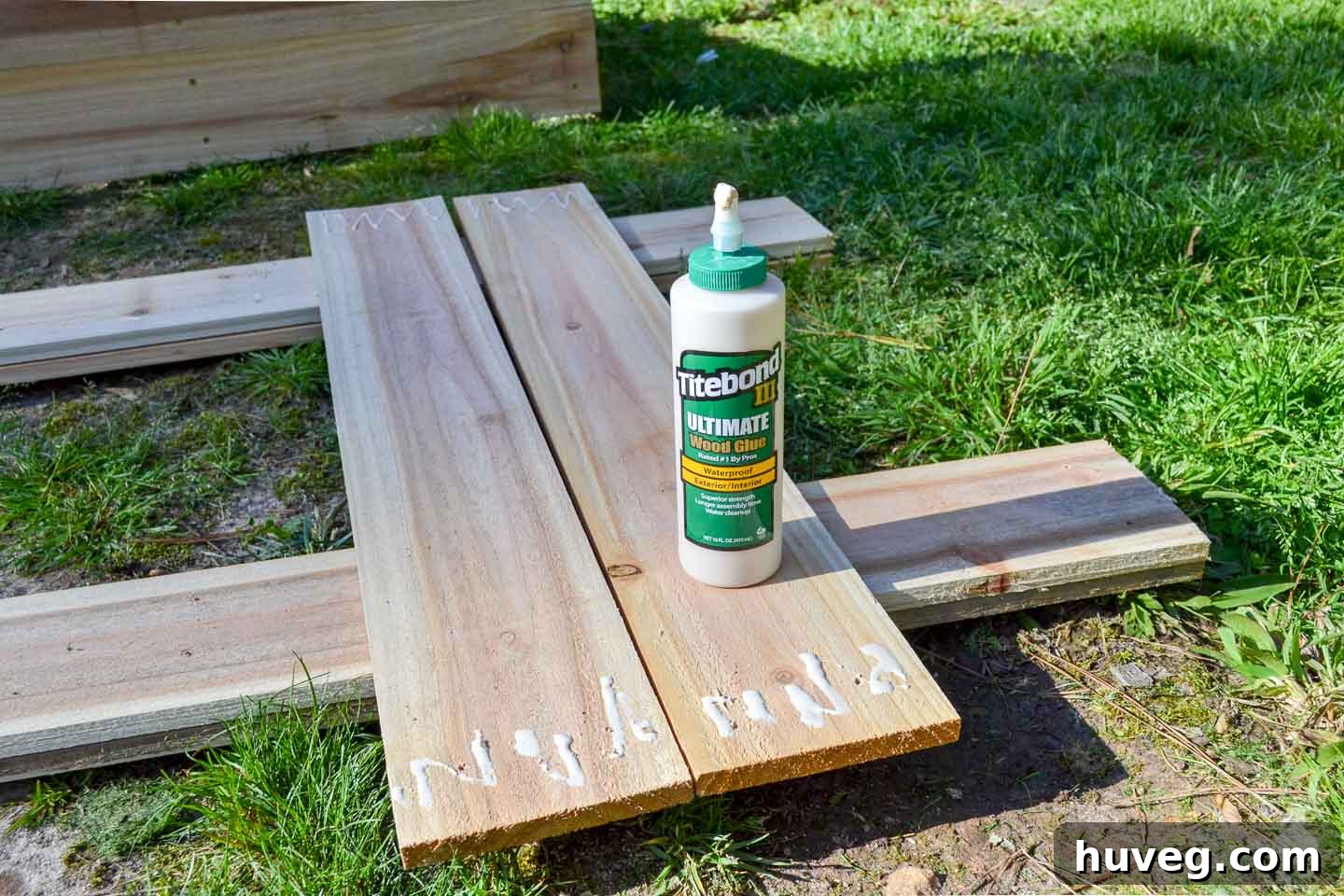
- Exterior Grade Wood Glue: Crucial for adding extra strength and durability to your joints, preventing future separation and increasing the lifespan of your bed. I highly recommend a waterproof formula. (View on Amazon)
- Painter’s Tape: Excellent for temporarily securing multiple boards together for precise batch cutting, saving time and ensuring uniform lengths. (View on Amazon)
- Miter Saw: Essential for making clean, straight, and precise cuts on your wood pickets and 2x4s. A reliable miter saw significantly speeds up the cutting process and improves accuracy. (View on Amazon)
- Cordless Drill and Drill Bits: Absolutely necessary for pre-drilling pilot holes to prevent wood splitting, especially when working with cedar. Having a dedicated drill for pilot holes and a separate impact driver for screws can drastically improve efficiency. (View Drills on Amazon | View Drill Bits on Amazon)
- Impact Driver (Highly Recommended): If you plan on doing a lot of DIY projects, an impact driver is a game-changer for driving screws quickly and effortlessly, especially long exterior screws. (Often sold in combo kits with drills.)
- Exterior Wood Screws: Use screws specifically designed for outdoor use, typically coated to resist rust and corrosion, ensuring your bed holds together in wet conditions. Galvanized or ceramic-coated screws are good choices. (View on Amazon)
- Shovel: You’ll need a sturdy shovel for excavating the trench for the garden bed to sit securely in the ground. Prepare for a workout, especially if you have tough soil! (View on Amazon)
- Landscape Fabric: An indispensable material for lining the bottom of your raised bed to prevent weeds from growing up from the native soil while still allowing water to drain. (View on Amazon)
DIY Kit Alternative: If you prefer the convenience of a ready-to-assemble kit and wish to minimize cutting, there are similar raised garden bed kits available. While they might be slightly more expensive, they offer a quick solution for those short on time or tools, often providing excellent value for the garden space created.
Step-by-Step Construction Guide
Follow these steps to build your durable and attractive L-shaped cedar raised garden bed:
Step 1: Making Your Precise Cuts
Accuracy in cutting is key for a sturdy and aesthetically pleasing garden bed. Start by preparing your fence pickets and 2x4s:
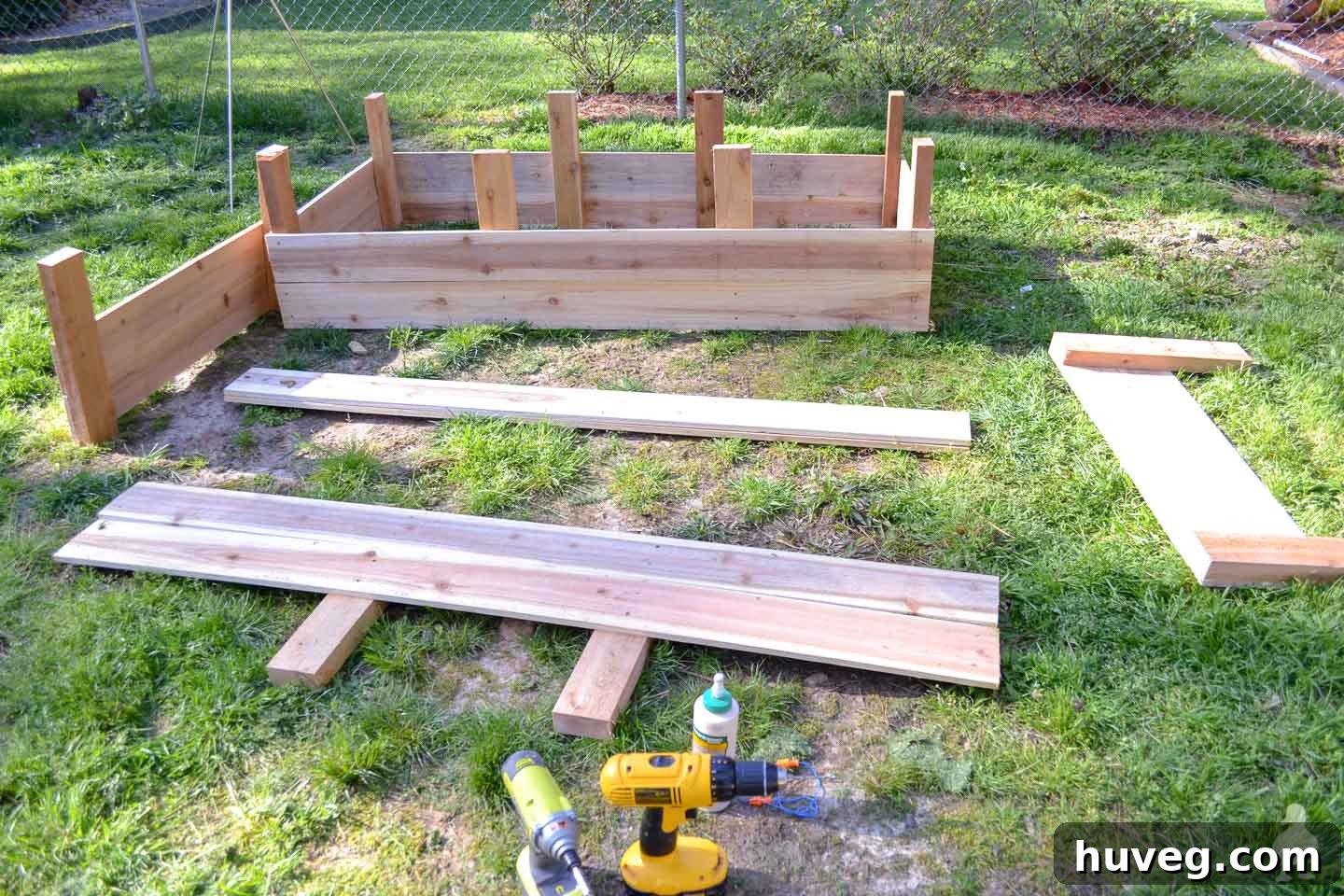
- Fence Pickets: Begin by cutting off the “dog-eared” ends of each cedar fence picket. To ensure all pickets are precisely the same length without individual measuring, stack them neatly together. Secure the stack with painter’s tape, then make one clean cut across all of them using your miter saw. This method guarantees uniformity and saves considerable time. Each rectangular section of the L-shaped bed requires four full-length cedar picket boards for the long sides and two more cut in half for the shorter ends.
- 2×4 Support Posts: Cut your cedar 2x4s into 18-inch lengths. Each 8-foot 2×4 should yield approximately five such posts. These posts provide the crucial internal reinforcement for the walls of your raised bed. You can choose to make these posts slightly longer if your climate requires deeper beds to protect plants from severe frost (a consideration less critical in Georgia but important in colder regions like Michigan, where some gardeners opt for 19-inch posts).
Step 2: Assembling the Side Panels
With your wood cut, it’s time to assemble the individual panels that will form the walls of your raised bed. This involves attaching the cedar pickets to the 2×4 support posts:
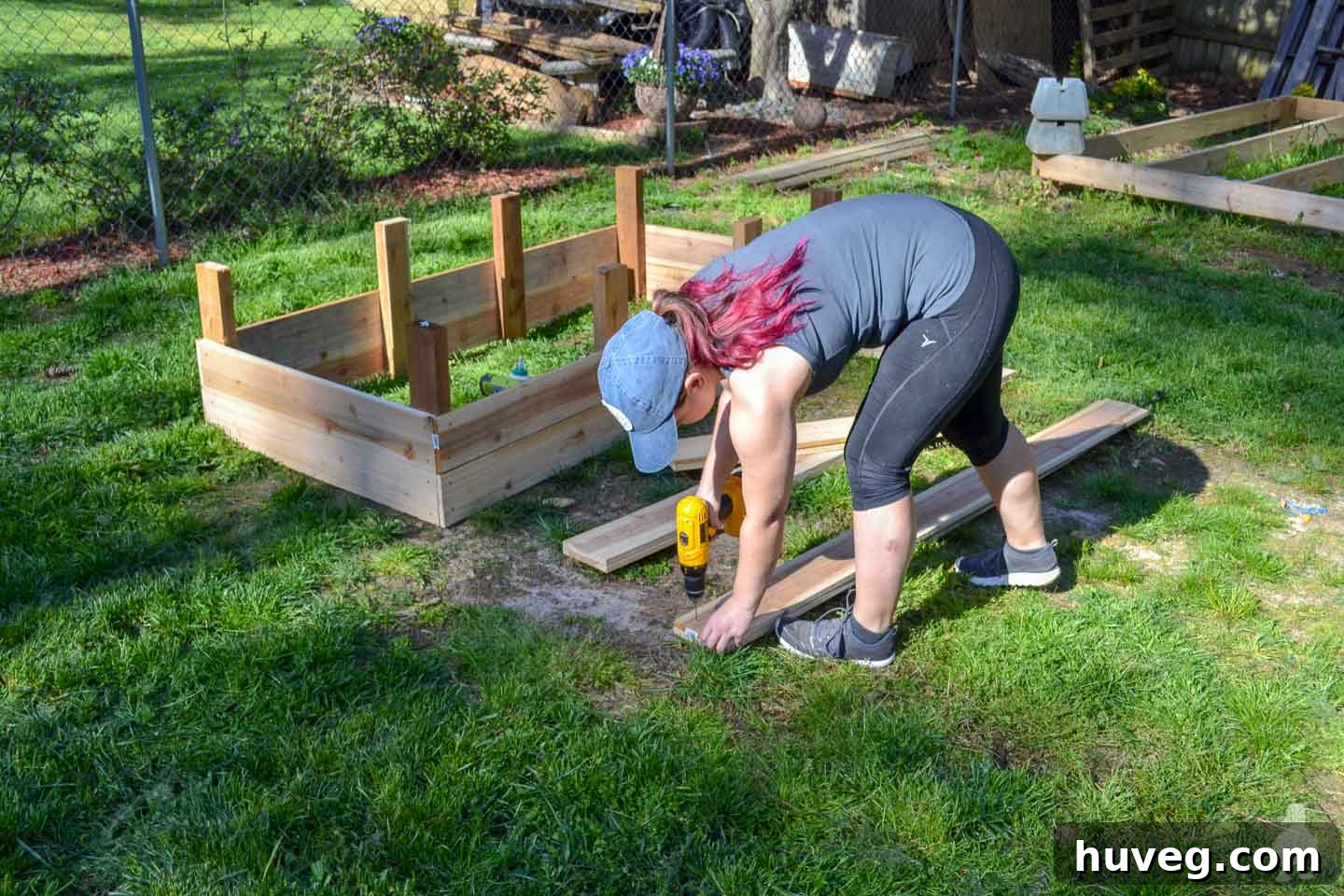
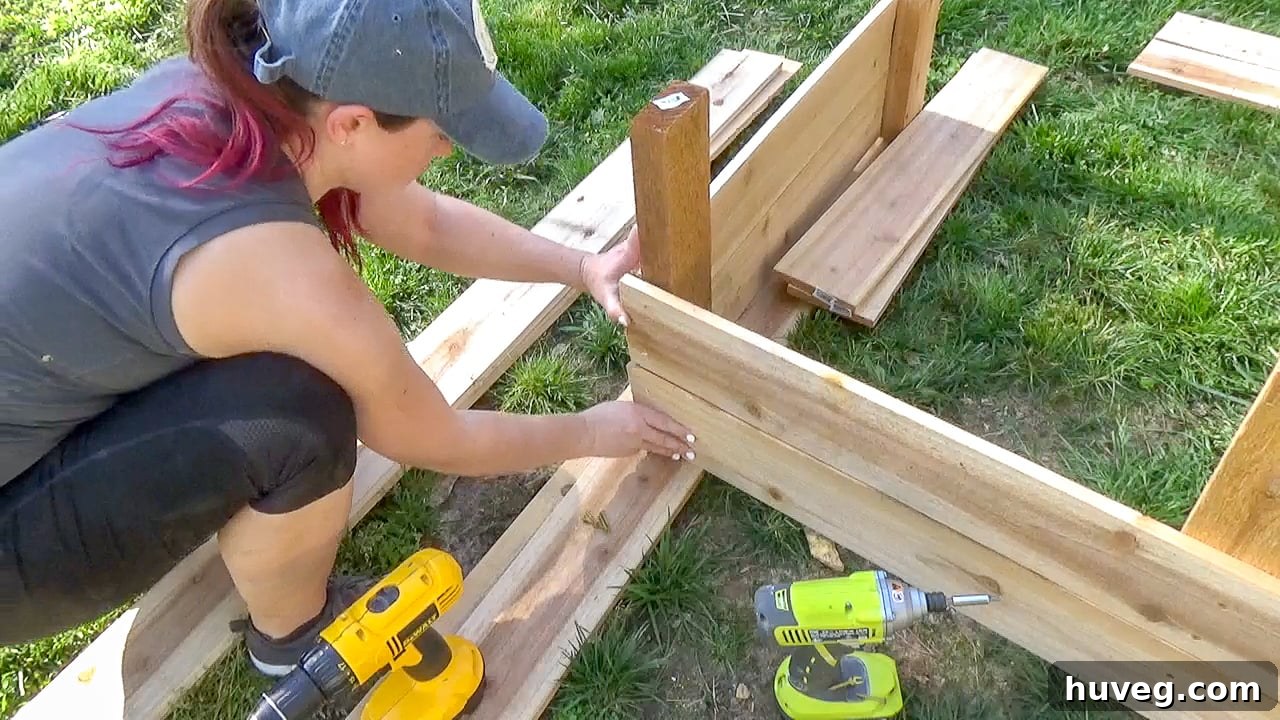
- Pre-drilling is Essential: Before driving any screws, always pre-drill pilot holes through the cedar pickets where you intend to attach them to the 2×4 posts. Cedar, while durable, can split if screws are driven directly without pilot holes. This step is critical for preventing damage and ensuring a strong connection.
- Attaching Pickets to Posts: Apply a bead of exterior wood glue along the edge of each 2×4 post where the picket will attach. Then, align your pickets and screw them into the 2×4 posts. For the longer sides of the bed, I visually spaced the internal 2×4 supports, ensuring even reinforcement along the length. Building these panels on a relatively flat surface will help ensure square corners and even alignment. If your ground is uneven, use spare wood pieces to create a temporary level base for stacking and assembly.
Step 3: Forming the L-Shape
To create the distinct L-shape, you won’t build three separate beds. Instead, two main rectangular beds are constructed, and then a corner piece is added to join them:
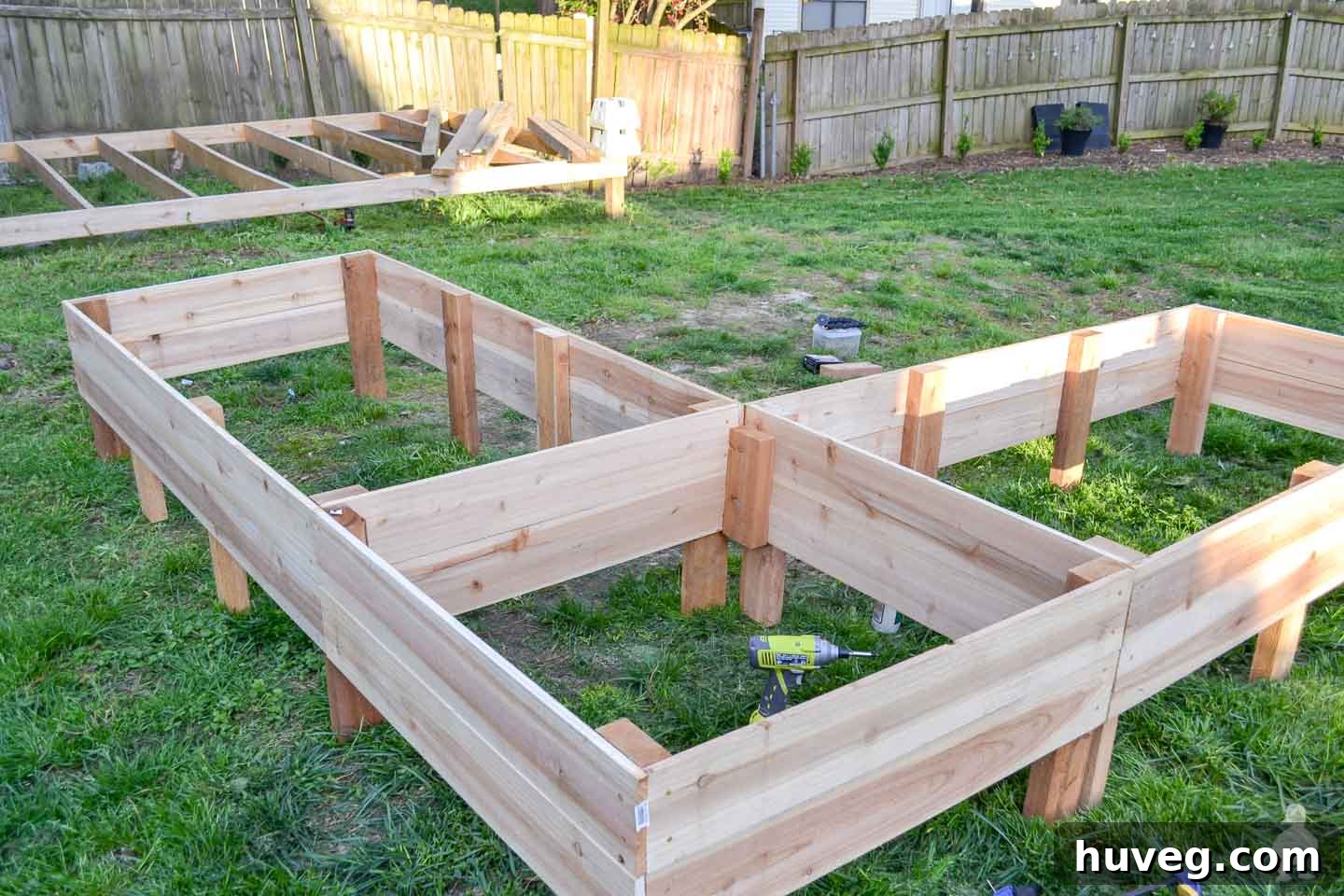
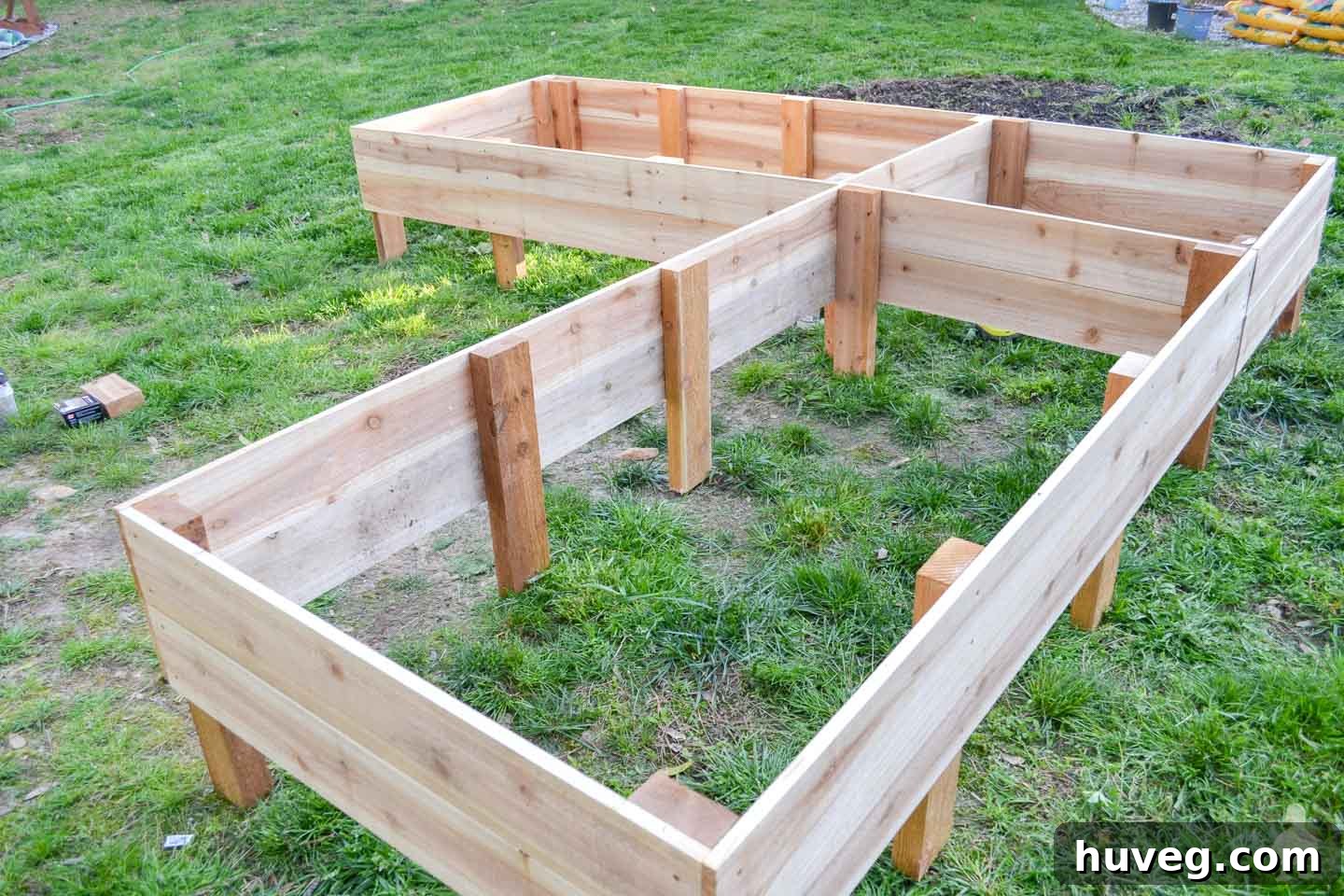
- Corner Assembly: Take two of the picket boards and cut each in half. These shorter pieces will form the inner and outer walls of the corner. Attach these pieces using exterior screws and wood glue to the ends of your two pre-assembled rectangular bed sections, effectively creating the L-shaped configuration. Ensure all connections are tight and secure.
Step 4: Site Preparation and Digging
Once the bed structure is complete, it’s time to prepare its permanent home in your yard:
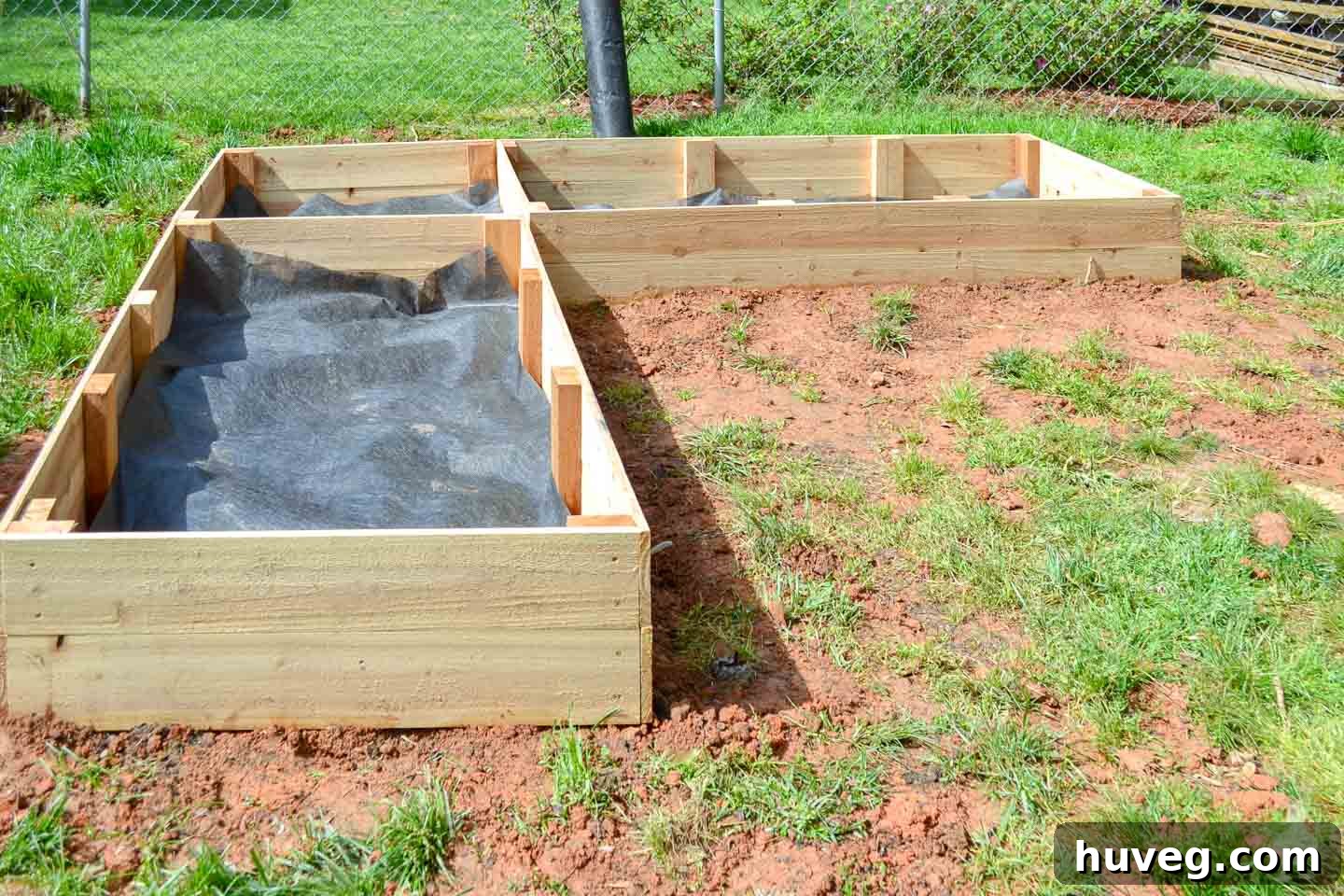
- Positioning and Leveling: Carefully place your assembled L-shaped bed in its desired location. Use a level to check for evenness. If your ground is uneven, as mine was, you will need to dig a trench to allow the bed to sit level and plumb.
- The Digging Process: Prepare for significant excavation! Digging a trench to sink the bottom edges of the raised bed into the ground offers several benefits: it adds stability, helps prevent wood rot by reducing exposure of the lowest boards to surface moisture, and makes the bed appear more integrated with the landscape. In challenging soils like Georgia’s red clay, this can be quite laborious, but the effort is well worth it for a secure and long-lasting installation.
Step 5: Installing Landscape Fabric
After the bed is properly seated in its trench, line the bottom with landscape fabric. This is a crucial step, especially if your yard is prone to weeds:
- Weed Barrier: The fabric acts as an effective barrier, preventing weeds from sprouting up from the native soil into your cultivated bed.
- Drainage: High-quality landscape fabric is permeable, allowing excess water to drain through while keeping soil contained. Secure the fabric along the inside edges of the bed using staples or small nails to prevent it from shifting.
Step 6: Filling with Organic Material (Lasagna Gardening Method)
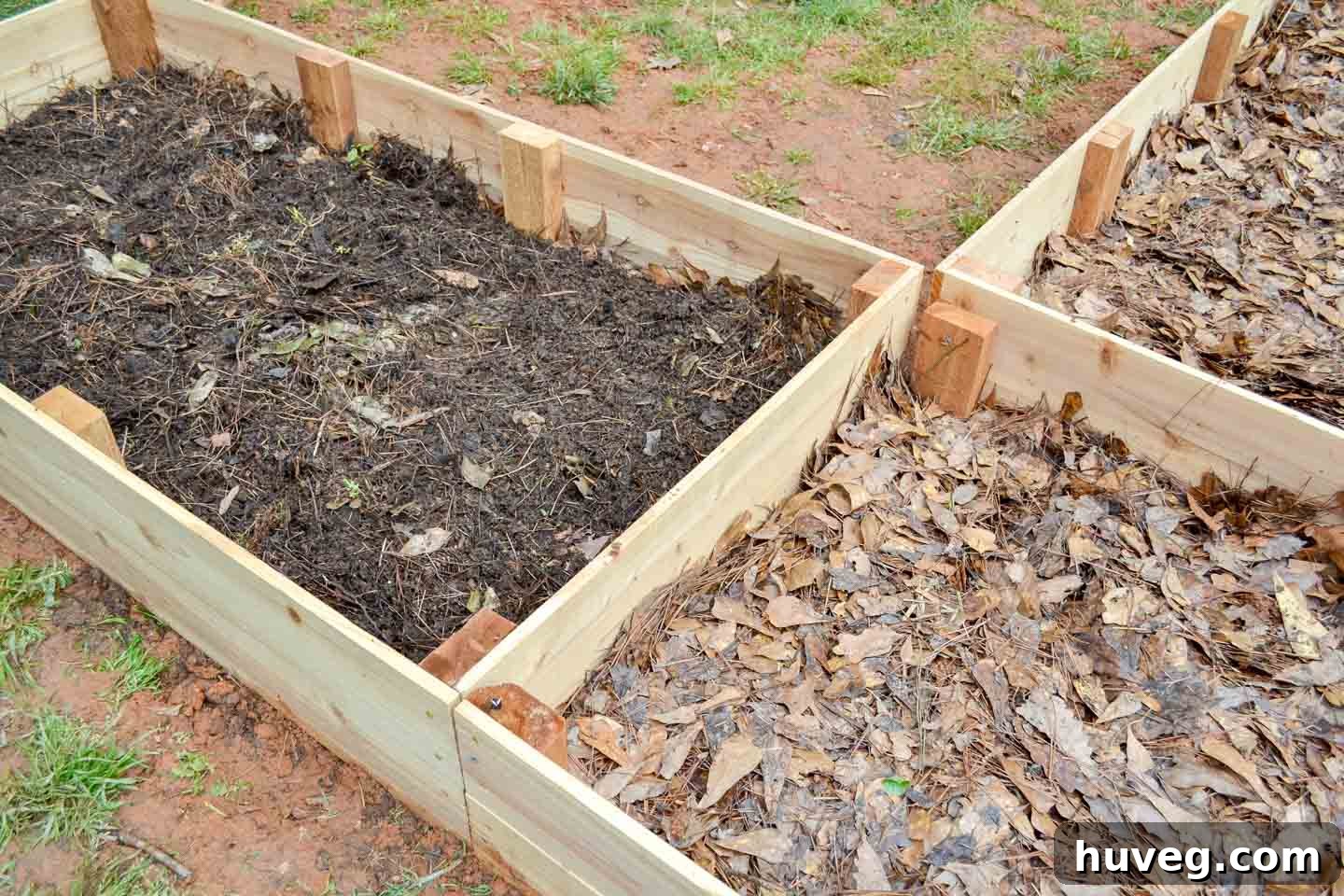
Now for the exciting part: filling your raised bed with nutrient-rich soil! I highly recommend the “lasagna gardening” method, which involves layering various organic materials. This technique enriches the soil, improves drainage, and helps suppress weeds over time:
- Bottom Layer (Weed Barrier/Drainage): Start with a layer of cardboard or newspaper directly on top of the landscape fabric. This adds an extra biodegradable weed barrier and retains moisture.
- Brown Layers: Next, add “brown” organic matter such as dried leaves, straw, wood chips, or shredded paper. These materials provide carbon and create air pockets for good drainage.
- Green Layers: Alternate with “green” organic matter, like grass clippings (untreated), kitchen scraps (avoid meat/dairy), fresh manure, or green plant trimmings. These supply nitrogen, which is essential for decomposition.
- Compost and Topsoil: Continue layering browns and greens, watering each layer as you go to encourage decomposition. Finish with a substantial layer of high-quality compost and organic topsoil. You’ll be surprised how much compost even a small raised bed can consume, so be prepared to source a significant quantity! This top layer is where your seedlings will directly grow, providing them with immediate nutrients.
This layering method creates a healthy, living soil ecosystem, promoting beneficial microbial activity and providing a slow-release nutrient supply for your plants. It’s an investment in the long-term health and productivity of your garden.
Step 7: Preparing for Seedlings
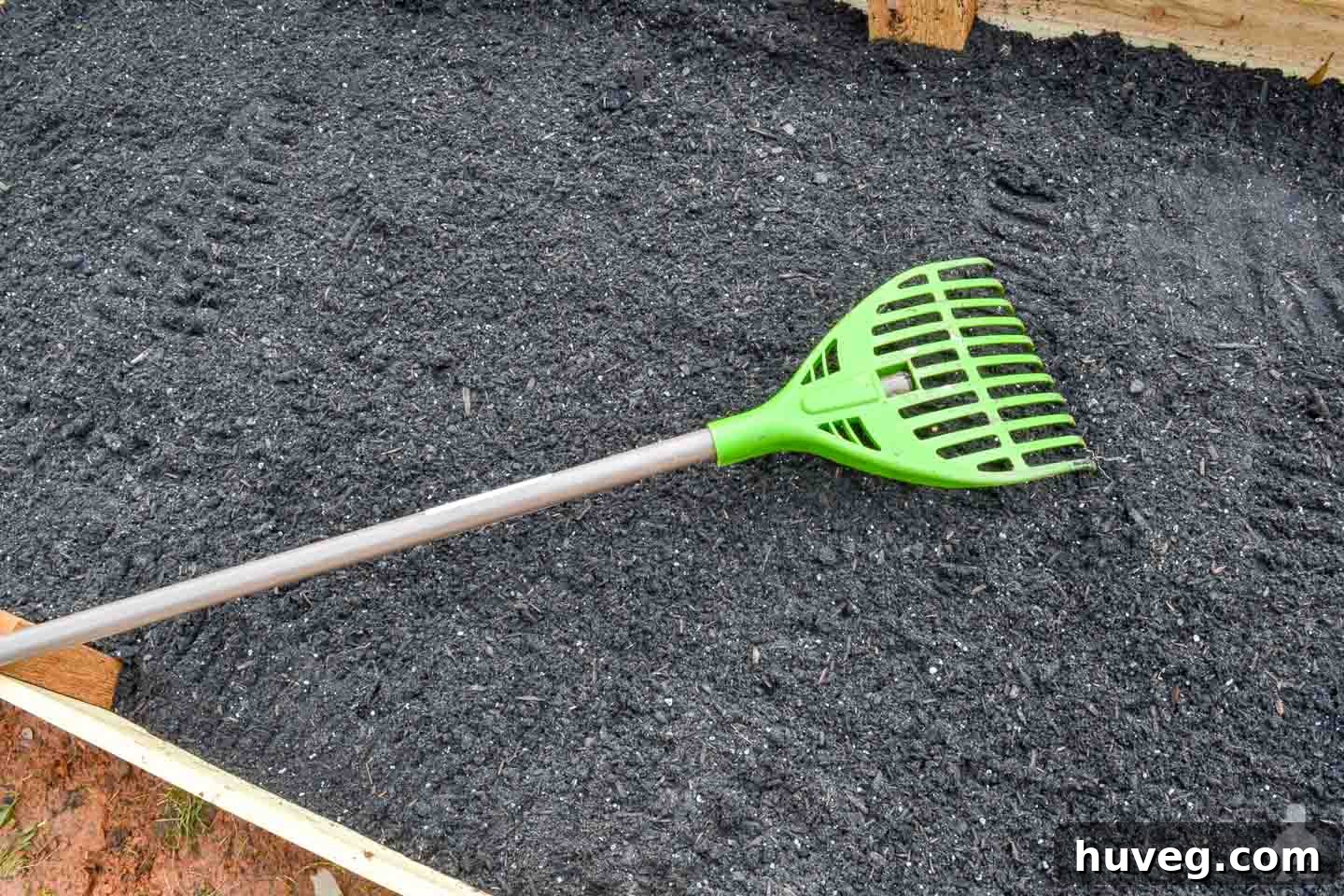
Once your raised bed is filled to the brim with your rich soil mixture, give it a final rake to smooth the surface. The beds are now ready for your eager seedlings!
Watch the full video tutorial for an even clearer perspective on the build process!
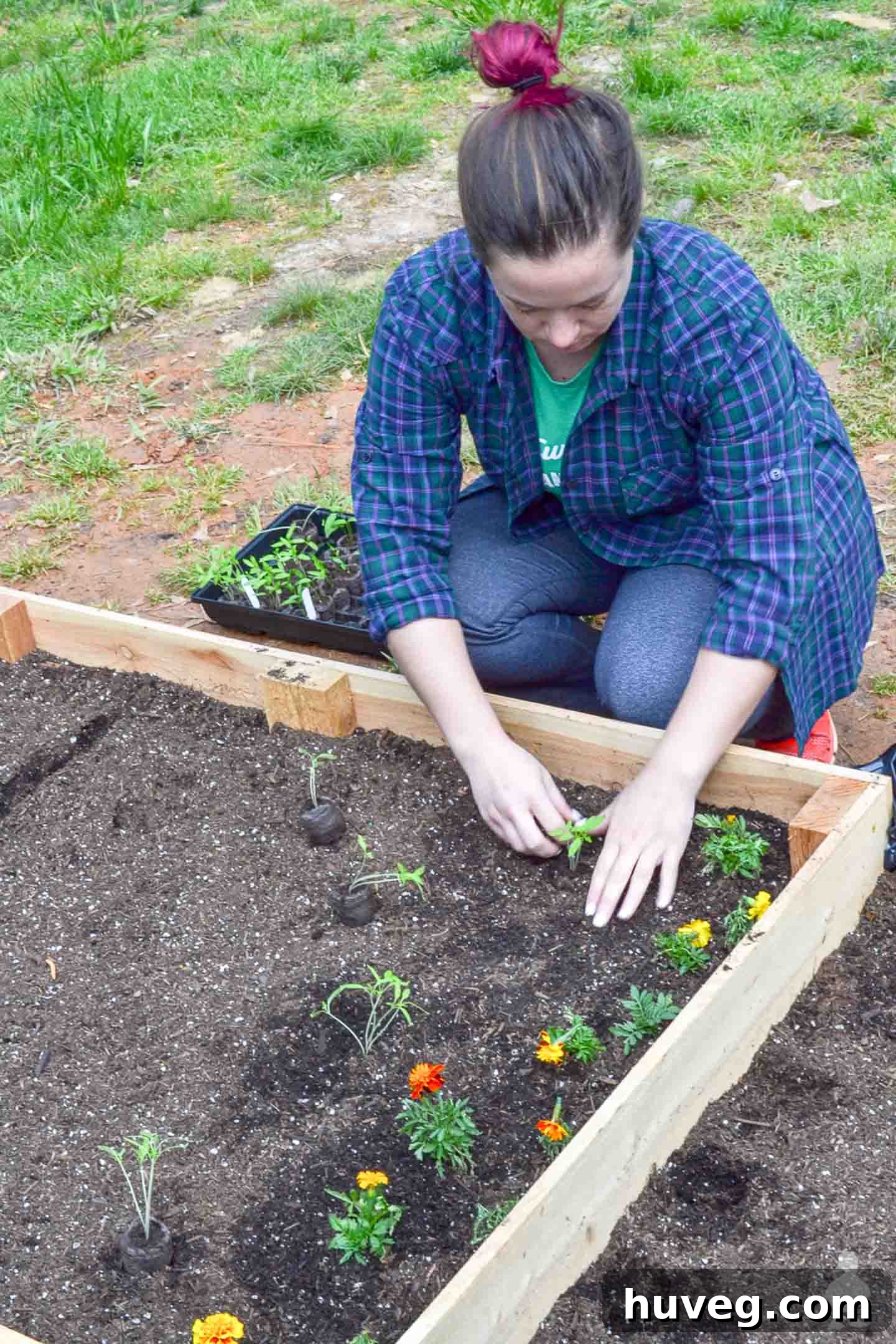
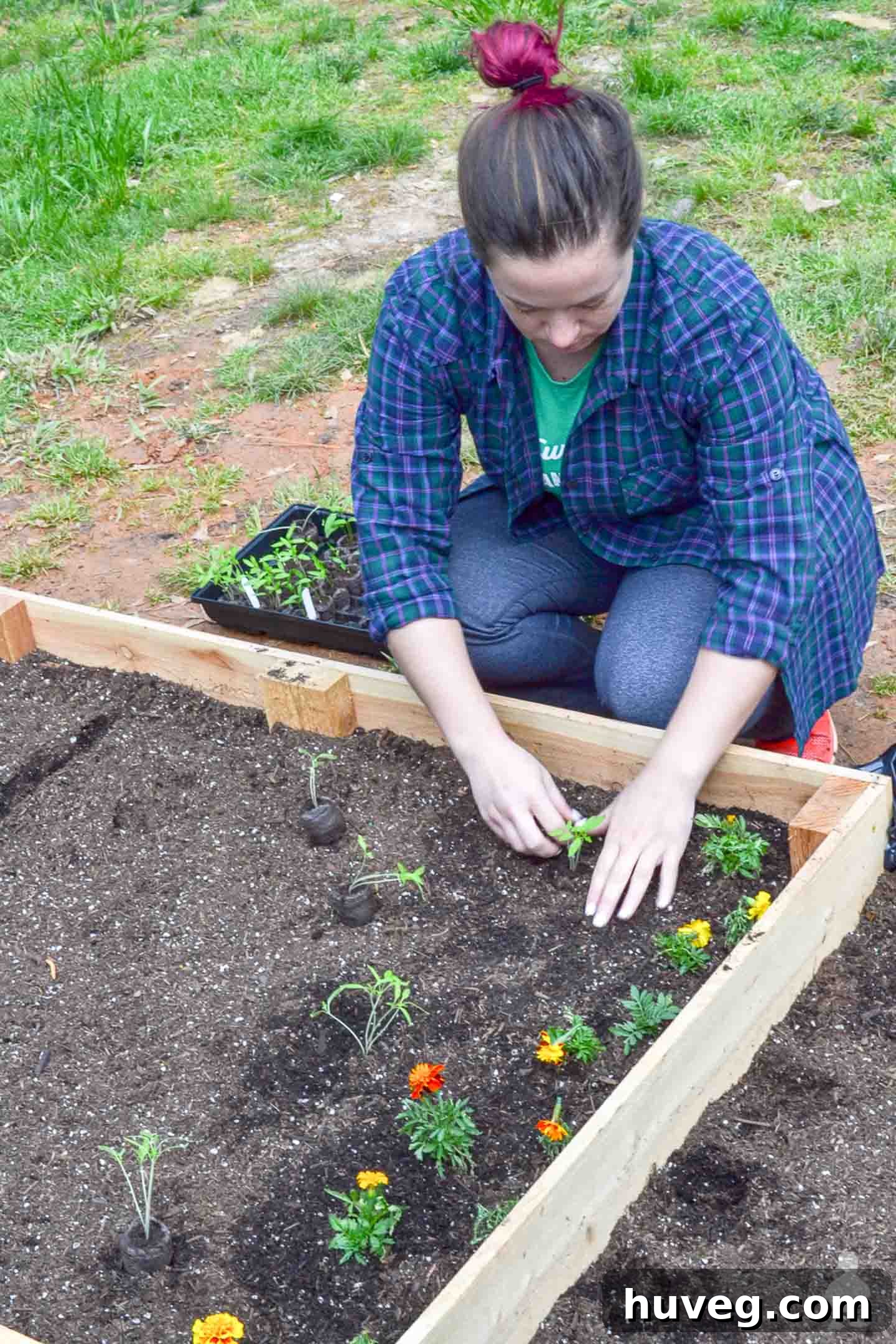
It’s always a delight to capture the hands-on process of DIY projects. While it can be a challenge to manage tripods and timers, having a helping hand for photography allows for more engaging and personal tutorials, moving beyond mere “disembodied hand” instructions to show the full experience. Gardening is a tactile activity, and these images truly convey the joy of working with the soil.
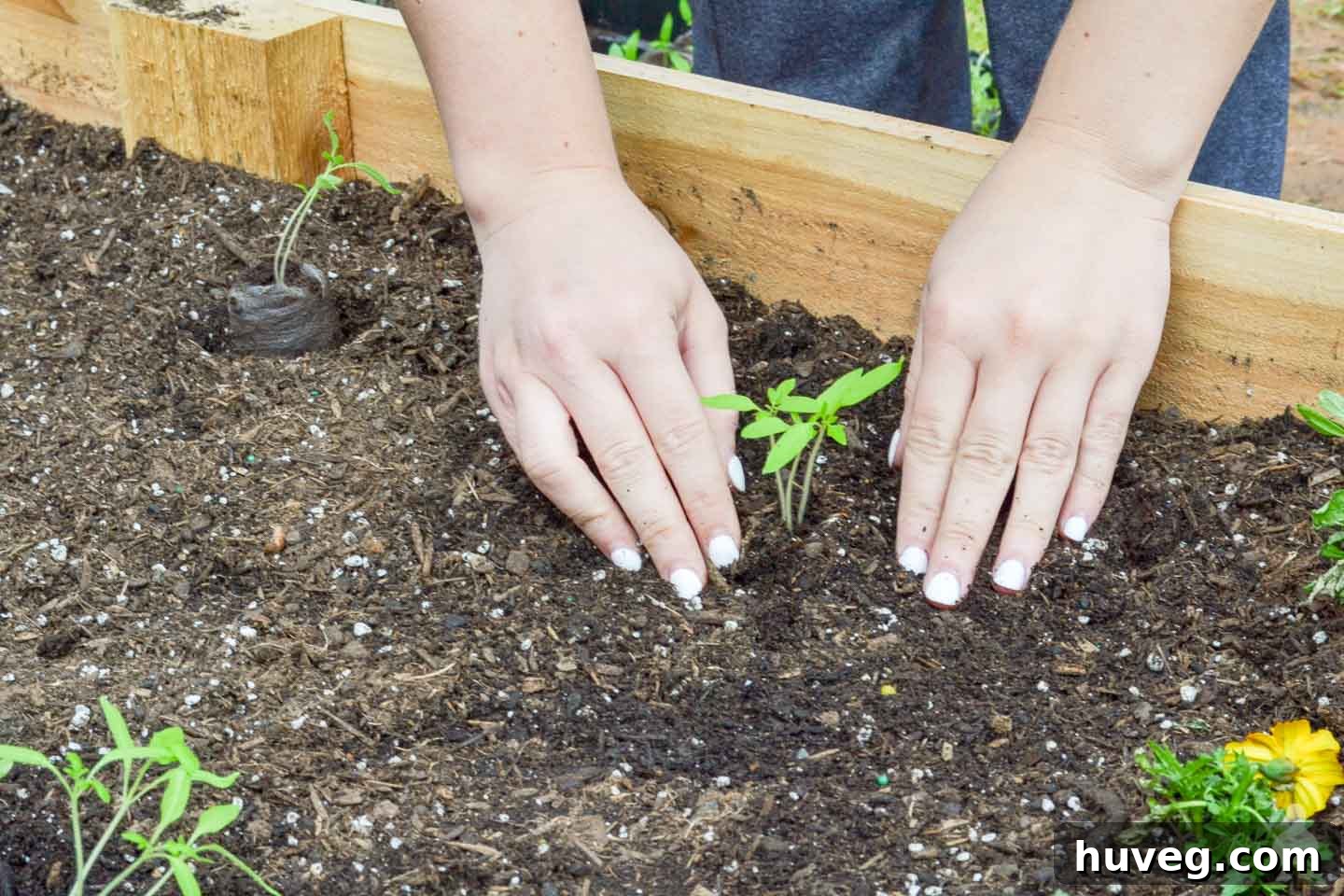
(For those interested in starting your own seeds indoors, I have a separate tutorial on growing seedlings. I found this growing kit to be very effective when combined with individual seed packets.)
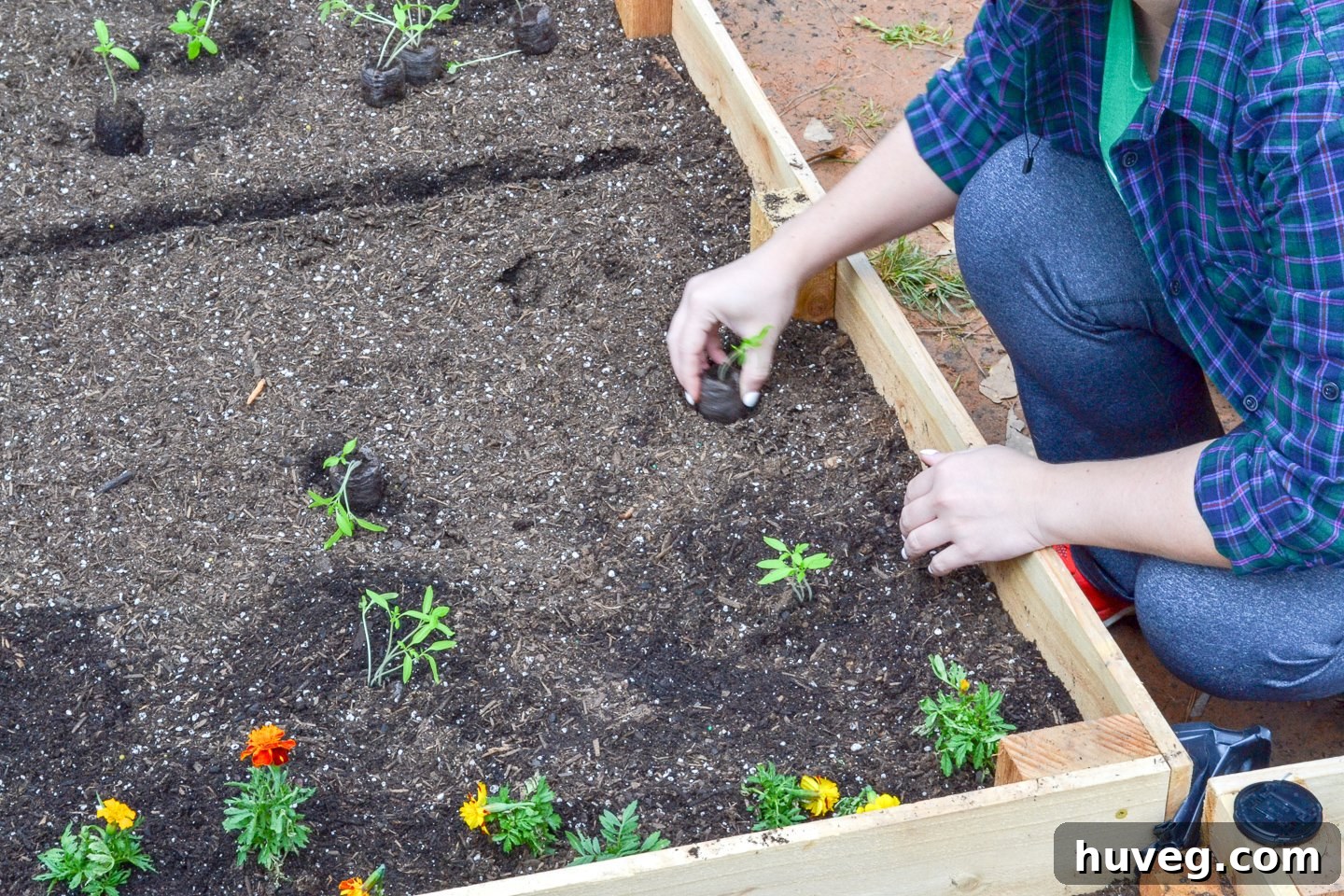
Planting Your Raised Garden Bed: Tips for Success
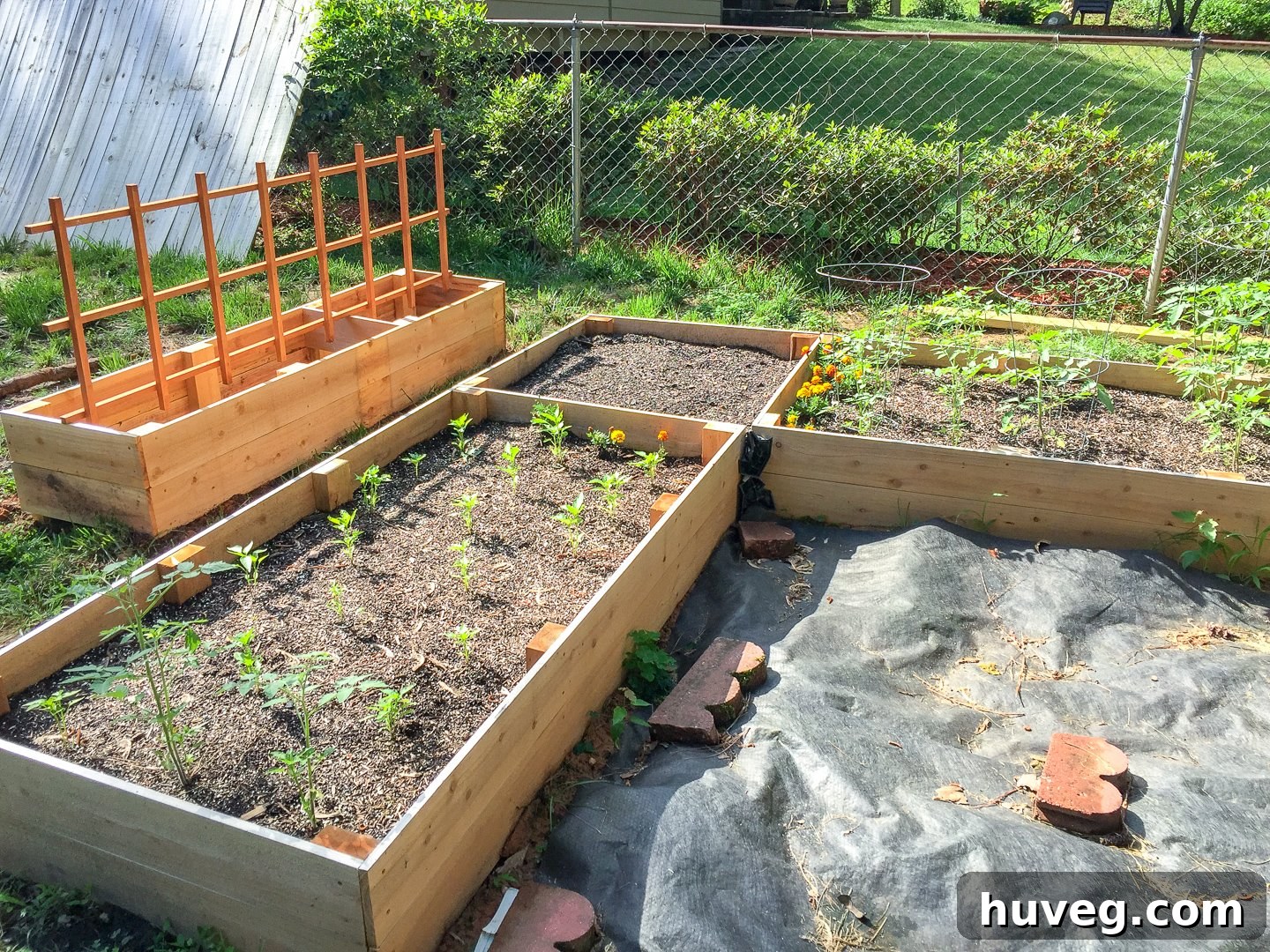
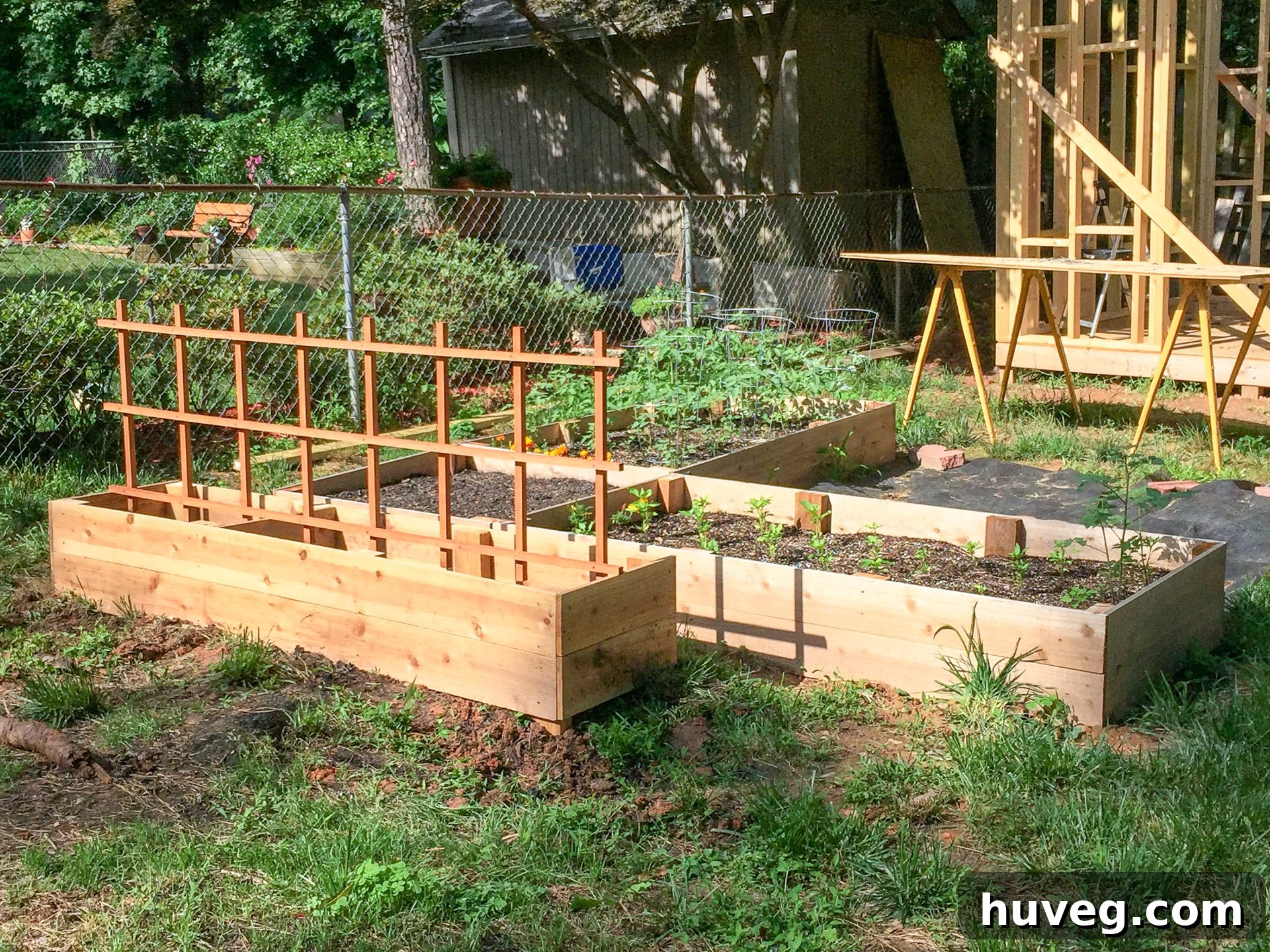
With the bed built and filled, the real fun begins – planting! This L-shaped design offers versatile planting opportunities. In one section, I dedicated space primarily to tomatoes, interplanting them with marigolds. Marigolds are fantastic companion plants, known for their natural ability to deter common garden pests, thereby protecting your precious tomatoes. While a few are a good start, adding more marigolds can enhance this protective effect.
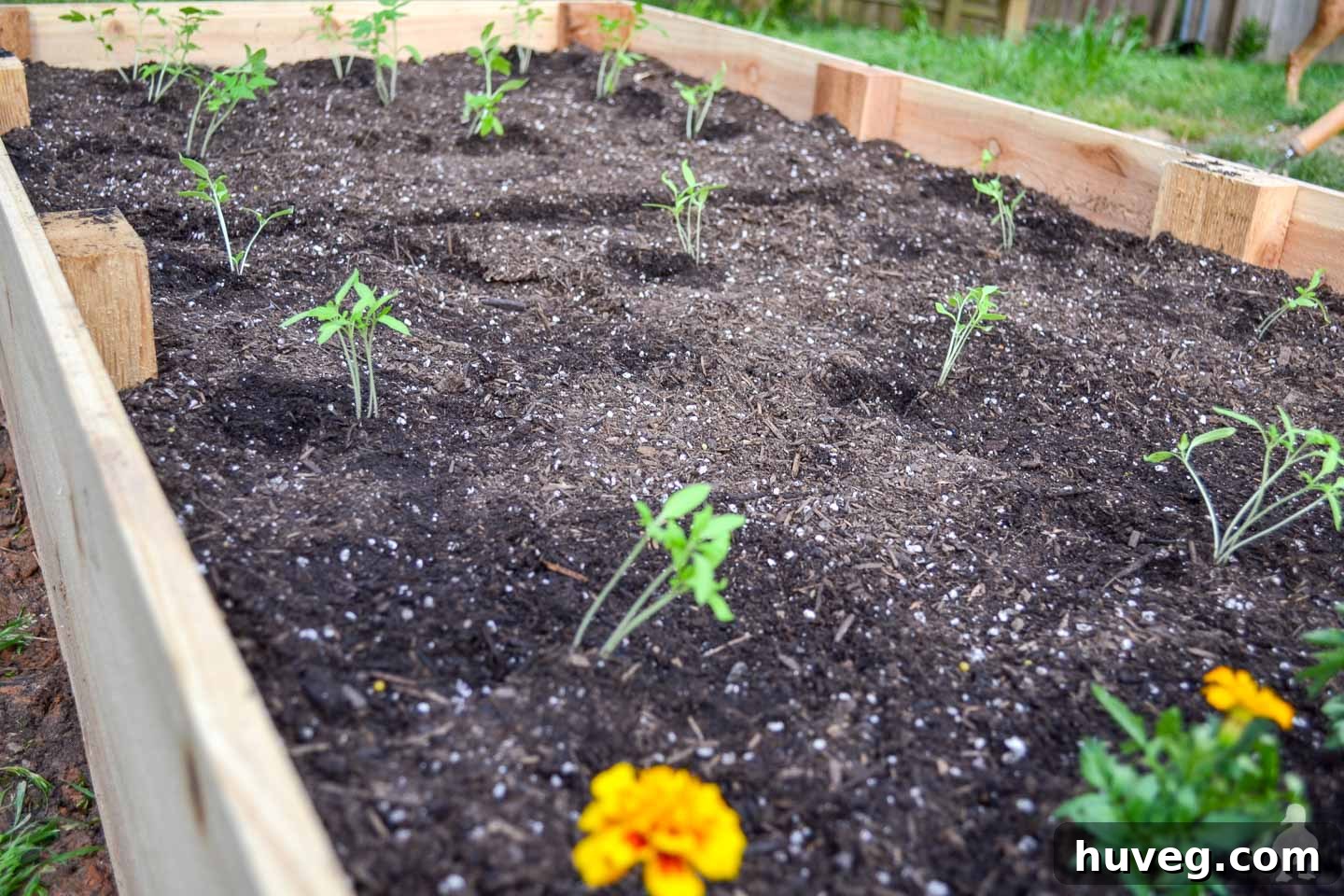
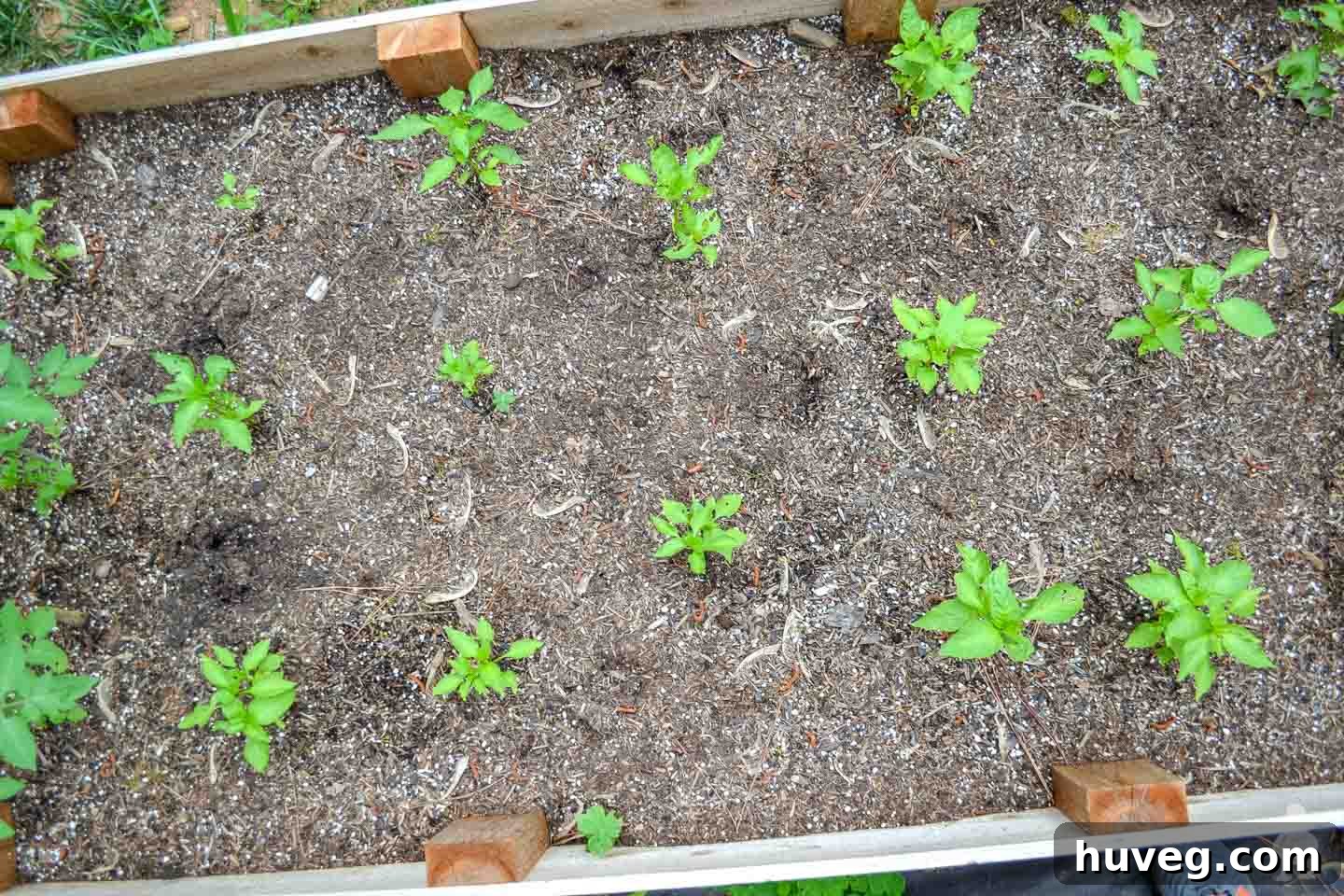
The other arm of the L-shape became home to various peppers, thriving in the rich, well-drained soil. Additionally, onions and carrots, planted from seed, have just begun to peek through the soil, promising a diverse and abundant harvest in the weeks to come. Anticipate more updates and fresh photos as these vibrant vegetables mature.
Beyond this main L-shaped bed, I also constructed a narrower bed specifically for cucumbers, complete with a trellis. This particular spot presented an additional challenge due to lingering roots from a recently removed tree, making leveling a bit trickier. If you encounter similar issues with uneven landscapes and stubborn roots, please let me know! I’d be happy to share specific tips and tricks for successfully installing garden beds in challenging terrain.
Beyond the Garden: Exciting Backyard Transformations
Spoilers Ahead!

While the L-shaped garden bed is a fantastic addition, it’s just one piece of a much larger puzzle of ongoing backyard transformations. Over the past couple of months, significant developments have been happening all around this new vegetable garden. From nearly every angle, you’ll catch glimpses of exciting projects that are nearing completion and are almost ready to be fully unveiled. My schedule often cycles between intense building periods, followed by a flurry of updates, and then a quiet spell as the next big project takes shape. A well-deserved nap is definitely on the horizon!

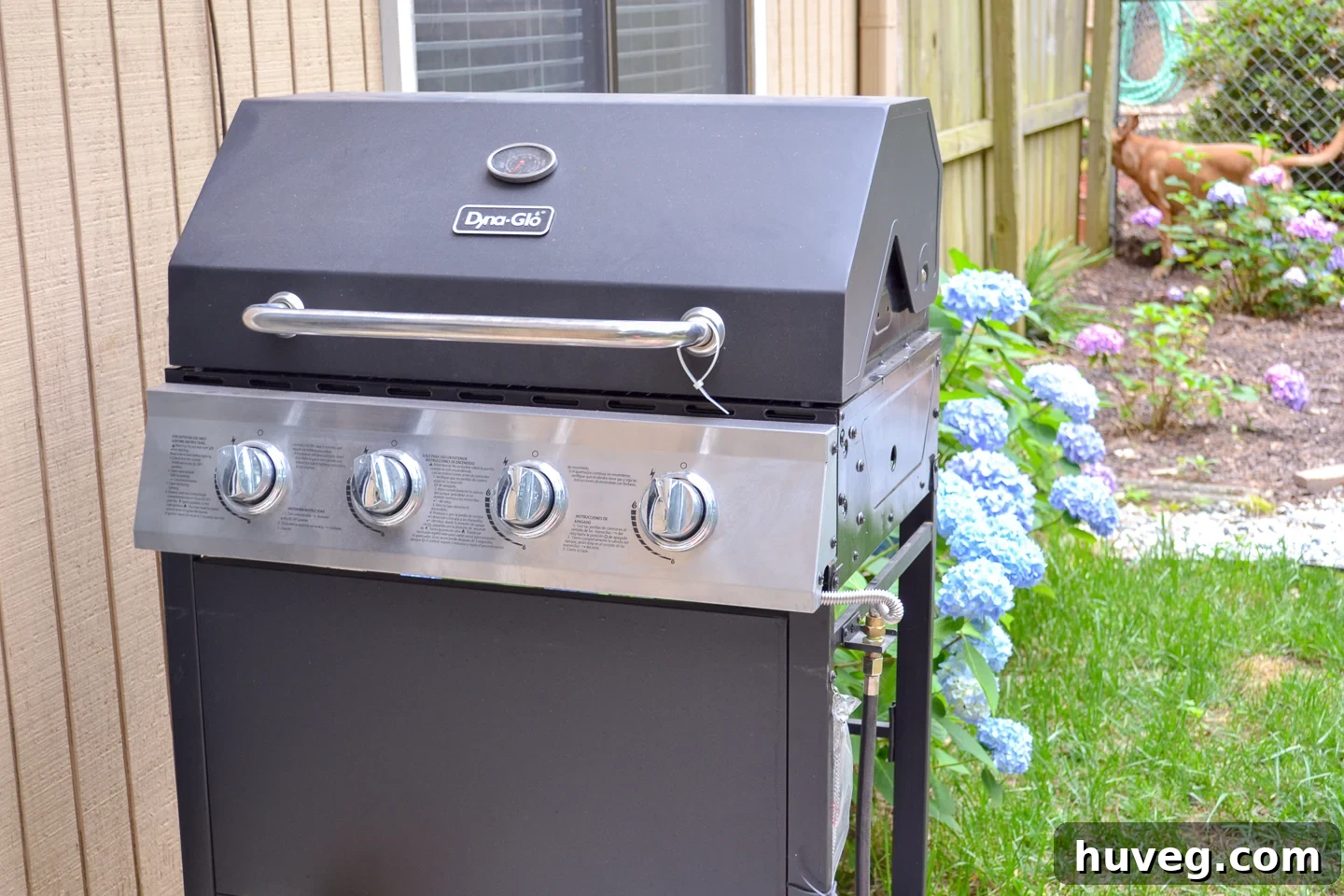
This month promises a cascade of new content. The long-awaited deck is now fully complete, and I’ll be sharing at least two more posts detailing its construction and final reveal. The pub shed, as some eagle-eyed readers may have spotted in the background of certain photos, is well underway, providing a fantastic new space that’s already seen a week of enthusiastic evening grilling. It’s a testament to the sheer volume of work, but the results are incredibly rewarding.
Looking ahead, I’m excited to provide an update on the vintage travel trailer restoration. It finally has a name, and I’m currently conceptualizing a unique art piece to showcase its new identity. The “gut job” restoration is set to commence very soon, promising another thrilling DIY journey.
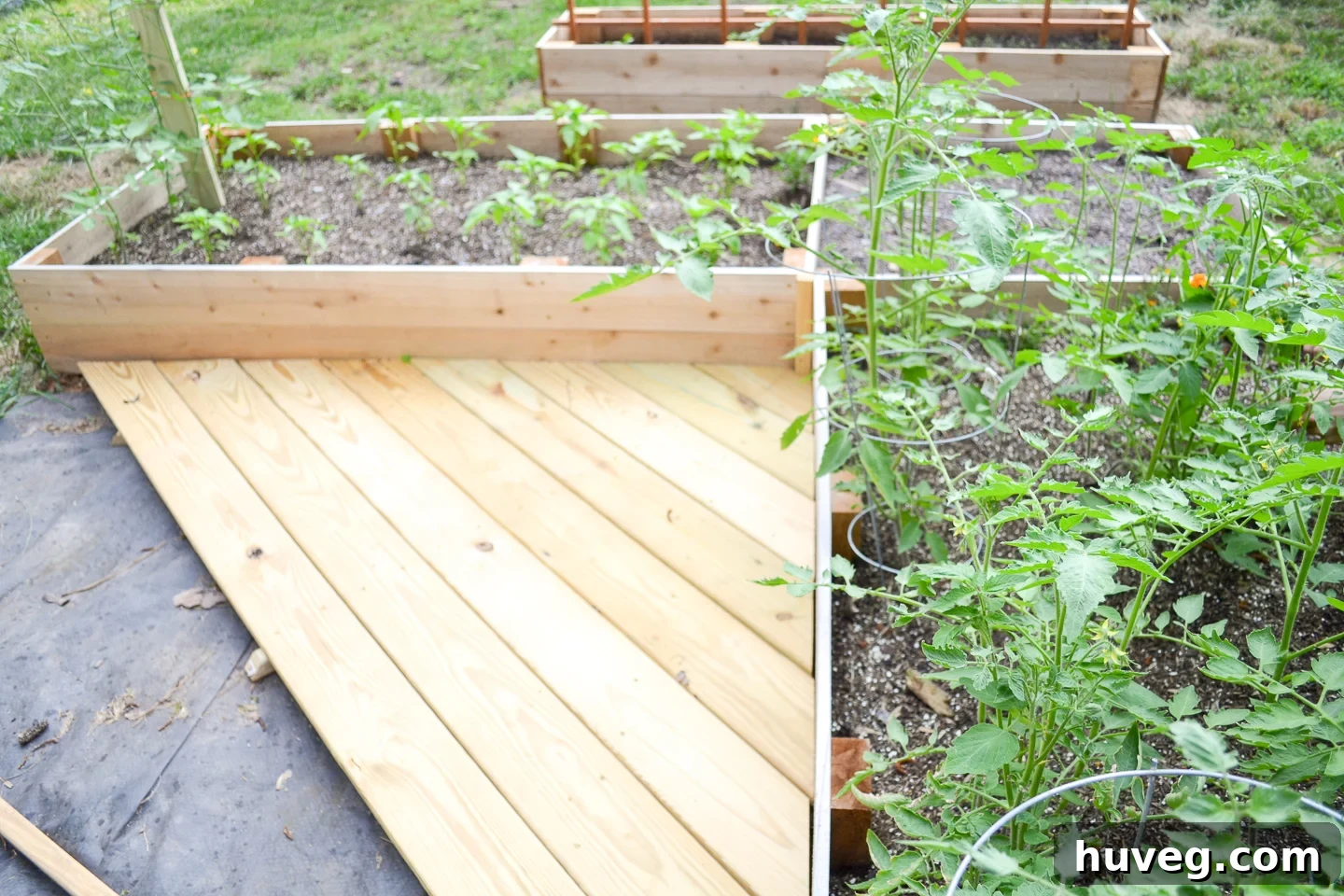
Lastly, my new vegetable garden now features a charming small deck, ingeniously built from leftover decking materials. This mini deck has proven incredibly beneficial during the spring’s frequent rainstorms, keeping my feet dry and making garden access much more pleasant. A dedicated tutorial for this convenient addition will be shared shortly.
Start Your Own Garden Adventure Today!
That’s a glimpse into the whirlwind of projects happening around here! Building this L-shaped cedar raised garden bed was a rewarding experience, combining practicality, aesthetics, and the joy of growing your own food. I hope this detailed guide inspires you to embark on your own gardening or DIY adventure. What have you been building, growing, or creating lately?
Pin this project for later inspiration: