Streamlining My Photography Gear

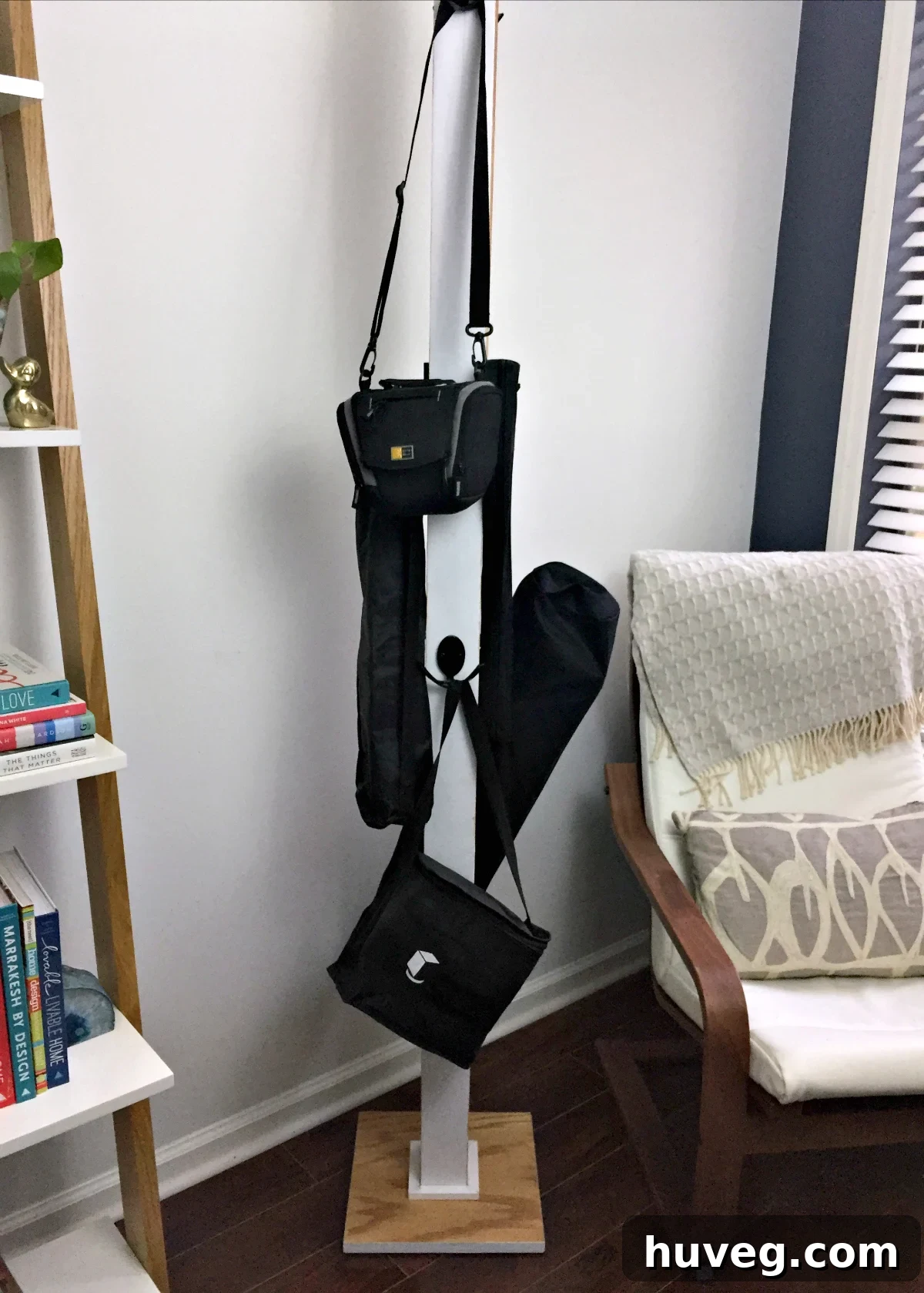
I am a compensated 3M-sponsored blogger. Opinions are my own, and additional products used in the project were selected by me.
The quest for a beautifully organized home often begins in unexpected moments. For many, the impulse to declutter and organize strikes in January, a fresh start coinciding with the new year. However, I’ve discovered a unique rhythm to my own organizing efforts, one that often kicks in just before the festive holiday season descends upon us. Rather than waiting for the post-holiday rush, tackling a quick and impactful organization project beforehand serves as a much-needed palate cleanser. It’s a strategic move to alleviate stress, creating a calm and orderly foundation before the house transforms into a vibrant, albeit glitter-filled, wonderland of Christmas decorations. This approach allows me to mentally prepare and truly enjoy the season without the underlying anxiety of lingering clutter. This particular project, a custom-built photography equipment stand, perfectly embodied that pre-holiday organizational surge, transforming a chaotic corner of my office into a beacon of order and efficiency.
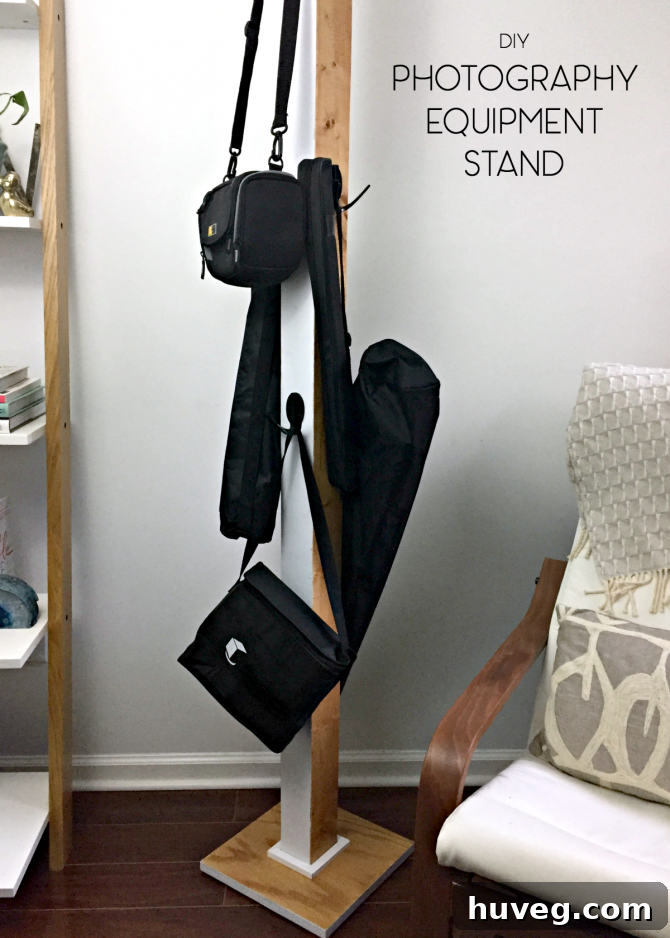
Photography has long been a passion of mine, a skill I’m constantly striving to refine. And as any enthusiast knows, pursuing this hobby seriously means accumulating a considerable amount of gear. Last year, my mother thoughtfully curated my Christmas gifts around this very theme, providing me with an array of new equipment designed to elevate my photographic journey. While incredibly exciting, this influx of tripods, lighting kits, reflectors, and various accessories soon presented a familiar challenge: where to store it all? For the past year, my office had been home to an ever-growing pile of this essential, yet unwieldy, equipment. It was a constant source of disarray, making it difficult to quickly grab what I needed and hindering my creative flow. I realized it was high time to provide these valuable tools with a proper, accessible, and organized home.
My search for the ideal photography storage solution led me to Pinterest, where I diligently scrolled through countless ideas. As I brainstormed, I kept several key objectives in mind to ensure the solution would be perfectly tailored to my needs:
- Maintain Portability with Bags: A significant portion of my photography equipment comes with its own protective bags, designed for safe travel. Even though my “travel” is largely confined to moving gear between rooms within my house, I valued the concept of keeping everything neatly stowed in its assigned bag. This not only offered excellent protection for delicate items but also ensured that any piece of equipment could be grabbed quickly for an impromptu shoot. This preference steered me away from conventional built-in closet organizers, which dominated many search results, towards a more flexible, hanging system.
- Prioritize Speed and Simplicity: My DIY plate is perpetually full with various home improvement projects. Therefore, it was crucial that this particular organization endeavor be both effective and straightforward to execute. I needed a project that could be completed efficiently, without demanding excessive time or complex techniques.
- Leverage Existing Resources: Resourcefulness is a cornerstone of smart DIY. I happened to have a surplus of hooks remaining from a previous entryway closet makeover project. If I could ingeniously incorporate these into the new design, it would not only reduce material costs but also ensure no good hardware went to waste.
Among the various ideas that surfaced, one concept particularly caught my eye: a decorative post designed to hold Christmas stockings, similar to this example. I immediately saw its potential for adaptation. By modifying the design – making it taller, sturdier, and more functional – it could perfectly suit my photography equipment. The added benefit of a freestanding, mobile stand was a significant draw, allowing me to easily relocate my entire gear collection to wherever my next creative endeavor might take me within the house.
Materials Needed: Crafting Your Photography Equipment Stand
Gathering the right materials is the first step towards a successful DIY project. Here’s a comprehensive list of what you’ll need to create your own bespoke photography equipment stand:
- 2 – 2x4s: These standard lumber pieces will be fused together to create a robust central post. You can choose a length between 4 to 6 feet, depending on the desired height and amount of hanging space. I opted for 6-foot boards to maximize the vertical storage potential for my diverse range of equipment.
- Wood Putty: Essential for filling any gaps or imperfections, particularly where the two 2x4s meet, ensuring a seamless and smooth finish.
- Sandpaper: A variety of grits will be needed for preparing the wood, smoothing out the putty, and achieving a professional, touchable surface ready for paint or stain.
- Wood Glue: A strong, reliable wood adhesive is critical for securely bonding the two 2x4s together, forming a solid and durable central post.
- Hooks: Select sturdy hooks suitable for hanging various weights and shapes of equipment bags. I found black robe hooks to be exceptionally versatile; their double prongs were ideal for accommodating straps and handles.
- Painter’s Tape (for delicate surfaces): This is crucial for achieving crisp, clean lines when applying multiple finishes like paint and stain, especially on newly painted areas that require extra care.
- Paint and/or Stain: Choose finishes that complement your existing office decor or personal aesthetic. A combination of both can create a dynamic and customized look.
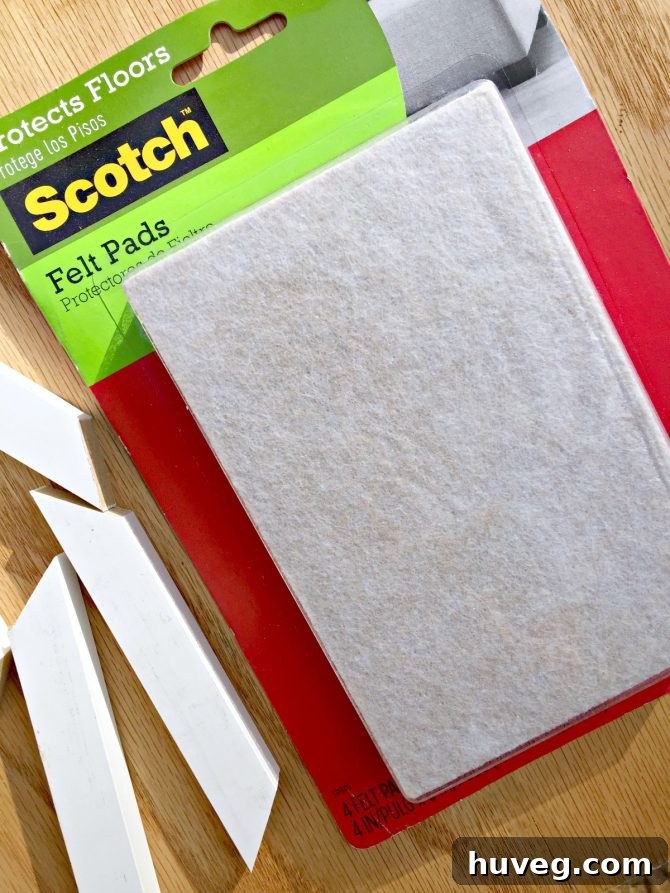
- Scotch™ Felt Pads, Rectangle, 4 x 6 inch: These sponsored felt pads are indispensable for protecting your floors and allowing the stand to be moved easily without causing scratches.
1. Create a Custom 4×4 Post for Enhanced Aesthetics and Durability
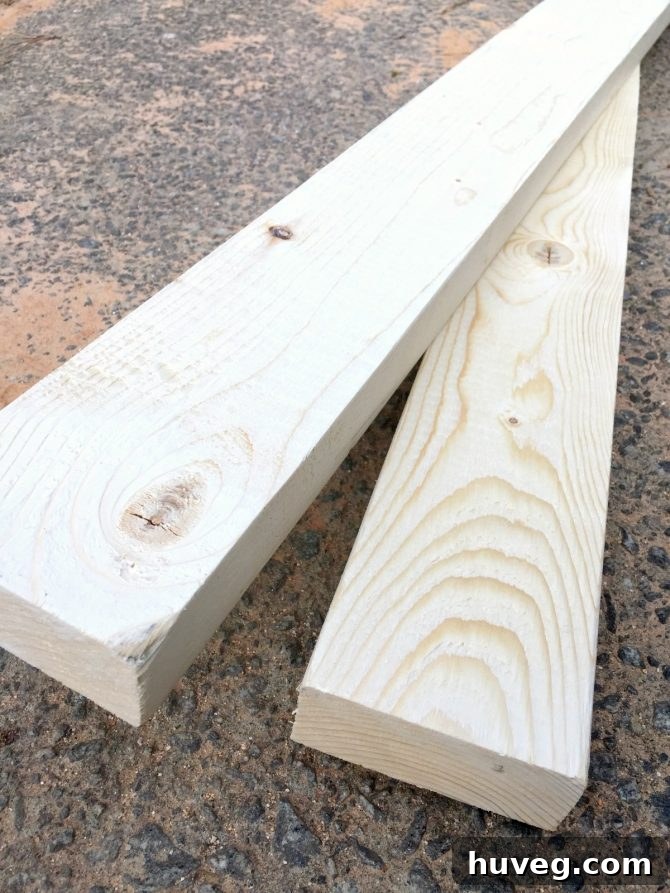
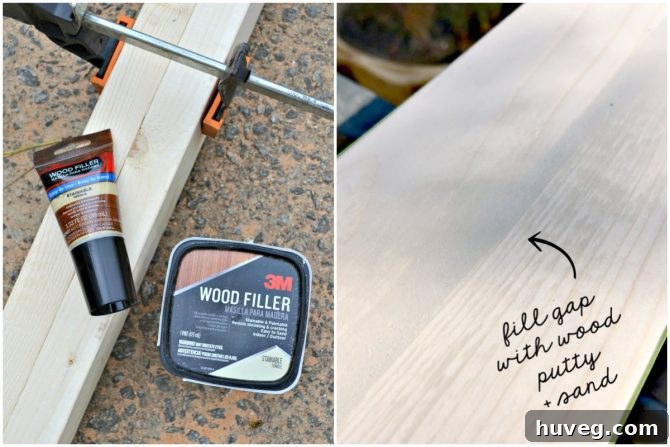
Many inspiration guides for similar projects often suggest using a standard 4×4 deck post. However, this option presented several practical drawbacks that made it unsuitable for my indoor photography stand. Decking materials are typically made from cedar, which, while durable for outdoor use, has a very rough texture requiring extensive sanding to achieve the smooth, refined finish I envisioned for my office. Alternatively, pre-treated (PT) lumber, a more affordable choice, often comes saturated with chemicals, meaning it needs weeks or even months to thoroughly dry out before it can be painted or stained. This prolonged waiting period was simply incompatible with my timeline and patience. To circumvent these issues, I opted for an equally cost-effective yet more immediate solution: crafting my own custom “4×4-ish” post. By taking two readily available whitewood 2×4 boards and carefully gluing them together along their longest edges, I created a sturdy central column (measuring closer to 3×3.5 inches once joined). This method allowed me to control the quality of the wood and bypass the lengthy drying times associated with treated lumber. After applying a generous amount of wood glue, I used clamps to apply firm, even pressure across the entire length of the boards, ensuring a strong and enduring bond as they dried completely.
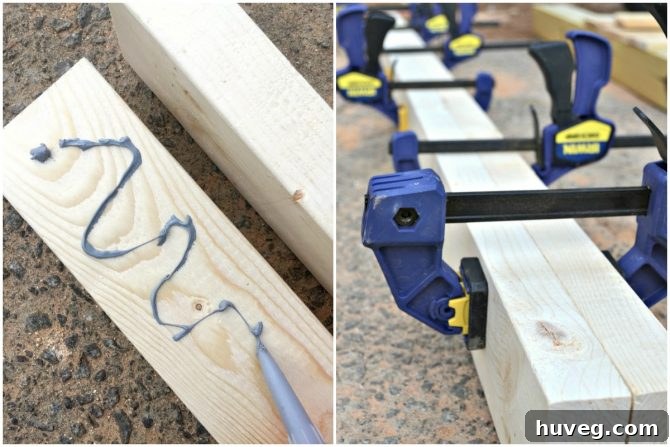
Once the glue had fully cured, creating a solid single piece, the next crucial step was to address any visible seams or imperfections. I meticulously filled any gaps between the two joined boards with wood putty, ensuring a smooth and consistent surface. After the putty dried, I thoroughly sanded the entire post, moving from a coarser grit sandpaper to a finer one, until it was perfectly smooth and ready to accept paint and stain. This attention to detail in the preparation phase is key to achieving a professional and polished final appearance.
2. Cut the Base to the Appropriate Size for Optimal Stability
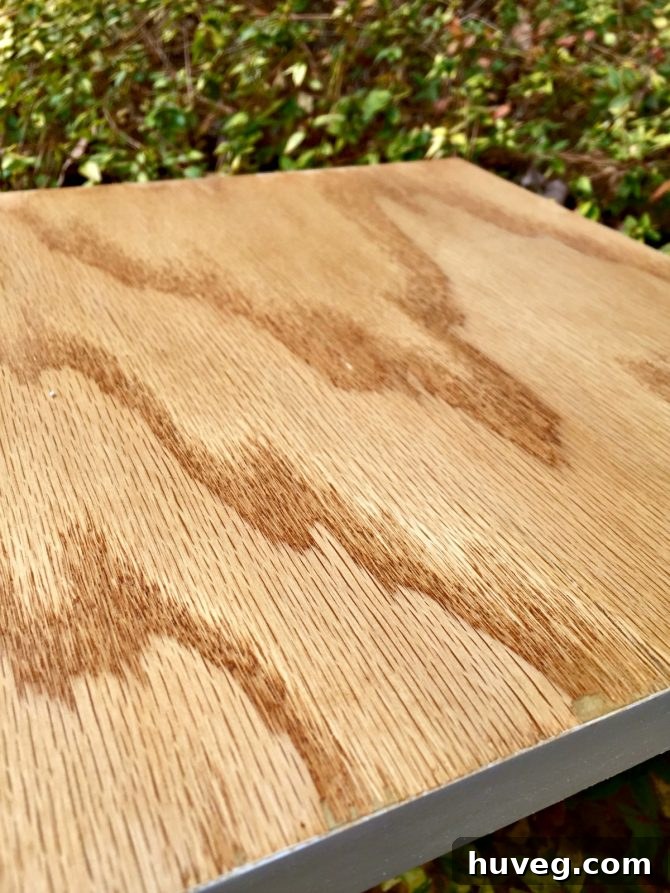
A sturdy and well-proportioned base is paramount for any freestanding structure, especially one designed to hold valuable equipment. For this project, I was fortunate to have some leftover 3/4-inch birch plywood from a previous endeavor, making it an ideal, cost-effective choice for the stand’s base. The critical consideration here is ensuring the base is wide enough to provide ample stability, preventing the tall post from becoming top-heavy and prone to tipping. A base size of at least 12 inches, or even better, 16 inches square, is generally recommended to guarantee robust stability. My particular piece measured 13 inches, which, being the largest available scrap, worked perfectly. Accurately squaring off the plywood piece using a saw ensures a balanced and aesthetically pleasing foundation for your photography equipment stand.
3. Enhance the Base with Iron-On Veneer Edging for a Refined Look
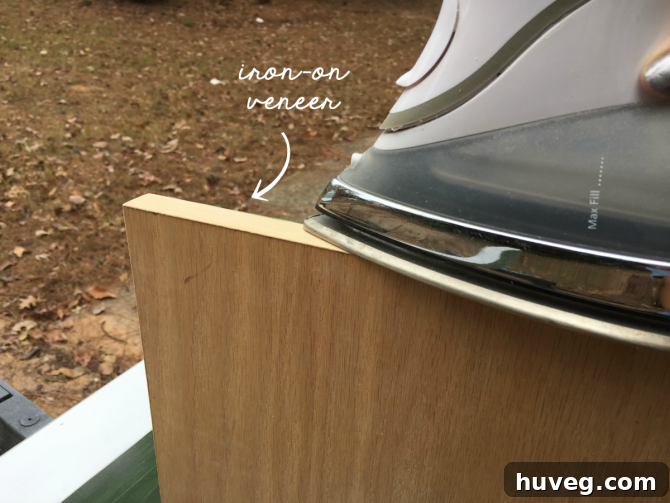
Plywood, while practical and robust, often has unsightly raw edges that can detract from a project’s overall finish. To elevate the appearance of my stand’s base and give it a more polished, professional look, I decided to apply iron-on veneer edging. This simple yet effective technique dramatically transforms the raw, layered edges of plywood into a smooth, finished surface that blends seamlessly with the rest of the project. The application process is surprisingly straightforward: you simply position the veneer tape along the edge and apply heat with a household iron, which activates the adhesive on the back. Once cooled, any excess veneer is carefully trimmed, and the edges are lightly sanded for a perfectly smooth transition. It’s a testament to the versatility of household tools – I often find myself using an iron for these types of crafting and DIY finishing touches far more frequently than for pressing clothes!
4. Apply Paint, Stain, and Seal for a Custom Finish
With the structural components prepared, it was time to bring the stand to life with color and protection. I envisioned a sophisticated two-tone finish, combining crisp white paint with a warm wood stain. The white would be applied to the edging and decorative trim, while the base and two alternating sides of the central post would receive the stain. This color scheme was deliberately chosen to harmonize with the existing bookshelves in my office, ensuring the new stand felt like an integrated part of the room’s design rather than an arbitrary addition. Achieving the perfect stain match proved to be a bit of a creative challenge, requiring some experimentation. I found that a blend of natural, golden mahogany, and a subtle wash with antique walnut provided the closest match – a process more art than science, involving mixing and testing on scrap wood until the desired hue was achieved. During this process, I tackled the painted sections first, allowing them to dry completely before carefully taping off these areas with painter’s tape. Given that the paint was freshly applied, I opted for a “delicate surfaces” painter’s tape to ensure clean lines without damaging the new finish. After both paint and stain were applied and thoroughly dry, a protective topcoat or sealant would be added (not explicitly mentioned in original materials list, but implied for durability), safeguarding the beautiful finish for years to come.
5. Secure the Base to the Post and Add Decorative Trim
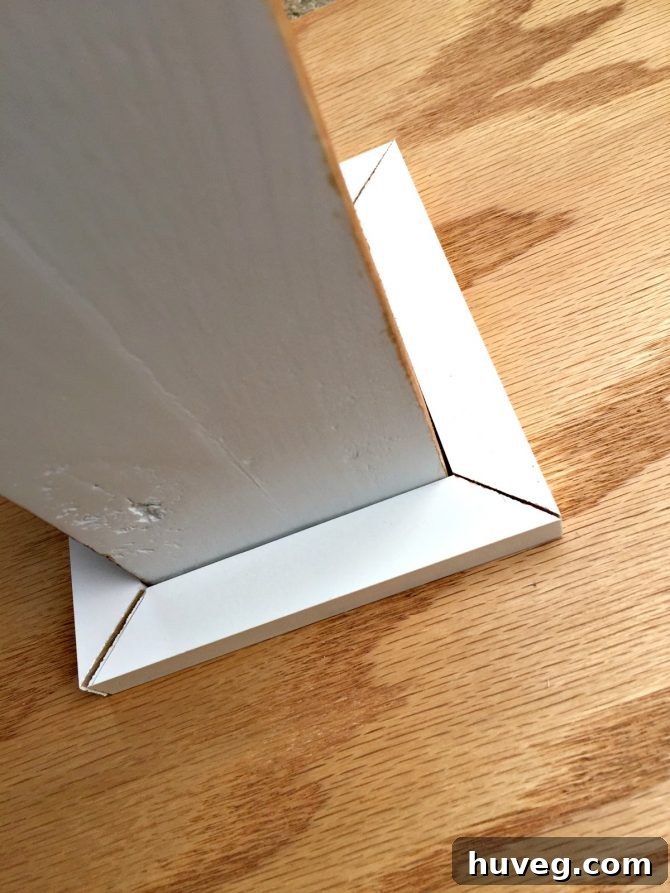
Once all the painted and stained components were completely dry and ready for assembly, the next crucial step was to securely attach the post to its base. Precision is key here: I carefully marked the exact center of the base to ensure the post was perfectly aligned and balanced. With the alignment confirmed, I used a combination of robust wood glue and finish nails to create an incredibly strong and stable connection between the base and the central post. This dual approach provides both enduring adhesion and immediate structural integrity. To further enhance the stand’s aesthetic appeal and give it a truly bespoke, finished look, I incorporated some ready-to-install decorative trim. I had acquired this molding on a whim during a previous store visit, and it proved to be an inspired addition. Carefully cut to fit around the perimeter where the post met the base, this trim added an elegant architectural detail, elevating the overall design and providing a polished transition between the two main components.
6. Apply Scotch™ Felt Pads for Floor Protection and Easy Mobility
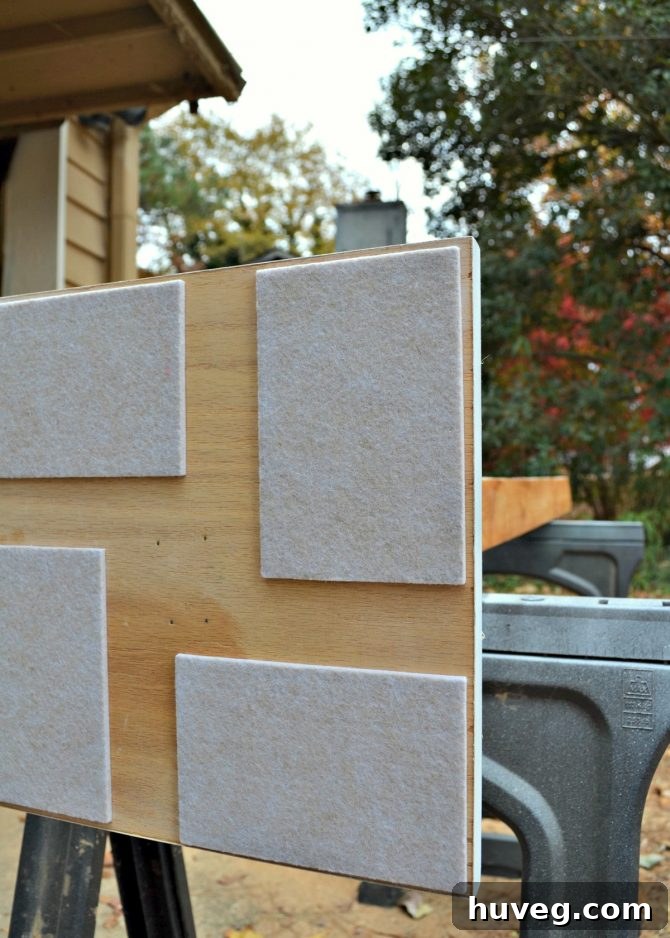
A crucial detail for any movable piece of furniture is protecting your floors, and the photography equipment stand was no exception. Earlier in the year, Scotch® Brand had generously provided me with a variety of their products to test, and their felt pads proved to be the perfect solution for this project. These 4×6-inch Scotch™ Surface Felt Pads are designed to be cut to size, offering versatility for different applications. For my stand, I opted to use all four pads included in the package, positioning them strategically across the bottom of the base. This provided comprehensive coverage, not only concealing the less-than-perfect, potentially splintery bottom edges of the plywood but, more importantly, creating a soft barrier between the stand and my flooring. This ensures that when I inevitably move the stand around my office or home to accommodate different shooting setups, it glides smoothly without leaving a single scratch or scuff mark on my floors – a definite win for both aesthetics and practicality.
The application of these self-adhesive felt pads was quick and effortless, providing an instant upgrade to the stand’s functionality. By covering the entire bottom surface, I achieved maximum floor protection and enhanced the stand’s portability. Now, repositioning heavy camera bags or lighting equipment is a smooth, quiet operation, free from the worry of damaging my beautiful hardwood floors. This small addition makes a significant difference in the long-term usability and enjoyment of the DIY stand, turning a functional piece into a truly well-considered and floor-friendly accessory for any home or studio.
7. Strategically Add Hooks to the Post for Organized Accessibility
With the stand’s structure complete and finished, the final, and perhaps most functional, step was to install the hooks. Strategic placement is key to maximizing storage and ensuring easy access to all the photography gear. I began by placing two hooks closer to the top of the post, ideal for lighter items or frequently used accessories. Moving down, another pair of hooks was installed approximately two feet lower, providing ample space for larger bags or tripods. Finally, a third set of hooks was added about halfway down the post, perfect for smaller bags, cables, or additional accessories. To maintain visual balance and make the most of the dual-finished post, I alternated the placement of the hooks between the white painted sides and the stained sides, creating an aesthetically pleasing and highly functional display. This varied height and alternating placement ensures that every piece of equipment, regardless of its size or shape, has a dedicated and easily reachable spot.
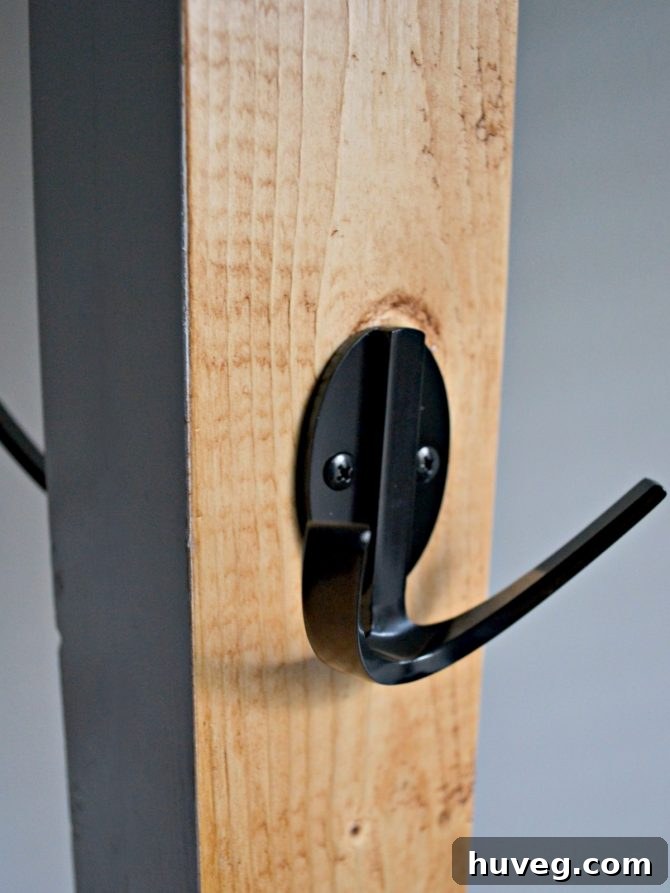
Once all the hooks were securely in place, the project was essentially complete. It was immensely satisfying to finally hang up all my camera bags, tripods, light stands, and other photography essentials, transforming a messy pile into an orderly and visually appealing display. I then found the perfect spot for the new stand in my office, where it could be easily accessed and integrated into my workspace. The result is a dedicated, functional, and attractive home for all my photography equipment, making it a joy to grab what I need and return it neatly after each use.
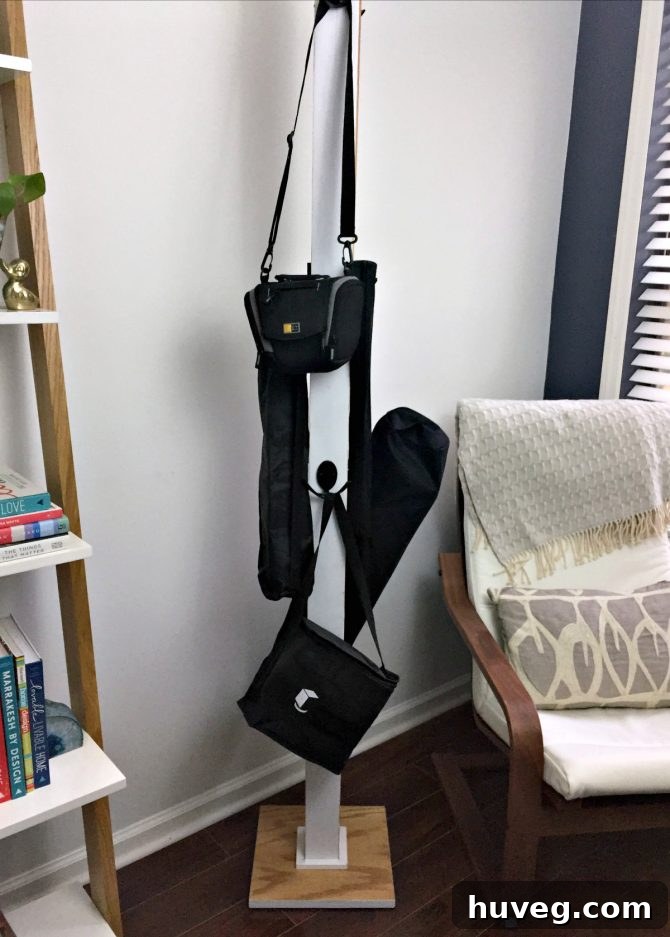
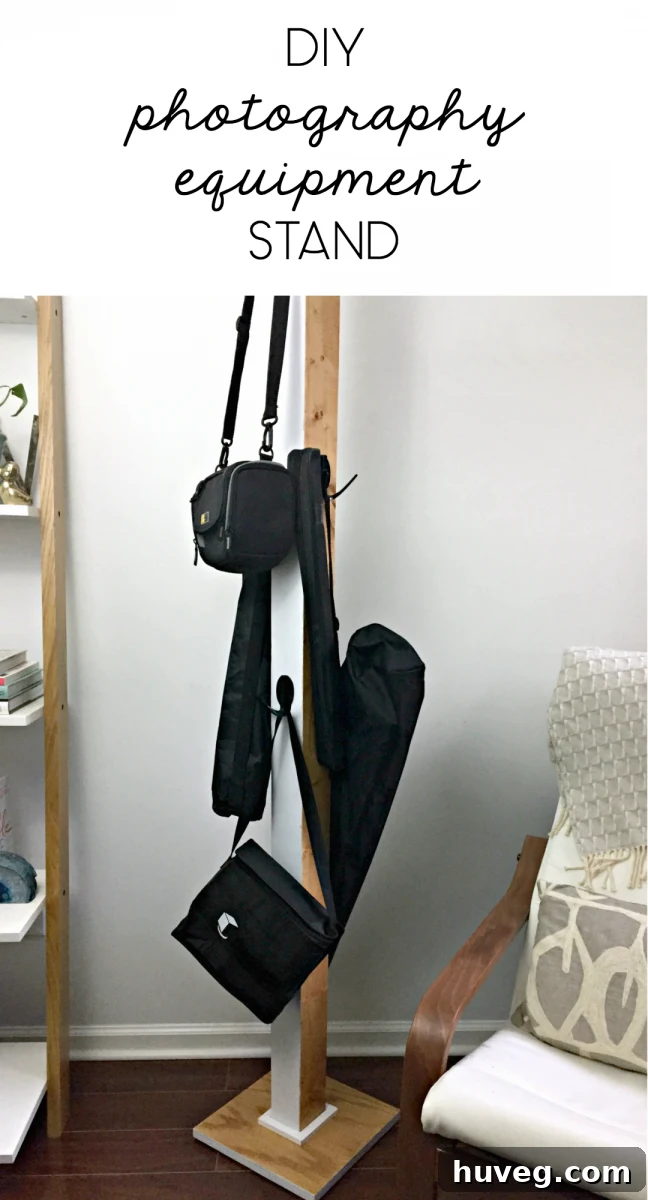
Having had this custom photography equipment stand in my office for well over a month now, I can confidently say it has been a game-changer for my workflow and overall organization. The ease with which I can now grab a specific lens bag, a piece from my lighting kit, or my camera itself, is truly transformative. No more rummaging through cluttered corners or stacked boxes; everything has a designated, easily accessible spot. This streamlined approach allows me to jump straight into creative projects without the frustration of searching for gear. Moreover, the vertical hanging design offers a significant advantage: those often cumbersome and oddly-shaped equipment bags are now safely suspended off the ground. This prevents them from being squished, crushed, or damaged, which often happens when they are haphazardly stashed away in a closet or on the floor. It’s a win-win solution that protects my valuable equipment while simultaneously creating a more organized, efficient, and aesthetically pleasing workspace. This simple DIY project has not only solved a practical storage problem but also contributed to a more stress-free and productive environment, proving that thoughtful organization truly enhances daily life. Do you have any unique organization challenges you’re looking to conquer?