2013 Kitchens: Evolutionary Strides

The Precision Pivot: From Guesswork to Meticulous Measurement in Kitchen Renovation
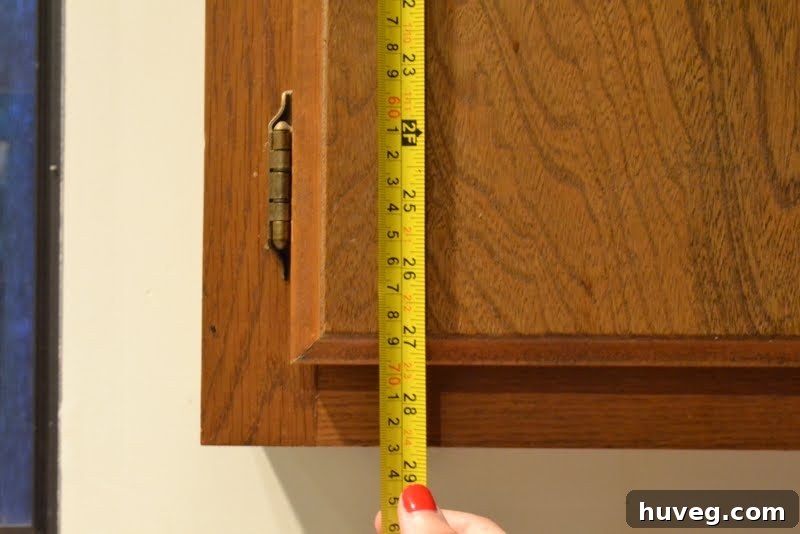
Every significant home improvement journey has its turning points. For many DIY enthusiasts, there comes a moment of profound realization, a shift from casual estimation to a commitment to absolute precision. In the demanding realm of kitchen renovation, this pivot is not just advisable; it’s absolutely essential. I’ve personally experienced this transformation, moving beyond my typical modus operandi of “eyeballing” dimensions to meticulously “measuring” every single element in the kitchen.
This isn’t just about adhering to rigid rules; it’s about safeguarding your investment, ensuring flawless functionality, and achieving the aesthetic vision you’ve tirelessly planned. While the instinct to jump straight into demolition or painting is strong, the foundation of a successful kitchen remodel truly lies in the accuracy of its initial measurements. This meticulous approach prevents costly errors, avoids frustrating delays, and ultimately delivers a space that functions as beautifully as it looks.
Why Precision is Paramount in Kitchen Remodeling Projects
A kitchen is arguably the most complex room in any home when it comes to renovation. It’s a intricate puzzle of cabinetry, appliances, plumbing, and electrical systems, all needing to fit together seamlessly. Unlike a simple coat of paint or a new curtain rod, errors in kitchen dimensions can have cascading and expensive consequences. Imagine installing custom cabinets only to find they’re a fraction too wide for a doorway, or ordering countertops that don’t quite meet at the seam. These are the nightmares that meticulous measurement aims to prevent.
The Critical Stages Where Every Millimeter Counts:
- Layout and Design: Before any physical work begins, accurate measurements of the existing space are crucial. This includes walls, windows, doors, and existing utility hookups. These dimensions inform the entire design process, from the placement of the “work triangle” (sink, stove, refrigerator) to the flow of traffic. Without precise initial measurements, even the most innovative kitchen designs can falter, leading to awkward layouts or inefficient use of space. A detailed floor plan, built on accurate numbers, is the blueprint for success.
- Cabinetry Installation: Whether you opt for stock, semi-custom, or fully custom cabinets, their fit is paramount. Wall cabinets need precise placement to ensure level lines and correct distances from countertops. Base cabinets must align perfectly, creating a continuous and sturdy foundation for countertops and appliances. Even a slight miscalculation can lead to gaps, uneven surfaces, or an inability to open doors and drawers fully. The integrity of your entire kitchen structure hinges on the accuracy of these installations.
- Appliance Integration: Modern kitchens often feature built-in appliances like dishwashers, microwaves, and double ovens. These require specific clearances and cavity dimensions. Measuring the exact specifications of your chosen appliances and ensuring your cabinet openings accommodate them precisely is non-negotiable for a clean, integrated look. An appliance that doesn’t fit correctly can disrupt the entire aesthetic and functional flow of your kitchen, turning a dream feature into a frustrating problem.
- Countertop Fabrication: Countertops, especially those made from expensive materials like granite, quartz, or marble, are cut to exact templates derived from the kitchen’s dimensions. There’s virtually no room for error here. A precise measurement ensures a snug fit against walls, around sinks, and at seams, avoiding unsightly gaps or overhangs. These surfaces are focal points, and any flaw due to inaccurate measurement will be immediately noticeable and costly to rectify.
- Flooring and Backsplash: While seemingly less critical, accurate measurements here prevent material waste and ensure aesthetic appeal. For tiling, precision in layout leads to symmetrical patterns and fewer awkward cuts, resulting in a professional, polished finish. For hardwood or laminate, accurate cuts ensure a seamless, gap-free floor that stands the test of time.
- Utility Placement: Accurate measurements are also vital for the correct placement of electrical outlets, plumbing lines for sinks and dishwashers, and gas lines for stoves. Planning these based on exact dimensions ensures that everything is functional and meets safety codes, avoiding the need for costly and inconvenient rerouting later in the project.
The Reality of Renovation: Beyond the Perfect Picture
Let’s be honest, the polished images you see on home improvement blogs and social media rarely tell the full story. My own experience, captured in the images, often involves a bit of staging to present a clearer narrative. This picture, for instance, was completely staged. Not that I wasn’t genuinely engaged in measuring (that’s precisely where this whole journey began!), but juggling a tripod with one hand and a tape measure with the other while trying not to bump the camera can be quite the photographic challenge at the end of a long day. The glamour of DIY often takes a backseat to the grit and grind of the actual work.
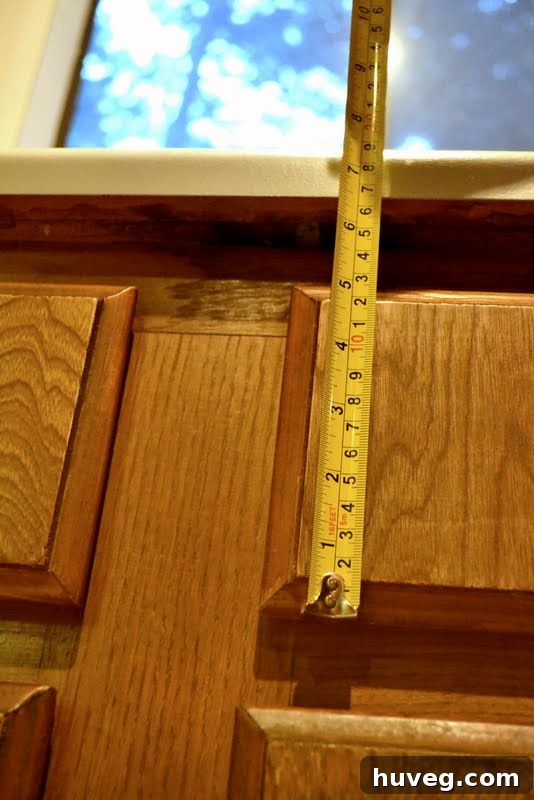
The quest for precision is a real, hands-on endeavor, often accompanied by dust, sweat, and the occasional awkward pose. It’s a testament to the dedication required to transform a space. For example, during one of my measuring sessions, I recall focusing on a detail that seemed trivial at first glance:
There was little value found in measuring that false drawer front initially. However, upon deeper reflection, even these small, aesthetic components contribute to the overall finished look of the kitchen. A false drawer front, though not functional, still needs to align perfectly with its surroundings, maintaining symmetry and visual balance with adjacent cabinet doors and drawers. It’s a testament to the fact that in a truly professional-looking DIY renovation, no detail is too small to escape the meticulous eye. This comprehensive approach to every element, no matter how minor, is what elevates a good renovation to an outstanding one.
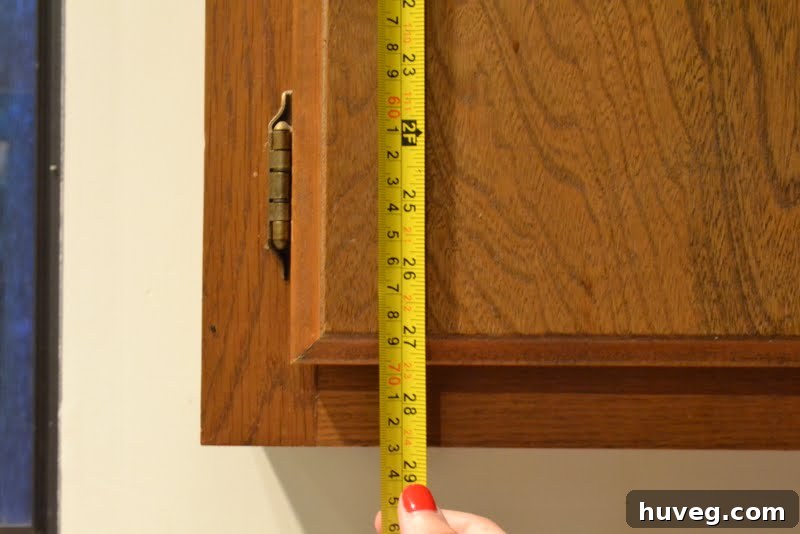
The renovation journey is filled with these small, often unglamorous tasks that collectively build towards a magnificent outcome. And yes, amidst the sawdust and the diligent measuring, personal touches can still shine through. I even managed to capture a second photo where you can spot that my gel manicure was still perfectly intact! I shared it on Instagram the weekend before the Haven conference. It’s a small reminder that even during the most hands-on projects, there’s a way to maintain a semblance of presentability to the world, proving that passion for DIY doesn’t always have to mean sacrificing style completely. It’s about finding joy and personal expression even in the midst of a demanding home improvement project.
Embracing the Journey: From Bare Walls to Dream Kitchen
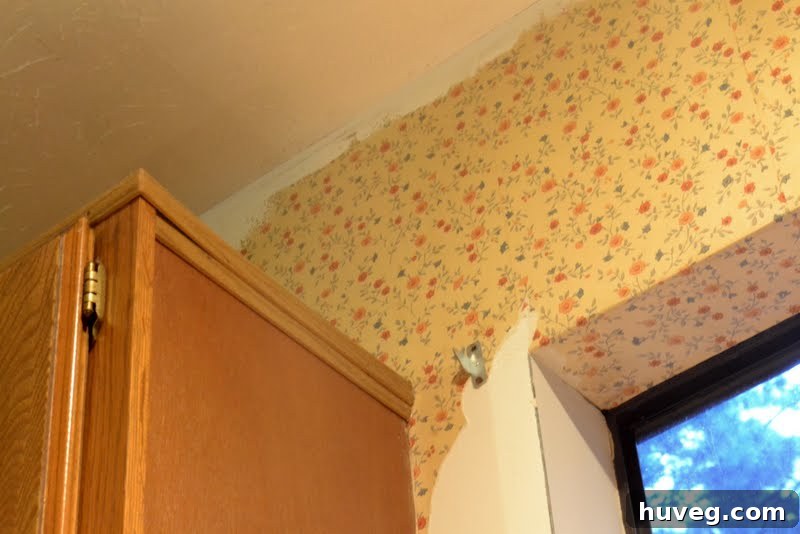
As you can clearly see from the progress, or rather, the initial stages captured in these images, I still have a significant way to go before reaching the vision of a fully finished kitchen. A major kitchen renovation is a marathon, not a sprint. It involves a sequence of detailed steps, each building upon the last, demanding patience, perseverance, and a meticulous eye for detail. The initial phase, as depicted, is often characterized by exposed walls, raw materials, and the exciting, yet daunting, prospect of bringing a vision to life from the ground up.
The transformation process typically unfolds through several key phases, each requiring its own level of precision and careful execution:
- Demolition: The satisfying, albeit messy, removal of old fixtures, cabinets, and sometimes even walls to open up the space or reconfigure the layout. This stage requires careful planning to avoid damaging structural elements or existing utility lines.
- Rough-ins: This crucial stage involves bringing in new electrical wiring, plumbing lines, and potentially HVAC ductwork according to the new kitchen design. Accurate measurements here are critical for proper functionality, ensuring outlets are in accessible locations, and pipes connect correctly, all while adhering to local building codes.
- Insulation and Drywall: Preparing the walls and ceiling, creating a smooth canvas for paint and finishes. Properly installed drywall ensures an even surface and good insulation, contributing to the overall comfort and energy efficiency of the kitchen.
- Flooring Installation: Laying down the chosen flooring material, whether it’s hardwood, tile, or laminate, requiring careful calculation of materials and precise installation for a level surface. A well-laid floor sets the foundation for everything else, affecting how cabinets sit and how the entire room feels.
- Cabinet Installation: The moment the kitchen truly begins to take shape. This requires immense precision to ensure all cabinets are level, plumb, and aligned perfectly. This is often where the initial meticulous measurements truly pay off, as well-fitted cabinets create the backbone of your kitchen’s functionality and aesthetic.
- Countertop Installation: Following cabinet installation, precise templating and fitting of countertops bring a significant aesthetic and functional element to the kitchen. This stage is where your material choices really come to life, demanding expert handling and measurement.
- Appliance Installation: Integrating refrigerators, ovens, dishwashers, and other appliances, ensuring they fit perfectly within their designated spaces and connect correctly to utilities. This is the final step in making your kitchen fully operational and highly efficient.
- Backsplash and Finishing Touches: Adding decorative backsplashes, installing light fixtures, painting, and fitting hardware like cabinet pulls and handles. These final details tie the entire design together, often requiring fine-tuned adjustments and a keen eye for aesthetics to achieve a truly polished look.
Each of these steps, particularly those involving installation and fitting, relies heavily on the accurate measurements taken at the outset. Skipping or rushing this crucial planning phase will inevitably lead to headaches, rework, and increased costs later on. It’s a lesson learned by many, and one that underscores the value of patience and precision in DIY home improvement.
The Sweet Reward of Diligent DIY and Accurate Planning
By the end of the week, I anticipate that tangible progress will be palpable. It will literally be floating in the air, much like the inevitable layer of dust that seems to become a permanent resident during any serious renovation project! Dust, while a nuisance, is a visible sign of effort, a testament to materials being cut, surfaces being prepped, and old giving way to new. It’s the byproduct of progress, an often-unavoidable companion on the path to creating something beautiful and functional. Embracing this mess as a sign of creation helps maintain perspective and motivation through the longer stretches of the project.
Ultimately, this journey from initial concept to a fully realized kitchen is incredibly rewarding. It’s a testament to the power of thoughtful planning, the dedication to accuracy, and the sheer satisfaction of bringing a vision to life with your own hands. Embracing the mess, the meticulous measurements, and the many small victories along the way makes the final reveal all the more meaningful. A well-designed and precisely executed kitchen not only enhances the daily living experience but also significantly increases the value and appeal of your home, making it a wise investment of time and effort.
So, whether you’re embarking on a full-scale kitchen overhaul or a minor upgrade, remember the fundamental principle: measure twice, cut once. Or, in the spirit of a true DIYer dedicated to perfection, measure many times, double-check, and then measure again. It’s the cornerstone of success for any home renovation project, ensuring that your vision translates flawlessly into reality. Onward to a beautifully finished kitchen, one precise measurement at a time!