Lower Cabinet Reinstall Showdown

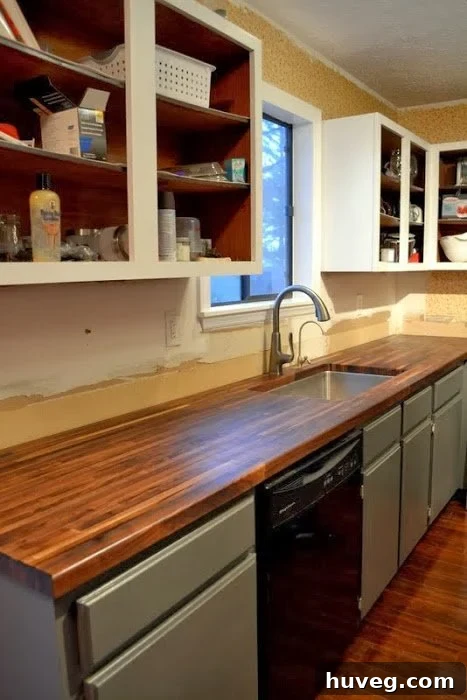
After weeks of meticulous preparation and painting, the moment finally arrived: re-hanging the freshly painted kitchen cabinet doors. This crucial final step transforms a workspace into a truly functional and beautiful kitchen. In this installment, I’m thrilled to share a simple yet incredibly effective trick I discovered for re-installing those cabinet doors, especially when you’re tackling the job solo.
It’s Wednesday, and that means it’s time for another “Dueling DIY” kitchen renovation update! For those new to the concept, Dueling DIY is a collaborative project where another blogger and I challenge each other to complete weekly home improvement tasks. It’s a fantastic motivator, keeping me focused and on schedule with my kitchen overhaul. While the friendly banter is all in good fun, the real benefit lies in the shared journey and mutual encouragement.

This particular chapter of our renovation journey, affectionately dubbed “Clash of the Kitchens,” pits me against Carrie from Brick City Love. Carrie has been absolutely crushing it with her kitchen transformation, making incredible strides. Her exposed brick wall, in particular, gave her an early and well-deserved lead. However, last week brought an unexpected and serious setback for Carrie when a fire broke out in the row home next to hers. The damage was extensive, leaving her home covered in soot, grit, and debris. I only learned the extent of it when she posted her update, understandably having her hands full with the immediate aftermath. Mercifully, Carrie herself was unharmed – she was out with friends, a timely reminder of the importance of those social connections! Her home, though messy and impacted by the fire department’s necessary inspections behind walls to ensure containment, was spared from the direct blaze, and her beloved pups were safe. It was a truly frightening situation, highlighting the unpredictable nature of homeownership and the resilience of DIYers.
Given Carrie’s pressing issues – a damaged roof, front door, and bathroom ceiling certainly take precedence over blog updates – I’ve decided to continue sharing my progress. This challenge is about more than just Carrie and me; we have a growing community of readers who are also tackling their kitchen renovations and linking up each week. Maintaining this momentum and providing motivation is key. And who knows? Perhaps this challenging experience will only fuel Carrie’s DIY superpowers, allowing her to somehow still outshine my efforts despite a hole in her roof. If so, I’ll happily buy the first round at the pub!
Now, let’s dive into my kitchen update. I must offer a preemptive apology and spoiler: everything is still incredibly dusty and dirty. It’s astonishing how quickly grime accumulates when you’re constantly making choices between “clean the kitchen floor” and “do laundry so I have clean underwear.” The glamorous side of DIY, right?
…………………………………………….
I’m particularly excited this week because what was once “invisible progress” has finally transformed into tangible, photographable results. The most significant milestone was applying the final two coats of pristine white paint to all the upper cabinet doors and frames, bringing a whole new level of brightness to the space.
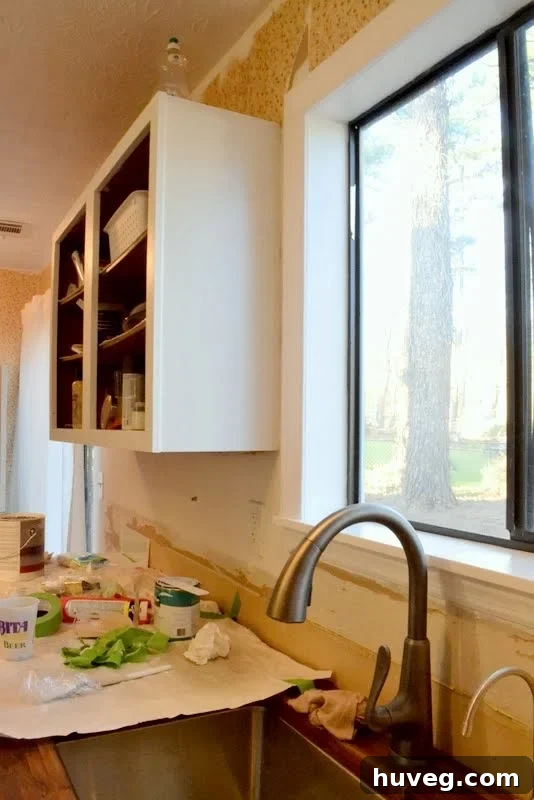
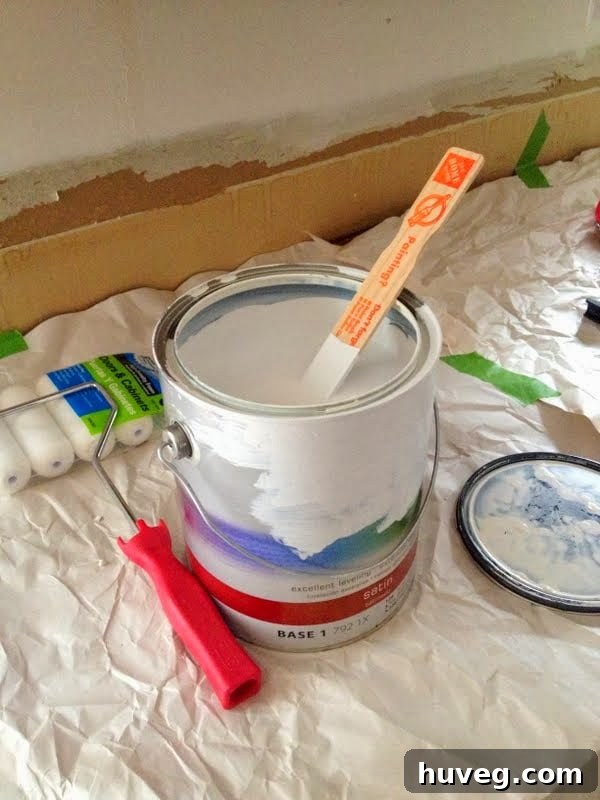
For those curious about the specifics, I’m using Benjamin Moore’s Advance paint, a fantastic choice for cabinetry due to its durability and smooth, furniture-like finish. The upper cabinets are painted in Decorator’s White, a crisp, clean shade that provides incredible brightness without any undesirable yellow or bluish undertones. Achieving the right white can be notoriously tricky, as color balance often plagues older homes and, frankly, my photography skills! The lower cabinets are painted with the same high-quality Advance paint, but color-matched to Martha Stewart’s Seal, creating a beautiful contrast and grounding the design. I truly love the professional finish and the way these colors interact, making the kitchen feel fresh and modern.
Re-Hanging Kitchen Cabinet Doors After Painting: A Comprehensive Guide
After the arduous task of painting, the next critical step in any kitchen cabinet renovation is the proper re-installation of the doors. This process not only brings the kitchen back to life but also ensures longevity and functionality. Careful planning and execution during this stage can make all the difference in the final look and feel of your updated kitchen.
Installing New Cabinet Hinges for a Flawless Finish
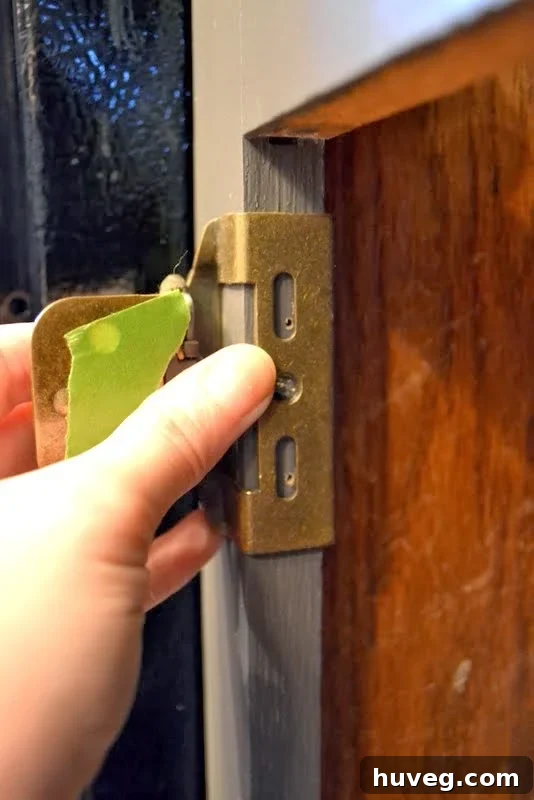
One of the most significant undertakings this week was installing new cabinet hinges on all the freshly painted lower cabinet doors. This seemingly minor detail can dramatically improve both the aesthetics and functionality of your cabinets. A crucial tip I learned through experience: always keep your old hinges, at least until you’ve purchased and verified that your new ones are a perfect match. This simple step can save you immense frustration and time.
- **Reference for Type:** Keeping the old hinges meant I instantly knew the exact mechanism and type I needed – whether it was a face frame hinge or a frameless hinge. This visual reference eliminated the need for guesswork or extensive research, making the shopping process much smoother.
- **Hole Placement Challenge:** While the new hinges were nearly identical in function to the old ones, a subtle difference emerged: the placement of the screw holes for attaching them to the cabinet base. This slight variation meant I couldn’t simply reuse the existing holes. The new finish, of course, was the primary reason for upgrading, offering a refreshed look that complemented the new paint.
- **A Hidden Advantage:** Fortunately, the new hardware was designed in such a way that it completely covered the old screw holes. This was a significant win! It meant I didn’t have to bother with the tedious process of patching and filling the old holes, which, while not incredibly difficult, is certainly an annoying extra step in a DIY project. Eliminating this chore saved precious time and effort.
- **Precision Pre-Drilling:** Instead, the task simply involved carefully pre-drilling new screw holes. Pre-drilling is essential when working with wood, as it prevents splitting, ensures screws go in straight, and helps achieve a secure, tight fit. I used a drill bit slightly smaller than the screw shank to create pilot holes, ensuring perfect alignment for the hinges and preventing any damage to the newly painted wood.
Choosing the right hinges is paramount for a professional finish. Consider factors like hinge type (overlay, inset, partial overlay), whether they are soft-close (a highly recommended upgrade for noise reduction and luxury feel), and the desired finish to match your other cabinet hardware. Proper hinge installation lays the foundation for perfectly aligned and smoothly operating cabinet doors.
How to Re-Hang Cabinet Doors When You’re Working Solo — A Neat Trick!
Attempting to hang cabinet doors on existing cabinet frames, especially when working alone, can be a surprisingly difficult and often frustrating task. It often feels like you need at least three hands: one to hold the door steady, another to press the hinges firmly into place while ensuring the screw holes align perfectly, and a third to operate the drill. Not to mention the contortions required if you’re also trying to photograph the process! Recognizing this challenge, I had to tap into a bit of ingenuity to get the job done efficiently and accurately.
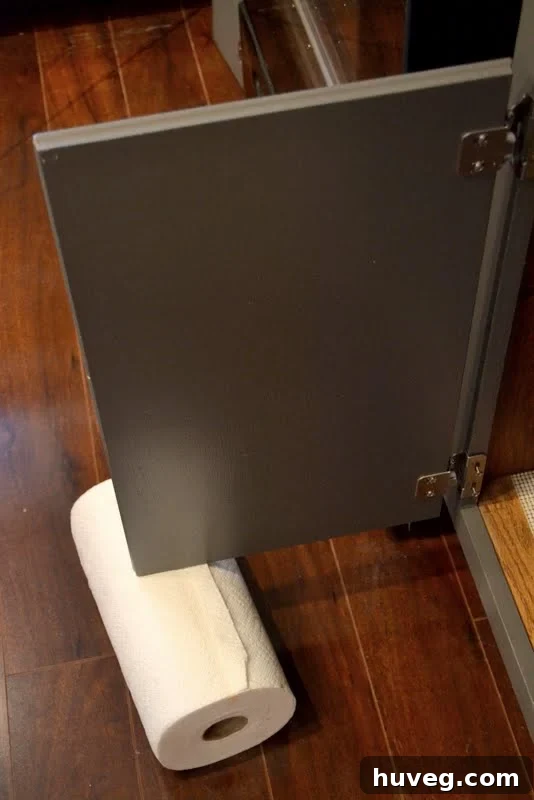
My secret weapon for this solo operation? A simple, everyday paper towel roll! The problem with hanging doors alone is finding something to support the door at exactly the right height while you attach the hinges. The paper towel roll, when placed under the door, provided just enough lift to ease the strain on my back and arms. Initially, it was a smidge too high, turning the “too low with no assistance” problem into a “slightly too high with the roll” issue. However, with a bit of creative squishing and manipulating the cardboard roll, I was able to adjust its height precisely to achieve the perfect elevation. This reminded me of another one of those Goldilocks moments in DIY – finding the “just right” solution. I swear, these moments happen so often, I should rename my blog from Ugly Duckling House to The Goldilocks House; the name even fits the cottage-y exterior better! (UPDATE — I did start calling it this!)
This improvised support freed up my hands, allowing me to focus on aligning the hinges and driving in the screws without the added stress of constantly supporting the door’s weight. It’s a testament to the fact that sometimes the best tools aren’t found at the hardware store but right in your own home. Other items like stacks of old books, small sturdy boxes, or even shims can work wonders as temporary supports. The key is finding something stable and easily adjustable to the precise height you need to make the hinge installation process smooth and accurate.
How to Level Old Cabinet Doors — Start by Removing the Drawers
Once the doors were loosely attached, the next critical step was to ensure they were perfectly level and aligned. This is often where the “old cabinet” aspect presents its biggest challenge. Achieving a seamless, uniform look requires meticulous attention to detail. To properly level each door, I found it necessary to remove the adjacent drawers. This provided ample space and better access for the small level I was using, making the process significantly easier. My trusty pink level, a remnant from a (clearly gendered marketing) starter kit I bought from Walmart before moving in, has surprisingly stuck with me for over four years. It just goes to show that sometimes the cheap, simple tools are the most reliable!
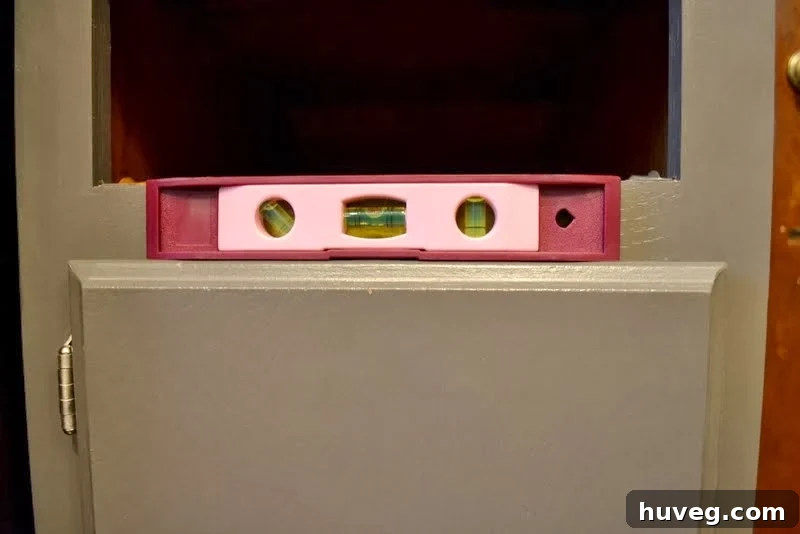
As you might notice in some of the (admittedly blurry) photos, a few small paint chips occurred while I was maneuvering the doors. Being as clumsy as I can be, I unfortunately allowed some doors to clunk together because my hands were too tied up to prevent it. This is a common reality in DIY, and it means a few touch-ups will be needed soon. This brings up an important point about paint durability and application. For context, I still have a door from a cabinet painting kit experiment I did a few years ago, and it remains completely chip-free. While I would still wholeheartedly recommend that kit for its exceptional durability and chip resistance, it simply didn’t offer the specific color palette I envisioned for this kitchen renovation. My current choice, Benjamin Moore Advance, offers an exquisite finish and good durability, but it’s clear that careful handling during installation is always key to preventing minor imperfections.
Despite my initial fears of creating a collection of wonky, uneven doors and descending into an afternoon of tool-throwing obscenities (or worse, quitting altogether), the entire process went a lot smoother than anticipated. My procrastination on this step was truly unfounded. There was one particularly stubborn door that flustered me for a while, but after persistent adjustments, I realized the door itself was perfectly level; it was the drawer directly above it that was slightly out of alignment. After attempting to resolve it for a few minutes, I decided to chalk it up to an existing issue that I’ll address another day. Sometimes, knowing when to pause and accept minor imperfections is part of the DIY learning curve.
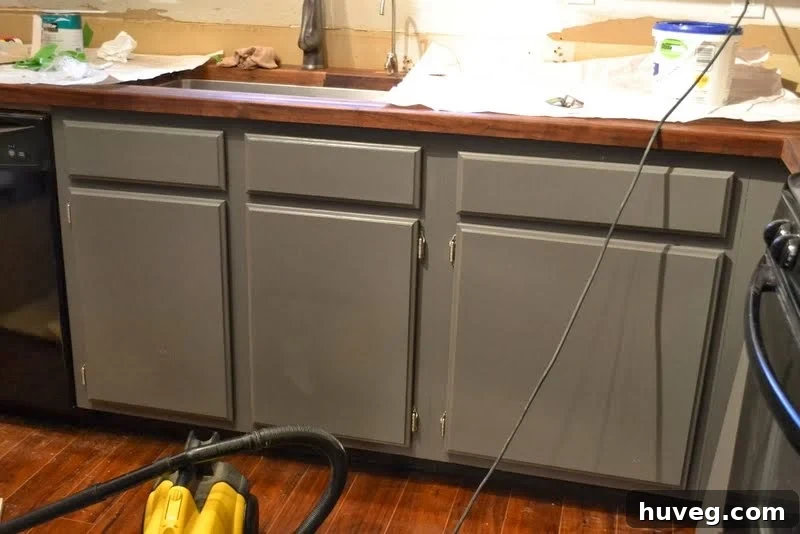
But the absolute best part of completing this stage? I’m finally starting to reclaim this space as an actual, functioning kitchen. It’s no longer just a project zone; it’s becoming the heart of the home again. This significant progress also has a wonderful ripple effect: it means I’ll soon have the space and mental bandwidth to finish the dining room. And, perhaps most importantly, I can finally enjoy my new TV in a living room that isn’t cluttered with piles of furniture, flatware, and dishes that belong elsewhere. The sheer joy of having organized, functional spaces is an incredible reward for all the hard work.
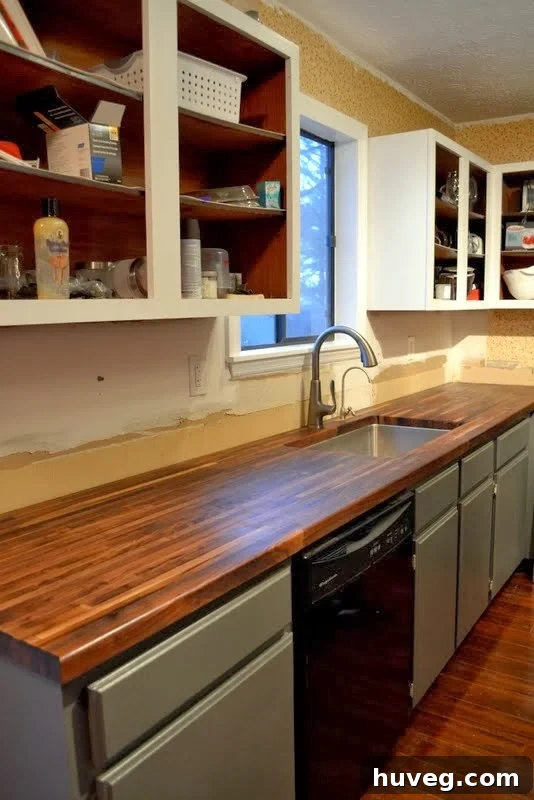
Of course, reclaiming the kitchen means having to wash all the dusty dishes and embark on a thorough cleaning spree, but that’s a small and welcome price to pay for the incredible progress achieved. Every step forward, no matter how small, brings me closer to the fully functional and beautiful home I envision. This renovation journey is not just about aesthetics; it’s about creating a more enjoyable and efficient living environment. Stay tuned for more updates as this kitchen transformation continues to unfold!