DIY Tile Trio: Walls Transformed

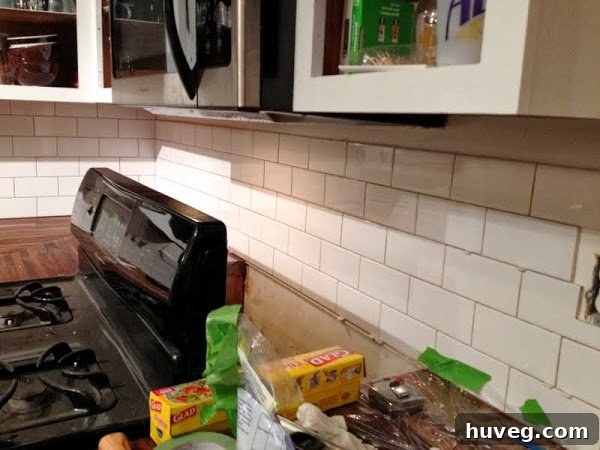
Embarking on a kitchen renovation project is always an exciting journey, fraught with both exhilarating progress and unexpected hurdles. For many DIY enthusiasts, transforming a kitchen backsplash stands out as a particularly rewarding endeavor, capable of dramatically altering the room’s aesthetic. Our own kitchen has been undergoing such a transformation, and as we continue this “Dueling DIY” series, we’re thrilled to share the latest advancements and the real-world challenges encountered along the way.
The Kitchen Backsplash Journey Continues: Two Walls Down
As of our last update, significant headway had already been made. Two of the kitchen walls were successfully adorned with a fresh, crisp tile backsplash. The smallest of these, nestled conveniently beside the refrigerator, is destined to become a cozy and functional coffee station—a small but impactful corner that promises to add both style and convenience to our daily routine. The precision and care taken with this section laid a solid foundation for the rest of the project, even if it was just a taste of what was to come.
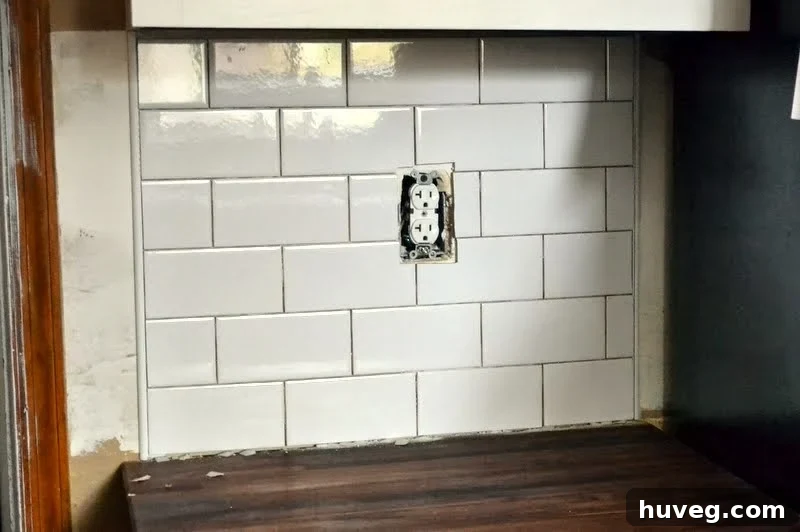
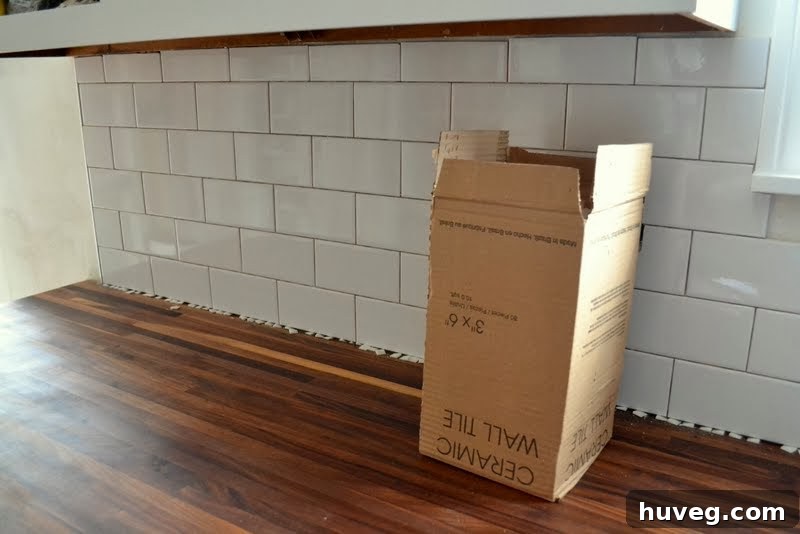
Following the successful completion of the coffee station area, our focus shifted to a more expansive surface: the wall spanning the length of the sink. This section required meticulous planning and execution, given its prominence and the need for seamless integration with existing fixtures. Tiling around the sink area often presents its own set of challenges, including navigating plumbing fixtures and ensuring a watertight finish, but the satisfaction of seeing it come together perfectly was immense. Each tile laid brought us one step closer to realizing our vision for a beautifully updated kitchen.
Tackling the Final Frontier: The Stove Wall
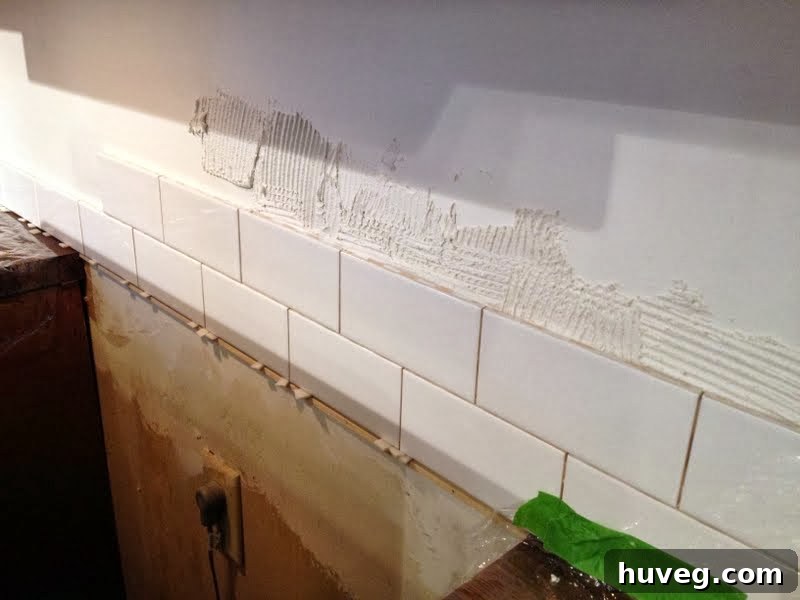
With the smaller, more straightforward sections behind us, only one significant area remained: the wall behind the stove. This segment often serves as the focal point of a kitchen backsplash, demanding particular attention to detail and precision. It’s also typically the wall that receives the most scrutiny, making any imperfections more noticeable. This particular wall proved to be the most challenging, truly putting our DIY skills and patience to the test. It’s precisely why the recent shift to daylight saving time felt like a much-needed blessing.
The Critical Role of Daylight in DIY Tiling
For any serious DIYer, especially when it comes to tasks involving power tools like a tile saw, adequate lighting isn’t just a convenience—it’s a necessity. Having that extra hour of daylight after a long workday has been nothing short of a game-changer. Operating a tile saw requires keen visual accuracy for precise cuts, not to mention the inherent safety considerations. Attempting intricate cuts in dwindling light can lead to costly mistakes, both in terms of wasted materials and potential hazards. The ability to work with natural light streaming into the kitchen after returning home not only enhances visibility but also significantly boosts morale. It helps to mentally justify the noisy, scraping sounds that inevitably emanate from the tile saw. Once the sun dips below the horizon, even the most dedicated DIYer might feel a pang of guilt, fearing they’re rudely interrupting a neighbor’s peaceful evening. Daylight provides a sense of legitimacy to the controlled chaos of renovation, making the entire process feel less intrusive and more productive.

Navigating the Unexpected: Travel Delays and Hidden Imperfections
Life, as it often does, threw a curveball in the form of an unexpected out-of-town trip last week. This unforeseen absence meant a pause in our tiling progress, delaying the much-anticipated grouting stage. While a setback on the surface, this brief interlude unexpectedly turned into a hidden blessing. The extra time provided a valuable opportunity to step back, re-evaluate, and ultimately confront a minor but significant problem that surfaced during the tiling process.
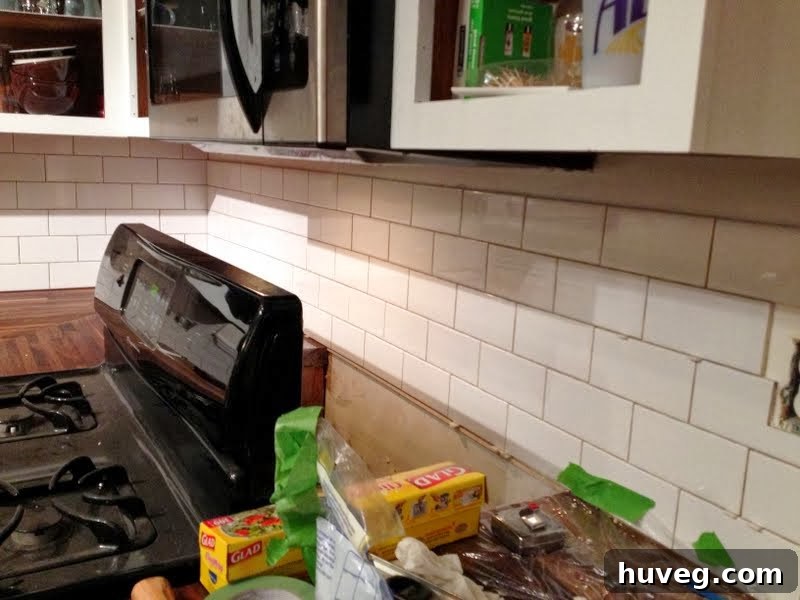
The issue became glaringly apparent as the tiles neared completion along the stove wall: the upper cabinets and the perfectly level line we were striving for with the tiles were not, in fact, parallel. This is a common conundrum in older homes, where walls and fixtures rarely adhere to perfectly plumb and level standards. This discovery, affectionately dubbed a “wop, wop” moment, meant engaging in an annoying game of visual trickery to disguise both inconsistencies simultaneously. The dilemma was stark:
- **Aligning with the Unlevel Cabinet:** If we were to align the new tile perfectly with the existing, slightly unlevel upper cabinet, the area directly above the stove might *appear* level to the casual observer. However, the cascading effect on the grout lines would create an unsettling visual distortion, making the tiles look as if they were “melting” down the wall—a far cry from the clean, uniform aesthetic we envisioned.
- **Maintaining a Perfectly Level Tile Line:** Conversely, if we insisted on laying the tile perfectly level, disregarding the cabinet’s slight tilt, the upper cabinet itself would then look noticeably crooked, as if “someone hung it drunk.” This would draw attention to the cabinet’s imperfection, rather than concealing it.
Such are the joys and exasperations of renovating an older home. At some point, one learns to stop questioning the curious decisions made by previous builders and instead focuses on creative problem-solving. We resorted to a clever, yet subtle, workaround: utilizing some of our surplus tile wedges. These small but mighty tools were strategically employed to “fudge” some imperceptible extra spacing between certain tiles. This technique allowed us to subtly adjust the tile lines, gradually tapering the gaps to visually compensate for the unlevel cabinet without creating obvious discrepancies. It’s a testament to the adage that sometimes, perfect isn’t practical, and clever camouflage is the true mark of a resourceful DIYer.
Grout Selection: A Strategic Decision
This subtle adjustment also played a crucial role in the ultimate decision regarding grout color. The choice between a pristine white and a subtle light gray grout became significantly clearer. Opting for white grout now appears to be the most strategic move. White grout, by blending seamlessly with the tile color, has a far greater chance of discreetly hiding these minor imperfections and the areas where we employed our “fudging” technique. A contrasting grout color, while often stylish, would unfortunately highlight every minute inconsistency, drawing unwanted attention to the compromises we had to make. Thus, a decision born out of necessity transformed into a practical advantage—definitely a win in the column of DIY adaptability!
When selecting grout, it’s important to consider more than just color. For instance, sanded grout is typically recommended for wider grout lines (1/8 inch or more) as the sand particles provide strength and reduce shrinkage, preventing cracking. Unsanded grout, on the other hand, is best for narrower lines (less than 1/8 inch) and softer tiles that could be scratched by sand. For high-moisture areas like kitchens and bathrooms, using a good quality, stain-resistant grout is paramount. Our choice of white grout not only helps to camouflage minor inconsistencies but also contributes to a bright, clean aesthetic that complements the overall kitchen design.
The Final Stretch: Cuts, Caulking, and Grouting
With the major tiling completed on the stove wall, the final meticulous cuts remain. These include trimming the last few tiles that sit precisely beneath the upper cabinets and navigating the intricate shapes required around the electrical outlet. These detailed cuts demand unwavering patience and precision, as they are crucial for a polished, professional finish. Hopefully, the weather will cooperate, granting us sufficient daylight this evening to complete these delicate tasks. However, with rain in the forecast, it’s more probable that these finishing touches will extend into tomorrow, demanding another day of focused effort.
Once all tiles are perfectly placed, the next phase begins: caulking and grouting. While these steps are absolutely essential for a durable, water-resistant, and aesthetically pleasing finish, they are often considered the least enjoyable aspects of the tiling process. Both silicone caulk and grout can be messy, tedious, and require a meticulous hand to ensure clean lines and smooth applications. Grouting involves spreading the mixture over the tiled surface, working it into every joint, and then carefully wiping away the excess without pulling it out of the lines. This process is time-sensitive and demands careful attention to detail for an even, consistent look.
Caulking, often the very last step, is equally critical. It’s used to seal any transitions between the tiled surface and adjacent countertops, walls, or fixtures, preventing moisture intrusion and providing a neat, flexible seal. Despite the mess and the repetitive motions, there’s a certain satisfaction that comes with seeing the tile transform as the grout fills the spaces and the caulk creates crisp edges. The tediousness of these final steps is ultimately overshadowed by the anticipation of the finished product: a beautiful, functional backsplash that breathes new life into the kitchen.
The Reward: Reclaiming Our Kitchen and Inspiring Others
The nearing completion of the backsplash project signifies more than just another DIY task checked off the list; it means getting our kitchen back. The disruption that comes with any major renovation, especially in a central living space like the kitchen, is considerable. The return to normalcy, to a fully functional and beautifully updated kitchen, is the ultimate reward for all the hard work, planning, and problem-solving. It’s a moment of immense satisfaction, knowing that every tile laid, every cut made, and every challenge overcome has contributed to creating a space that is not only more appealing but also a true reflection of our dedication to home improvement.
We are incredibly excited to see the final reveal of our kitchen backsplash and hope our journey, complete with its unexpected turns and creative solutions, inspires others in their own home renovation endeavors. Whether you’re tackling a full kitchen overhaul or a small accent project, the spirit of DIY is about learning, adapting, and finding joy in the transformation. We encourage you to share your own kitchen projects and join the community of DIYers who understand the unique blend of frustration and triumph that defines home improvement. Let’s continue to inspire each other with our creativity and perseverance!