Crafting Your Own Starry Mountainscape

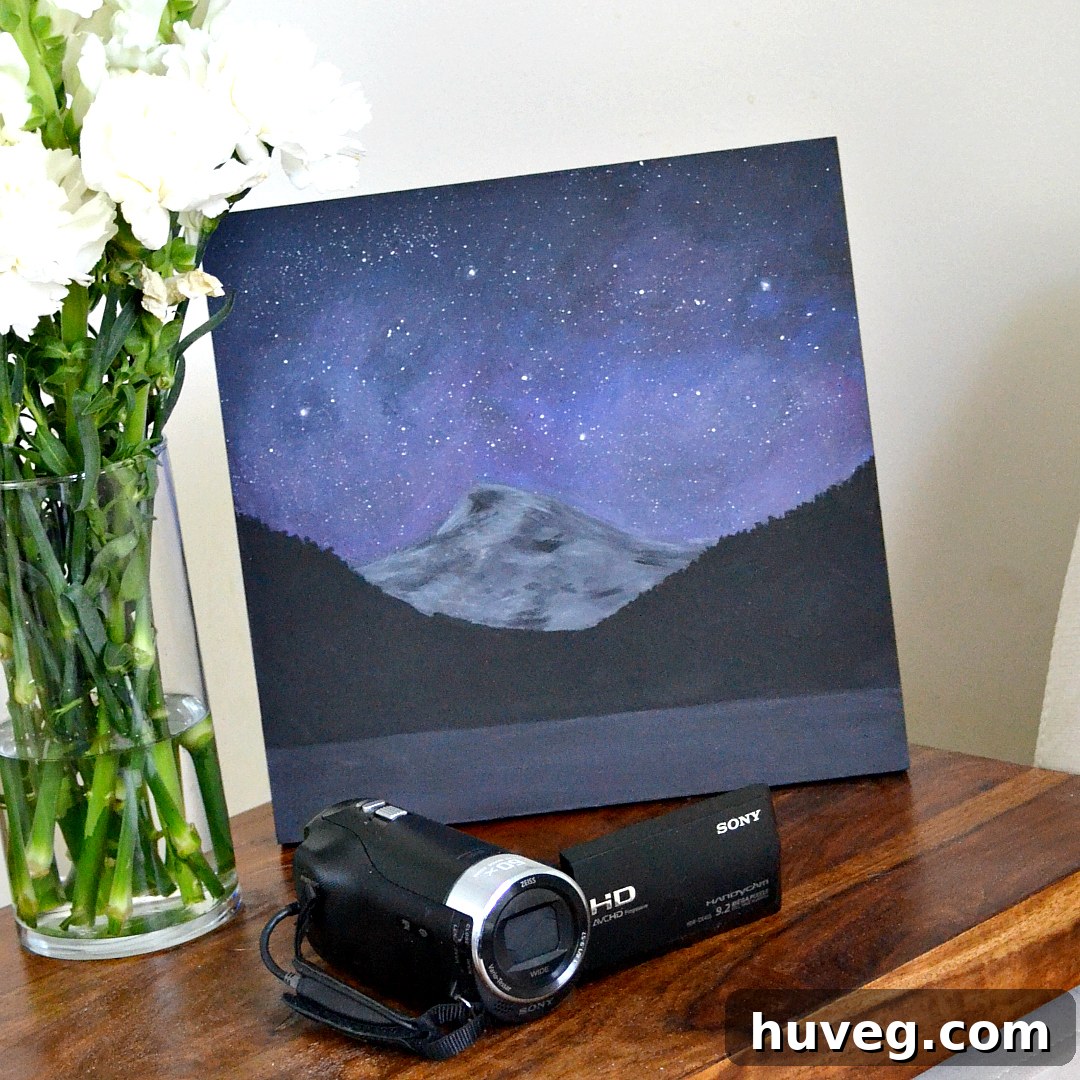
Transform Your Canvas: Easy DIY Starry Mountain Night Sky Painting Tutorial
Embark on a creative journey to paint your very own breathtaking night sky scene with majestic mountains. This acrylic painting tutorial is designed to be both easy and incredibly fun, even if you consider yourself a beginner. Whether you’re looking to unleash your inner artist, repurpose an old canvas, or simply create a beautiful piece of decor, this step-by-step guide will walk you through every layer of color and every twinkling star. Get ready to create a unique masterpiece that captures the magic of a starry night over tranquil peaks. You can follow the full detailed instructions below or watch the speed video to see the magic unfold.
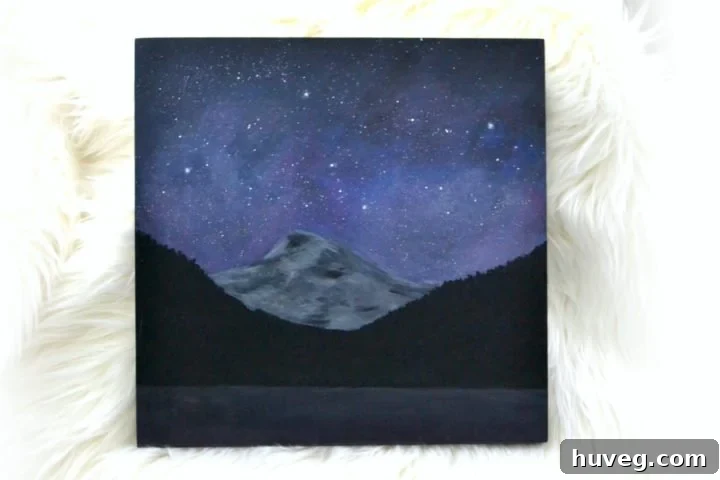
Life can be wonderfully hectic, full of unexpected turns and ambitious DIY projects. Just recently, my partner K and I were deep in building a new bed for our primary bedroom (plans for that coming soon!). Not long after, we made significant strides on the Murphy bed in the guest room – another exciting project nearing completion. And, in a moment of pure canine joy, our beloved Stella decided the garden bed was her personal spa, resulting in an emergency bath that left our tub temporarily painted in mud! Amidst all this delightful chaos, I found the perfect escape and creative outlet: completing this stunning night sky mountain painting. It was a perfect way to decompress and bring a vision to life, proving that even the busiest schedules can make room for art.
Reimagining Your Canvas: Before and After an Artistic Transformation
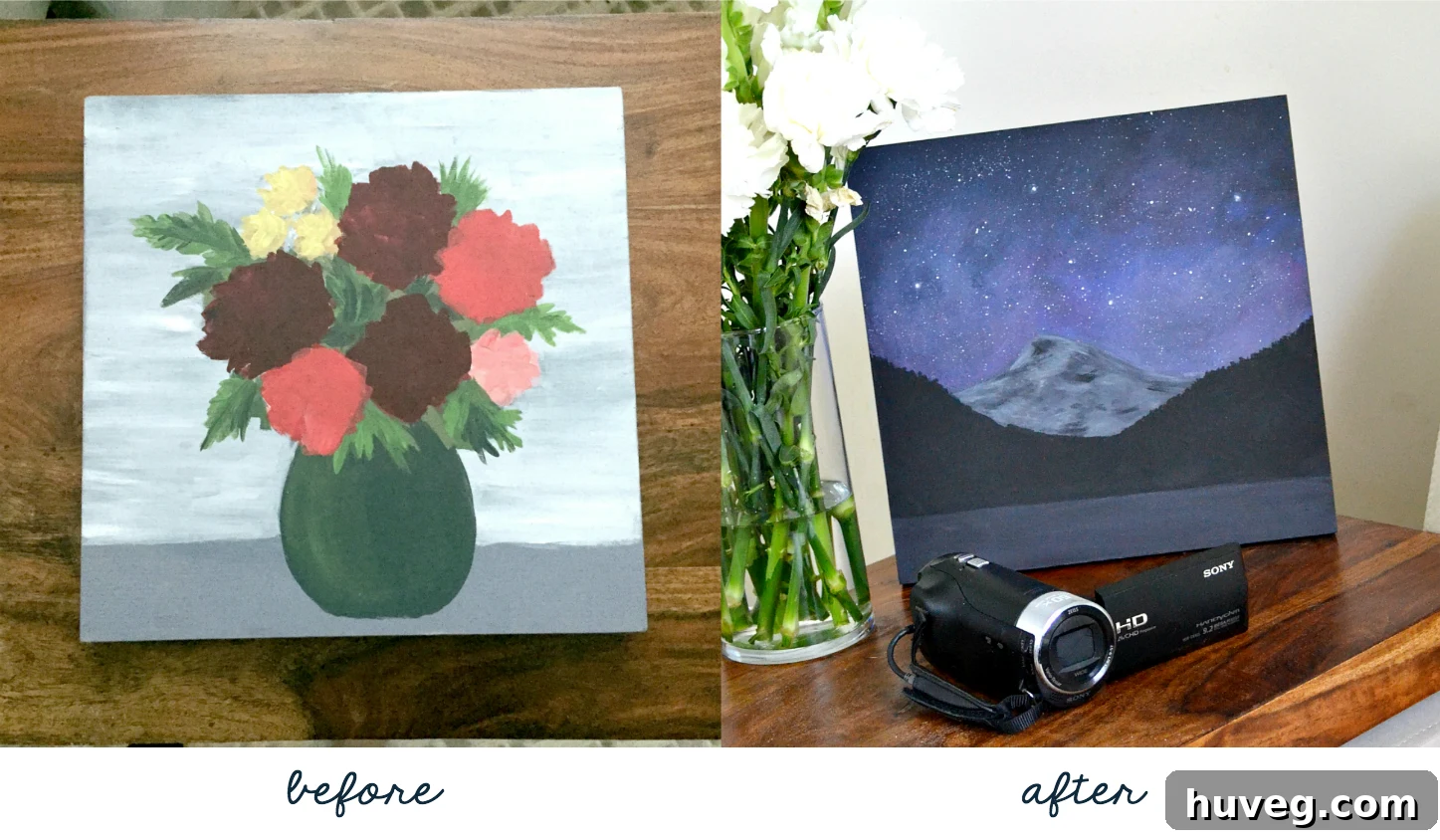
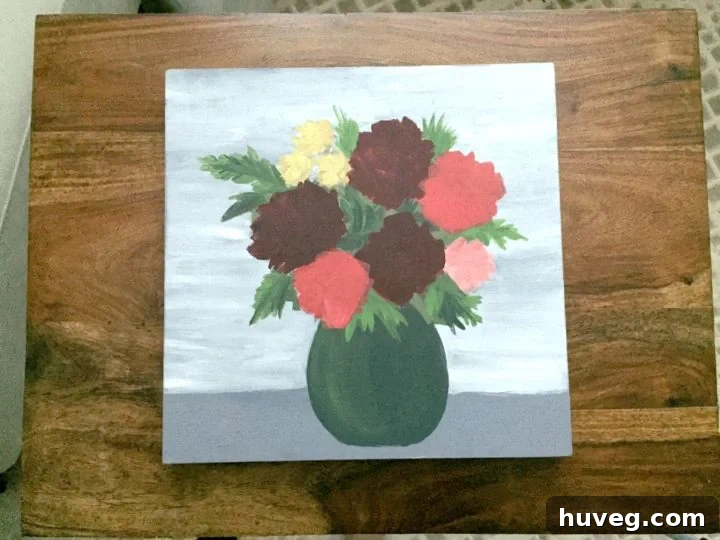
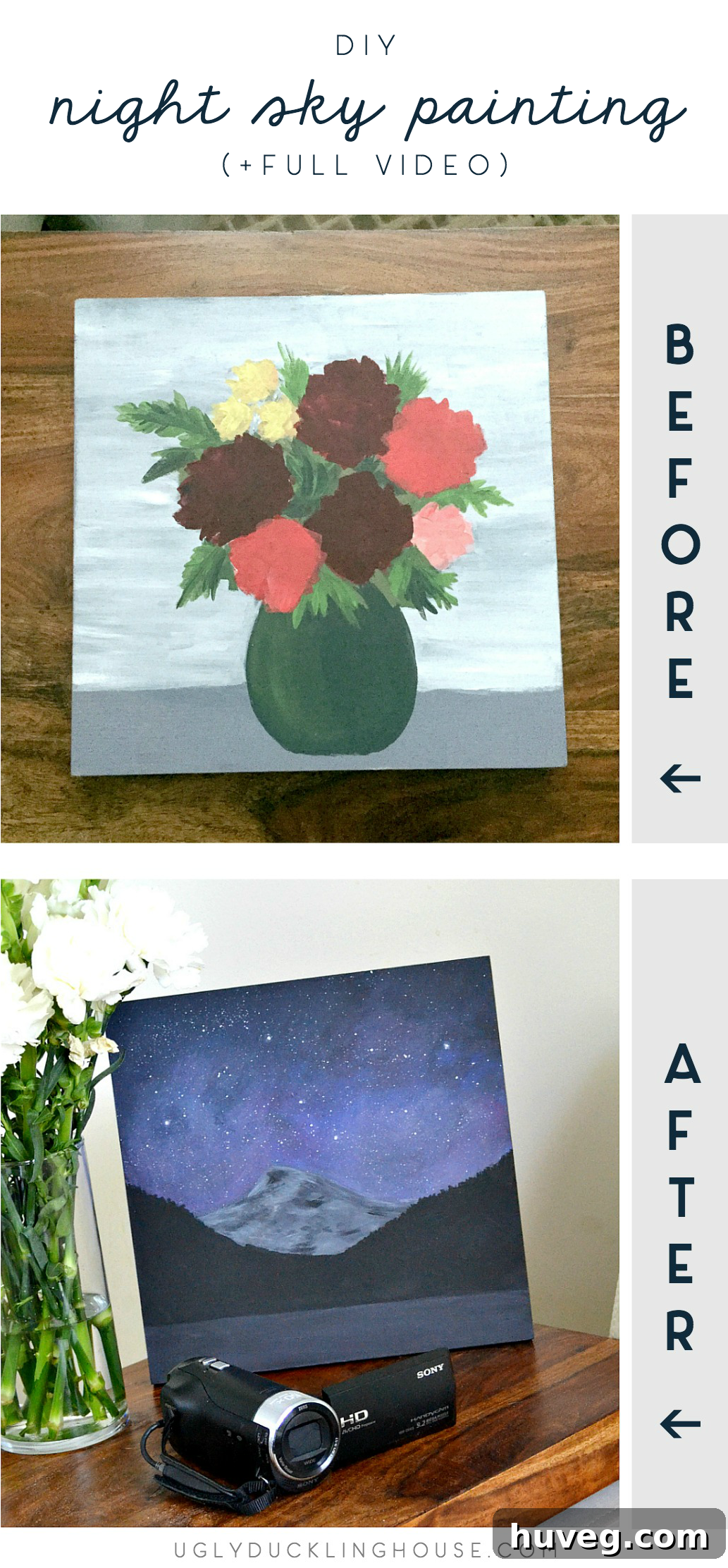
As you can clearly see from the “before and after,” this painting began its life as something entirely different. Its former incarnation was a rather unfortunate flower vase, a relic from a “paint and sip” event. This particular event was a promotional gathering with Atlanta bloggers, offering a familiar experience: show up, enjoy some drinks, and paint. While it wasn’t a sponsored post and I attended simply for the allure of free drinks and a free canvas (and to catch up with fellow blog friends like Erin Spain), the experience cemented my preference for self-guided artistry.
I’ve discovered a pattern: I tend to struggle in those structured, step-by-step painting classes where everyone creates the same piece. This is now the second time I’ve opted to paint my own vision over an existing canvas, and it reinforces my belief that true creativity flourishes when you paint what genuinely inspires you. Perhaps it’s the wine, or perhaps it’s the artistic constraint, but if you’ve ever left a painting class feeling disheartened by your perceived lack of skill, it might be because you were forced to paint something you didn’t truly connect with. My advice? Go rogue! It’s your canvas, and it’s perfectly fine to bid farewell to those unloved flowers and transform them into something beautiful and meaningful to you.
Finding Your Artistic Flow: Inspiration and Creative Freedom
Inspiration can strike in the most unexpected places. For this particular painting, it came from one of the stunning screensavers displayed by our Amazon Fire TV device. If you’re not familiar, these devices cycle through a collection of 182 incredible photos, each capable of sparking serious wanderlust. With memories of my recent vacation to St. Lucia fresh in my mind and K and I immersed in discussions about our vintage camper renovation project, a specific image of The Milky Way hovering over Mt. Hood in Oregon absolutely captivated me. Other screensavers would come and go, but every time this one appeared, I found myself pausing, drawn into its serene beauty and vastness.
This image became the catalyst for an organic painting process, one where the outcome is truly unique each time. The swirling colors and atmospheric blending of a night sky are inherently difficult to replicate precisely, and that’s part of the charm! I couldn’t reproduce this painting identically twice, nor would I want to. The beauty lies in the individual brushstrokes and spontaneous blending that make each piece one-of-a-kind. If you decide to try this tutorial, I wholeheartedly encourage you to embrace that uniqueness. I’d love to see the variations you create! To help guide you, I meticulously captured photos at key stages and pulled several stills from an overhead video I filmed during the process.
How to Paint a Starry Sky and Mountains: A Step-by-Step Guide for Acrylics
Creating a painting like this might seem complex, but the underlying technique is surprisingly straightforward: it’s all about continuous layering of colors. Acrylic paints are fantastic for this due to their quick drying time, allowing you to build depth and blend seamlessly. Here’s a detailed look at the supplies you’ll need and each step of the process:
Supplies You’ll Need
Gathering your materials before you begin ensures a smooth and enjoyable painting experience. These are the essentials I used:
- 10×10 wood panel: A sturdy surface provides a good foundation for layering.
- Anita’s Craft Paint (picked up at Hobby Lobby ages ago): Twilight Blue, Medium Blue, Christmas Red (all matte). These provide a rich, deep base for the sky.
- Apple Barrel Acrylic Paints: White, Black, Wild Iris, Purple Iris (all matte). A versatile palette for blending and creating atmospheric effects.
- Small and medium all-purpose paint brushes: Essential for both broad strokes and finer details.
- Gesso (surface prep medium): A crucial primer that prepares your canvas for paint, ensuring better adhesion and vibrancy.
- Frogtape Delicate Surface painter’s tape: For crisp lines and protecting finished areas. While often seen in sponsored posts, my use here is purely based on its effectiveness.
- Paper towels: For dabbing, blending, and cleaning brushes.
- Container for clean water: To rinse brushes and thin paints.
- Paper plate for mixing: A simple, disposable palette for blending colors.
Prep Your Canvas for a Stellar Beginning
The foundation is key to any great painting. Begin by applying a coat of gesso over the entire surface of your 10×10 wood panel. Gesso, often called a “medium,” is more than just a white paint; it’s a primer specifically designed to prepare a surface for acrylics. It provides a slightly textured, absorbent base that allows subsequent layers of paint to adhere better, making colors appear more vibrant and consistent. This step is especially important when painting over an existing design, as it ensures the old art doesn’t show through.
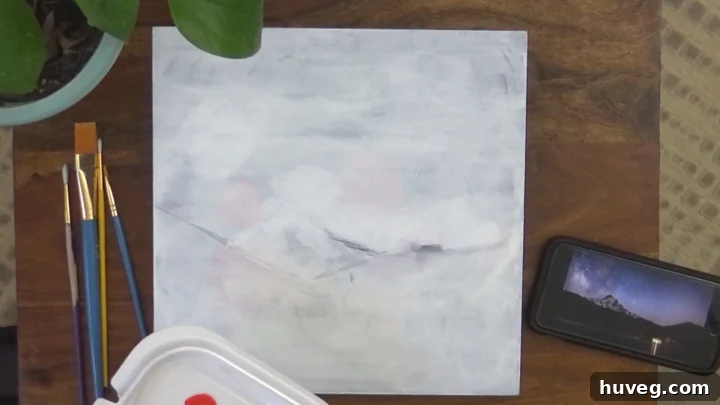
Once the gesso is dry, take a pencil and lightly sketch the main elements: the horizon line for the sky, the general shape of your mountain, a rough outline for the distant trees, and the calm body of water at the bottom. Don’t worry about perfection here; simple, general shapes are all you need to establish your composition and guide your initial color blocking.
Mastering Color Blocking: Building the Celestial Canvas
As you might observe in the accompanying speed video, I started with the sky, laying down the initial color blocks. I began by introducing black into the top corners, gradually blending it inwards, and adding white to specific areas on either side of where the mountain would be. Initially, this phase leaned towards monochromatic tones, but I quickly began integrating blues and subtle hints of red to create depth and warmth, mimicking distant nebulae. For effective layering and to introduce texture, I utilized a damp paper towel. By gently “sponging” the paint, I achieved soft transitions and an organic, cloud-like texture, allowing the colors to meld rather than create harsh lines.
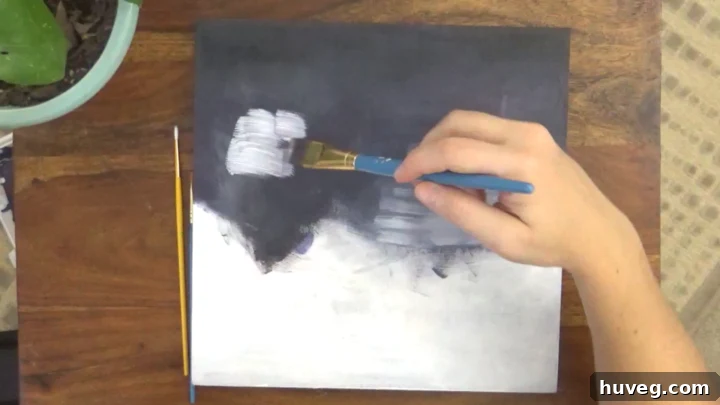

With the primary sky colors established, I shifted my focus to the elements below. The tree line was rendered in deep black, creating a stark silhouette against the burgeoning sky. Next, the central mountain took shape, primarily defined by layers of black, white, and a subtle touch of blue. My intention was for the sky to remain the painting’s focal point. Therefore, I aimed to highlight the mountain just enough to give it prominence without allowing it to compete with the dramatic celestial display above. It needed to be present and powerful, yet muted.
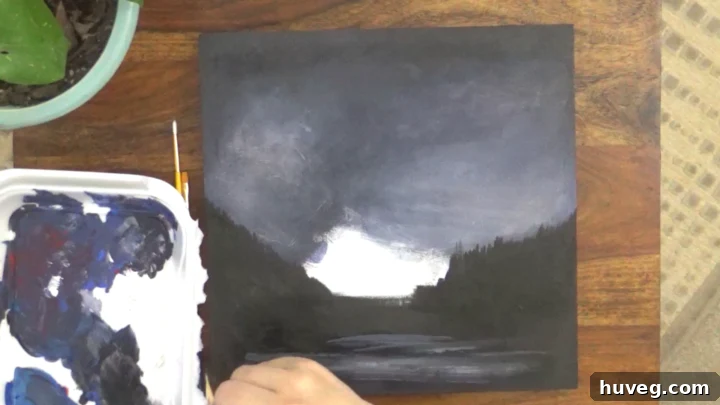
This principle of “non-competition” guided the rest of the landscape. For the distant trees, I used a small paintbrush to make quick, upward swipes of black paint, giving them texture while maintaining their silhouette. For the body of water at the bottom, I applied broad strokes of blue, blended with white and black. Thinning the paint slightly with water helped create a beautiful, streaky effect, mimicking reflections and the natural movement of water. This subtle approach ensures that the foreground elements support, rather than distract from, the grandeur of the night sky.
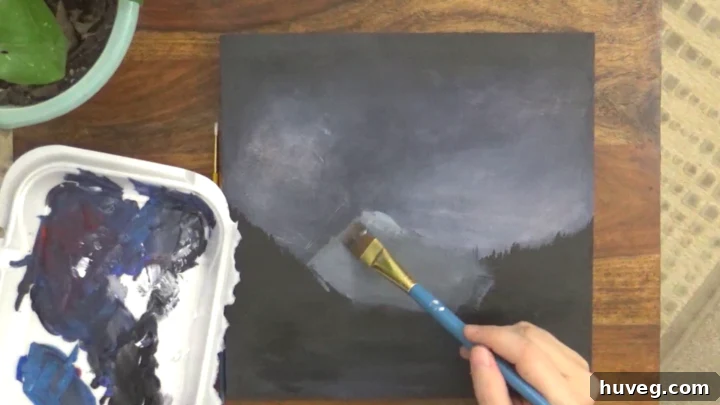
As the mountain layers began to dry, I meticulously added more black and white areas to sculpt its form, defining highlights and shadows that give it depth and realism. These subtle adjustments are crucial for making the mountain feel dimensional and grounding the ethereal sky.
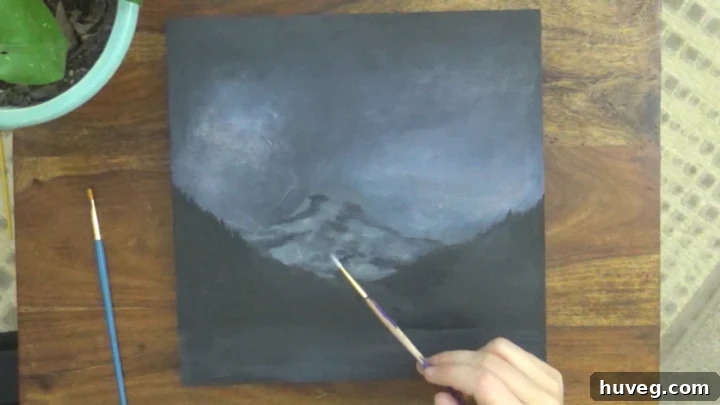
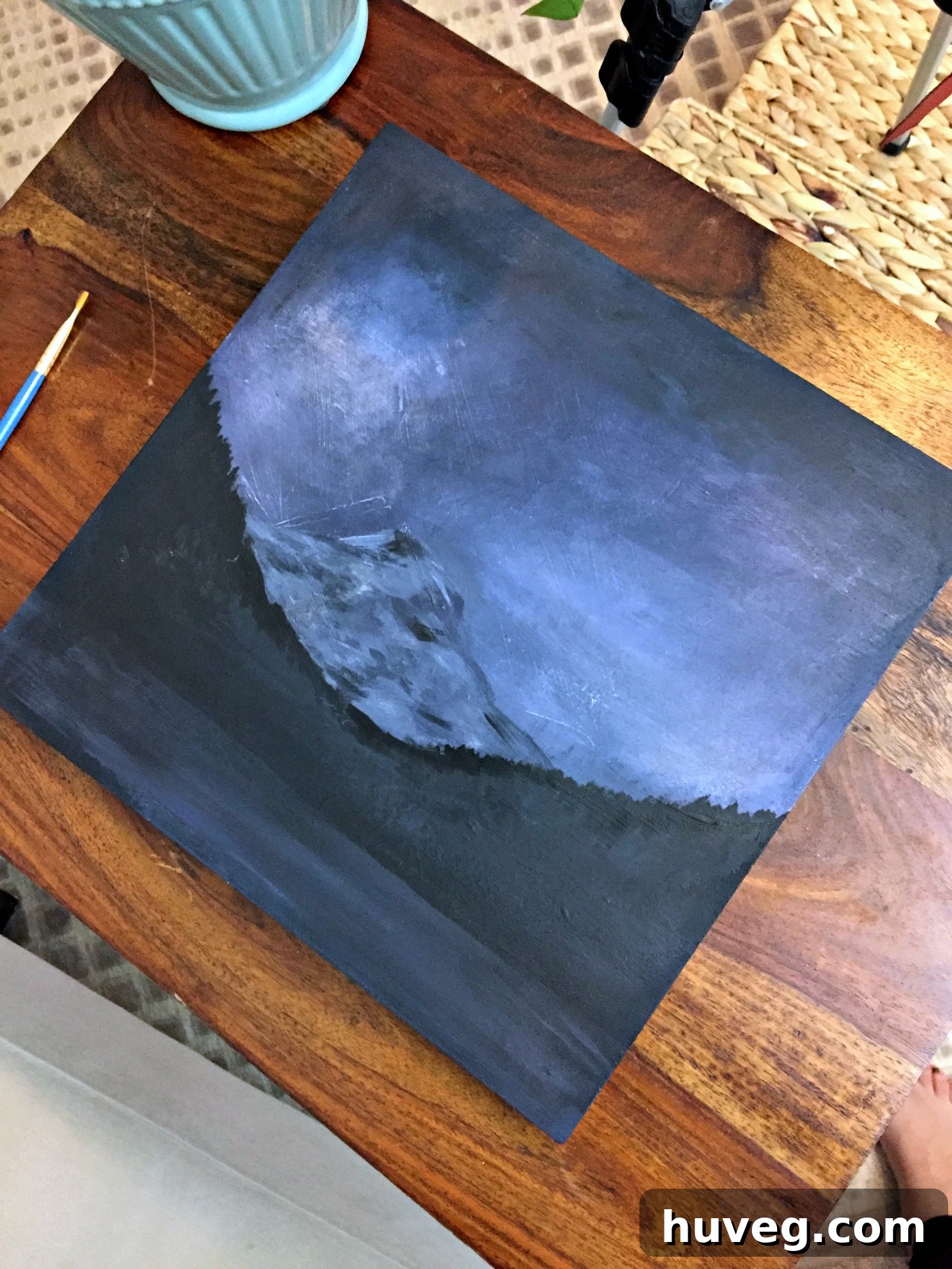
After the first painting session, often done casually in front of the TV, the canvas resembled the image below. This marks an excellent stopping point, especially with acrylics. Allowing the paint to sufficiently dry is critical before adding more water or paint, as working too soon can lift or disturb underlying layers, leading to unwanted blobs or smudges (a lesson I learned a couple of times!). As a general rule of thumb, avoid mixing more than 30% water with your acrylics; for thinning, an acrylic medium is often a better choice. I confess to using just water for this piece, but now you’re equipped with even better knowledge!
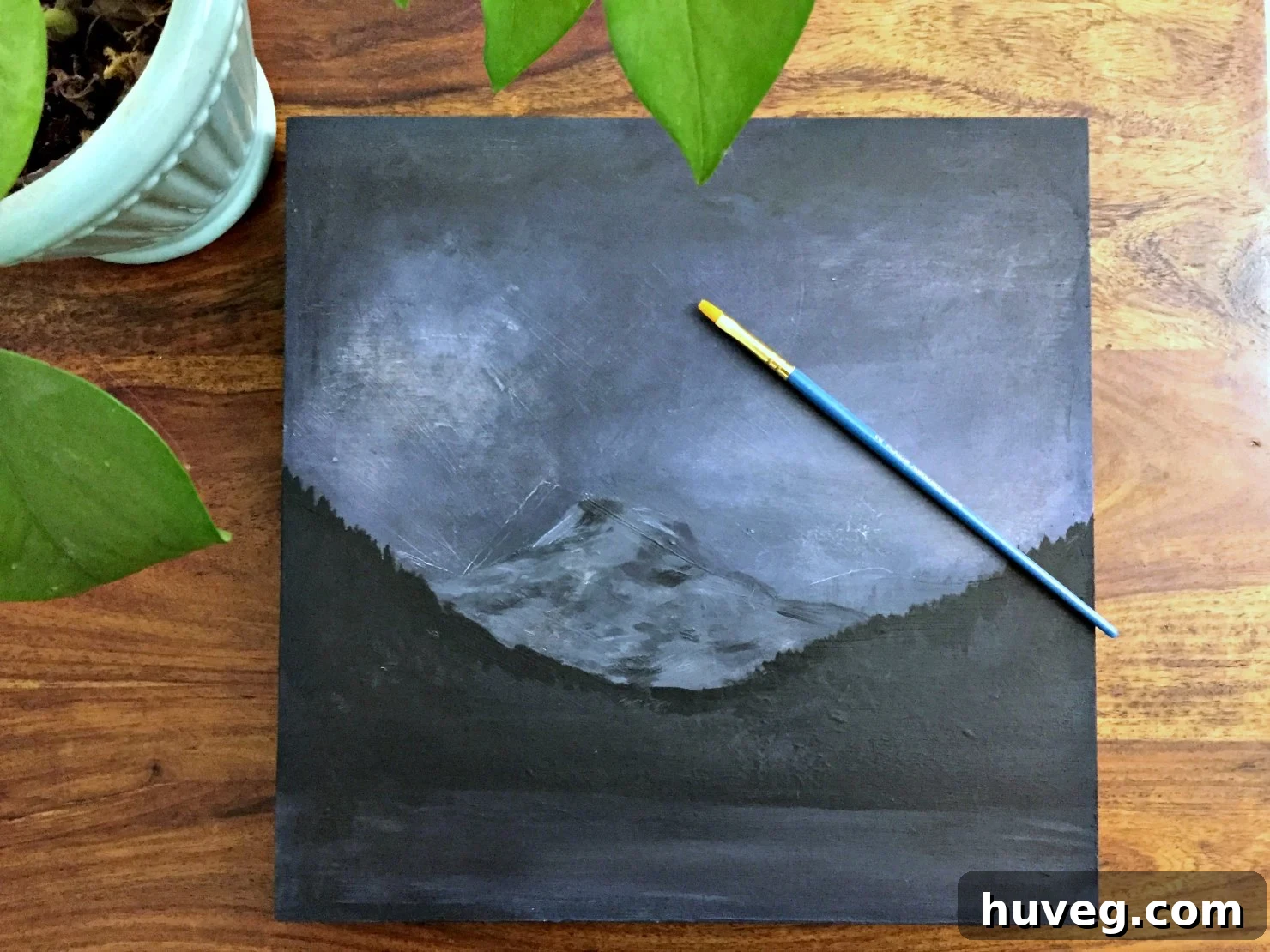
More Color Layering: Deepening the Cosmic Hues
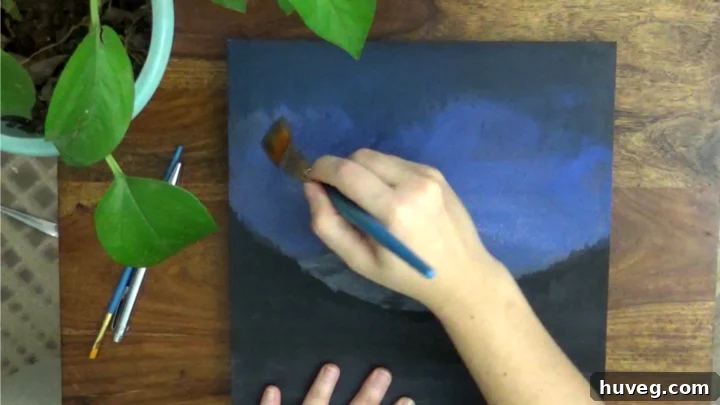
The following night, after the initial layers had completely dried, it was time to enrich the sky even further. I returned to the same swiping and sponging technique, gradually adding more blue, purple, and white. This iterative layering process is what gives the night sky its profound depth and ethereal glow, making it seem as if distant galaxies are swirling across your canvas. Each layer subtly builds upon the last, creating a seamless and vibrant cosmic tapestry.
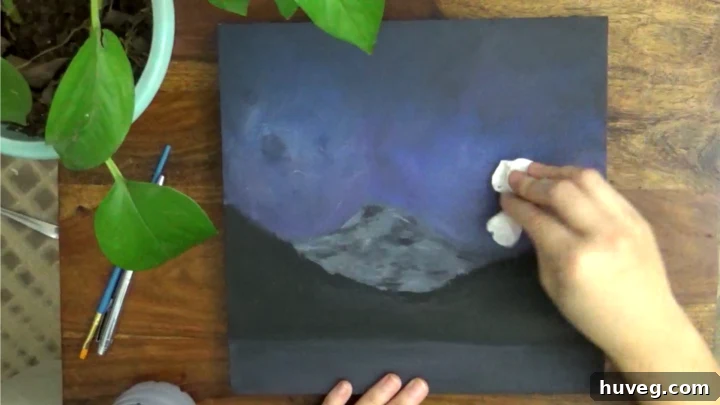
The photo below shows the painting after it had more time to dry, and I had added a second, darker layer to the trees, further deepening their silhouette and creating a stronger contrast against the vibrant sky.
The Grand Finale: Tape, Flick, and Starry Skies!
Once you are absolutely delighted with the color variation and depth of your sky, it is paramount to let it dry COMPLETELY. Patience at this stage will prevent any smudges or paint lifting later on. This is where your starry night truly comes to life.
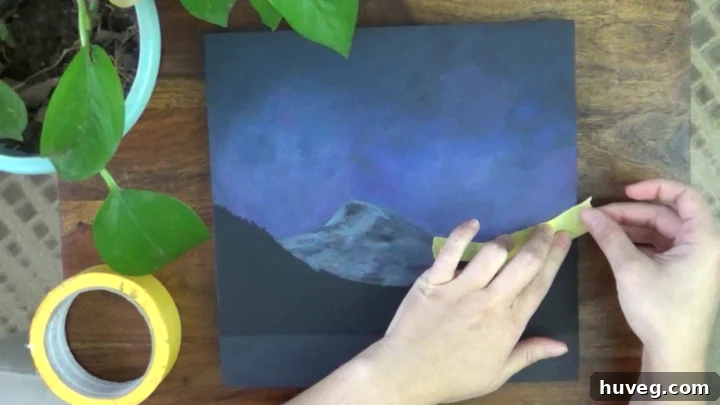
To prepare for adding the stars, carefully protect the lower landscape area (mountains, trees, and water) with painter’s tape designed for delicate surfaces. This ensures that your crisp mountain lines remain untouched and only the sky area receives the dazzling starlight. Take your time to press the tape down firmly along the edges, preventing any white flecks from sneaking into your landscape.
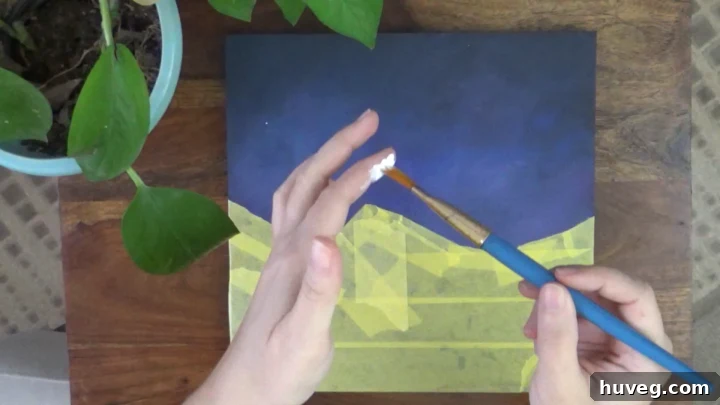
Now for the magic! Dip a VERY dry paintbrush (or even an old toothbrush) into a tiny bit of pure white paint – you only need a minuscule amount on the tip. Hold the brush over the taped-off sky area, and with a gentle flick of your finger against the bristles, send tiny specks of white paint scattering across the surface. Vary your technique by adjusting the amount of paint on your brush and how close you hold it to the canvas. This creates clusters of small flecks and larger, more defined stars, mimicking the natural, random dispersion of stars in the night sky. This flicking method is my absolute favorite part; it’s incredibly satisfying and creates an instantly captivating starry effect.
If you accidentally create a dot that’s too large or misplaced, act quickly! Use a tiny dab from a wet paper towel to gently lift the paint. Remember to dab, not rub, as rubbing could still disturb the newly dried paint layers beneath.
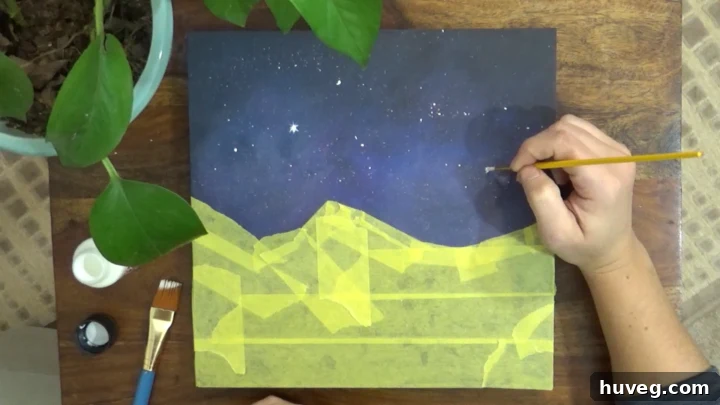
For areas where I wanted a little more emphasis, perhaps a brighter, more prominent star, I went in by hand with a fine-tipped brush and carefully added a few extra dots of white paint. These small touch-ups can add significant depth and realism to your celestial display.
With the stars twinkling across the canvas, gently peel off all the painter’s tape to reveal your finished masterpiece. The crisp lines separating the starry sky from the mountain landscape will be incredibly satisfying. I plan to seal this painting with some art resin to give it a beautiful, protective finish and then frame it – new posts on those steps coming soon! I am truly thrilled with how it turned out, and it will probably eventually find its perfect home hanging inside our vintage camper.
My partner, K, immediately fell in love with this painting. He’s even offered to scan it at work, so I anticipate having prints available for you all in the near future!
Catch the full video tutorial here:
Embrace Your Inner Artist: More Creative Inspirations
If you’re eager for another example of how to “go rogue” and make a structured paint n’ sip class your own, check out my laundry room art project, which was beautifully inspired by the talented artist Emily Jeffords. It’s another testament to the joy of personal expression in art.