My Kitchen Countertop Makeover

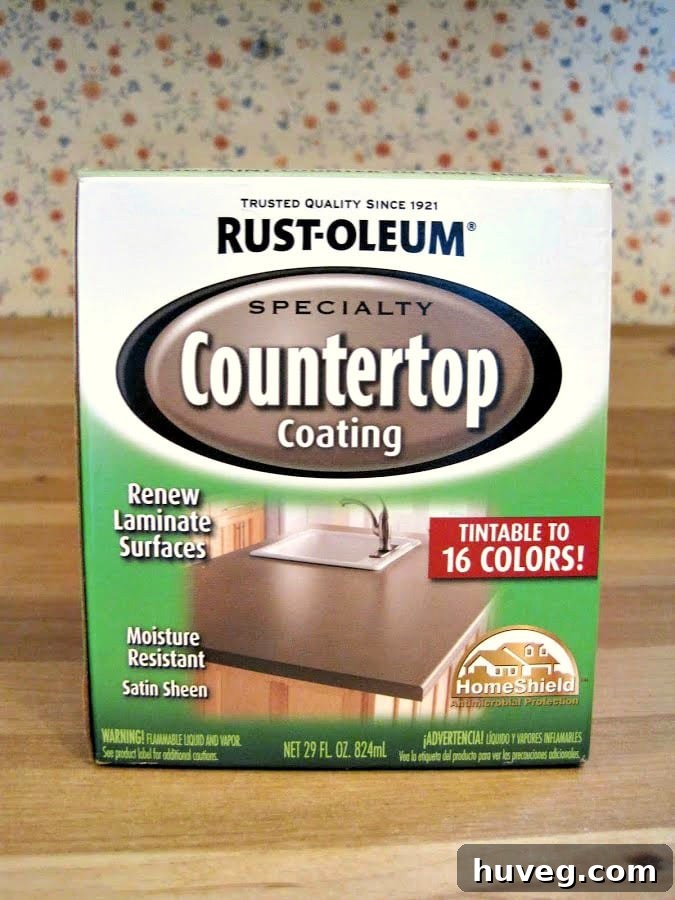
Transform Your Kitchen: A DIY Guide to Painting Laminate Countertops on a Budget
Shortly after moving into my fixer-upper, I embarked on a budget-friendly kitchen transformation, starting with my countertops. For just about $20, I experimented with countertop paint, aiming for a quick refresh without a major overhaul. In this comprehensive guide, I’ll walk you through the step-by-step process of using this affordable product, share my honest experience, and reveal what the results looked like immediately and over time.
Yes, you read that right. I painted my kitchen countertops. And while it might sound unconventional, it was a necessary step in making my kitchen more livable while planning for a full remodel.
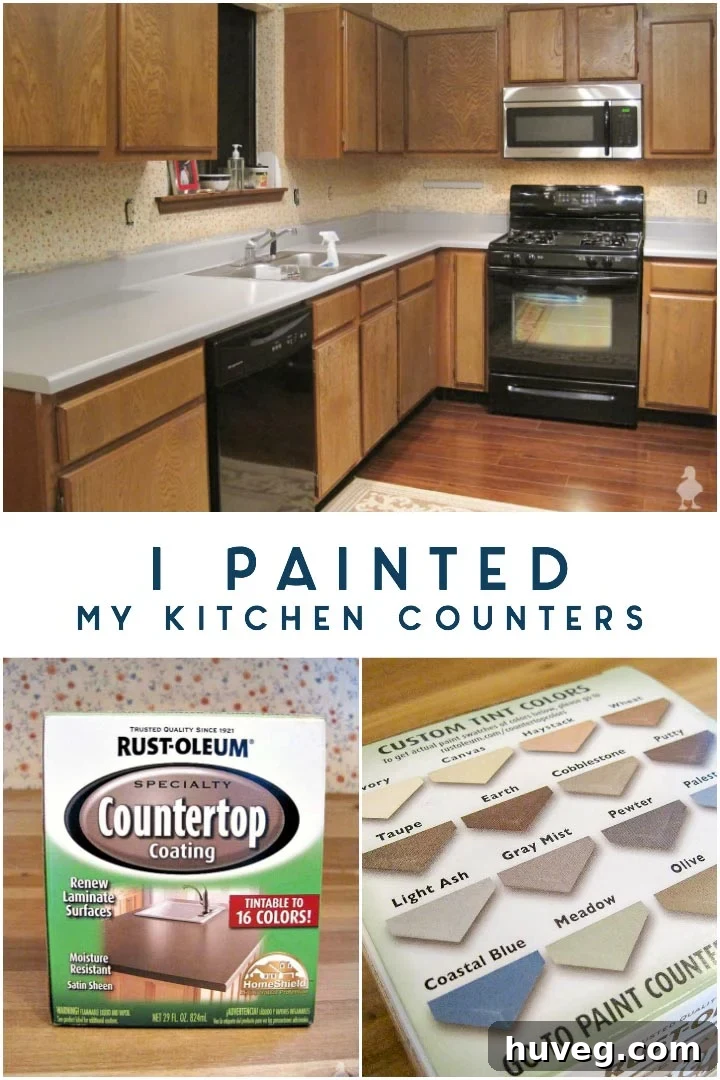
The Ugly Truth: My Kitchen Before the Paint Job
If you’re new here, you might not be familiar with the “before” state of my kitchen when we first moved in. To put it mildly, it was a horror show. The kitchen ceiling was stained an alarming shade of orange from years of smoke damage, the linoleum floor had yellowed with age, and the refrigerator was so filthy I had to use industrial-strength cleaner just to make it presentable. And yes, there was an infamous fingernail discovery that became a talking point!
But the countertops, oh, the countertops! They were caked with such a thick layer of grease and dust that we actually resorted to oven cleaner to strip away the grime. It was clear that this space needed a complete overhaul, but a full demo and remodel wasn’t immediately feasible. This desperate situation presented a perfect opportunity to try an unconventional, incredibly affordable solution: painting the countertops. My goal wasn’t perfection, but simply to freshen up the space and make it feel clean and welcoming.
Why Paint Countertops? The Ultimate Budget-Friendly Kitchen Refresh
For many homeowners, the cost of replacing kitchen countertops can be a significant barrier to refreshing their kitchen. Traditional countertop materials like granite, quartz, or even new laminate can run into hundreds or thousands of dollars. This is where countertop paint offers an incredible alternative.
I first encountered the idea of painting laminate countertops after reading a post from Brooklyn Limestone. My immediate reaction was a mix of skepticism and intrigue. Could it really be possible? More importantly, how much would it cost? I had seen “countertop makeover” kits at big box stores like Home Depot, but with price tags often exceeding $200, they seemed a bit too much for a temporary fix, especially for someone as budget-conscious as I am. I needed a solution that was genuinely cheap, allowing me to experiment without significant financial commitment.
To my pleasant surprise, I discovered a specific countertop paint product that retailed for around $20. This was a game-changer! If I was planning to replace the countertops eventually anyway, spending a mere $20 on a temporary cosmetic upgrade felt like a no-brainer. It was a low-risk way to add “lipstick on a pig,” as they say, to my less-than-charming kitchen. If I disliked the outcome, the wait for a proper replacement wouldn’t be long, and I wouldn’t have wasted a fortune. No long-term commitment was necessary, just a simple experiment.
Products That Paint Laminate Countertops: Kits vs. Coatings
The market for countertop paint has evolved since my initial experiment, now offering a wider range of options beyond just a single coating. It’s helpful to understand the difference between multi-step kits and simpler paint coatings when making your choice:
- Rust-Oleum Counter Top Transformations (kit): This is a more comprehensive system that often includes a base coat, decorative chips for a speckled look, and a clear topcoat. It’s designed to mimic the appearance of stone.
- Rust-Oleum Countertop Coating (what I used): This is a single-product, direct-to-surface coating designed for a solid color finish. It’s simpler to apply and often more budget-friendly.
- Giani Countertop Kit: Another popular kit that offers a more detailed, multi-step process to create the look of granite or marble with various colors and techniques.
- Giani 2-Part Epoxy Topcoat Kit: Often used as a durable finish over Giani’s base kits, providing a strong, high-gloss surface.
- Beyond Paint Countertop Refinishing Kit: A comprehensive kit that often combines primer, paint, and sealer into one, simplifying the process.
- Beyond Paint Countertop Paint: A simpler paint-only option from the Beyond Paint line, offering a direct application.
While I haven’t personally tried all these newer products, their availability provides more choices depending on your desired finish, budget, and willingness to undertake a multi-step process. For my experiment, the straightforward Rust-Oleum Countertop Coating was exactly what I needed.
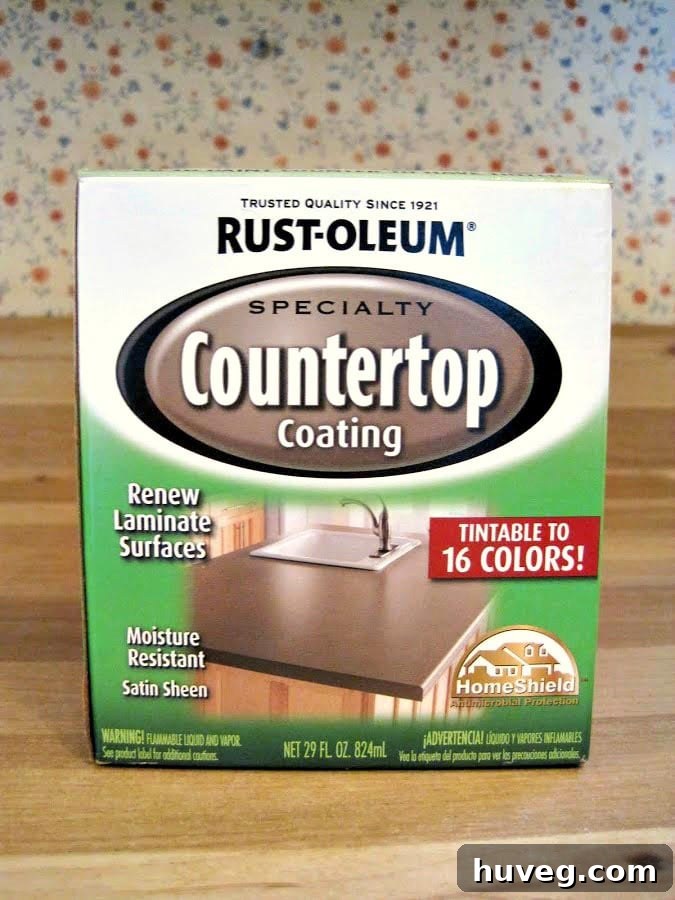
Color Options: Embracing the Gray
When it came to color, I didn’t opt for anything wild, but I did use this project as an opportunity to test how light I wanted the countertops to be in the long run. Can you guess which color I gravitated towards? If you guessed gray, you know me well! It’s a common affliction among DIY enthusiasts, I suppose.
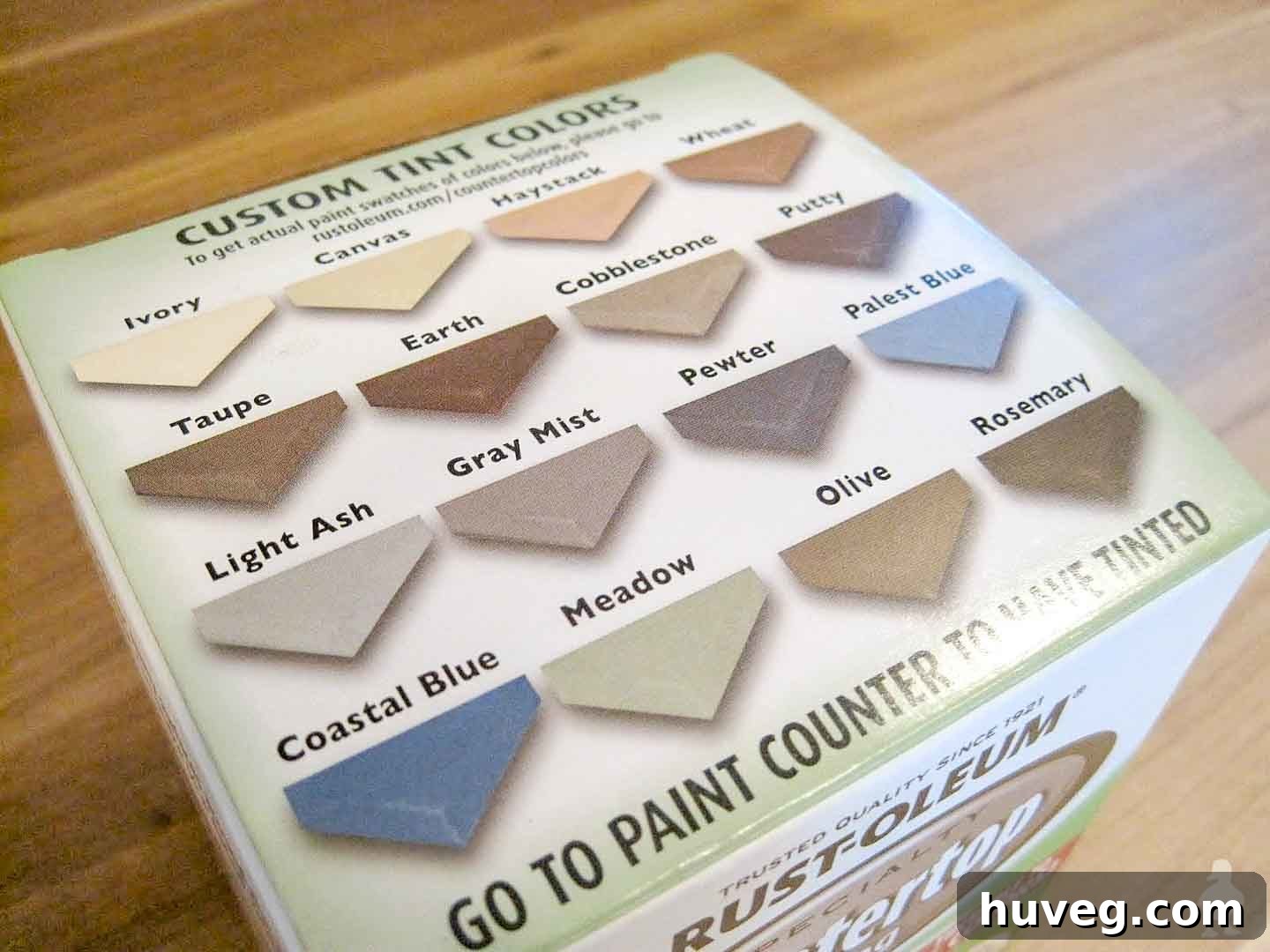
To be fair, this particular Rust-Oleum product only offered sixteen color options, and three of those were shades of gray. I settled on the middle gray tone, aptly named “Gray Mist.” It felt like a safe, modern choice that would instantly brighten the space compared to the dingy old laminate.
Prepping the Counters (and Myself): Safety First!
My limited research into this product, primarily through user reviews, revealed two crucial insights: first, this paint was quite toxic, and second, it would require a full three days to properly cure. It also boasted excellent adhesion to laminate surfaces, eliminating the need for a separate primer. However, this meant it would stick to *anything* it touched, making thorough protection of my surrounding kitchen surfaces absolutely critical. My precious floors were first on the list. After spreading out three old bedsheets (which served as makeshift drop cloths), I felt somewhat prepared to begin.
Knowing the inherent toxicity of this painting adventure, I gathered my basic tools: gloves, a foam roller, and a breathing mask. While I thought I was being prepared, my initial mask choice was far from adequate. It’s crucial to learn from my mistake:
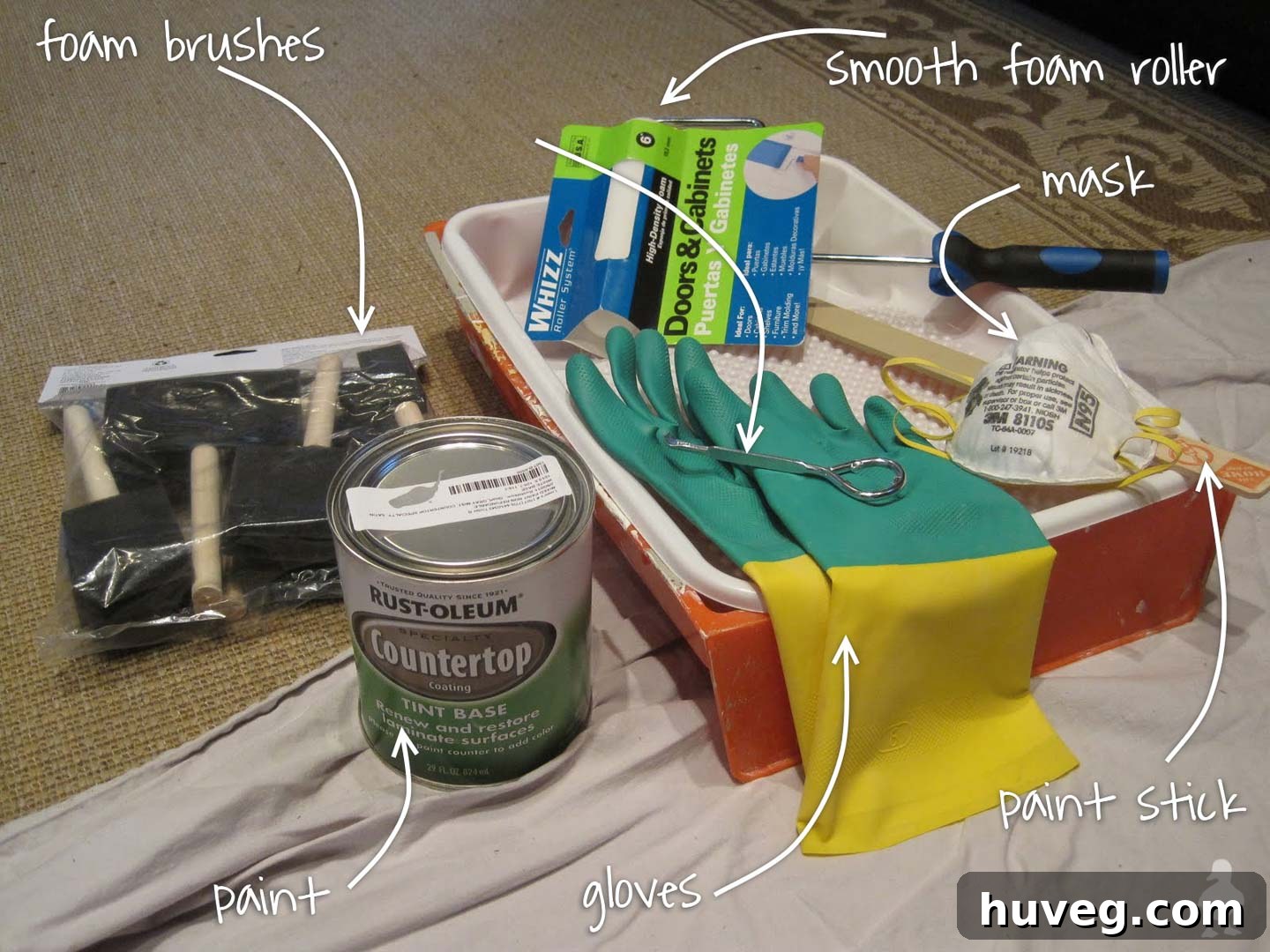
It was a look, indeed! But please, take proper precautions and protect yourself from harmful fumes. The mask you should be wearing for this type of epoxy paint is a proper respirator, like this 3M Painting Respirator. Remember: do as I say, not as I do!

Before application, I found that a paint stick was incredibly useful. Despite a warm weekend, the can’s instructions stressed the importance of paint consistency, especially if temperatures were to drop during the three-day curing period (optimal temperatures are between 50 and 90 degrees Fahrenheit). I noticed the color had easily separated from the tint base, even though I had only purchased the paint two days prior, so thorough stirring was absolutely essential. Although the paint appeared relatively thin as I loaded it onto the foam roller (chosen for its “smooth finish” promise), I was pleasantly surprised by how thick and robust the coverage was once applied to the countertop.
The Painting Process: Applying the Coats
Applying the paint was a straightforward process, though not without its challenges. The fumes, as predicted, were intense, necessitating open windows day and night.
Coat #1: Laying the Foundation
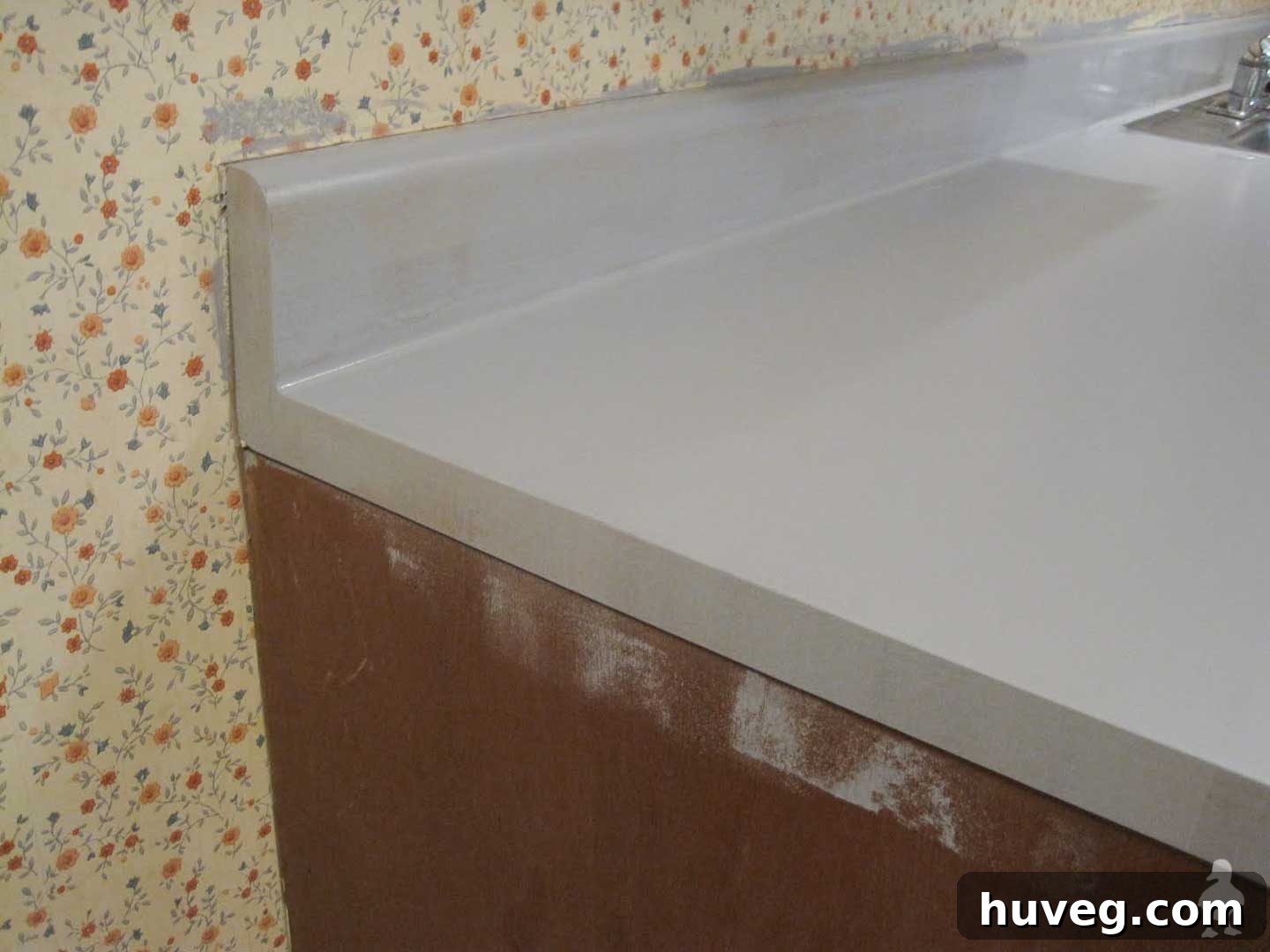
As you can see in the close-up, my approach wasn’t about meticulous precision. My primary goal was coverage. I simply rolled the paint wherever it was needed, focusing on transforming the overall appearance rather than perfecting every edge. Beyond protecting the floors and major appliances, I didn’t obsess over masking every single surface. When I accidentally got too close to the stove, a quick wipe with a damp paper towel handled the fresh spill fairly well.
Despite my (inadequate) safety accessories, the fumes were still overpowering. This stuff truly reeks. I kept all the windows open overnight, even with the dip in temperatures, just to prevent the noxious odors from lingering in the house as I prepared for work the next day. It wasn’t exactly the fresh morning air I would typically prefer!
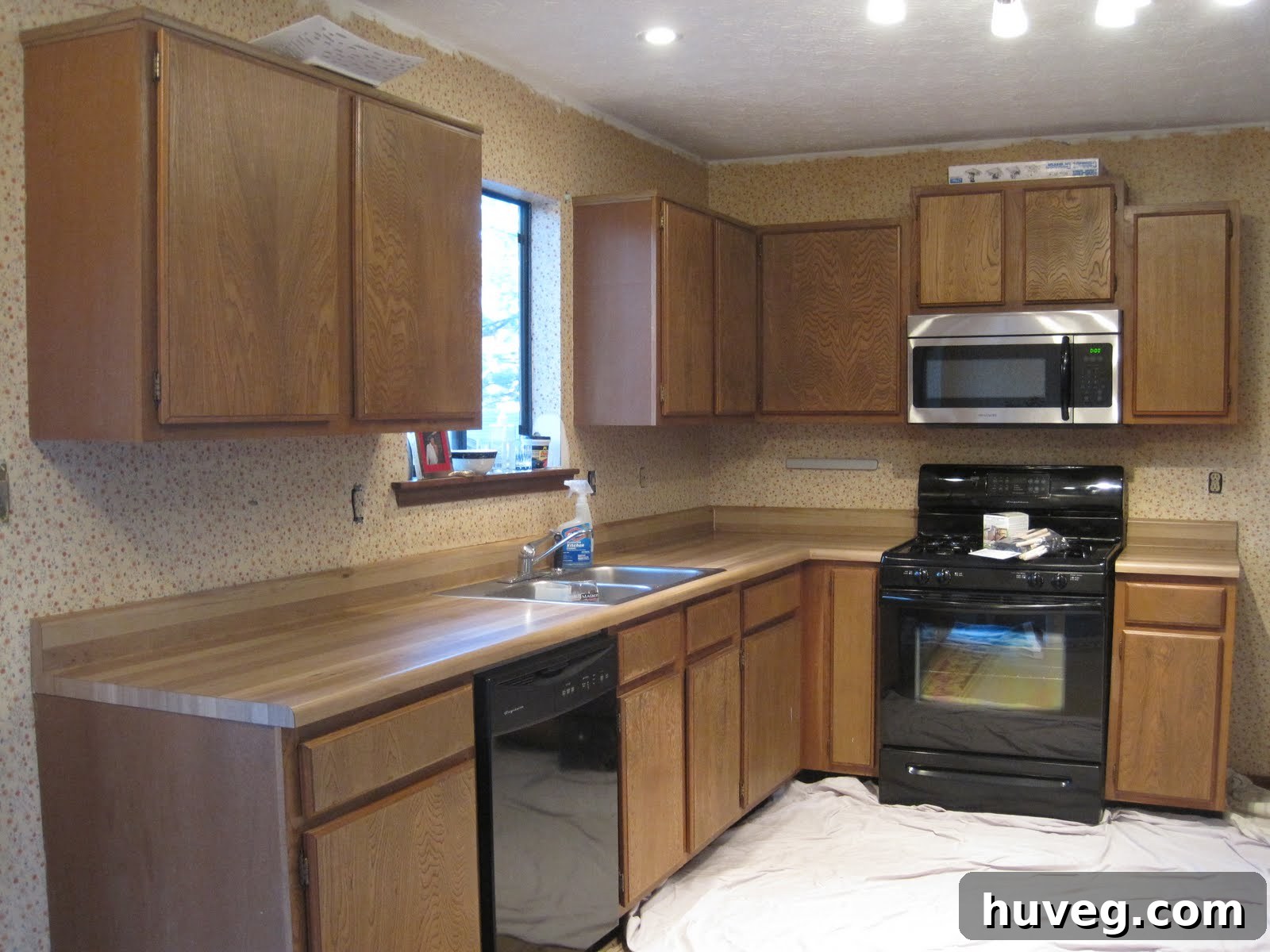
Before Countertop Paint
Okay, now for the moment you’ve been waiting for — the raw, unadorned “before” shot, captured during daylight hours.
One Coat Later… A Glimpse of the Transformation
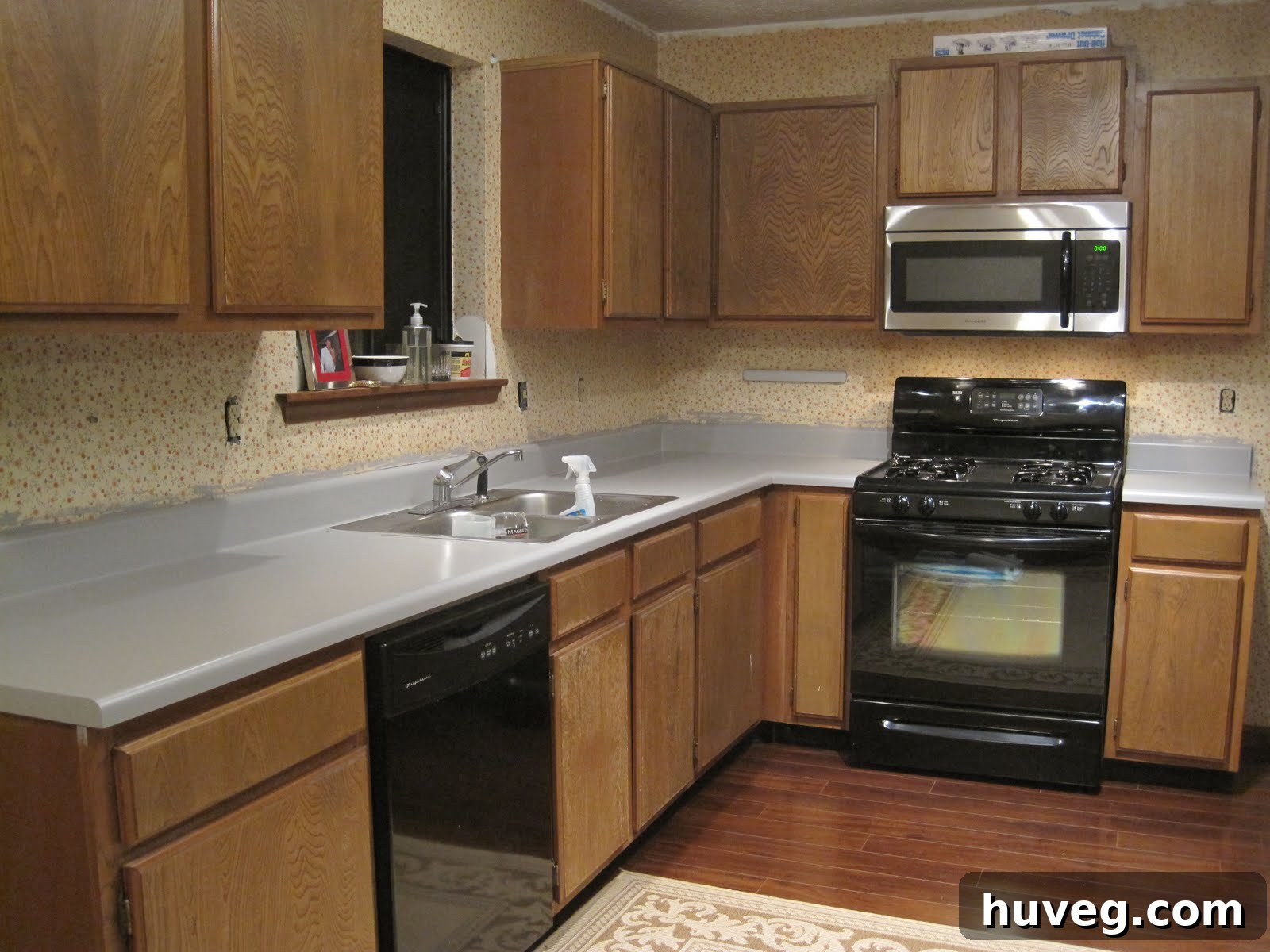
Just one coat made a remarkable difference, providing a solid foundation for the final look.
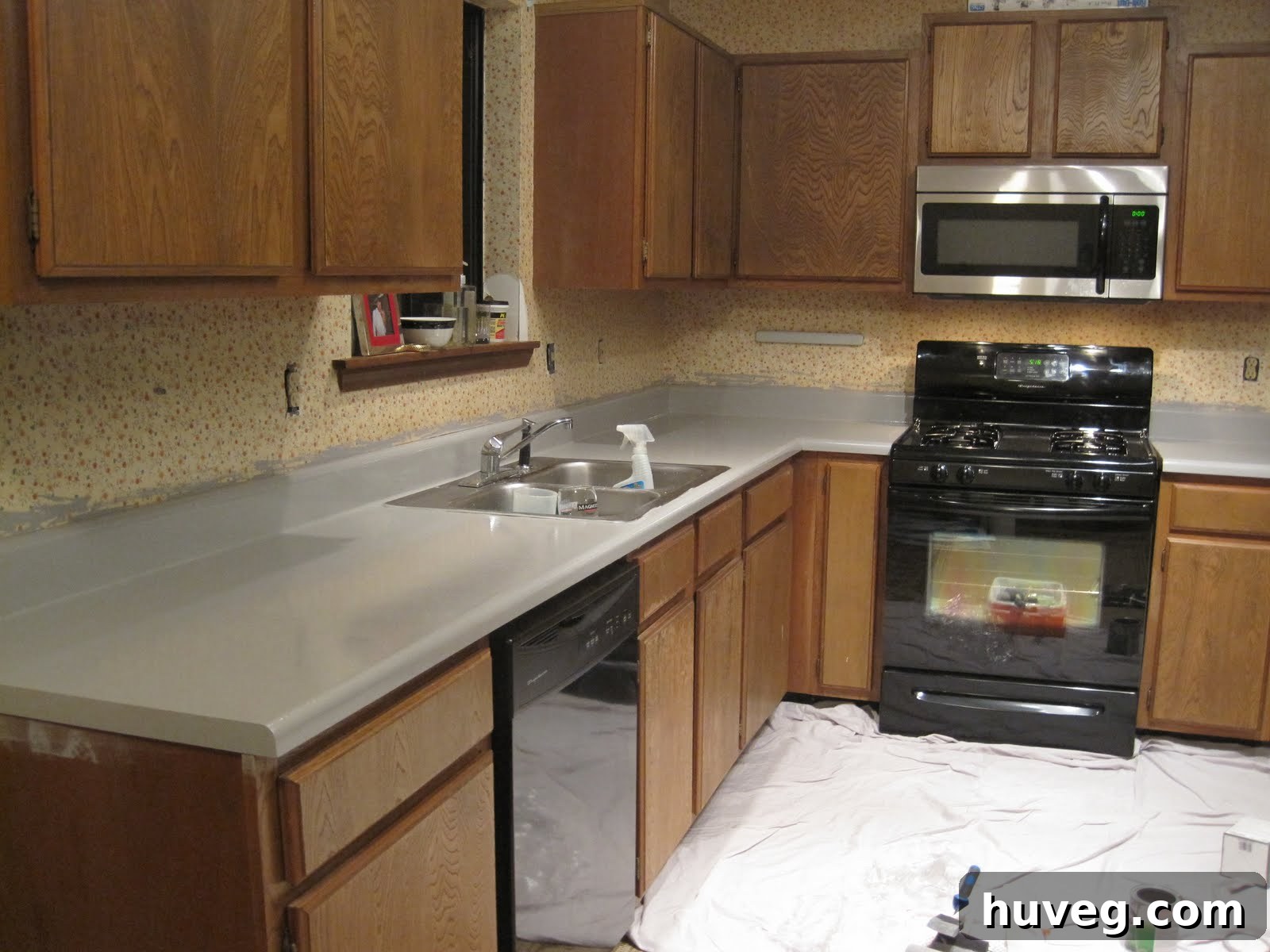
The Second and Final Coat: Completing the Project
This final shot was taken at night just before I went to bed, so a better, daylight “after” picture will follow later to truly showcase the color and finish.
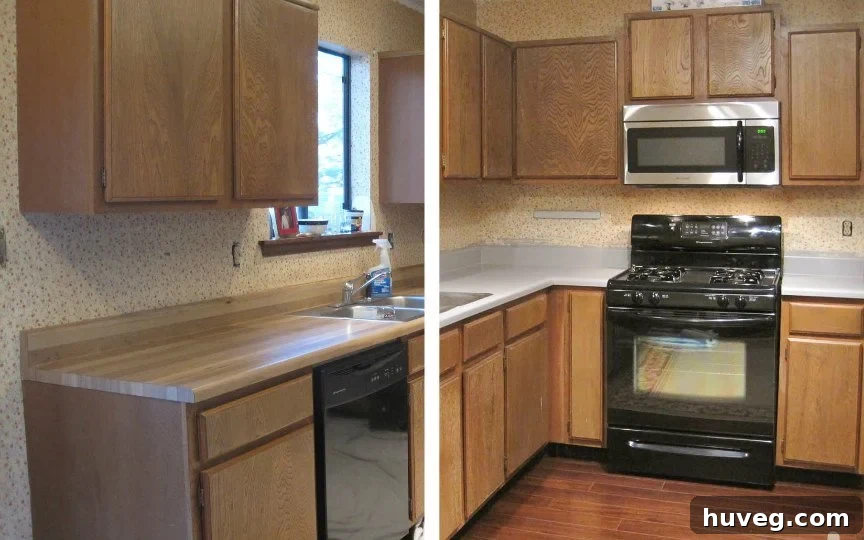
And just for a bit of fun, here’s a side-by-side Before & After comparison:
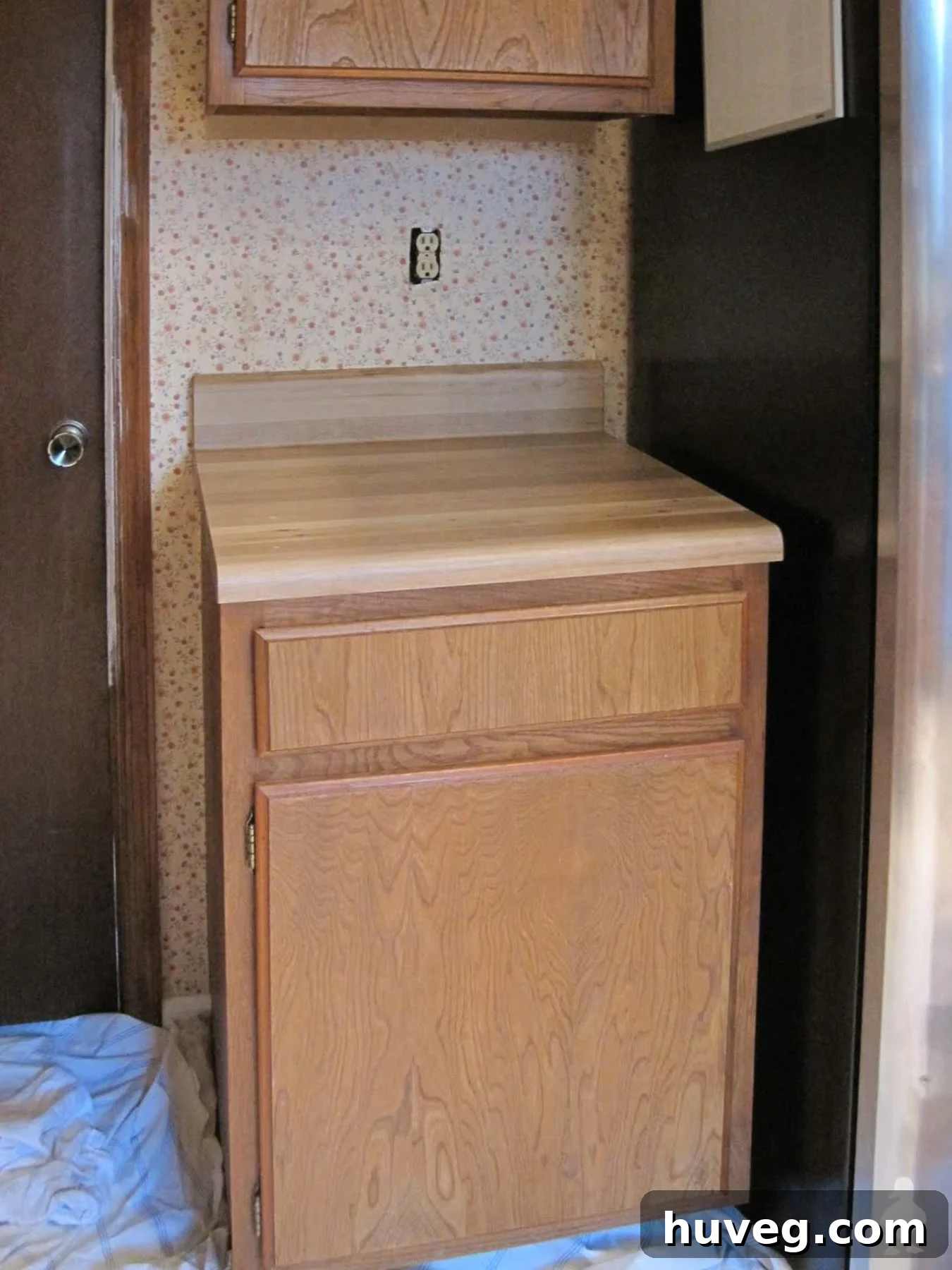
I also painted the small counter section next to the fridge, though I forgot to snap an “after” picture for that specific spot. You can still see its original state here:
Initial Impressions: “Meh” But Informative
Now, for the ultimate question: how did I feel about the results? The honest answer is a resounding “meh.” I wasn’t expecting miracles from a $20 can of paint, and while the finish was consistent and dry to the touch within a few hours, I wasn’t completely in love with it.
On the positive side, the paint adhered quite well during the three-day curing period, suggesting it would wear decently for the next year or so – exactly what I needed before a full material upgrade. However, I did notice some areas where the paint appeared to bubble slightly. I suspect this was my fault, likely due to not waiting for slightly higher ambient temperatures before beginning the project, as the can’s instructions specify.
Despite the minor imperfections, this experiment provided invaluable insights. It confirmed that I don’t want to go with a mid-tone gray for my permanent countertops. Once I paint the dated oak cabinets a lighter color, I envision either an extremely light or extremely dark countertop to create a striking contrast. This “test drive” for just $20 was a powerful motivator, pushing me even harder to tackle those old cabinets. White cabinets paired with a dark gray or even a crisp white countertop would look fantastic.
Long-Term Durability: Months and Years Later
The initial “meh” reaction was just the beginning. The true test of any painted countertop lies in its long-term durability and how it holds up to daily kitchen use.
A Few Months Later…
About six months after the initial application, I conducted a review to assess how the painted countertops were faring under normal kitchen activity. Were there chips, scratches, or peeling? Did the color hold up? You can dive into the detailed results of that follow-up by clicking here to see how they truly performed.
And a Few Years Later… The Ultimate Kitchen Remodel
As anticipated, the painted countertops served their purpose as a temporary solution. Eventually, the time came for a more permanent and significant upgrade. I finally replaced them with beautiful, inexpensive butcher block countertops, and I absolutely adore them! This marked a major milestone in my kitchen renovation journey. You can find all the comprehensive details of the butcher block installation and the broader kitchen remodel here:
- Sourcing the butcher block
- Cutting a hole for the sink (and how we fixed our mistake)
- How to smooth countertop edges with a router
- Treating the butcher block for long-term use
- Adding a backsplash
- Painting the rest of the kitchen
- What the kitchen looks like now!
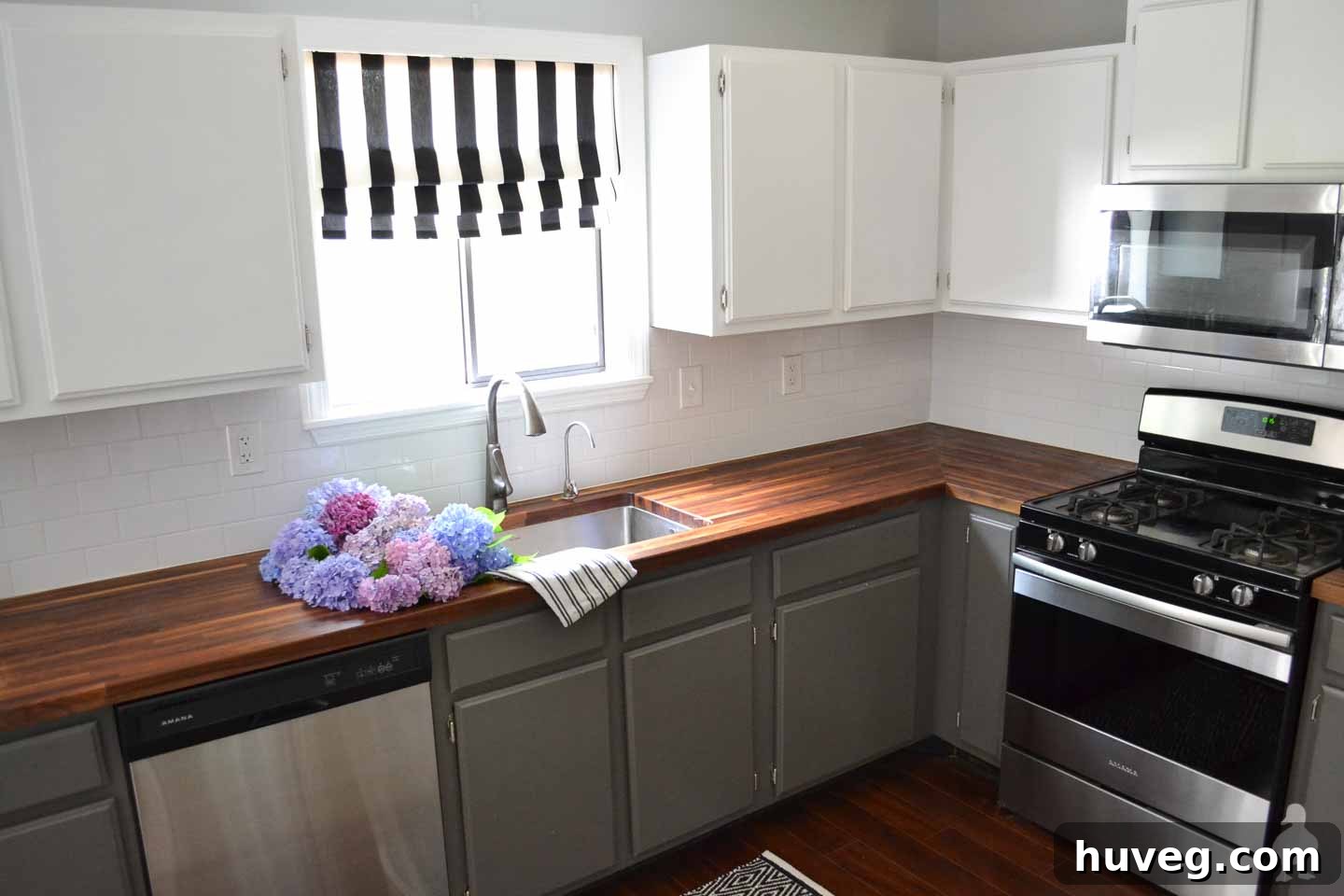
This entire process, from the initial $20 paint job to the final butcher block installation, illustrates that kitchen transformations don’t always need to start with massive budgets. Sometimes, a simple, affordable DIY can pave the way for bigger, more informed decisions down the line.
** I was not compensated in any way for using this product. I simply enjoy trying out new things and helping my readers navigate the uncertainty of unknown products. Word of mouth is the sincerest form of advertisement, and you will get nothing but 100% honesty from products that I try.**
More Kitchen Remodeling Ideas & Tutorials
Want more kitchen ideas? From tiling a backsplash to installing counters and more, I’ve got you covered for your next kitchen project! SEE ALL KITCHEN PROJECTS
-
How to Tile a Backsplash (Step by Step Guide)
-
How to Protect Butcher Block Counters During Projects
-
How to Fix a Bad Cut in Butcher Block Counters with an Undermount Sink
-
No-Sew Faux Roman Shade and My Christmas Kitchen Window
-
How to Seal Damaged Drywall
-
How to Prep Kitchen Walls for a Tile Backsplash