Laying Tile on Concrete

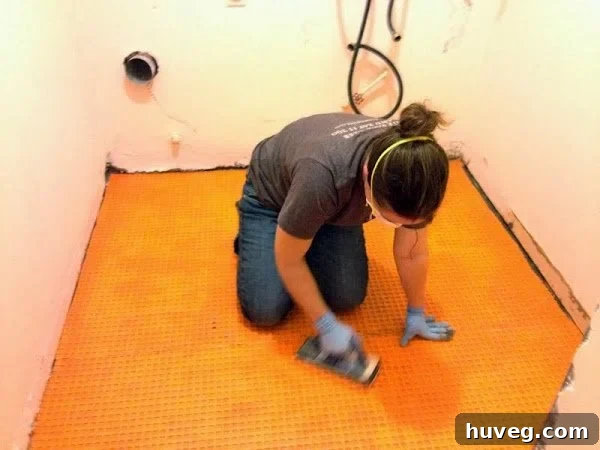
The faint ache in my knees serves as a constant reminder of my latest home improvement triumph: a successful tile installation over a concrete subfloor in my laundry room. While some might view these bruises as a badge of honor, I’m already adding heavy-duty kneepads to my next holiday wishlist! This project, initially daunting, proved to be incredibly rewarding and surprisingly straightforward, thanks to careful planning and the right materials. If you’re considering tackling a similar renovation, let me guide you through my experience and share why tackling this project now was the smartest decision.
Transforming Your Laundry Room: A Guide to Tiling Over Concrete Subfloors
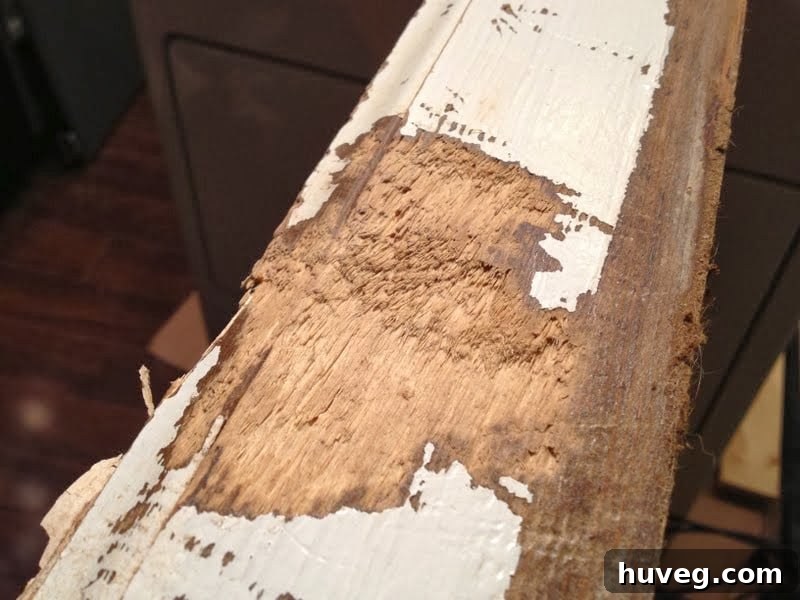
Home renovation often involves a complex dance of timing, budget, and unexpected challenges. My journey to a beautifully tiled laundry room began with a pressing need and a golden opportunity. My parents generously offered to upgrade my outdated washer and dryer as a graduation gift, setting a budget under $1,000. Knowing that Black Friday was just around the corner, I saw a chance to maximize their generosity and get an even better deal. However, there was a catch: my laundry room floor was bare, a casualty of my puppy Charlie’s early chewing phase that left the baseboards and floor covering in disarray. The thought of bringing in new appliances only to move them out again for tiling was enough to prompt immediate action.

This urgent timeline pushed me to embark on the tiling project sooner rather than later. The convenience of having a finished floor before appliance delivery far outweighed any desire to postpone. This decision led me to discover an invaluable product that makes tiling over concrete subfloors not just possible, but exceptionally reliable: Ditra uncoupling membrane. This essential material provides a crucial layer of protection, ensuring the longevity and beauty of your new tile floor. Let’s delve into the specifics of why Ditra is so highly recommended and how it revolutionized my laundry room makeover.
The Power of Ditra: Ensuring Durability for Your Tile Over Concrete Subfloor
One of the biggest concerns when tiling over a concrete subfloor is the potential for cracked tiles. Concrete, being a dynamic material, is susceptible to movement caused by temperature fluctuations, moisture changes, and structural shifts. These subtle movements can exert stress on rigid tile installations, leading to unsightly cracks over time. This is where Ditra, with its distinctive bright orange, waffle-like appearance, truly shines as an uncoupling membrane. It’s not just a fancy plastic sheet; it’s a meticulously engineered solution designed to address these very challenges.
Ditra functions by “uncoupling” the tile from the subfloor. Essentially, it creates an intermediate layer that allows the concrete subfloor to move independently from the tile above. This innovative design isolates the tile from the stresses of substrate movement, dramatically reducing the risk of cracking. But Ditra offers more than just uncoupling; it also provides essential waterproofing, making it an ideal choice for moisture-prone areas like laundry rooms and bathrooms. Its unique waffle pattern forms channels that manage vapor pressure, preventing moisture from migrating up through the subfloor and damaging the tile assembly. Additionally, Ditra offers load distribution properties, helping to support the tile and prevent damage from impacts.
While Ditra may not be the cheapest option on the market, its long-term benefits in preventing costly tile failures make it an incredibly worthwhile investment. For a 54 sq ft roll, I paid around $80, which comfortably covered my 45 sq ft laundry room. The ease of installation further justifies the cost. Armed with just a utility knife for precise cuts, applying Ditra is a manageable DIY task that lays the foundation for a professional-grade tile finish. Understanding its crucial role in protecting your tile ensures peace of mind and a durable, beautiful floor for years to come.
Step-by-Step Ditra Installation for a Flawless Tile Over Concrete Subfloor
The success of any tiling project begins with meticulous planning and proper subfloor preparation. Before laying a single piece of Ditra, ensure your concrete subfloor is clean, dry, and free of any debris, grease, or paint. Any cracks or uneven spots should be addressed and repaired with a suitable leveling compound. A smooth, stable surface is paramount for a lasting installation. Once your subfloor is prepped, you can begin the Ditra installation process.
1. Planning Your Ditra Layout
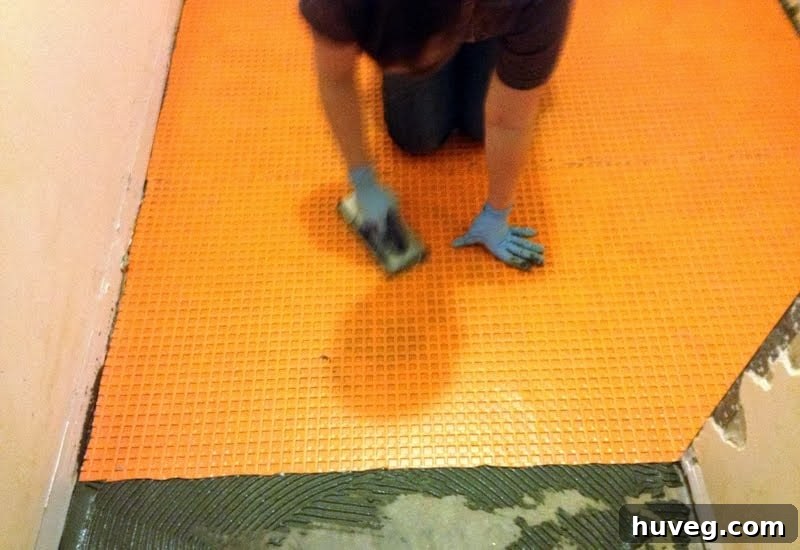
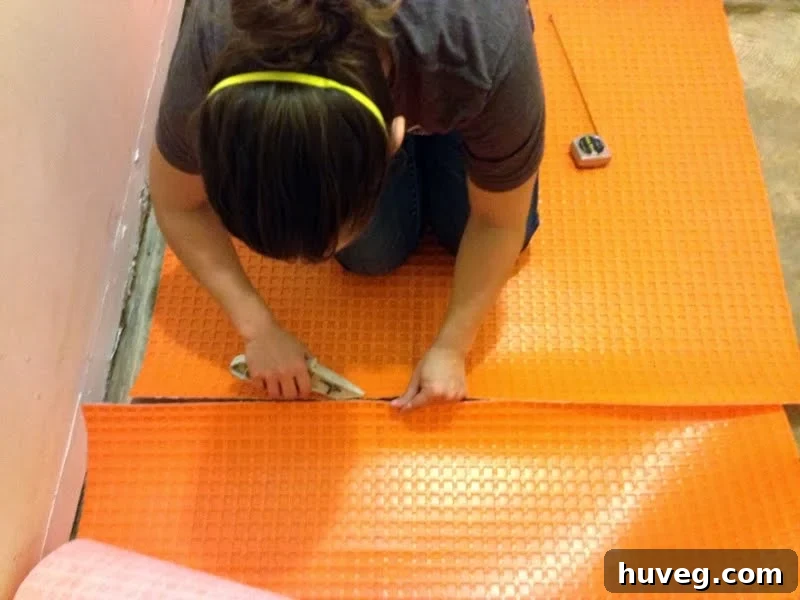
My laundry room presented a unique challenge with its L-shaped layout: a main square for appliances leading into a narrow hallway. My dad, my trusty assistant, and I devised a strategy to minimize cuts and simplify the process. We opted for two horizontal pieces in the main square and a perpendicular piece for the hallway. This clever approach eliminated the need for complex, intricate cuts around awkward corners, saving significant time and effort. Always dry fit your Ditra pieces first to visualize the layout and make any necessary adjustments before mixing mortar. This planning phase is crucial, especially for irregular room shapes.
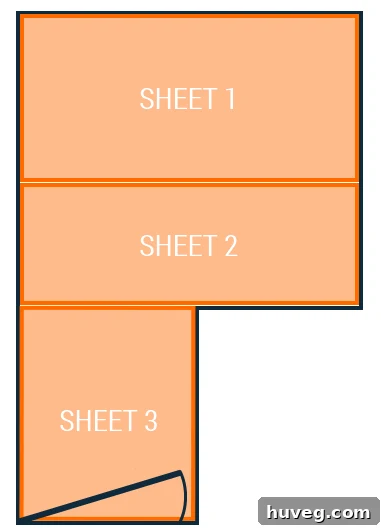
2. Mixing the Right Mortar for Ditra
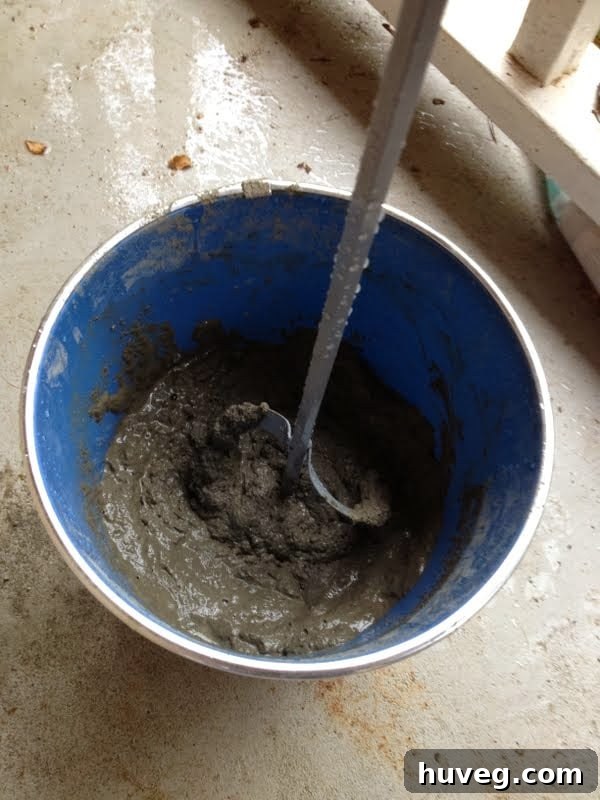
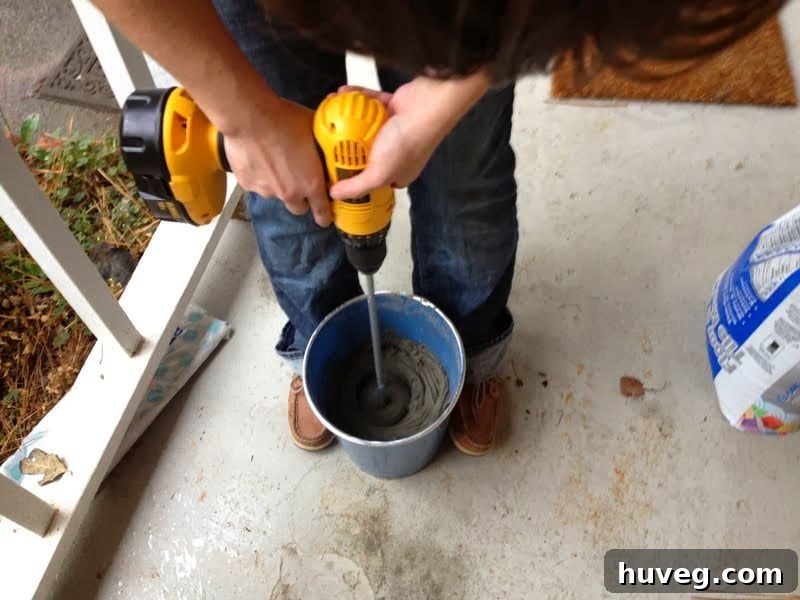
The type of mortar you use with Ditra is absolutely critical. You must use an unmodified thin-set mortar. This means no polymers, no latex additives, and definitely no pre-mixed varieties. Unmodified thin-set allows Ditra’s fleece backing and waffle patterns to create a mechanical bond with the mortar, providing the essential uncoupling functionality. Always consult the Ditra manufacturer’s guidelines for specific mortar recommendations. I had to ask a sales clerk for help finding the correct bag, but it was readily available at a large home improvement store. Mix the mortar according to the package directions to achieve a thick milkshake consistency – fluid enough to spread smoothly but firm enough to hold its shape. The rain during my project actually helped keep my porch clean from excess powder, a small silver lining!
3. Spreading Mortar and Laying Ditra
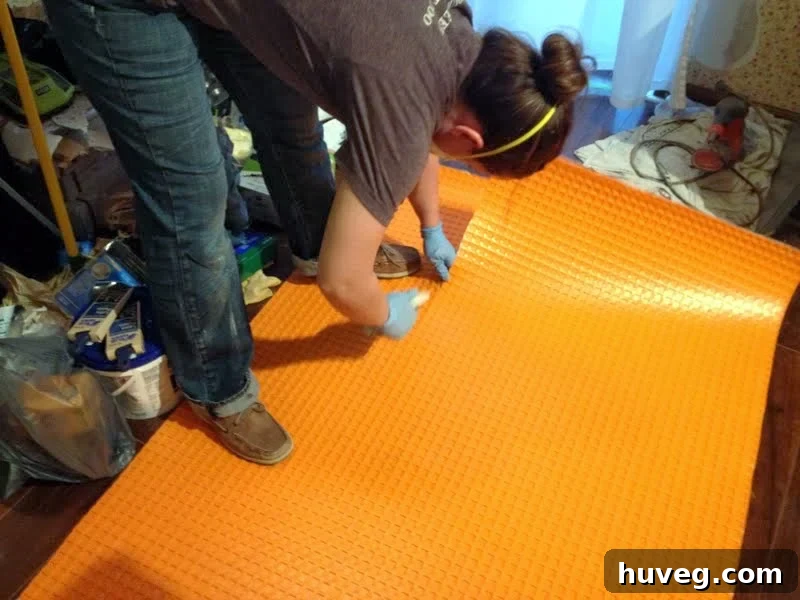
Once your mortar is ready, work in manageable sections. Using the recommended trowel size (typically 1/4″ x 3/16″ for Ditra, applied at a 45-degree angle), spread a uniform bed of mortar onto the concrete subfloor. It’s vital to use appropriate personal protective equipment (PPE) during this stage. I always wear a mask to avoid inhaling fine mortar dust and gloves to protect my skin, as mixed mortar can be corrosive. Carefully lay the Ditra sheet onto the wet mortar, fleece side down, ensuring it’s precisely positioned according to your layout plan. Avoid trapping air bubbles underneath the membrane.
4. Smoothing and Sealing Ditra
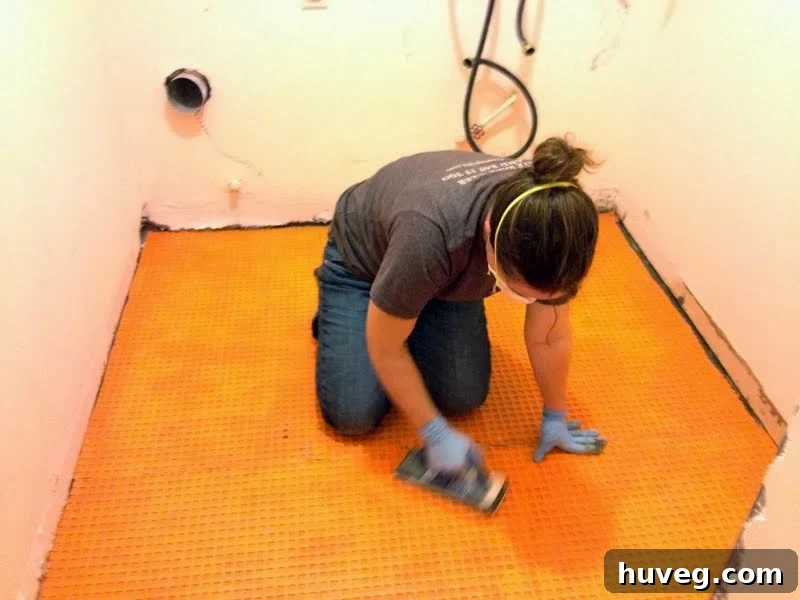
After laying each section of Ditra, use a grout float to apply firm, even pressure across the entire surface. This action embeds the fleece backing into the mortar, ensuring a strong bond and forcing out any trapped air bubbles towards the edges. This step is where the kneepads truly become essential, as it requires sustained pressure and movement on your knees. While I focused on installation, my dad expertly managed the continuous mortar mixing, optimizing our workflow. One of the trickier spots was around the door frame; next time, I’ll definitely remove the door beforehand to simplify the process, especially since it swings inward.
Ready for Tile: The Next Phase of Your Laundry Room Transformation
Eventually, my entire laundry room floor was covered in a pristine, waffled orange coating – the Ditra uncoupling membrane. The beauty of Ditra is that, unlike some other systems, you don’t typically have to wait for the mortar underneath to fully cure before you begin tiling on top. This immediate tile-ability is a major advantage for DIYers eager to see their project progress. However, after a few hours of intensive work mixing, spreading, and smoothing, Dad and I were thoroughly exhausted. We decided to tackle the actual tile installation on another day, allowing us a much-needed break.
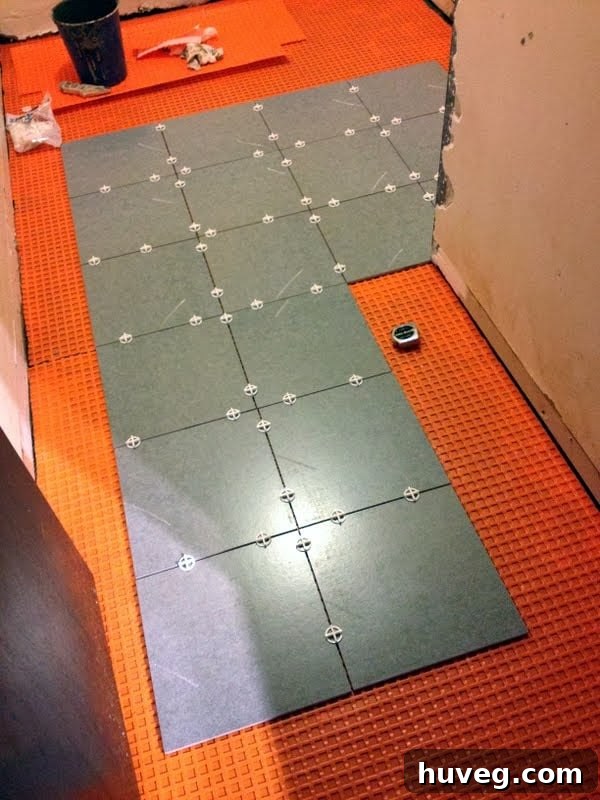
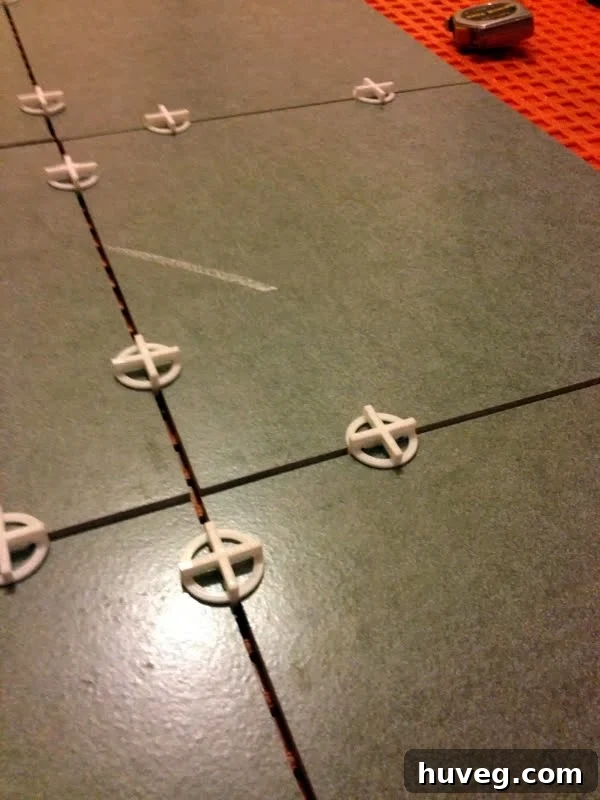
Even though the tiling came later, I couldn’t resist using a box of my chosen tiles to start dry fitting. I opted for simple, gray 12×12 ceramic tiles, which I found for an incredible 99 cents per square foot during my trip to pick up the Ditra. This neutral choice ensures a clean, organized aesthetic that won’t overwhelm the compact laundry room space. Given the room’s odd shape, dry fitting was crucial to plan the tile layout, ensuring that the lines would look consistent and professional, especially along the doorway. Careful planning now prevents frustrating issues later. With the layout finalized, the next exciting step is the actual tiling – a task made significantly easier and more reliable thanks to the solid foundation provided by the Ditra membrane.
Completing this phase of the laundry room renovation has been incredibly satisfying. Tiling over a concrete subfloor doesn’t have to be intimidating, especially when you leverage the right materials and techniques. Ditra has proven to be an indispensable ally in ensuring a durable, crack-free tile floor. I hope my experience encourages you to take on your next home improvement project with confidence. What exciting projects are you tackling around your home?