Mastering the Art of Painting Paneled Doors

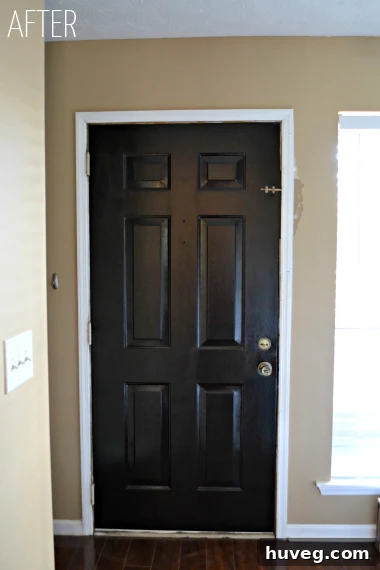
There’s nothing quite like the satisfaction of transforming a space with a DIY project, and this week, we’re diving into a refresh that promises to deliver dramatic results without breaking the bank. If you’ve been wondering how to paint a paneled door like a pro, you’ve come to the right place. Get ready to turn a mundane doorway into a stunning architectural feature!
The Power of a Painted Door: An Instant Home Makeover
Interior doors are often overlooked, blending into the background with their standard white or wood finishes. Yet, they present an incredible opportunity for a budget-friendly home makeover. A fresh coat of paint can elevate an entire room’s aesthetic, adding character, depth, and a touch of personality. Whether you’re aiming for a modern minimalist look, a classic elegant feel, or a vibrant pop of color, painting your doors is a high-impact, low-cost solution.
Embracing the Dark Side: The Allure of Black Interior Doors
For ages, the idea of painting the door has lingered in my mind. Pinterest was a treasure trove of inspiration, filled with captivating images of black interior doors that exuded sophistication and style. However, finding the ‘right time’ for such a project always seemed elusive. As often happens with these lingering thoughts, a sudden burst of motivation hit, leading to the spontaneous decision: why not today?
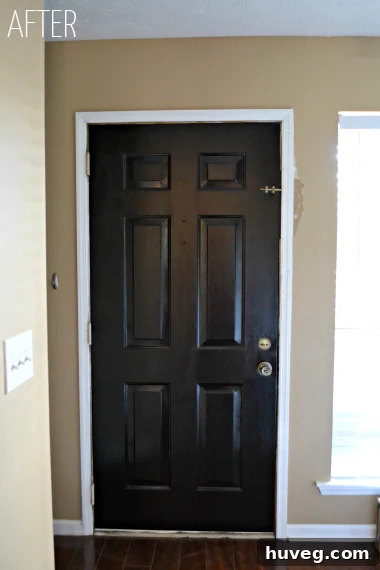
Black interior doors have surged in popularity for good reason. They offer a striking contrast against lighter walls, making a bold statement that feels both modern and timeless. Black has an incredible ability to anchor a space, add depth, and even make a room feel more luxurious. Beyond aesthetics, black doors can cleverly disguise minor scuffs and marks, making them a practical choice for high-traffic areas. This transformation wasn’t just about a new color; it was about adding a sophisticated focal point to my home.
The Journey Begins: Patience and Persistence
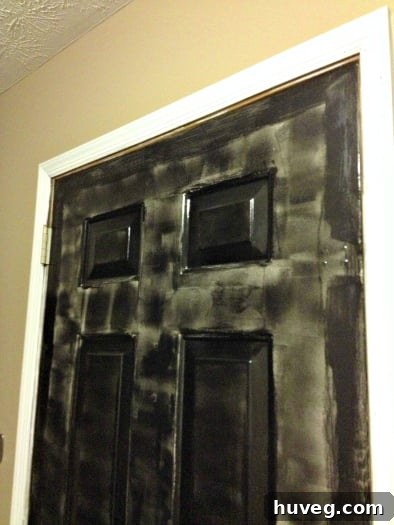
And so, the journey began. Night after night, coat after coat. Painting a door, especially one with panels, requires patience. Thin, even coats are absolutely essential for achieving a professional, smooth finish. While they take longer to apply and dry, they prevent drips, brush marks, and an uneven texture. Rushing this process almost always leads to disappointing results, so embrace the waiting time between coats.
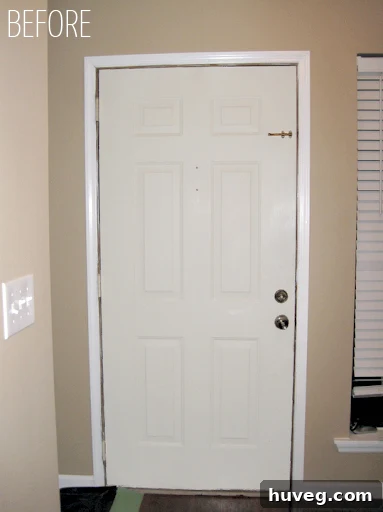
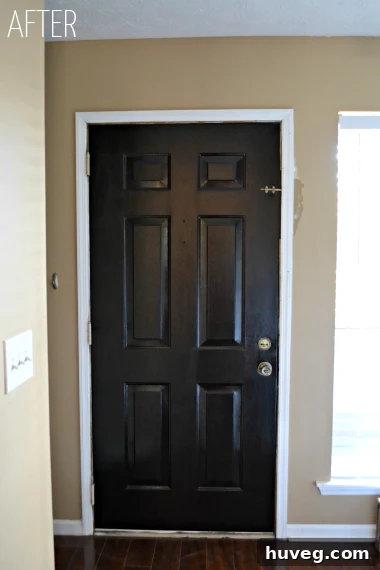
Finally, after what felt like an eternity – a fourth coat applied with meticulous care – the project was complete. It’s remarkable to think this small update in the house had been envisioned over a two-year window. Sometimes, the most satisfying projects are those that simmer on the back burner before bursting into life. The before and after is truly astounding.
Hardware Harmony: Brass on Black
Once the paint had fully cured, it was time to reinstall the door hardware. The brass fixtures against the glossy black door created a stunning contrast that I didn’t just like – I absolutely loved it! The warmth of the brass perfectly complemented the dramatic black, adding a touch of classic elegance. The hinges, however, posed a minor aesthetic challenge. They had been painted over in ivory sometime around the dawn of time, and while not immediately visible, this will be a small detail to address on another day. For now, the overall effect is spectacular.
Mastering the Art: How to Paint a Paneled Door Like a Professional
Painting a paneled door might seem daunting due to its intricate details, but with the right technique, it’s a straightforward process that yields incredibly professional results. The key lies in understanding the sequence and direction of your brushstrokes.
Essential Tools and Materials for Your Door Painting Project:
- Screwdriver: For removing door hardware (knobs, hinges, strike plates).
- Cleaner: TSP (Trisodium Phosphate) or a good quality degreaser to clean the door thoroughly.
- Fine-grit Sandpaper (120-220 grit): For light sanding between coats and to rough up the surface for better adhesion.
- Painter’s Tape: To mask off any areas you don’t want to paint (if painting the door in place) or cover glass inserts.
- Drop Cloths or Plastic Sheeting: To protect your floors and workspace.
- Primer: Especially crucial if painting over an oil-based finish with latex, going from dark to light, or vice-versa. A good bonding primer is your best friend.
- Paint: High-quality interior paint (e.g., semi-gloss or gloss for durability).
- Angled Paint Brush (1.5 – 2 inches): Ideal for cutting in around panels and edges.
- Small Foam Roller (for doors and furniture): Excellent for achieving a smooth, even finish on flat surfaces without brush marks.
- Paint Tray and Liner.
- Clean Rags.
Step-by-Step Guide to a Flawless Finish:
1. Preparation is Paramount
This is arguably the most critical step. Remove all door hardware, including knobs, hinges, and any other fixtures. Clean the door thoroughly with a degreaser like TSP to remove dirt, grime, and oils. Rinse with clean water and allow to dry completely. Lightly sand the entire door with 120-220 grit sandpaper to create a smooth surface for the paint to adhere to. Wipe away any sanding dust with a damp cloth or tack cloth. If you’re not removing the door and painting it in place, use painter’s tape to protect walls, floors, and any glass.
2. Priming for Perfection (If Necessary)
Primer creates a uniform surface for your paint and ensures excellent adhesion. It’s vital if you’re switching paint types (e.g., latex over oil-based), if the existing finish is very glossy, or if you’re making a dramatic color change. Apply a thin, even coat of a good quality bonding primer using your angled brush for the panels and a foam roller for the flat surfaces. Allow the primer to dry completely according to the manufacturer’s instructions.
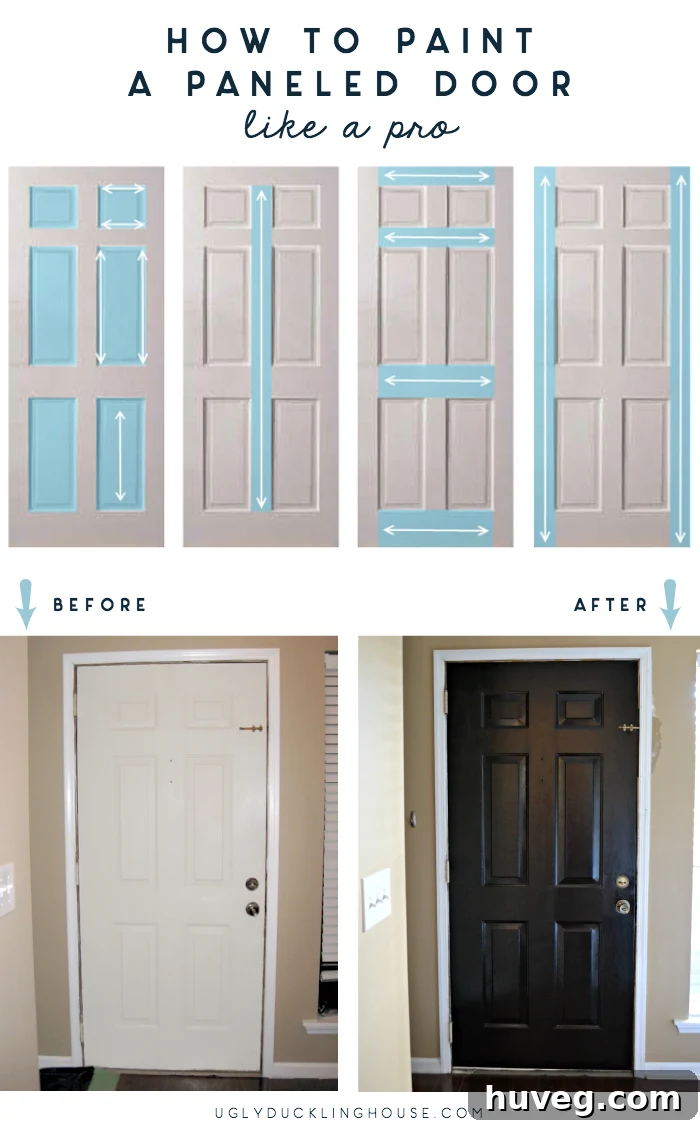
3. The Painting Sequence: Follow the Diagram
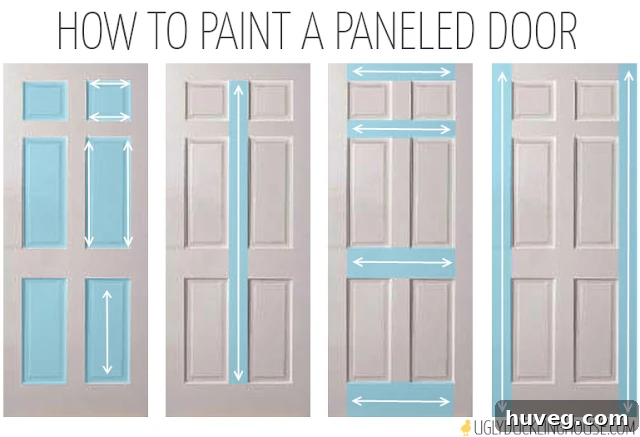
To achieve a professional look and avoid visible seams or uneven texture, follow this specific order of painting, as illustrated in the image above:
- Inside Panels: Start with the innermost recessed areas. Use your angled brush to paint the vertical edges of the panels, then the horizontal edges. Next, use the foam roller to fill in the flat center of each panel. Work efficiently to maintain a wet edge and avoid lap marks.
- Horizontal Rails: Move to the horizontal sections of the doorframe. Begin with the top-most horizontal rail (the section between the panels), then the middle, and finally the bottom rail. Apply paint smoothly, ensuring your brush or roller strokes follow the grain of the wood (horizontally).
- Vertical Stiles: Finish with the vertical sections. Paint the stiles running down the sides of the door, again, ensuring your strokes are consistent and follow the vertical direction.
- Outer Edges: If you are painting the edge of the door (the part visible when the door is closed), do this last.
For my project, I found that a small foam roller (designed for doors and furniture) was fantastic for the flat surfaces, providing an incredibly smooth finish. An angled paint brush was indispensable for the detailed work around the panels and edges.
4. Thin Coats and Drying Time
Remember the golden rule: multiple thin coats are always better than one thick coat. Thin coats dry faster, reduce drips, and create a more durable, even finish. Allow each coat to dry completely according to the paint manufacturer’s recommendations before applying the next. Lightly sand with 220-grit sandpaper between coats for an ultra-smooth finish, wiping away all dust.
Choosing the Right Paint: My Experience with Gloss Black
The paint I chose for this project was Rustoleum’s Painter’s Touch in gloss black. This particular paint stuck exceptionally well to the primed surface. I even performed a scratch test after the first coat to ensure proper adhesion – a crucial step! It’s vital to know what type of paint you’re applying over; if you’re unsure whether the existing paint is oil-based or latex, a simple test can save you a lot of frustration. Dab a cotton ball soaked in denatured alcohol onto an inconspicuous area. If the paint comes off, it’s latex; if not, it’s oil-based. As Allison from House of Hepworths unfortunately experienced, painting latex over oil without proper preparation can lead to epic peeling!
I only needed about half a pint of this paint (I appreciate how small and convenient these cans are). As I applied it, the color initially appeared more like a navy blue, which gave me a momentary pause. However, within a few minutes, as the paint dried, it settled into a perfect, rich black. It was incredibly easy to paint with and made cleanup a breeze, making this a dramatically simple yet impactful upgrade from the boring off-white that once dominated the doorway.
Maintaining Your Beautifully Painted Doors
Once your doors are fully painted and cured, maintaining them is simple. For everyday cleaning, a damp cloth is usually sufficient. For tougher marks, use a mild soap and water solution. Avoid abrasive cleaners or scrubbers that could damage the paint finish. With proper care, your newly painted doors will look fantastic for years to come.
The Impact of a DIY Transformation
This project proves that sometimes, the biggest transformations come from the smallest details. Painting an interior door black transformed a previously unnoticed element into a sophisticated statement piece that instantly elevates the entire space. It’s an easy-to-tackle DIY that offers immense satisfaction and a significant aesthetic upgrade.
What’s next on the DIY agenda? The staircase! Stay tuned for more transformations. The journey to a more personalized and beautiful home continues!