The Genius Hack for Effortless Art Hanging

Transforming a house into a home often involves personal touches, and few things define a space as powerfully as carefully chosen and beautifully displayed art. Yet, the seemingly simple task of hanging pictures can often feel daunting, leading to walls that remain bare for far too long. If you’ve been putting off bringing your walls to life, rest assured, the solution doesn’t require complex tools or advanced DIY skills. With the right approach and ingenious hangers, achieving a gallery-worthy display is easier than you might imagine. We’re about to uncover simple tricks and a revolutionary tool that will make hanging art with confidence a breeze, turning your home into a personalized sanctuary of style and cherished memories.
Mastering Wall Art Placement: The Ultimate Guide to Effortless Hanging and Perfect Display
For years, like many homeowners, I’ve harbored grand intentions of adorning every wall in my house with art. Despite this enthusiasm, the reality has been a slower journey, with many blank spaces awaiting their moment. But change is finally underway, driven by a particularly special piece that recently found its way back to me. This isn’t just any painting; it’s a testament to family, memory, and the enduring power of art to connect generations. Its journey into my home also became the perfect opportunity to master the art of effortless picture hanging, a skill I’m excited to share.
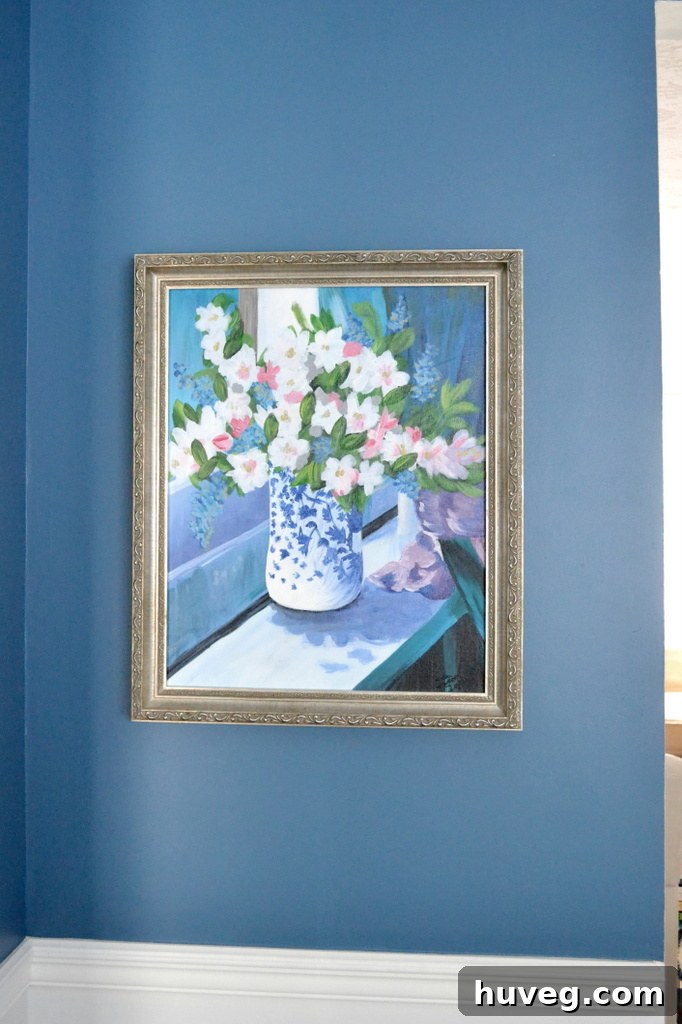
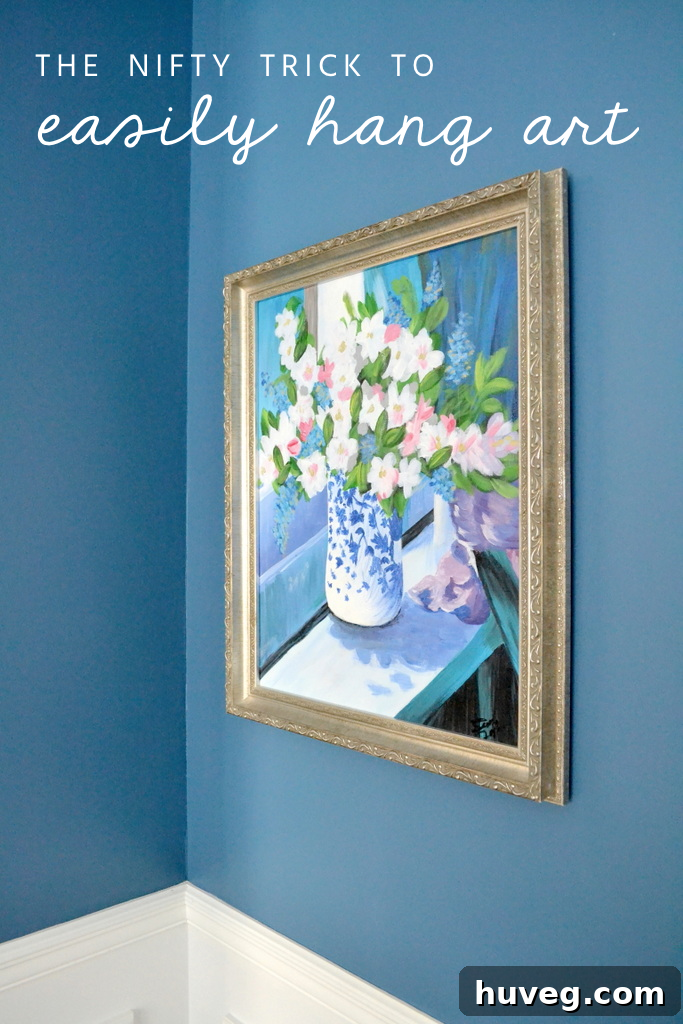
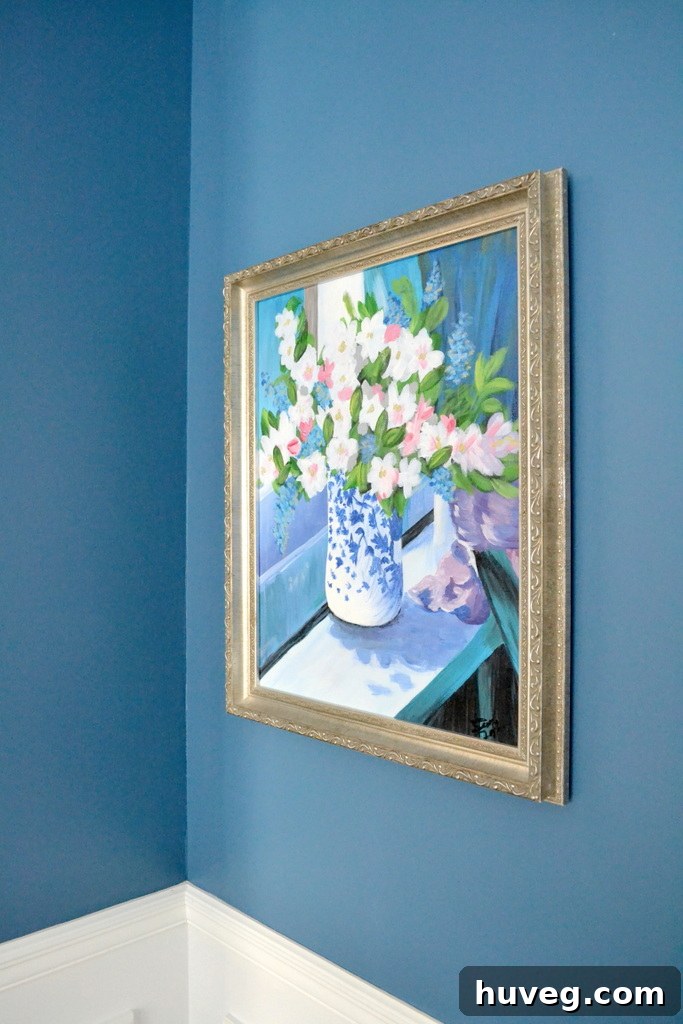
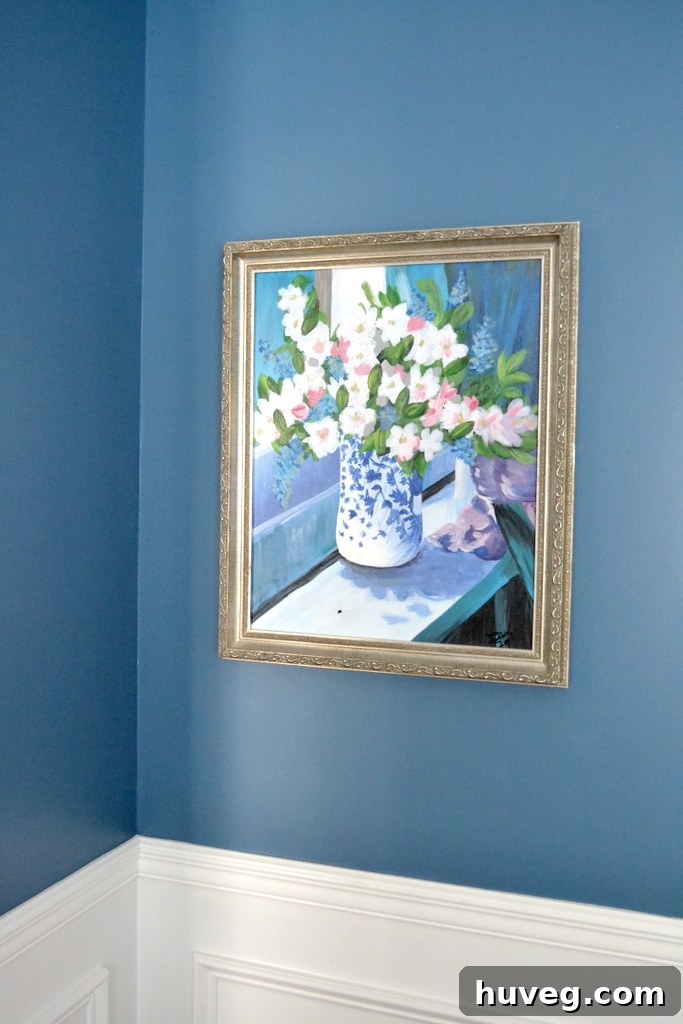
This particular piece, a floral painting, holds immense sentimental value, as I painted it for my grandmother during my middle or high school years. She cherished it deeply, having it professionally framed around that time, and it graced her home for decades—first in her own residence, and later above her bed in my parents’ home. In her later years, as her battle with Alzheimer’s progressed, many possessions faded from her grasp. Yet, this painting, a small window into our shared history, miraculously remained. It was a beacon of comfort amidst the shifting landscape of her memory. So, when she passed away, it was a quiet, unspoken understanding that this painting would come to live with me, becoming a tangible link to her loving spirit.
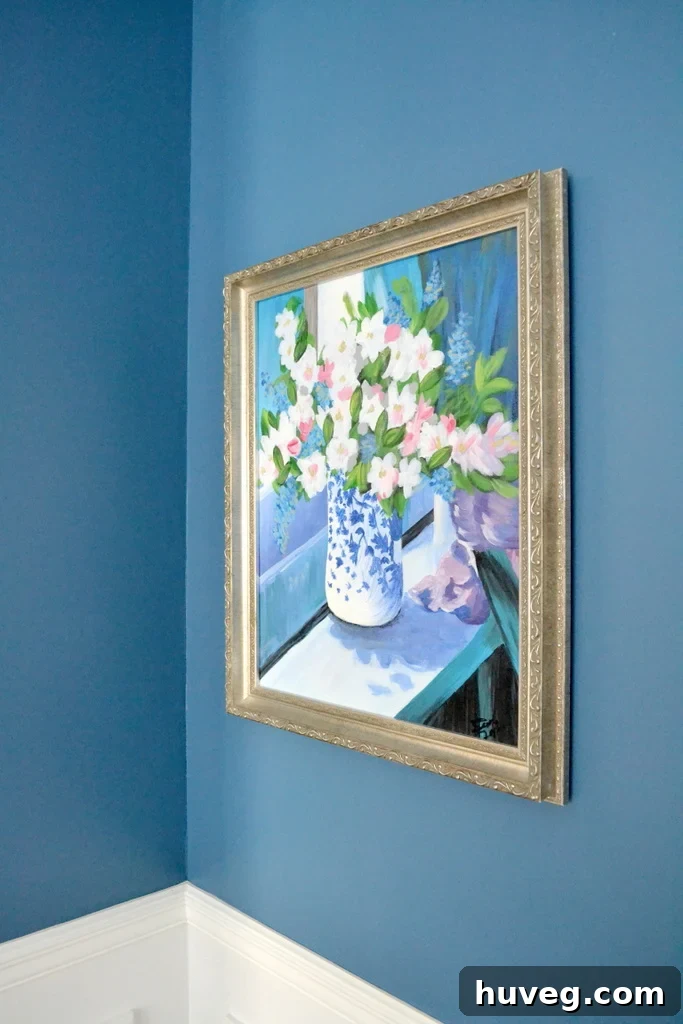
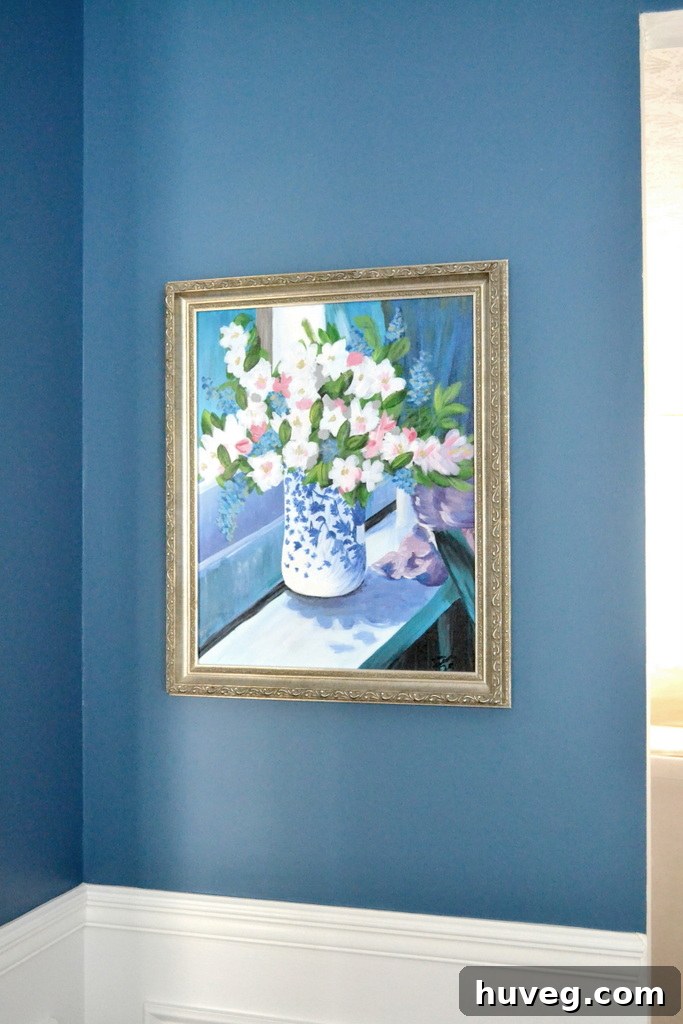
Finding the perfect spot for such a treasured piece was crucial. It wasn’t just about filling a blank space; it was about honoring its story and placing it where it could be admired daily. The ideal location quickly revealed itself: a charming, small wall in our blue dining room, nestled perfectly as a gateway into the kitchen. This vibrant blue backdrop seemed to breathe new life into the painting, making its colors pop and giving it the prominence it deserved. With the location chosen, the next step was to hang it correctly, ensuring it sat at just the right height to captivate and engage.
The Secret to Perfect Wall Art Placement: Embracing the 57-Inch Rule
When hanging a single piece of art, or even establishing the anchor point for a gallery wall, achieving the optimal height is key to creating a harmonious and aesthetically pleasing display. This is where the “57-inch rule” comes into play, a guideline widely adopted by art galleries and interior designers for its ability to place art at an average eye level. The rule suggests that the center of your artwork should be approximately 57 inches (145 cm) from the floor. This height allows viewers to comfortably appreciate the piece without craning their necks up or down, making the art feel perfectly integrated into the room’s design.
While the 57-inch rule provides an excellent starting point, simply measuring 57 inches from the floor and marking your spot isn’t enough. You need to account for the physical dimensions of your art and where its hanging mechanism is located on the back of the frame. This involves a straightforward, albeit essential, calculation that ensures your picture hanger is placed precisely where it needs to be for the artwork to sit at the desired 57-inch center. Mastering this simple math is the foundation for perfectly placed wall art every time.
Step-by-Step Guide to Flawless Art Hanging
Step 1: Determine Your Art’s Midpoint
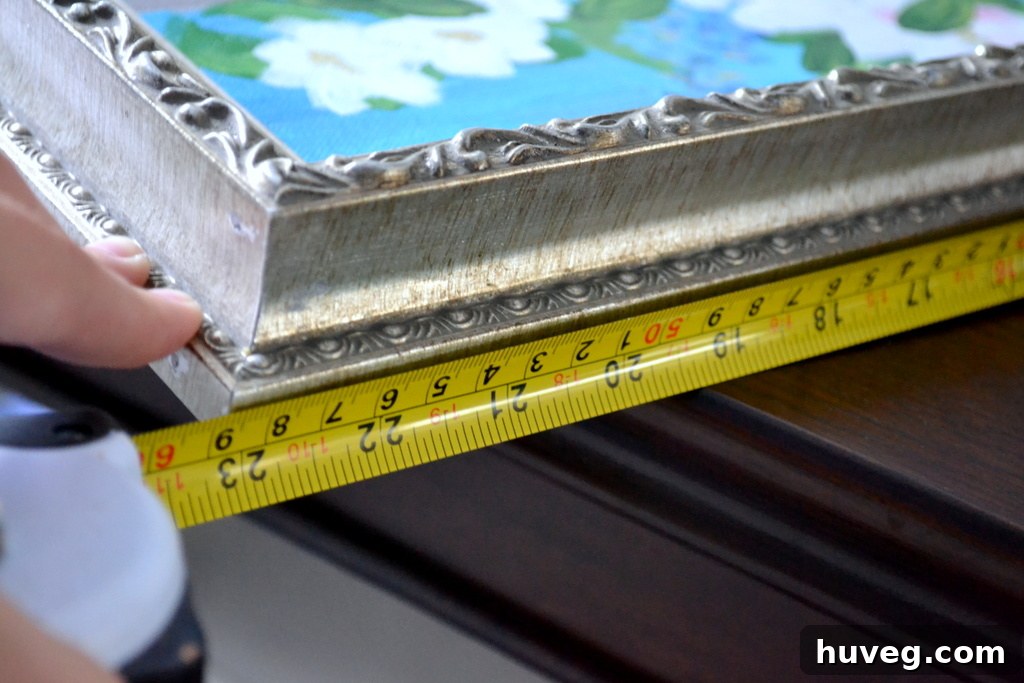
Begin by measuring the total height of your framed art piece. Once you have this measurement, divide it by two. This calculation gives you the exact midpoint of your artwork. For example, my cherished floral painting measures 23 inches tall. Therefore, 23 inches / 2 equals 11.5 inches. This 11.5-inch mark represents the visual center of the piece, which is what we ultimately want to align with the 57-inch guideline.
Step 2: Calculate the Hanging Point Offset
Next, flip your artwork over and measure the distance from the very top edge of the picture frame down to the point where the hanging wire or mechanism is attached. This measurement accounts for how much of the artwork will extend above the hanger. In my case, this distance was 4.5 inches. Now, subtract this measurement from the midpoint you calculated in Step 1. Using our example: 11.5 inches (midpoint) – 4.5 inches (top of frame to wire) = 7 inches. This 7-inch figure is your “offset” – it tells you how far above the desired 57-inch center your actual hanger needs to be placed.
Step 3: Mark Your Spot on the Wall
Finally, armed with your offset number, you can accurately mark the spot for your picture hanger on the wall. Add the offset value to the standard 57-inch eye-level height. So, 57 inches + 7 inches = 64 inches. This 64-inch mark is the precise location where you will install your picture hanger. Using a pencil, lightly mark this spot on the wall. For single pieces, this is your installation point. If you’re hanging a group of art, the 57-inch rule still applies; you’ll use the center of your entire collection or arrangement as your 57-inch reference point, mapping out each individual piece relative to that central axis. This meticulous planning ensures a cohesive and visually balanced gallery wall.
Discovering the Easiest Picture Hangers: Monkey Hooks
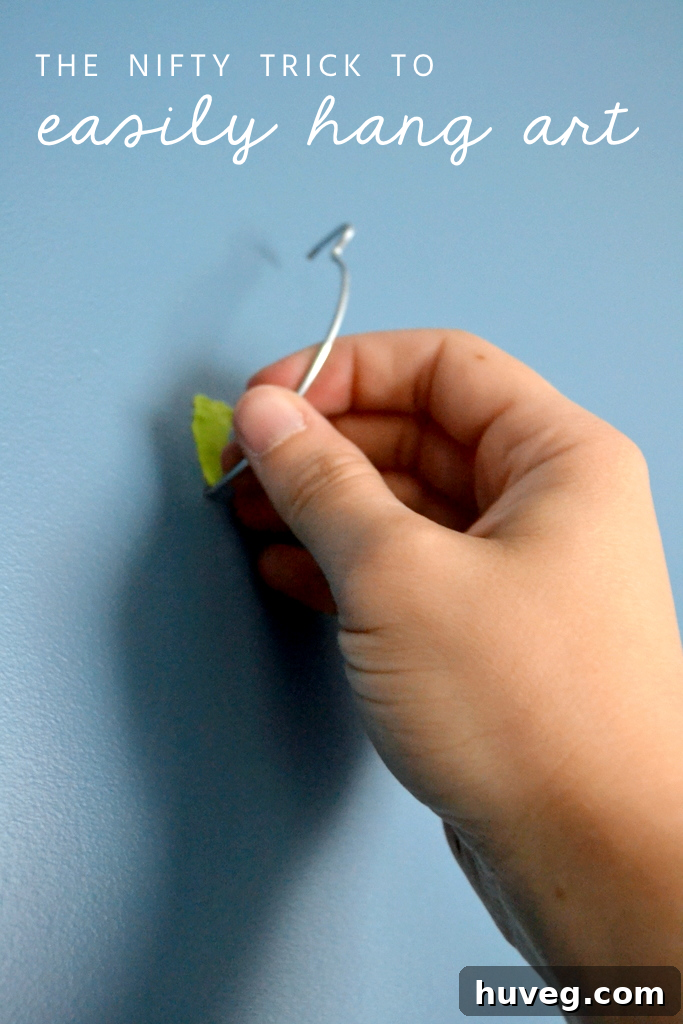
After decades of struggling with traditional nails, wall anchors, and complicated hanging systems, I recently stumbled upon a product that has completely revolutionized my approach to wall art: Monkey Hooks. These ingenious little devices are a true game-changer for anyone looking for a quick, secure, and tool-free way to hang pictures. They are designed for drywall and offer incredible simplicity and strength without the need for drills, hammers, or wall anchors that often leave significant damage. The moment I tried them, I knew I had found the ultimate solution for hanging art with ease, making the entire process enjoyable rather than a chore.

Effortless Installation: How Monkey Hooks Work
What makes Monkey Hooks so remarkable is their unparalleled ease of installation. Have you ever read the convoluted instructions for seemingly simple products, laughing at their excessive detail? (If not, Brian Regan’s Pop-Tart routine is a must-watch!) Monkey Hooks, despite sometimes having four official steps on their packaging, truly boil down to just one: you simply pierce the drywall with the thin, pointy end of the hook and then twist it around. The clever design allows the majority of the hook to slide behind the drywall, where it securely latches into place using the strength of the wall itself. This process takes mere seconds, requires no tools other than your own hand, and leaves only a tiny, almost invisible hole if you ever decide to remove it.
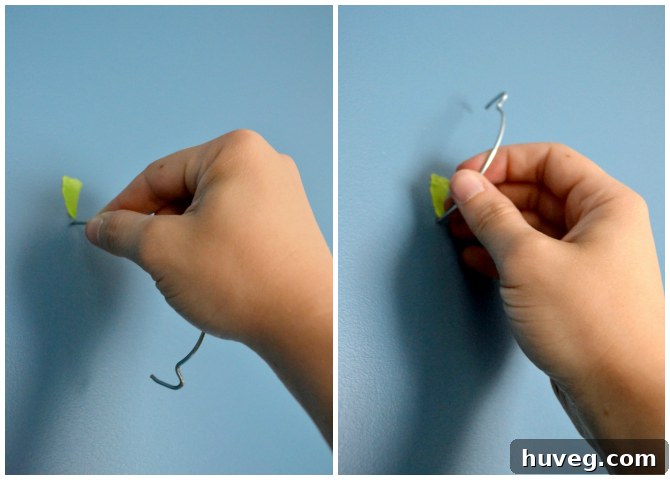
The beauty of Monkey Hooks lies in their simplicity and strength. Once installed, they provide an incredibly sturdy anchor point capable of holding a significant amount of weight (often up to 35-50 pounds, depending on the specific hook type). This makes them perfect for everything from lightweight prints to heavier framed mirrors. The only crucial consideration is to avoid hitting a wooden stud behind the drywall; these hooks are specifically designed to work by gripping the drywall itself. For areas with studs, traditional nail hangers or screws would be more appropriate. But for the vast majority of wall space in modern homes, Monkey Hooks offer an unbeatable combination of speed, security, and minimal wall damage. Frankly, the hardest part of the entire process was extracting the hooks from their layers of plastic and cardboard packaging!
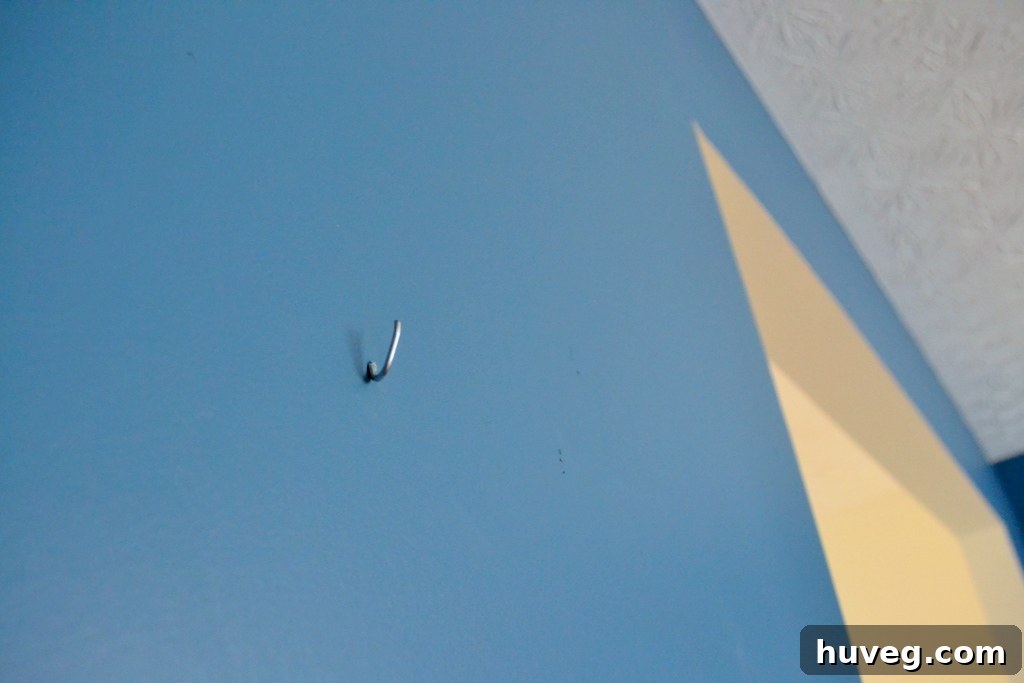
With the 57-inch rule applied and a Monkey Hook effortlessly installed, my grandmother’s painting now holds a place of honor in our dining room. It’s perfectly centered, sits at an ideal viewing height, and looks as though it was always meant to be there. This isn’t just a piece of decor; it’s a daily reminder of love, memory, and the simple satisfaction of bringing personal history into my living space. It fits right in, harmonizing with the blue walls and filling the room with a unique sense of warmth and character. This project truly underscored how art can transform a house, adding layers of meaning and beauty that resonate deeply.
Beyond the Hook: General Tips for Stunning Wall Art Displays
While the 57-inch rule and easy hangers like Monkey Hooks simplify the technical side of hanging art, creating a truly stunning display involves more than just precise placement. Consider these additional tips to elevate your home decor:
- Lighting is Key: Pay attention to how natural and artificial light interacts with your art. Avoid placing highly reflective pieces directly opposite a window. Consider adding subtle picture lights to highlight important artworks, especially in areas with low ambient light.
- Embrace Gallery Walls: For an impactful statement, create a gallery wall. The 57-inch rule still applies to the center of the entire arrangement. Plan your layout on the floor first, then use paper templates on the wall to finalize placement before making any holes. Mix frame styles, sizes, and even mediums for an eclectic look, or maintain uniformity for a more streamlined aesthetic.
- Scale and Proportion: Ensure your art is appropriately sized for its location. A tiny piece on a vast wall can look lost, while an oversized one can overwhelm a small space. As a general guideline, art should typically fill about two-thirds of the wall space above a piece of furniture (like a sofa or console table).
- Use a Level: After hanging, always use a spirit level to ensure your artwork is perfectly straight. Even a slight tilt can be noticeable and detract from the overall aesthetic.
- Consider Groupings: Instead of scattering small pieces, group them together to create more visual impact. Treat a collection of smaller items as one large piece for placement purposes, using the 57-inch rule for the center of the group.
- Theme and Flow: Think about the overall theme and color palette of your room. Does the art complement or provide a striking contrast? Ensure there’s a visual flow between pieces, especially in open-concept spaces.
Transform Your Space with Meaningful Wall Art
Hanging art doesn’t have to be a source of frustration. With a clear understanding of optimal placement principles like the 57-inch rule and the discovery of incredibly simple tools like Monkey Hooks, you can confidently transform your walls into vibrant expressions of your personality and cherished memories. The satisfaction of seeing a beloved piece, whether an inherited treasure or a new acquisition, perfectly displayed is immense. It truly adds a layer of depth and character that makes a house feel like a home.
So, don’t let those blank walls linger any longer. Take inspiration from these straightforward tips and tackle your own art hanging projects. There’s a powerful magic in surrounding yourself with things that hold special significance, and a well-curated wall art display is one of the easiest ways to inject warmth, style, and personal history into your living environment. What pieces in your home are waiting to tell their story on your walls?