Mastering the Chuck Key Unleash Your Hammer Drill’s Power

Mastering Backyard Stump Removal: A DIYer’s Guide and Hammer Drill Lessons Learned
Hey fellow DIY enthusiasts! As someone constantly juggling projects and chasing deadlines, I know the feeling of wanting to share an exciting update only to get sidetracked. While my Halloween costume reveal might be delayed (blame the endless sunshine here in Georgia – outdoor projects still beckon!), I’m thrilled to dive into a recent backyard adventure that taught me a valuable lesson. We’re talking about tackling a stubborn tree stump, a powerful hammer drill, and a rookie mistake that transformed into an essential learning moment. So, grab a cup of coffee, and let’s laugh (and learn) together about a power tool blunder that many DIYers might quietly relate to.
This week, my ongoing battle with a persistent tree stump in the backyard presented an unexpected challenge, and it’s a story I can’t wait to share. For those who enjoy a good “aha!” moment, or simply appreciate the candid realities of home improvement, you’re in for a treat. This experience was a stark reminder that even after years of wielding tools, there’s always something new to learn, especially when delving into more heavy-duty equipment. My hope is that by sharing my momentary lapse of judgment, I can spare someone else a bit of frustration and perhaps fast-track their journey to mastering a key power tool.
The Persistent Stump: Transforming Your Backyard One Ember at a Time
For some time now, a colossal tree stump, remnants of a once-troublesome tree, has been dominating a section of my backyard. Initially, large portions of it were even hidden underground, making its removal a truly daunting task. While various methods exist for stump removal—from chemical treatments and professional grinding to physical excavation—I opted for a more hands-on approach: controlled burning. This method appealed to me for its simplicity and the satisfaction of gradually diminishing the obstacle.
My strategy involved a multi-pronged attack to encourage a deep, sustained burn. Lacking traditional firewood, I gathered an eclectic mix of fuel sources: a sizable pile of roots I had previously excavated, discarded tree limbs, small scraps of unusable wood from other projects, and various dried foliage from around the yard. I optimistically assumed this collection would sustain several bonfires.

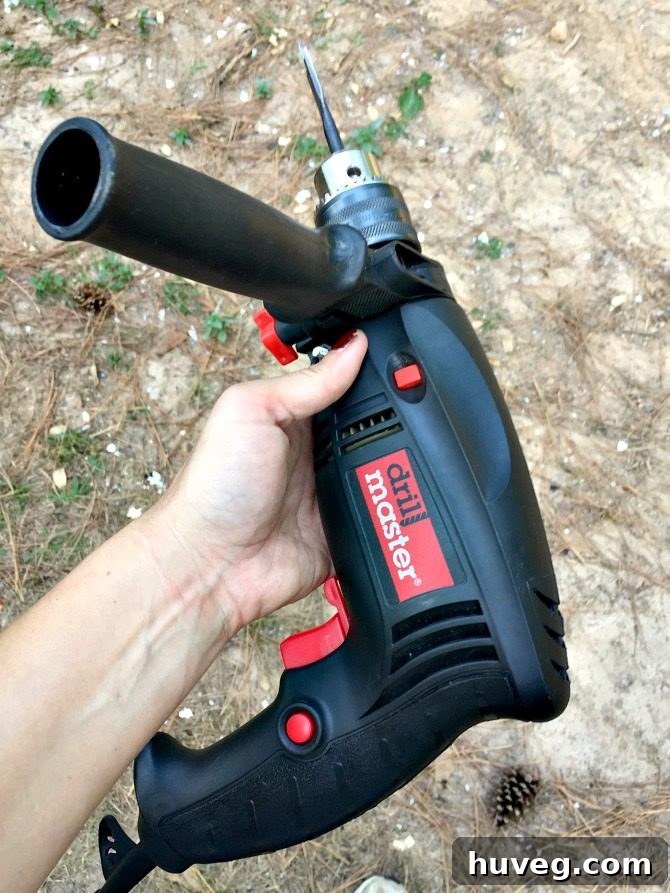
To facilitate a deeper and more efficient burn, I adopted a technique recommended by various online DIY videos: drilling deep holes into the stump. For this, I borrowed my dad’s powerful hammer drill and fitted it with a robust spade bit. The idea is that these boreholes create channels for oxygen and fuel, allowing the fire to penetrate the stump’s core and accelerate its decomposition. Once the holes were drilled, I followed another tip from those videos: pouring vegetable oil inside. I was genuinely surprised by how flammable vegetable oil proved to be, offering a cheap and effective way to fuel the internal burn of the stump, a real game-changer in this project!
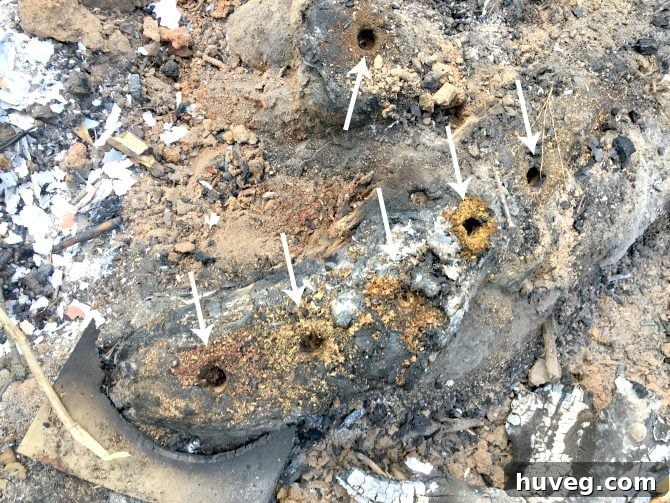
My initial calculations regarding fuel supply, however, turned out to be wildly inaccurate. My substantial pile of roots and scrap wood vanished in less than three hours! The next day, determined to continue, I returned to the site, cleared out the ash, and prepared to drill even deeper into the stump’s subterranean roots. I decided to switch from the spade bit to a longer bit to reach further down. This seemingly routine task is where my “rookie mistake” made its grand entrance, leading to a moment of pure DIY frustration.
Demystifying the Hammer Drill: Power Tools and the Stuck Bit Dilemma
A hammer drill is a powerhouse tool, distinct from a regular drill. While both rotate a bit, a hammer drill adds a pulsating, hammering action, making it incredibly effective for drilling into tough materials like concrete, brick, or, in my case, a dense tree stump. Its enhanced power and torque mean that securing the drill bit in its chuck—the adjustable clamp that holds the bit—is far more critical than with standard drills. Unfortunately, this distinction was momentarily lost on me.
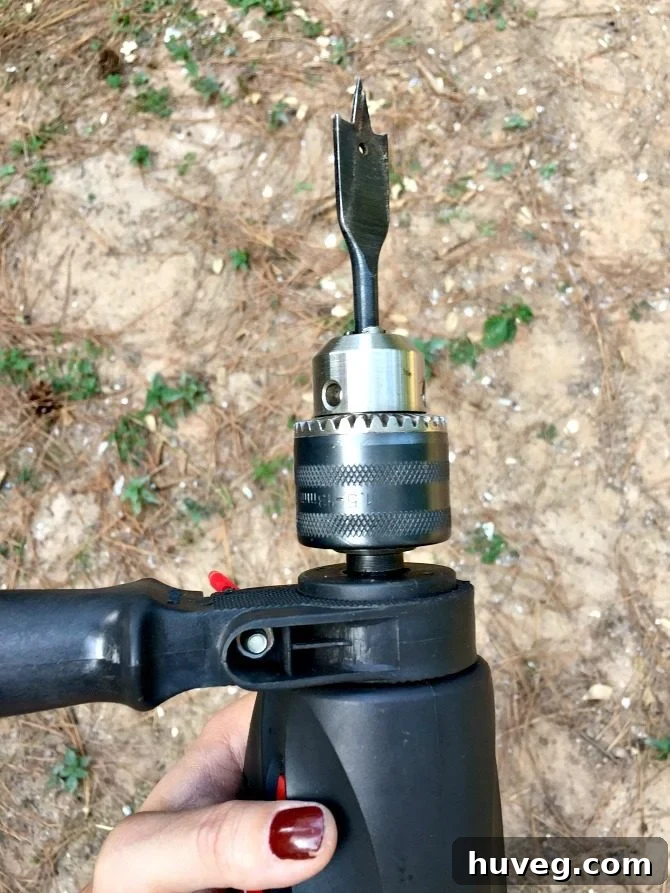
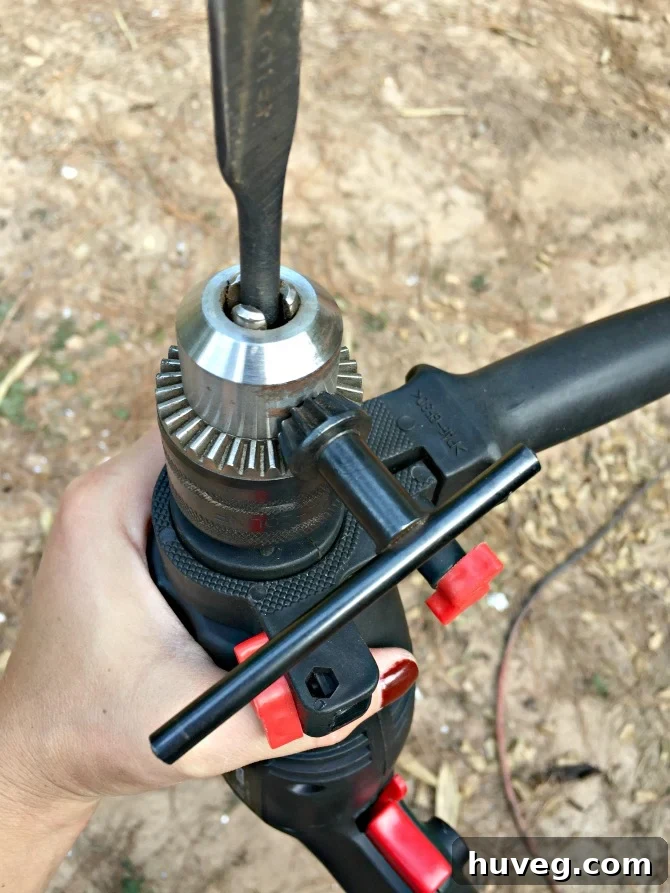
Attempting to change the bit, I tried to loosen the chuck as I normally would with my lighter-duty drills – by hand. But this time, the bit remained stubbornly stuck, while the chuck itself threatened to twist completely off the drill. I felt utterly foolish. In all my years of using drills and impact drivers, I had never encountered this problem. My assumption, based on extensive use of hand-tightened drills, was that this powerful hammer drill would be no different. This oversight was clearly my fault, and it left me with a bit hopelessly trapped, effectively halting my project.
Frustration mounting, I texted a friend, explaining my predicament. Their immediate response was, “Do you know where the chuck key is?” A chuck key! Of course! The realization hit me like a ton of bricks – a heavier-duty drill would naturally require a more secure method of tightening than simple hand-tightening. It was one of those forehead-smacking moments where the solution seems glaringly obvious in hindsight. The problem was, I didn’t even know what a chuck key looked like, let alone where to find it.
The Chuck Key Revelation: A Simple Tool, a Profound Lesson
My mind immediately went to familiar scenarios. Many power tools, like jigsaws, utilize Allen wrenches for securing blades, so I instinctively searched for something similar, perhaps taped to the drill as my dad often does with small, easily-lost accessories. Instead, nestled discreetly on the end of the drill, I spotted this:
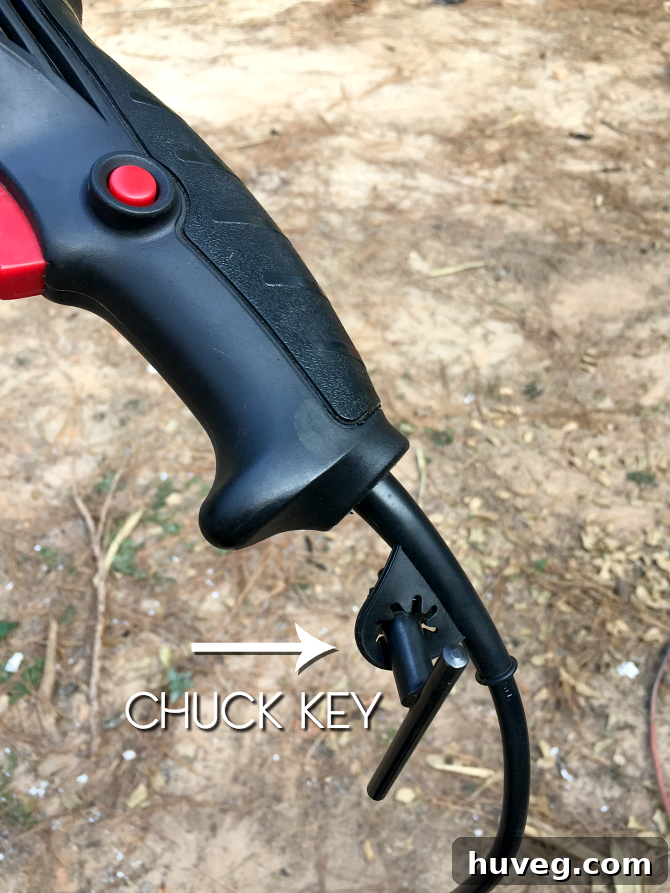
Aha! That’s what that is—a chuck key! My initial confusion wasn’t entirely resolved, however. I fumbled with it for a few more moments, trying to figure out how it worked, much like a baby trying to fit a square peg into a round hole. Then, it clicked: I needed to align the teeth of the chuck key with the corresponding holes on the drill chuck and rotate it. It became clear that one direction would tighten the bit, while the other would loosen it – a truly intuitive design once you understand its purpose.
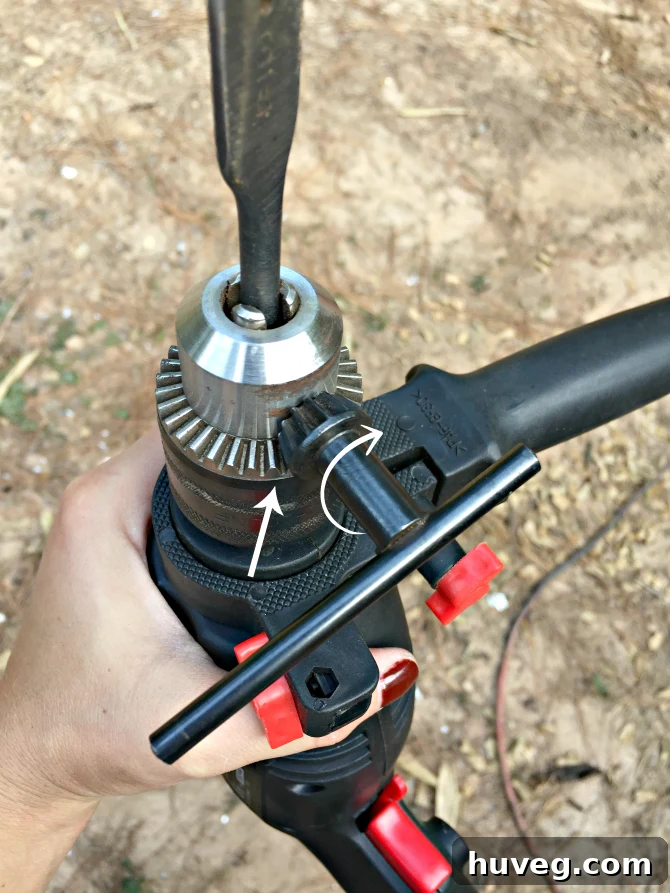
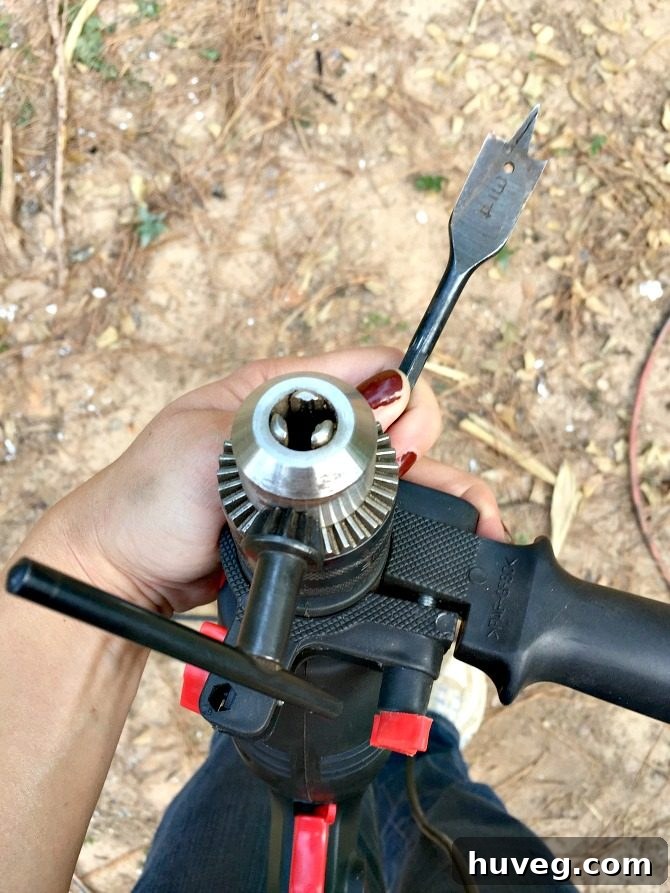
And just like that, with a satisfying click, the (not-so) hopelessly stuck bit popped right out. The relief was immense, and the lesson was profoundly simple yet incredibly important. If you’ve ever felt like a complete beginner in the world of DIY, know that even with more than half a decade of projects under my belt, I still have these “aha!” moments that make me feel momentarily inept. However, it’s these very experiences, especially when I rarely read instruction manuals before diving headfirst into a project, that make the journey so entertaining and valuable. Sharing these insights, even the seemingly obvious ones, is why I do what I do. If I can spare even one person the frustration of spending twenty minutes fumbling with a power tool, then my momentary idiocy was absolutely worth it.
From Blunder to Bonfire Bliss: Enjoying the Rewards of Hard Work
With that minor hiccup behind me, I’ve been able to resume my stump-burning project, and it has been absolutely wonderful. Almost every night, I’ve had a bonfire blazing in the backyard, enjoying the simple pleasure of crisp air, the soothing crackle of fire, and the comforting scent of woodsmoke. It’s truly a perfect way to unwind and embrace the cooler evenings, particularly here in Georgia where “fall” often feels like an extended summer. These evenings fuel my excitement for future backyard enhancements, as I envision a more expansive space designed for entertaining, which I’ll be sharing plans for in an upcoming post!
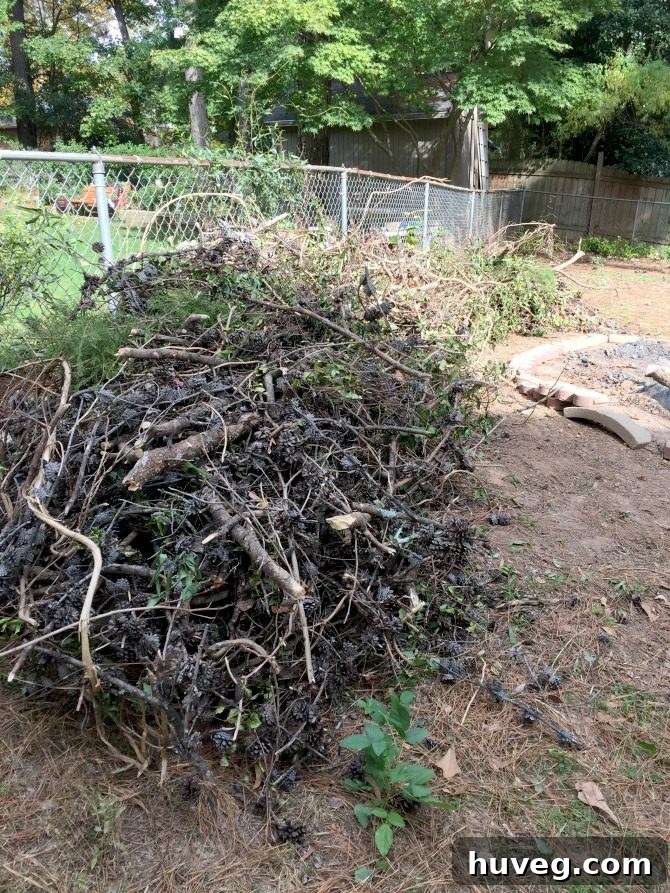
Solving the fuel supply problem for my nightly bonfires was another unexpected win. Thanks to the amazing guy who mows my lawn, I now have a sustainable source of firewood. He’s often cutting down small trees and limbs for my neighbors, and instead of hauling it away, he now drops it off for me. It’s a fantastic win-win situation: he saves time and effort, and I get a continuous supply of free, natural fuel for my fires. While the photo might show what looks like a mountain of brush, rest assured, the larger, more substantial pieces are beneath, and I typically burn through a pile of this size in a single evening.
This entire experience has been a wonderful reminder that DIY is a journey of continuous learning, filled with unexpected challenges and rewarding breakthroughs. Even the simplest tools can hide a crucial trick or two, and embracing these learning moments, even the embarrassing ones, is part of the fun. So, tell me, what exciting projects have you been tackling lately? Have you had any “aha!” moments with your tools, or perhaps enjoyed some cozy outdoor fires as the seasons change?