Unlock Seamless Gate Security: Self-Adjusting Latch Setup

Disclaimer: This is a sponsored project/product by National Hardware, but my opinions are, as always, 100% my own.
Revitalize Your Backyard Gate: A Comprehensive Guide to Heavy-Duty Latch Installation
Every homeowner knows the frustration of a backyard gate that simply refuses to cooperate. For me, it wasn’t just frustration; it was a recurring saga. My backyard gate was one of the very first projects tackled after moving into my home. Little did I know, it would also become one of the first things to repeatedly break – not once, not twice, but an uncountable number of times. This persistent problem highlighted a crucial lesson: the importance of robust hardware and correct installation from the start. This time, however, I was determined to fix it right, ensuring lasting durability and functionality. And thankfully, I didn’t have to contend with replacing the gate hinges this round; a simple, effective latch upgrade was the key to victory.
The Recurring Nightmare: Understanding Gate Latch Failures
My gate’s history of failure wasn’t just inconvenient; it revealed fundamental flaws in its original setup. The first time the latch gave out, its components simply vanished. I returned home to find crucial parts missing, a mystery that underscored the flimsiness of the initial hardware. Adding to this, the original latch had been incorrectly installed on the outside of the gate, making it vulnerable and less secure. When I attempted the first repair, I merely replaced the broken latch and flipped its orientation, attaching it to a fence picket instead of the gate’s sturdy support frame. This seemed like a quick fix, mirroring the previous homeowner’s approach, and it worked for a while. However, a brutal winter storm exposed this vulnerability, splitting the picket clean down the middle and ripping the hardware along with it.
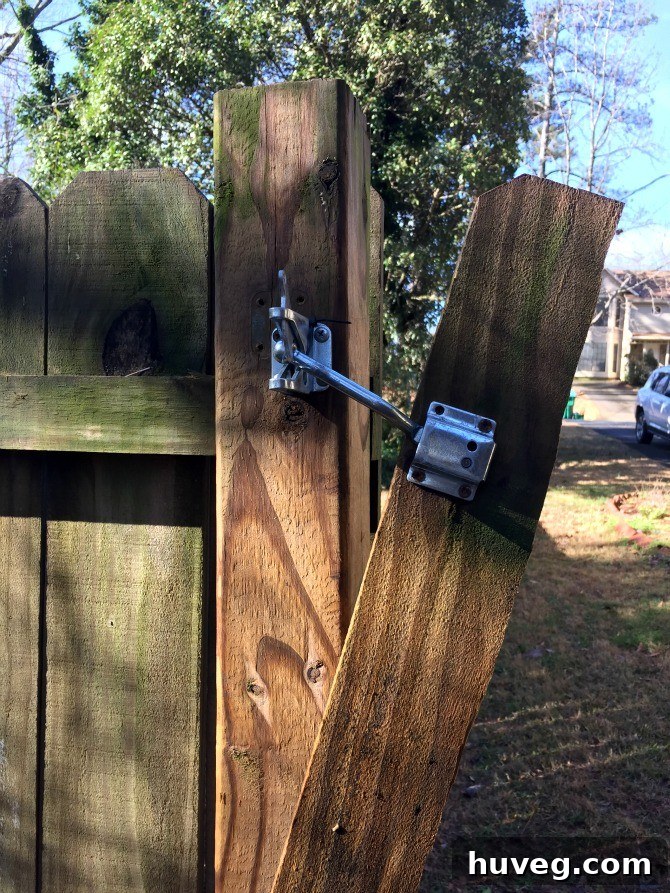
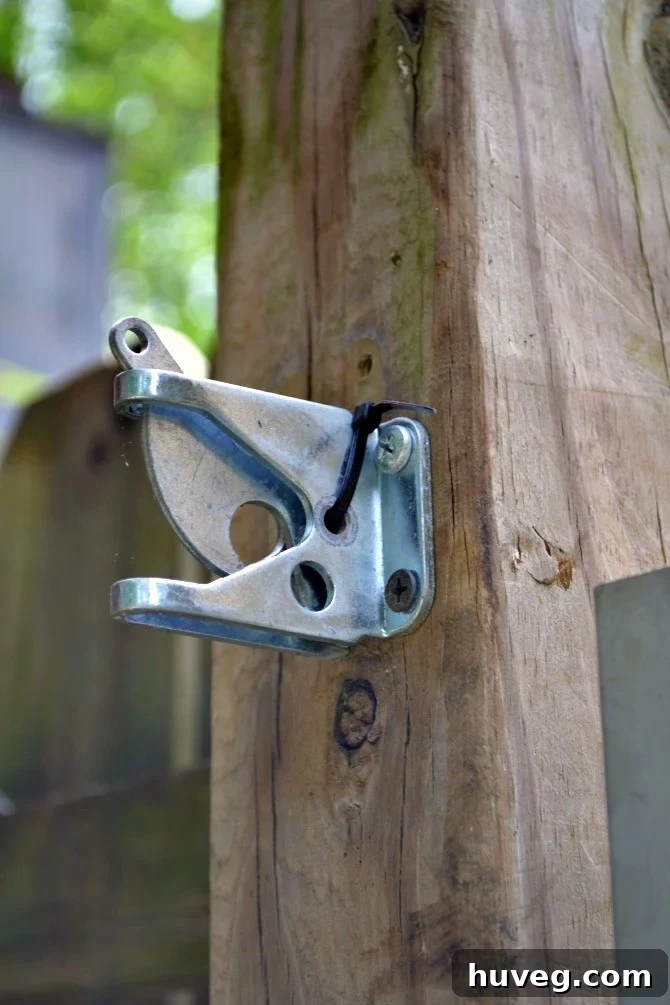
Another instance saw me resorting to a makeshift repair with a zip tie – a testament to my desperation and the gate’s chronic issues. But when the other side of the latch completely separated, I knew it was time for a permanent solution. This wasn’t just about replacing a broken part; it was about upgrading to superior hardware and ensuring it was installed correctly, in the optimal location, to prevent future failures. A gate is more than just an entryway; it’s a critical component for backyard security, pet containment, and overall property aesthetics. A consistently failing latch compromises all these aspects, leading to potential safety hazards, loss of pets, and decreased curb appeal.
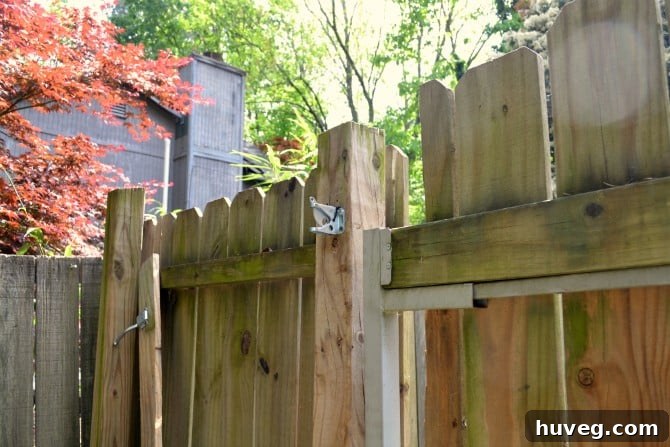
The old hardware was a clear sign of poor quality and improper mounting. It was undersized and not designed to withstand the daily stresses or environmental elements. Its failure was inevitable, highlighting the importance of choosing materials that are up to the task. This experience taught me that saving a few dollars on cheaper hardware often leads to higher costs and more frustration down the line.
Choosing the Right Gate Latch: Quality and Durability Matter
The timing for a comprehensive gate repair couldn’t have been better. Coincidentally, National Hardware reached out, proposing a collaboration on a few projects. Given my extensive home improvement to-do list, which always seems to involve hardware, this partnership was a perfect fit. National Hardware offers an impressive array of latches, so after explaining my specific needs for a robust, reliable solution, they promptly recommended and sent over a heavy-duty gate latch. This wasn’t just any latch; it was a significant upgrade in both design and material strength.
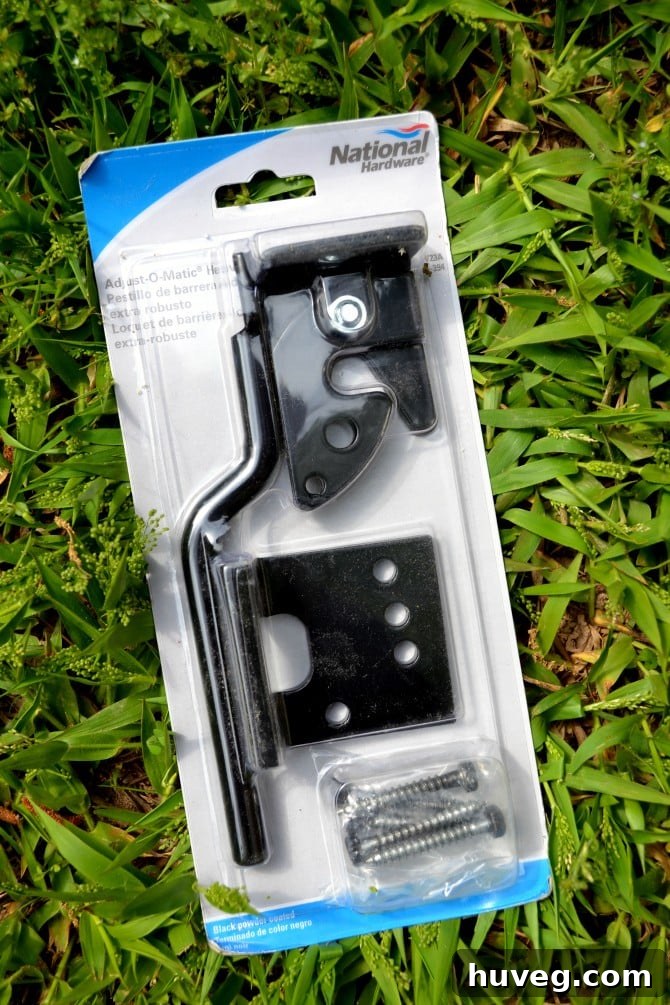
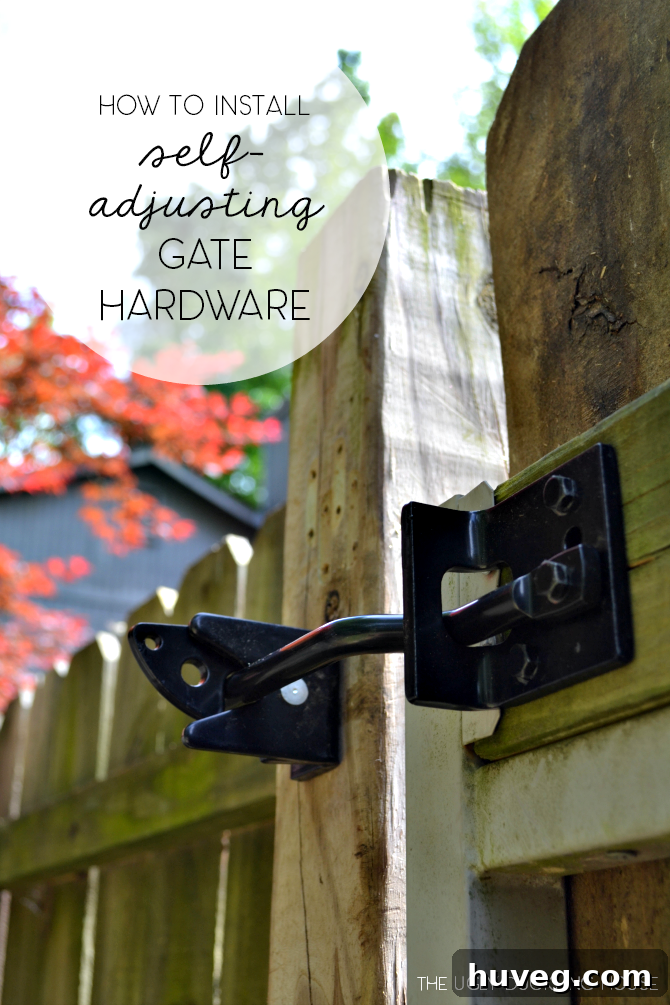
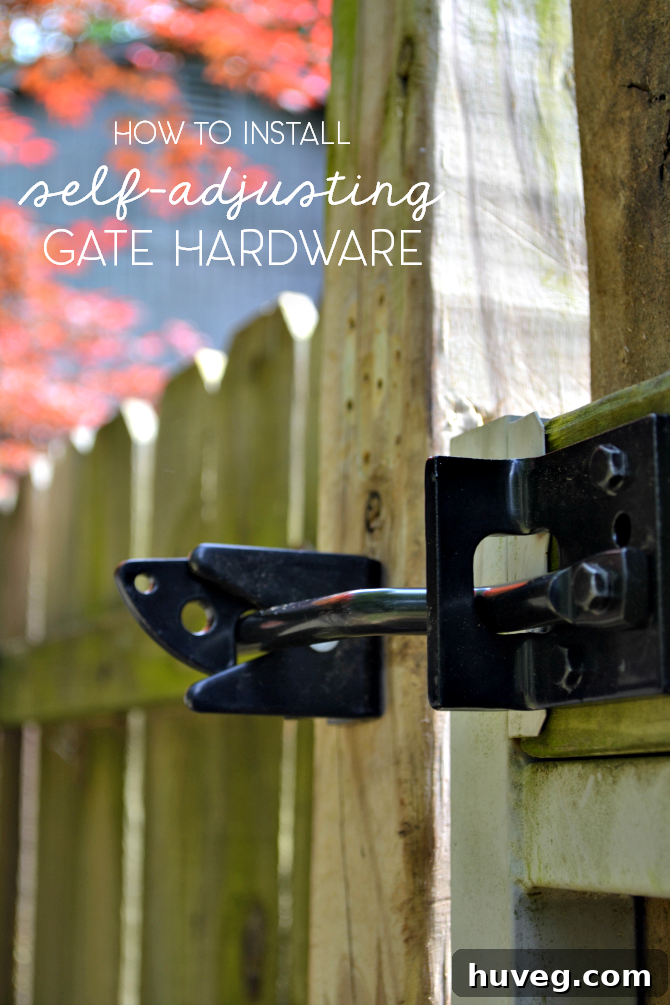
The new latch was not only visibly stronger but also twice as wide as its predecessor. This increased width was crucial for proper installation. The original 4-inch latch only needed to bridge the gap from the gatepost to the first picket. However, due to existing structural elements on the gate’s support frame, the new, wider latch needed to accommodate this while still extending effectively to the gatepost. This wider design allowed for a more secure attachment to the gate’s main support, rather than a flimsy picket, thereby addressing the root cause of previous failures. Investing in quality hardware like this National Hardware “Adjust-O-Matic” heavy-duty gate latch is paramount for any outdoor gate, ensuring longevity and reliable operation against daily wear and tear and environmental stressors. Its robust construction ensures it can withstand high winds, frequent use, and the test of time, unlike the flimsier models I’d previously encountered.
Essential Tools for a Successful Heavy-Duty Gate Latch Installation
Before diving into the installation process, gathering the right tools is essential. Having everything ready not only streamlines the project but also ensures safety and precision. Using the correct tools can significantly reduce installation time and prevent frustration. Here’s what you’ll need for this gate latch upgrade:
- Heavy-Duty Gate Latch Hardware: The core component, designed for exceptional durability and long-term performance.
- Phillips Head Drill Bit: Useful for removing old screws or for any auxiliary hardware, though the main fasteners for this heavy-duty latch will require a different bit.
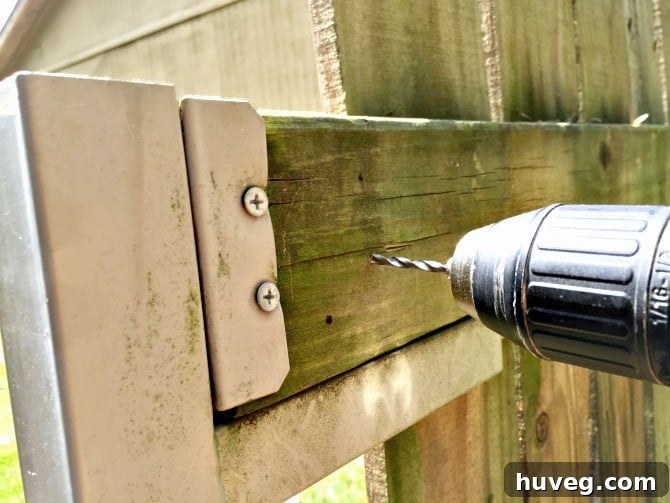
- 3/32″ Pilot Hole Drill Bit: Absolutely critical for preventing wood splitting, especially in dense lumber, and for guiding screws precisely into place. Selecting a bit slightly narrower than your screw diameter is key to allowing the threads to properly grip the wood for maximum holding power.
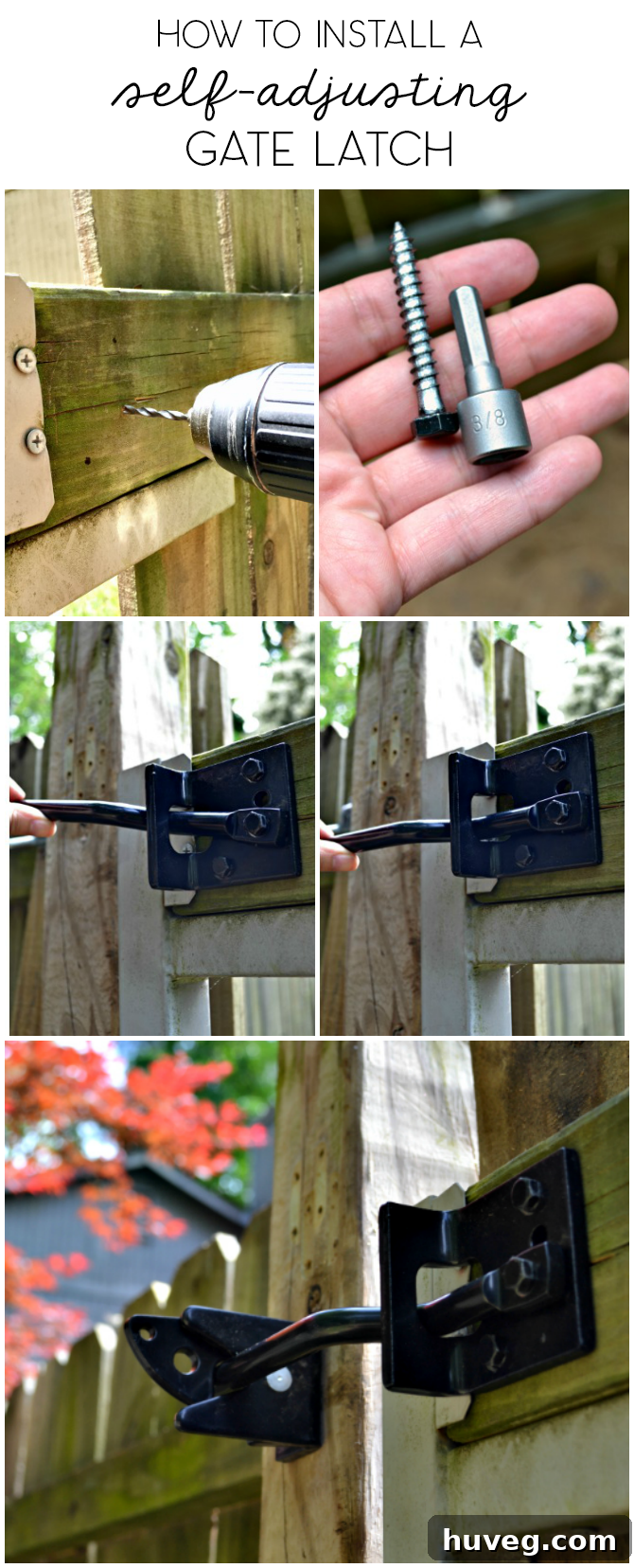
- 3/8″ Hex Nut Driver Bit: Essential for driving the robust lag screws (often referred to as lag bolts) that typically come with heavy-duty gate hardware. While a wrench can also be used, a driver bit makes the process significantly faster, more consistent, and less strenuous on your hands.
- Optional: Magnetic Bit Holder: This handy accessory extends the reach of your drill bits, making it easier to work in tight spaces or when reaching across wider gate frames. It also prevents dropped screws, saving valuable time and frustration.
- Marker/Pen: For accurately marking pilot hole locations. Precision in marking is crucial for achieving a perfectly aligned and functional latch.
- Cordless Drill/Driver: A powerful and versatile tool that will be indispensable for both drilling pilot holes and driving the lag screws. Ensure its battery is fully charged before you begin to avoid interruptions.
And, of course, an optional but highly valued assistant: your curious furry friend, always eager to supervise, offer moral support, and bark at airborne dandelion tufts.

Step-by-Step Guide: Installing Your Heavy-Duty Gate Latch with Precision
1. Remove the Old, Failing Hardware
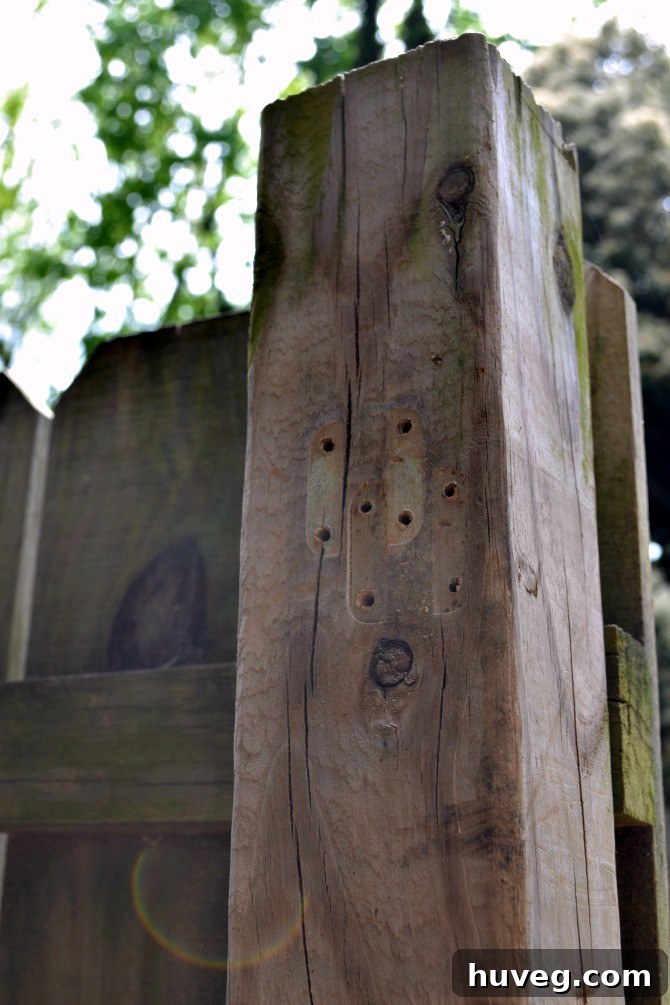
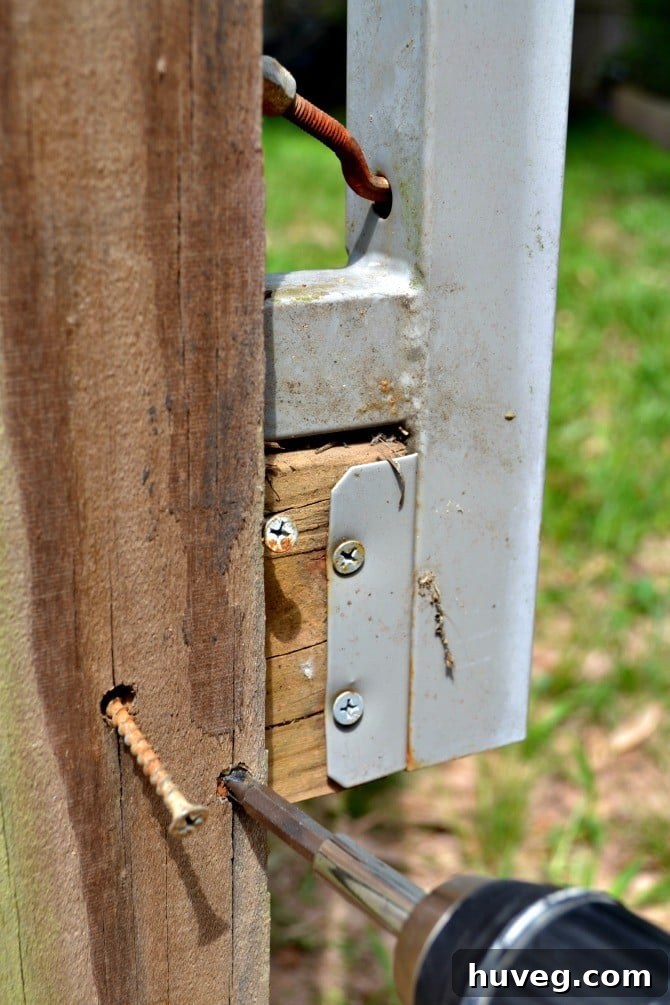
The first and most satisfying step is to completely remove all traces of the old, problematic hardware. This isn’t just about making space for the new; it’s about eliminating the source of past frustration and starting with a clean, uncompromised surface. Carefully detach the old latch, screws, and any other components that contributed to the gate’s unreliability. Pay particular attention to any rusty or stripped screws that might still be embedded in the fence board or gate frame; these can be stubborn but must be removed to ensure a flush surface for the new hardware. A clean slate is essential for a successful, stable installation, as any remaining bits could interfere with the new latch’s proper alignment.
2. Understand and Orient Your New Hardware
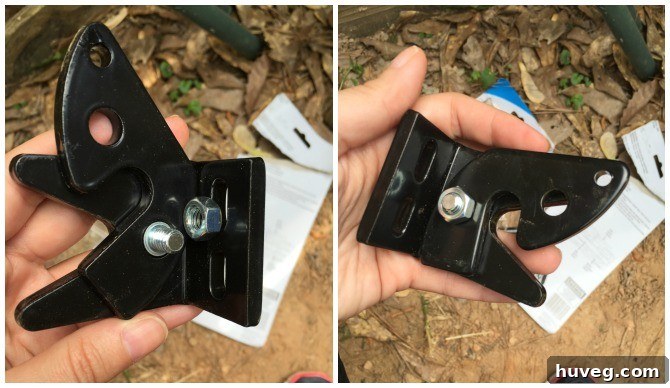
Before screwing anything in, take a moment to familiarize yourself with the components of your new heavy-duty latch. There are typically two main parts: the “striker” (the piece that mounts to the gatepost and catches the latch bar, often resembling a hook or receiver – labeled ‘A’ in many instructions) and the “latch bar” assembly (the long arm with a handle that mounts directly onto the gate frame, labeled ‘B’). Crucially, you might need to adjust the orientation of the striker depending on which side of the gatepost you want it to receive the latch bar. For my installation, I wanted the striker to receive the arm from the left. This required unscrewing the bolt that held the striker in place, flipping the mechanism to achieve the desired orientation, and then carefully re-tightening the bolt. This adjustment can typically be done by hand, allowing for essential flexibility in installation to match your specific gate configuration.
3. Mark and Drill Pilot Holes for Precision
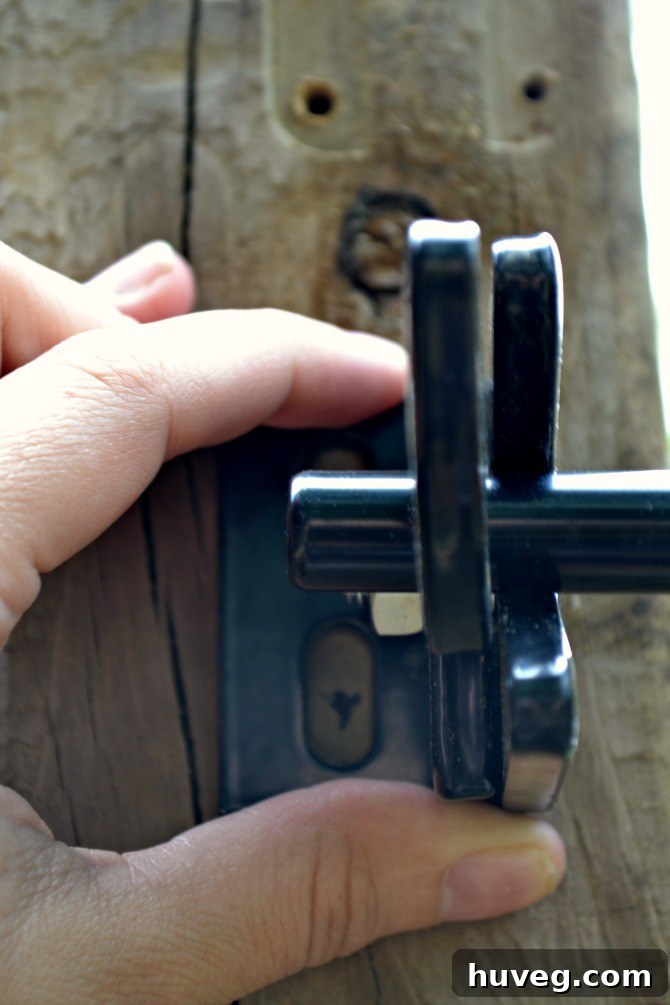
This step is paramount for a professional and durable installation, especially when working with sturdy lag screws that can split wood if not prepped correctly. Drilling pilot holes prevents the wood from cracking or splitting, ensures that your hardware is precisely aligned, and makes driving the screws significantly easier. Start by carefully positioning your new latch hardware exactly where it needs to be installed on both the gate and the gatepost. Use a marker or pen to meticulously mark the center of each screw hole. Once marked, select a drill bit that is slightly narrower than the width of your lag screws. Drilling a pilot hole with a bit that is too wide will prevent the screw threads from properly gripping the wood, compromising the latch’s strength. Conversely, too small a bit could still cause splitting. Take your time, ensuring each pilot hole is drilled straight, perpendicular to the surface, and to the appropriate depth, matching the length of your screws.
4. Install the Latch Bar Assembly to the Gate
I found it easiest to begin by installing the latch bar assembly onto the gate itself. This self-latching arm is the primary moving part, and securing it first provides a fixed reference point for accurately positioning the striker on the gatepost later. Align the latch bar assembly with your pre-drilled pilot holes on the gate frame. Insert the lag screws and, using your cordless drill equipped with the 3/8″ hex nut driver bit, begin to drive them into the pilot holes. Unlike traditional Phillips head screws, lag screws require a hex driver (or a sturdy wrench) due to their robust design, which offers superior holding power and resistance to stripping. Drive them securely, ensuring they are snug, but remember to leave the final screw that holds the adjustable arm slightly loose for now; this allows the arm to move freely for initial adjustments and optimal latching action. This unique bit makes the installation process surprisingly efficient and fun.
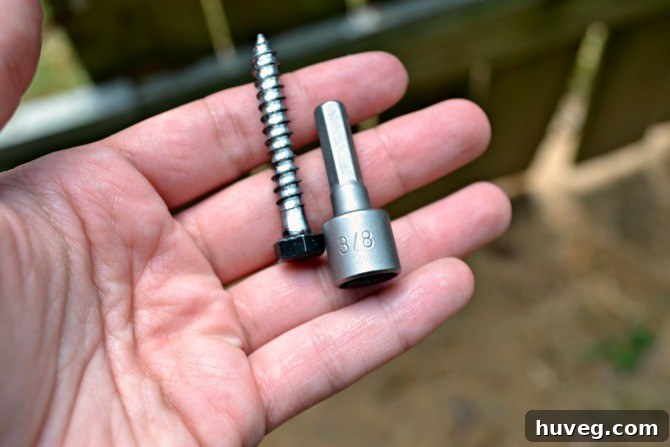
Even with numerous bit sets in my toolbox, this particular hex nut driver for lag screws is not one I get to use very often, which surprisingly added a novel and enjoyable aspect to the project. There’s a certain satisfaction in employing the right, specialized tool for the job.
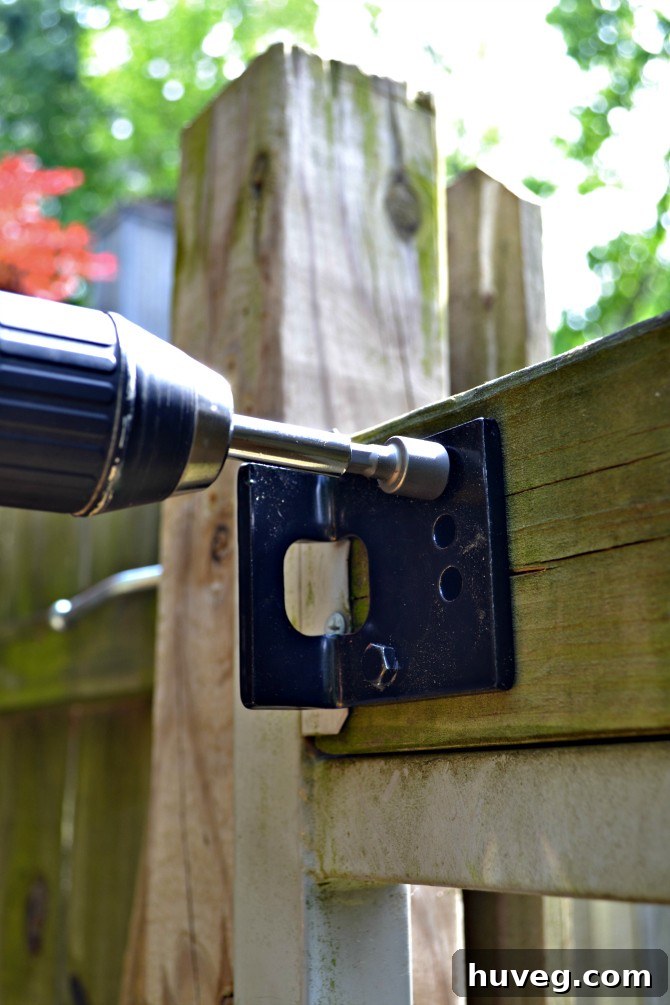
5. Install and Adjust the Striker on the Gatepost
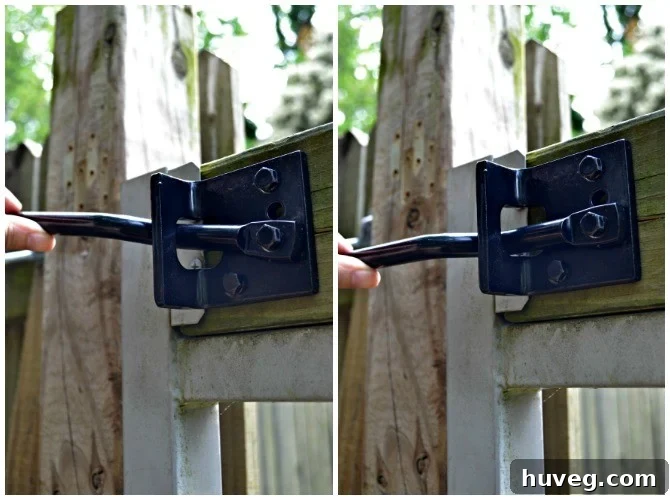
With the latch bar securely mounted on the gate, gently close the gate, bringing it to its normal latched position. Now, align the striker (the receiver part) on the gatepost, ensuring it precisely engages with the latch bar when the gate is closed. Mark its screw holes with your pen. Repeat the pilot hole drilling process for the striker, meticulously ensuring alignment and preventing wood splitting. Once pilot holes are ready, attach the striker to the gatepost using the remaining lag screws and your hex nut driver. The goal here is a snug fit that allows the gate to close and latch effortlessly without sticking or requiring excessive force. Perform a few test closes to verify smooth operation. Remember the final screw for the adjustable arm on the gate side should still have a little give, allowing the arm to move freely up and down for optimal latching and future micro-adjustments.
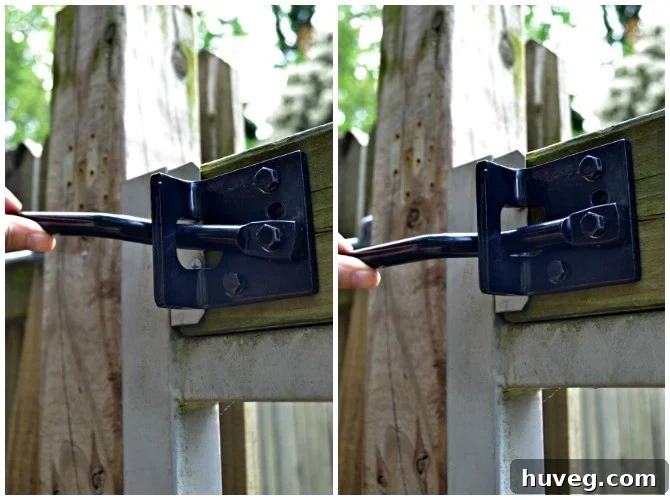
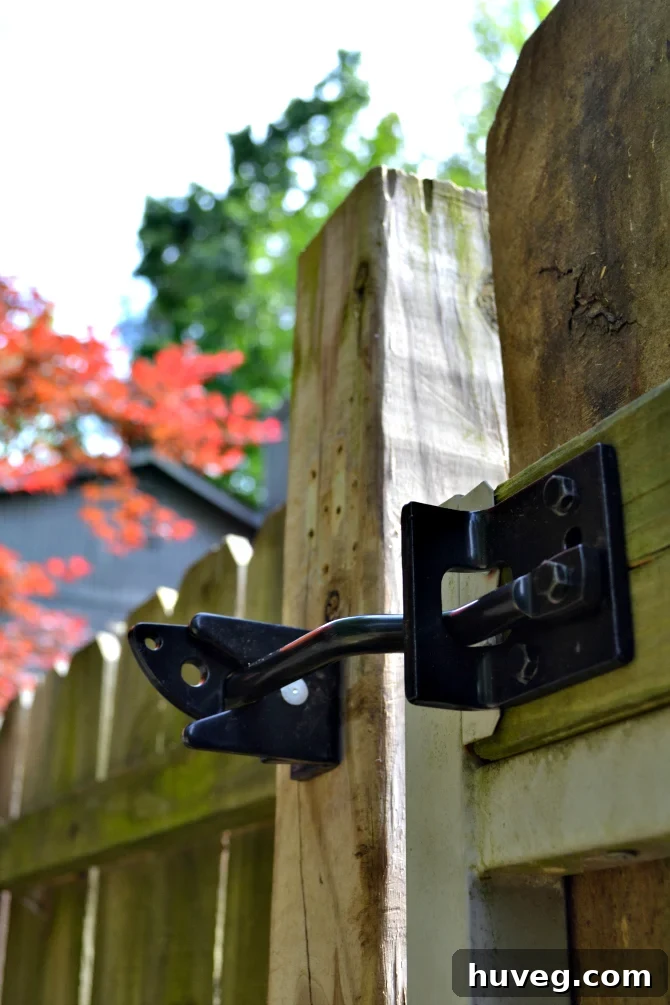
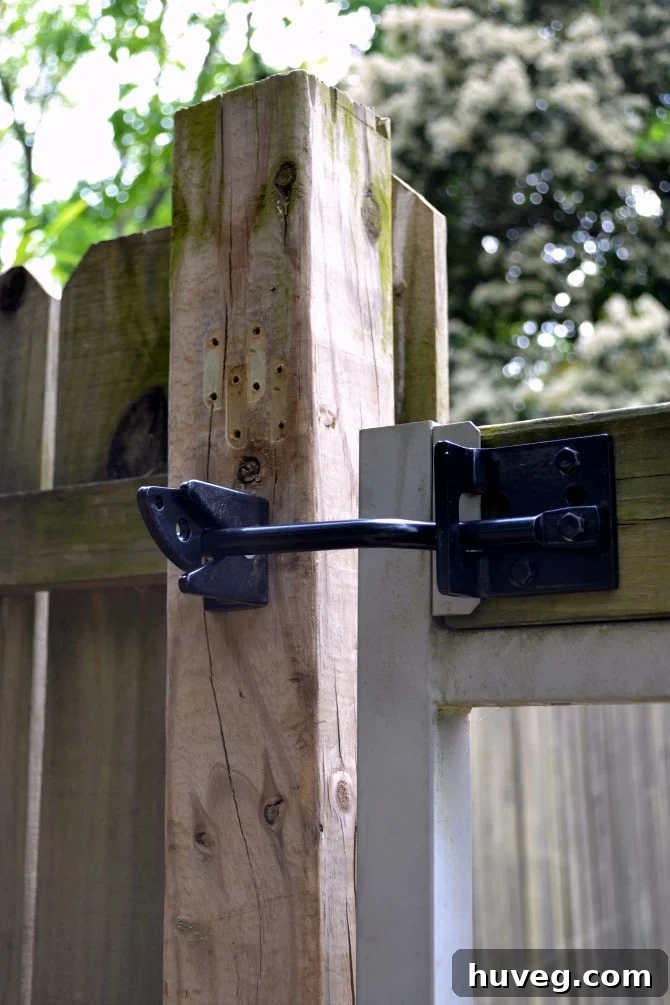
Once everything is in place, you’ll witness your gate transformed with a sturdy, reliable latch, looking spiffy and solid, ready to provide enhanced security and peace of mind.
The Genius of “Adjust-O-Matic”: Long-Term Gate Functionality
One of the most appealing features of this new National Hardware latch, and a crucial factor in choosing it, is its “Adjust-O-Matic” capability. Fences and gates are constantly subjected to environmental changes – temperature fluctuations, moisture, ground settling, and even constant use can cause them to shift slightly over time. A rigid, non-adjustable latch would quickly become misaligned, leading to the same frustrating issues I experienced before: sticking, failure to latch, and eventual breakage. The “Adjust-O-Matic” design elegantly counters this common problem, promising years of trouble-free operation and minimal maintenance.
On the striker side, where the hardware attaches to the gatepost, the screw holes are intentionally elongated. This thoughtful design means that if the gate or fence settles by a quarter of an inch or more – a very common occurrence over seasons – I don’t need to drill new holes or undertake a complex re-installation. I can simply loosen the screws slightly, slide the entire hardware piece down (or up) to compensate for the shift, and then re-tighten. This minor adjustment takes mere minutes and saves immense future hassle, potential damage to the wood, and the cost of new hardware, ensuring the latch always engages perfectly, maintaining optimal security and functionality.
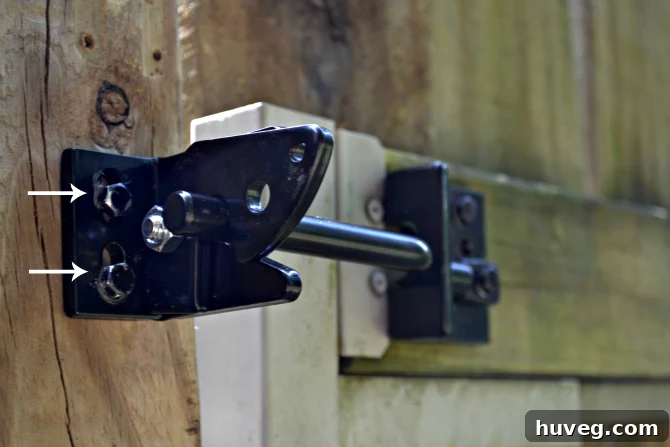
Similarly, on the gate side, the screw holding the latch arm in place is designed to have a slight range of motion. This inherent flexibility allows the arm itself to subtly adjust its vertical position as needed, ensuring it consistently catches the striker on the post. This means even minor shifts in the gate’s alignment won’t require tools or re-drilling; the latch simply “self-adjusts” within its designed parameters for seamless operation. These features are a testament to quality engineering, making the initial investment well worth it for the long-term peace of mind, reduced maintenance, and the assurance of a gate that consistently performs its duty.
The Finishing Touches: Restoring the Gate’s Integrity
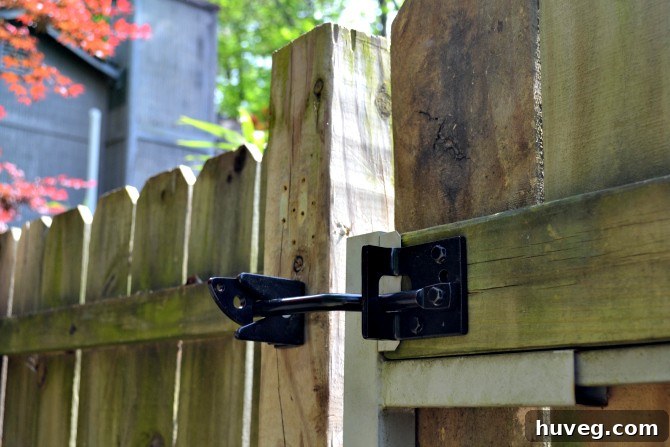
With the new, robust hardware securely in place, the final step was to address the structural damage to the gate itself. The old, split picket, which had been the weak point of the previous installation, was carefully unscrewed and removed. Fortunately, I had a stash of equally weathered, but intact, pickets leftover from previous projects – including a fence repair and garden bed construction. These scrap pieces, once considered remnants, became the perfect replacements, seamlessly blending with the existing fence and restoring the gate’s structural integrity and aesthetic appeal. This small detail truly completed the overhaul, transforming a constantly problematic gate into a reliable, sturdy entryway that enhances the overall look and security of my backyard.
Conclusion: A Reliable Gate for Years to Come
Upgrading my backyard gate latch from a flimsy, poorly installed component to a heavy-duty, adjustable solution from National Hardware has been a truly transformative experience. No more fighting with a gate that won’t latch, no more improvised zip-tie repairs, and certainly no more concerns about security or escaping pets. This project underscores the critical importance of not just fixing a problem, but upgrading to a superior solution that addresses underlying weaknesses in both hardware quality and installation technique. Investing in quality hardware and taking the time for correct, thoughtful installation pays dividends in peace of mind, enhanced property value, and long-term functionality. If your gate is a constant source of frustration, consistently failing or requiring makeshift repairs, I highly recommend considering a similar upgrade. It’s a DIY project that delivers significant impact and lasting satisfaction, proving that sometimes, the best solution is a robust and intelligently designed one.