Seamless Crown Molding Transitions for Tiled Walls

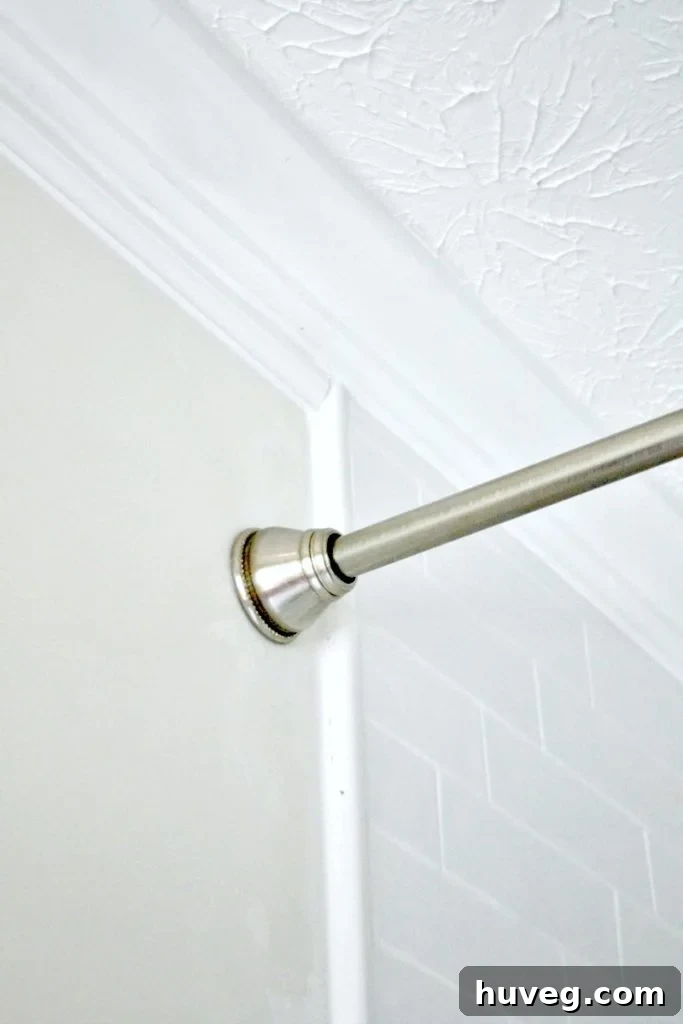
Embarking on a bathroom renovation, particularly when you decide to tile all the way up to the ceiling, often brings unexpected design dilemmas. One of the most perplexing challenges many DIY enthusiasts and even seasoned professionals face is how to seamlessly integrate crown molding where the tiled surface meets the drywall. This isn’t just a minor aesthetic concern; it’s a practical puzzle that can significantly impact the finished look of your bathroom. The difference in thickness between a tiled wall and a standard drywall surface creates an uneven plane, making traditional crown molding installation nearly impossible without unsightly gaps or awkward cuts. However, a surprisingly simple, yet ingenious, solution exists that not only resolves this transition issue but also elevates the luxurious feel of your space.
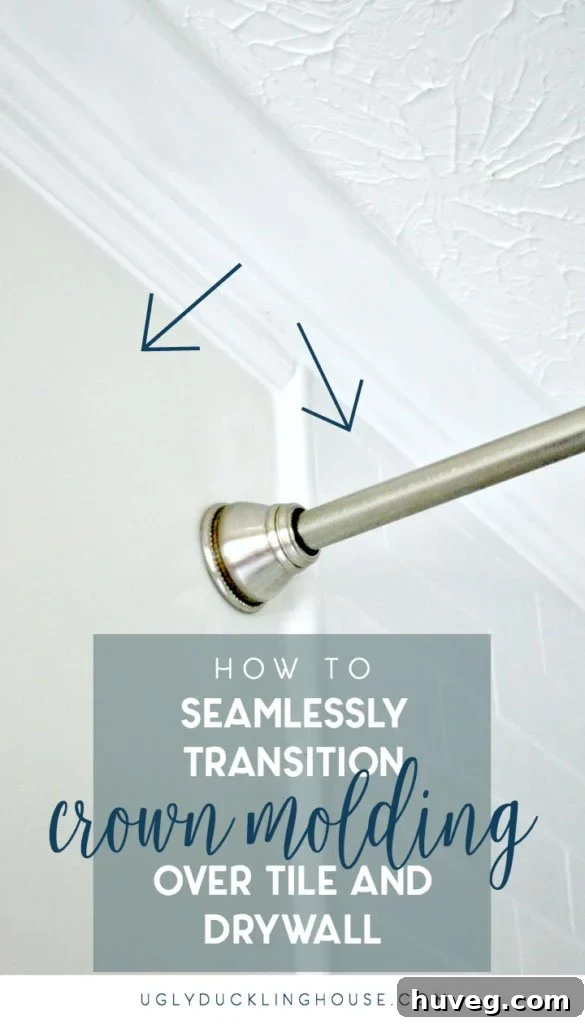
The Universal DIY Dilemma: Overcoming Unexpected Hurdles
Just like figuring out the most logical way to paint a staircase without trapping yourself on a wet step, or the realization that some power tools require a simple chuck key, home improvement projects are full of these “aha!” moments. Sometimes, the most straightforward solutions elude us until we’ve spent considerable time contemplating the problem. It’s a common experience for anyone tackling a renovation project: you encounter a seemingly complex issue, brainstorm elaborate solutions, only to discover a remarkably simple fix that makes you wonder why it wasn’t obvious from the start. This particular crown molding challenge in a tiled bathroom is one such instance, leaving many scratching their heads in search of a professional-looking finish.
The core of the problem lies in the varying thicknesses of the wall surfaces. A standard drywall wall is typically 1/2 inch or 5/8 inch thick. When you apply tile, along with the necessary thinset adhesive, you effectively add another 1/4 inch to 1/2 inch (or sometimes more) to the wall’s thickness. This creates a noticeable “step” or uneven plane where the tile ends and the drywall begins. Installing a piece of crown molding, which is designed to sit flush against a single, consistent wall plane, becomes a significant challenge when faced with this disparity. Without a clever approach, you’re left with options that are either visually unappealing, incredibly difficult to execute, or both.
Achieving a Flawless Finish: Crown Molding in Tiled Bathrooms
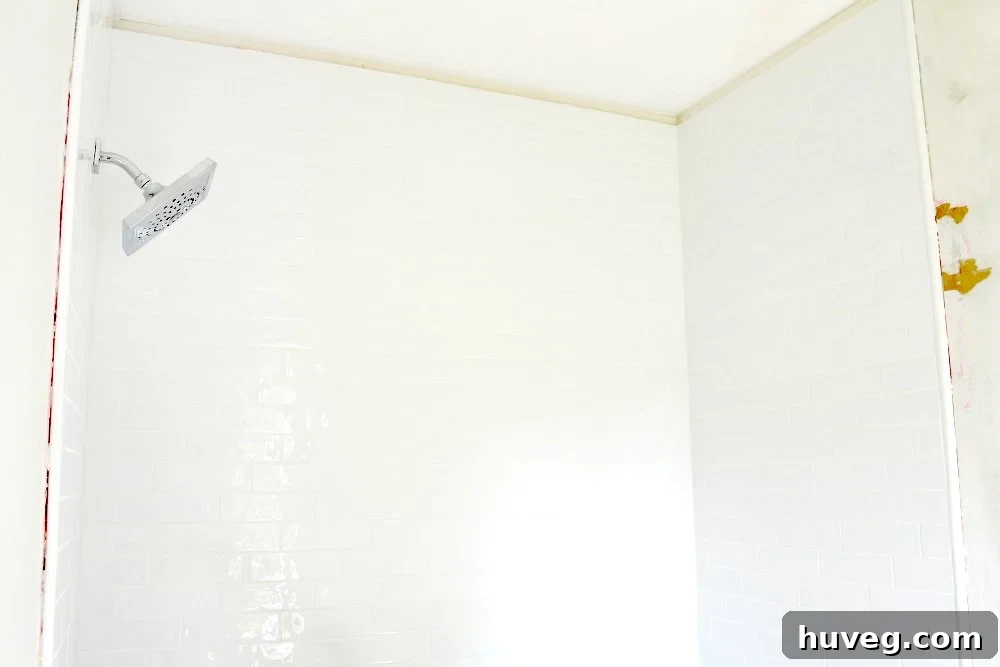
When renovating a bathroom, especially a primary or master bath, homeowners often aspire to create a luxurious and polished aesthetic. Tiling up to the ceiling within a shower enclosure or across an entire bathroom wall is a popular design choice that contributes to this high-end look. Crown molding, a classic architectural detail, perfectly complements this sophisticated design by adding elegance and a sense of completeness to the room. It visually bridges the wall and ceiling, giving the space a custom, finished appearance. However, the unique structural challenge posed by the tile-to-drywall transition often leads to confusion about the best installation method. Many DIYers search for solutions, encountering a variety of approaches, some of which are far more complicated than necessary.
Common & Complex Approaches to Crown Molding Transitions
Online forums and renovation guides often present several methods for handling crown molding where tile meets drywall, each with its own set of complications and drawbacks:
- **Skipping Molding in the Shower Area:** One option is to install crown molding only on the drywall portions of the room and simply terminate it where the tiled shower or wall begins. This can create an abrupt visual break, making the room feel unfinished or disjointed. The crown molding’s continuous flow is interrupted, detracting from the desired seamless aesthetic.
- **Molding Only on Tiled Surfaces:** Conversely, some might consider applying molding only along the tiled sections and leaving the drywall bare. This is an uncommon and often aesthetically awkward choice that breaks traditional design principles and can look out of place in most bathrooms.
- **Cutting Molding to Account for the “Bump”:** Another approach involves making intricate cuts to the crown molding itself, attempting to shape it around the differing thickness of the tile. This is akin to creating a complex cope or scribe joint, requiring extreme precision and often leading to significant material waste. Achieving a perfectly flush and clean transition with this method is incredibly difficult, even for experienced trim carpenters. Any slight miscalculation can result in visible gaps or an unprofessional finish.
- **Routing or Cutting the Back of the Crown Molding:** Some suggest routing out or cutting away the back portion of the crown molding where it meets the thicker tiled surface. While this might allow the front face to sit flush, it can weaken the molding and still requires highly accurate measurements and cuts. It’s another technically demanding solution that often results in frustration and compromised structural integrity of the molding piece.
While these methods might technically “work,” they often involve a steep learning curve, specialized tools, and a high risk of error, leading to an outcome that falls short of a professional standard. Fortunately, there’s a much simpler, more elegant solution that yields superior results.
The Elegant Solution: Utilizing Baseboard for a Seamless Crown Molding Transition
After much contemplation and experimenting, I discovered a method that is not only straightforward but also achieves a polished, custom look. The key lies in leveraging a common trim material in an unconventional way: baseboard molding.
Step-by-Step Guide to a Flawless Transition:
-
Preparation and Visualization with Scraps
Before committing to cutting your actual crown molding, it’s always wise to test your theory. Grab a small scrap piece of both the baseboard you plan to use and your chosen crown molding. This allows you to easily manipulate the pieces and visualize the final outcome without the cumbersome weight of full-length trim. This initial step helps confirm the dimensions and ensures you achieve the desired projection for your crown molding.
-
The “Upside-Down Baseboard” Revelation

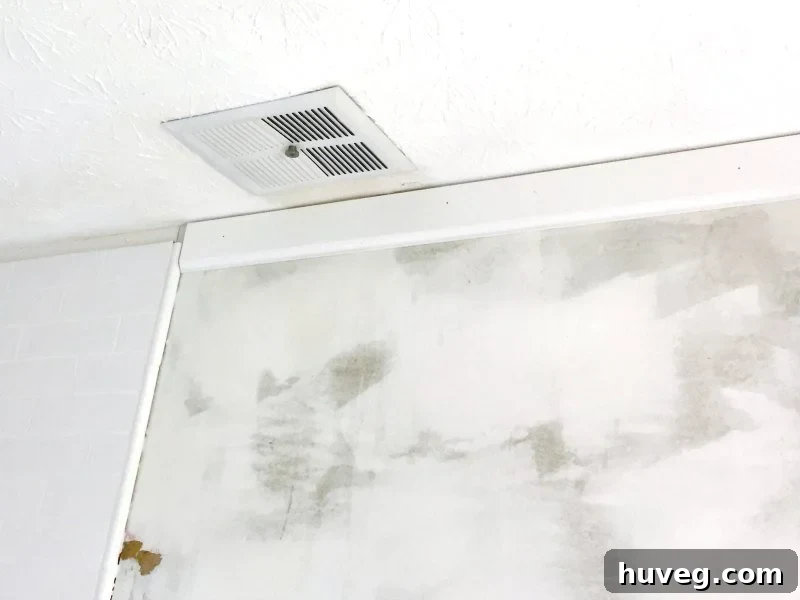
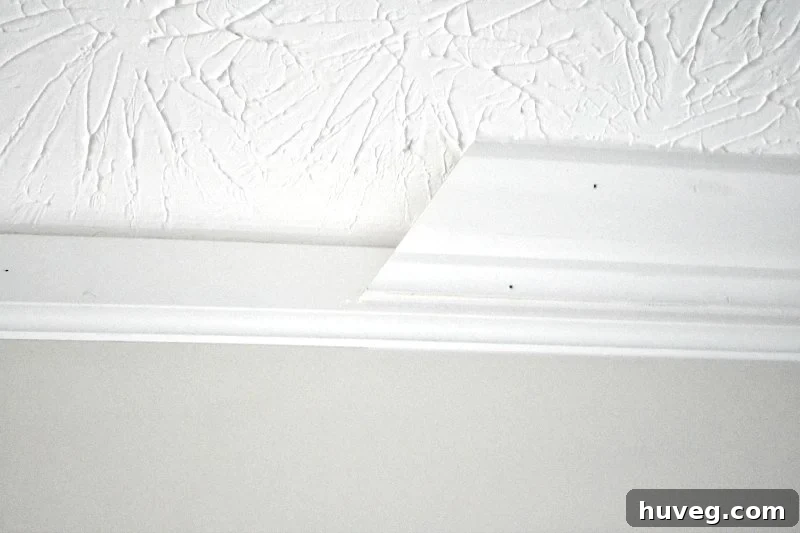
The secret weapon here is standard baseboard. The trick is to install a piece of baseboard upside down directly on the drywall section of the wall, precisely where the crown molding will eventually sit. Why upside down? Baseboard typically has a decorative, routed edge along its top. By flipping it, this decorative edge faces downwards, creating a flat, consistent surface along the top edge that will align perfectly with the ceiling. More importantly, the baseboard’s thickness effectively “builds out” the drywall surface, bringing it forward to match the projection of the adjacent tiled wall.
Using your scrap pieces, determine the exact height at which to install the upside-down baseboard. You want it positioned so that once the crown molding is installed directly beneath the ceiling, the baseboard will protrude just slightly below the bottom edge of the crown – typically about 1/2 inch. This subtle protrusion not only provides a consistent surface for the crown molding but also offers a bonus aesthetic benefit.
-
Achieving a “Beefier” Crown Molding Look
This method isn’t just a clever solution for the tile-to-drywall transition; it’s also a fantastic design hack. By adding the upside-down baseboard just below the crown molding, you visually thicken the entire trim assembly. This technique, often employed by professional designers, makes standard crown molding appear more substantial and custom-made, lending an extra touch of luxury and architectural gravitas to the room. It’s a simple way to achieve that sought-after “beefier” trim look without investing in more expensive, larger crown profiles.
-
Seamless Installation of the Crown Molding
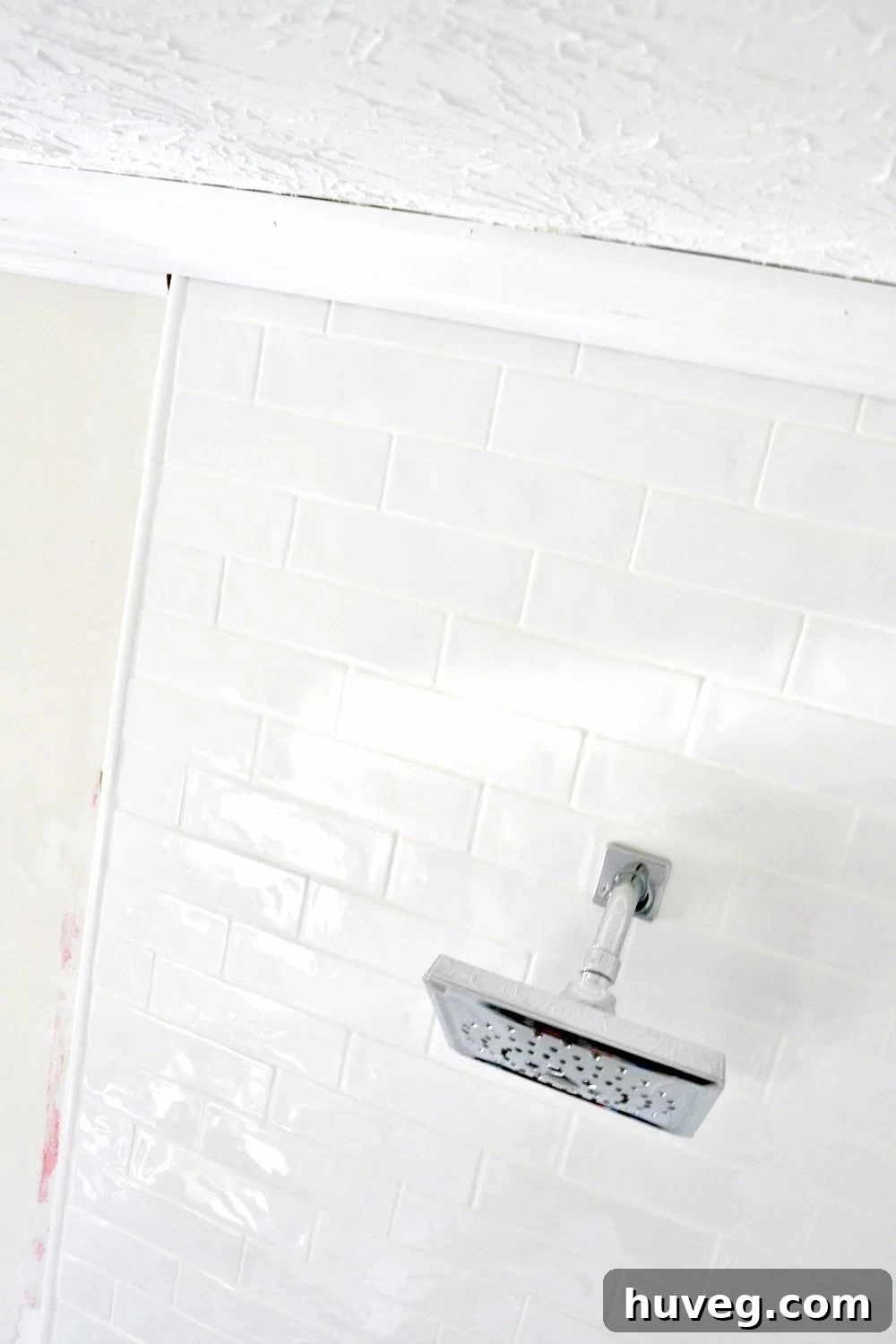
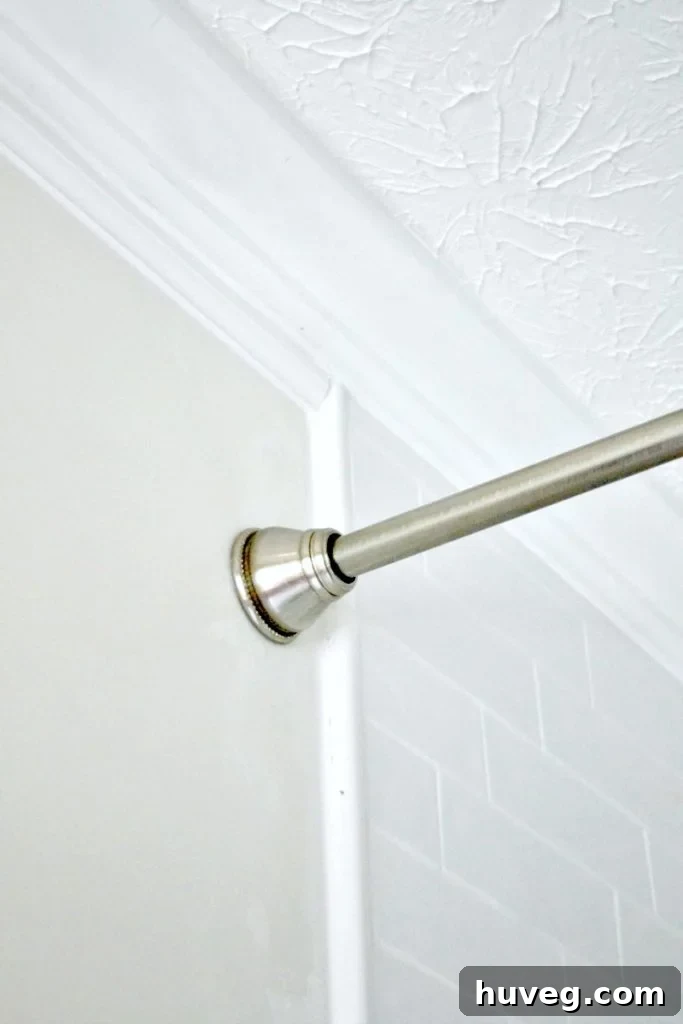
Once the upside-down baseboard is securely installed on the drywall sections, you have created a consistent surface depth across the entire perimeter of the room, effectively eliminating the thickness discrepancy between the tiled and drywall areas. Now, the crown molding can be installed in a continuous run, sitting flush against both the tiled wall and the newly built-out drywall section with the baseboard. Use a pneumatic nailer for efficient and secure attachment. While cutting crown molding still requires careful angle calculations (resources like Sandra’s templates for crown molding can be incredibly helpful for this), the process is significantly simplified when you don’t have to contend with varying wall depths.
During installation, you might encounter minor variations, such as a pencil tile edge that’s slightly thicker than the subway tile and baseboard combo. In most cases, crown molding has enough flexibility to accommodate these minute differences. Any tiny resulting gaps can be easily filled with a good quality caulk, creating a perfectly smooth and finished appearance.
The Benefits of This Smart Trim Solution
This innovative use of baseboard offers several distinct advantages, making it the preferred method for anyone facing this common renovation dilemma:
- Truly Seamless Transition: The primary benefit is the creation of a visually uninterrupted flow of crown molding around the entire room, regardless of whether the wall is tiled or drywalled. The finished look is professional and cohesive.
- Simplified Installation: By eliminating the wall thickness discrepancy, you remove the most challenging aspect of installing crown molding in such a scenario. The cuts for the crown molding become standard, reducing frustration and material waste.
- Enhanced Aesthetics: The “beefier” crown molding effect adds significant architectural interest and a custom, high-end feel to the bathroom, making it look far more luxurious.
- Cost-Effective: Utilizing standard baseboard is an economical way to achieve this sophisticated look compared to purchasing larger, more elaborate crown molding profiles. Less waste from botched cuts also saves money.
- Robust Foundation: The baseboard provides a solid, flat surface for the crown molding to sit on, ensuring a secure and durable installation.
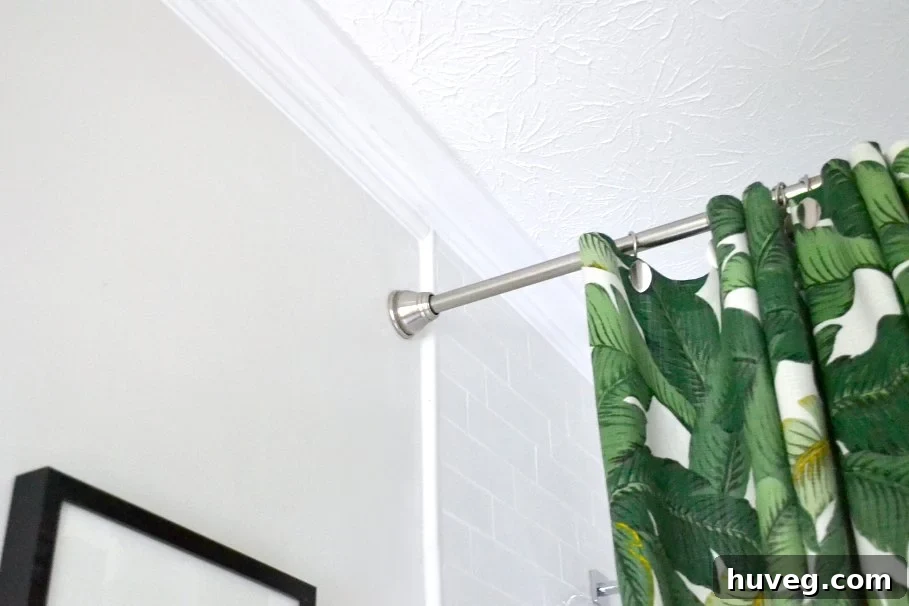
This simple yet incredibly effective approach to crown molding installation around tiled walls is a testament to how creative thinking can transform a complex problem into an elegant solution. It’s these kinds of smart DIY tricks that make home renovation projects more manageable and ultimately more rewarding. Have you ever stumbled upon a remarkably simple fix for a problem that initially seemed overwhelming? Share your insights; there’s always something new to learn in the world of home improvement!
Explore More Bathroom Renovation & Drywall Tips
For those eager to dive deeper into bathroom makeovers or refine their drywall skills, we have a wealth of resources available. From glittering shower tile installations to essential drywall repair guides, you’ll find everything you need to tackle your next project with confidence.
More Drywall Tips
SEE ALL DRYWALL ARTICLES
Drywall can be intimidating, but with the right guidance, you can master it. Check out these helpful posts to learn what you need to know:
-
Painting Prep after Drywall Repair
-
Skim Coating Tips: Bubbles, My Favorite Primer, and More
-
DIY Drywall Over Wood Paneling
-
How to Seal Damaged Drywall
-
How to Prep Kitchen Walls for a Tile Backsplash
-
How to Seamlessly Transition Crown Molding Where Tile Meets the Wall
You can also find more on the complete bathroom makeover series, including the big shower makeover and other articles under the bathroom category.