Build Sleek, Extra-Long, Deep, & Slim Floating Shelves

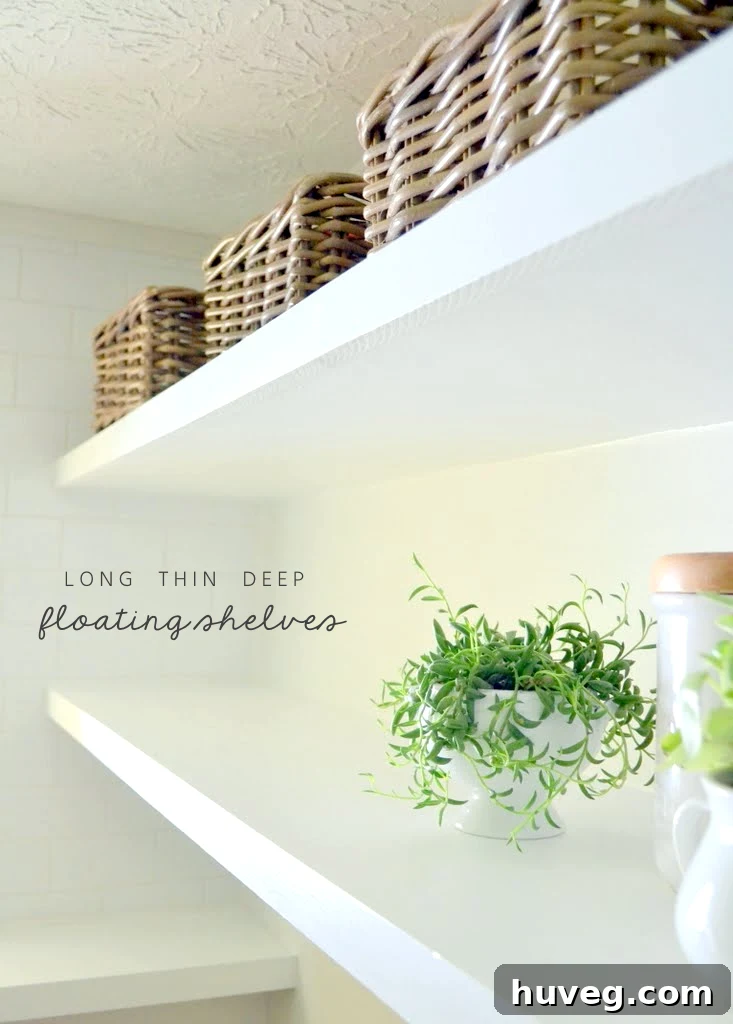
DIY Floating Shelves: Build Long, Thin, and Exceptionally Sturdy Shelves for a Modern Home
Are you dreaming of elegant, minimalist storage that doesn’t compromise on strength or break the bank? This comprehensive guide provides free, easy-to-follow plans to construct beautiful, long, and thin floating shelves using readily available, inexpensive materials. Say goodbye to bulky shelves and hello to robust support with a sleek profile!
The thin floating shelves in my laundry room are finally complete, marking a significant milestone in reclaiming valuable space. With these shelves firmly in place, I can bid farewell to the cluttered floor of “Mount Washmore” and welcome a new era of organized storage. The transformation has been remarkable, proving that functional spaces can also be aesthetically pleasing.
The journey to these perfect floating shelves was not without its challenges. For a considerable time, I meticulously scoured countless DIY tutorials, yet I consistently found myself searching for a specific combination of features that seemed elusive. My ideal floating shelf design needed to be:
Long, Deep, Thin, Inexpensive, and Secure.
Finding a tutorial that encompassed all these attributes proved to be surprisingly difficult. The most significant hurdle was the common requirement for the structural frame of floating shelves to be rather thick, especially when aiming for considerable length. While many admire the substantial appearance of “chunky” floating shelves, I personally find them out of place in certain settings. Some things, like a baby’s chubby legs or a scoop of cookie dough ice cream, are perfectly charming when chunky. But for my floating shelves, I envisioned something far more refined and streamlined, akin to smooth peanut butter or the lean elegance of Leonardo DiCaprio (apologies to #dadbod enthusiasts!).
I fully understand that shelf thickness often stems from a combination of personal taste and structural necessity. A certain bulk is typically required to ensure a long, wide shelf remains sturdy enough to bear a reasonable amount of weight without bowing or sagging over time. The internal structure must adequately support the load, and increased thickness is often a direct consequence of this engineering. However, given the incredibly tight and awkwardly shaped dimensions of my laundry room, the idea of thick, visually dominant shelves simply didn’t appeal to me. The real puzzle was discovering how to achieve substantial support with a minimal profile – a feat comparable to a bodybuilder supported by “chicken legs.” After much contemplation and combining various tutorial ideas I discovered on Pinterest, I devised a method that perfectly balanced form and function. And it worked significantly better than the bodybuilder analogy!
So, let’s dive into the detailed tutorial for building your own long, thin, and robust floating shelves.
DIY Long and Thin Floating Shelves: A Step-by-Step Guide
Lumber Needed:
- 1x2s: Essential for the main frame and the front fascia of each shelf. Their narrow profile is key to the thin design.
- 1x3s or similar 1x scrap wood: Recommended for the internal support structure within the frame, offering enhanced rigidity.
- 1/2″ sanded plywood: Used for the top surface of each shelf, providing structural integrity and a smooth finish.
- 5mm sanded plywood: Employed for the bottom surface of each shelf, primarily for decorative purposes to conceal the internal frame.
Essential Materials:
- Pocket hole screws (1 1/4″): For creating strong, hidden joints in the frame assembly.
- Wood glue: For reinforcing all wooden joints, ensuring maximum stability and longevity.
- Finishing nails (1 and 2 1/2″): Used with a nail gun for quickly attaching plywood and trim pieces.
- Wood putty: To fill nail holes and imperfections, creating a seamless finish.
- Caulk: For sealing gaps between the shelf and wall, ensuring a professional, integrated look.
- Pencil: For precise marking and layout.
- Painter’s tape: Indispensable for clean cuts on plywood and for visualizing shelf placement.
- Primer, paint or stain: For the desired final aesthetic and protection.
Recommended Tools:
- Kreg Jig: For fast, strong, and accurate pocket hole joinery.
- Circular saw or table saw: For cutting lumber and plywood to precise dimensions.
- Miter saw: For accurate cross-cuts on lumber.
- Finishing nail gun & air compressor or cordless nail gun: For efficient and secure attachment of plywood panels.
- Level: Absolutely critical for ensuring your shelves are perfectly horizontal.
- Stud finder: To locate wall studs for maximum support.
- Square: For verifying 90-degree angles during frame assembly.
- Utility knife: Excellent for cutting thinner plywood and scoring lines.
- Clamps: Essential for holding pieces together securely while glue dries or screws are driven.
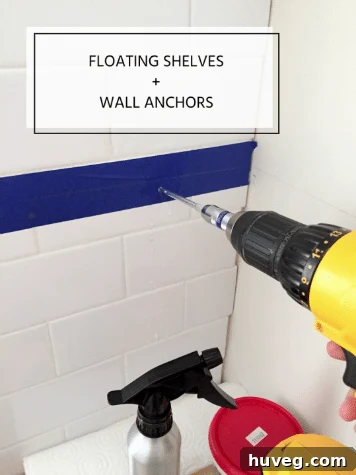
For Drilling into Tile (Refer to This Detailed Tutorial for the Full Process):
- 5/16″ ceramic/glass tile bit: A specialized bit for drilling through hard tile surfaces without cracking.
- 5/8″ wall anchors: Crucial for securing shelves to drywall or tile where studs are not available (ensure compatibility with your wall material and thickness).
- 3-inch #10 drywall screws: Selected to pass through the 1.5″ width of a 1×2 and the 1.5″ length of the wall anchor (adjust length for thinner materials).
- Drill: Powering your tile bit and driving screws.
- Painter’s tape: To prevent drill bit slippage on smooth tile surfaces.
- Spray bottle of water: To keep the tile bit cool during drilling, prolonging its life and preventing tile damage.
- Paper towels: For wiping away water and tile dust.
- Hammer: For gently tapping wall anchors into place.
- Dust mask: Essential for safety, especially when drilling into tile to avoid inhaling fine dust.
Preparation is Key: Laying the Groundwork for Your Floating Shelves
Before any cutting or assembly begins, it’s crucial to assess your wall structure. My floating shelves were designed to be supported on three sides by existing walls, a foundational aspect of this tutorial. If your intended installation spot lacks at least two adjacent walls with studs or solid anchoring points, you may need to consider alternative support methods. The strength of these shelves relies heavily on secure attachment to robust wall structures.
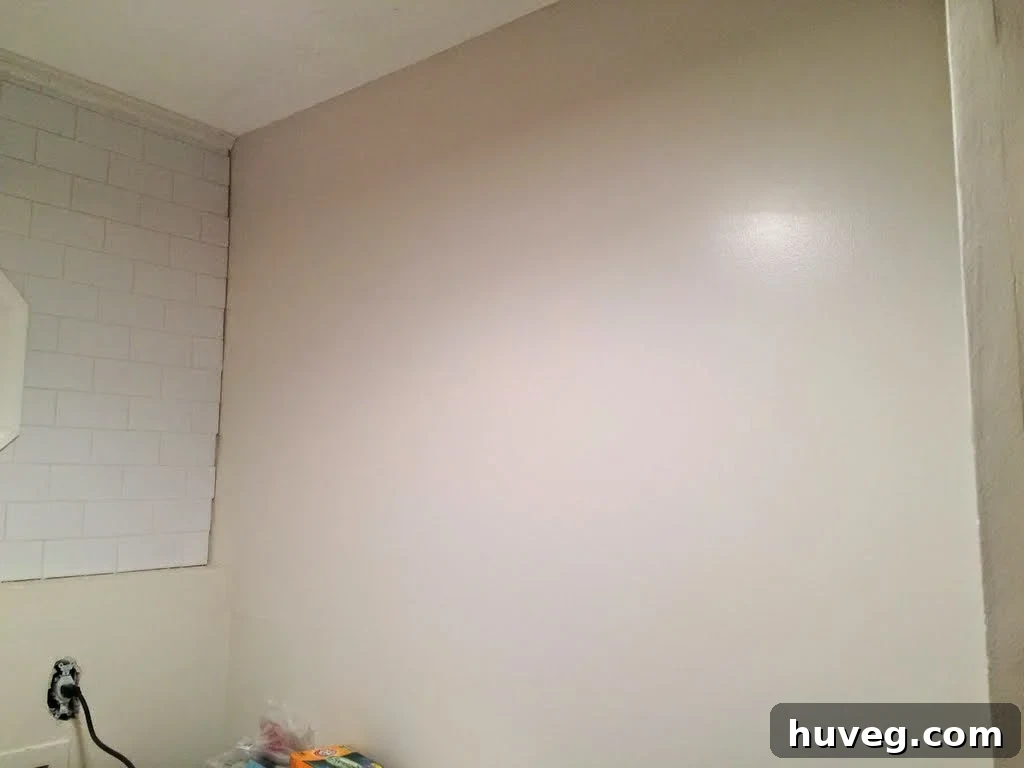
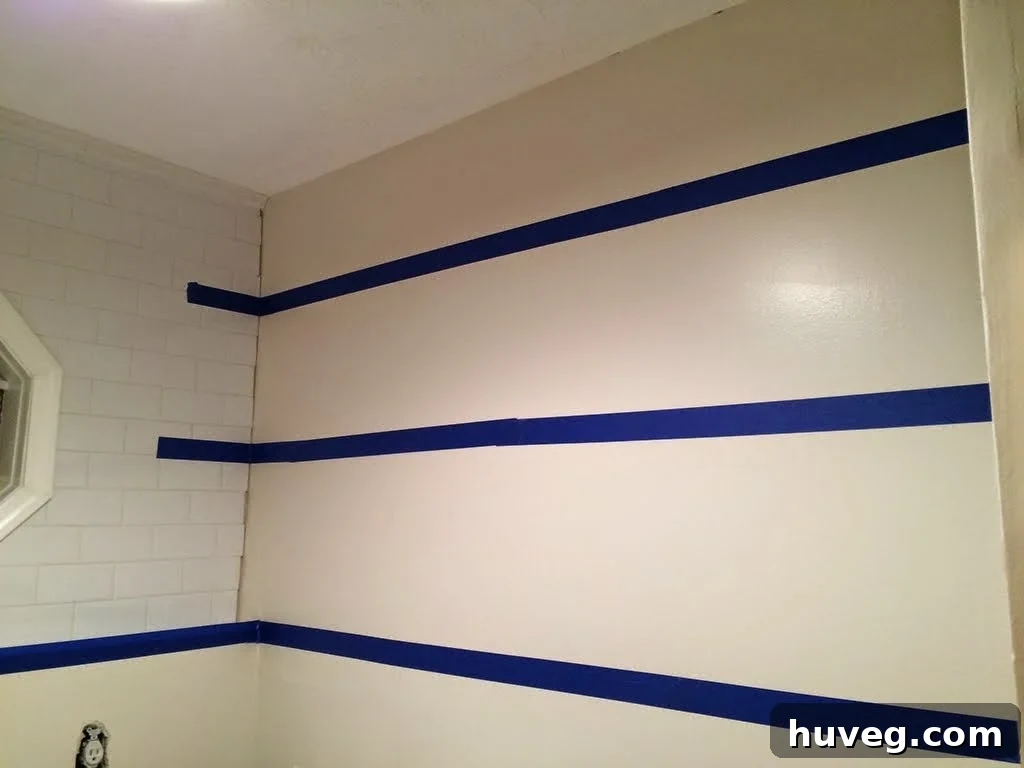
Begin by carefully marking the desired locations for your shelves along the wall. A smart trick here is to use painter’s tape to visually outline each shelf. This helps you confirm the placement and spacing before committing to pencil marks or drilling. Once satisfied, remove the tape and use a level to draw a precise pencil line across the entire wall. This line will serve as your guiding edge, ensuring the top of your support frame is perfectly level and aligned.
Designing for Strength and Slenderness: Understanding Shelf Measurements
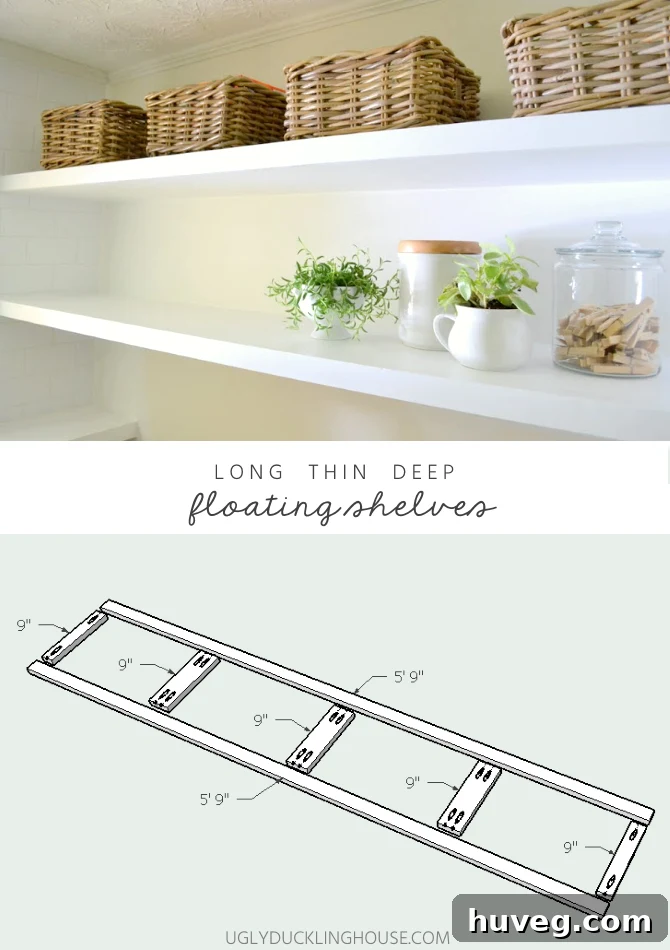
The shelves I constructed (visible on the right side of the picture above) measure approximately 69 inches long and 12 inches deep. The most impressive aspect of this design is that despite their generous length and depth, each shelf maintains a remarkably thin profile of only 1.5 inches, while still being incredibly sturdy! This slender appearance is achieved through a clever structural design.
The innovation lies in using a 1×2 piece of lumber on its thin side for the main structural components, which allows the shelf to remain visually thin without sacrificing support. Crucially, I designed a full 4-sided frame for these shelves, rather than simply relying on cleats and middle supports that are drilled through the shelf. While many floating shelf tutorials omit the fourth, front-facing piece, I discovered it was invaluable for keeping the middle support pieces secure, perfectly level, and ultimately providing superior support for the plywood top. This comprehensive frame design is the secret to achieving both a thin aesthetic and robust functionality.
1. Crafting the Robust Internal Frame
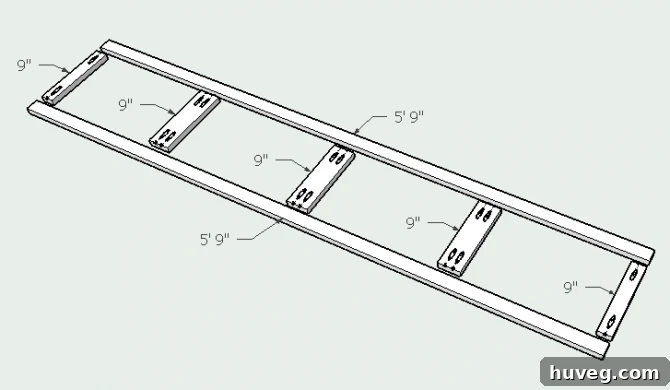
Constructing the internal frame is a straightforward process. I utilized 1x2s for the perimeter of each shelf. The back and front pieces were cut to the full shelf length (69 inches or 5’9″). For the side pieces, I cut them to the desired depth of the shelf minus the actual width of the front and back 1x2s. Since 1x2s are typically 1 1/2″ wide, my 12″ deep shelves required side pieces cut to 9″ (12″ – 1.5″ – 1.5″).
During my initial build, I experimented with the inner support pieces. I first tried 1x2s for the lower shelf and then switched to scrap 1x3s for the top shelf. I quickly realized that the 1x3s provided a significantly sturdier frame, especially when combined with pocket hole joinery using a Kreg Jig. Therefore, I highly recommend using 1x3s for your internal supports. As a relative beginner with Google SketchUp, having only created one other post with it ages ago, I hope these diagrams clearly illustrate the frame structure!
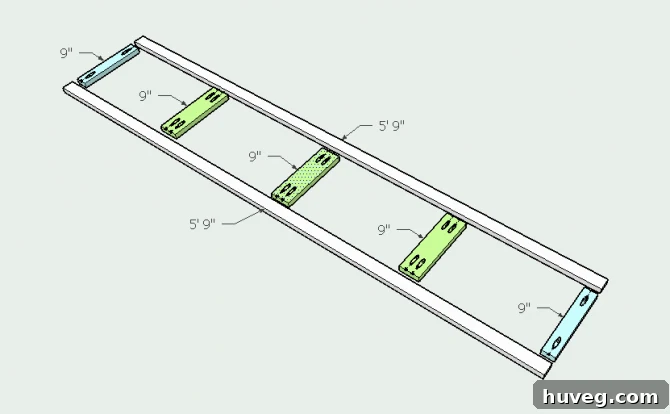
To further clarify the components, I’ve provided a color-coded version. The blue and white pieces represent the 1x2s (9″ and 69″ long, respectively), forming the perimeter. The green pieces are the 1x3s (9″ long), serving as the crucial internal supports.
All pocket holes for the various frame pieces were drilled before mounting anything to the wall. Although I initially assembled the entire frame, I later found it more practical to temporarily detach the side cleats for easier wall installation of the back cleat and middle supports. Re-attaching the side cleats afterward proved much simpler, and I recommend this approach for a smoother installation process.
Understanding and Installing the Side Cleats (Frame Supports)
For those new to DIY, “cleats” are essentially wooden strips screwed into the wall that act as crucial support elements, helping to bear and distribute the weight of the shelf. In this project, terms like cleats, frame, and supports are often used interchangeably to describe these integral structural components. The entire shelf system’s integrity hinges on how securely these initial wall-mounted pieces are installed. You must ensure they are robustly fastened, either by screwing them directly into wall studs or by utilizing appropriate wall anchors on all three connecting walls.
I began by installing the side cleats. The tile wall side was addressed first, as it presented the most rigid and least forgiving surface. The opposite wall then received its cleat, secured using reliable wall anchors. Remember to leave a precise gap along the back wall to snugly accommodate the back piece of your shelf frame (approximately 1 1/2″ for a 1×2). This careful spacing ensures a tight, professional fit for the entire frame.
Pro Tip from Pretty Handy Girl: For an exceptionally solid hold when using wall anchors, consider Cobra Triple-Grip anchors. They offer superior gripping power in various wall materials.
2. Expertly Installing Support Through a Tile Wall
Drilling into tile and securely anchoring supports requires a specific technique to prevent cracking and ensure stability. Due to the specialized nature of this task, I’ve created a dedicated, in-depth tutorial that you can access here. This separate guide covers all the nuances, from selecting the right drill bit to preventing tile damage and properly setting anchors.
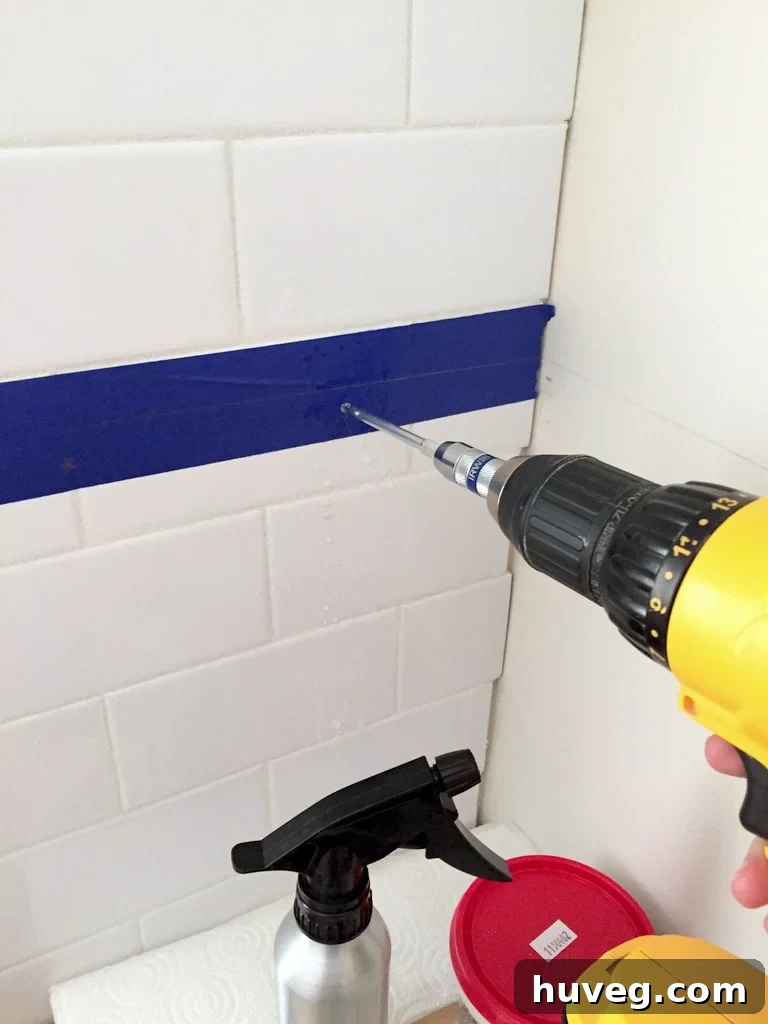
3. Integrating the Middle Supports with the Back Cleat
Once your back cleat is cut to its impressive 69-inch length, it’s time to reinforce it with the crucial middle supports. I used leftover scrap 1x2s initially, but as mentioned, discovered the superior stability offered by 1x3s for these inner sections. To create robust, hidden joints, I utilized my Kreg Jig to drill pocket holes, securing the pieces with 1 1/4″ screws (a size determined by the 3/4″ thickness of the wood). Always apply wood glue in addition to screws; however, wait until you are absolutely certain of your assembly sequence. I found myself making adjustments during my first shelf, so holding off on glue initially was beneficial!
As illustrated in the diagrams above, I strongly advocate for using 1x3s for the middle supports. While I didn’t have enough scrap 1x3s for both shelves and ended up using only two 1×2 supports in the middle (spaced by eye), even that configuration proved surprisingly solid. However, for maximum durability and peace of mind, incorporate as many 1×3 supports as your design allows.
DIYer’s Best Friend: Face clamps are indispensable for pocket hole joinery. If you own a Kreg Jig, I wholeheartedly recommend investing in their dedicated face clamp; it makes clamping pieces together before driving screws incredibly easy and precise.
4. Securing the Complete Frame to the Wall
With your side cleats firmly installed (remembering to leave that 1 1/2″ gap for the back piece), it’s time to bring the entire frame together. Carefully position the back cleat and the rest of the pre-assembled frame, screwing it into the wall studs for optimal support. The front frame piece can either be screwed into the middle supports beforehand or attached as a final step. Through trial and error, I found no significant difference in approach. Regardless, due to the substantial length of these shelves, installing the frame single-handedly can be a bit cumbersome, so consider enlisting a helper if possible.
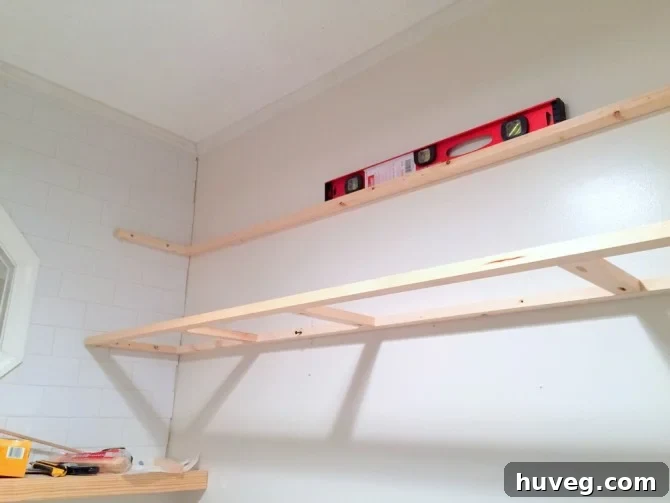
Installation Aid: A brad nailer can be a fantastic substitute for an extra set of hands. Use it to temporarily tack the shelf support in place, allowing you to easily adjust and level everything before driving permanent screws into the wall studs.
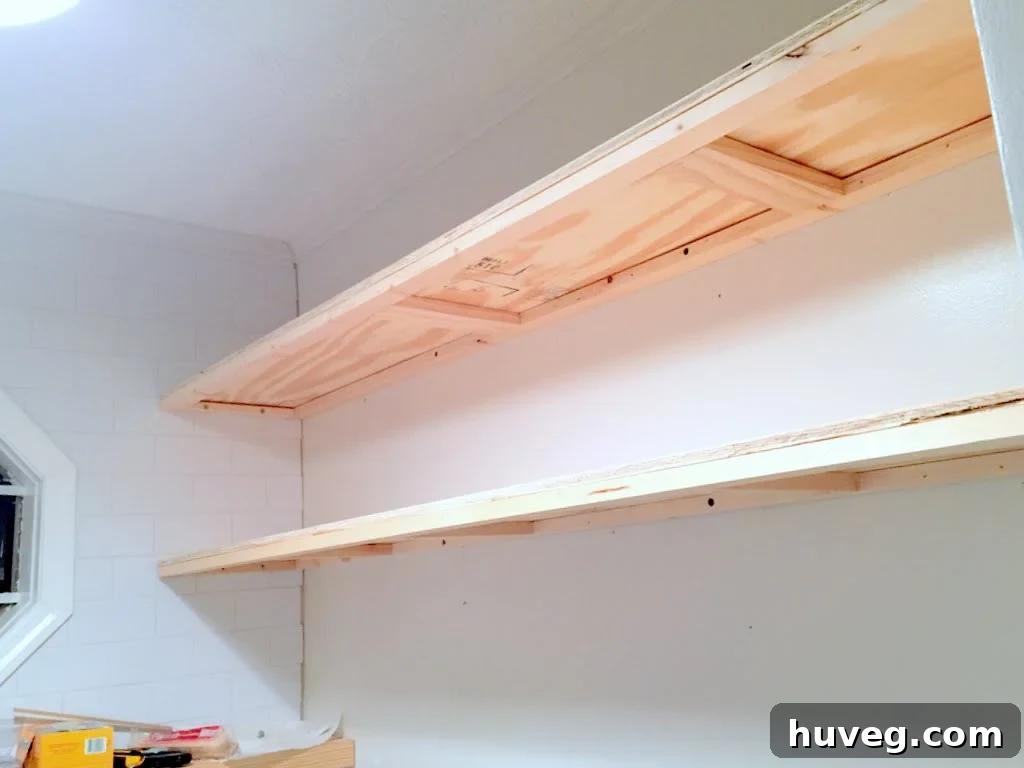
5. Encasing the Frame: Attaching the Plywood Skins
With the sturdy frame securely mounted in place, the next step is to give your floating shelves their smooth, finished surfaces by adding the plywood. Since I didn’t have a table saw readily available in my garage at the time, I had my local hardware store (the “Blue” store, as I call it) cut down pieces of 1/2″ sanded plywood and 5mm sanded plywood to my desired 12″ widths. For any subsequent length cuts or intricate shapes, I used my circular saw at home, often clamping a piece of scrap wood to the plywood as a straight-edge guide for perfectly straight cuts.
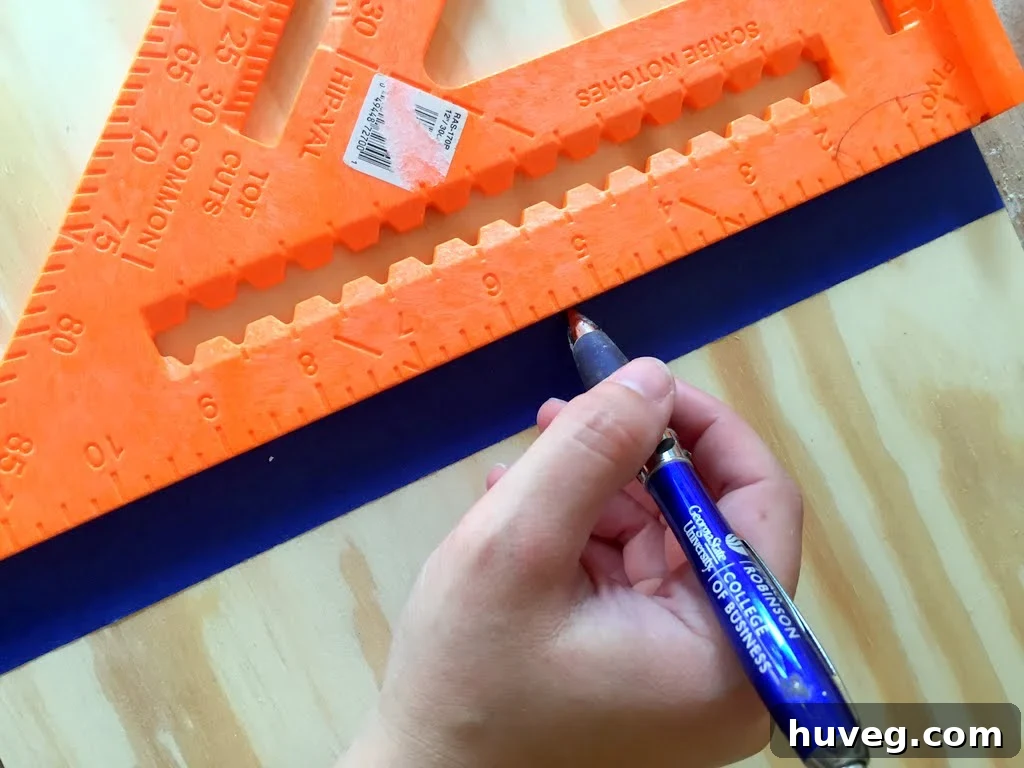
Clean Cut Trick: To achieve splinter-free, clean edges when cutting plywood, apply painter’s tape along your cut line before using the saw. This simple step makes a significant difference in the final appearance.
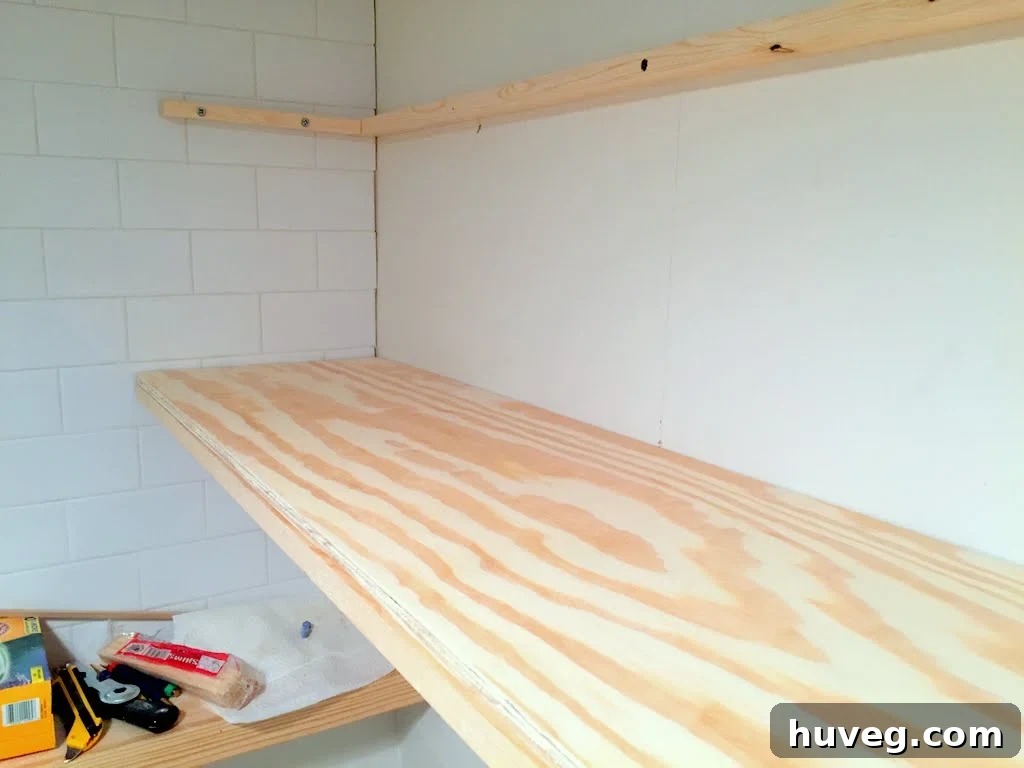
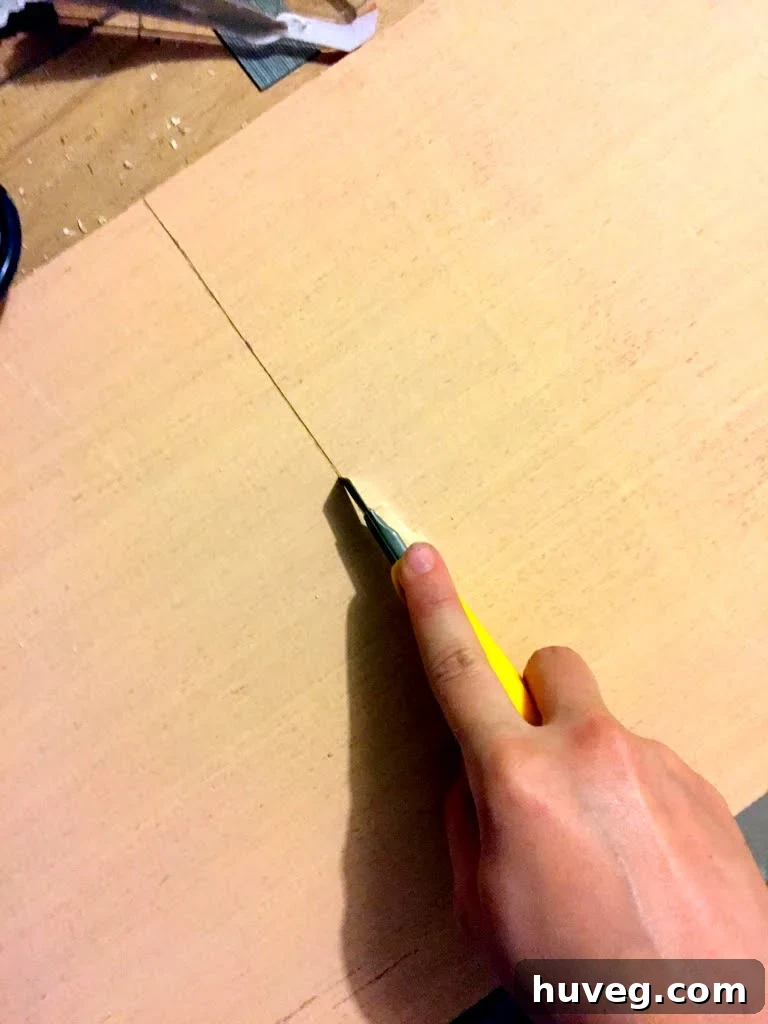
For the thinner, 5mm plywood that forms the bottom surface (primarily for decorative purposes), I discovered a fantastic shortcut: it can be cut down remarkably easily with a sharp utility knife! On a side note, OLFA** generously sent me several of their utility knives to test, and I’ve become particularly fond of this specific model. It has quickly become my go-to tool for various tasks, including small molding projects, and I’ve found it to be the ultimate weapon against cardboard box clutter in my home*.
I attached the top 1/2″ plywood piece with a combination of wood glue and my brad nailer, ensuring a strong bond and a smooth, unblemished surface. The thinner bottom piece of plywood required a bit more finessing. I strategically applied a few brad nails towards the back to hold it in place initially, then used clamps along the front edge while the wood glue cured. This ensured a tight, flush fit all around.
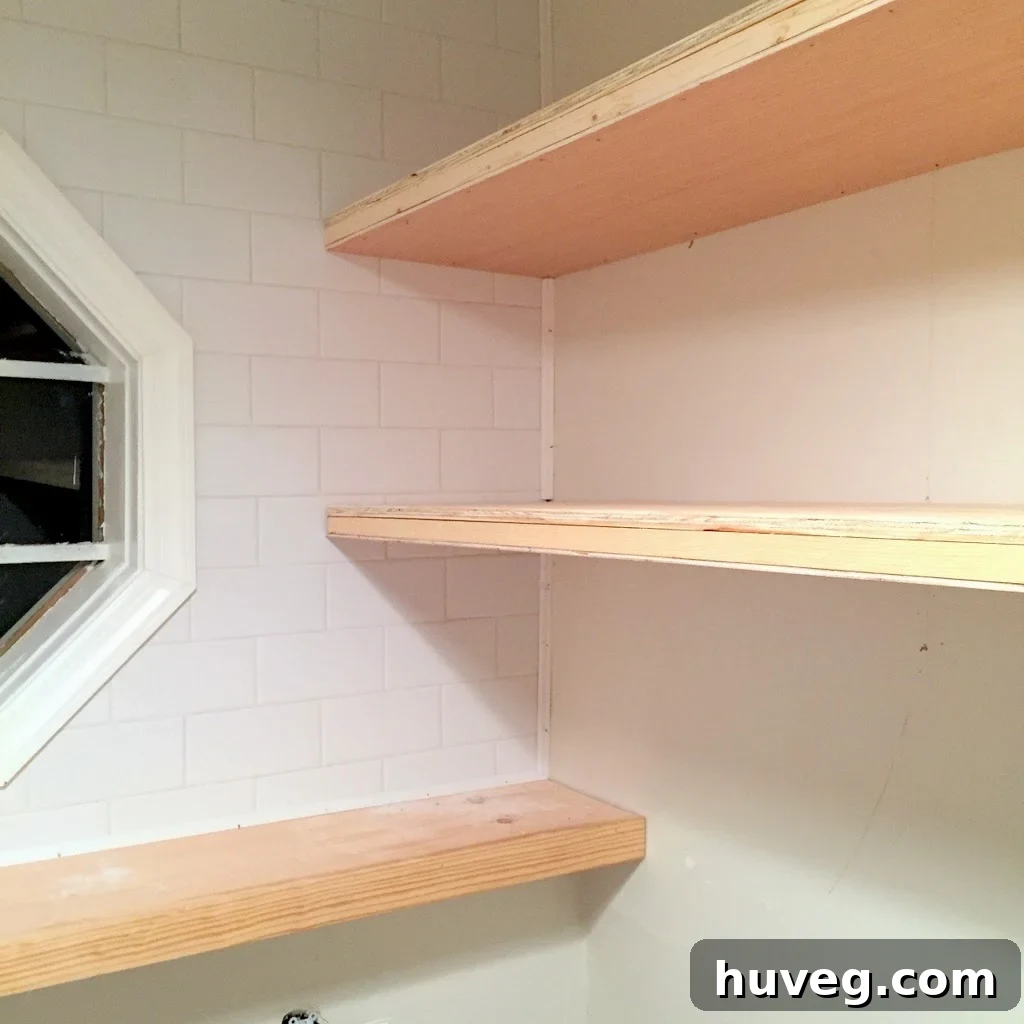
6. The Finishing Touch: Attaching the Front Fascia Piece
Once both the top and bottom plywood panels were securely in place, the entire shelf assembly measured just under 1 1/2″ thick. This precise dimension allowed me to use another 1×2 piece of lumber for the front fascia. This final piece serves a crucial dual purpose: it elegantly conceals the exposed edges of the plywood, creating a seamless and finished look, and it reinforces the overall structure, maintaining the sleek, thin profile of the floating shelf.
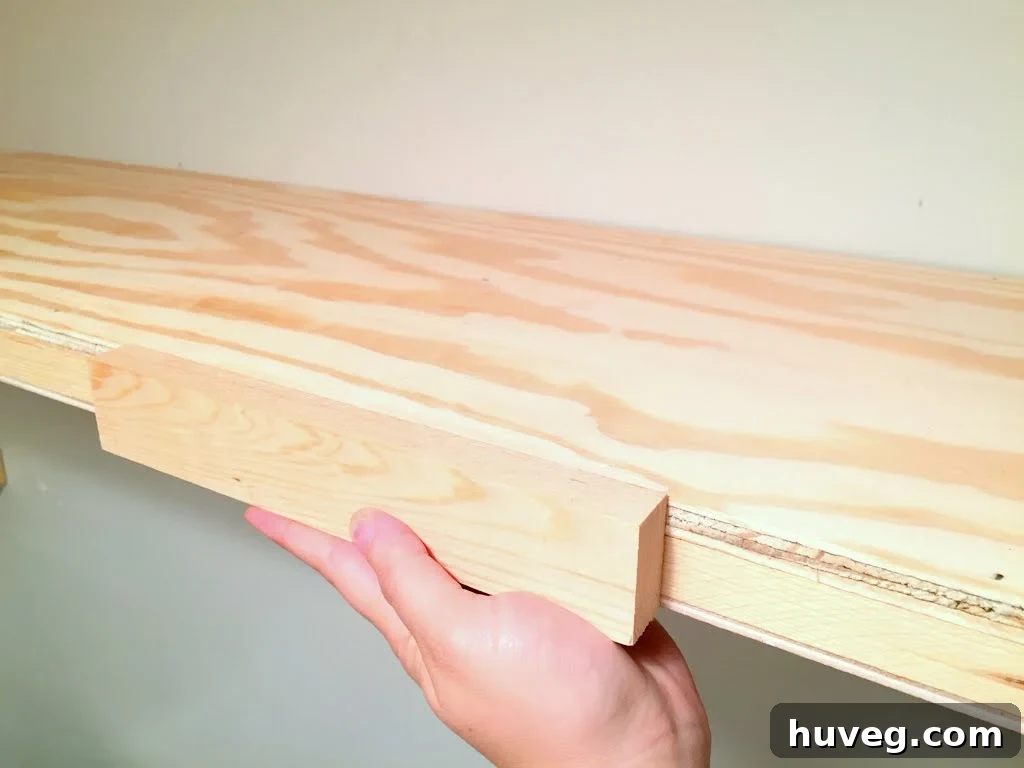
7. The Grand Reveal: Finishing and Decorating Your Stunning Shelves!
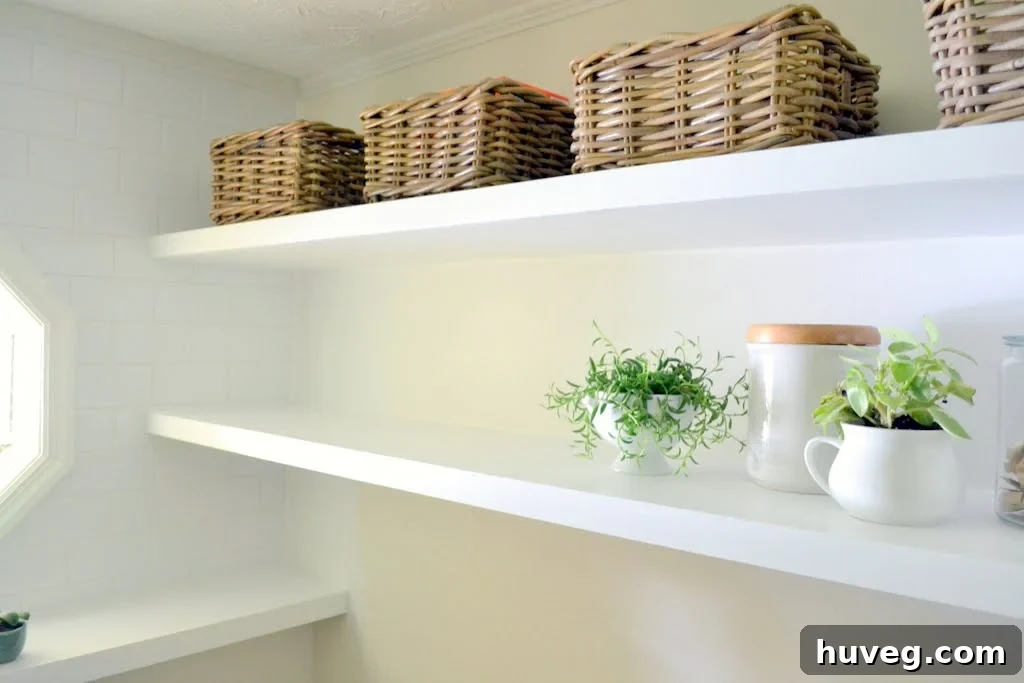
With all the structural components assembled, the final steps transform your functional framework into beautiful, decorative elements. This involves a meticulous finishing process: filling all nail holes with wood putty, thorough sanding to achieve a perfectly smooth surface, caulking any gaps between the shelf and the wall for a seamless built-in look, priming the entire shelf for optimal paint adhesion, and finally, applying your chosen paint or stain. The results are truly rewarding:
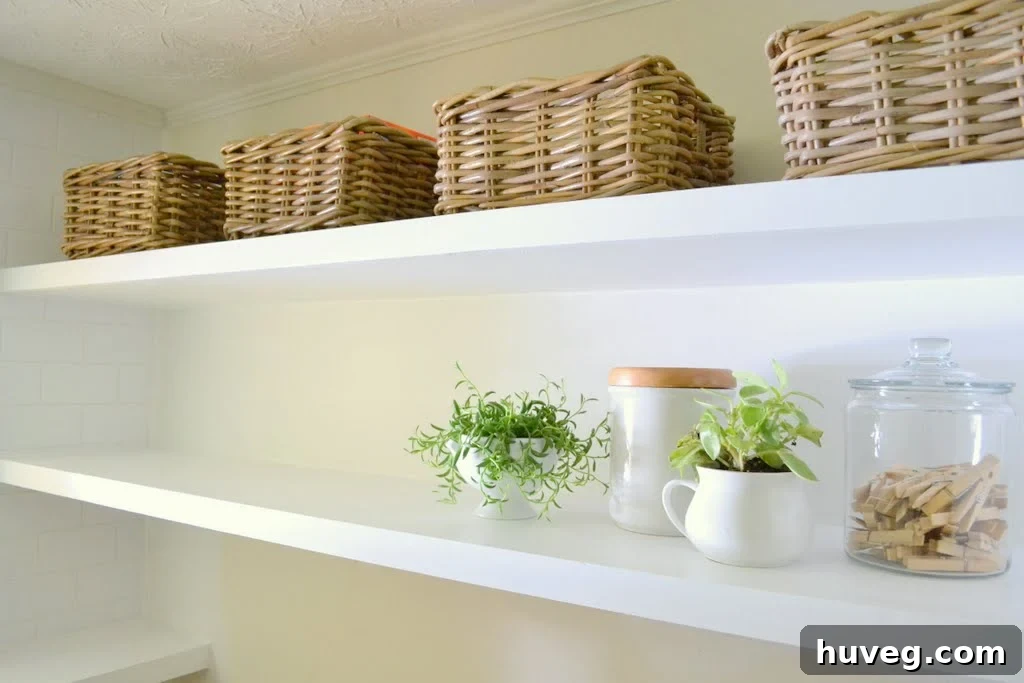
These photos also showcase two other recent updates to my laundry room: first, I completed the trim work around the tiled wall, which vastly improved the overall aesthetic and coherence of the space. Second, I embarked on the arduous task of re-painting the walls. This marks the third color I’ve applied since moving in, prompting a serious eye-roll for the sheer number of attempts it took to find the right shade! I had long suspected that the previous color, which works well in other parts of my home, simply wasn’t compatible with the unique lighting conditions in this room. I tried to live with it for as long as possible, but once I started painting the shelves, it seemed like the perfect opportunity to test a leftover gallon of white paint from my office. And to my absolute delight, it was the perfect fit! I’m now convinced my quest for the ideal wall color in this room is finally over. I’ll share more details on the complete wall transformation once it’s entirely finished.
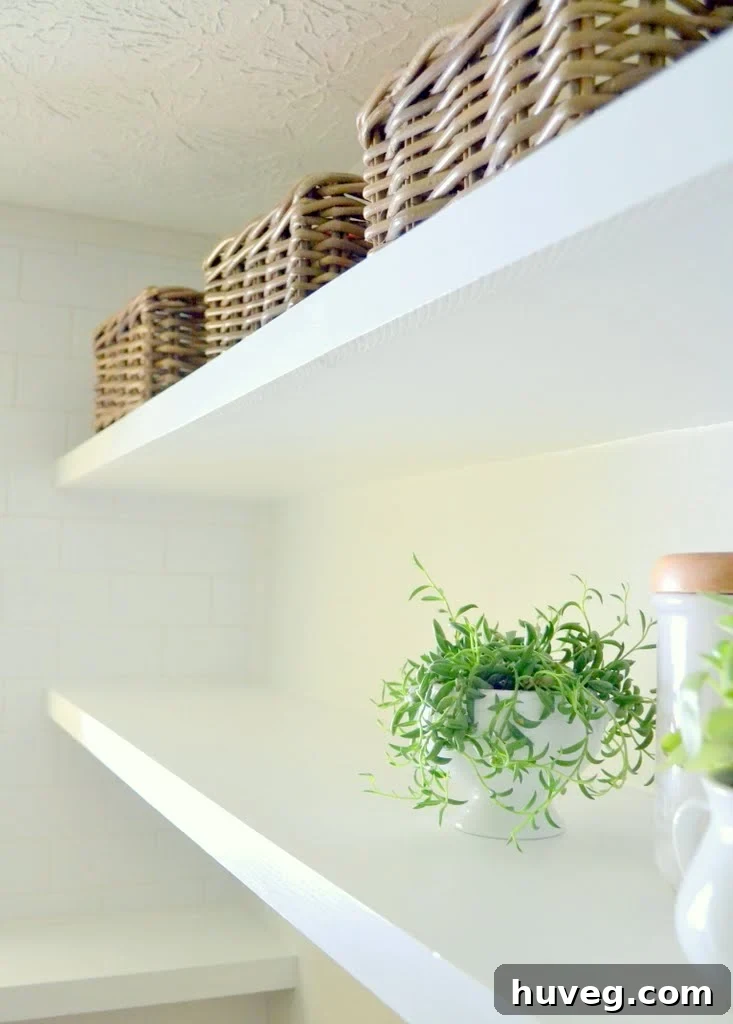
For those curious about the decorative elements, the charming baskets you see are very old finds from Ikea, but they integrate beautifully with the new shelves. The crisp white container on the right is a vintage kitchen jar, likely a cookie jar, that I discovered at Goodwill last weekend. It now discreetly houses my less-than-aesthetic detergent pods, keeping them hidden and maintaining the room’s tidy appearance.
This concludes the detailed tutorial for these long, thin, and sturdy floating shelves. I still have a few more trim pieces to install, some final painting to complete, and an exciting decorative project underway for this room, which I hope to finish later this evening. I’m absolutely loving the progress, and with rain predicted for the week, it’s the perfect indoor project to tackle. Stay tuned for more updates, and feel free to catch sneak peeks on my Instagram if you’re eager for a preview!
Don’t forget to pin this project for later inspiration!
———————————————
*I must confess, I’ve genuinely been seeking out excuses to cut up cardboard boxes lately, simply because this utility knife is incredibly satisfying to use. Is that a bit strange? Probably. But it’s also wonderfully therapeutic, and my garden beds recently needed a substantial amount of cardboard to help suppress weeds before adding mulch, so this peculiar obsession served a practical purpose! Though, honestly, a large part of the enjoyment still comes from the sheer fun of slicing through each box with precision, like a tiny samurai sword.
**Full Disclosure: As previously mentioned, OLFA kindly provided me with a selection of their products to review and requested that I share my honest thoughts on the blog after trying them. As always, all opinions and sentiments expressed on this blog are 100% my own, and I only ever endorse products or tools that I genuinely appreciate and would use myself.