Elegant Outdoor Design Concealing Your AC Unit with a Stylish Wood Screen

Outdoor air conditioner units are essential for home comfort, but their bulky presence can often detract from an otherwise beautiful yard. If you’re looking for a clever and effective way to enhance your home’s curb appeal while keeping functionality intact, a DIY air conditioner cover is the perfect weekend project. This guide will walk you through creating an attractive, durable wooden screen using cedar planks and a strong outdoor-friendly adhesive, transforming an eyesore into a seamless part of your landscape.
Transforming your backyard doesn’t have to be a monumental task. With simple materials and a clear plan, you can easily construct a custom wooden screen that not only conceals your unsightly AC unit but also adds a touch of rustic charm to your outdoor space. This project is surprisingly straightforward, making it accessible even for beginner woodworkers eager to tackle a rewarding home improvement task.
Gone are the days of a prominent, industrial-looking AC unit dominating your yard. Imagine a discreet, stylish enclosure that complements your existing landscaping. Our goal is to achieve a polished look that blends harmoniously with your home’s exterior, proving that utility and beauty can coexist.
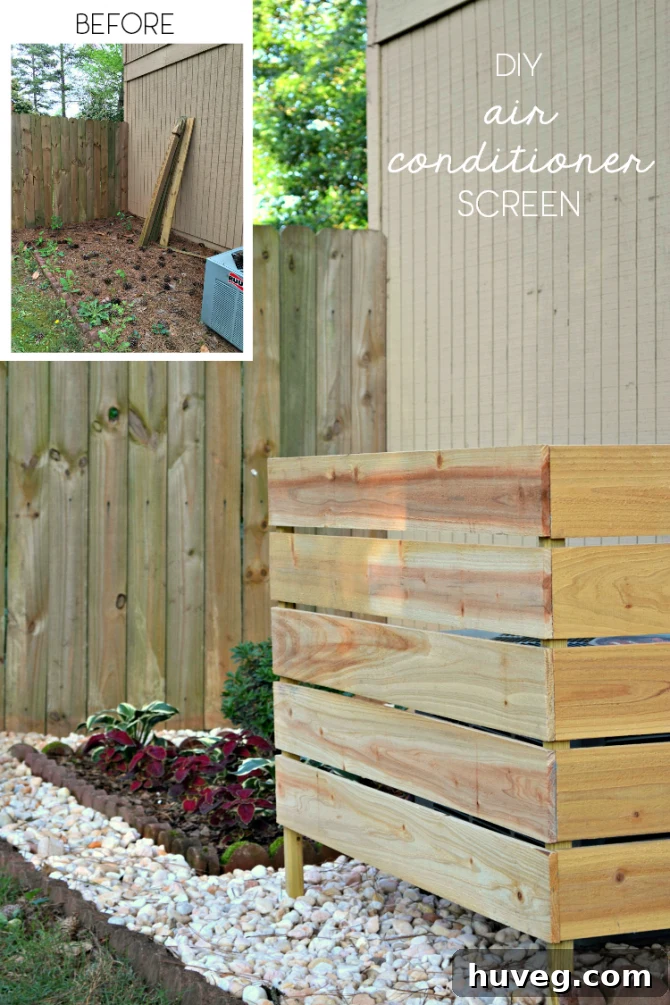
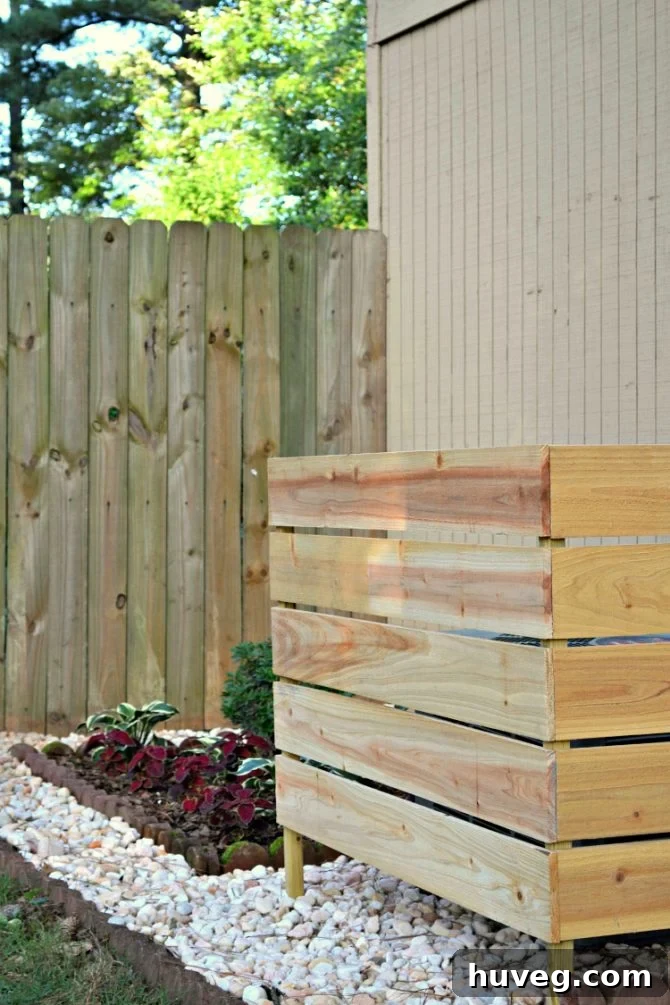
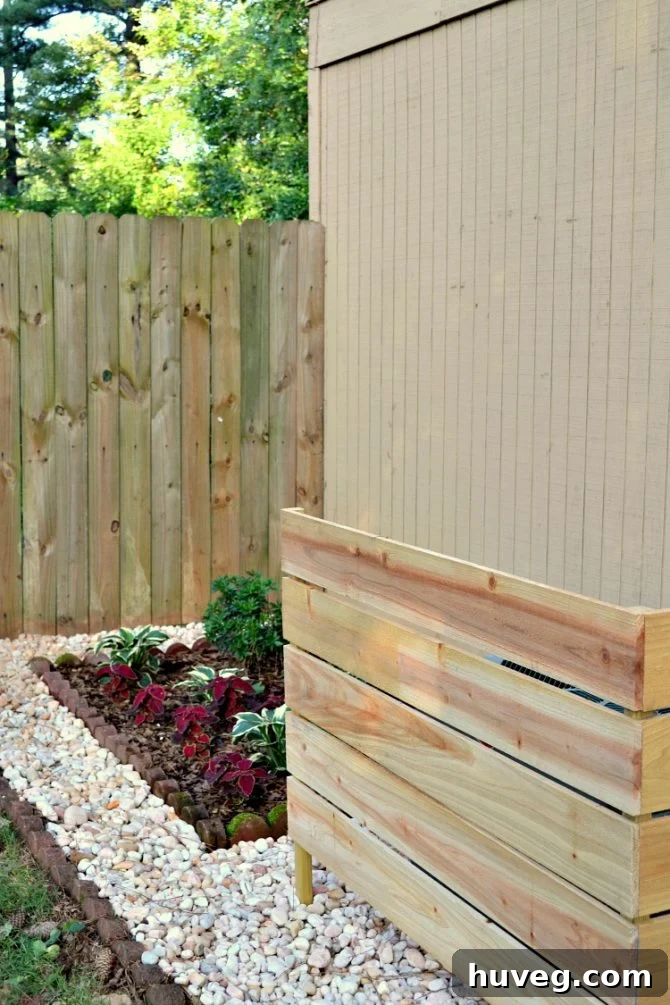
Take a look at the stunning transformation – my new wooden screen beautifully conceals the air conditioning unit on the side of the house, creating a much more appealing view:
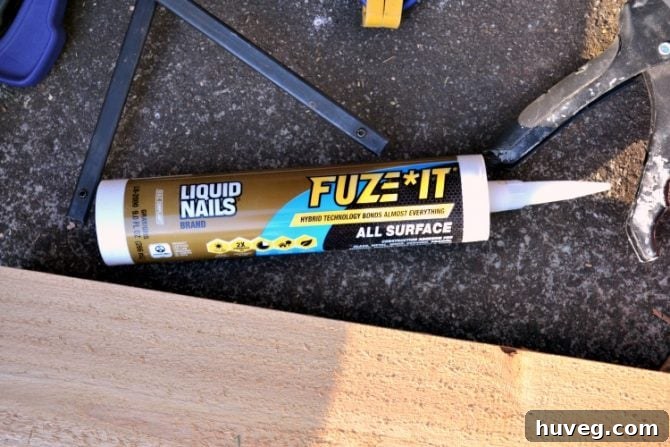
For this project, I chose Liquid Nails Fuze*It, an adhesive I’ve trusted for various smaller applications in the past. This larger-scale outdoor project presented an exciting opportunity to truly test its capabilities. My vision was to create an inexpensive yet durable solution to hide the air conditioning unit and enhance the overall aesthetic of my backyard. The ability of this adhesive to create a strong, lasting bond, even in challenging outdoor conditions, was paramount to the success of this DIY venture.
The Journey to a Beautiful Backyard: Before & After
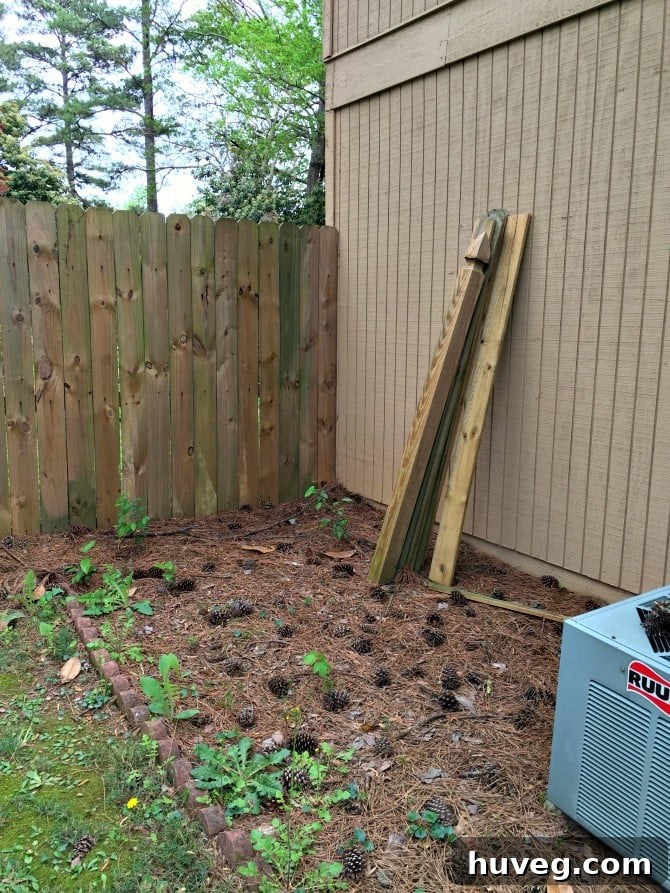
Many of you might remember how this area of my home used to look. It was far from ideal, featuring the prominent air conditioning unit, exposed fence posts, and some less-than-charming boards. This was the starting point for a major backyard overhaul:
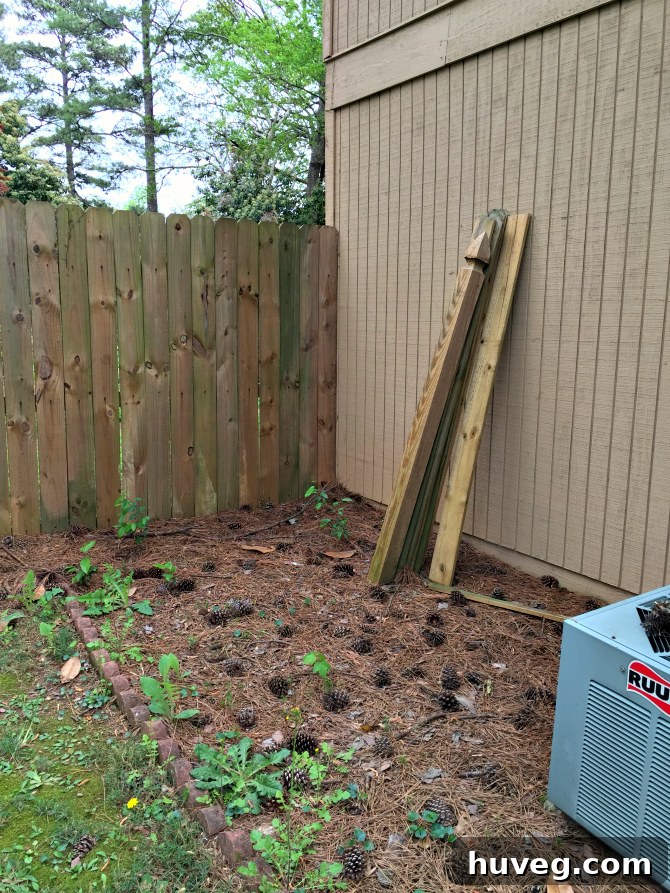
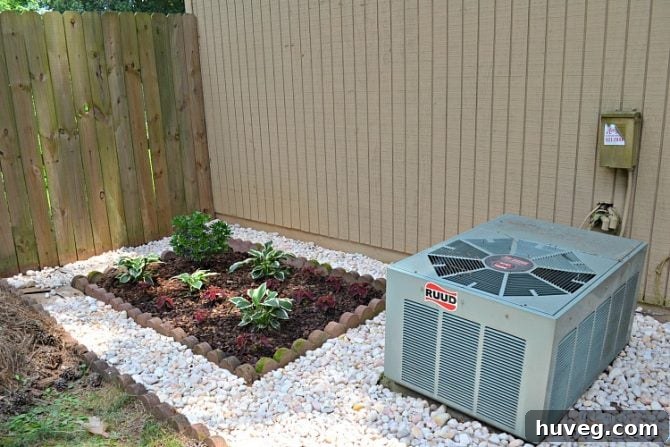
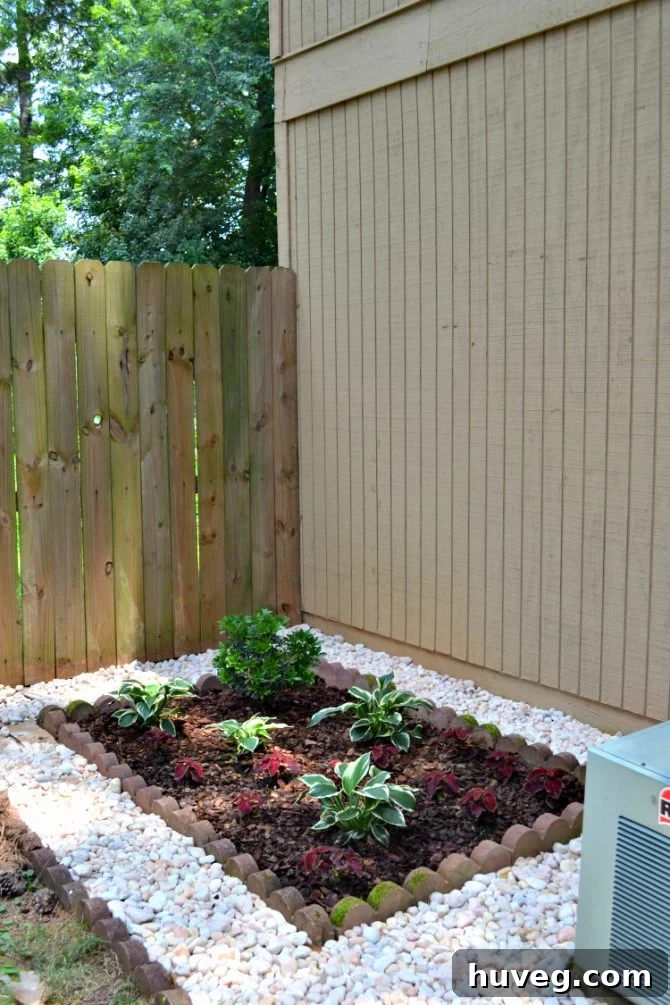
Significant progress has been made in transforming this part of my backyard. We’ve introduced inexpensive egg rock for a clean base and carefully selected air conditioner-friendly plants to add greenery without impeding airflow. Despite these improvements, the large, utilitarian AC unit remained a focal point, particularly visible from the road. It was clear that a dedicated solution was needed to camouflage this outdoor AC, enhancing the overall aesthetic of the property.
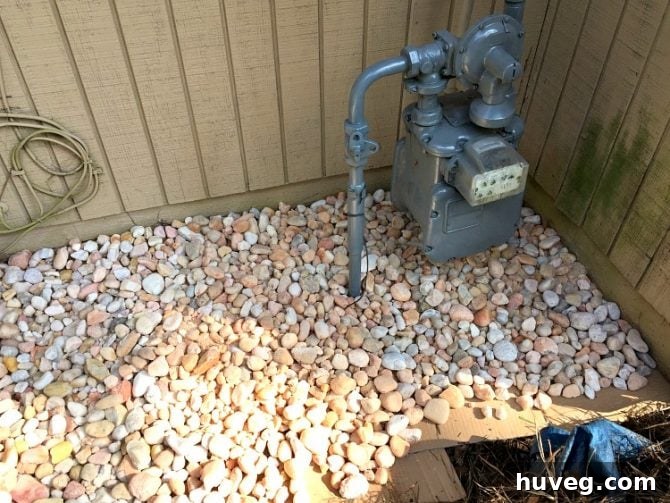
While planning the AC screen, I recognized an additional opportunity to further tidy up the area. By slightly extending the screen a few feet to the right, I realized I could also cleverly conceal the gas meter located near the chimney. This approach allowed for a more cohesive and comprehensive visual improvement, ensuring the meter remained easily accessible for maintenance while being hidden from view.
The success of this project hinged on the performance of Liquid Nails Fuze*It. Would it truly stand up to the rigors of an outdoor woodworking project of this size? The answer is a resounding yes! This versatile adhesive boasts exceptional bonding capabilities, adhering to a wide range of surfaces. Its quick-drying formula and proven reliability in diverse indoor and exterior conditions – hot, cold, and wet – made it the ideal choice. For this wooden air conditioner cover, it was crucial that Liquid Nails lived up to all its claims, and it absolutely delivered, providing a strong, lasting bond that withstands the elements.
How to Build a DIY Wooden Screen to Hide Your Air Conditioner
Building your own wooden air conditioner cover is a rewarding project that significantly boosts your home’s curb appeal. Follow these detailed steps to create a beautiful and functional screen for your outdoor AC unit and other utilities.
Materials and Tools Needed for Your AC Cover Project:
Gathering the right materials and tools before you begin will ensure a smooth and efficient building process. Here’s what you’ll need for this DIY wooden screen:
- Cedar Fence Pickets: These are ideal for outdoor projects due to their natural resistance to rot, insects, and moisture, offering a beautiful and durable finish.
- Pre-treated 2x2s: Used for the support posts, pressure-treated lumber provides enhanced durability and protection against ground contact and harsh weather.
- Clamps: Essential for holding your pieces firmly in place while the adhesive cures, ensuring a strong and precise bond.
- Liquid Nails Fuze*It: A high-performance construction adhesive known for its versatility and weather resistance, crucial for outdoor applications.
- Level: Absolutely vital for ensuring your screen panels are perfectly straight and plumb, both during assembly and installation.
- Small Garden Shovel or Mattock: For digging the holes where your screen’s support posts will be anchored.
- Optional: All-weather fasteners (e.g., screws or nails). While the adhesive is strong, fasteners can provide immediate structural integrity, speeding up the assembly process and adding long-term reinforcement.
UPDATE: After a few seasons, I observed that the adhesive alone, despite its strength, began to show signs of wear from continuous exposure to the elements. To ensure maximum longevity and stability, I later added all-weather fasteners, reinforcing the structure and guaranteeing its durability for years to come.

1. Prepare Your Cedar Pickets by Trimming Ends
The first step in constructing your custom AC screen is to prepare the cedar pickets. Begin by using a saw to carefully cut off the dog-eared ends from each picket. This creates a clean, uniform edge for a more polished look. It’s important not to discard these trimmed pieces just yet; they will prove invaluable as spacers later in the project, ensuring consistent gaps between your boards.

2. Measure and Cut Boards for the Side Panels
Next, focus on creating the individual panels that will form the sides of your air conditioner cover. Accurately measure and cut enough cedar boards to create five boards per panel, totaling 15 boards if you plan for a three-panel screen. The specific length of these boards should be tailored to fit your unique AC unit and the space available. For my project, the front panel measured 50 inches, while each of the two side panels (one for the AC and one for the gas meter) was 34 inches. Precision in this step ensures a snug and aesthetically pleasing enclosure.

3. Prepare Support Posts and Assemble Panels
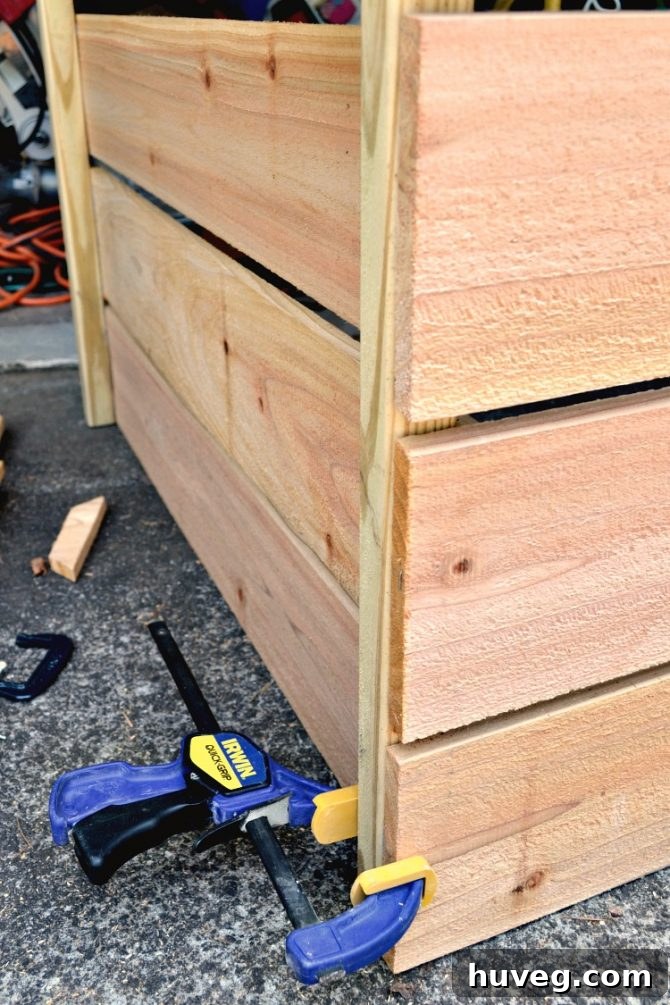
With your cedar boards ready, cut the pressure-treated 2x2s to create four robust support posts. These posts will provide the structural backbone for your screen. Now, carefully glue and clamp the cedar boards to these posts. Crucially, allow approximately 12 inches of overhang at the bottom of the posts. This overhang isn’t just for aesthetics; it serves a vital functional purpose: it will be buried in the ground to securely anchor the panels of your air conditioner screen, ensuring stability and resistance to wind and movement.
(***Important Safety Note*** Before you even think about digging into the ground, it is absolutely essential to identify the location of any underground utility lines. This can be done quickly and easily by calling 811 or submitting an online request a few days before you plan to commence any digging. This free service helps prevent costly damages, service interruptions, and potentially dangerous accidents.)

4. The Gluing Process: Secure Boards with Adhesive and Clamps
Once all your wood pieces are cut to size, it’s time for the crucial gluing stage. Begin by applying the adhesive to the top cedar board. Carefully position it and then immediately clamp it to the vertical 2×2 posts, ensuring it is perfectly square. While absolute precision in squaring might feel daunting, careful initial cuts and working on a level surface will naturally guide your alignment. The strength of the adhesive, combined with the pressure from the clamps, will create a solid, stable bond.
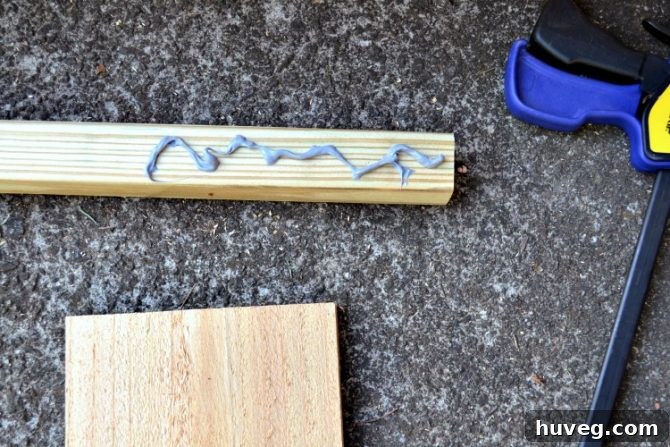
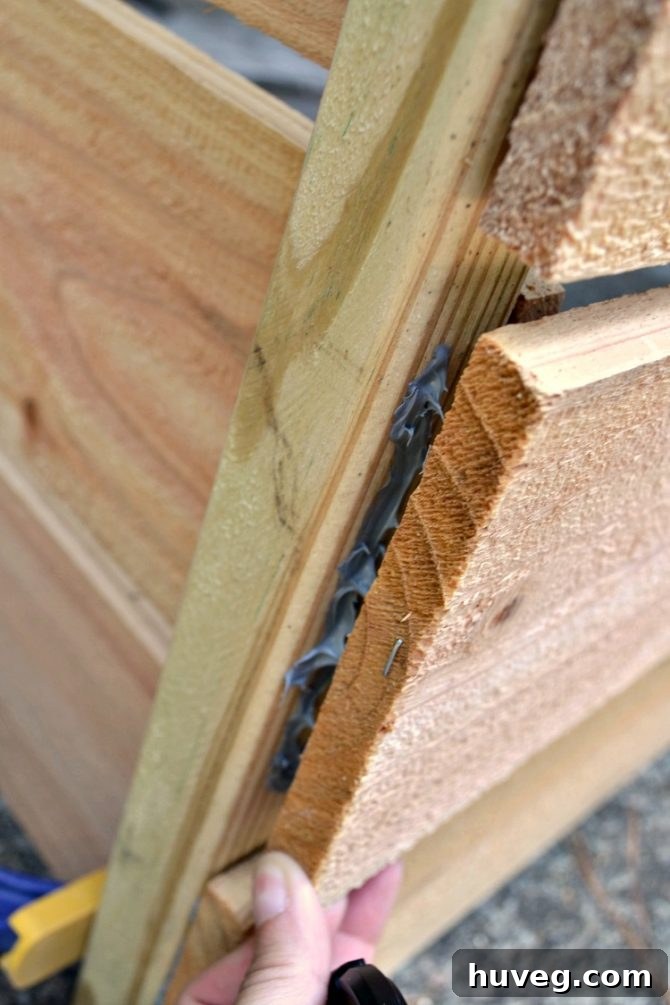
Don’t be concerned if a small amount of adhesive oozes out as you clamp the pieces together. This is a common occurrence and can be easily managed. I found that using the edge of a scrap wood piece was an effective way to quickly clean up any excess glue before it dried. Once the project is complete, any minor residue will be hardly noticeable, especially with the natural texture of the cedar.
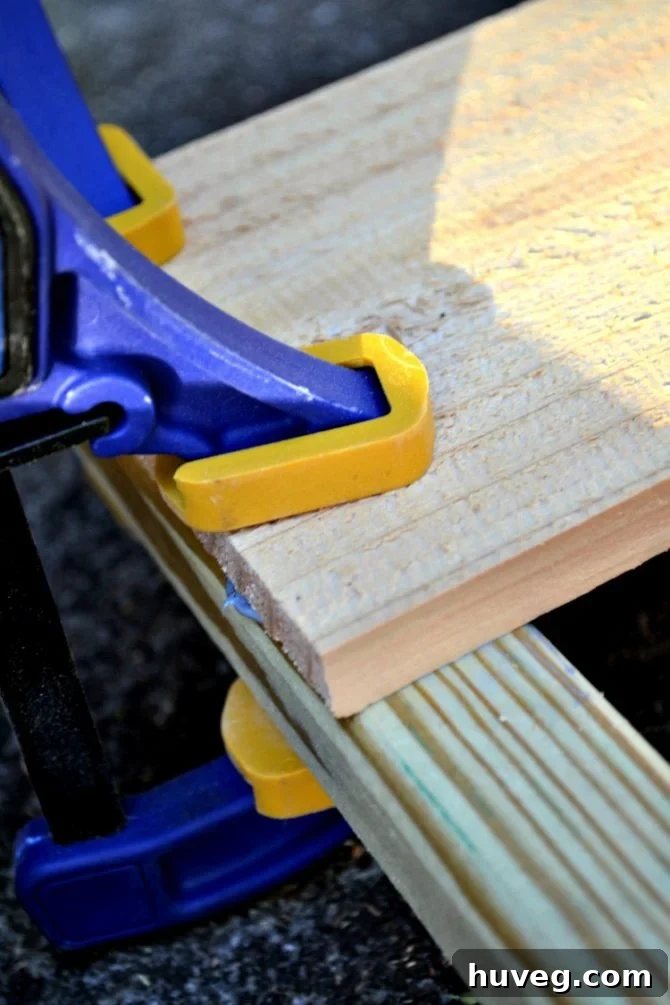

5. Utilize Trimmed Pieces as Spacers for Even Board Distribution
With the top board securely clamped, proceed to add the second board directly below it. This is where those previously trimmed “dog-eared” scrap pieces of wood become invaluable. Provided they are visually straight and not warped, these scraps make excellent, consistent spacers.

Position a scrap piece between the first and second boards to ensure an even and aesthetically pleasing gap. This consistent spacing is key to achieving a professional-looking finish for your AC cover. Repeat this process, gluing and clamping each subsequent board until you have completed one full panel, typically consisting of five boards.
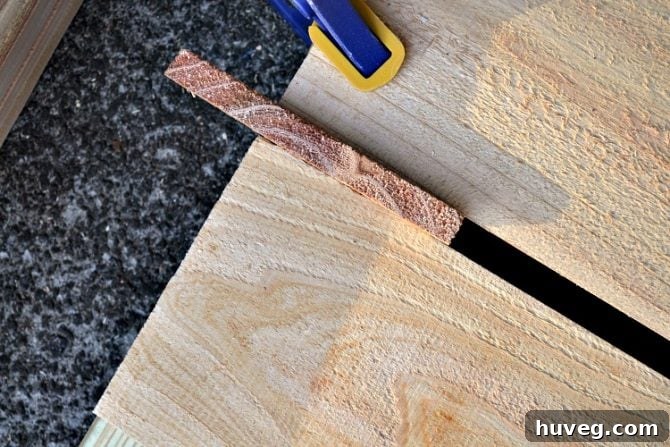
During the fusing process, the bond between the posts and boards begins to set remarkably quickly – often within minutes with Liquid Nails Fuze*It. This rapid curing means you need to work efficiently, applying the adhesive and positioning the boards promptly. I initially tried dampening the surfaces as recommended on the adhesive tube to potentially speed up the bond even further. However, a surprise afternoon rain shower took care of that for me! After that, I found that the adhesive performed perfectly well without pre-dampening, proving its reliability in various conditions. Continue this method until all five boards are glued and clamped securely, forming a complete panel.
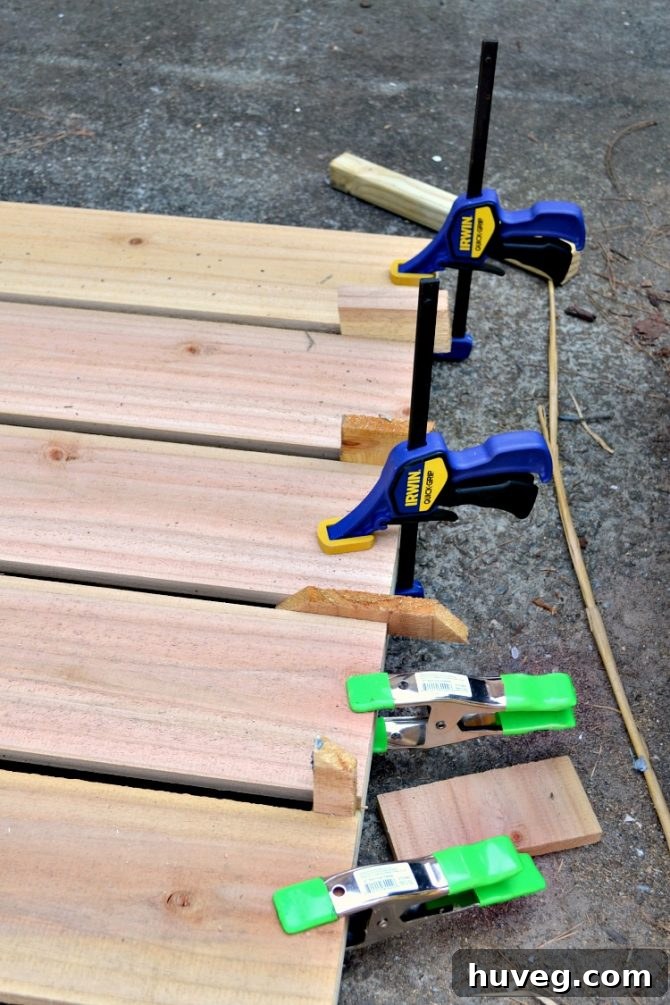

6. Plan and Assemble the Side Panels in a Zig-Zag Configuration
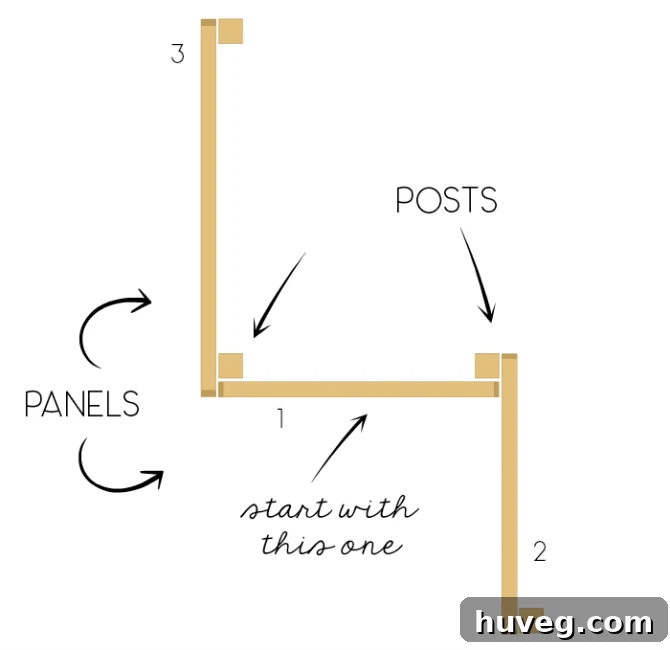
While the first panel (which will serve as the central panel) cures, you can begin planning and assembling your two side panels for the air conditioner cover. For this design, I used a total of four posts. The strategy involves using the strong central panel as a foundation and then attaching the additional side panels to its left and right posts, forming a distinct “Z” pattern when viewed from above. This configuration provides excellent coverage and stability, wrapping neatly around the AC unit and any other utilities you wish to conceal.
One of the trickier aspects during this stage can be determining whether to glue the side panels in front of or behind the central panel’s posts. It requires a bit of foresight and careful orientation, especially when clamping pieces upside down to facilitate the gluing process. A clear understanding of the final “Z” shape is key to getting this right.
To provide a clearer understanding of the overall layout, here’s a simple diagram. This overhead view illustrates the “Z” pattern, with the small squares representing the robust support posts, showing how each panel connects to create the complete enclosure.
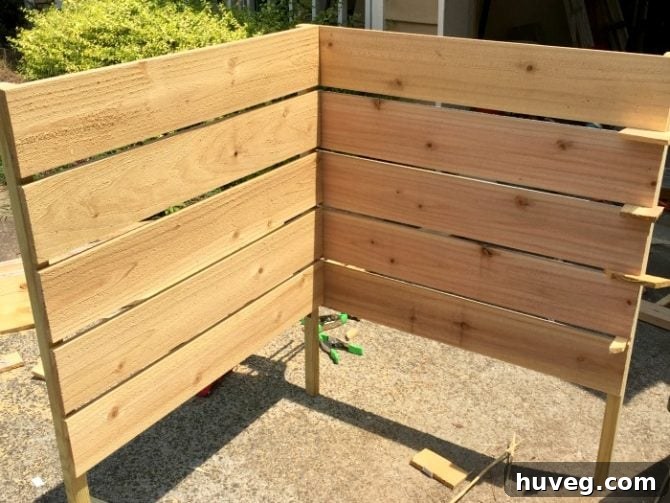
Once the full air conditioner cover was carefully flipped over, the structure truly began to take shape. The photo below clearly shows the first two panels, demonstrating how the design starts to come together to effectively conceal the intended area.

7. Integrate the Third Panel (If Your Layout Requires It)
Depending on the specific layout and needs of your backyard, two panels might be sufficient to create an effective and aesthetically pleasing cover screen. However, in my case, a third panel was essential to comprehensively hide both the air conditioner and the adjacent gas meter, achieving a seamless look. With the first two panels fully cured and firmly bonded, I proceeded to glue on the third and final panel. This time, I worked with the screen in its upright position, which made the final assembly process more intuitive and visually straightforward.
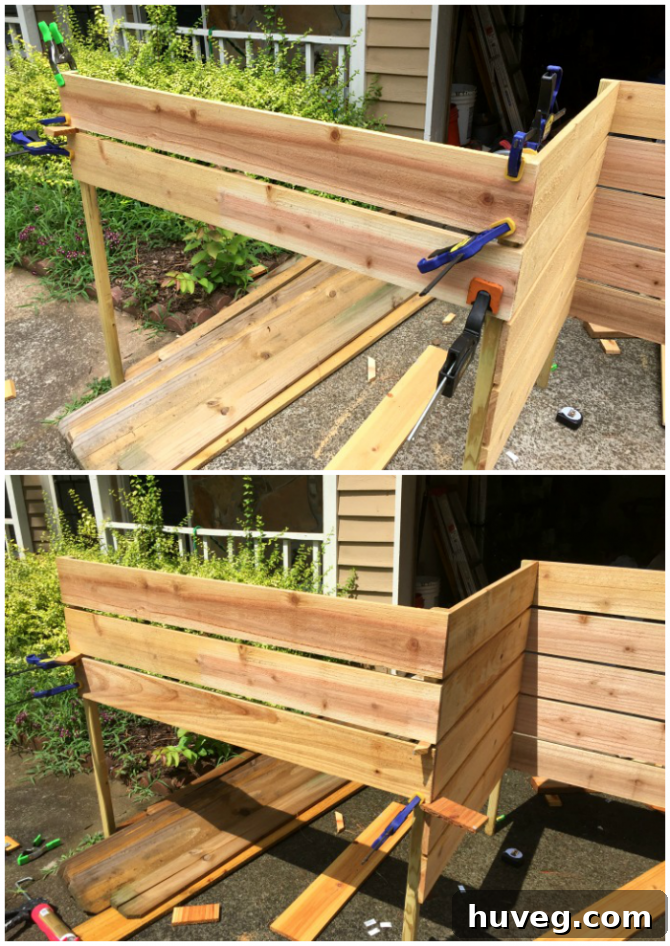

8. Securely Install the Posts into the Ground
Finally, with all the panels fully assembled and the adhesive completely dry and cured, the moment arrived to install the new air conditioner cover screen. This involves carefully digging the necessary holes and positioning the screen’s posts into the ground, preparing it to beautifully conceal your outdoor unit from view.
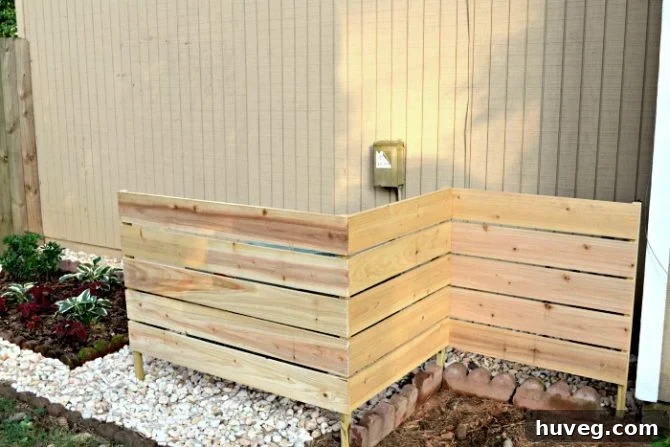
While installing the posts required a bit of effort and sweat, the end result was surprisingly perfect: the air conditioner screen was magically level. I say “magically” because, after popping the posts into their respective holes, I fully expected to spend time making adjustments with my level. However, to my delight, it was perfectly aligned right from the start – a rare and satisfying occurrence in DIY projects!
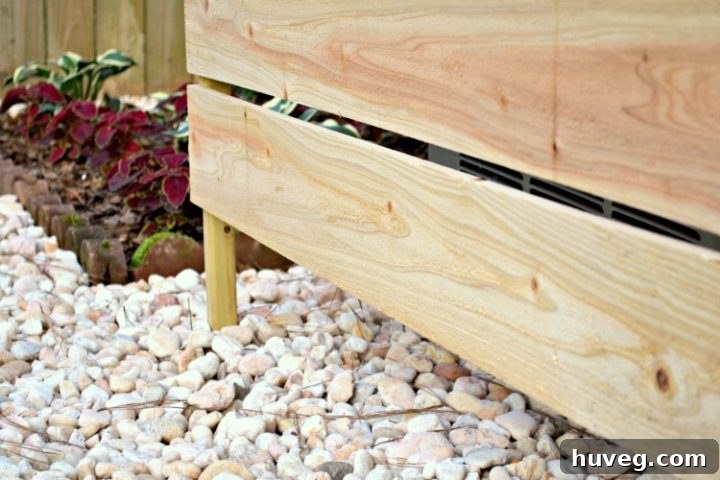
For detailed information on optimal spacing and landscaping around your outdoor air conditioning unit, I highly recommend consulting this comprehensive post, which covers the landscaping additions made to the side of the house. As a fundamental rule, it is absolutely critical to maintain a reasonable and recommended distance between any items, including your new screen, and the AC unit to ensure proper airflow and efficient operation.
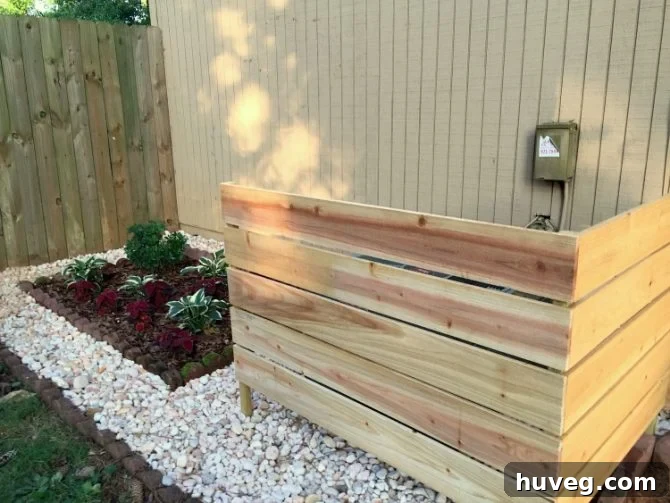
While I could have buried the posts a bit deeper, I intentionally factored in the future installation of a scalloped edging that will run along the front of this area. Despite this, the corners of the air conditioner screen feel wonderfully secure and stable. If you are undertaking this air conditioner cover project and have concerns about the long-term solidity of the posts in the ground, you might consider attaching rebar to the posts and hammering it further into the earth. Once again, always ensure you contact your local utilities before any significant digging to avoid accidentally interfering with buried lines.
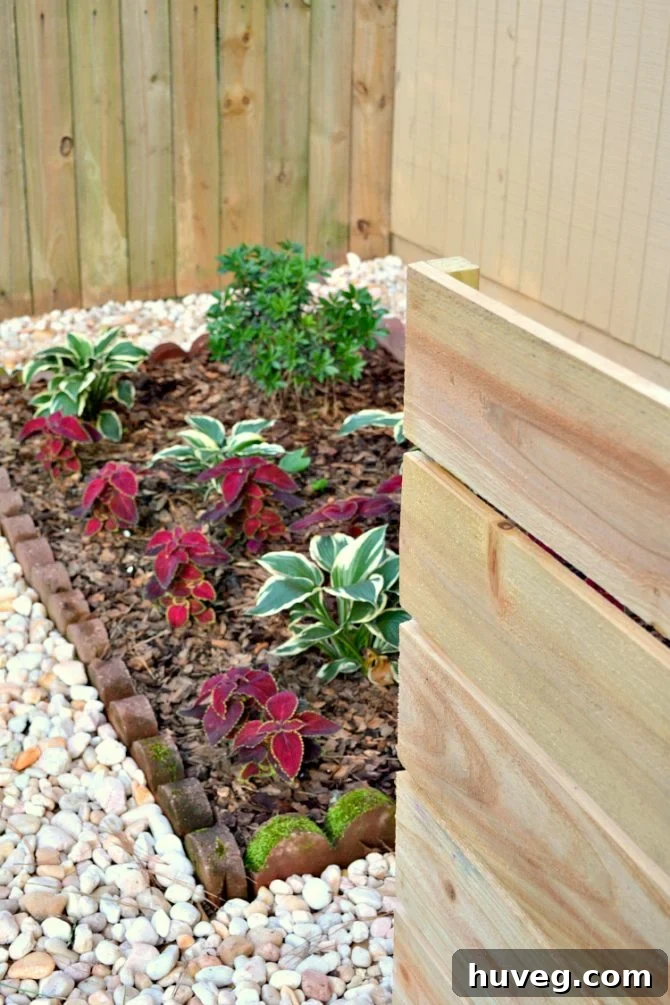
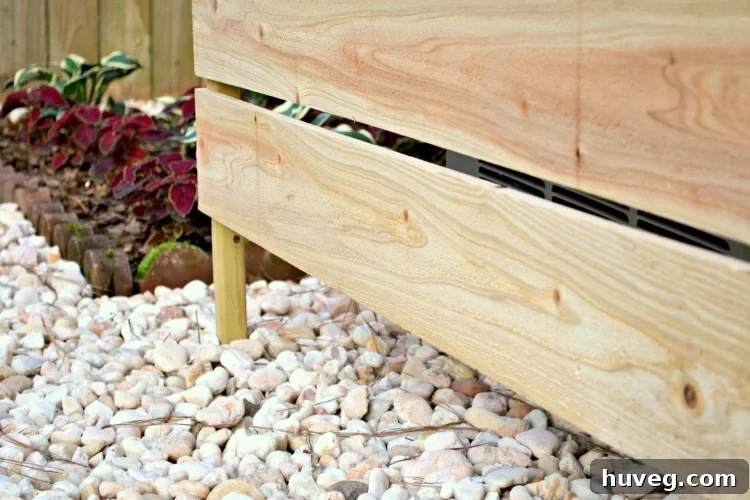
The screen panels are strategically designed to primarily conceal the side of the AC unit that is most visible from the street. However, I deliberately chose to leave the back of the unit open and unobstructed. This design ensures that the air conditioner remains freely accessible for any potential servicing needs, maintaining ease of maintenance without compromising the visual appeal from the primary viewing angles.
To truly appreciate the transformation, let’s revisit the “before” scene, showcasing the stark contrast with the current aesthetic.
Here’s the progress photo, illustrating the thoughtful integration of air conditioner-friendly landscaping that preceded the screen installation:
And finally, the stunning “after” shot, with the newly installed wooden air conditioner screen beautifully in place, completely camouflaging the previously unsightly AC unit!

Continuing the Transformation: My Next DIY Backyard Projects
Even with the successful completion of the AC cover, my backyard transformation journey continues. I still have several exciting DIY projects on my radar to further enhance this area and complete the desired aesthetic. These upcoming home improvement tasks include:
- Painting the remaining house trim on this side of the house to ensure a cohesive and refreshed look.
- Properly digging down and installing the scalloped edging in front of the AC screen, providing a neat border and a finished touch to the landscaping.
- Possibly adding some additional plants near the chimney area to tie the entire side of the house together, creating a lush and inviting atmosphere.
Each step brings us closer to a fully realized and beautiful outdoor living space. The DIY air conditioner screen has already made a significant impact, ensuring the side of my house looks consistently nice and tidy!
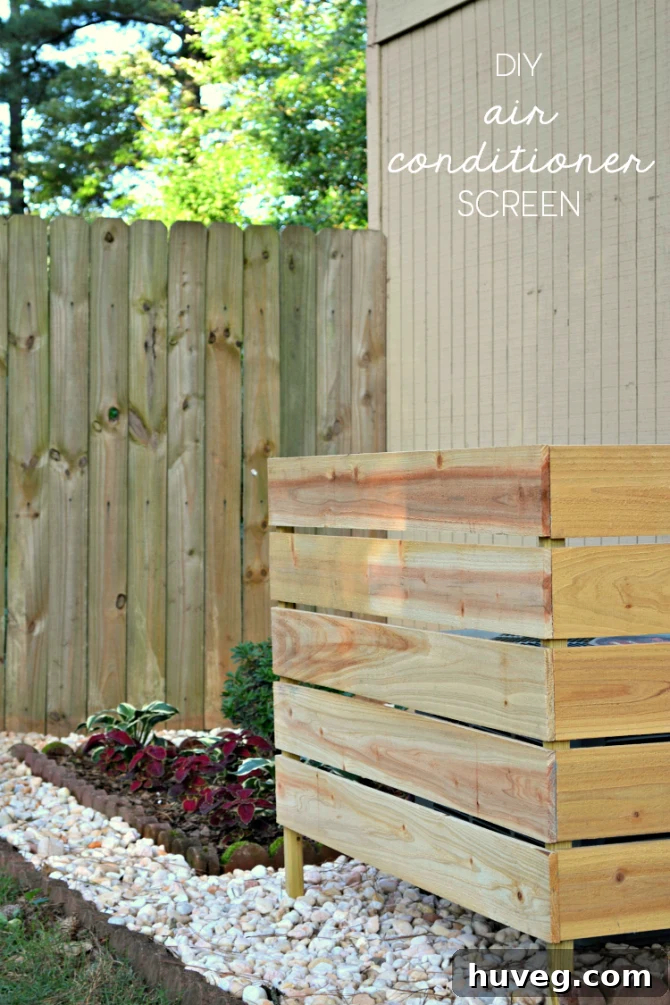
The remarkable visual impact of this DIY project is best captured through a side-by-side comparison. These before and after photos vividly showcase how a simple, well-executed wooden screen can completely revolutionize your home’s exterior, turning a utilitarian element into an attractive feature.