Drifting Towards Your Dream Laundry Room

Understanding a comprehensive vision for a home renovation project can sometimes feel like trying to catch smoke. You might grasp bits and pieces, but truly seeing the entire picture, the intricate details that make a design come alive, requires a deeper dive.
Today, we’re pulling back the curtain on our ambitious laundry room design plan. This isn’t just about making a room functional; it’s about transforming a neglected, utilitarian space into a highly efficient, aesthetically pleasing, and personalized area that genuinely supports daily life. You’ve already witnessed the initial, foundational step with the installation of the floor tile. But that was merely the overture; the full symphony of design and renovation is still unfolding. Join us as we explore the blueprint, understanding where every effort is directed and how each element contributes to the ultimate dream laundry room.
The Foundation: What’s Already Been Accomplished
A successful renovation always begins with a solid foundation. For our laundry room, this meant tackling the most crucial elements first, setting the stage for all subsequent design decisions. These initial steps were pivotal in ensuring durability and preparing the space for its stylish transformation:
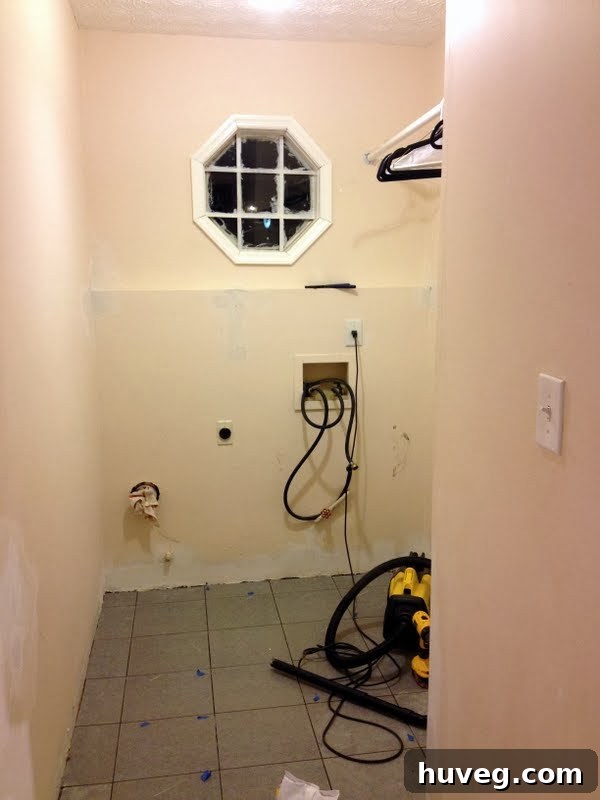
- Ditra Uncoupling Membrane Installation: This critical layer, installed over the concrete subfloor, provides an essential uncoupling layer that prevents cracks in the tile caused by subfloor movement. It’s a proactive step that significantly enhances the longevity and integrity of the tiled floor. Learn more about tiling over concrete subfloor with Ditra Uncoupling Membrane here.
- New Floor Tile Laid: The selection and installation of durable, aesthetically pleasing floor tile instantly elevated the room’s base. This provides a clean, hard-wearing surface that is both practical for a high-traffic, potentially damp area and visually appealing.
- Window Trim Painted White: While seemingly a minor detail, painting the window trim a crisp white earlier in the renovation process (during the first makeover after moving in) instantly brightened the space and provided a fresh, clean canvas. This step, even years prior, laid the groundwork for the current design, though recent inspirations from images like this one shared by a reader, have me contemplating a slight tweak to the overall color scheme or accent choices.
The Grand Vision: Unveiling the Laundry Room Mood Board
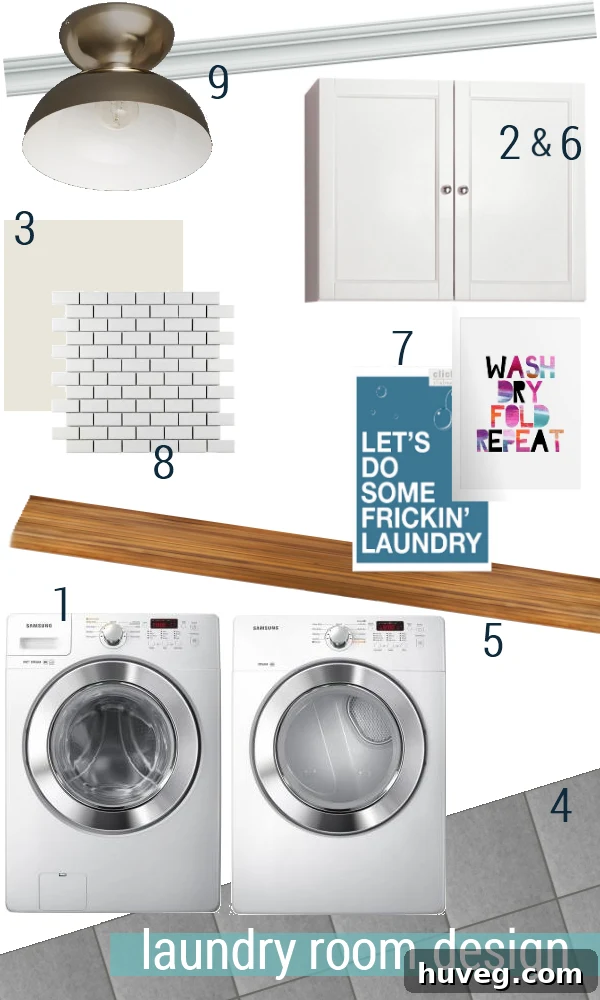
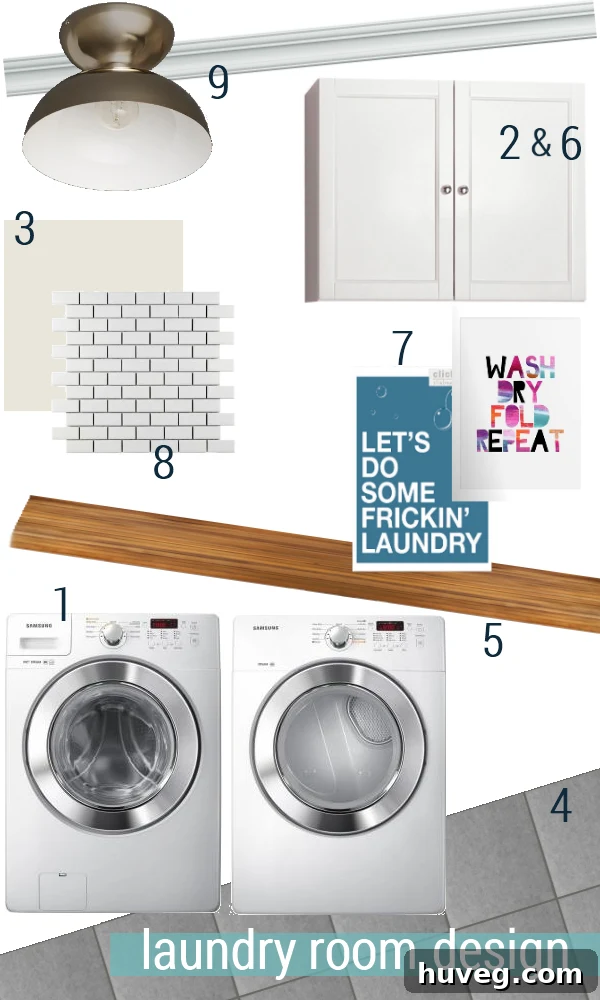
With the foundations in place, it’s time to unveil the comprehensive design plan. A mood board is an invaluable tool in home renovation, allowing us to visualize the interplay of colors, textures, and functional elements before any major changes are made. It helps ensure cohesion and alignment with the overall aesthetic goals, guiding every decision from major appliance choices to the smallest decorative accent. Our goal is to transform this laundry room into a functional powerhouse that doesn’t compromise on style, creating a space that makes the arduous task of laundry a little more enjoyable, or at least, significantly more efficient.
1. Embracing Efficiency: Front-Loading Washer and Dryer
The decision to opt for a front-loading washer and dryer set was thoroughly debated, weighing the pros and cons of both front- and top-loading machines. The invaluable feedback from our community on this post was instrumental in shaping this choice. Ultimately, the driving factor was a candid self-assessment of personal habits. I know that for me, the key to an organized home is designing around my existing behaviors, rather than relying on a drastic change in routine. The primary benefit of front-loaders in this context is the opportunity they create for a continuous countertop above them. This seemingly simple feature is a game-changer for laundry efficiency.
A dedicated folding counter in the laundry room is non-negotiable for my workflow. If I have to transport unfolded laundry to another room, like the bedroom, it inevitably gets forgotten, piles up, and eventually becomes a comfy bed for our dog, Charlie, necessitating a re-wash. By integrating a folding space directly where the laundry is processed, I can immediately fold and sort, ensuring items are put away promptly. This approach transforms a common household chore from a multi-step, easily deferred task into a streamlined, integrated process, preventing clutter and saving time in the long run. It’s about designing a space that works for me, not against my natural inclinations.
2. Smart Storage Solutions: Replacing Outdated Shelving
The existing shelving in the laundry room is a classic example of “functional but ugly.” While it technically holds items, its appearance detracts from the room’s potential, and its design is far from optimal for maximizing space or aesthetics. The plan is to completely rip out the old, unattractive units and replace them with a custom, more visually appealing, and highly efficient shelving system. This revamp will not only improve the room’s look but also its organizational capacity. The process of removing the old cleats will inevitably require some drywall repair. Fortunately, this isn’t an isolated task; there are other areas of drywall needing attention, thanks to an incident involving an aggressive puppy who once mistook a wall corner for a chew toy. It’s a small but necessary step towards a perfectly smooth and finished surface, ensuring the new shelving has a pristine backdrop.
3. A Fresh Canvas: Paint Selection and Surface Preparation
For the walls, we’ve chosen Benjamin Moore’s Dove Wing, a beautiful, versatile off-white that perfectly complements the rest of the downstairs main areas, including the hallway and living room. This consistent color palette ensures a seamless flow throughout the home, creating a harmonious and cohesive feel. This selection will gracefully cover the peachy-pink paint that, for reasons unknown, I initially found appealing upon moving in (perhaps an homage to Lindsey’s Pepto Bismol walls, though I’m ready to move on!).
The key differentiator in this room’s paint application will be the sheen and specialized properties. We’re opting for a kitchen and bath paint from Valspar, specifically formulated with mildewcide. This is a crucial protective measure given the room’s history; photographic evidence from my old laundry room post indicates prior water damage, though it was repaired before I moved in. While the damage is long gone, the patch job itself isn’t up to my aesthetic standards, leaving lumps and bumps that are a constant visual annoyance. The choice of paint is a strategic compromise: rather than undertaking the extensive, time-consuming, and costly task of tearing down to the studs and replacing all the drywall—a process that could extend this project by weeks or months—we’re working with the existing conditions. My approach is to make the walls look as good as possible, using skim coats in the most problematic areas to smooth imperfections, and then applying a high-quality, zero-VOC, mildew-resistant paint. If this were a forever home or a more prominent living space, a full drywall replacement might be considered. However, for a laundry room where practicality and a reasonable timeline are paramount, this method strikes the perfect balance between achieving a clean finish and maintaining project momentum.
4. Finishing the Floor: Grout and Sealant
With the new tiled floor already installed, the next vital step is to apply the grout and sealant. This process is essential for several reasons: grout fills the spaces between the tiles, providing structural integrity and preventing dirt and debris from accumulating. More importantly, in a laundry room environment prone to moisture, sealing the grout protects it from water penetration, staining, and mildew growth. Choosing a dark gray grout will not only complement the overall color scheme but also offer practical benefits, as it tends to show dirt less than lighter options. Once the grout is properly cured and sealed, the floor will be fully prepared for the installation of the new washer and dryer, ensuring a durable and easy-to-maintain surface for years to come.
Upon completion of painting and appliance installation, this phase of the laundry room makeover will pause. The remainder of the project will be undertaken in a second phase, likely after the kitchen renovation is complete, allowing for focused attention on each major home improvement area.
5. The Indispensable Folding Counter: Design & Materiality
As previously emphasized, a dedicated folding counter is an absolute necessity for streamlining my laundry routine. I was so incredibly pleased with the custom folding counter I designed and built for Heidi and Jon during a filming project with SheKnows, that I’m keen to recreate a similar solution for my own laundry room. This design is elegantly simple yet robust, typically constructed from stained pine boards that are cleated and secured using a Kreg Jig to create a solid, seamless, floating surface. The floating aspect is particularly beneficial in a laundry room, as it maintains an open, airy feel while providing significant functional space.
To introduce warmth and richness into the predominantly neutral and gray palette of the room, a walnut stain will be applied to the pine boards. This not only enhances the natural beauty of the wood grain but also adds a sophisticated contrast, preventing the room from feeling too sterile. The counter will span above the front-loading washer and dryer, providing ample space for folding clothes, sorting items, or even temporarily holding laundry baskets. This design choice marries high functionality with appealing aesthetics, ensuring the laundry room is not just efficient but also inviting.
6. Optimizing Vertical Storage: Cabinets and Shelving
The laundry room features an “nookish” corner and an awkward design around the window that presents both challenges and opportunities for storage. To maximize the available vertical space and improve functionality, the plan includes adding a hanging cabinet or two in this area. Initially, I had installed a simple hanging rod when I moved in, but practical experience has shown that I rarely use it; I am almost exclusively a dryer user. This realization prompts a re-evaluation of how best to utilize that spot.
There’s a subtle lip underneath the window, which could be perfect for a shallow shelf. However, the exact height of the folding counter over the new washer and dryer will dictate how much clearance is available. Placing a wide shelf directly under the window might make the space feel too cramped. Therefore, a more adaptable solution is being considered: perhaps a narrower shelf for decorative items or small pictures, flanked by shelving units on either side of the window. This approach aims to make the best out of a potentially challenging design situation, creating both practical storage and visual interest without overwhelming the space. Closed cabinets would be ideal for concealing cleaning supplies, while open shelving could display carefully curated baskets or decorative pieces.
7. Adding Personality: Color and Art
While the permanent fixtures and larger elements in the laundry room are predominantly neutral, the space desperately needs an injection of color and art to prevent it from feeling sterile and uninspired. Since laundry is often considered a tedious chore (and one I personally dislike intensely!), incorporating bright, cheerful, and even humorous art can significantly impact the room’s atmosphere and my mood while performing the task. Art provides an excellent opportunity to introduce personality and warmth without committing to permanent color changes on walls or large fixtures.
Consider playful prints like this one from ClicheZero, which injects a dose of humor, or simple, graphic designs such as this minimalist print from MiraDosen. These pieces can counterbalance the inherent drudgery of laundry with a sense of whimsy and joy. Strategically placed, colorful artwork can draw the eye, add focal points, and make the room feel more intentional and less purely utilitarian. It’s a simple yet effective way to infuse character and make the space feel more inviting and less like a chore factory.
8. Stylish Protection: Backsplash Tile
The choice of backsplash tile is still being finalized, but a simple white subway tile remains a strong contender. Its timeless appeal, clean lines, and versatility make it an excellent choice for a laundry room, offering both aesthetic value and practical wall protection. White subway tile provides a crisp, bright backdrop that will complement the Dove Wing paint and the warm walnut tones of the folding counter without competing for attention. For the grout, the plan is to use the same dark gray color as the floor grout. This repetition of color creates a cohesive look and simplifies the purchasing process, potentially reducing the need for additional supplies and ensuring a unified design language throughout the room. A tiled backsplash is not only visually appealing but also incredibly functional, protecting the walls from splashes and making cleaning easier in a high-moisture environment.
9. Elevating the Ceiling: Crown Molding and New Lighting
To truly complete the transformation and add a touch of sophistication, two key elements will dress up the ceiling: crown molding and a new light fixture. Crown molding adds an architectural detail that instantly elevates the perceived quality and finish of any room. It provides a crisp, elegant transition between the walls and the ceiling, framing the space beautifully and adding a custom, high-end feel. This small detail can have a significant impact on the overall character of the laundry room.
Equally important is the lighting. A new, stylish light fixture, already purchased from West Elm some time ago, will replace the existing utilitarian fixture. Good lighting is essential in a functional space like a laundry room, ensuring visibility for sorting, stain treatment, and folding. Beyond its practicality, a well-chosen fixture serves as a decorative element, acting as a “jewelry piece” for the ceiling and contributing to the room’s overall aesthetic. Installing both the crown molding and the new light fixture are projects that could realistically be completed in a single weekend, adding those crucial finishing touches that tie the entire design together and significantly enhance the room’s appeal.
Beyond the Blueprint: Future Decorative Elements
While the mood board outlines the primary structural and aesthetic elements, the complete vision for the laundry room extends to smaller, decorative items that will be introduced in due course. These might include functional yet stylish storage baskets for detergents and supplies, a comfortable and durable rug to add warmth and define the space, or other thoughtful accents that further personalize the room. These additions will layer texture, color, and comfort, transforming the laundry room into a truly finished and inviting part of our home. For now, the focus remains on implementing these foundational design decisions, building a functional and beautiful base that future styling can effortlessly complement.