Unlock Your Door’s Hidden Potential: Slim Storage Shelves

Transform Wasted Space: DIY Vertical Storage Ledges for Your Home Office & Beyond
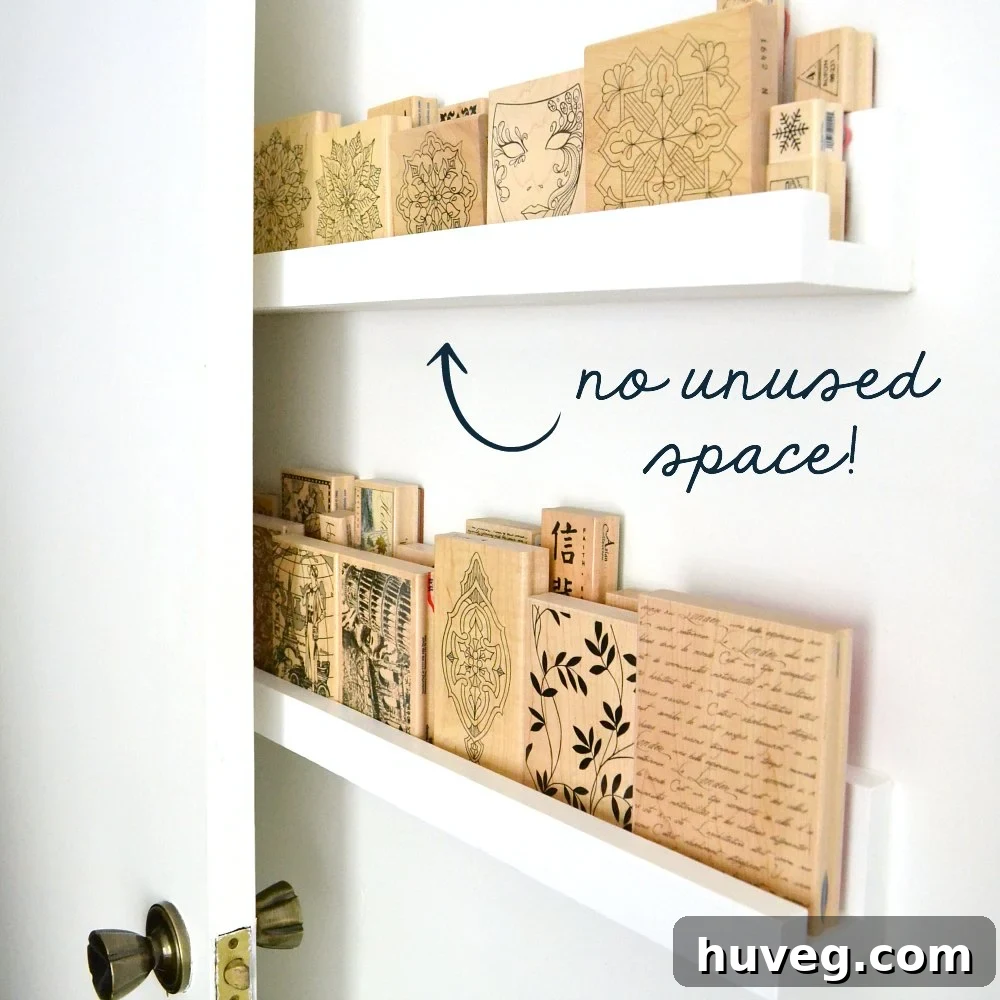
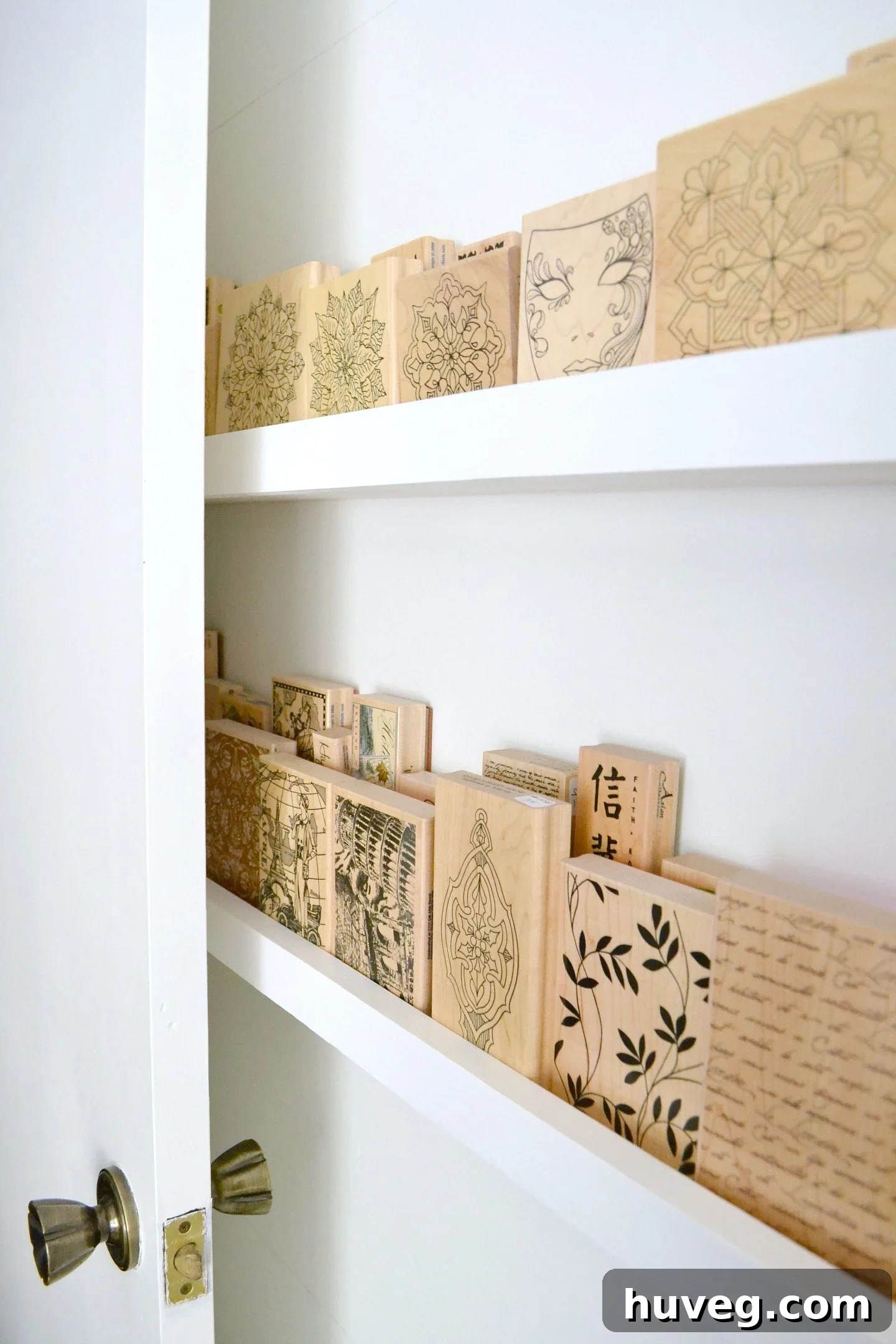
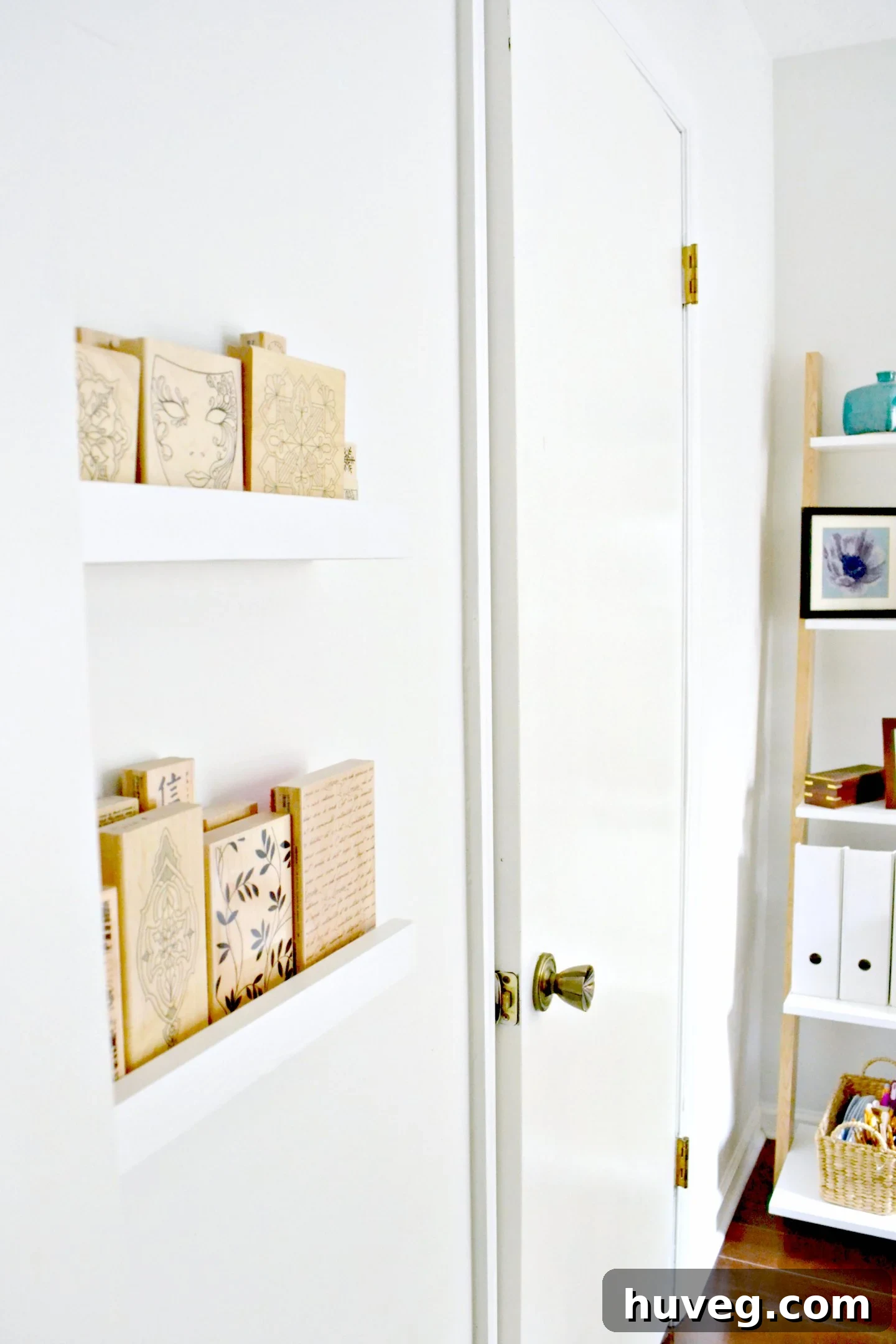
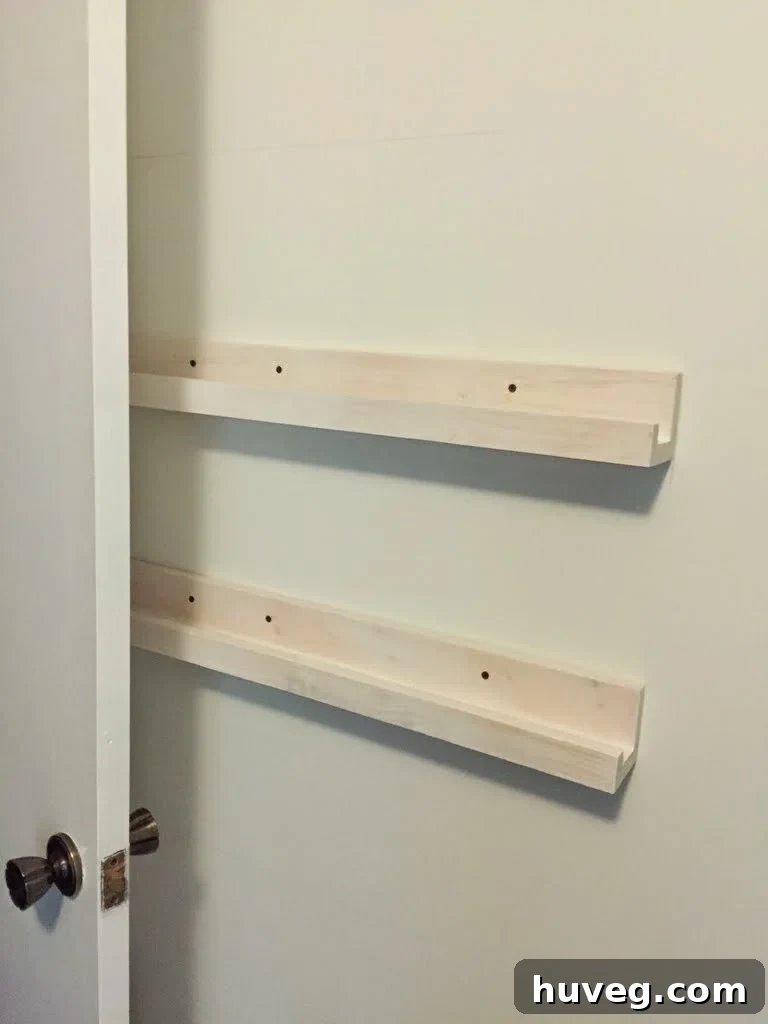
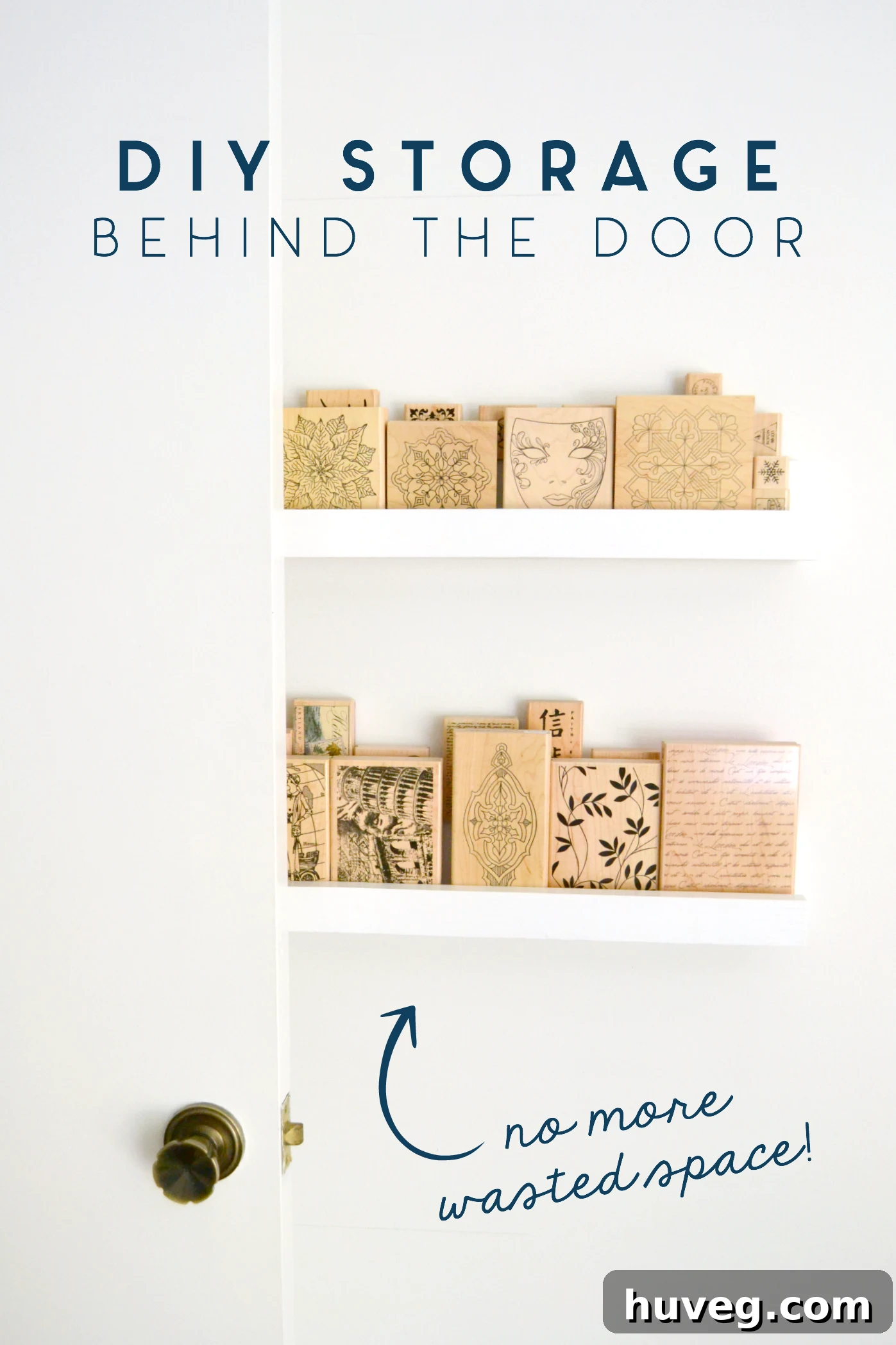
Do you have an often-overlooked, awkward space behind a door in your home that’s currently serving no purpose? Imagine transforming that forgotten sliver of wall into a highly functional, beautifully organized storage solution. This guide will walk you through creating elegant, DIY vertical storage ledges perfect for utilizing narrow spaces, such as those behind doors. I’ll show you how I specifically leveraged these ledges to organize my extensive wood stamp collection, turning clutter into a curated display in my home office.
Just last week, I shared a glimpse into a flurry of new projects I was undertaking, many focused on organization for my home office. Two of the four planned organizational units are now complete, and I’m thrilled to unveil the detailed, modified plans for crafting these clever ledges. They are a game-changer for reclaiming unused vertical space!
Building Custom DIY Storage Ledges for Narrow Spaces
The inspiration for these practical wood stamp storage ledges comes from Ana White’s renowned $10 ledges. However, a standard 1×4 board, while versatile, proved just a tad too wide for the specific, tight confines behind my office door. This common challenge in smaller homes or apartments often leaves narrow wall sections unutilized. My solution was to adapt the design, opting for 1×3 boards for both the bottom and back of each ledge.
This subtle modification wasn’t just about achieving the perfect fit; it also significantly reduced the material cost. Each ledge now costs roughly $4-5 to build. When selecting wood, I chose pine boards. While slightly pricier than basic furring strips, pine offers a smoother finish and better durability, which is ideal when planning to paint the finished product for a clean, integrated look. For those on an even tighter budget or prioritizing a super smooth painted surface, ripping down some MDF can also yield excellent results for these ledges.
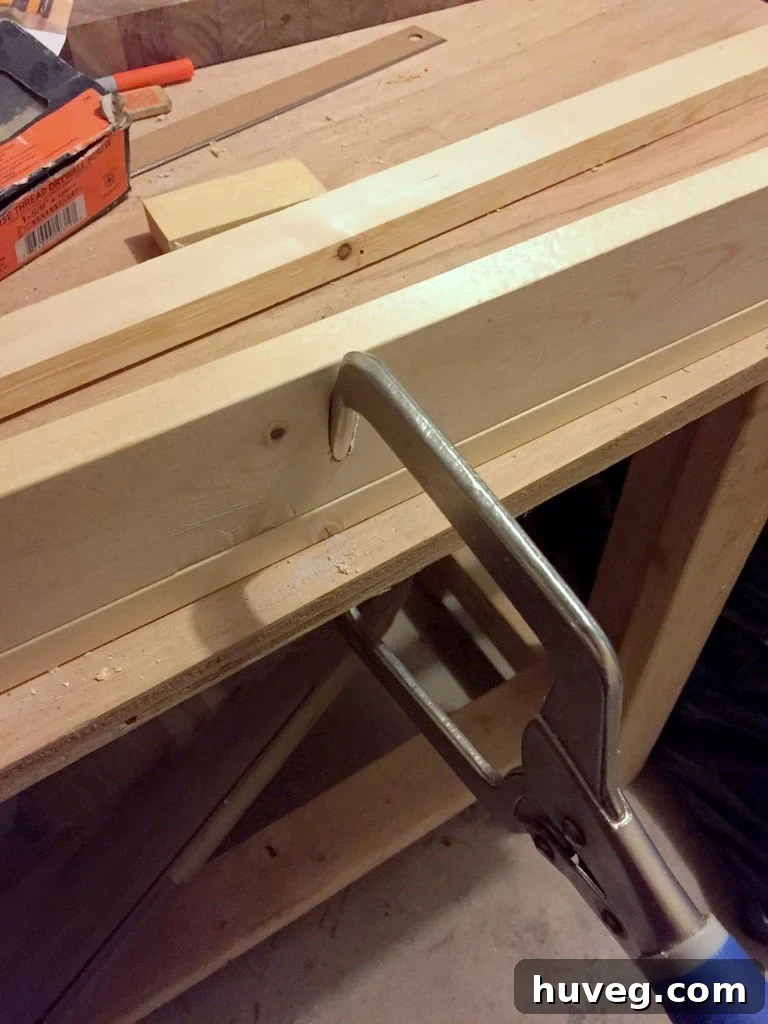
Construction was straightforward. I purchased six-foot-long boards and simply cut each in half to create two three-foot-long ledge sections. The assembly was quick and efficient thanks to my trusty Kreg Jig, which allowed me to securely screw the bottom and back pieces together. The Kreg Jig creates strong pocket holes, ensuring a robust joint that will stand the test of time and hold various items without sagging.
To prevent my precious wood stamps (or any other items you might store) from sliding off, I added a crucial element: a front lip. Using wood glue and my nail gun, I attached a piece of 1×2 to the front edge of each ledge. Many commercial rubber stamp displays surprisingly lack this simple feature, often leading to stamps tumbling to the floor. This small addition makes a world of difference in functionality and peace of mind.
Before installation, I primed each shelf. Priming at this stage offers better coverage and adhesion for the final paint coat. However, I deliberately waited to caulk and apply the final paint layers until the shelves were securely mounted on the wall. This strategic approach allowed me to create a perfectly seamless bead of caulk along every edge where the ledge met the wall. The benefit? A professional, built-in look that hides any imperfections in the wall or slight gaps from installation. Plus, it made it easier to see exactly where I needed to paint, as the primed wood was still somewhat transparent against the wall. If I had painted everything beforehand, distinguishing between the caulk and the painted wood would have been much harder, risking missed spots.
Effortless Solo Installation: Hanging Long Shelves with Ease
Installing a three-foot-long shelf by yourself can be surprisingly tricky and cumbersome. To simplify this task and ensure a perfectly level and secure installation, I’ve developed a streamlined method that any DIYer can master. The key is methodical preparation and a clever trick to temporarily secure the shelf.
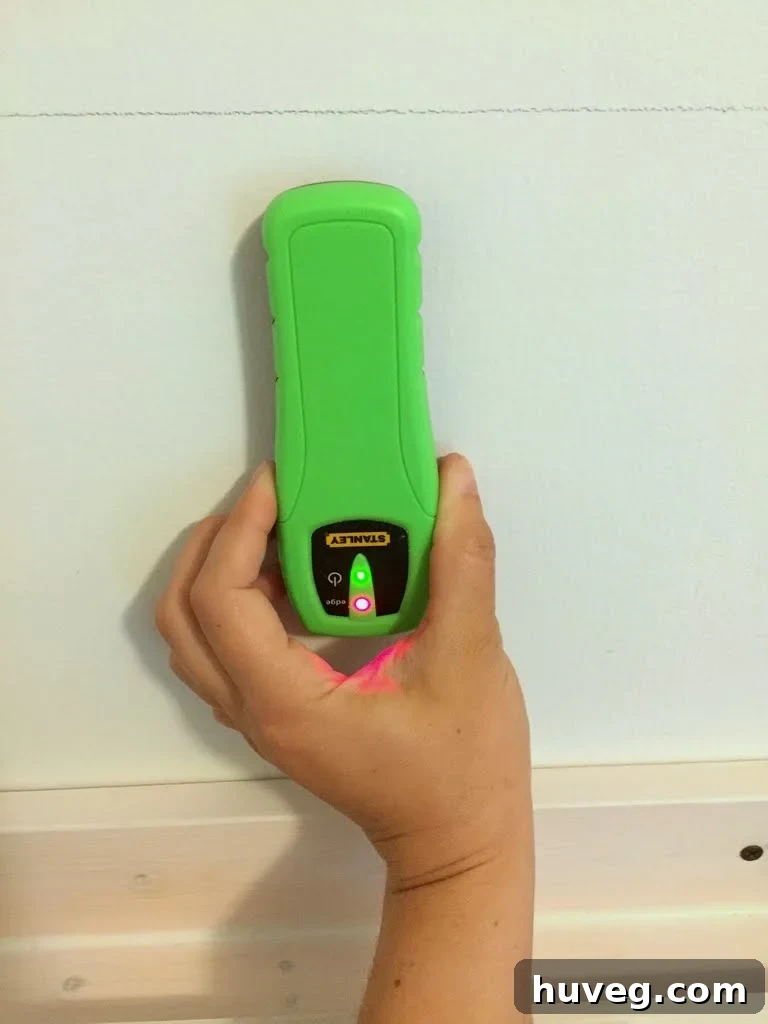
Step 1: Locate and Mark Your Studs. Before lifting any wood, the first crucial step is to accurately locate the wall studs. These sturdy wooden supports provide the strongest anchor points for your shelves, ensuring they can bear significant weight without pulling away from the drywall. Use a reliable stud finder to scan the wall and mark the center of each stud with painter’s tape. Painter’s tape is ideal because it’s easily visible and won’t damage your wall paint when removed. Aim for at least two stud connections per three-foot shelf for maximum stability.
Step 2: Pre-Screw for Temporary Support. This is the ingenious trick for solo installation. Take one of your mounting screws and partially screw it into the ledge, at one of the marked stud locations, just enough so that the tip of the screw barely pokes through the back of the wood. This tiny protrusion will allow the screw to “grab” the drywall when you push the ledge against the wall, providing temporary support. It’s like having an extra hand!
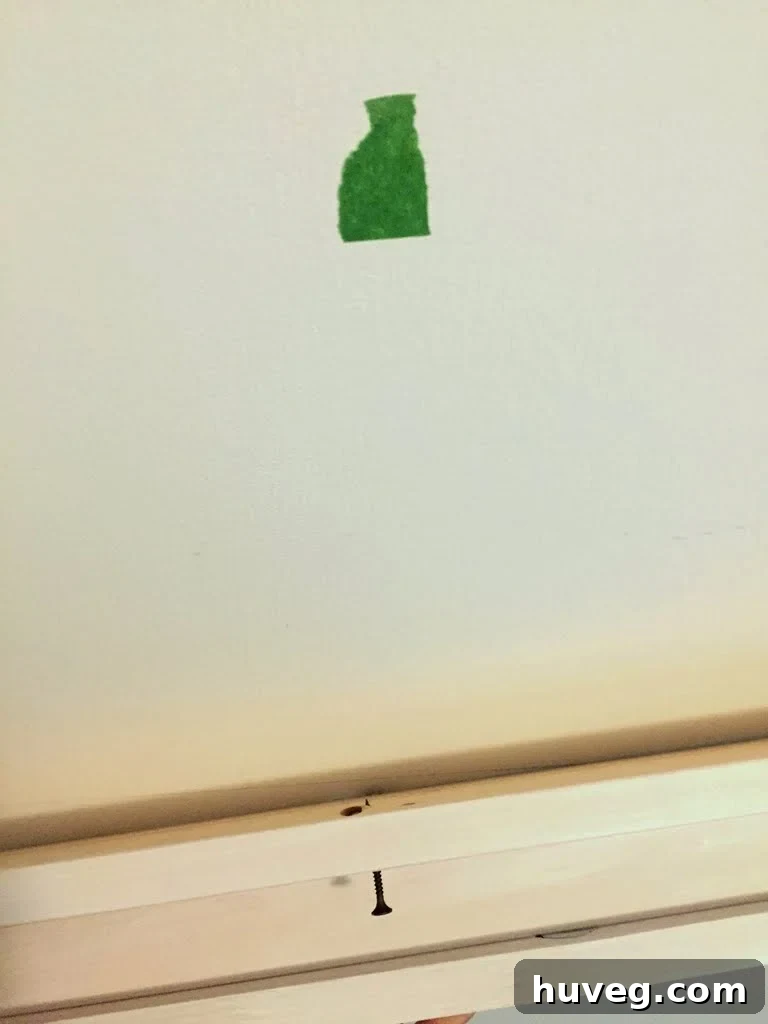
Step 3: Secure the First Point. With the pre-screwed ledge in hand, align the protruding screw with your marked stud. Gently push the ledge against the wall so the screw tip catches the drywall. While holding the ledge steady with one hand, use your drill to drive that first screw into the stud, securing the ledge slightly to the wall. Don’t worry if it’s not perfectly level yet; the goal here is just to get it minimally secured so you can free up both hands.
Step 4: Level and Finalize. Once the first screw is in, the ledge should be able to hold its own weight. Now you can use a level to adjust the shelf until it’s perfectly horizontal. With the ledge leveled, drive in your second screw (and any subsequent screws into other studs) to fully secure it to the wall. This two-step process allows for precise leveling even when working alone, preventing frustrating attempts to hold, level, and screw simultaneously.
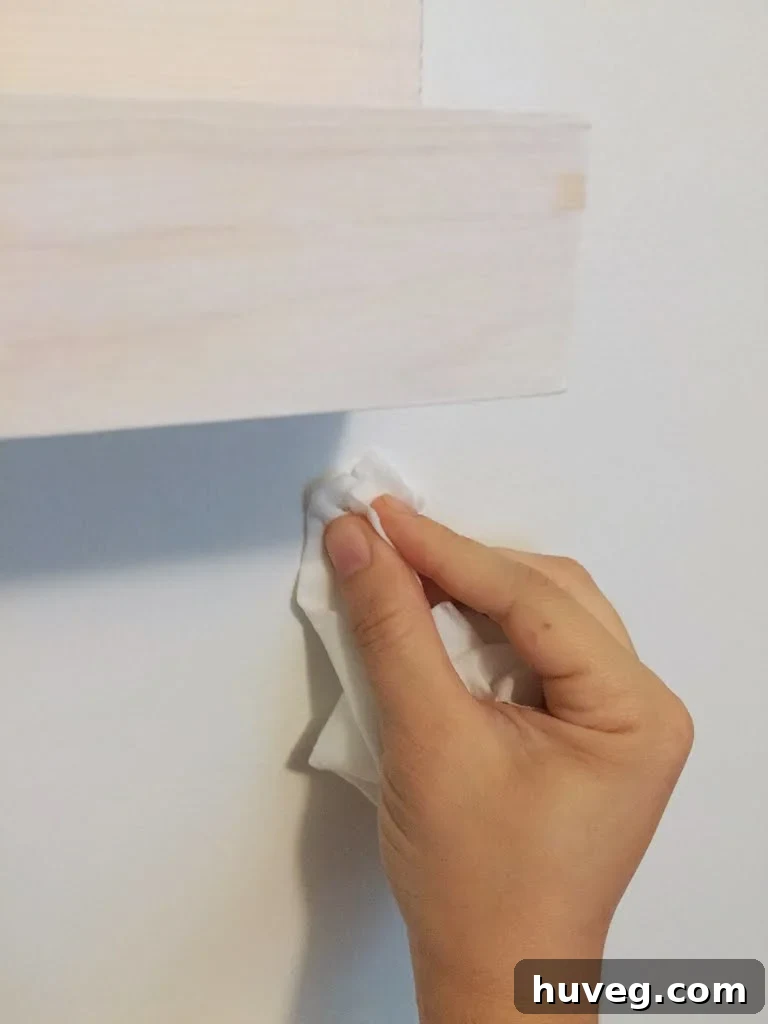
Pro Tip for Clean Walls: You’ll inevitably end up with a few pencil or chalk marks on your wall after measuring and marking. While a Magic Eraser is a popular choice, it can sometimes dull the sheen of your wall paint. A fantastic alternative I’ve discovered is an oil-free makeup wipe! These wipes are remarkably effective at gently lifting stray marks without damaging the paint finish, making them just as great for your walls as they are for removing eyeliner.
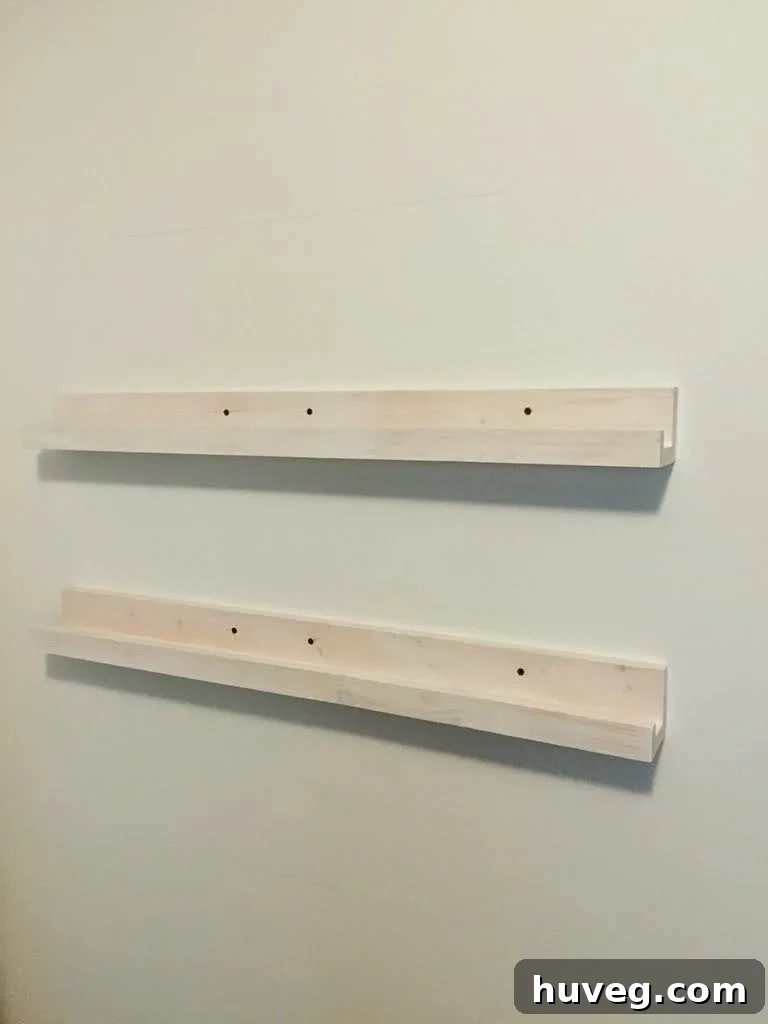
With your shelves firmly in place, it’s time for the finishing touches: caulk along all seams for that professional, built-in look, apply your final coats of paint, and then comes the satisfying part—stocking your beautifully organized shelves!
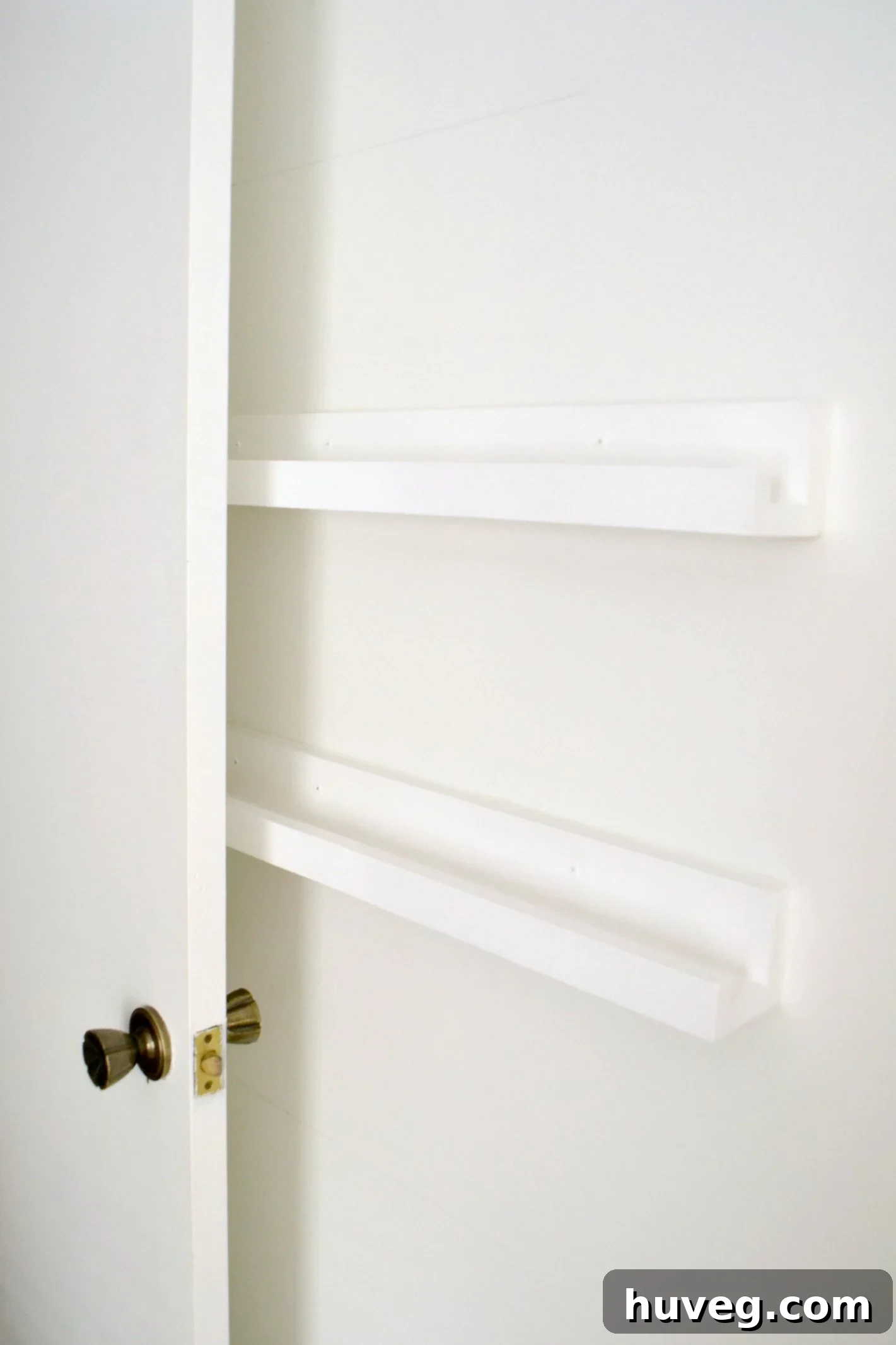
Optimizing Your Wood Stamp Collection Storage
These DIY storage ledges are particularly effective for organizing collections like wood stamps. The unique design, with its front lip, plays a crucial role in maintaining order and accessibility. For my wood stamp collection, the lip acts as a subtle barrier, preventing stamps from accidentally sliding off. More importantly, it helps create distinct rows for different sized stamps.
The space behind the lip provides an excellent spot for smaller stamps, ensuring they don’t get lost or hidden behind larger ones. By keeping the larger stamps in the front, the entire collection maintains a neat, organized appearance, making it easy to see and access every item at a glance. No more rummaging through cluttered boxes!
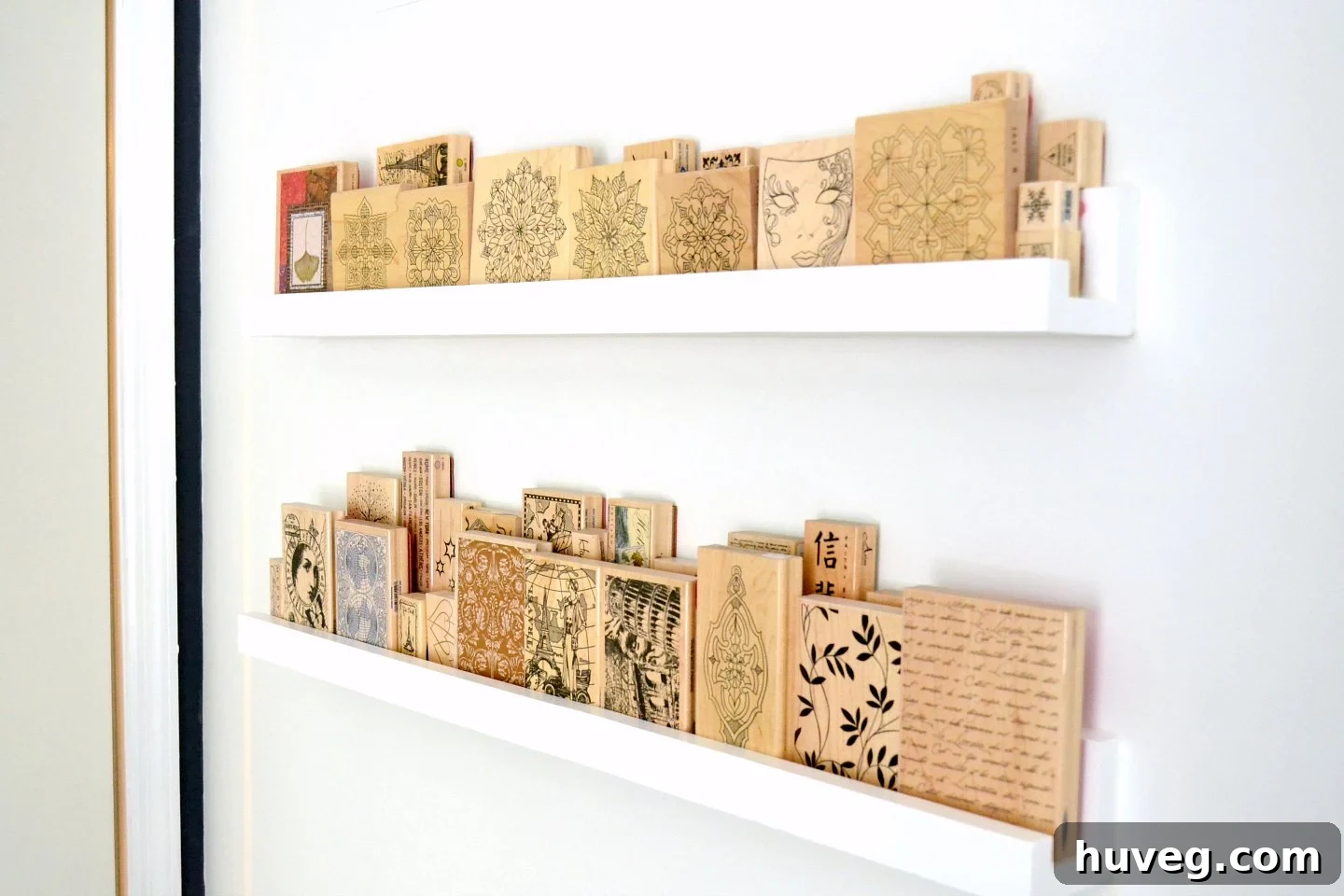
I have a substantial collection of rubber stamps, many of which are intended for creating intricate wood or paper ornaments using embossing powder. For far too long, these creative tools languished in a forgotten box at the back of my closet—a classic “out of sight, out of mind” scenario. Now, prominently displayed on these accessible shelves, I anticipate using them far more frequently. In fact, later this year, I plan to share a tutorial on how to craft some of those beautiful ornaments yourself, inspired by having my supplies so readily available.
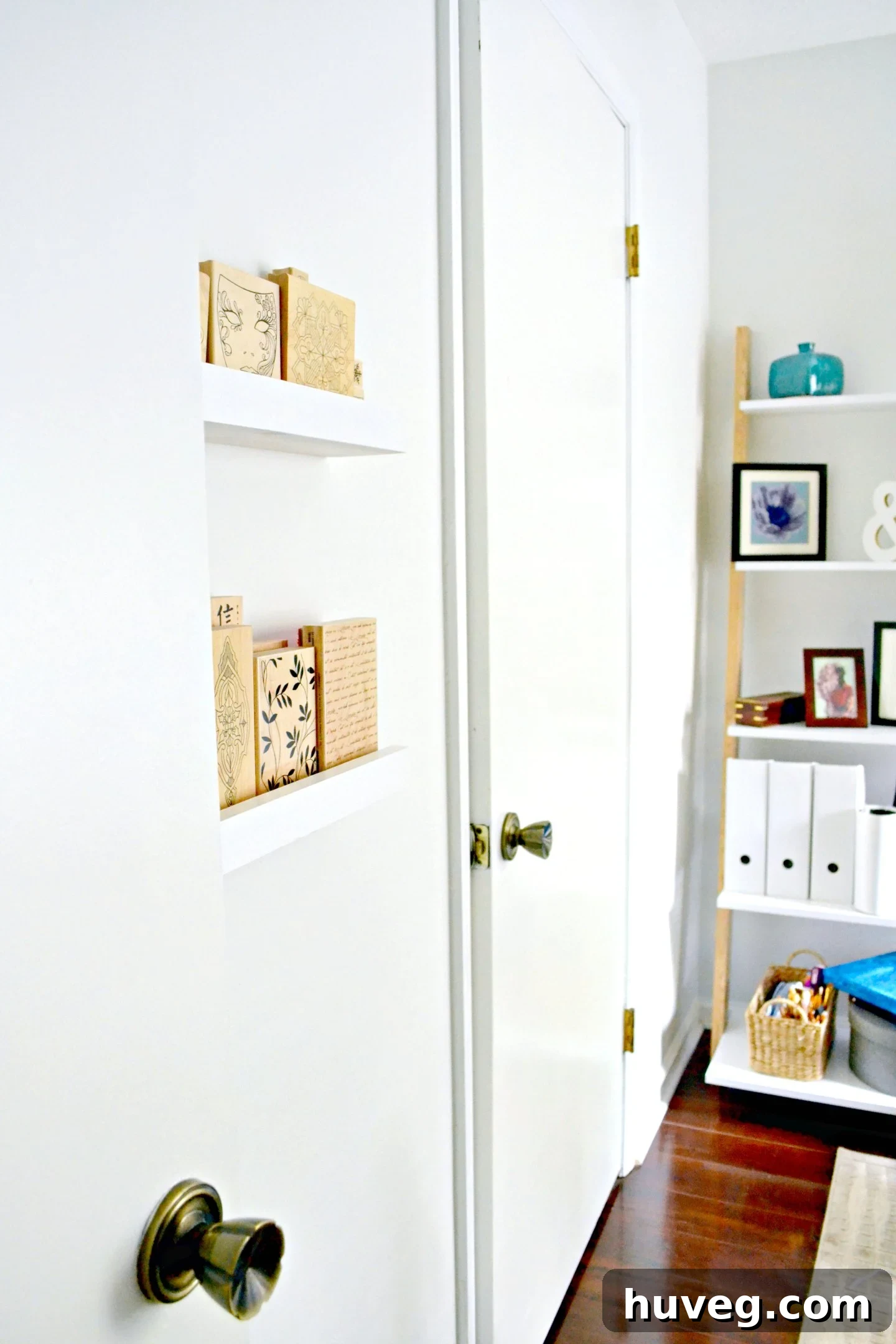
Each new piece of organization I complete in the office feels like a victory against clutter. These simple, budget-friendly ledges are not just storage; they are an investment in efficiency and creative inspiration. They prove that even the most overlooked corners of your home hold immense potential for beautiful, functional storage. And guess what? There’s plenty more organizational wisdom and DIY projects I’m eager to share with you this week!
Expand Your Storage Horizons: More DIY Shelf Ideas
Are you now inspired to tackle other areas of your home that could benefit from smart shelving solutions? I’ve certainly made my fair share throughout the house, leveraging various designs to maximize space and style. If you’re looking for more creative ways to add storage, explore some of my other popular shelving projects:
- Discover how to create stunning long, deep, and thin floating shelves that I installed in my laundry room. These are perfect for adding substantial storage without overwhelming the space.
- Check out the versatile DIY picture ledges I designed for the guest bedroom redesign. These are another ingenious modification of a similar concept, allowing you to display art and photos beautifully without blocking the bottom of the frames, offering a flexible and dynamic display solution.
Embrace the power of DIY to transform your home, one organized space at a time!