Illumination Updates

Crafting a Custom Lighting Masterpiece: My DIY Sputnik-Inspired Journey
As the rhythm of academic life intensifies, pulling me into yet another demanding exam week – yes, they truly are as relentless as they seem, and I’m already counting down the days until this mini-mester concludes and a semblance of normalcy returns – my creative spirit finds solace in the world of DIY. It’s during these periods of mental exertion that I find immense relief and satisfaction in hands-on projects, transforming abstract ideas into tangible realities within my home. My limited free time is currently divided between making significant progress on the staircase renovation (a fresh update awaits you tomorrow for Dueling DIY Tuesday) and a collection of smaller, equally engaging plans, including my exciting new light fixture project.
This particular light fixture, a bespoke creation that promises to add a distinctive touch to my space, has been a labor of love and a testament to the unexpected treasures one can unearth in a regular hardware store. My initial post about this endeavor, titled “Sputnik Pursuits,” highlighted only a handful of collected supplies. While it’s true I purchased every last piece the store had in stock, it simply wasn’t enough to bring my ambitious vision to fruition. This project, which has evolved into a fascinating exploration of form and function, embodies the spirit of personalized home decor – creating something truly unique that reflects individual style and ingenuity.
Unlocking Potential: The Hidden World of Light Fixture Adapters
One of the most exciting revelations during this project was discovering the sheer variety and versatility of light fixture adapters available at common hardware stores. It’s a treasure trove that many DIY enthusiasts might overlook. Did you know that these stores stock an incredible array of adapters capable of transforming a simple plug into a light source, or converting a light socket into an outlet, or even performing both functions simultaneously? During my visit to a major hardware retailer, I stumbled upon an entire aisle dedicated to these ingenious devices. I must confess, I experienced a genuine “geek-out” moment as I surveyed the vast spectrum of possibilities. The realization struck me: I would never again be without an extra light source or the means to create one, thanks to these adaptable components. This discovery alone felt like a significant win, opening up countless future DIY lighting possibilities and empowering me to customize my home lighting in unprecedented ways.
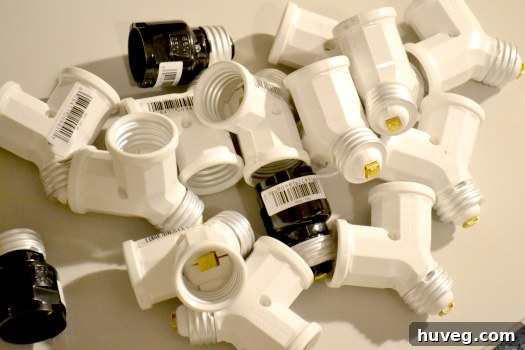
However, for the specific requirements of this project, my focus narrowed to two key types of adapters: socket adapters that deftly split one socket into two, commonly seen as Y-shaped pieces, and socket extenders, typically black cylindrical components. The Y-shaped splitters are crucial for creating the multi-directional and dispersed light effect I envision, allowing a single power point to host multiple bulbs. These pieces are foundational to the “Sputnik” feel, allowing for a radial explosion of light. The socket extenders, on the other hand, serve a dual purpose: they provide much-needed length, allowing bulbs to project further and create distinct layers, and perhaps more importantly, introduce an element of intentional non-uniformity and organic flow to the design. My aim is to move beyond a strictly symmetrical or rigid aesthetic, and these extenders are instrumental in achieving that fluid, sculptural quality. After an initial run that depleted the store’s stock, a subsequent trip proved successful in acquiring the additional pieces necessary. With these new acquisitions, the fixture has truly begun to take shape, moving from a mere concept to a tangible structure that already hints at its final unique form, promising a truly personalized lighting experience.
The Organic Evolution: Sculpting Light with Adaptable Components
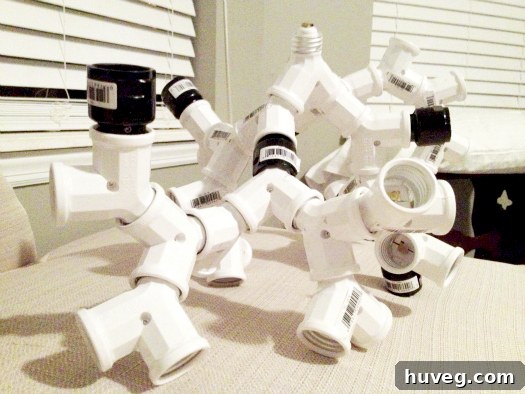
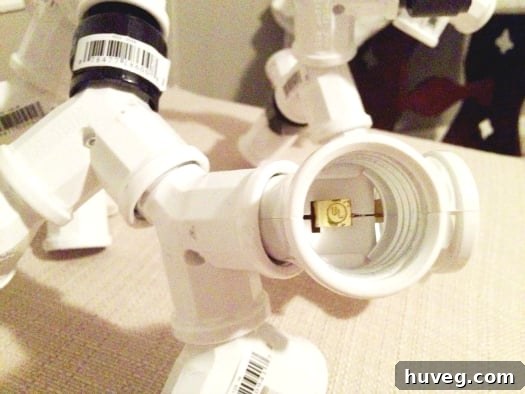
The assembly of this light fixture has been less about following a rigid blueprint and more about an organic, iterative design process. It’s a continuous experiment in form and balance, a dance between intention and discovery. My approach involves “playing with the various twists,” a phrase that encapsulates the dynamic nature of connecting each Y-splitter and extender. I spend considerable time removing, adding, and reorienting the components, carefully observing how each adjustment alters the overall silhouette and, crucially, how it will direct the light from each bulb. The goal is not just to create a functional fixture, but a sculptural piece that casts an interesting array of light and shadow, transforming the ambiance of the room it will eventually inhabit. This hands-on method allows for a true artistic expression, where the final form emerges through intuitive experimentation.
This phase is all about visual experimentation. I’m constantly evaluating the emerging structure from different angles, imagining how the light will spread. It’s a delicate balance to ensure that while the arrangement appears spontaneous and free-flowing, it also maintains a cohesive aesthetic. The extenders are particularly useful here, allowing me to vary the depth and projection of individual bulbs, breaking up any potential monotony and contributing to the desired organic, branching effect. Each connection point is a decision, each twist a creative choice, pushing the design closer to its final, unique form. This hands-on, exploratory method is deeply rewarding, allowing for a personalized touch that mass-produced fixtures simply cannot offer. It’s truly a labor of love that transforms simple hardware into a work of art, a custom lighting solution perfectly tailored to my vision.
Anticipating the Transformation: From ‘Hot Mess’ to ‘Coral’ Masterpiece
Currently, I must admit, the fixture presents itself as a bit of a “hot mess.” In its raw, unpainted state, with its array of different colored plastic and metal components, the elegant vision I hold for it isn’t immediately apparent to an outside observer. But this is a common phase in many DIY projects – the awkward adolescent stage before the final transformation. I firmly believe in the principle that things often look worse before they look significantly better. This unfinished appearance, however, is merely a temporary canvas awaiting its artistic metamorphosis. Once it receives its unifying coat of paint, ideally in one solid, carefully chosen color, its true character will emerge, revealing the sophisticated design beneath.
The ultimate aesthetic I am striving for is something reminiscent of coral. Imagine the intricate, branching structures found beneath the sea – diverse in form, yet cohesive in their natural elegance. My goal is to capture that organic complexity, that sense of natural growth and sculptural beauty. When painted uniformly, the current disarray of adapters and extenders will coalesce into a singular, flowing form, where the individual components recede and the overall shape takes center stage. This choice of inspiration moves beyond conventional lighting designs, aiming for a piece that serves as both a light source and a striking art installation. The concept of creating a “coral” texture from industrial parts adds a layer of unexpected artistry to a functional item. To give you a clearer idea of the sophisticated and artistic direction I’m headed, the original inspiration for this project stemmed from a captivating piece: an intricately designed branch chandelier, which I encountered online. You can view the original inspiration here, a testament to how diverse sources can spark brilliant DIY ideas.
The Unexpected Origin: Bar Decor and Home Integration
Upon revealing the inspiration for my project, the branch chandelier I referenced, a question often arises: is anyone truly surprised that such a distinctive and edgy piece originates from a bar setting? Honestly, I didn’t think so. There’s an undeniable allure in borrowing elements from commercial spaces, particularly bars and restaurants, and cleverly integrating them into a residential environment. These establishments often feature bold, creative, and sometimes unconventional design choices that can inject a unique personality into a home. The idea of taking something with a raw, industrial, or even slightly rebellious aesthetic and softening it for a domestic space is incredibly appealing to me, creating a juxtaposition that is both intriguing and stylish.
This fusion of styles creates a dynamic contrast, making the home feel curated and thoughtfully designed rather than simply decorated. This particular bar-inspired chandelier, with its organic yet somewhat rugged structure, provides the perfect springboard for my “coral” vision. It’s about translating that powerful visual impact into a piece that resonates with my personal style, demonstrating that great design can come from anywhere – not just traditional home decor catalogs. This project is a testament to the idea that with a bit of creativity and DIY spirit, one can truly transform a space with pieces that tell a story, even if that story begins in an unexpected place like a chic bar, proving that unique lighting ideas can be found everywhere.
Patience and Precision: Waiting for the Perfect Painting Conditions
One of the less glamorous, yet critically important, aspects of any DIY project involving paint is timing. The weather here in Georgia, much like the muse for my creative endeavors, can be wonderfully unpredictable. Lately, we’ve experienced a perplexing meteorological dance: one day warm and spring-like, the next a sudden plunge into freezing temperatures, only to rebound quickly to pleasant, temperate conditions. Such fluctuations, while keeping life interesting, are far from ideal for painting projects, especially one as intricate as this light fixture. Ensuring a professional-looking finish requires careful consideration of environmental factors, which often means exercising patience.
Applying a smooth, durable, and aesthetically pleasing coat of paint requires stable environmental conditions. Temperature and humidity play significant roles in how paint dries, adheres, and cures. Too cold, and the paint can become thick and difficult to apply, potentially leading to uneven finishes or poor adhesion. Too humid, and drying times can extend dramatically, increasing the risk of drips, dust accumulation, or an unappealing tacky finish. Therefore, I will patiently be waiting for another month or so, until the Georgia weather settles into a more consistently warm and dry pattern, before I give this fixture its final coat of paint. This period of waiting is not downtime; rather, it’s an opportunity to continue refining the arrangement of the components, ensuring each bulb points precisely where I desire, and visualizing the finished product in its intended setting. This patient approach ensures that the eventual painting process will yield the best possible results, bringing my coral-inspired vision to life with a flawless, durable finish that will elevate my home decor.
(On a different note, for those who missed it, I recently announced the lucky winner of the Ryobi giveaway! If you’re curious to see who won, head back over to that post for all the details! Congratulations to the winner!)
Want more DIY inspiration, project sneak peeks, and behind-the-scenes glimpses into my creative world? I regularly share exciting updates and fresh ideas on my social media channels. You can catch exclusive sneak peeks of current and upcoming projects by following me on Facebook and Instagram. For more extensive DIY discussions and community engagement, you can also find me contributing on Hometalk, a fantastic platform for home improvement enthusiasts. And for quick updates, tips, and a direct line to my latest musings, be sure to follow me on Twitter at @uglyducklingDIY. Join the community and let’s inspire each other to create beautiful, personalized spaces! Please note: Some links provided may contain affiliate partnerships. For comprehensive information regarding these affiliations and how they support my blog, kindly refer to my dedicated Disclaimer page.