Transforming Tricky Spaces with Smart Tile Layouts

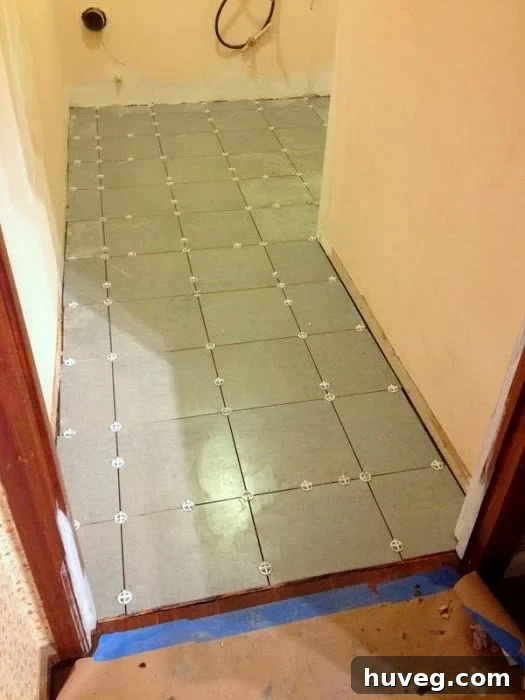
The countdown to Black Friday and, more importantly, my highly anticipated laundry appliance shopping spree, was in full swing. This past weekend presented the perfect window to tackle the next big step in my laundry room transformation: installing the floor tiles. Having successfully laid the Ditra uncoupling membrane last weekend, I was eager to get started. I started by using an inexpensive box of plain gray ceramic tiles, priced at a mere $0.99 per tile, to dry fit the layout. This initial dry run proved to be incredibly insightful, especially when considering the unique challenges of planning a tile layout in an awkward space like my laundry room. It forced me to think critically about every cut and placement, making what initially seemed like a straightforward task into an engaging puzzle.
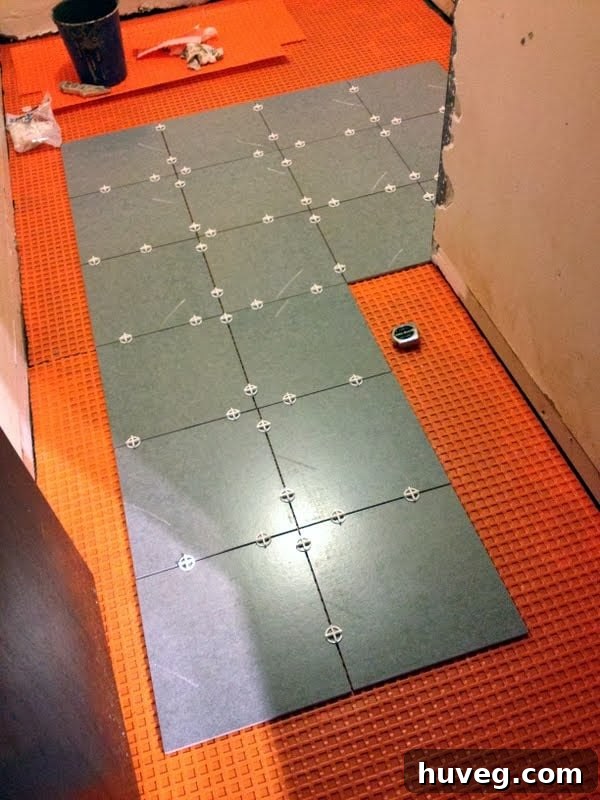
My primary goal for this particular tile layout was efficiency: to significantly reduce the number of individual cuts I would need to make per tile. This approach wasn’t just about saving time; it was also about minimizing waste and making the overall process smoother in a challenging environment. I opted for a strategy that maximized the use of each tile, turning potential off-cuts into usable pieces for subsequent rows. The inherent irregularities of the room meant that a simple, full-tile grid wouldn’t work, so a more thoughtful, adaptable plan was essential. This thoughtful planning stage is often overlooked, but it’s where much of the success (or failure) of a tiling project, especially in an unconventional space, is determined. It allows you to visualize the finished product, anticipate potential problems, and make adjustments before any mortar is mixed.
Mastering Your Tile Layout in Awkward Spaces: Essential Tips and Strategies
Tackling a tiling project in a room with an unconventional shape or multiple corners can feel daunting. My laundry room, with its various nooks and crannies, is a prime example of an awkward space. However, with careful planning, it’s entirely possible to achieve a professional-looking finish while minimizing frustration and waste. Here are some key considerations and tips I discovered during my own tiling journey:
- Embrace Simplicity for Complex Rooms: When faced with a challenging room layout, opting for a straightforward, square, and ceramic tile often proves to be the most practical choice. Intricate patterns, irregular tile shapes, or delicate materials can amplify the difficulty in an already complex space. A no-nonsense tile allows you to focus on the cuts and layout rather than wrestling with the material itself. It provides a clean, understated backdrop that won’t compete with the room’s unique architecture.
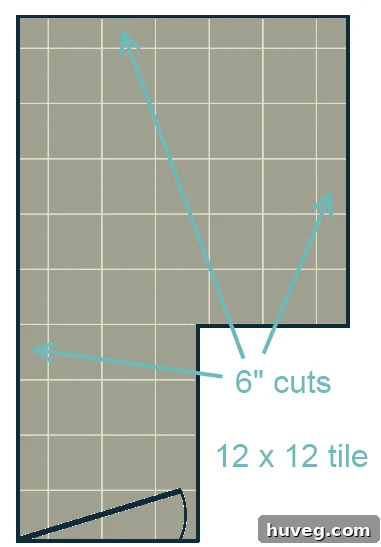
- Analyze the Room’s Peculiarities: My laundry room, as you’ll see in the diagram below, boasts one heck of an odd layout. Before making any decisions, take the time to truly understand every angle, bump-out, and recess. Measure repeatedly and sketch out the room’s footprint. Identifying the longest walls, narrowest points, and any fixed obstacles (like pipes or existing fixtures) is crucial for developing an effective strategy. This intimate understanding of the space will inform your tile choices and layout plan.
- Strategic Tile Cutting for Waste Reduction: A core principle of my layout was to maximize each 12-inch tile by cutting it in half, creating two 6-inch lengths. These shorter pieces were then strategically used along the longest wall. This approach dramatically reduced overall tile waste. Instead of discarding the other half of a cut tile, it could be seamlessly integrated into the very next row. This not only saves money on materials but also reduces the environmental impact of your project. Always consider how off-cuts can be repurposed before reaching for the trash bin.
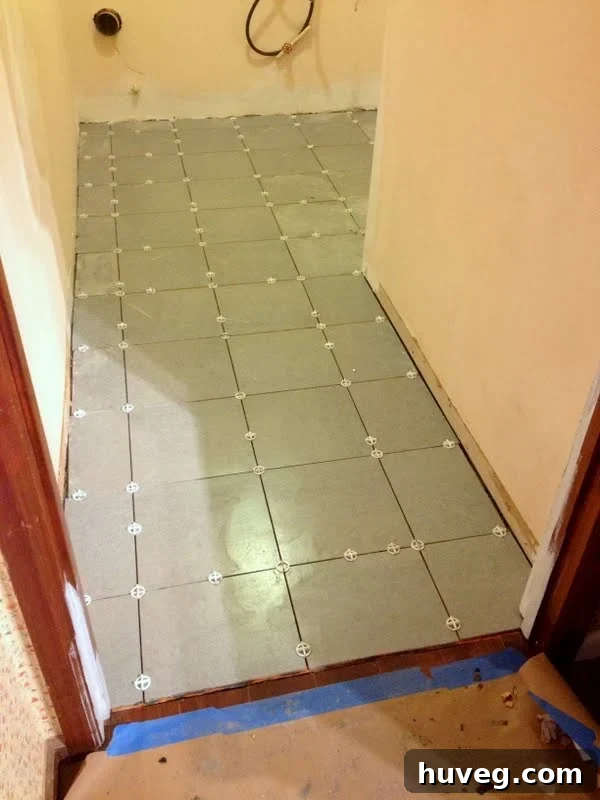
- The Power of the Dry Fit – Starting from the Middle: The golden rule of tile layout, especially in irregular rooms, is to always start your dry fit in the middle of the room. This allows you to achieve symmetrical cuts along opposing walls, ensuring a balanced and aesthetically pleasing finish. My “hair-brained” idea of using 6-inch tile cuts on both sides could have looked incredibly peculiar if I hadn’t meticulously mapped things out first. Fortunately, at the room’s widest point, I managed to achieve consistent 6-inch cuts along both sides and the back wall. This symmetrical approach created a sense of order despite the room’s inherent oddity. The only area that presented a slight deviation was the narrower doorway, which ended up with 8-inch pieces on the right side instead of 6 inches. Crucially, there were no awkward 2-inch slivers, which would have been problematic since Ditra uncoupling membrane requires a minimum of 2 inches of tile coverage to function correctly. This meticulous dry-fitting process truly paid off, allowing everything to work out in my favor and prevent costly mistakes down the line!
Reflections from the Trenches: What I Learned Planning a Tile Layout in an Awkward Space
Once again, I found myself installing tiles in the room while my indispensable helper, Dad, took on the role of “Sir Mix-A-Lot,” expertly preparing batch after batch of mortar. This partnership is always a learning experience, and this project was no exception. Here are some of the key lessons that emerged during the actual installation of the tile:
- The Importance of Door Removal (Eventually): While my initial enthusiasm led me to install the Ditra uncoupling membrane without removing the door – a decision I quickly regretted – I was smart enough (or rather, Dad insisted we were smart enough) to remove it for the tile installation. This seemingly small step made an enormous difference, providing unobstructed movement and preventing endless contortions. It’s a classic example of learning from previous mistakes and embracing proper preparation.
- The Paradox of Perfectionism in an Imperfect World: My arms, unfortunately, have the wingspan of a fruit fly, making reaching across even a small room a monumental task. Compounding this physical limitation is my inherent (and sometimes maddening) need for perfection. This room, with its imperfect walls and uneven surfaces, was a constant battle against my desire for flawless lines and perfectly spaced tiles. This clash between ideal and reality is a common struggle in DIY, demanding patience and a willingness to accept minor imperfections.
- The Recipe for Frustration (and a Timely Break): This blend of a demanding need for perfection, coupled with skipped breakfast and hours of physical labor, inevitably led to a snarling mess of frustration about halfway through the project. My patience wore thin, and the minor imperfections of the room felt amplified. Luckily, this low point conveniently coincided with running out of supplies. This provided a much-needed and perfectly timed break for lunch with Dad. I truly have to give him immense credit; he not only endures my steep learning curve but also the understandable frustration that arises when things don’t go smoothly right away. His calm demeanor and willingness to roll with the punches are invaluable.
- The Room of Contradictions: It is truly astounding how a single room, especially one being tiled, can simultaneously feel like the smallest space on the planet (in terms of freedom of movement) and the largest (when measured by the sheer amount of time spent stretching my short arms out while on my hands and knees). The repetitive motions, the constant shifting, and the confined nature of the workspace can make hours feel like days, and inches feel like miles. This paradoxical feeling underscores the physical and mental stamina required for detailed home renovation projects.
In essence, Saturday transformed into an intensive 8-hour yoga session, all performed within the confines of the room I dread most (primarily because I absolutely loathe doing laundry). And after all that bending, stretching, and mental gymnastics, it dawned on me that the newly installed tiles are nearly the exact same freaking color as the cement slab I spent all this time diligently covering. It was a humorous, if slightly ironic, realization after such an arduous day. Huh. There’s that, I suppose. Sometimes, the aesthetic changes are subtle, even when the effort isn’t!
Achieving the #YogaBody and Looking Ahead to a Functional Laundry Space
Despite the physical toll and the monochromatic revelation, my project to-do list is steadily shrinking, which is a significant victory in itself. And who knows, perhaps with enough tile jobs under my belt, I’ll finally achieve that super lean “yoga body” I’ve always vaguely desired (pssh, ha!). One can dream, right? Progress feels good, even if it comes with sore muscles and bruised knees. The next steps are already planned: I’ve secured the paint (spoiler alert: it’s the same reliable color I’ve used in the hallway and living room downstairs, just with a different sheen). There was simply no need to spend countless hours agonizing over new paint choices, especially given my notorious decision-making timeframes. This project needed to move quickly, and leveraging a proven color was the most efficient route. My grout is also ready and waiting, signaling that the finish line is within sight.

My hands aren’t particularly thrilled after a full day of leaning on the textured Ditra, even with the aid of kneepads, but the discomfort is a testament to progress. Each ache and bruise is a step closer to my ultimate vision: a clean, efficient, and well-organized laundry space that no longer thwarts my efforts to stay tidy. Currently, because I tend to want to escape the room as quickly as possible, I often find myself carrying unfolded laundry upstairs to fold in my bedroom – a task that inevitably gets sidetracked by a new season on Netflix or an urgent request for snuggles from Charlie. This renovation aims to eliminate those distractions by making the laundry room a place where I actually *want* to be, even if just for a few extra minutes.
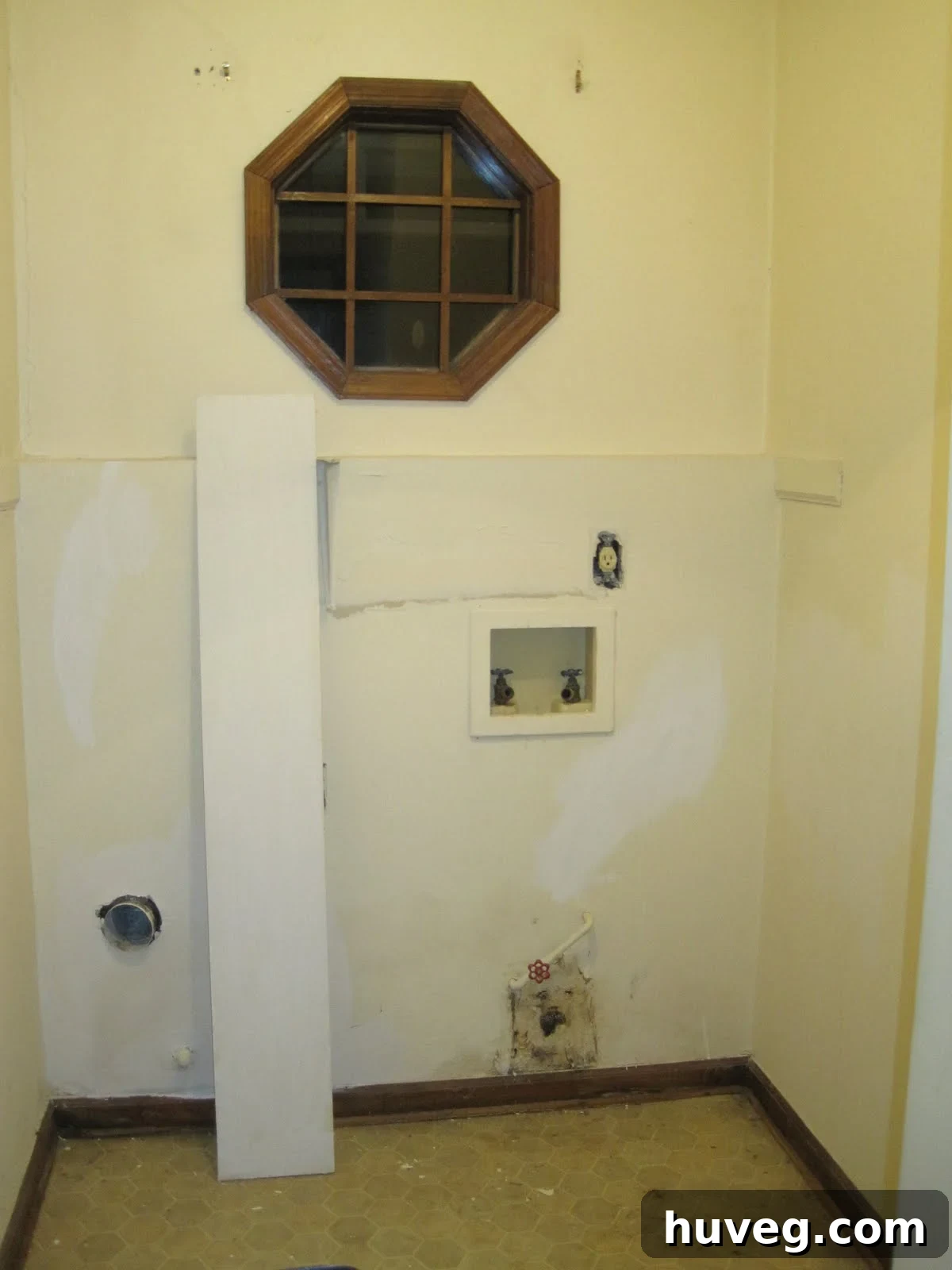
For now, I can leave you with a stark “before” picture, captured when I first moved in – blech. It serves as a powerful reminder of how far this space has come:
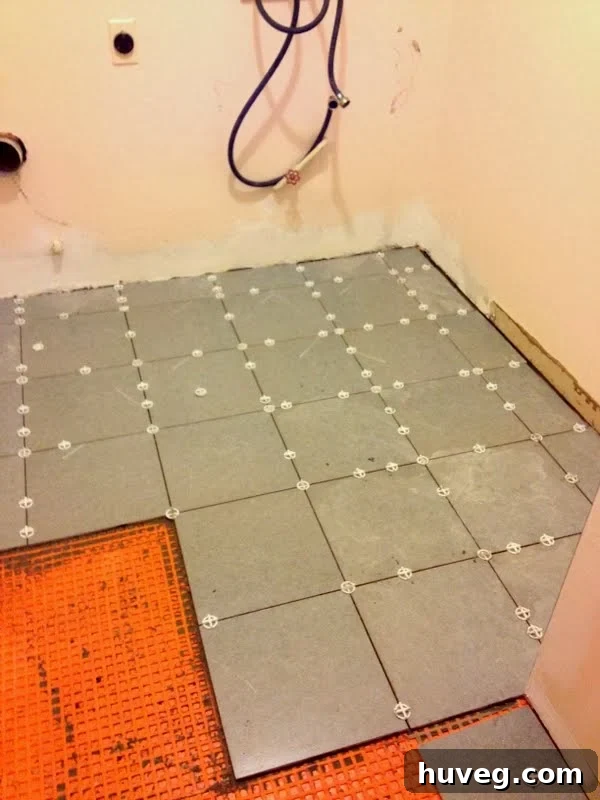
And here is an in-progress shot, showing precisely where I’m at with the tiling at this very moment:
As the week progresses, I have a few other exciting updates to share, including details on some necessary wall repair jobs (perhaps even a video documenting the process!) and a more in-depth look at the overall design plan for the laundry room. Then, it’s finally time for turkey and, more importantly, the highly anticipated appliance acquisition. It’s been a busy and productive weekend, and the rewards are starting to become tangible. How was your weekend? I hope it was equally fulfilling, perhaps with slightly less physical exertion!