The Learning Curve Continues

Are you ready to dive back into the heart of my recent plumbing saga? If you’ve been following along, you know it’s been a rollercoaster of emotions. But rest assured, this installment brings a much-needed sense of relief – at least for now!
If you missed the initial chaos and discovery, you can catch up on the start of this plumbing emergency in Part 1 here.
From Panic to Peace: Navigating a Home Plumbing Crisis (Part 2)
The morning after the initial discovery of water damage, an unsettling calm settled over the house. My mind raced with possibilities, most of them grim, yet I held onto the hope of a quick resolution. With a plumber scheduled to arrive in just a few hours, I used the waiting period to conduct another thorough assessment of the house, trying to gauge the full extent of the water’s mischievous journey.
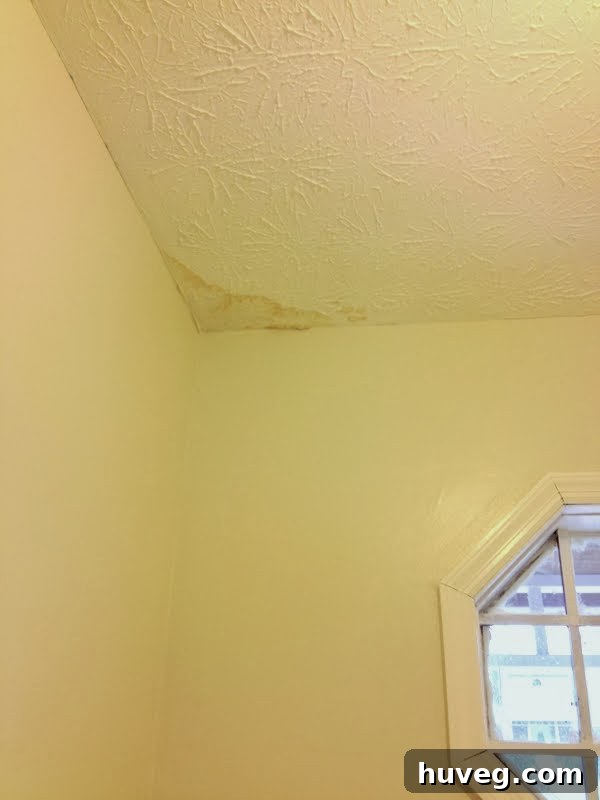
In the laundry room, my gaze immediately fell upon the ceiling. A fresh, tell-tale stain had blossomed in one corner, an undeniable testament to that morning’s watery escapades. It was a stark visual reminder of the plumbing challenge I faced.
Despite fearing the worst – a potentially catastrophic burst or frozen pipe – a strange sense of optimism prevailed. The prompt response time from the plumbing service gave me hope that intervention could happen quickly, minimizing any long-term damage and, crucially, reducing the risk of mold growth. I headed back upstairs to the primary bathroom, now able to think clearly enough to document the situation. The panic from the previous day had subsided just enough for me to grab my camera and capture the scenes between the bathroom and the garage. All the photos shared in Part 1 were, in fact, taken at this point; earlier, I was simply too overwhelmed to even consider picking up a camera.
The Plumber’s Arrival: Expertise at My Doorstep
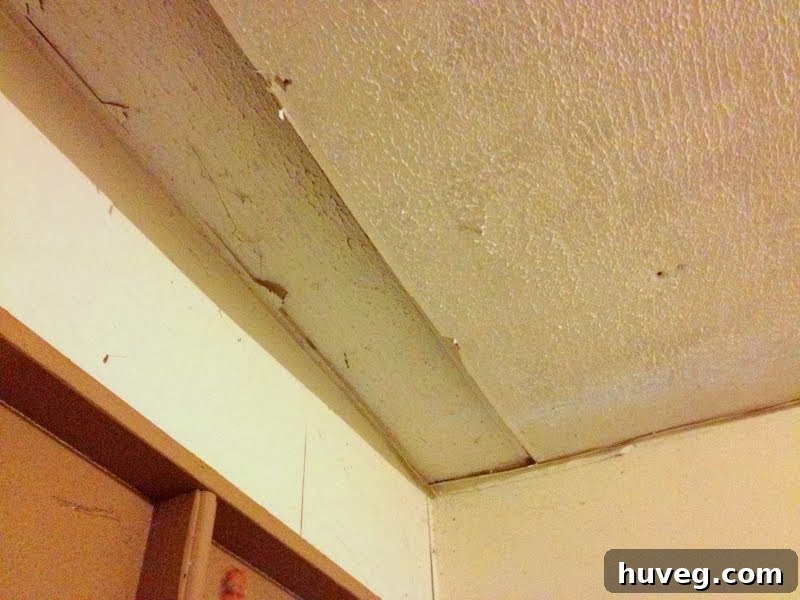
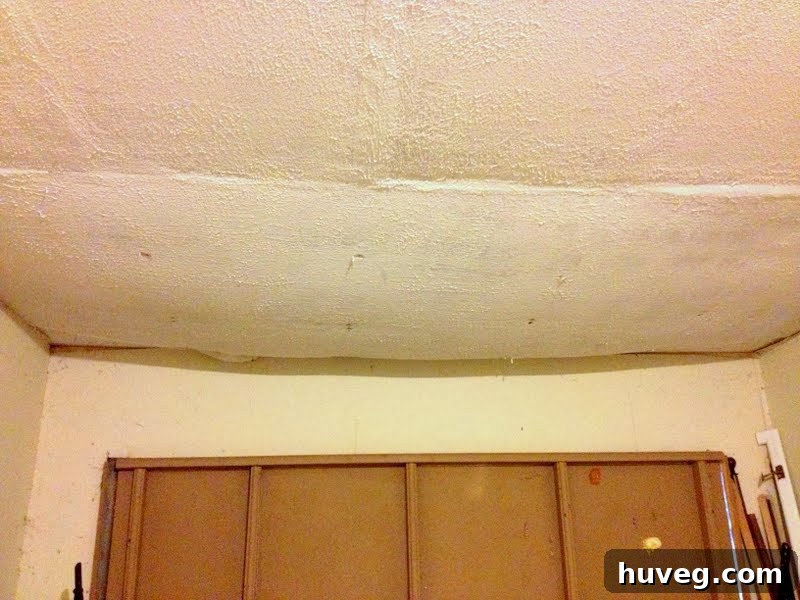
Around 10 AM, the doorbell chimed, signaling the arrival of Greg, my new plumber, accompanied by his son. Their presence immediately put me at ease. It was clear this was a local, family-run business, and Greg exuded an incredible warmth and friendliness. As requested, I walked him through the house, providing a layout overview. The primary bathroom, the source of the visible issue, sat directly above the laundry room. However, the plumbing lines were likely hidden behind the wall, positioning them directly over the garage ceiling – precisely where the drywall had started to sag and show signs of strain. Greg meticulously examined the garage area, offering valuable insights even before commencing any work.
He revealed a fascinating bit of history about my home and the entire neighborhood: originally, all these houses were fitted with polybutylene piping. This wasn’t entirely new information to me, as it had been disclosed during the home purchase. What was remarkable, however, was Greg’s intimate knowledge of this fact – he had been involved with companies bidding on many of the re-plumbing jobs in the area years ago. This meant he possessed an unparalleled understanding of these specific homes: their typical layouts, the plumbing systems they likely contained, and the installation standards that were common at the time. This deep-seated knowledge instantly boosted my confidence in his ability to diagnose and resolve the issue.
Investigation Uncovers Unexpected Relief
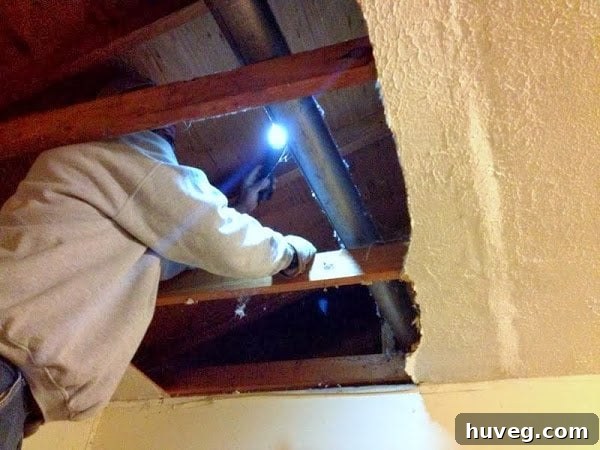
Ready to get to work, Greg suggested the most logical first step: carefully removing the section of drywall in the garage that had clearly detached from the ceiling joists. This would grant direct access to the suspected problem area. Much to my immense surprise and relief, the drywall beneath was almost completely dry, save for a small corner. This tiny damp spot was likely a residual effect from the morning’s valve incident, not a sustained leak. Already, this plumbing nightmare was looking less terrifying than I had anticipated.
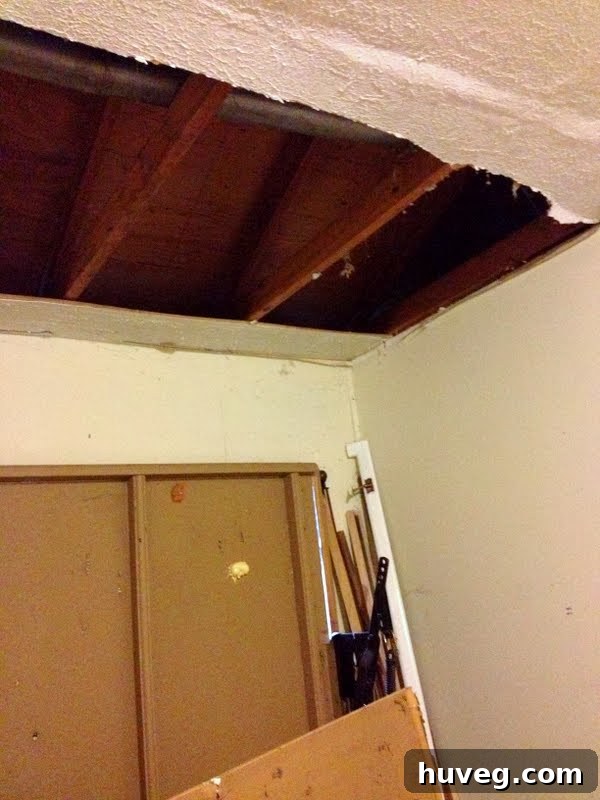
Further inspection brought even better news. Greg recognized the previous re-plumbing job as the work of one of his local competitors. He noted that while that particular company’s work could be inconsistent (they often offered the lowest estimates, sometimes reflecting in compromised craftsmanship), in this instance, they had done a decent job. He then pointed out something crucial: the pipes above the garage were, in fact, fully insulated! This was a monumental discovery. It meant they hadn’t frozen, and therefore, hadn’t burst. My biggest fear – a catastrophic frozen pipe leading to extensive water damage – was immediately quelled. I was in the clear!
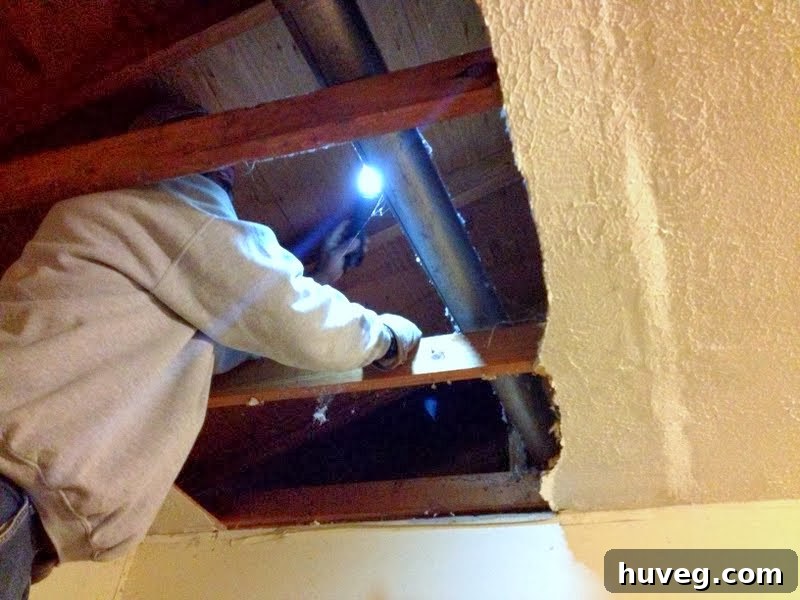
During their exploration, we also stumbled upon an unexpected hidden space above the garage. I had always assumed the access panel in the garage ceiling led to unused plumbing or electrical voids. Instead, it revealed a significant storage area, complete with a forgotten stroller left by a previous homeowner! As for why the drywall had initially come loose, Greg’s professional opinion was simply age and gravity. It was likely already weak and had slumped further over the cold winter months. I probably hadn’t noticed its deterioration amidst the flurry of indoor projects I had been tackling in the previous month. Well, hooray for the charming eccentricities of old houses!
The Mystery of the Loose Valve and the Simple Solution
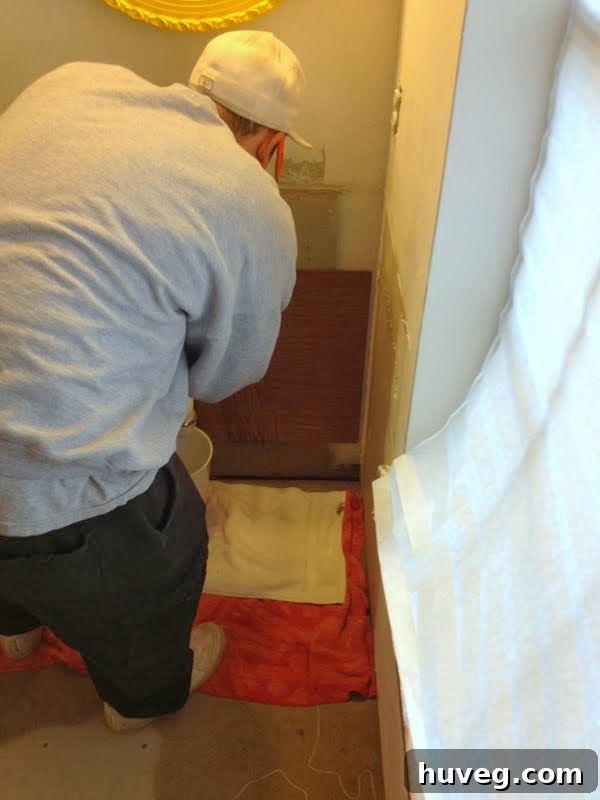
With the primary fears averted, we returned to the primary bathroom. There, Greg and his son easily drained the remaining water and, with a few precise turns, tightened the problematic valve completely. No more leak, no burst pipe, and ultimately, no actual pipe repair work was needed. A massive wave of relief washed over me. “Balls yeah!” I thought, silently celebrating the avoidance of a major home repair project. Yet, a perplexing question lingered: how on earth could that valve have suddenly come loose?
It didn’t make sense. If it were a chronic issue with a leaky valve, wouldn’t it have shown symptoms earlier, not remained bone-dry for months only to suddenly fail? I had spent countless hours in that bathroom recently, searching for misplaced tools, and never once noticed a single drip. Likewise, weeks spent tiling the laundry room below had yielded no suspicious stains on the ceiling. This meant the leak was definitely no more than a few days old. Greg, a seasoned plumbing professional, admitted he had never encountered such a peculiar situation before. His best hypothesis involved the fluctuating temperatures common in winter. Expansion and contraction, much like with other building materials, could have gradually loosened the once-perfectly-tightened compression valve. Given that compression valves are designed to withstand 300 pounds of pressure, it takes surprisingly little for a “loose” connection to escalate into a “completely off” state in no time. My frantic twisting of the valve in the initial panic likely served as the final straw, exacerbating the problem rather than fixing it.
Expert Advice and A Valuable Connection
And the good news kept coming! Since no actual repairs were necessary, Greg explained that he would only charge me for a standard service call. He also offered valuable advice for addressing the minor water damage: allow the area to dry thoroughly. He knew a reputable drywall specialist if I needed help hanging a new panel in the garage later. Most importantly, he stressed the importance of proactive steps to prevent mold growth, advising me to point a fan into the space behind the wall for air circulation and do the same in the bathroom itself. He also recommended checking my hot water heater’s pressure settings, noting that homes rarely require the intense water pressure supplied directly from the street. Installing a water pressure regulator, an affordable device around $50, could easily mitigate this.
Overwhelmed with gratitude for their help and honesty, I gladly handed over my card for payment. Before they left, they even took the time to double-check the plumbing work my uncle had done beneath the kitchen sink, where the garbage disposal and pipes had been relocated to accommodate a new fixture. While I trusted my uncle’s craftsmanship and hadn’t experienced any leaks in the months since, it was incredibly reassuring to hear a professional confirm that everything looked perfectly fine.
Just as the father-son duo was preparing to depart, Greg’s son handed me their business card, with his personal number thoughtfully scrawled on it. He mentioned that because they were local, living just down the street, he would be more than happy to assist in an emergency, even if it was late. I thanked them profusely, shaking their hands, and felt a profound sense of relief, knowing I now had trusted plumbers I could rely on in any future home repair crisis.
Drying Out and Mold Prevention: The Aftermath
Shortly after they left, I made a swift trip to the hardware store, armed with a newfound mission: comprehensive drying and mold prevention. I picked up a large standing fan for the garage, specifically to direct airflow into the ceiling void, and a box fan for the primary bathroom. Recognizing the importance of moisture control, I also grabbed an industrial-sized bucket of DampRid, a powerful dehumidifying product, for upstairs and a smaller container for the laundry room, just as a precaution. To my disappointment, the industrial-style dehumidifiers available for rent were all gone – I assumed snatched up by others dealing with actual frozen pipe disasters. Undeterred, I also secured a spray bottle of mold treatment and preventer to apply to all the wet surfaces. In essence, I was meticulously doing everything humanly possible to ensure that bathroom dried out completely and effectively.
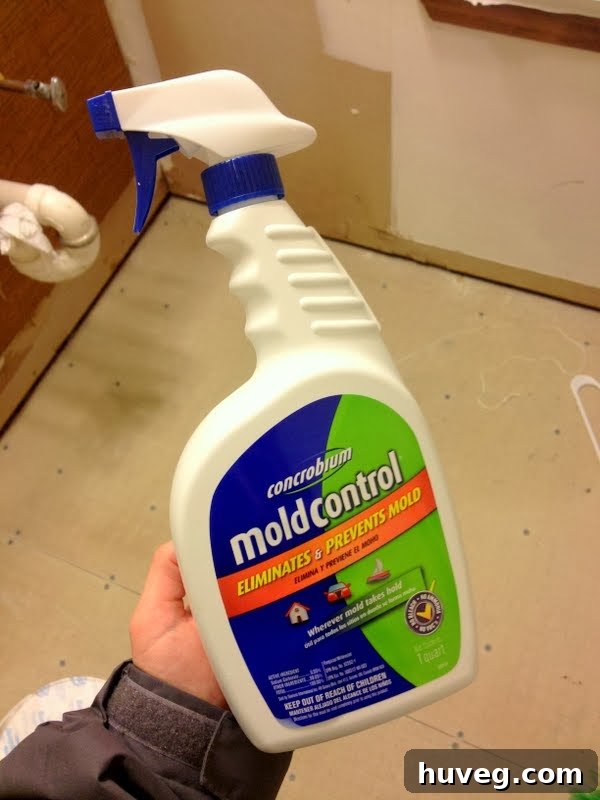
One crucial step I took was peeling back the carpet leading into the bathroom. If water reaches the subfloor, carpet padding notoriously struggles to dry out on its own without proper ventilation. Lifting it allowed the air to circulate freely beneath, facilitating quicker drying and preventing hidden moisture accumulation.
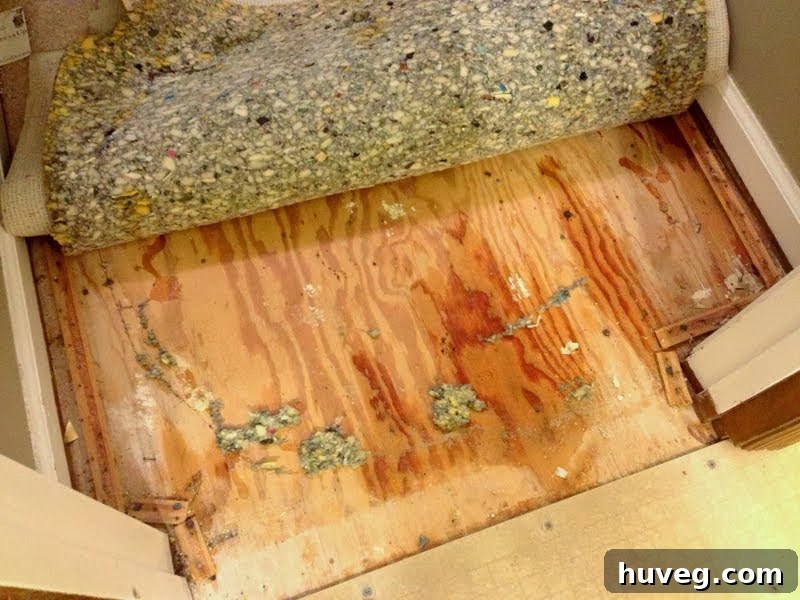
Remarkably, in just twelve hours, the room already showed significant improvement:
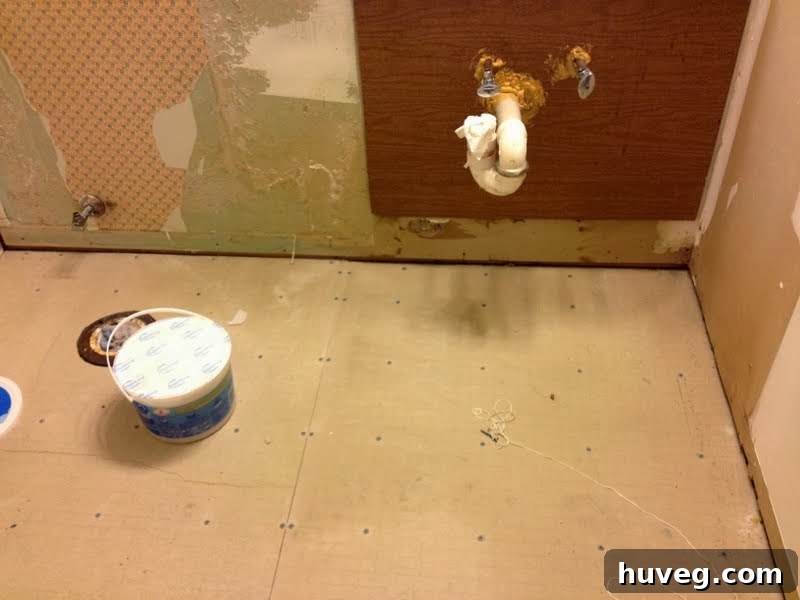
The lingering damp smell in the bathroom had dissipated, replaced by a faint, cleaner aroma from the DampRid – a sure sign that things were moving in the right direction. I’m contemplating adding another large bucket of DampRid to the ceiling space above the garage for a few days to ensure every last bit of moisture is absorbed. Once I’m absolutely certain everything is bone dry – and I mean completely dry – I’ll feel comfortable replacing the drywall. I might even delay the drywall replacement a little longer to capitalize on the gaping hole, making it easier to hoist some plywood into my newly discovered vacant storage area. (I promise to share photos of that intriguing space at some point; balancing on the ladder to snap a picture felt like too much of a risk at the time!).
The Invaluable Lesson: Knowing When to Call the Pros
I genuinely love the world of DIY. Every minute of tackling home improvement projects brings me immense satisfaction, even the challenging ones. I can already laugh about this story, vividly recalling my frantic dash across the room (any “Indiana Jones” fans out there who can name that movie reference?). However, despite my steadily growing “expertise” in various home tasks, this incident was a stark reminder that I still have an enormous amount to learn. There are moments when I feel incredibly silly and too embarrassed to admit I don’t know what to do, even fighting back a few overwhelmed tears. But as long as I’m learning from these experiences, I believe I’m on the right track.
Plumbing, in particular, remains an area where I lack significant confidence. This is precisely why this story felt so challenging to tell, openly exposing my own moments of complete common sense failure. Much like electrical work, I know it’s *possible* to figure things out independently with enough research and dedication. However, sometimes, the peace of mind that comes with calling seasoned professionals is simply invaluable. Considering this is my first major plumbing incident in over three years of homeownership, I think I’ve done reasonably well in applying my limited know-how so far! And at the very least, now I have the pros’ contact information readily available in my phone, ensuring I won’t feel quite so unprepared or embarrassed the next time a home emergency strikes.
(As of this post, several days have passed since the initial disaster, and all areas remain completely dry. I’m planning a good two weeks of observation before I can definitively declare this a success, but so far, so good!)
Alrightie, now it’s your turn. Have you ever faced a complete home disaster moment like mine, leaving you utterly clueless about what to do next? Or perhaps you’ve had a scare that, against all odds, turned out to be far less catastrophic than you initially feared? Share your stories in the comments below!