Floor Revival: Painting Vinyl and Linoleum

Budget Bathroom Transformation: Painting Vinyl & Linoleum Floors with Countertop Paint
Every homeowner faces that one space that constantly nags at them – for me, it was the hideous flooring in my primary bathroom. The dated vinyl or linoleum, with its uninspiring pattern and general wear, had become an unbearable eyesore. I desperately needed a quick, cost-effective solution to refresh the space without embarking on a full-scale renovation just yet.
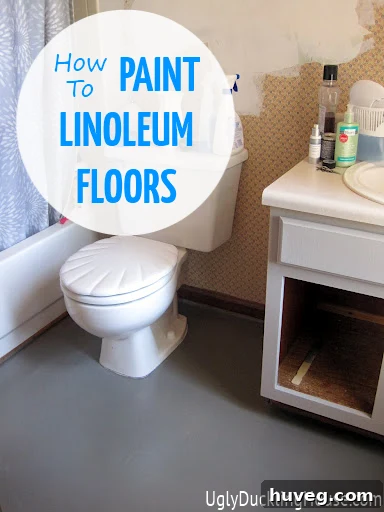
Having already acquired Rust-Oleum countertop paint for an upcoming project to refresh the laminate countertops in both my primary and guest bathrooms (following my cabinet painting endeavor), I thought, “Why stop there?” The idea struck me: if this paint could adhere to laminate countertops, perhaps it could work wonders on my equally problematic bathroom floors. It was an unconventional approach, as the product isn’t specifically designed for floors, but I was ready to experiment for the sake of an immediate visual upgrade.
Choosing the Right (or Unconventional) Paint for Your Floor Makeover
You may recall my previous success painting my kitchen’s laminate countertops last month with a similar product. Rust-Oleum offers two distinct countertop painting solutions. One is a comprehensive “Countertop Transformations Kit,” which typically includes multiple components designed to simulate a flecked, stone-like appearance. While impressive, this kit usually costs around $250 – a price point that, frankly, felt too close to replacing the countertop entirely with a new, more durable material like butcher block from IKEA. For a temporary fix, spending that much on paint didn’t align with my budget-friendly goals.
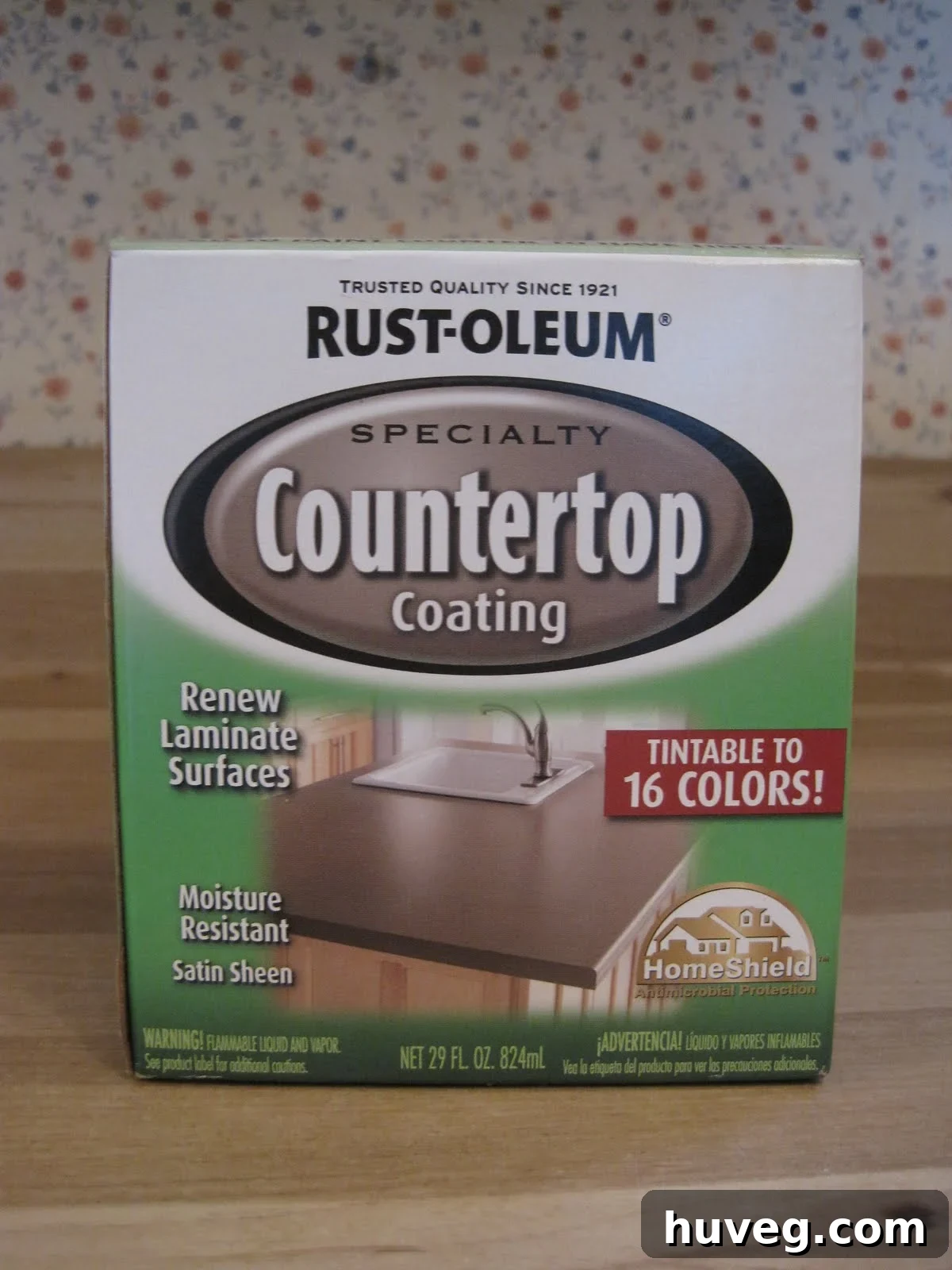
The alternative, and my chosen weapon for this project, is Rust-Oleum’s simple $20 can of Countertop Coating. This product is specifically formulated to bond well with laminate, and my kitchen experience had already proven its effectiveness. Given its strong adhesion properties on laminate, I hypothesized it might perform similarly on my cleaned, albeit old and unattractive, vinyl/linoleum bathroom floor. For just twenty dollars, it was a low-risk experiment that promised a high-impact return. I opted for a muddier, darker color than the gray I used in the kitchen, hoping for a more forgiving and aesthetically pleasing shade while I save up for a full floor replacement.
Prepping for Success: The Essential Steps Before You Paint Floors
Let’s be honest: bathrooms, while serving a crucial purpose for personal hygiene, are notoriously challenging to keep pristine. The thought of scrubbing behind an ancient toilet, especially one slated for eventual replacement during a future renovation, isn’t exactly appealing. However, thorough preparation is paramount for any successful paint job, particularly when dealing with high-traffic areas like floors. Proper cleaning ensures optimal adhesion, making all the difference in the longevity and appearance of your painted surface.
Step 1: Deep Cleaning and Degreasing for Maximum Adhesion
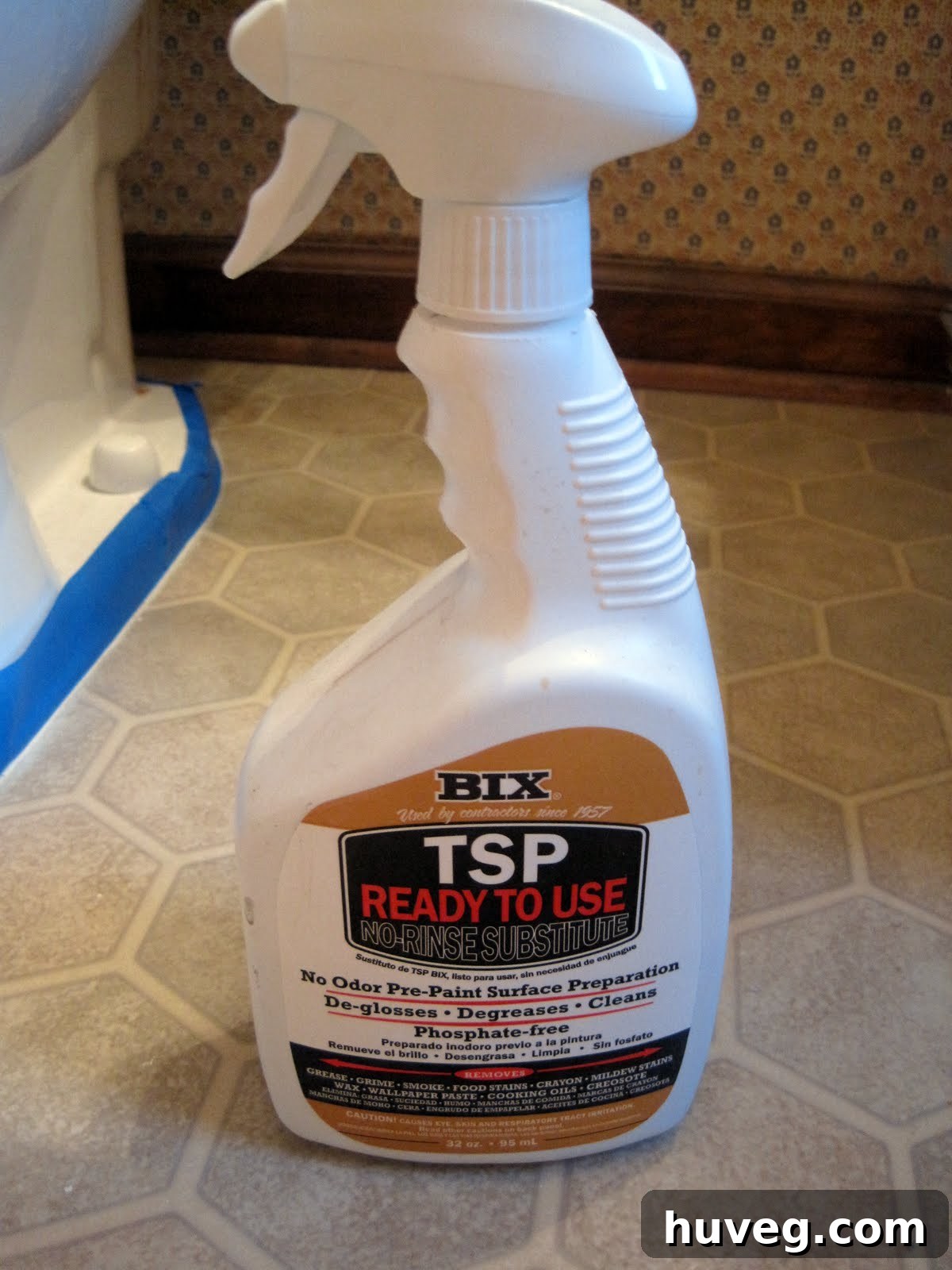
For paint to bond effectively, the surface needs to be meticulously clean and slightly de-glossed, much like gum sticking to hot asphalt. After a general scrub-down to remove loose dirt and grime, I followed up with a crucial step: a thorough cleaning using a TSP substitute. This powerful cleaner is a DIYer’s best friend because it effectively degreases and de-glosses surfaces, creating the ideal canvas for paint adhesion. The added benefit? It typically doesn’t require pre-rinsing, saving valuable time and effort before you even open the paint can.
Step 2: Precision Taping to Protect Adjacent Surfaces
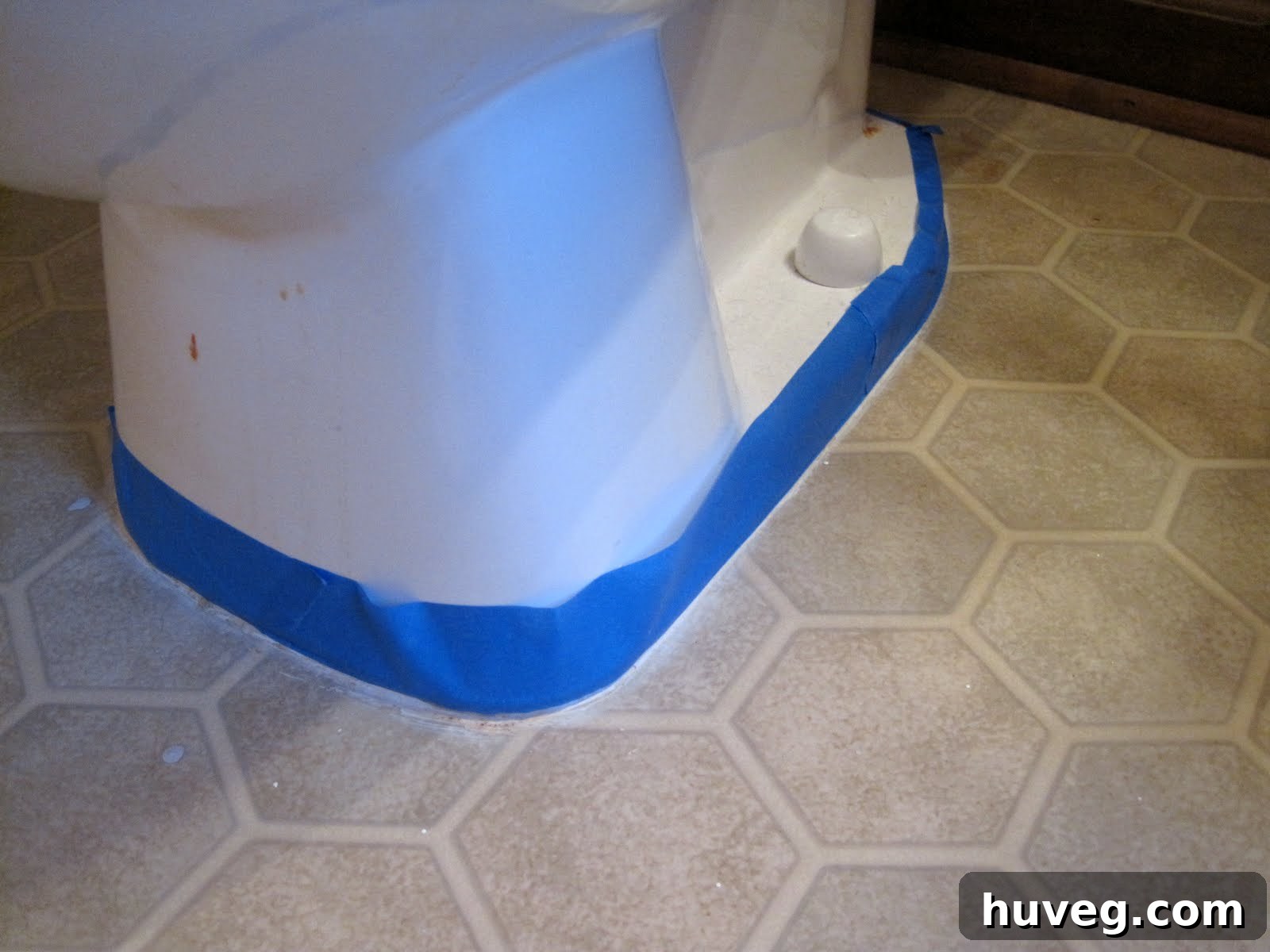
Once the floor was clean and dry, the next task was applying painter’s tape to areas I wanted to protect from paint splatter. This included the transition strip leading to the bedroom carpet and the base of the toilet. Even though these elements are likely to be replaced in the future, maintaining a tidy appearance during the interim phase was important. Careful taping ensures crisp lines and a professional finish, which greatly enhances the overall look of the newly painted floor.
Safety First: Gearing Up for Paint Application
Before diving into the actual painting, safety is paramount. While I often forgo extensive safety gear for standard low-VOC latex paints (like my usual BEHR go-to), this particular Rust-Oleum product is known for its strong fumes. This isn’t a paint to take lightly. Proper ventilation and personal protective equipment are non-negotiable.
Ventilation and Respiratory Protection
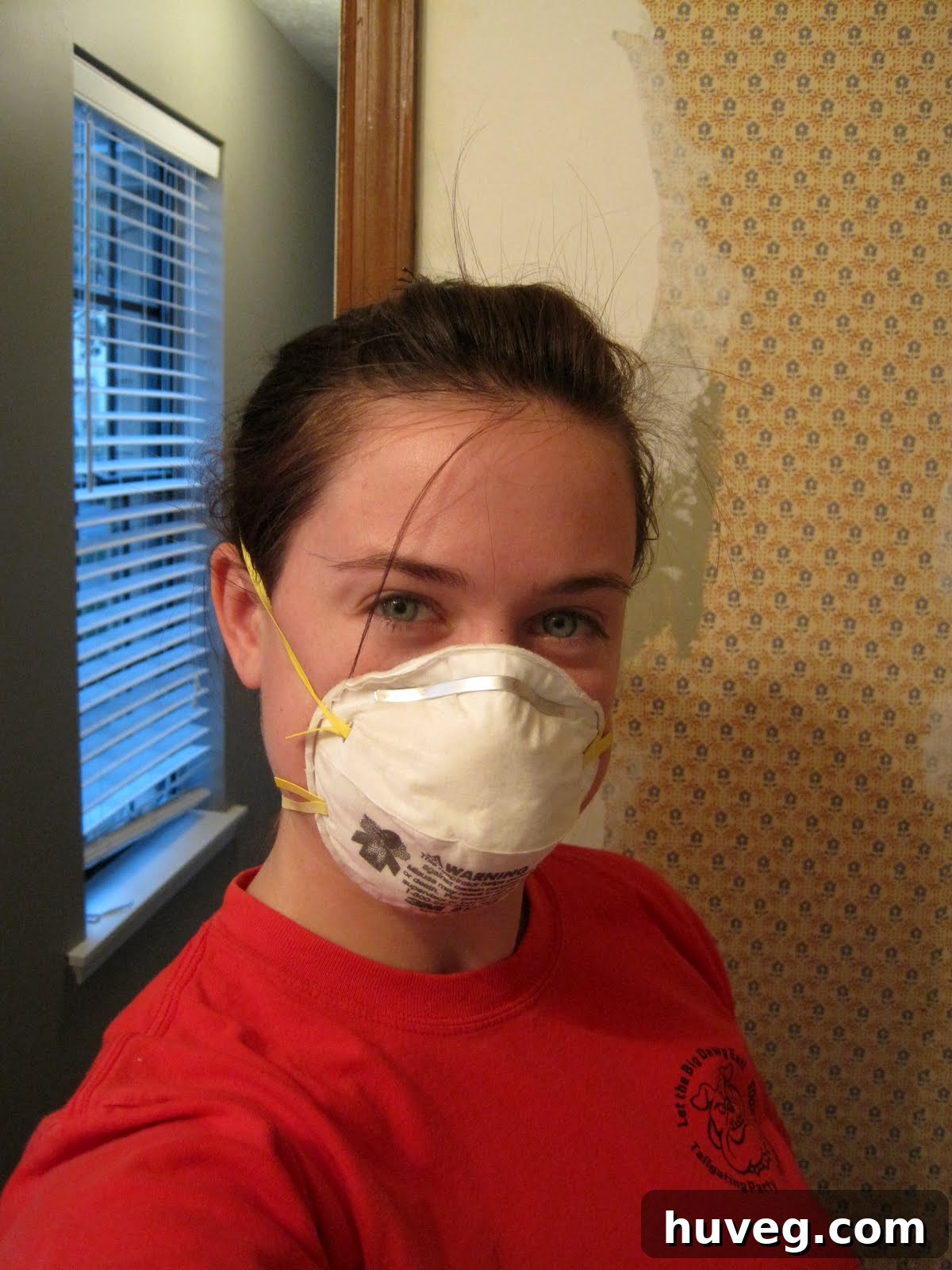
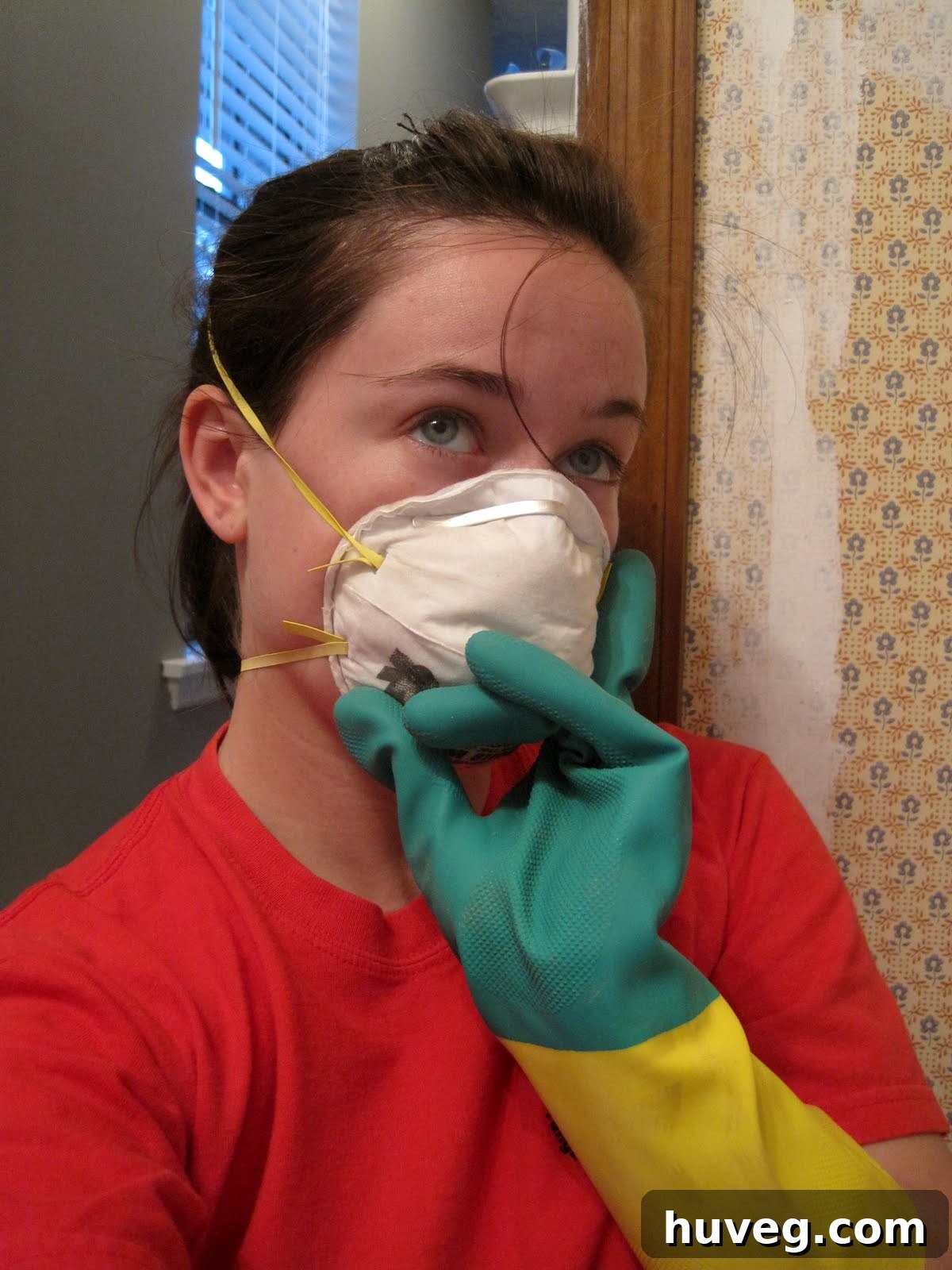
I ensured the bathroom window was open wide to maximize airflow. For respiratory protection, a simple breathing mask was my initial choice, but if I were to do this project again, I would definitely opt for something more robust, such as a charcoal-filtered respirator mask. The fumes from this paint are incredibly strong and can quickly become overwhelming, so protecting your lungs is vital. Always prioritize safety when working with any strong chemicals.
Hand Protection
Gloves are also essential to protect your skin. This paint is tough to remove once it dries, so preventing skin contact from the start will save you a lot of hassle.
The Painting Process: Achieving a Smooth, Durable Finish
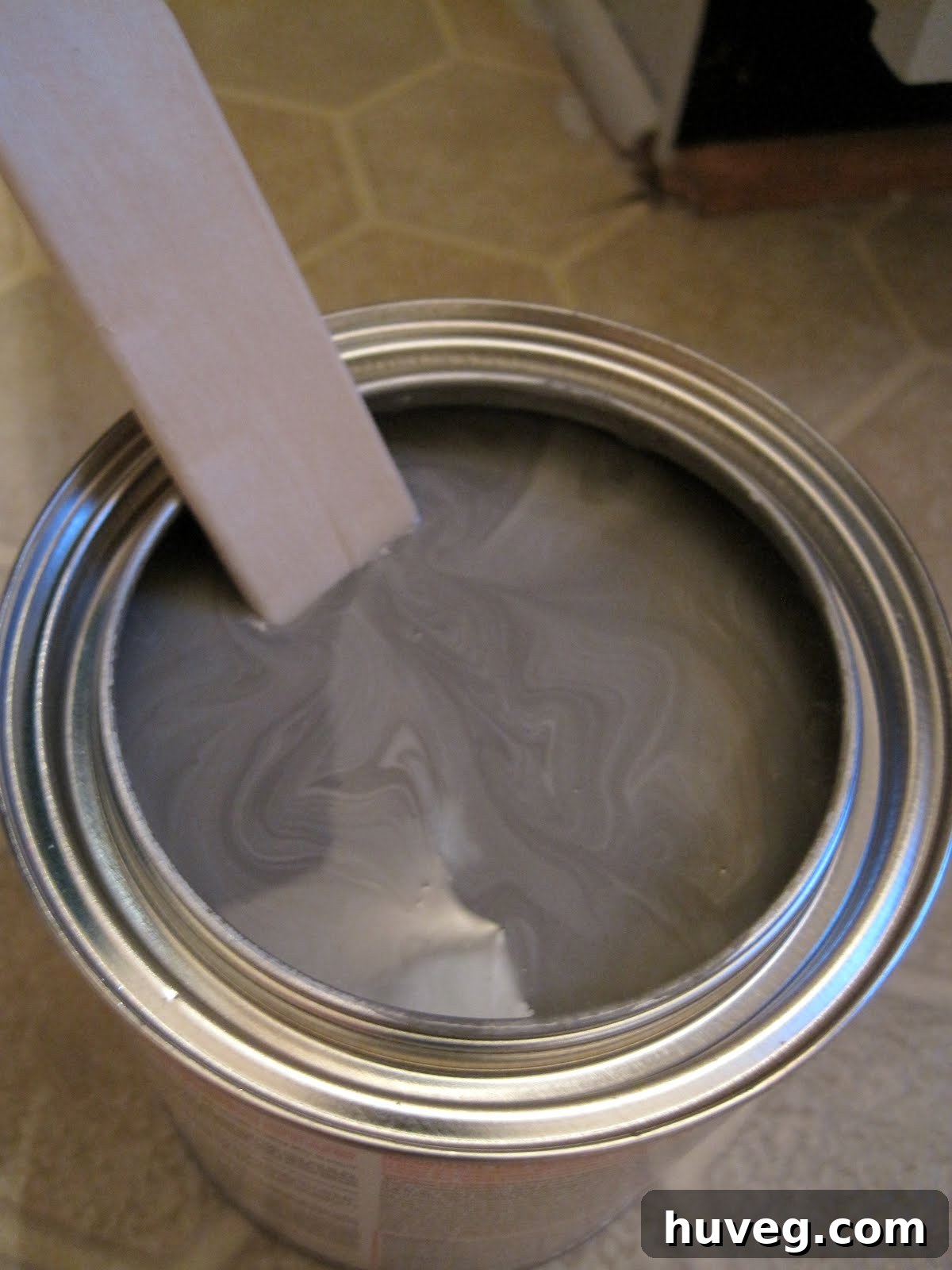
With safety gear donned and the room prepped, it was time for the main event: applying the paint. This particular Rust-Oleum coating tends to separate in the can, so thorough stirring is a critical first step. Spend a few minutes ensuring a completely smooth, consistent color; this prevents streaks and ensures an even finish, ultimately saving you from frustrating re-application later.
Application Techniques for Flawless Coverage
Whether you opt for a foam brush for cutting in along edges and corners, or a foam roller for larger areas (I used both), the goal is a smooth, thick application. The aim is to achieve full coverage in a single coat if possible, avoiding the need for a second application and the extended waiting period before the bathroom can be used again. Plan your painting strategy carefully, always starting in the corner furthest from the door and working your way out. This prevents you from painting yourself into a corner and ensures a continuous, even finish.
While my bathroom is small enough that I didn’t face the serious risk of trapping myself, it’s wise to take your time planning your brush strokes. Crucially, gather all necessary toiletries and items you might need from the bathroom before you even dip the brush into the can. Trust me, trying to retrieve your toothbrush or contact solution when the floor is wet paint requires some acrobatic maneuvers you’d rather avoid!
The Waiting Game: Drying, Ventilation, and Temporary Adjustments
Once the final section of the floor was coated, I double-checked that the window was open wide and closed the bathroom door. Since the bathroom is adjacent to our primary bedroom, ensuring proper ventilation was essential to allow the paint to dry and cure without the strong fumes impacting our sleep. The open windows efficiently aired out the space, and we slept normally, free from any noxious odors. The trade-off was a temporary relocation of our showering and nightly routines to the guest bathroom for a few days. My partner, Scott, quickly discovered his strong preference for our primary bathroom’s oversized showerhead over the guest room’s low-flow alternative – a small sacrifice for a significantly improved floor.
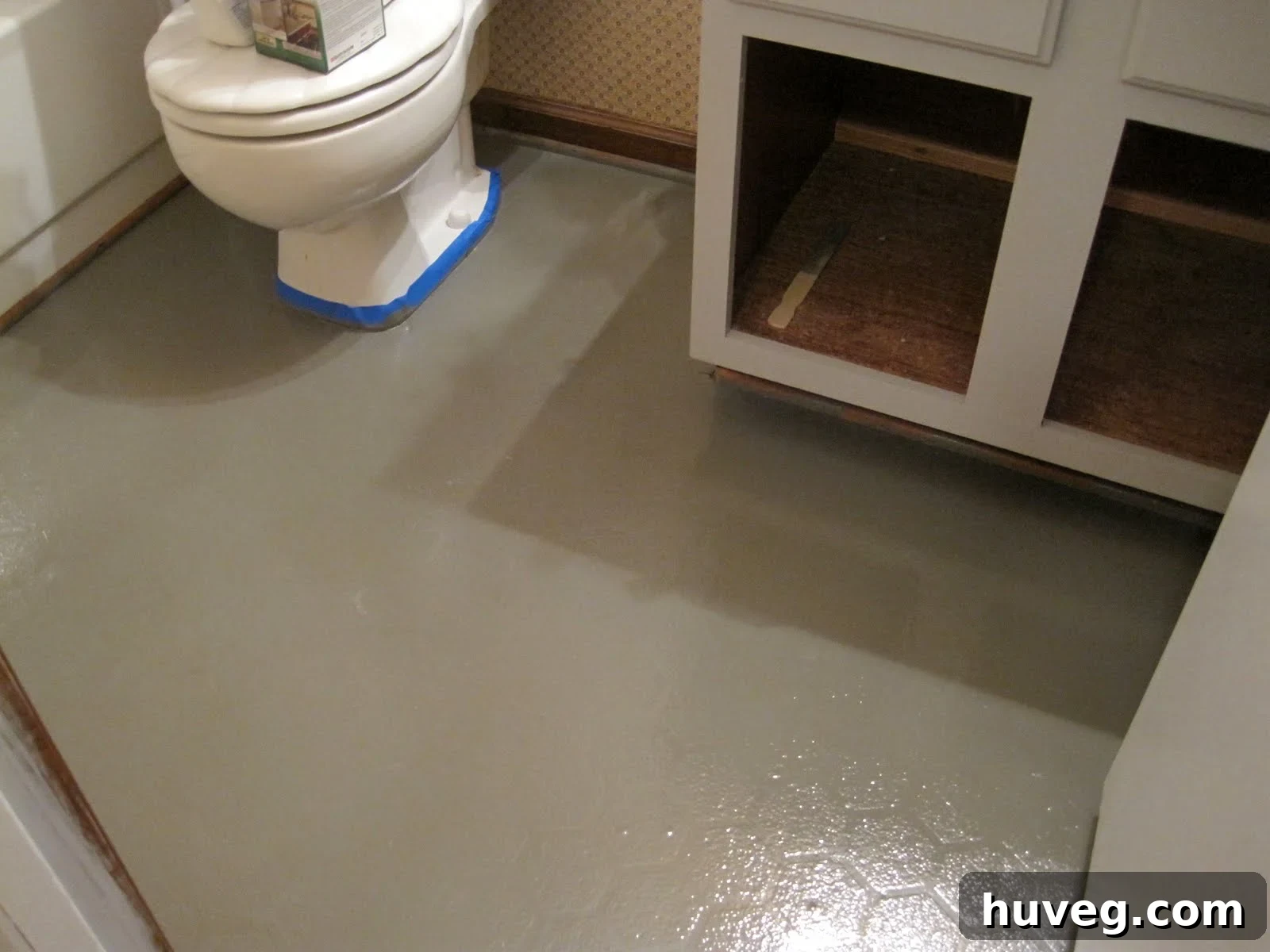
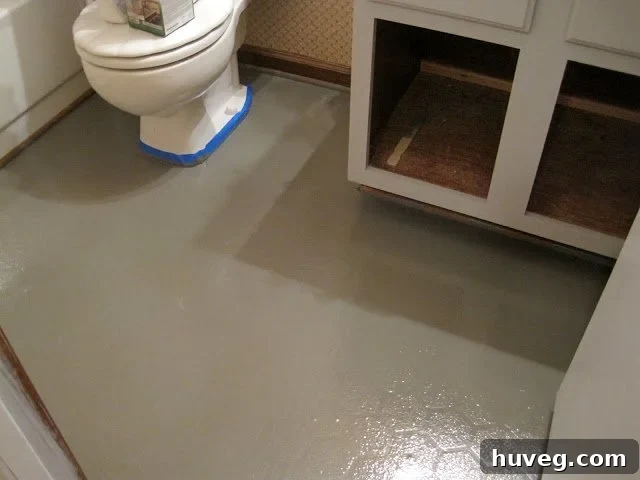
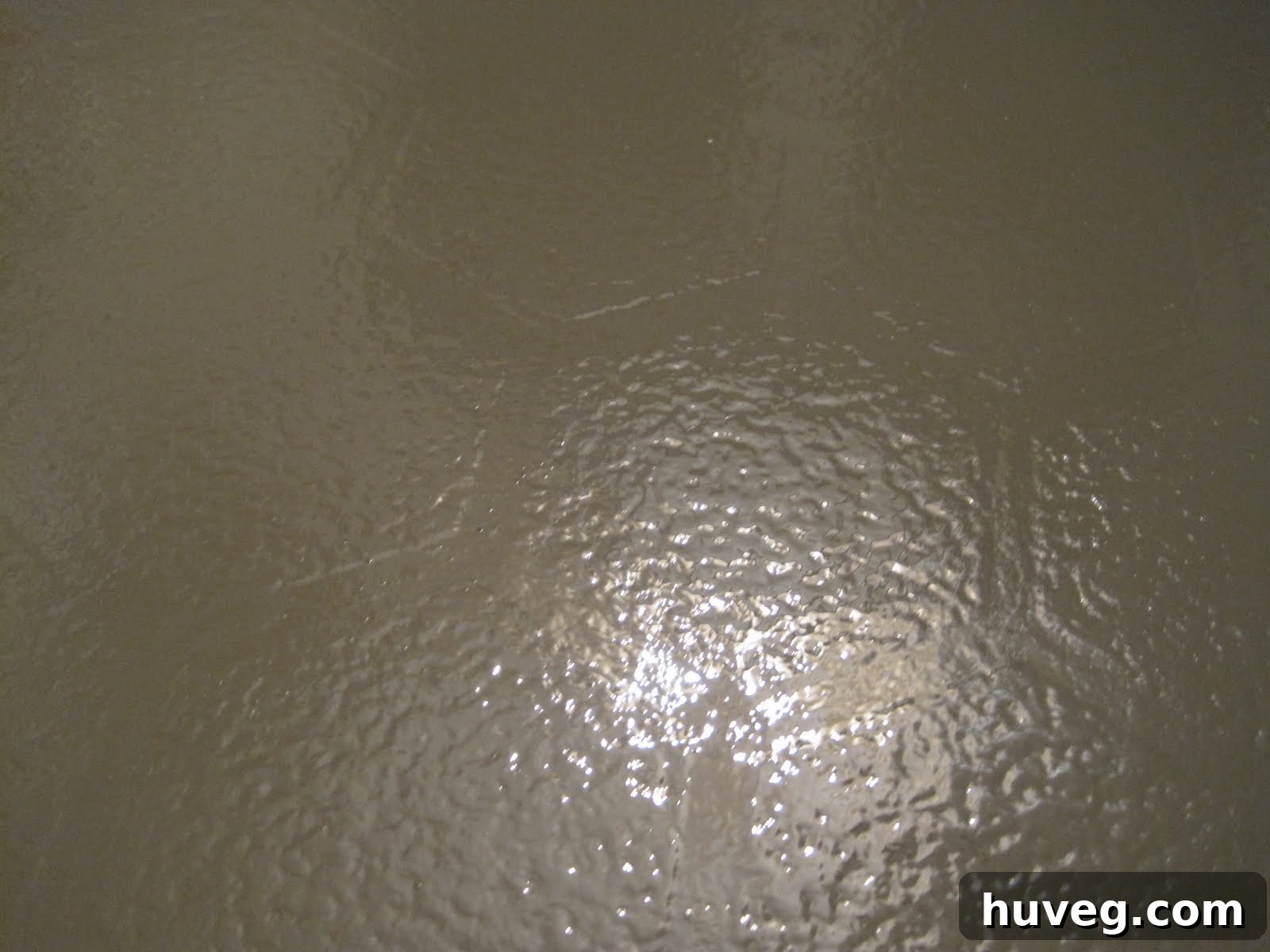
In my opinion, three days of using the guest bathroom was a small price to pay for such a dramatic transformation. Although the original honeycomb texture of the linoleum is still subtly visible beneath the new paint (as seen in the photo above), I’m already contemplating adding a decorative element, like chevron stripes or a fun stencil print, to further personalize the space. Even wet, the initial results were incredibly promising.
I took these initial photos at night, so the full sheen and final look aren’t perfectly captured. However, for a mere $20, this product has quickly become a favorite in my DIY arsenal. If only its fumes weren’t so potent, I’d be tempted to use it for countless other projects!
The Long-Term Test: How Did the Painted Floors Hold Up?
Many months after this initial project, I revisited the bathroom to assess the durability of the painted floor, comparing its performance to the kitchen countertop paint job. Did this unconventional approach truly stand the test of time in a high-moisture, high-traffic environment? To see a comprehensive update on how both the painted floors and countertops fared over months of use, including signs of wear, maintenance tips, and my final verdict on this budget-friendly hack, be sure to click here.
Is Painting Your Vinyl or Linoleum Floor Worth It? Final Thoughts
Ultimately, painting your vinyl or linoleum bathroom floor with a durable countertop coating can be an incredibly effective and budget-friendly solution for tackling outdated or unsightly flooring. It offers an immediate visual upgrade that can dramatically improve the aesthetics of your bathroom without the expense and disruption of a full renovation. While the strong fumes necessitate diligent safety precautions and ventilation during application, the transformation achieved for minimal cost makes it a compelling DIY project.
This project served as a perfect stopgap measure, providing a clean, modern look that I can live with comfortably while I save and plan for my dream bathroom renovation. The ability to transform a space so significantly with just a can of paint reinforces the power of DIY and creative problem-solving. If you’re tired of staring at your “ugly duckling” floors, don’t shy away from this unconventional yet rewarding approach.
Discover More DIY Home Transformations