Transform Your Favorite Quotes with Watercolor Borders

Happy Monday, fellow DIY enthusiasts! Today, I’m excited to share a wonderfully simple yet impactful art project that adds a personalized touch to any space: creating stunning DIY watercolor borders using painter’s tape. As I finalize some updates around my laundry room and kitchen, I find myself drawn to projects that offer creative expression without demanding too much time or advanced skill. This particular endeavor fits the bill perfectly, allowing anyone, from seasoned artists to complete beginners, to craft beautiful, custom artwork.
Do you remember the #craftnado I mentioned previously? It’s part of my ongoing effort to embrace a small, creative DIY project each month. For March, I decided to experiment with watercolor art, specifically focusing on how to frame some of my favorite quotes with vibrant borders. The results were so captivating that I actually struggled to decide which quote was worthy of such a beautiful treatment! Does that ever happen to you – falling in love with the technique more than the intended content? While I continue to ponder the perfect sentiment for my framed art, I’m thrilled to share the step-by-step process for creating these exquisite watercolor borders. This way, you can easily complete one of your own before the end of spring, or truly, at any time of year with a color scheme that complements your decor.
The Magic of Watercolor and the Simplicity of Tape
Watercolor is a medium known for its ethereal beauty, soft transitions, and vibrant potential. It’s incredibly forgiving, making it ideal for experimentation. Combining this artistic medium with the precise utility of painter’s tape opens up a world of possibilities, allowing you to create sharp, clean lines that might otherwise be challenging to achieve freehand. I consider myself merely a dabbler when it comes to watercolor, so this project was a fantastic opportunity to explore new techniques, specifically how painter’s tape can elevate even the simplest watercolor applications into sophisticated art pieces.
Why Choose a DIY Watercolor Border?
Beyond being an enjoyable craft, creating your own watercolor border art offers numerous benefits:
- Personalization: Craft unique pieces that reflect your style, mood, or favorite sayings.
- Affordability: Most materials are inexpensive and readily available.
- Versatility: Perfect for framing quotes, small illustrations, abstract patterns, or even as decorative stationery.
- Skill Development: A great way for beginners to get comfortable with watercolors and masking techniques.
- Thoughtful Gifts: Handmade art makes for truly special and memorable presents.
- Home Decor Enhancement: Add a pop of color and artistic flair to any room.
Gather Your Creative Arsenal: Materials You’ll Need
Before diving into the creative process, ensure you have all your supplies ready. Having everything at hand will make the experience smoother and more enjoyable.
- Watercolor Paper: This is crucial. Standard printer paper will buckle and warp with water. Opt for a good quality watercolor pad, ideally 140 lb (300 gsm) or heavier, to prevent warping and allow for better absorption. I typically use an artist’s watercolor pad for reliable results.
- Painter’s Tape: This is the secret weapon! High-quality painter’s tape (like FrogTape or similar brands designed for clean lines) is essential to prevent paint bleed. The specific formulation of these tapes creates a micro-barrier that seals against water-based paints.
- Watercolor Paints: Palettes are generally inexpensive and can be found at any craft store or even major retailers like Walmart. Don’t feel pressured to buy professional-grade paints, especially if you’re just starting. I’ve even used a simple, affordable set with great success.
- Watercolor Brushes: While your paint set might come with a small brush, investing in one or two better-quality brushes will significantly improve your painting experience. A medium round brush and a flat wash brush are excellent starting points.
- Water: Two containers of water are ideal: one for rinsing brushes and one for clean water to mix with paints.
- Paper Towels or a Rag: For blotting brushes, cleaning up spills, and controlling water on your paper.
- Ruler and Pencil: For precise measurements and light guidelines.
Step-by-Step Guide: Crafting Your Perfect Watercolor Border
This project is all about precision in preparation and freedom in application. Follow these steps for a beautiful outcome:
Step 1: Preparing Your Canvas and Planning the Border
Start by laying your watercolor paper on a clean, flat, and stable surface. If you’re working on a larger piece or prone to paper warping, you can lightly tape the edges of your watercolor paper to your work surface using artist’s tape or more painter’s tape. This helps keep the paper flat as it dries.
Next, it’s time to define the inner “white space” that your border will frame. You can eyeball it for a more organic look, but for crisp, straight lines, I highly recommend using a ruler and a light pencil. Gently mark the dimensions of your desired inner rectangle or square. Remember, these pencil lines will be covered by tape, so they don’t need to be perfectly erased later, but keeping them light prevents indentations on the paper.
Step 2: Mastering the Tape Application for Crisp Lines
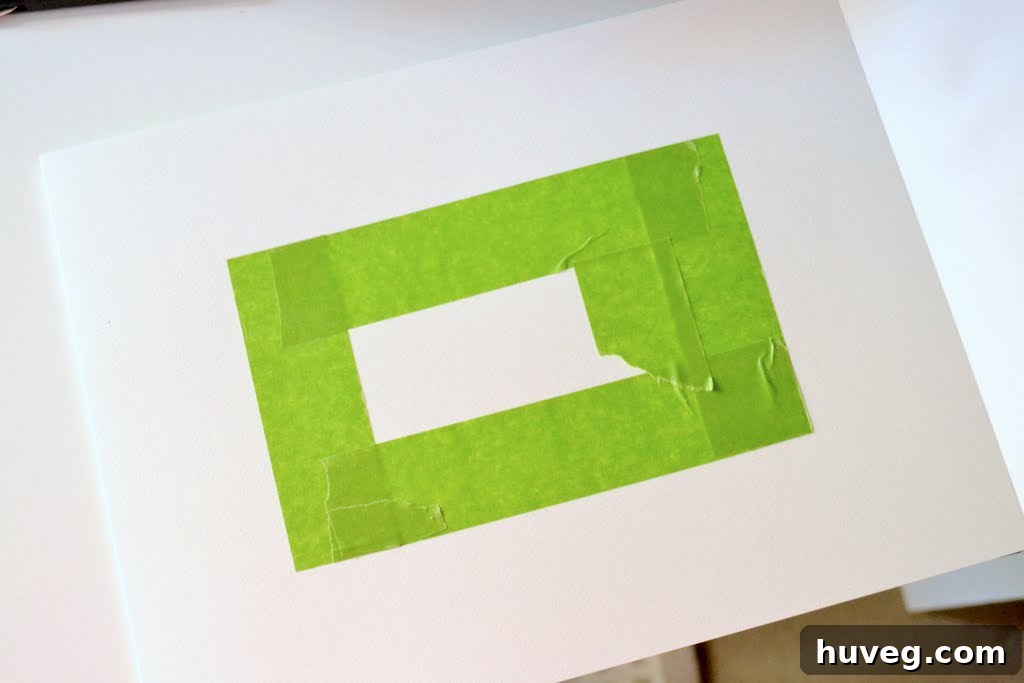
This is where the magic of painter’s tape truly shines. Carefully apply strips of painter’s tape along the pencil lines, defining the outer edge of your desired white space. The tape acts as a barrier, protecting the paper underneath from paint.
For each corner, you have a couple of options to ensure a clean, sharp angle:
- Fold at a 90-degree Angle: Apply one strip of tape, then apply the perpendicular strip, slightly overlapping the first. Carefully fold the top layer of tape at a perfect 90-degree angle, creasing it firmly. You can trim any excess if needed.
- Cut to Square with Scissors: Apply your first strip of tape. Then, apply the second strip, overlapping the first at the corner. Using sharp scissors or a craft knife (and a cutting mat underneath!), carefully cut through both layers of tape at a perfect 45-degree angle from the inner corner outwards. Remove the small overlapping triangular piece to reveal a clean 90-degree corner.
Either method works beautifully, as long as the resulting edge is clean and precise. The most critical step here is to press down very firmly along every edge of the tape that will be touching the watercolor paint. This creates a strong seal, preventing the paint from seeping underneath the tape and preserving that crisp, unpainted line. Use your fingernail, a credit card, or a bone folder to really burnish the edges down.
Step 3: Bringing Color to Life – The Watercolor Process
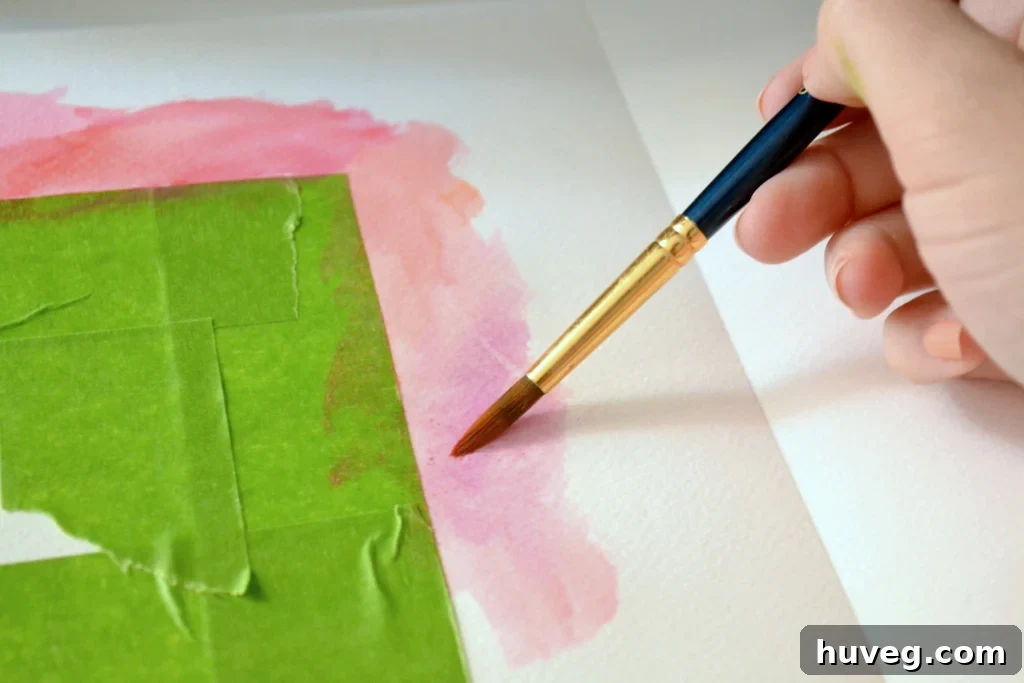
Once your “no-paint” area is perfectly taped off, it’s time for the fun part: applying the watercolors! To achieve rich, saturated colors, I recommend working in small sections. Dip your brush in clean water, then pick up some pigment from your watercolor palette. Don’t be shy with the paint; the goal for this border is often vibrant intensity.
Experiment with different application techniques:
- Wet-on-Wet: Apply clean water to a small section of your paper first, then drop in your chosen colors. The colors will spread and blend softly, creating beautiful, organic transitions.
- Wet-on-Dry: Apply paint directly to dry paper for more defined lines and intense color.
I love using a variety of colors in my borders – pink, red, orange, purple, and peach are fantastic for a spring-like feel. Don’t be afraid to let colors blend naturally where they meet. The beauty of watercolor is often in these spontaneous interactions. Layering colors can also add depth; just make sure the first layer is mostly dry before adding another on top. Remember to use a separate container for rinsing your brush to keep your painting water clean.
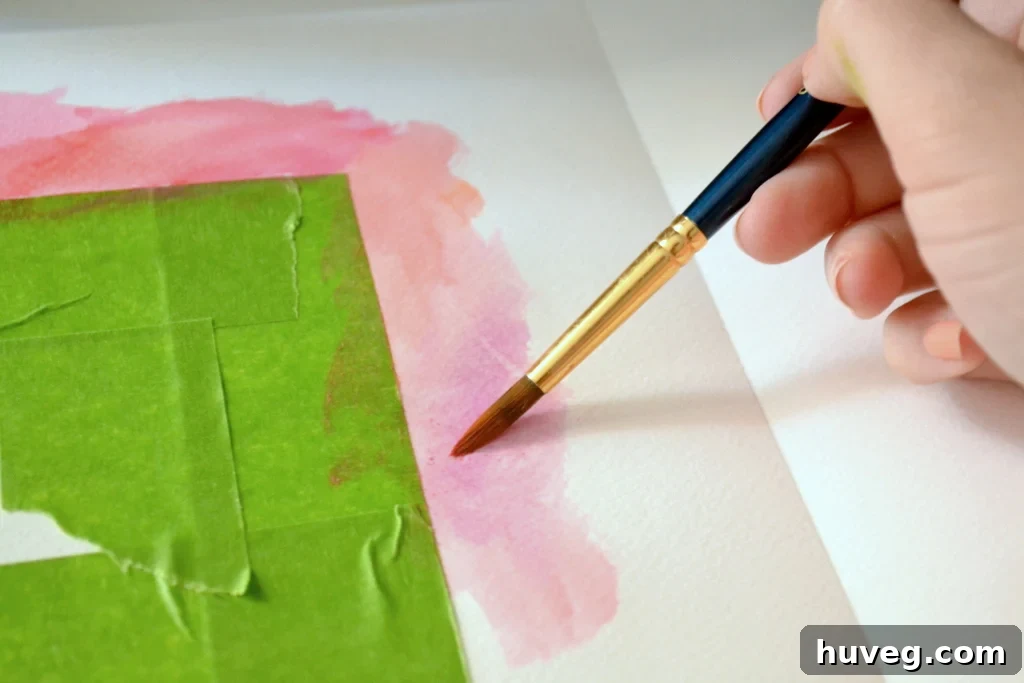
Step 4: The Waiting Game (Drying)
Patience is a virtue, especially in watercolor. After you’ve applied all your desired colors, it’s crucial to let the paint dry completely. I admit, as I watched the colors settle, I began to question whether this technique would truly work. Since watercolor’s nature is to absorb into the paper, I worried it might simply soak under the tape, obliterating that crisp line I was aiming for. However, I recalled a demonstration I’d seen about how specific painter’s tape reacts directly against water, which was the main reason I even tried this in the first place. This reassurance reminded me to trust the process. Drying time can vary depending on the amount of water used and humidity, but generally, give it at least 30 minutes to an hour, or until the paper feels dry to the touch and the paint no longer looks shiny.
Step 5: The Grand Reveal – Peeling Back the Tape
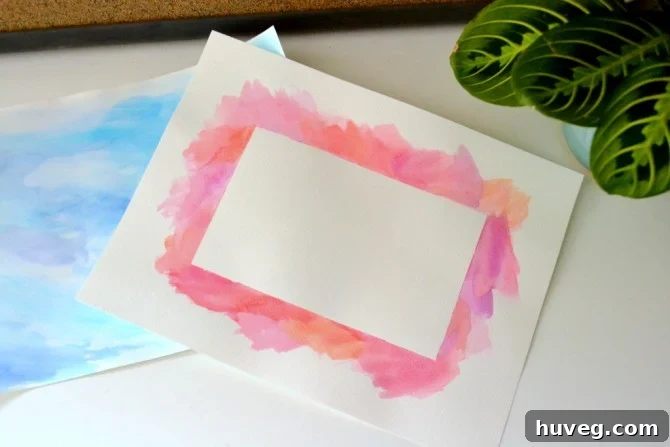
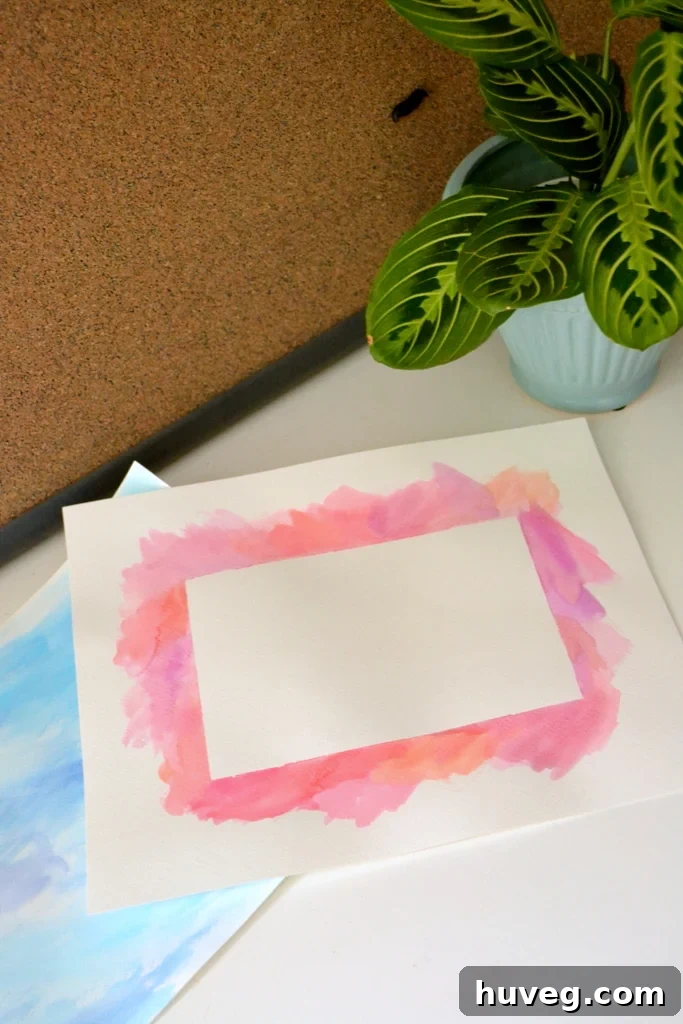
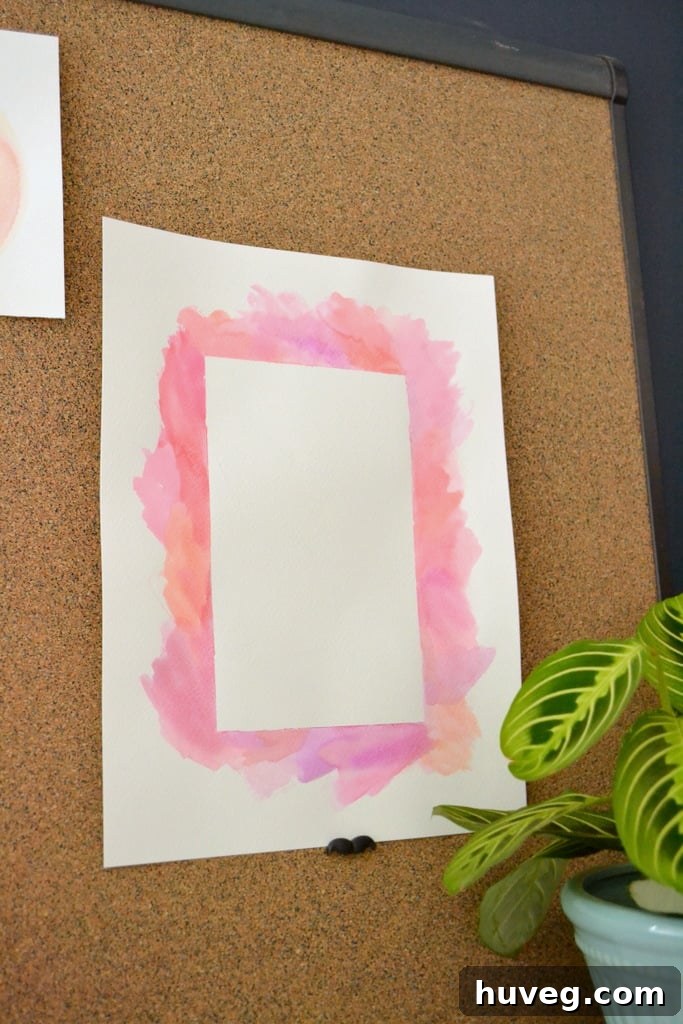
This is arguably the most satisfying part of the entire process! Once your watercolor is completely dry, it’s time for the big reveal. Carefully and slowly peel back the painter’s tape. Pull the tape at a shallow angle, away from the painted area. This helps prevent any potential tearing of the paper or lifting of paint. What you should be left with is a wonderfully crisp, clean unpainted border, perfectly contrasting with your vibrant watercolor creation!
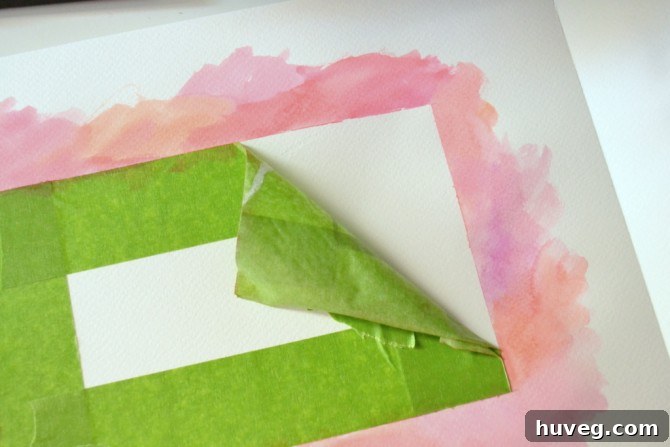
Sweet! There’s nothing quite like the satisfaction of seeing an idea materialize exactly as envisioned. The sharp contrast between the painted border and the pristine white space is truly gratifying.
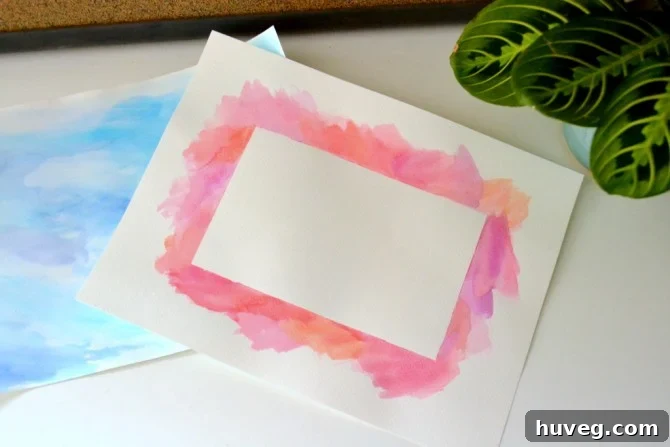
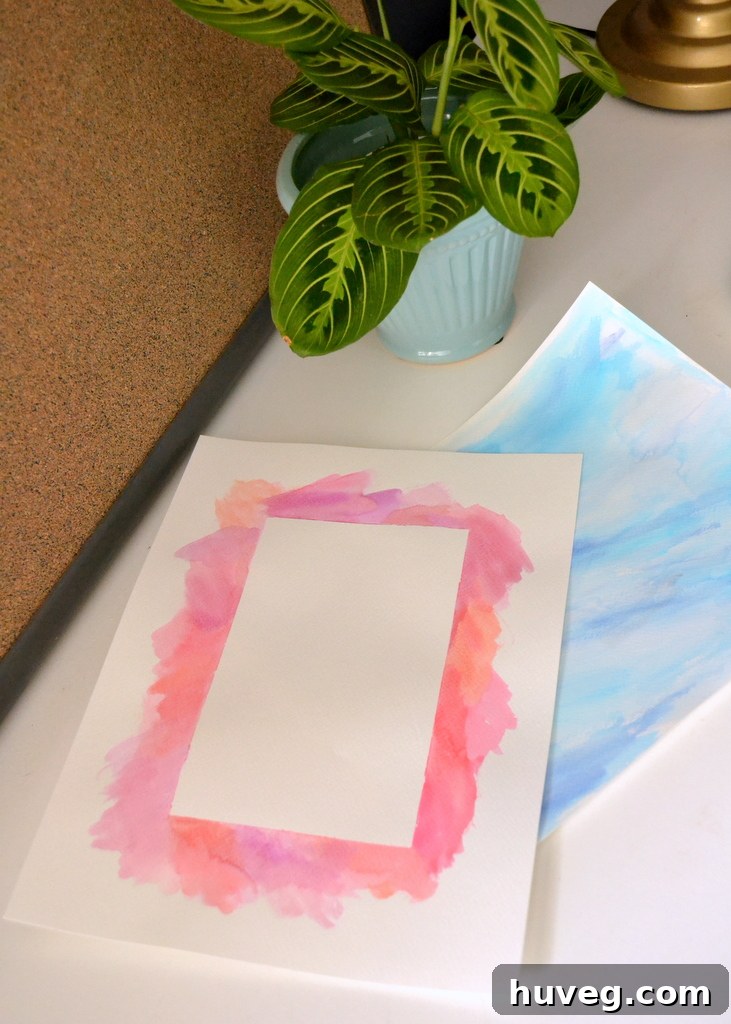
Tips for Success & Taking Your Art Further
As you can see from my process, I often create a couple of different watercolored pages at the same time. This allows for experimentation and gives me options. One of these, for instance, was intended for a sponsored Pinterest project coming later this month, which I’ll be excited to share once the images are ready.
Here are a few additional tips to help you achieve the best results:
- Practice Makes Perfect: If you’re new to watercolor, do a few small practice swatches on scrap paper to get a feel for the paint consistency and how colors blend.
- Don’t Overwork It: Watercolor thrives on spontaneity. Too much brushing can disturb the paper fibers and make colors muddy.
- Control Your Water: A common beginner mistake is using too much or too little water. Experiment to find the right balance for the effect you want.
- Quality Tape Matters: While basic masking tape might seem similar, painter’s tape is specifically designed for clean removal and preventing bleed. Don’t skimp here!
- Embrace Imperfections: Even professional artists have “happy accidents.” A slight bleed or unexpected blend can add character to your piece. If a small amount of paint does seep under the tape, a very sharp craft knife can sometimes be used to carefully scratch off tiny bits of dried paint, or a white gel pen can cover minor imperfections.
What to Put Inside Your Beautiful Border?
Now, the only remaining challenge for me is to select a quote truly worthy of its stunning new frame! This border technique is incredibly versatile for various artistic expressions:
- Inspirational Quote Art: Hand-letter your favorite quotes directly onto the white space, use stencils for a polished look, or print text and adhere it. The border instantly elevates simple text into a framed work of art.
- Minimalist Illustration: A delicate line drawing or a simple sketch within the border can create a focal point.
- Abstract Center: Fill the inner space with a contrasting abstract watercolor wash or even another pattern.
- Personalized Gifts: Use a child’s drawing, a family photo, or a personalized message for a heartfelt present.
- Seasonal Decor: Change your quotes or interior designs with the seasons – a festive message for winter, a blooming flower for spring.
Unleash Your Inner Artist
This DIY watercolor border project is a testament to how simple techniques can yield incredibly beautiful and professional-looking results. It’s an accessible way to add custom art to your home, create thoughtful gifts, or simply enjoy a relaxing creative session. The crisp lines and vibrant colors will undoubtedly bring a fresh, artistic touch wherever you choose to display your finished piece.
So, gather your supplies, set aside some creative time, and prepare to be amazed by what you can achieve with a little paint and tape. I’d love to hear about your experiences! What is your absolute favorite quote? Perhaps I can “steal” one from you to finally complete my own bordered masterpiece. Happy crafting!