Craft Your Own Floating Bookshelf With Free Blueprints

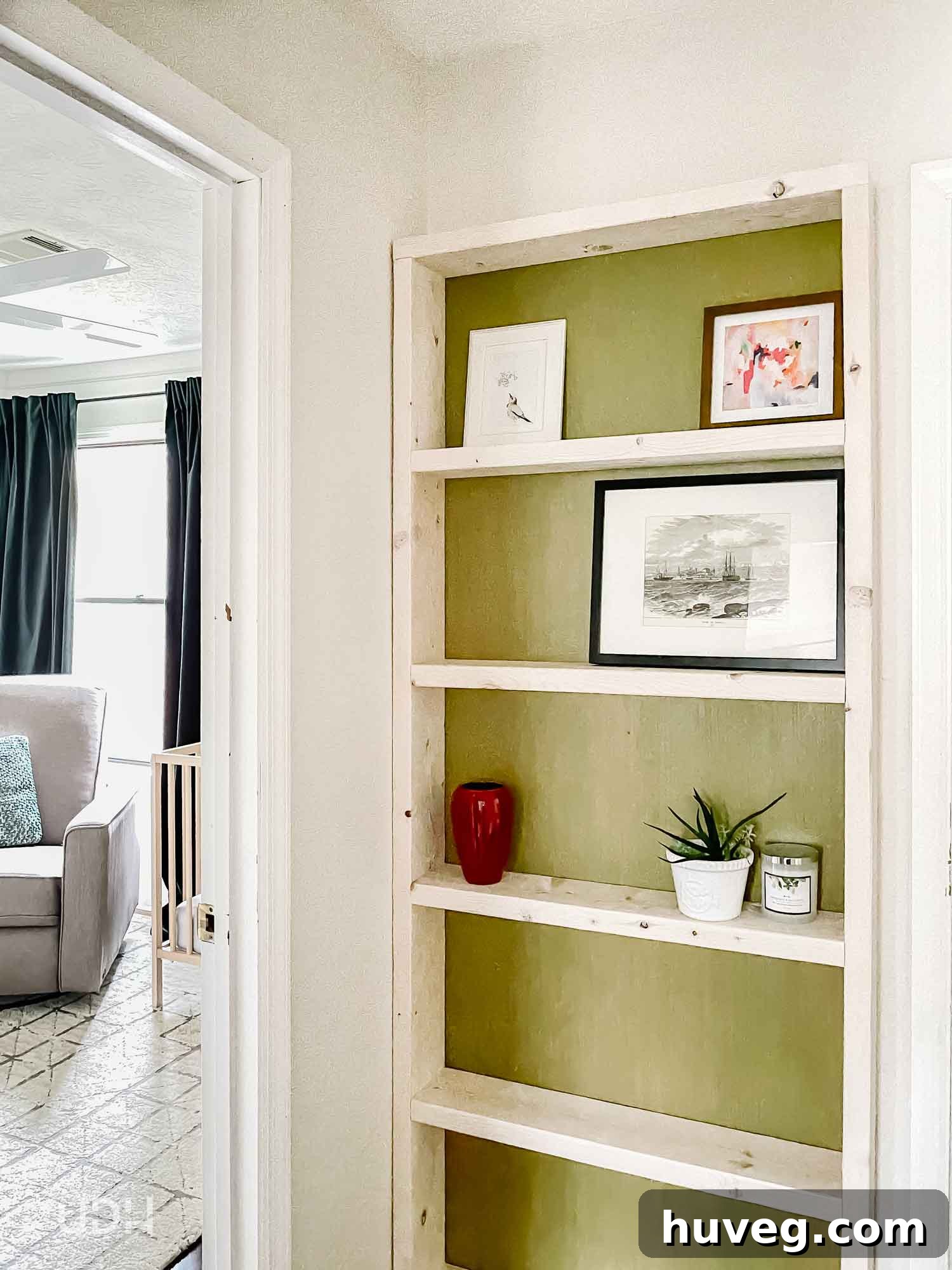
Transforming your home with practical and stylish storage doesn’t have to be complicated or expensive. This comprehensive guide will walk you through building a stunning DIY floating bookcase, perfect for adding much-needed organization and visual appeal to narrow hallways, forgotten corners, or any space craving a functional facelift. Even if you’re a complete beginner and your drill is still in its box, this project is designed for success, providing ample storage without sacrificing precious floor space.
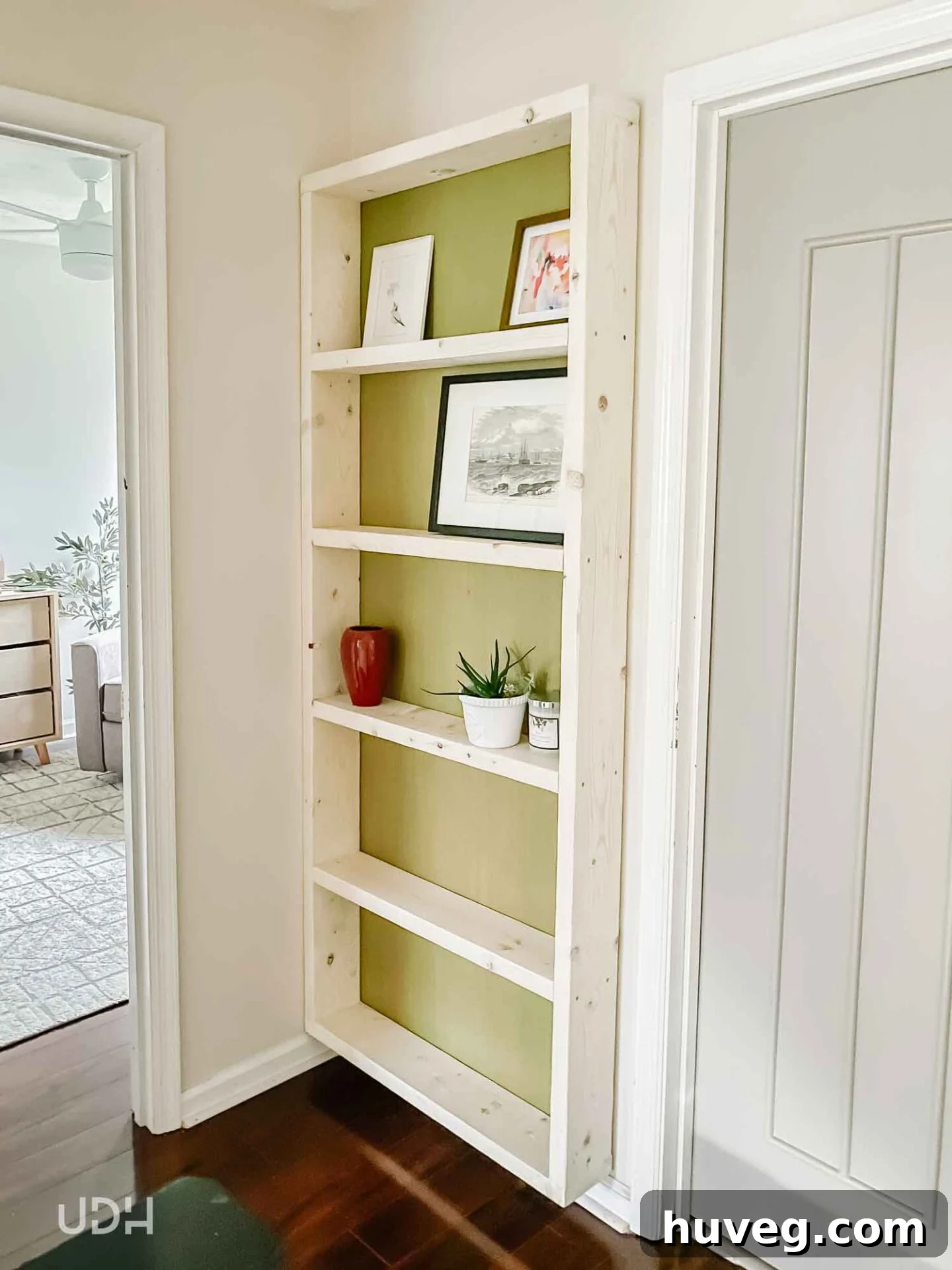
To ensure your building process is as smooth as possible, we’ve created detailed, free plans for this custom floating bookshelf. Below, you’ll find a sneak peek into the construction and wall-mounting process, giving you a solid overview before you even pick up a tool. For those who prefer visual learning, a comprehensive YouTube video tutorial will also be available soon, offering even more in-depth guidance and tips to make your DIY floating bookcase truly exceptional.
Check out the video below:
Help us grow our community of DIY enthusiasts!
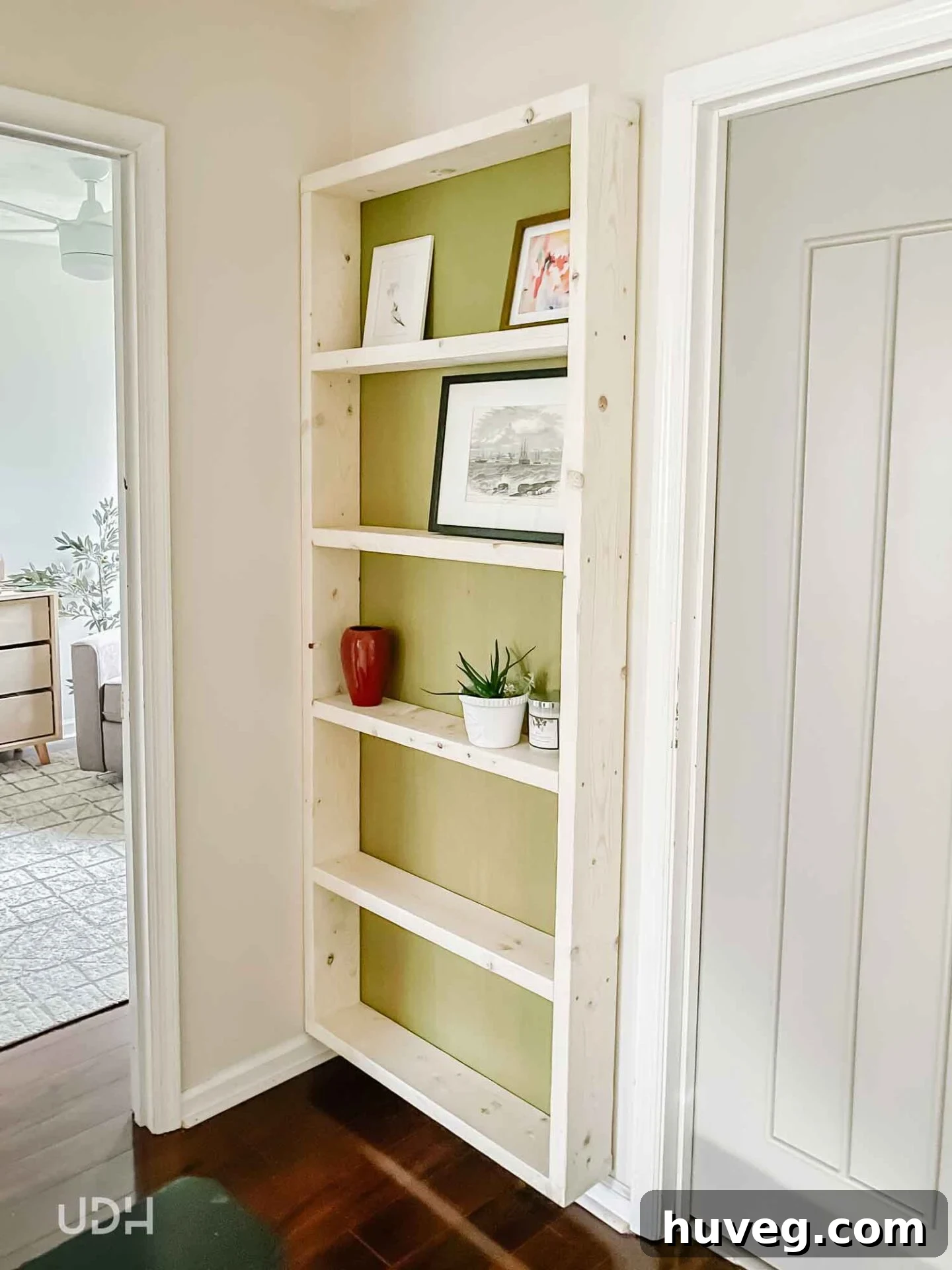
The inspiration for this project stemmed from a common household dilemma: a blank wall craving purpose and a closet overflowing with essentials. Despite what seemed like ample storage for our home’s size, the arrival of our third family member (and a furry friend!) quickly highlighted the premium on every inch of enclosed storage. Babies, as many parents know, come with an incredible amount of “stuff.” One afternoon, I was inspired to utilize the often-overlooked corner nestled between Ellis’s nursery and the guest bathroom. This space had become a catch-all for miscellaneous items – the infamous “things-that-don’t-go-there.” Creating this custom floating bookcase ingeniously solved multiple problems at once. Its narrow profile and off-the-ground design are its most appealing features. Despite its impressive height, it avoids feeling bulky or intrusive in the tight landing area just off the stairs. Instead, it feels like an intentional, built-in element that has always belonged. Plus, with no feet to collect dust, keeping that corner of the floor sparkling clean is a breeze, making it a perfect example of functional and aesthetically pleasing hallway organization.
How to Build Your Own DIY Floating Bookcase: A Step-by-Step Guide
Building this floating bookcase is a rewarding project, especially when you see the transformation it brings to your space. To keep the project budget-friendly without compromising on quality, I opted for readily available and cost-effective pine boards for the main shelving unit. For the backer, I ingeniously utilized leftover thin plywood scraps, demonstrating how you can make the most of materials you already have. The clever design ensures that where each piece of the backer is attached is subtly obscured by the shelves, giving the entire unit the polished look of one solid, continuous piece of wood. This attention to detail elevates the DIY project to a professional finish, making it an excellent choice for anyone looking to enhance their home’s decor.
The free PDF plans provided are meticulously based on the specific measurements used in my home, ensuring a perfect fit for my unique space. It’s crucial to remember that these dimensions were custom-tailored to align perfectly with my existing door trim and float precisely above the baseboards. Therefore, you may need to adjust your measurements to suit the specific dimensions of your own home’s trim and baseboards. Taking accurate measurements and customizing the plans to your space will ensure your DIY floating bookcase looks truly built-in and perfectly integrated into your home’s architecture.
Essential Materials & Tools for Your Floating Bookshelf Project
- 2×6 lumber (for robust shelf construction)
- 1/4″ or 5mm plywood (for the decorative and structural backer)
- Pencil (for precise marking)
- Miter saw (for accurate cross-cuts)
- Orbital sander (for smooth finishes)
- 120 and 220 grit Sandpaper (for preparing surfaces for stain/paint)
- Measuring tape (for all your dimensioning needs)
- Safety gear: Safety glasses, hearing protection, breathing mask (always prioritize safety!)
- Wood stain (to achieve your desired aesthetic)
- Cordless drill (for pre-drilling and driving screws)
- Wood clamps (essential for holding pieces during assembly)
- 3-inch wood screws (for strong, secure joins)
- Wood glue (for added joint strength and longevity)
- Stud finder (critical for safe and secure wall mounting)
- Brad nail gun (for attaching the backer panel cleanly)
- Level (for ensuring straight and plumb installation)
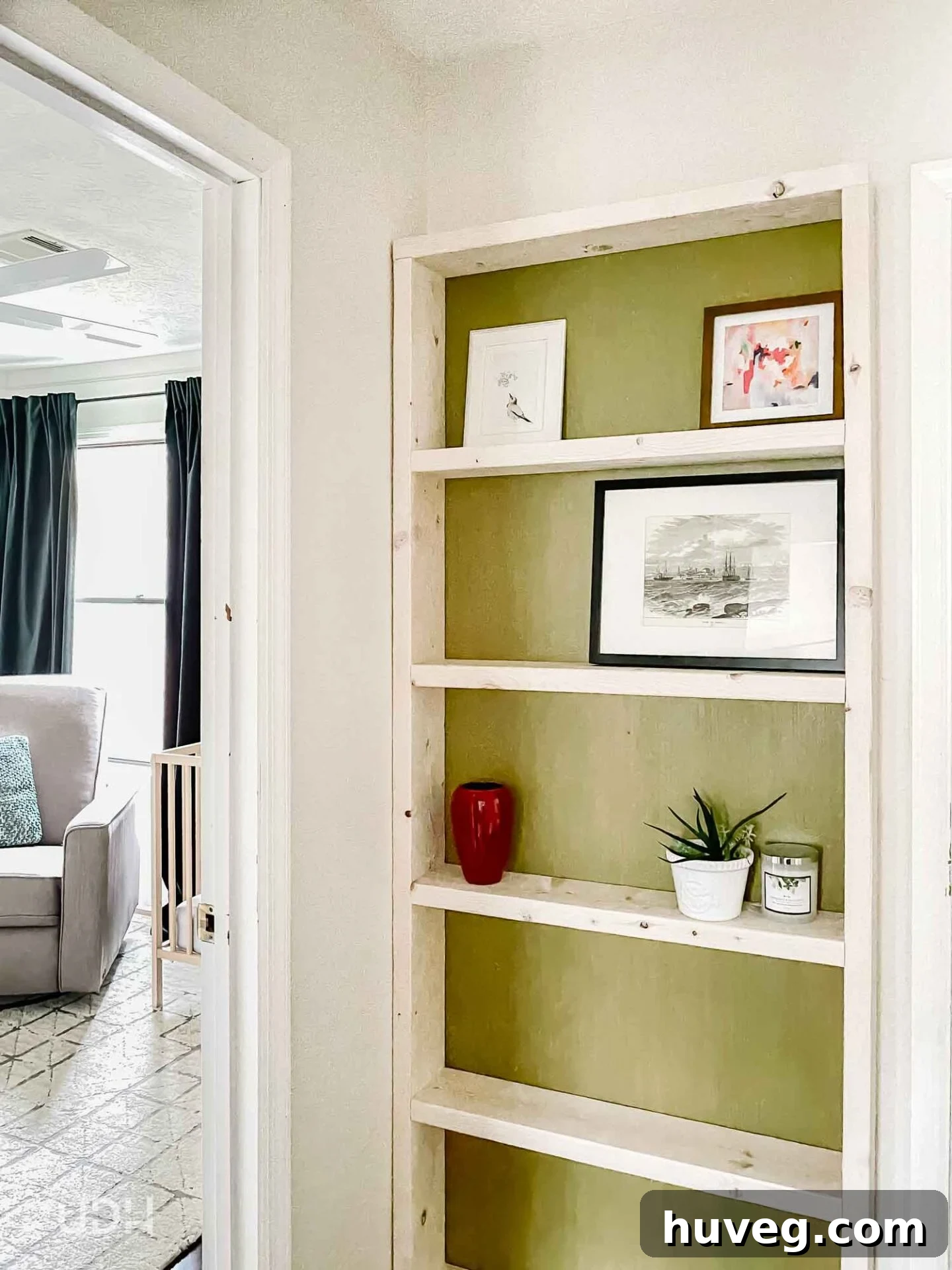
While some woodworking projects might lean heavily on specialized tools like a Kreg Jig for pocket holes, this floating bookcase design proves that you can achieve fantastic results with simpler methods. I purposefully chose not to use pocket holes for this project, partly because my Kreg Jig was tucked away in winter storage (look out for upcoming garage workshop updates!). The main advantage of pocket holes is hiding screw heads, but for a rustic-inspired piece made from pine, where natural knots and wood grain add character, direct screwing is perfectly acceptable. In fact, the subtle visibility of screw heads can sometimes enhance the DIY aesthetic. This approach makes the project incredibly accessible for beginners who might not yet own or know how to use a pocket hole jig, ensuring that anyone can tackle these simple yet effective floating shelves with confidence.
Time needed: 1 day
Access the complete cut list and detailed instructions for this simple solid wood floating bookcase by visiting our woodworking plans library.
- Precisely Cut Your Lumber for the Floating Bookcase Components
Begin by preparing all your 2x lumber pieces using a miter saw. You’ll need two identical pieces for the top and bottom of the bookcase frame, two side pieces to define its height, and several pieces for the internal shelves. When calculating shelf lengths, remember to subtract 3 inches from your top/bottom pieces to account for the thickness of the two side pieces. Precision here is key for a flush finish. After cutting, take the time to sand all pieces thoroughly before assembly. Starting with 120-grit sandpaper to remove any rough spots or milling marks, then finishing with 220-grit for a silky-smooth surface, will ensure your stain or paint application is flawless and professional. This pre-assembly sanding step saves significant effort later.
- Prepare and Cut the Bookcase Backer Panel
Next, turn your attention to the backer panel. Using a circular saw, carefully trim down your 1/4″ or 5mm plywood to the exact dimensions needed to cover the back of your assembled bookcase frame. Leftover plywood from previous projects is perfect for this, making it a sustainable and budget-friendly choice. In my case, this plywood had a vibrant, colorful pattern, which added an unexpected pop of character – a detail you might notice in future project posts! Ensure your cuts are straight and precise for a snug fit. This backer not only adds structural integrity but also serves as a canvas for color or wallpaper, allowing for easy customization.
- Assemble the Outer Frame and Integrate Shelves with Precision
The assembly process begins with creating the robust outer frame. Apply a generous bead of wood glue to all mating surfaces before securing them with 3-inch screws. Wood glue creates a stronger bond than screws alone and helps prevent future wobbling. Once the outer frame is solid and square, begin adding your internal shelves. Use a measuring tape or spacers to ensure equal spacing between each shelf, marking their positions accurately. Pre-drill pilot holes to prevent wood splitting, then apply wood glue to the ends of each shelf before screwing them tightly into the side pieces. As you work, you might encounter tight fits. Pro Tip: If a piece is stubborn, use a clamp. Fasten one jaw to an already secured shelf and the other to the shelf you’re trying to align. Gradually tighten the clamp until the wood aligns perfectly with your marks, making assembly a breeze.
- Stain and Customize Your Bookcase and Backer Separately
For the best results, staining or painting the bookcase and backer separately before final assembly is highly recommended. This ensures complete coverage and prevents accidental drips or missed spots in tight corners. For my project, I chose a muted, olive-y green, reflecting popular decor color predictions for the year. This trending hue beautifully complements the earth tones in the adjacent nursery, adding a touch of much-needed color to a naturally dim hallway. The beauty of this design is its adaptability; you can easily change the backer color or even apply fun wallpaper whenever your mood strikes. If you opt for paint, consider filling any visible knot holes with wood filler first for a super smooth, uniform finish. To achieve an even, professional stain without blotchiness, I cannot emphasize enough the importance of applying a pre-stain wood conditioner. This step is a game-changer for beginners and will be covered in detail in an upcoming guide as part of my DIY 101 series, ensuring your finish is always top-notch.
- Securely Attach the Backer Panel to the Bookcase Frame
Once both the bookcase and backer are stained and dry, it’s time for their union. Carefully align the backer panel (or individual pieces, if you’re using scraps like I did) with the back of the shelving unit. Using a brad nailer or a pin nailer, secure the backer to the frame. Space your nails evenly for a strong hold. Expert Tip for Pin Nailers: To ensure the thin pins “catch” the wood effectively and don’t simply shoot straight through, angle your nailer slightly differently with each pin along the edge. This varying angle increases the chances of the pin embedding securely into the 2x lumber frame, creating a much stronger attachment point and preventing the backer from coming loose over time.
- Safely and Securely Mount the Floating Bookshelves to the Wall
Wall mounting is a critical step for a truly “floating” look. Start by using a reliable stud finder to locate and mark the studs on your wall where the bookcase will be installed. These studs are your primary anchoring points. To help lift and temporarily support the heavy bookcase, stack some scrap wood to the desired height just above your baseboard. Carefully lift the assembled bookcase onto this temporary support. Begin by driving a 3-inch screw through the left corner of the top shelf, aiming for a stud. Place this screw above the shelf so it’s not visible from the front. Continue by adding several more screws through the bottom of the shelves and below, always targeting studs. In our video tutorial, we reveal clever, secret screw placements for an even cleaner look. Remember, screwing in at an angle significantly helps to grab the solid wood of the shelf and pull it tightly to the stud behind the drywall, providing superior support. Never rely solely on screwing through the thin backer, as it won’t provide adequate structural support. Continuously check for plumb and level as you go. However, if your walls are like mine – charmingly imperfect – you may need to trust your eye more than the level. Sometimes, a perfectly level installation can highlight wall imperfections (e.g., a huge gap at the corner if the wall isn’t square), so choosing a “happy medium” that looks aesthetically pleasing is often the best approach.
- Decorate, Personalize, and Enjoy Your New Floating Storage!
Once your DIY floating bookcase is securely mounted, the fun part begins: decorating! Due to the curious hands of tiny toddlers, we’ve had to get a little creative with what items can safely occupy the upper versus lower shelves for now. Think about displaying your favorite books, small plants, decorative accents, or even practical items that need a home. For instance, what you won’t see in these professionally styled pictures is our temporary solution for overflow toilet paper rolls on the bottom two shelves – a strategic choice given our son’s absolute delight in redistributing them throughout the hallway! A quick glance at my Instagram stories might reveal the humorous realities of toddlerhood, where functional storage sometimes takes on unexpected forms. Regardless, this project provides a customizable canvas for organization and expression, perfectly blending utility with your unique home decor style.
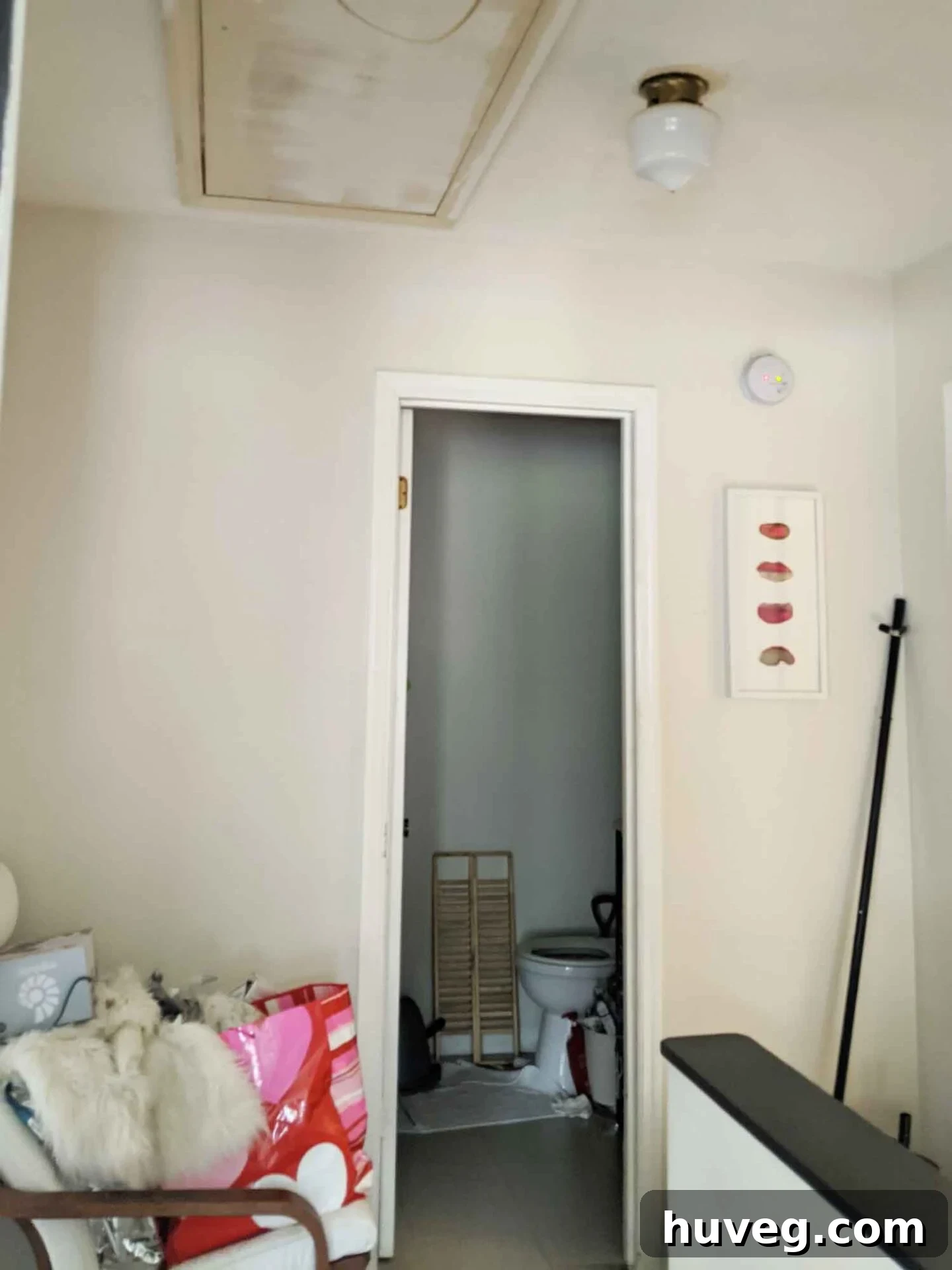
Considering the “before” state of this space, the transformation achieved with a simple 2×6 lumber build is nothing short of impressive, wouldn’t you agree? What was once an overlooked, cluttered corner has become a stylish and highly functional focal point. The impact of this DIY floating bookcase is even more striking when you witness the dramatic difference from the original “horror show” to its current, elegant form. This project truly demonstrates how thoughtful design and a little effort can profoundly enhance your living environment, proving that beautiful, practical storage solutions are well within reach for any DIY enthusiast.
BEFORE the DIY Transformation
AFTER the DIY Floating Bookcase Installation
Ready to build your own custom floating shelves? We’ve got you covered with detailed plans! Existing subscribers can conveniently download them directly from our exclusive Woodworking Plans Library, which also hosts a treasure trove of other fun and free DIY project plans. If you’re new to our community, simply sign up here to gain instant access to this valuable resource and start your next home improvement project today!
Explore More DIY Shelf & Storage Ideas
- How to Create Long, Deep, & Thin Floating Shelves (Perfect for a minimalist aesthetic and maximizing wall space in any room!)
- U-Shaped Floating Wall Shelves (An ideal solution for small bathrooms, entryways, or compact storage areas needing a unique touch!)
- DIY Book Ledges (Fantastic for creating charming displays in nurseries, organizing children’s books, or showcasing small collections beautifully!)
- Picture Ledge Shelf (A versatile variation of book ledges, featuring a decorative lip, designed to elegantly display framed photos, art, or small decor items without committing to permanent wall art placement.)