Our Built-In Showdown Begins

Welcome back, DIY enthusiasts, to another exciting update from the “Dueling DIY” challenge! My friend Charlotte and I are currently locked in a thrilling, friendly battle to transform our guest bedrooms, and we’re nearing the grand finale. For those who have been following along, you know the journey has been full of learning, laughter, and a healthy dose of competitive spirit. If you’re new to our renovation rivalry, you can dive into the entire series right here and catch up on all the progress.
For those just discovering the magic of the “Dueling DIY” series, let me introduce you to the concept. This challenge was born out of a desperate need to tackle long-overdue home projects that seemed perpetually stuck on my to-do list. By inviting another talented blogger to embark on a similar renovation journey, and committing to regular bi-weekly updates and monthly vlogs, we’ve created a fantastic system for accountability and motivation. It’s not just about getting things done; it’s about sharing the experience, celebrating small victories, and yes, enjoying a bit of good-natured smack talk along the way. This structured approach has proven to be an incredibly effective way to stay focused and push past those renovation hurdles.
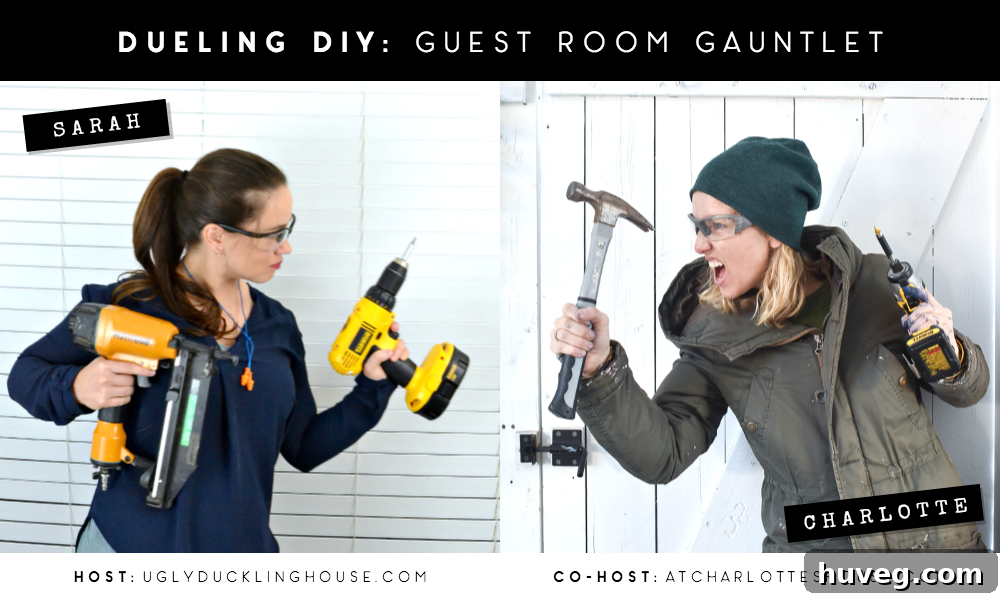
My partner in this creative clash is none other than Charlotte from At Charlotte’s House. She makes the “smack talk” part surprisingly easy, especially considering her “hideously designed” home was recently featured in Better Homes and Gardens. So, clearly, I’m feeling absolutely no pressure to deliver an equally stunning result. Just kidding (mostly)! Her talent truly pushes me to elevate my own DIY game, and having such a formidable opponent makes the challenge even more rewarding.
But enough about the competition for a moment; let’s dive into the core of my current project: the guest bedroom transformation. With the highly anticipated Murphy bed installation now successfully complete, the next critical phase involves enclosing this ingenious space-saving solution within a beautifully integrated wall of custom cabinetry and shelving. This built-in unit isn’t just about aesthetics; it’s about maximizing functionality, adding essential storage, and creating a cohesive, polished look that elevates the entire room. This step will truly bring the vision of a multi-functional guest bedroom to life.
Planning and Precision: The Foundation of Custom Built-Ins
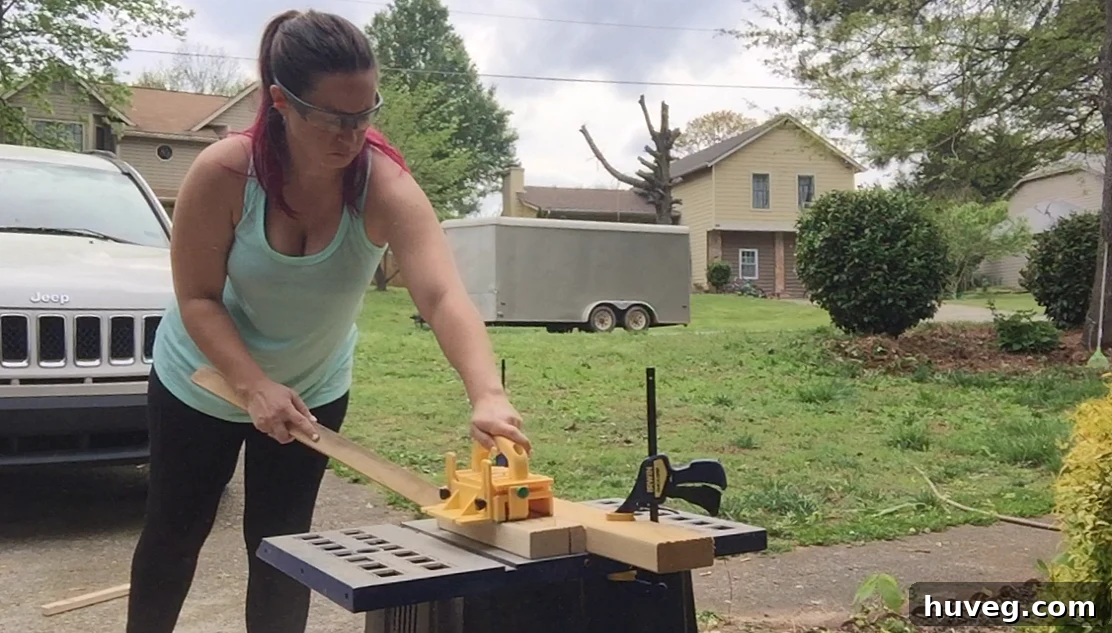
While the visual progress might seem subtle in photographs at this stage, don’t let that fool you. This phase has been incredibly demanding, requiring an immense amount of meticulous planning, complex calculations, and mental preparation. Building custom cabinetry from scratch is a significant undertaking, and much of the foundational work happens long before the first piece of wood is cut. It involves painstakingly ensuring that every element begins perfectly level and maintains that precision throughout the installation. I’ve been analyzing hardware requirements, obsessing over joint types, and delving deep into the world of cabinet construction. This process is truly a testament to the fact that DIY isn’t always glamorous; sometimes it’s a marathon of detailed thought and careful measurement. This project also pushed me to expand my skill set dramatically, as I’ve been learning to operate my dad’s old table saw for the very first time – a challenging but incredibly rewarding experience.
As I mentioned, this is my inaugural attempt at building cabinets, and I’m also tackling the installation of a sliding shelf – another first for me. Given the complexity and the desire for professional results, my mantra has been “measure twice, cut once,” or in my case, “measure a dozen times, then measure again.” Standard kitchen counters often sit at 36 inches, but for a guest bedroom, that felt too high and bulky. Conversely, a typical dining table height of around 30 inches seemed too low for the kind of versatile functionality I envision. Much like the principle behind my “Goldilocks” house, I’m searching for the measurement that feels “just right”—a sweet spot somewhere in the middle. The goal is to create a counter surface that is comfortable for writing, working, or displaying decor, while the remaining vertical space will be dedicated to open shelving and an upper storage area, specifically designed to accommodate accent lighting. To visualize this ideal balance, I started with a detailed 3D sketch, which has been an invaluable tool in confirming my design choices.
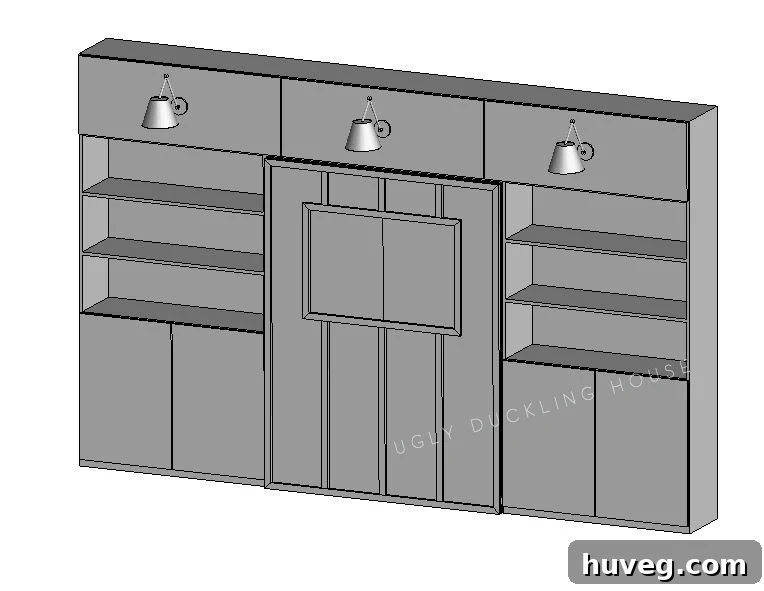
To further test the practicality and aesthetics of my chosen heights, I even repurposed some scrap plywood left over from the Murphy bed construction. I propped it up to simulate the shelves above the new counter, carefully assessing how the proportions would balance out. This real-world mock-up proved incredibly helpful, and I’m confident that the selected height will integrate seamlessly with the Murphy bed and the overall design of the room. This practical testing method allowed me to catch potential issues early and confirm that the visual weight and accessibility of the shelving would be perfect for the guest space.
Mastering the Base: Toe Kicks and Leveling the Foundation
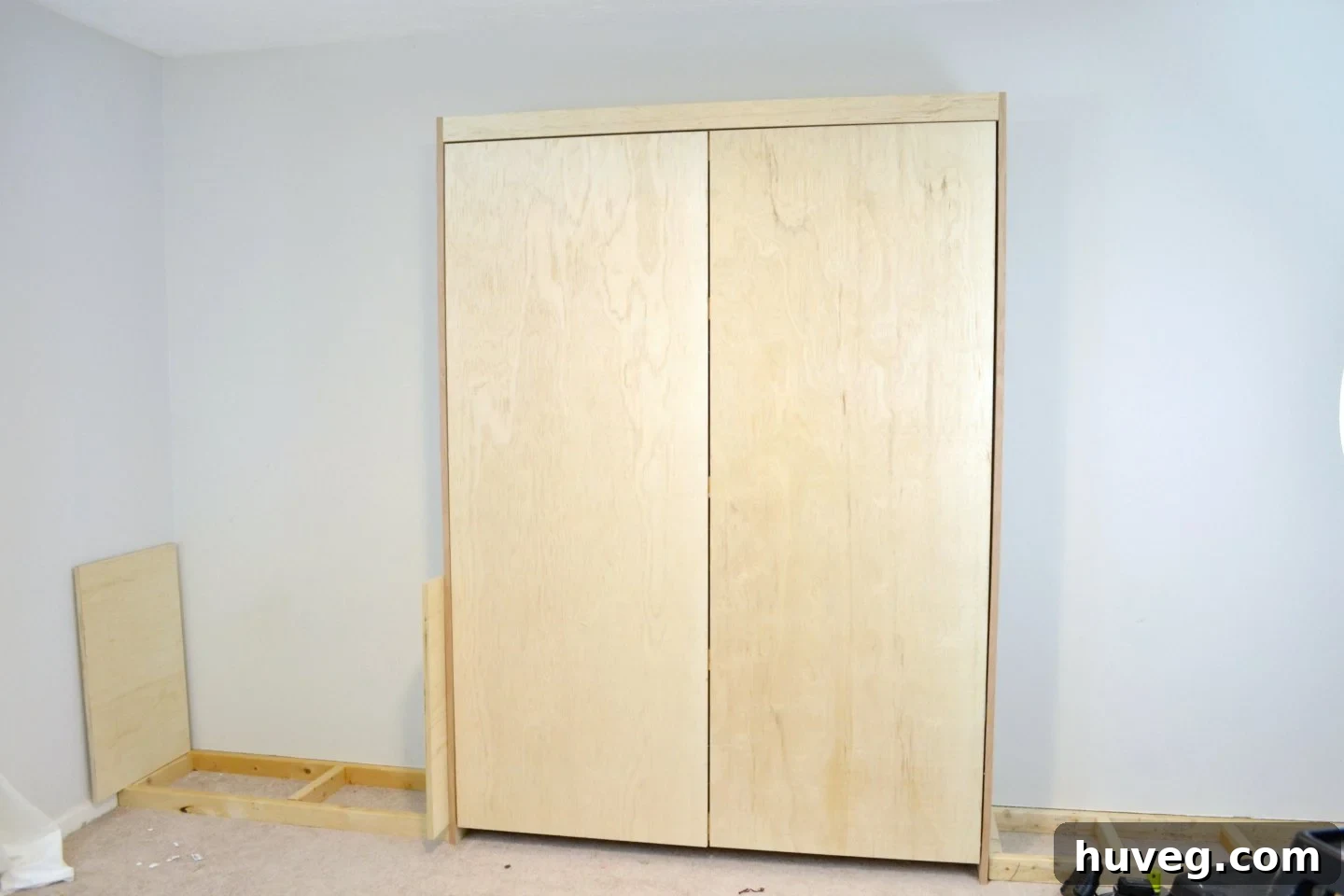
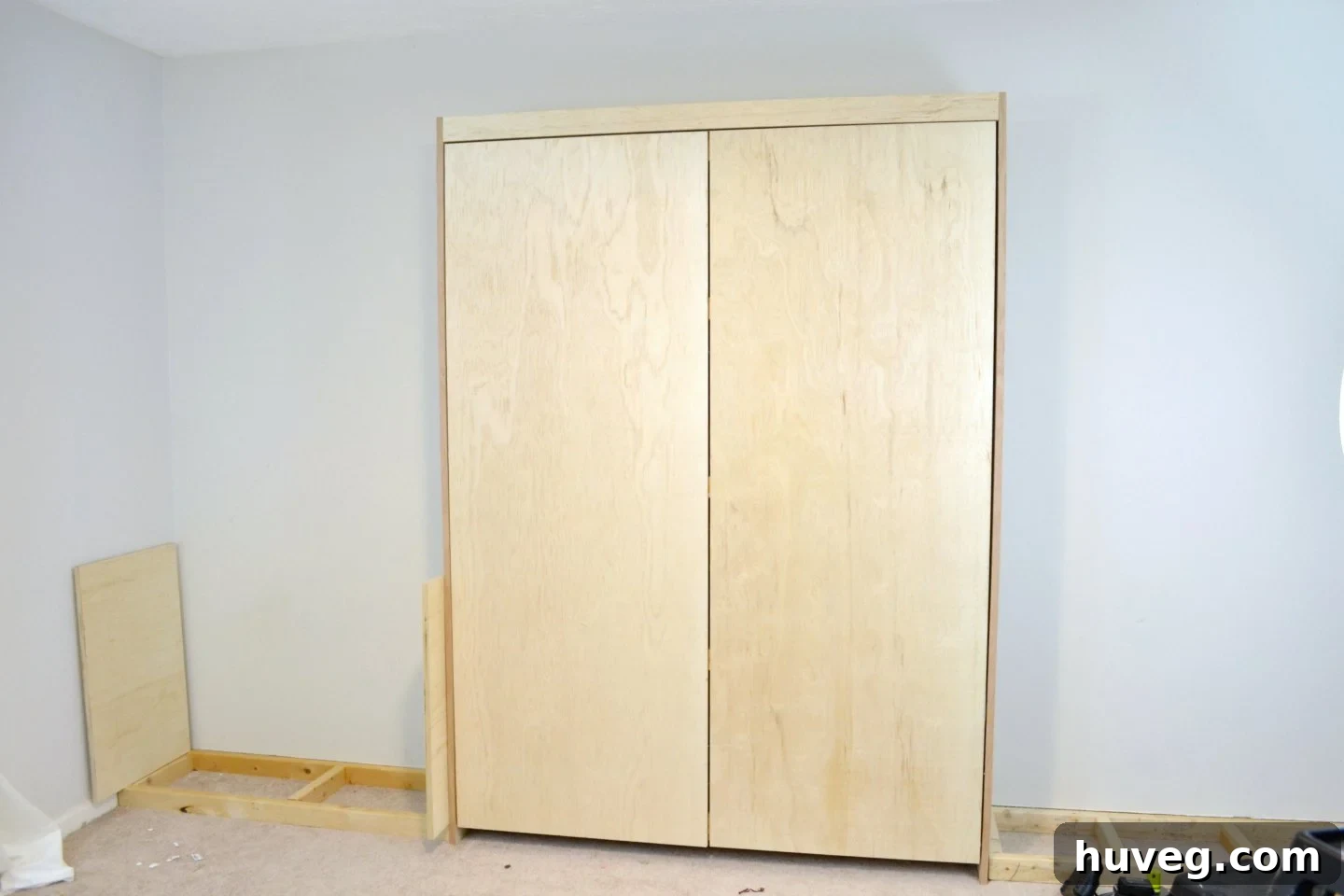
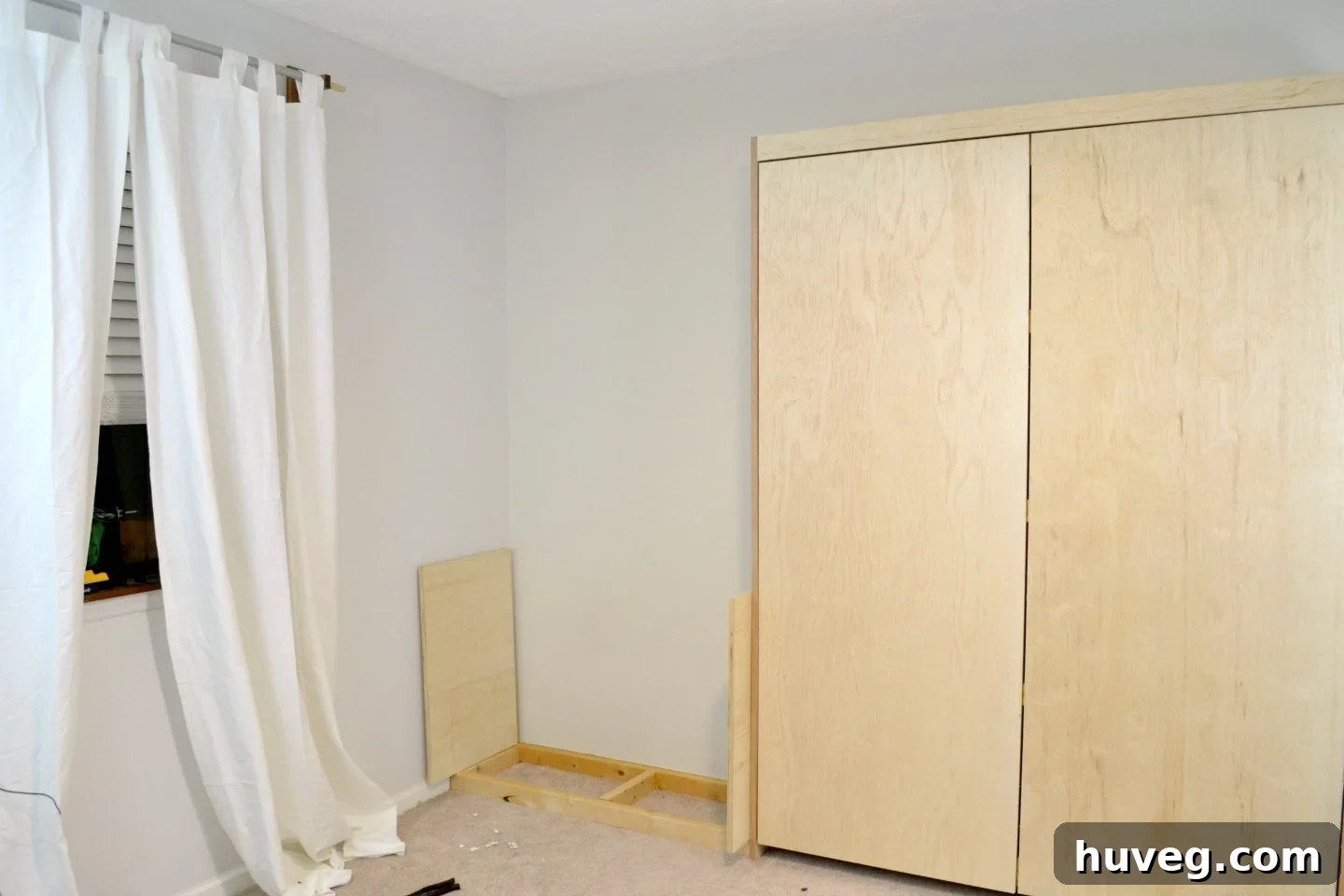
Building any type of integrated cabinetry typically starts from the ground up, and this project was no exception. The initial challenge involved navigating the existing baseboard situation. When I first moved into the house, one of my first major updates was replacing the old, unsightly carpet (the old carpet was truly “ew”) with new, plush carpeting. While this was a fantastic decision for comfort and aesthetics, the thicker pile inadvertently obscured a small portion of the baseboards. This isn’t something I typically notice or fret over in my daily life, but for the precision required by custom built-ins, it became a critical factor. It’s common practice in cabinet installation to create a small, level platform on the floor – known as a “toe kick” – upon which the cabinets will rest. This elevates the cabinets slightly, often matching the height of existing baseboards, and prevents the cabinet fronts from being obstructed by the flooring.
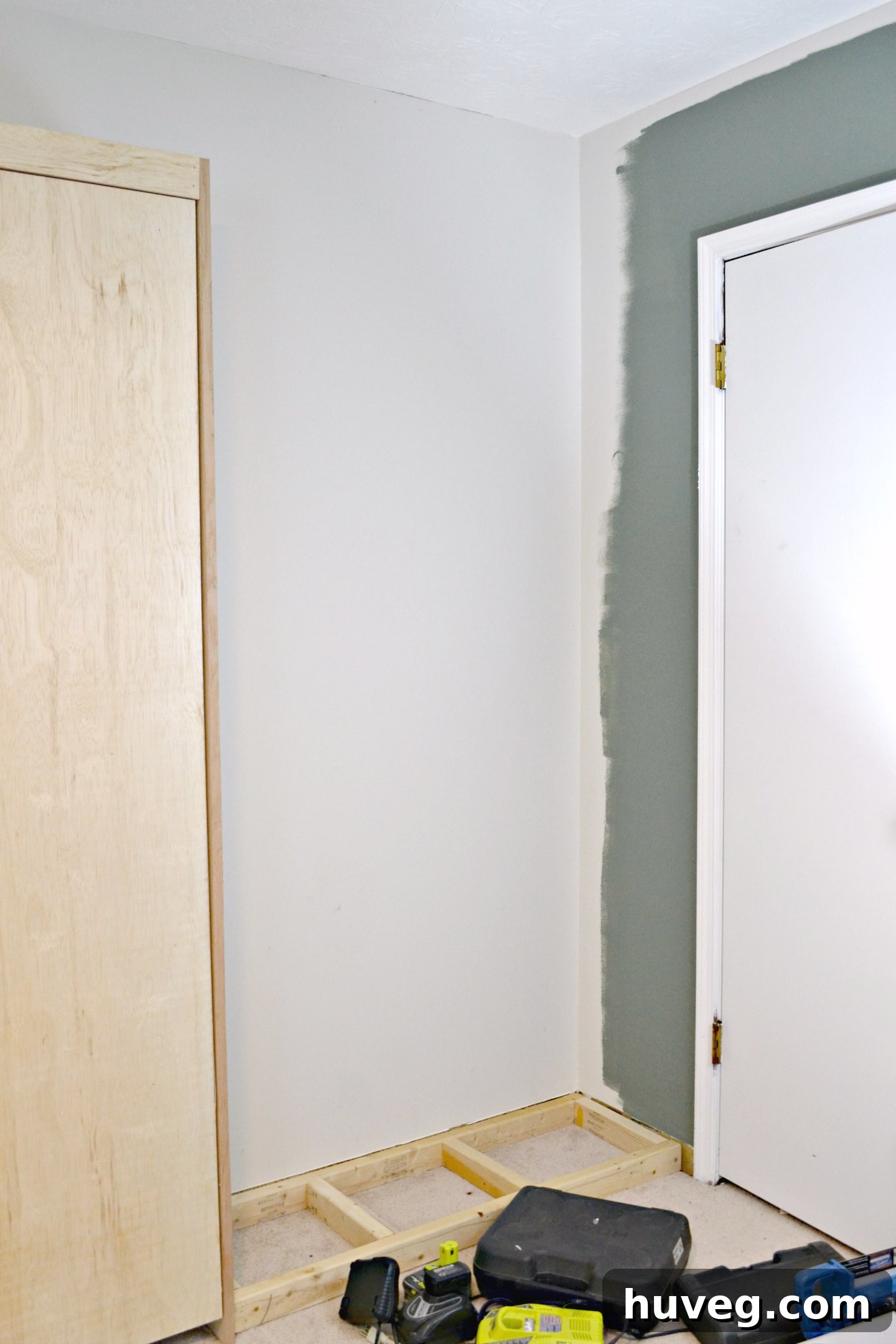
Armed with this knowledge, I set out to construct the 2×4 platforms for the toe kick this week. In my eagerness to get started, I initially neglected to account for the exact height of the baseboards in relation to the new, thicker carpet. And, surprise! My initial platforms ended up being an incorrect height. My goal was for the finished cabinets to sit perfectly flush with the Murphy bed and elegantly clear the baseboards. This unexpected hiccup presented me with two distinct paths forward:
- Option A: Carefully remove a section of the carpet on both sides of the Murphy bed, creating a clean, flat surface to install the 2×4 platform directly on the subfloor. This would potentially make leveling easier without the forgiving compression of the carpet.
- Option B: Disassemble my newly built 2×4 platforms, precisely rip them down to the exact height of the exposed baseboards, and then re-install them to sit perfectly above the carpet.
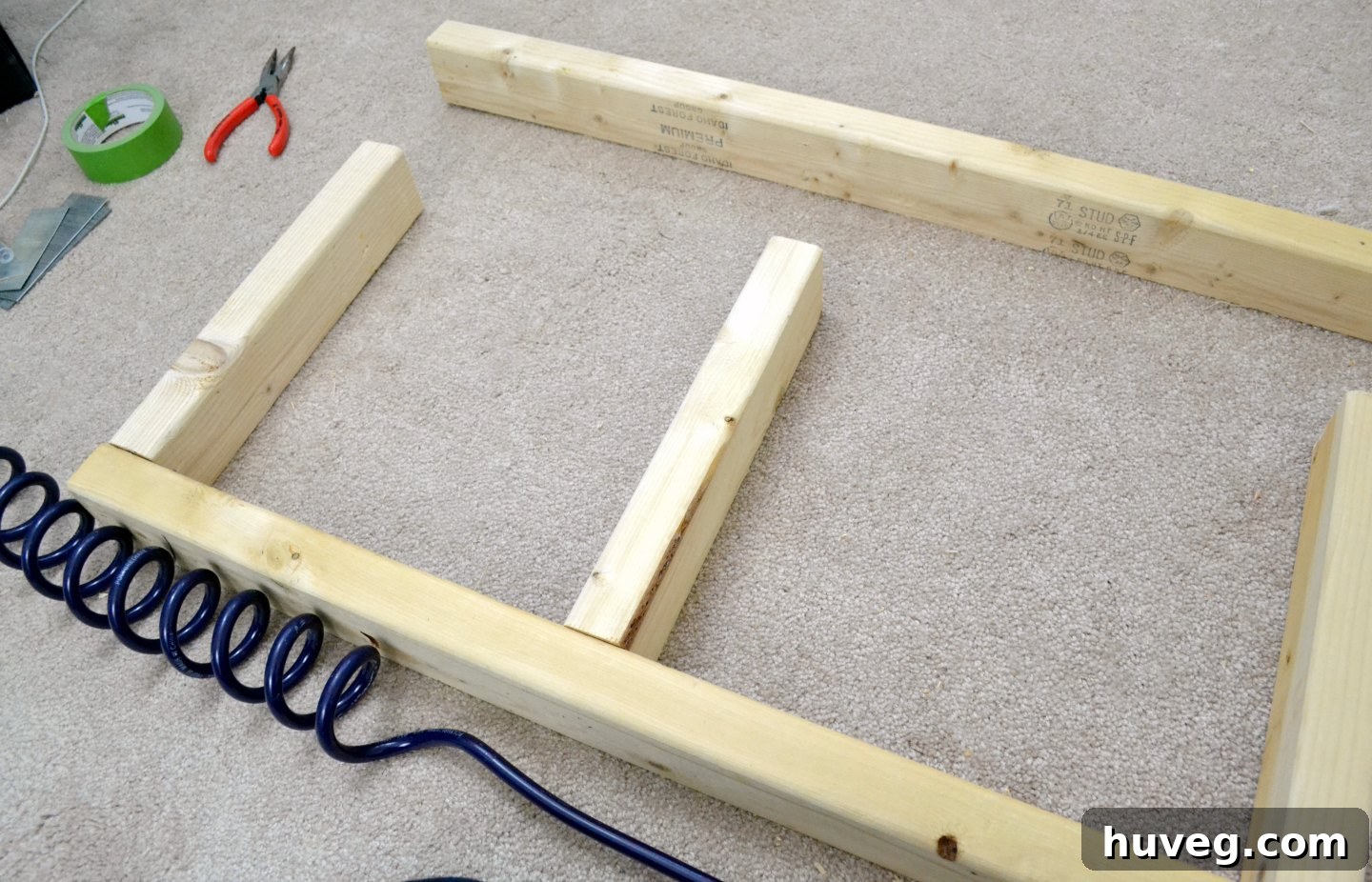
Initially, I leaned towards Option A, convinced that removing the carpet was the most straightforward approach. However, before committing, I decided to poll my fantastic community on Instagram stories. The response was incredible, sparking a dozen or so insightful conversations debating the pros and cons of each option. This valuable feedback, combined with some deeper thought, led me to change my mind. Ultimately, I chose Option B. I carefully ripped down the 2x4s to match the exact baseboard height, allowing them to sit perfectly over the carpet without any gaps or awkward transitions. The result was pure satisfaction: they are now perfectly level, which is a rare and glorious victory in DIY projects! This experience underscored the importance of community input and careful re-evaluation during complex renovations.
Cabinet Door Styles and Hardware Choices
The cabinet doors introduced yet another layer of decision-making, especially concerning the type of hardware and the overall style. When I initially ordered some of the hardware for this project (a huge shoutout to Rockler, who generously provided both the Murphy bed and cabinet hardware – you’ll see more about them in my detailed installation video and sponsor post!), I made a few assumptions. To ensure I made the most informed choice, I turned to the vast resources of the internet for guidance on various cabinet door styles and their respective hardware requirements. After much consideration, I settled on an inset style for the cabinet doors. This choice is a slight departure from my initial 3D mock-up, but I believe it will be a much better fit for the overall design. The Murphy bed itself features a distinct, visible frame on either side, and an inset cabinet door style will complement this perfectly, creating a more intentional, custom-built look that truly ties the entire wall unit together. It’s these subtle design decisions that often make the biggest impact on the final aesthetic.
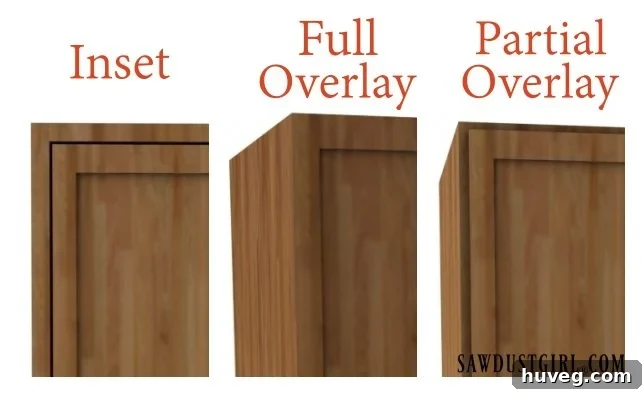
By the way, if you ever find yourself needing expert advice on cabinetry, hinges, or any other intricate woodworking details, I highly recommend checking out my friend Sandra from Sawdust Girl. She’s a true guru in the field and has a wealth of information, including helpful diagrams like the one above, that can guide you through even the most complex cabinet projects.
Illuminating the Space: Lighting and Artistic Touches
As the built-ins take shape, my mind is already racing ahead to the final layers of design: lighting and art. I anticipate that finding the absolutely perfect set of lights to install within and around the built-ins will be a bit of a treasure hunt, requiring patience and keen selection. However, I’m planning to make significant headway on the electrical wiring before our next update, ensuring everything is ready for the fixtures. I’ve been exploring various general lighting aesthetics, but my ideal solution would be a DIY project that incorporates a unique wood feature, similar to how I crafted my kitchen light fixture. This would add a bespoke, handcrafted touch that truly complements the custom nature of the built-ins, providing both ambient and task lighting for the guest room’s versatile functions. Thoughtful lighting is key to making a small space feel welcoming and functional.
Beyond the practicalities of lighting, I’m also incredibly eager to begin work on the art pieces that will adorn the Murphy bed itself and the surrounding shelves. However, I’m exercising a great deal of patience with myself, reserving this creative endeavor as a well-deserved reward. My plan is to immerse myself in the artistic process only after the shelving units are firmly installed and functional. This phased approach allows me to focus on the structural integrity and practical elements first, knowing that the artistic flourishes will be a delightful and therapeutic final step in personalizing this versatile guest space. The right art can completely transform a room, adding character and warmth to even the most functional of designs.
So, there you have it – a glimpse into the constant stream of decisions, challenges, and exciting progress that fills my DIY mind. I’m literally *this close* to making my first major cuts on the cabinet panels, a moment that always feels monumental and carries a mix of nerves and exhilaration. I’m incredibly optimistic that the next update will reveal a dramatic transformation, showcasing tangible results from all this meticulous planning.
On the competitive front, Charlotte has hinted that her guest room might be completed within the next two weeks. Of course, she’s mentioned that before, so we’ll see! Her room is indeed smaller than mine, so the possibility of her crossing the finish line first has always been a factor in this friendly rivalry. Regardless of who finishes when, my unwavering intention is to bring this series to a strong, impressive conclusion, even if there are still minor details to address in my room. After all, as any seasoned DIYer knows, rushing the process isn’t necessarily a virtue; quality and thoughtful execution often take precedence over speed. Be sure to head over to her blog and check out Charlotte’s latest Dueling DIY update, and get ready for another video recap from both of us in two weeks. And don’t forget, on my behalf, to playfully critique her design choices; perhaps you can even make her shed a tear of competitive frustration!

Stay tuned for more exciting updates as this guest bedroom transformation unfolds!