Homemade Elevated Pet Feeder

Building Colby’s Custom Elevated Dog Bowl Stand: A DIY Guide for a Happier Pet
Welcome back to our latest woodworking adventure! If you caught our previous post, you might have been trying to decipher the mystery behind a few intriguing snapshots from our recent weekend project. The suspense is over, and we’re thrilled to unveil what we’ve been diligently working on: a brand new, custom-built DIY elevated dog bowl stand designed specifically for our beloved canine companion, Colby!
Creating a homemade dog food stand for Colby was a project long overdue, driven by a desire to enhance his mealtime comfort and address some practical challenges with his old setup. This comprehensive guide will walk you through every step of building your own sturdy and stylish wooden dog bowl stand, ensuring your furry friend enjoys a more ergonomic and cleaner eating experience. Get ready to transform your pet’s dining habits with this rewarding woodworking project!
Why Choose an Elevated Dog Feeder? Benefits for Your Canine Companion
You might be wondering, “Why bother with an elevated dog feeder?” For us, the decision was clear. For years, Colby used traditional ceramic dog bowls placed directly on the floor. While seemingly convenient, this setup comes with several drawbacks, especially for larger dogs or those prone to certain health conditions.
One of the primary benefits of an elevated pet feeding station is improved posture. Dogs, particularly larger breeds like Colby, often have to bend significantly to reach food and water bowls on the floor. Over time, this can put strain on their neck, back, and joints. An elevated stand allows them to eat in a more natural, upright position, promoting better spinal alignment and overall comfort during meals. This is crucial for their long-term health and well-being.
Beyond comfort, an elevated feeder can aid in digestion. Eating with the head down can sometimes lead to gulping air, which can contribute to bloating and other digestive issues. By raising the bowls, food can travel more smoothly down the esophagus, potentially reducing instances of gas and discomfort. This thoughtful design makes mealtime a more pleasant and healthy experience for your dog.
Furthermore, a raised stand significantly helps maintain cleanliness around the feeding area. Bowls on the floor are more susceptible to being pushed around, spilled, or attracting dust and debris. An elevated dog dish stand keeps bowls securely in place and off the ground, minimizing mess and making cleanup much easier. This was a particular concern with Colby’s old setup, which, as you’ll see, had definitely seen better days.
Saying Goodbye to the Old: The Inspiration Behind Our Custom Pet Feeder
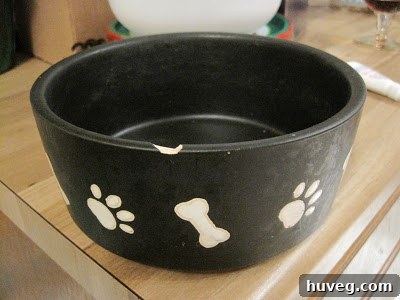
Colby’s previous dining setup consisted of two charming ceramic bowls, which, while aesthetically pleasing, proved to be less than ideal. As you can observe in the photo below, their condition had deteriorated significantly over time. One bowl was missing, and the remaining one showed considerable wear and tear. More importantly, ceramic has a notorious tendency to chip or break, posing potential hazards and necessitating frequent replacements. This was the driving force behind our decision to build a more durable, functional, and aesthetically pleasing custom pet feeder for him.
This project wasn’t just about replacing old bowls; it was about upgrading Colby’s entire dining experience with a robust DIY dog bowl stand that would stand the test of time and active use. We aimed for a solution that was not only practical but also seamlessly blended with our home’s decor, making mealtime a truly elevated affair for our furry family member.
Gathering Your Materials and Tools for This DIY Dog Bowl Stand Project
Embarking on any woodworking project, especially one as practical as a wooden dog bowl stand, begins with selecting the right materials and ensuring you have the necessary tools. For this particular pet feeding station, we chose materials that prioritize durability, ease of maintenance, and a touch of natural beauty.
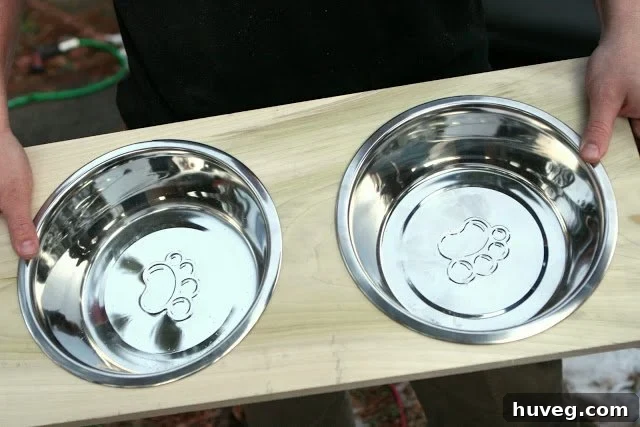
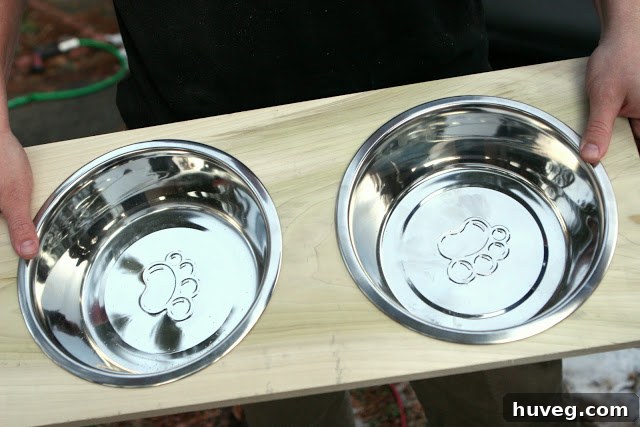
First, we headed to the pet store to acquire the new bowls. We opted for high-quality stainless steel bowls. Unlike ceramic, stainless steel is incredibly durable, resistant to bacteria, and easy to clean, making it the perfect choice for a busy dog like Colby. We made sure to measure the diameter of the bowls carefully, as this would be crucial for cutting the perfect holes in our wood plank.
Next, it was off to Lowe’s for the wood. We were looking for something sturdy yet aesthetically pleasing. I instantly fell in love with a particular plank of wood – its rich grain and subtle hint of green tones were captivating. While I’m currently blanking on the exact type of wood, its density and natural beauty made it an ideal candidate for the top of our custom dog dish stand. We selected a 24-inch plank for the main platform where the bowls would sit, and a 36-inch long post, which we would later cut down to create the legs for the stand. The choice of solid wood ensures a long-lasting and robust structure for this essential piece of pet furniture.
Tools you’ll need for this DIY dog feeder project:
- Tape measure
- Pencil
- Table saw (for cutting legs)
- Drill with appropriate drill bits (pilot holes, dowel screw attachment)
- Jigsaw (for cutting bowl openings)
- Sander (or sandpaper)
- Level
- Safety goggles and hearing protection
Step-by-Step Guide to Building Your Own Elevated Dog Feeder
Step 1: Preparing the Legs for Your Elevated Dog Bowl Stand
With our materials in hand, the first step in constructing our wooden dog bowl stand was to prepare the legs. For Colby’s height and comfortable eating posture, we determined that each leg should be nine inches long. Scott, with precision and care, measured each section of the 36-inch post. Utilizing the table saw, he carefully cut four identical nine-inch pieces. Safety is paramount when operating power tools, so always ensure you’re wearing appropriate eye and ear protection, and follow all manufacturer guidelines for safe operation. Achieving consistent leg lengths is crucial for ensuring a stable and level pet feeding station, preventing any wobbling that could disrupt your pet’s mealtime.
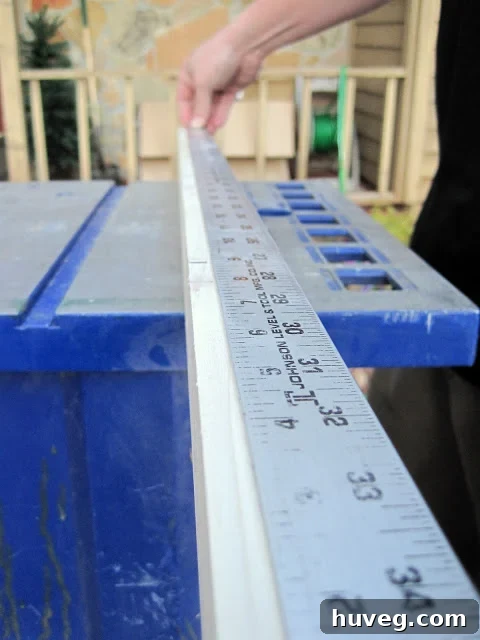 |
| Amidst our focused work on the custom pet feeder, a festive backdrop from the holidays lingered, a gentle reminder of past celebrations. |
Step 2: Precision Placement and Tracing for Your Dog Bowls
Next, we moved on to the critical step of accurately positioning where each dog bowl would sit within the main plank of wood. Achieving perfect alignment is key to a professional-looking DIY dog bowl stand. We began by turning our new stainless steel bowls upside down and placing them on the plank. This initial placement gave us a visual estimate of how the bowls would look and helped us determine a comfortable spacing.
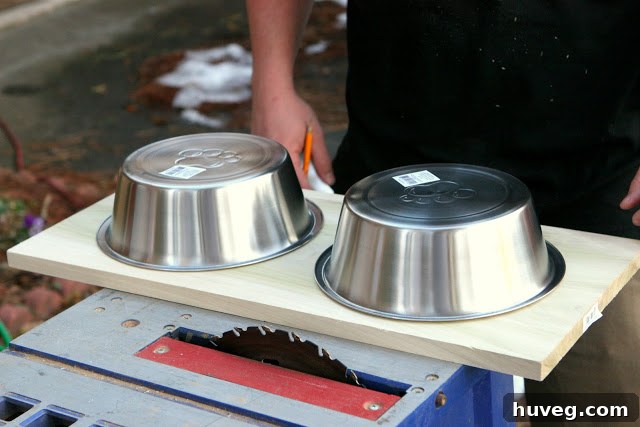
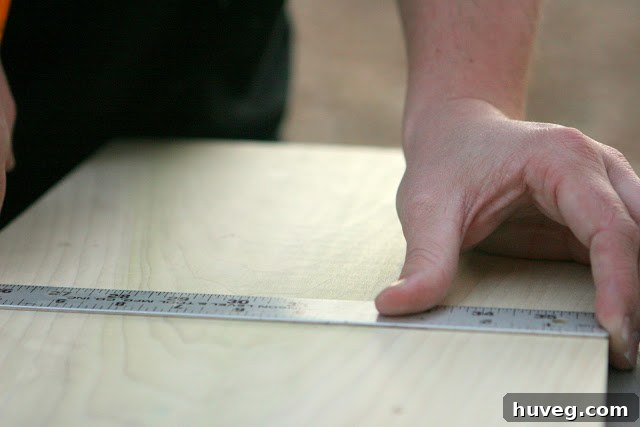
To ensure precise and symmetrical placement for our homemade dog food stand, Scott carefully measured equal margins on all sides of the plank. This ensured that both bowls would be perfectly centered, with an even gap between them. Accuracy in this step is crucial for the overall balance and appearance of your finished elevated dog feeder. Using a ruler and a pencil, he marked the exact center points and sketched out the desired positions.
Once the positions were finalized, we traced the outline of each bowl. A crucial tip here: we performed this tracing on the *bottom* side of the plank. This helps prevent unsightly pencil marks from showing on the top, visible surface of your finished dog water bowl holder. After tracing the initial outline, here comes the most important part: do not cut on this line!
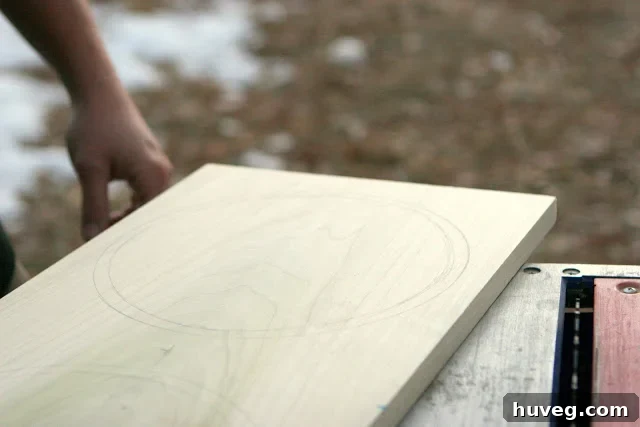
Instead, draw a second, smaller circle *inside* the first one. This inner circle dictates the size of the hole you will cut. The gap between the first and second circle creates the lip that the bowl will sit on, ensuring it hangs securely within the stand without falling through. We eyeballed this inner circle, but you can use a compass for greater precision. If you cut on the outer line, your bowl will simply fall through, resulting in a messy floor rather than a functional dog food stand. This “inner circle” technique is a fundamental step for any successful build a dog dish stand project.
Step 3: Cutting the Bowl Openings with Precision
With our guide circles clearly marked, it was time to create the openings for the bowls. Scott began by drilling a pilot hole within the area of the inner circle for each opening. This small hole provides a convenient starting point for the jigsaw blade, preventing the wood from splintering excessively when you begin the cut. Always ensure your drill bit is appropriate for the wood type and thickness.
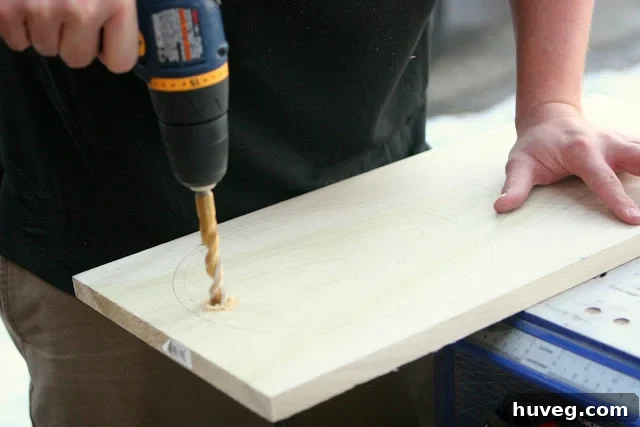
Once the pilot holes were drilled, Scott carefully inserted the jigsaw blade and meticulously followed the inner circle outline. The jigsaw allows for curved cuts, making it the ideal tool for this task. Don’t worry too much if your circles aren’t perfectly round; the lip of the stainless steel bowl will effectively conceal any minor imperfections, leaving a clean finish for your custom pet feeder. Take your time, maintain a steady hand, and let the tool do the work.
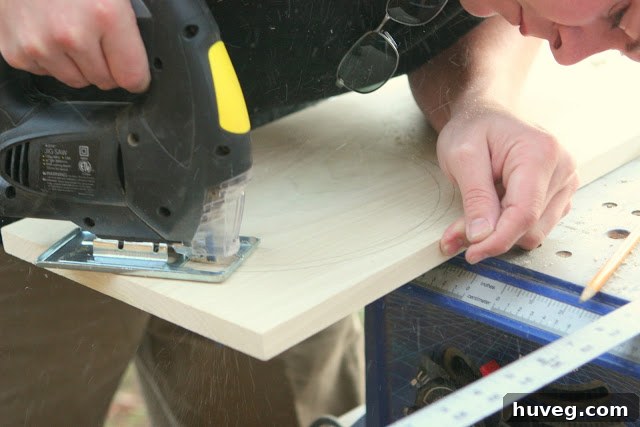
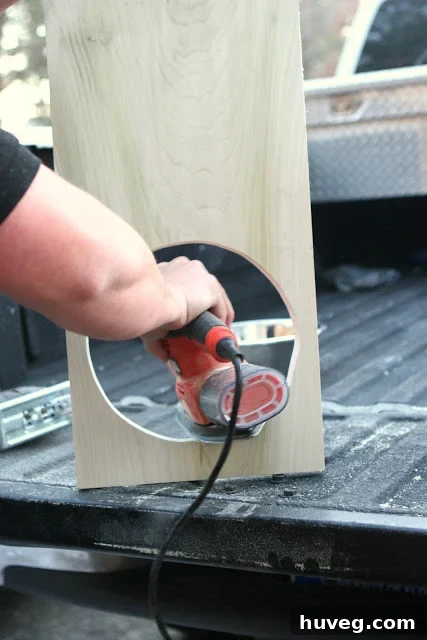
After completing the cuts, we conducted a dry run by placing the bowls right side up into the newly created holes. This test fit is crucial. While our bowls didn’t fall through, we noticed a slight tendency for them to shift more than desired, especially when Colby might enthusiastically dive into his food. This movement could potentially expose a small gap beneath the bowl over time. Not ideal, but we have a plan for a future fix! At this stage, we also performed some light sanding around the edges of the holes. This not only removes any splintering caused by the jigsaw blade but also ensures a smooth, safe edge for both the bowls and your pet.
Step 4: Securing the Legs for a Stable Dog Food Stand
The next critical phase of our DIY elevated dog bowl stand involved attaching the legs securely to the main plank. While I initially considered using liquid nails for a quick bond, Scott wisely insisted on using screws to ensure maximum stability and longevity. This approach guarantees that the legs will remain firmly attached for many years, even with a large, hungry dog like Colby pushing against the stand during mealtime. The challenge was that we wanted to preserve the natural beauty of the wood, opting against paint or wood putty, which meant traditional long screws driven from the top would be visible.
Our solution came in the form of double-ended screws, also known as dowel screws. These clever fasteners have threads on both ends and no head, allowing for a seamless, hidden joint. To prepare, David (a helpful extra hand!) assisted us by pre-drilling a pilot hole into the top of each leg. This prevents the wood from splitting when the screw is inserted. He then removed the drill bit and, using the drill itself (or a specialized driver), carefully threaded one end of the dowel screw into each leg until it was firmly seated, leaving the other threaded end exposed.
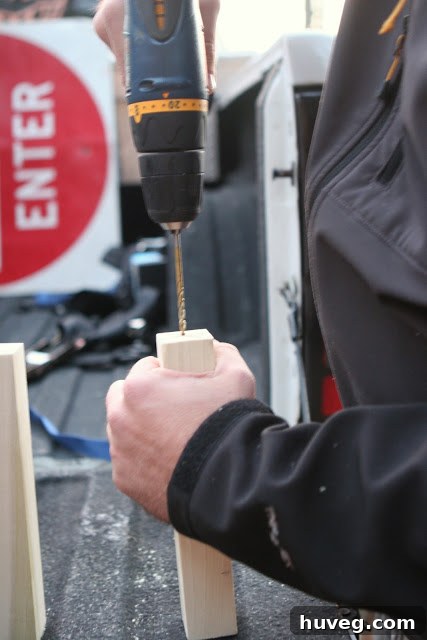
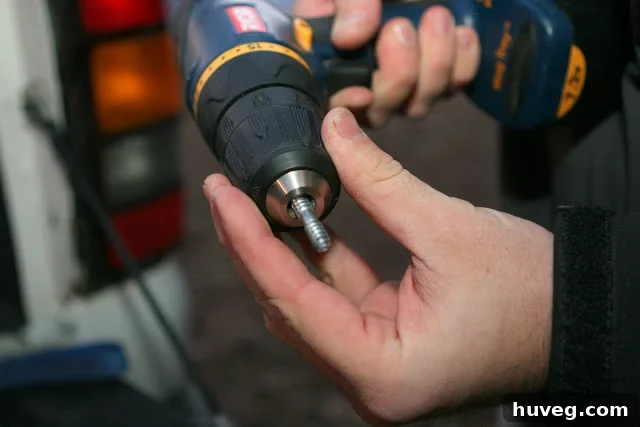
To attach the legs to the wooden plank that holds the bowls, we drilled corresponding pilot holes into the bottom of the plank. The trick here is to drill just deep enough to guide the dowel screw into place without going all the way through the top surface of the plank. This creates a strong, invisible joint, maintaining the clean aesthetic of our wooden dog bowl stand. While aiming for perfection, Scott got a little overzealous on one particular side, drilling a tad too far. Oops! These things happen in DIY projects, but I already have a plan to patch it up subtly, demonstrating that minor setbacks are just part of the creative process.
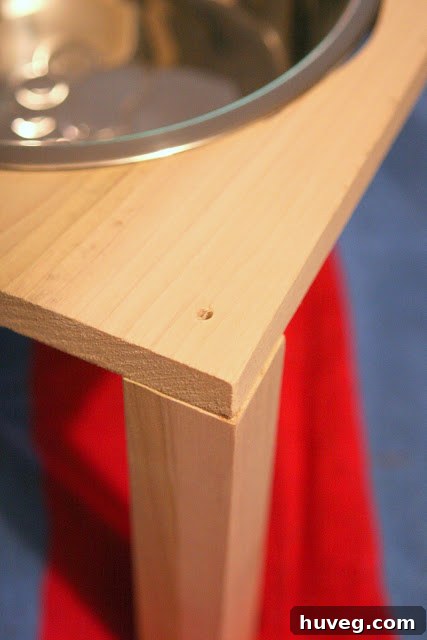
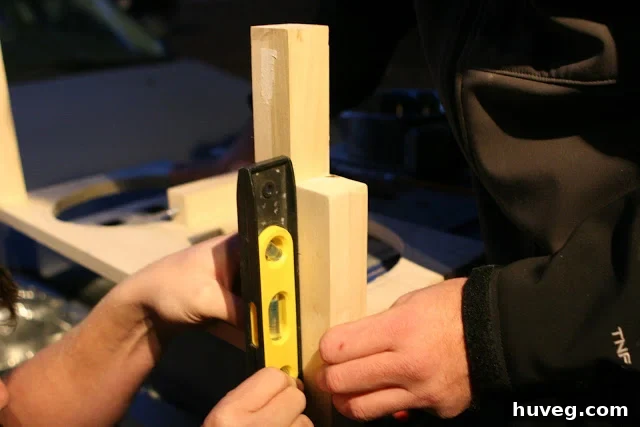
As each leg was screwed into the top of the stand, we meticulously used a level to ensure that they were all perfectly straight and flush. This crucial step prevents any wobbling and guarantees a stable pet feeding station for Colby. A slight imbalance can make a stand unstable, which is the last thing you want for your pet’s feeding area. Patience and attention to detail here will pay off in the long run.
Addressing Imperfections: Learning and Improving Your Woodworking Skills
As this was our very first time undertaking a woodworking project involving legs and precise joinery, I’d be less than honest if I claimed everything matched up perfectly flush and even from the start. It didn’t. There were small gaps, and the alignment wasn’t always impeccable. However, these imperfections are not roadblocks but rather opportunities for learning and refining our craft. I already have a few ideas to smooth things out and achieve a more polished finish for our homemade dog food stand.
If you’re keeping track at home, that’s three different fixes I’ve mentally noted to address before this project is truly complete: the slightly loose bowls, the over-drilled pilot hole, and the minor unevenness in the leg joints. While I could easily hide these small blemishes from this blog post, I believe it’s far more valuable to showcase both our successes and our challenges. DIY projects are a continuous learning process for both you, the reader, and for us, the creators. Transparency about what works and what requires a bit more finessing is part of the journey when you build a dog dish stand.
The Trial Run: Colby’s Approval of His New Elevated Feeder!
Despite the minor adjustments still needed, nothing could stop us from giving our new elevated dog feeder a trial run with our biggest critic: Colby himself! Seeing him approach his custom-built feeding station, sniffing around with curiosity, made all the hard work worthwhile. It’s truly rewarding to see your pet interact with something you’ve created with their comfort in mind. I believe he’s really going to enjoy all of Scott’s diligent efforts and the improved ergonomics of his new mealtime setup.
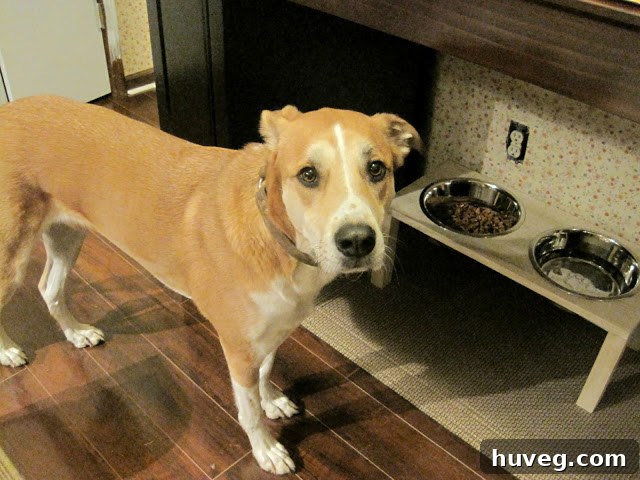
Next Steps: The Finishing Touches for a Durable Wooden Dog Bowl Stand
Our DIY dog bowl stand is built, but it’s not quite finished. The next crucial steps involve putting the final touches on this custom pet feeder to ensure its longevity, durability, and aesthetic appeal. This will include thorough sanding to smooth out any remaining rough edges and address the minor imperfections we noted. Following that, we’ll apply a protective finish, likely a coat of polyurethane. This poly will not only enhance the natural beauty of the wood grain, bringing out its rich tones and unique characteristics, but also provide a robust shield.
The protective coating is especially important because this wooden dog bowl stand will function as Colby’s dinner table, meaning it will undoubtedly endure spills, splashes, and daily wear and tear. A good sealant will protect the wood from moisture damage, making it easy to clean and ensuring it remains a beautiful and functional part of our home for years to come. But that’s a topic for another detailed post! Until then, I’ll leave you with one more shot of our stopping point, a testament to the progress we’ve made on this rewarding homemade dog food stand project.
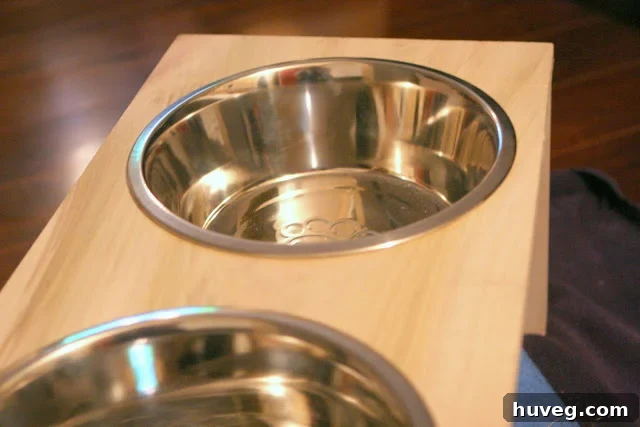
We hope this guide inspires you to take on your own DIY dog bowl stand project! Creating a personalized elevated dog feeder is a fantastic way to show your pet some extra love while improving their mealtime experience. Stay tuned for our next update, where we’ll delve into the finishing process and reveal Colby’s completely finished, beautiful, and functional new dining setup!