Dining Room Update: Floor Foundation Prepped

Mastering Your Home Renovation: Why Painting Trim Before New Floors is Non-Negotiable
Embarking on a home renovation project, especially one involving new flooring, requires careful planning and execution. One of the most critical, yet often overlooked, pieces of advice from seasoned DIYers and professionals alike is to paint your walls and trim *before* installing new floors. This recommendation isn’t merely a suggestion; it’s a golden rule designed to save you time, money, and immense frustration. Imagine the painstaking effort of laying down pristine new floors, only to have them marred by an accidental drip of paint from a brush stroke or roller. Paint, while relatively inexpensive, becomes a costly headache when it requires cleaning or, worse, damaging brand-new flooring. By tackling the painting first, you create a protective buffer, allowing for minor splatters or drips to be easily cleaned without fear of permanent damage to your significant flooring investment. This proactive approach ensures a cleaner finish and significantly streamlines the entire renovation process, leaving you with results you can truly be proud of.
Transforming the Dining Room: From Drab to Fab, Starting with Prep
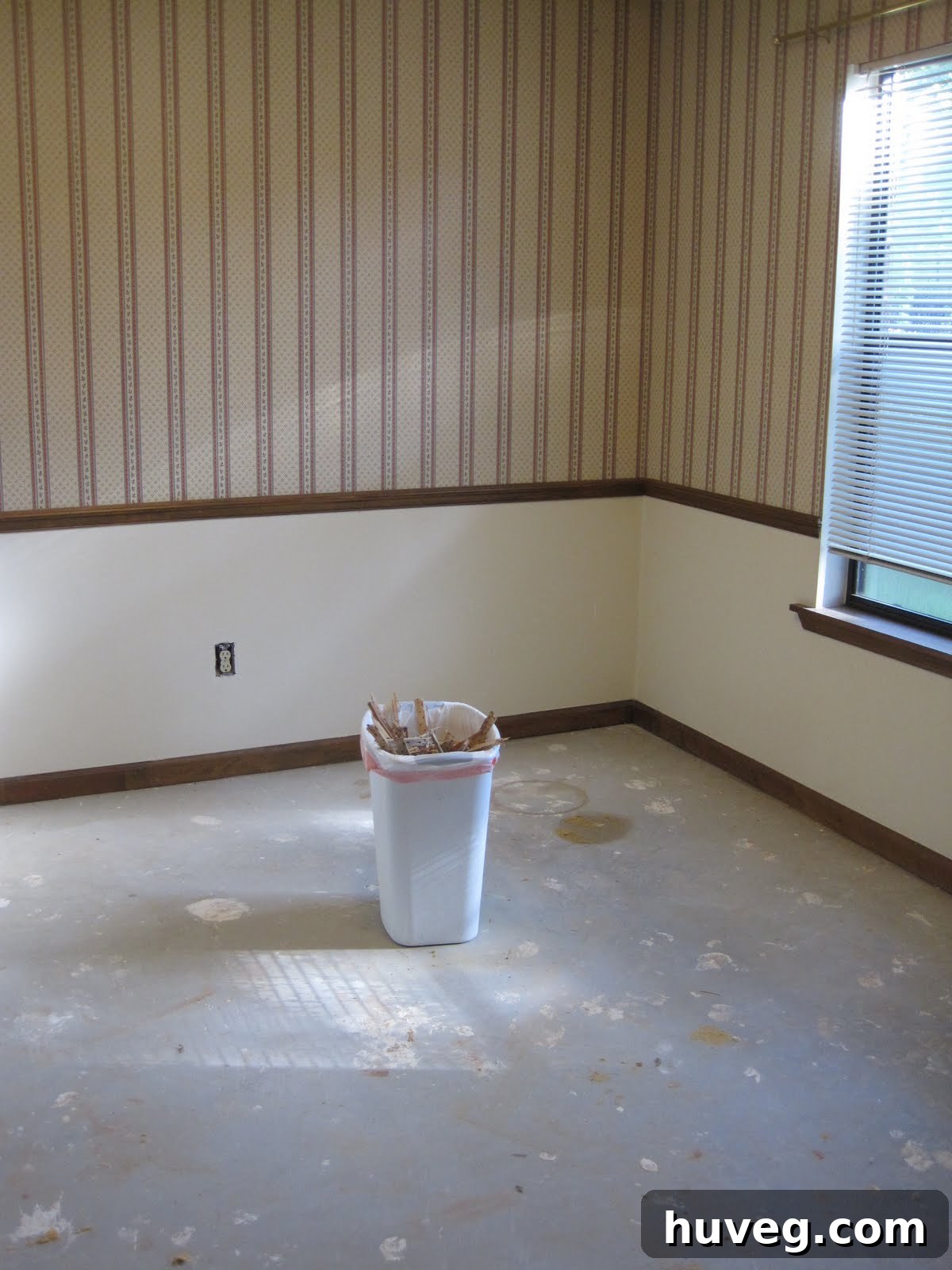
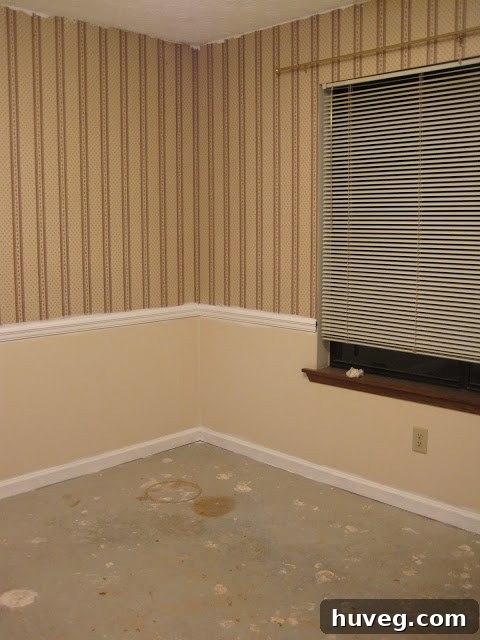
Our dining room, a space yearning for a fresh identity, presented its own unique set of challenges. While the general wisdom dictates painting walls before floors, the reality of existing, unsightly wallpaper often dictates a different sequence. The prospect of tackling the laborious and often frustrating task of wallpaper removal *before* the new floors went in felt like an insurmountable hurdle, especially with a strict renovation timeline. Therefore, a strategic compromise was made: prioritizing the painting of the chair rail and baseboards. This decision allowed progress to continue while deferring the wall painting (and wallpaper battle) to a later stage.
However, even with a modified plan, proper preparation remains paramount. The room’s previous life, complete with 28-year-old carpeting, left behind a legacy of dust and grime. For anyone undertaking a similar project, be warned: carpet padding doesn’t just age; it disintegrates into a fine, pervasive dust that settles on every surface. This necessitates a thorough, almost forensic, cleaning process before any paint can even be considered. Every nook and cranny, from the top of the chair rail to the wall-floor junction, required a meticulous wipe-down to ensure optimal paint adhesion and a smooth finish. A clean canvas, no matter how small the painting task, is the secret to professional-looking results. After a vigorous cleaning session that banished years of accumulated dust, the path was clear to begin the much-anticipated transformation.
Selecting the Perfect Shade: A Deeper Look at Behr’s Ultra White
For the refreshed chair rail and baseboards, the choice fell upon Behr’s primer-and-paint-combo in Ultra White. This particular product was selected for its convenience and ability to seamlessly match the existing trim throughout the rest of the house, fostering a cohesive aesthetic. Behr’s all-in-one formulas are often a go-to for DIY enthusiasts looking to simplify the painting process, offering the benefits of both a primer and a topcoat in fewer applications.
However, a candid observation regarding this specific “Ultra White” shade is warranted. While marketed as pure white, it tends to develop a subtle yellow undertone as it fully cures and dries. This slight shift from pure white to a softer, more ivory hue is a point of consideration for anyone aiming for a stark, clinical white. My assumption is that this characteristic might stem from the primer component within the combo, as standard Behr paints without the integrated primer typically maintain their intended color purity.
In this particular context, the slightly more ivory-colored trim proved to be a fortuitous outcome rather than a drawback. The overall design scheme for the house leans towards warmer tones, and the subtle warmth of an ivory trim complements this aesthetic beautifully. It provides a sophisticated, inviting feel that pure white might have starkly contrasted. This experience underscores an important lesson in color selection: always test paint samples in your actual space under various lighting conditions. What appears pure white on a swatch or in a can might evolve differently once applied to your walls and trim. Despite the unexpected color shift, the transformation from the original dated oak trim was nothing short of dramatic, instantly elevating the room’s appeal.
Unforeseen Hiccups: The Loose Trim Revelation
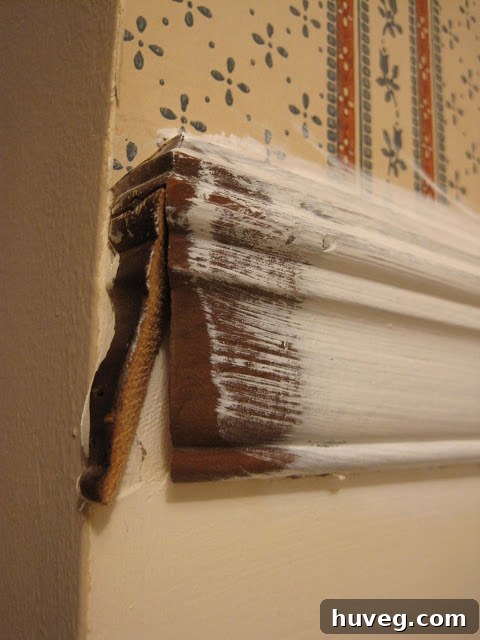
No home renovation project is truly complete without its share of unexpected twists and turns. These surprises, while sometimes frustrating, often provide valuable learning experiences and opportunities for more thorough craftsmanship. Such was the case during the application of the first coat on the dining room chair rail. While meticulously painting, a small, almost imperceptible, piece of loose trim caught the eye. A gentle touch confirmed its precarious state, and with a soft nudge, it detached completely.
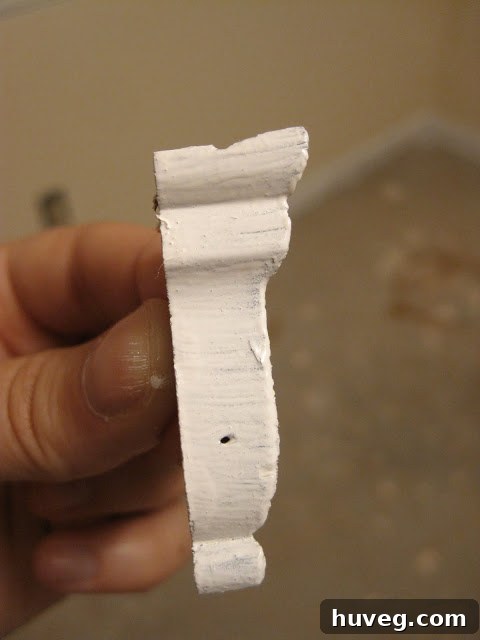
Initially, this might seem like an added complication, a detour from the painting schedule. However, it quickly presented an advantage. The detached piece, once fully liberated, became remarkably easier to paint. This allowed for comprehensive coverage on all its surfaces, ensuring a flawless finish without the awkward angles and potential misses that come with painting in situ. This unexpected removal meant the piece could be painted flat, dried thoroughly, and then reattached with precision.
Addressing the Unexpected: Reattaching Loose Trim and Fixing Minor Flaws
Once painted and fully dry, the loose trim piece was ready for reinstallation. This minor structural repair is a common occurrence in older homes and can be easily remedied with a few basic tools. For a secure fix, apply a strong wood glue to the back of the trim piece and firmly press it back into its original position. For added stability, especially if the piece is subject to frequent contact, small finishing nails or brad nails can be strategically placed, then filled with wood putty and sanded smooth before a final touch-up of paint. This attention to detail ensures not only a beautiful finish but also the structural integrity of your trim work, preventing future loosening.
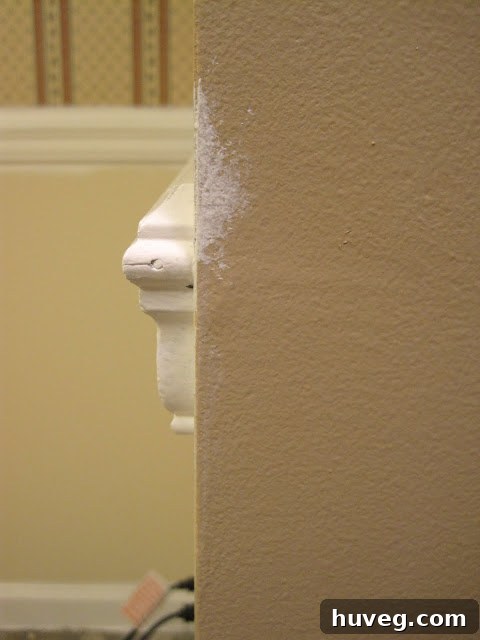
Another common painting pitfall made its appearance: a minor spillover onto an adjacent area. In a moment of focused painting, a section of the living room divider inadvertently received a fresh coat of trim paint. Such “oops” moments are almost inevitable in DIY projects. The key is to address them calmly and effectively. Since the paint had already dried, simply wiping it off was no longer an option. The solution involved careful scraping with a razor blade or fine-grit sandpaper to remove the excess paint without damaging the underlying surface. Following this, a precise touch-up with the correct color for the divider would be necessary. These small imperfections, when corrected, are just part of the learning curve and contribute to the overall satisfaction of a self-completed project.
The Power of Paint: Envisioning a Brighter Future for the Dining Room
After several meticulous coats of paint, the transformation began to truly take shape. The previously dated and somewhat dreary dining room started to shed its old skin, revealing hints of its bright and clean future. The freshly painted trim, even with its subtle ivory hue, offered a stark contrast to the original dark oak, instantly opening up the space and infusing it with a sense of modernity and airiness.
This stage of a renovation project is always the most rewarding. It’s where the hours of preparation, the careful brushstrokes, and the minor setbacks coalesce into a tangible vision. One can almost feel the room breathing again, awaiting its new floors and refreshed walls to complete its journey. The subtle sheen of the new paint, reflecting the natural light, promised a much more inviting and elegant dining experience. This vivid glimpse into the room’s potential serves as a powerful motivator, reminding us of the profound impact a simple coat of paint can have. It’s not just about changing a color; it’s about redefining a space, enhancing its character, and ultimately, improving the overall ambiance of your home. Ah, the sheer transformative power of paint!
Essential Tools & Tips for Painting Trim Like a Pro
Achieving professional-looking trim requires more than just good paint; it demands the right tools and a systematic approach. Here’s a quick checklist and some tips:
Key Tools:
- Painter’s Tape: High-quality tape (e.g., FrogTape or ScotchBlue) is essential for crisp lines.
- Angled Sash Brush: A 1.5 to 2.5-inch angled brush is perfect for cutting in clean lines against walls and floors.
- Drop Cloths/Plastic Sheeting: To protect adjacent surfaces, especially your new floors (if you ignored the advice to paint first!).
- Sanding Sponge/Fine-Grit Sandpaper: For smoothing out imperfections and ensuring good paint adhesion.
- Wood Putty/Caulk: For filling nail holes, minor cracks, and gaps between trim and walls.
- Screwdriver/Pry Bar: For removing old trim or switch plates.
- Cleaner/Degreaser: TSP substitute or a mild detergent for thorough surface preparation.
Pro Tips:
- Clean Thoroughly: As demonstrated, dust and grime are the enemy of good paint adhesion.
- Sand Lightly: A quick scuff sand helps new paint stick better, especially over glossy finishes.
- Caulk Gaps: Use paintable caulk to fill any gaps between the trim and the wall for a seamless, finished look.
- Apply Thin Coats: Multiple thin coats are always better than one thick coat, preventing drips and ensuring a smoother finish.
- Remove Tape While Wet: For the cleanest lines, pull painter’s tape off immediately after applying the last coat, while the paint is still wet. This prevents the paint from drying and adhering to the tape, which can cause peeling.
- Ventilate: Always ensure adequate ventilation while painting.
Common Painting Mistakes to Avoid and How to Fix Them
Every DIYer, regardless of experience, is susceptible to common painting mishaps. Being aware of these can save you time and frustration:
- Rushing Prep Work: Skipping cleaning, sanding, or taping leads to subpar results. The prep phase often takes longer than the actual painting, but it’s where success is truly built.
- Overloading the Brush: Too much paint on the brush leads to drips, streaks, and uneven coverage. Dip only about one-third of the bristles into the paint.
- Ignoring Drying Times: Applying a second coat before the first is adequately dry can pull up the underlying paint, creating a textured mess. Always follow manufacturer recommendations.
- Painting in Poor Lighting: Inadequate lighting can hide imperfections or areas you’ve missed. Use good task lighting to ensure even coverage.
- Fixing Drips Immediately: If you catch a drip while the paint is still wet, gently smooth it out with your brush. If it’s dried, you’ll need to lightly sand it down and touch up.
- Forgetting to Stir Paint: Pigments can settle at the bottom of the can. Always stir thoroughly before and periodically during painting to ensure consistent color and finish.
Choosing the Right White: More Than Just a Color
“White” paint isn’t a single entity; it encompasses a vast spectrum of shades, each with unique undertones that can significantly impact the final look of your room. Understanding these nuances is key to selecting the perfect white for your trim:
- Cool Whites: These have blue, gray, or green undertones, creating a crisp, modern, and sometimes stark feel. They pair well with cool-toned wall colors and contemporary decor.
- Warm Whites (like ivory): These have yellow, beige, or pink undertones, offering a softer, more inviting, and traditional look. They complement warm wall colors, natural wood tones, and rustic or classic interior styles. Our “Ultra White” with its yellowing tendency inadvertently leaned into this category, proving to be a pleasant surprise for our warm-toned home.
- Pure Whites: These are balanced, without strong discernable undertones, often used for ceilings or for a truly neutral base.
Consider the natural light in your room, the existing furniture, and the colors of your walls and floors. A white that looks brilliant in a south-facing room might appear dull in a north-facing one. Always get samples and paint swatches directly onto your trim to see how the color interacts with your specific environment before committing to a large purchase.
Long-Term Care for Your Painted Trim
Once your trim is beautifully painted, a little ongoing care will keep it looking fresh for years:
- Regular Cleaning: Dust and wipe down trim regularly with a soft, damp cloth to prevent grime buildup.
- Gentle Cleaners: For tougher marks, use a mild soap and water solution or a non-abrasive household cleaner. Avoid harsh chemicals that can dull the paint finish.
- Immediate Stain Removal: Address scuffs and stains promptly. The longer they sit, the harder they are to remove.
- Touch-Up Paint: Keep a small amount of your original trim paint for quick touch-ups of chips or dings. Store it in a cool, dark place in an airtight container.
- Protect Against Impact: Be mindful of vacuum cleaners, furniture, and pet activity that can cause damage to lower trim like baseboards.
By following these tips, your freshly painted trim will continue to enhance the beauty and value of your home, serving as a clean, elegant frame for your living spaces.