Your Essential Guide to Removing Old Shower Tiles

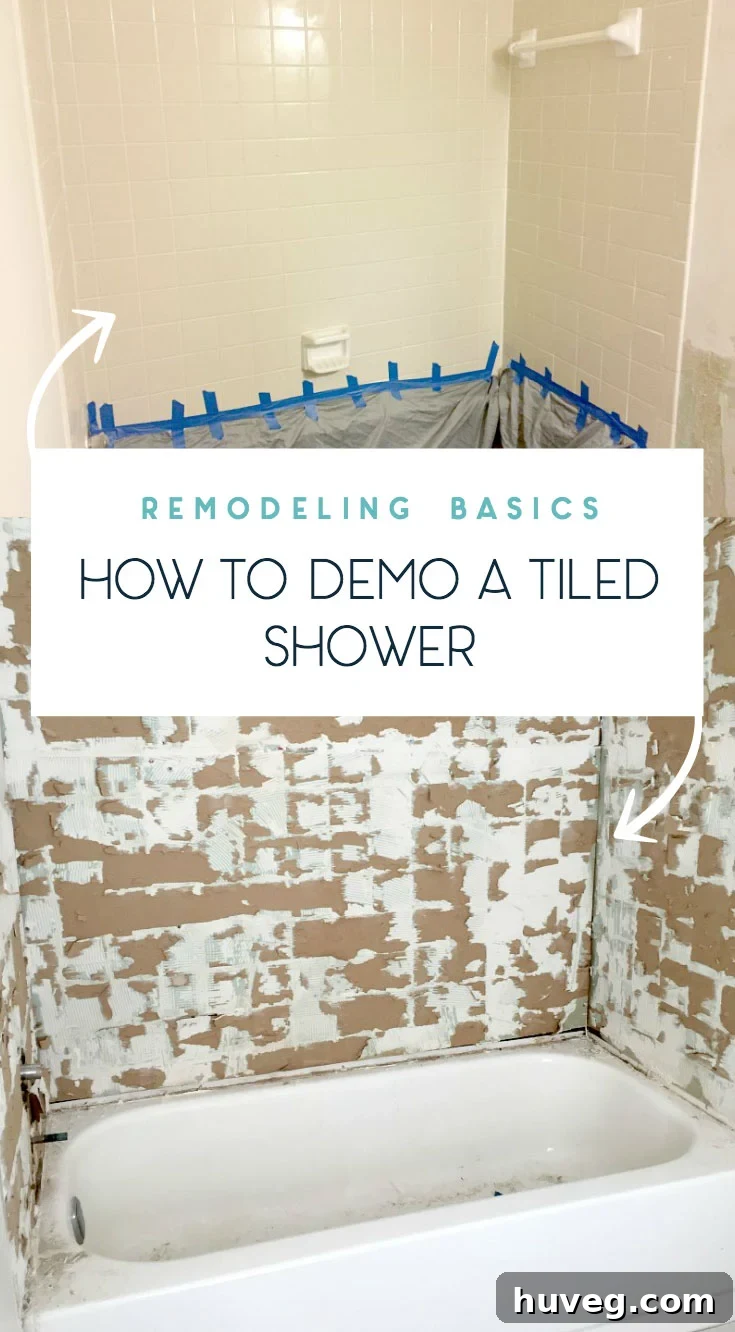
DIY Shower Demolition: Your Essential Guide to Removing Old Tile Efficiently and Safely
Embarking on a home renovation project, especially one as transformative as a bathroom overhaul, is always an exciting venture. As you might have gathered from my previous posts, my Instagram updates, or perhaps you just possess an uncanny knack for predicting DIY adventures, my primary bathroom is finally claiming center stage this summer. This isn’t just a minor refresh; we’re diving deep into a complete transformation, which means not only giving the floor some much-needed tile attention but also completely redoing the shower from the ground up.
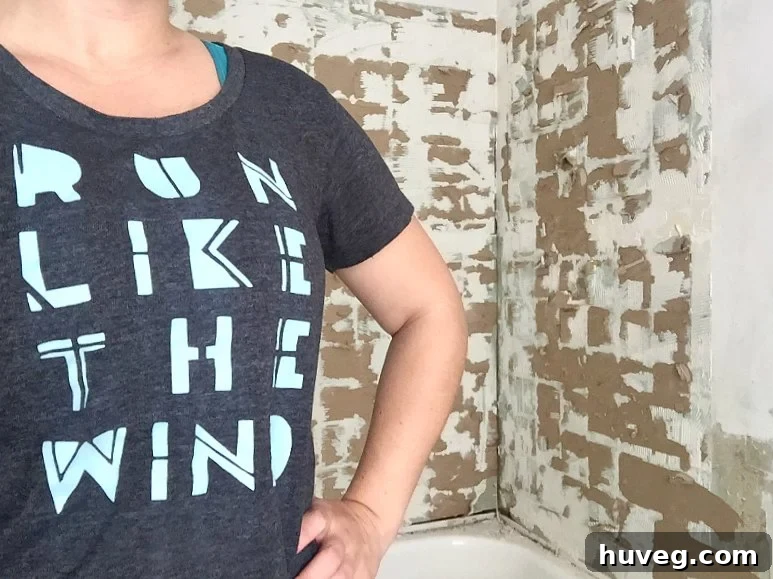
Before we delve into the satisfying process of installing a brand-new, beautifully tiled shower – a journey that has already presented its share of trial and error, which I’m eager to share, along with some video footage – there’s an initial, often overlooked, but incredibly crucial phase that I genuinely enjoy: demolition. The act of tearing down the old to make way for the new can be immensely therapeutic and surprisingly fun, if approached correctly. It’s more than just swinging a hammer; it’s about strategic deconstruction.
However, successful demolition isn’t about rushing in with tools blazing. To properly and efficiently remove an old tiled shower, preventing damage to existing structures and, most importantly, ensuring your own safety, a well-thought-out approach is essential. While many aspects might seem like common sense, the sheer temptation to attack unsightly tiles can lead to hasty decisions. My own experience has taught me that overlooking critical steps in the heat of the moment can result in unnecessary complications, delays, and even injuries. This guide is designed to equip you with the practical tips and insights I’ve gathered, helping you navigate the demolition phase with confidence, precision, and minimal drama. It’s not just about taking things apart; it’s about preparing the perfect canvas for your new masterpiece.
This post contains affiliate links — for the full disclosure policy, click here.
How to Demo A Tiled Shower: Mastering the Art of Efficient Tile Removal
Demolishing an old shower might seem like a straightforward smash-and-grab, but an organized and strategic approach will save you time, effort, and potential headaches down the line. Follow these tried-and-true methods to make your shower demolition project as smooth and effective as possible, ensuring a pristine foundation for your upcoming renovation.
Prioritize Protection: Safeguarding Your Bathtub and Surroundings
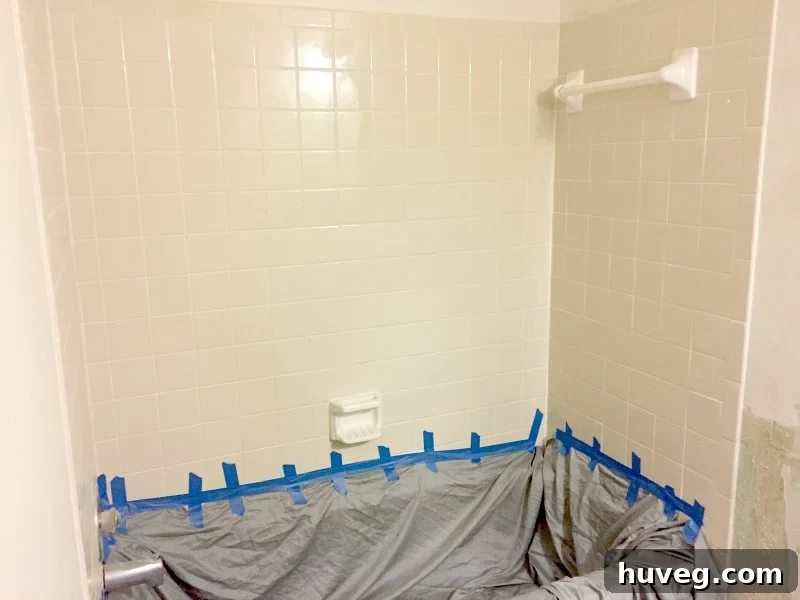
One of the first and most critical steps in shower demolition is protecting elements you intend to keep. In my case, preserving the existing bathtub was a non-negotiable. To achieve this, I meticulously laid down several layers of old sheets, ensuring ample padding, and then secured their edges with painter’s tape. This creates a soft landing zone for falling tiles and debris, significantly reducing the risk of chips, scratches, or cracks. It’s easy to underestimate the damage a seemingly dull tile shard can inflict when it falls from a height or breaks at an awkward angle. Even if you plan to sell or donate your old tub, maintaining its condition will enhance its value and usability.
Beyond the tub, consider protecting nearby vanity cabinets, toilets, and flooring. Use drop cloths, plastic sheeting, or even old cardboard boxes to shield these areas from dust, debris, and accidental tool strikes. Remember to plug the drain with a rag or a dedicated drain stopper. This prevents small pieces of tile, grout, or other debris from washing down and potentially clogging your plumbing, leading to an entirely new set of problems you definitely don’t want to deal with mid-renovation.
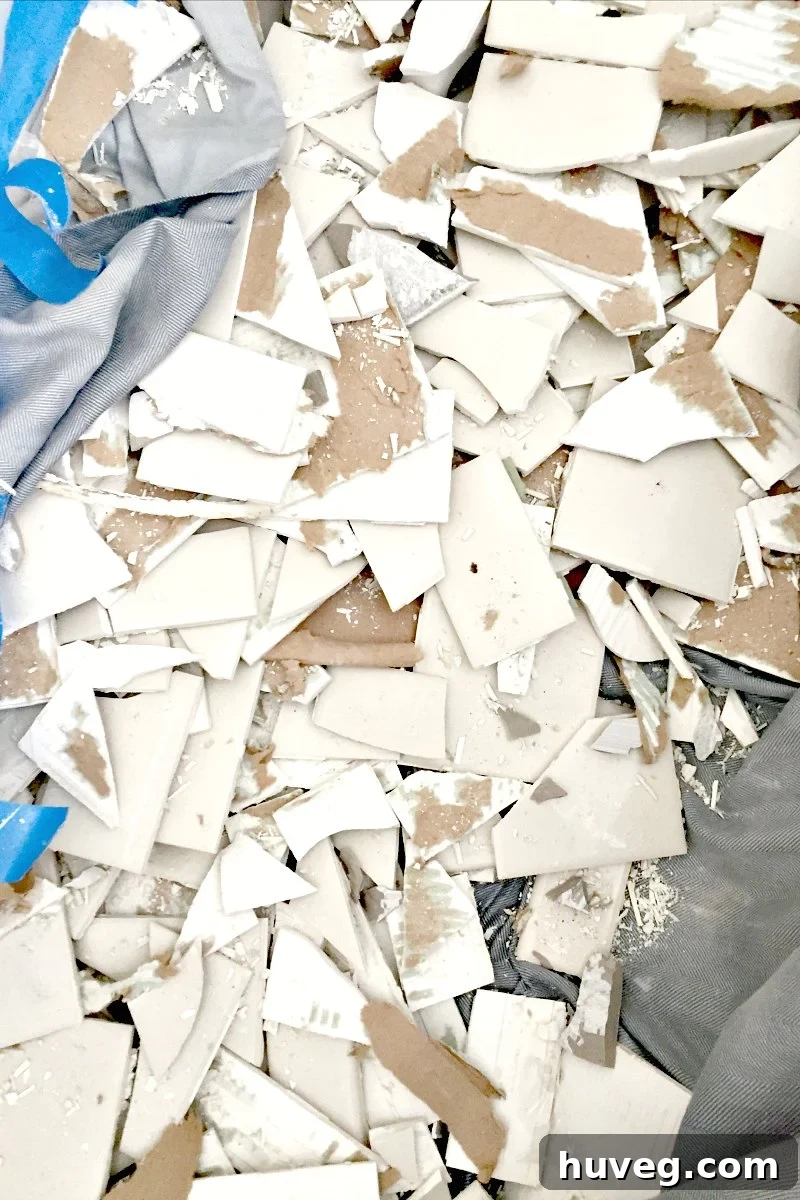
Strategic Start Points: Beginning Your Demolition at the Edges
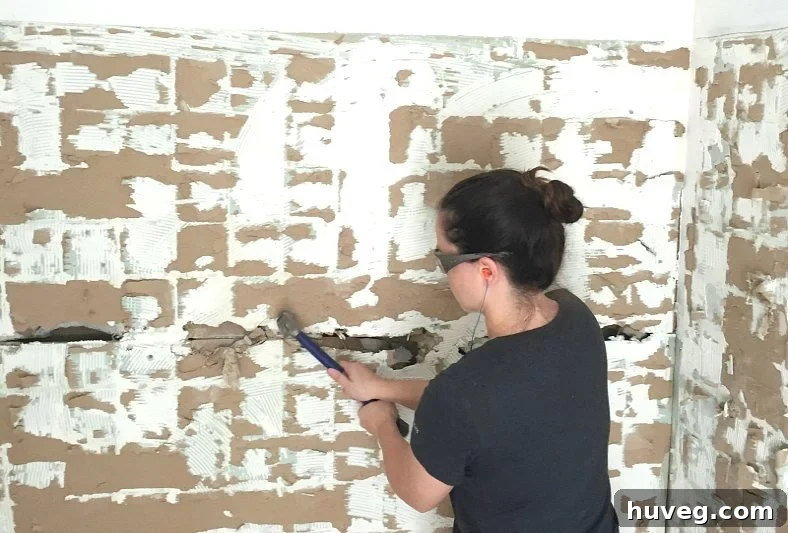
While it might seem obvious, initiating tile removal from the outer edges and working your way inwards is by far the most effective strategy. Tiles are typically most vulnerable at their perimeters, where grout lines meet walls or fixtures, making these ideal starting points. If your shower, like mine, dates back a few decades, you might even discover some looser tiles around the tub base or corners due to age, shifting, or minor water infiltration. These areas are excellent places to begin, as they offer less resistance. Not only does starting here provide easier access, but it also allows you to systematically peel back layers rather than blindly attacking the center, which can be inefficient and more prone to unexpected damage.
Moreover, paying close attention to these initial points can offer valuable clues about the condition of your shower’s substructure. Any areas exhibiting signs of water damage, such as discoloration, softened drywall, or crumbling grout, should be meticulously noted. This early inspection is crucial for futureproofing your new installation. Identifying moisture issues now means you can proactively address them during the waterproofing phase of your new tile installation, ensuring a more durable and long-lasting finish.
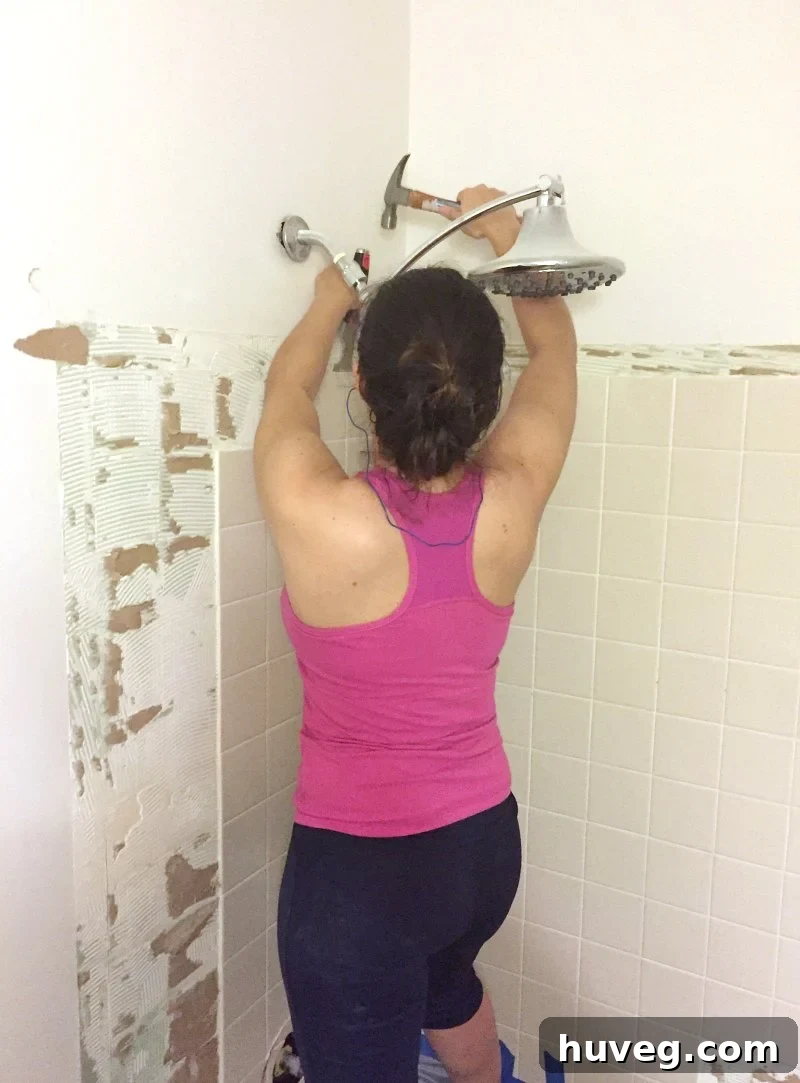
Leveraging Leverage: Hammering a Putty Knife Along Grout Lines
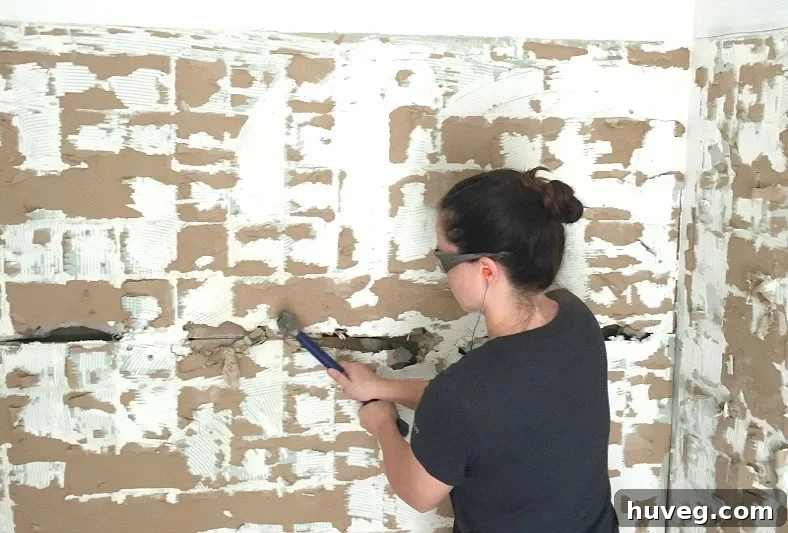
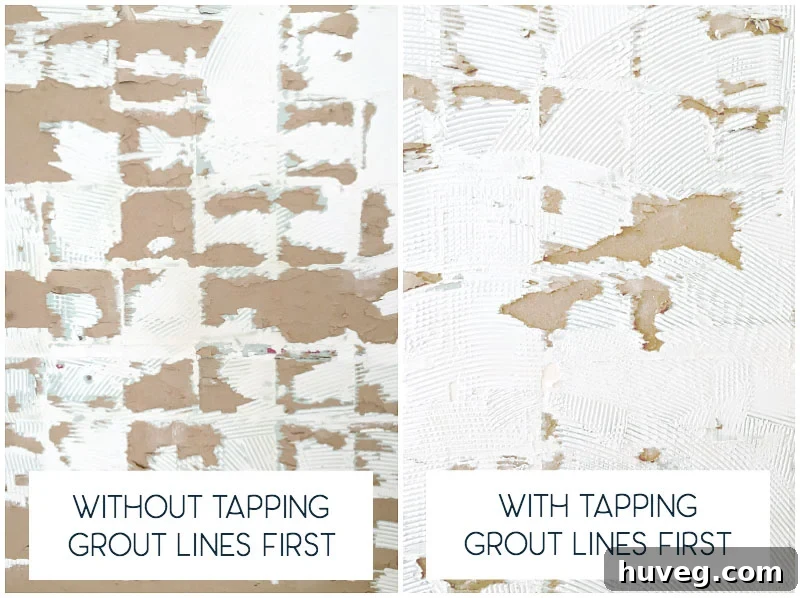
Here’s a tip that truly surprised me with its efficacy: instead of immediately prying at individual tiles, use a sturdy putty knife – a 6-in-1 painter’s tool works exceptionally well – to hammer along the grout lines. Position the blade precisely into the grout, then use a hammer to tap the end of its handle, almost like using a chisel. I initially tried this out of sheer curiosity, expecting minimal results, but was astonished by how effective it proved to be. My theory is that this targeted hammering creates sufficient vibrations to fracture the aged thinset and grout underneath, weakening the bond without requiring brute force.
This method significantly reduces the effort required to dislodge tiles. I can attest to its superiority from a friendly, albeit competitive, demolition session with a helpful bearded friend working on the opposite side of the shower. While he relied on brute force, my putty knife and hammer technique allowed me to remove larger chunks of tile more quickly and cleanly. He jokingly attributed my success solely to a “better putty knife,” and while a quality tool certainly helps, the technique itself was the true game-changer. Soon enough, he was asking me to tap at his grout lines to help loosen his tiles, confirming the power of this precise approach. This method not only speeds up the process but also often allows tiles to come off in larger pieces, making cleanup easier.
*(And yes, sometimes our “date nights” involve home renovation projects. It’s a testament to our compatibility that we haven’t resorted to using the vast array of tools at our disposal against each other… yet! We did, however, make plenty of jokes about “this not being how we pictured being in the shower together” that night.)
Safety First: The Indispensable Importance of Wearing Proper Protection
While a bit of humor can lighten the mood during a tough DIY project, safety is no laughing matter. I often find myself chuckling at the suggestive nature of some DIY tips, but seriously: if you’re engaging in any demolition or woodworking, you absolutely must prioritize personal protective equipment (PPE). The risks associated with tile removal are numerous, and adequate protection can prevent minor scrapes from escalating into serious injuries.
Always wear ear protection, such as high-quality earplugs or earmuffs, as hammering tiles and breaking grout can produce extremely loud noises that could lead to hearing damage over time. Eye protection is non-negotiable; safety glasses or goggles will shield your eyes from flying tile shards, dust, and debris, which can cause severe injury. Additionally, wear durable gloves to protect your hands from sharp edges and splinters. Long sleeves and pants, made from sturdy material, are highly recommended over shorts and t-shirts, even in warm weather. They offer a physical barrier against cuts and scrapes, which are common during demo. A dust mask or respirator is also advisable, as demolition generates significant dust that can irritate airways or pose long-term respiratory health risks.
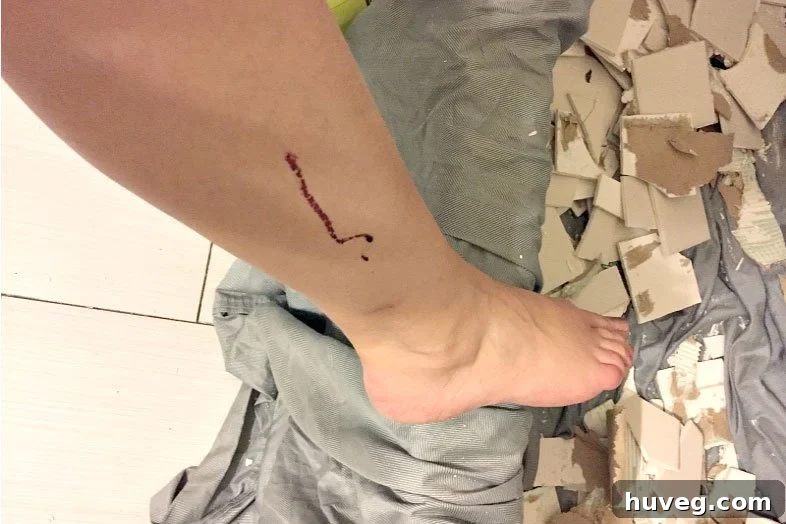
In my own experience, I learned this lesson the hard way. Despite my best efforts, I ended up with a small, yet surprisingly deep, cut on my calf. Amidst the falling debris, I didn’t even notice the injury until about thirty minutes later when I felt an itch and saw blood. While easily treatable, it served as a stark reminder that accidents can happen quickly, even with precautions. This incident also prompted a critical reminder: ensure your tetanus shots are up to date. If you’re working around old, potentially rusty materials, or even just exposed to dirt and debris, a tetanus booster is a wise precaution. If you have friends having babies, their Tdap (Tetanus, diphtheria, and pertussis) vaccine reminder can be a handy way to remember your own update, knocking out two protections in one swoop!
Demolishing Drywall: Score for Clean Lines, Then Hammer Away
After the tiles are down, you’ll likely find that the underlying drywall is heavily damaged by old adhesive, water intrusion, or the demolition process itself. While theoretically possible to reuse, the most practical and recommended approach for a shower remodel is to replace these damaged sections entirely. This ensures a clean, stable surface for your new backerboard and tile. We began by tearing into the old drywall with a hammer, which, I must admit, is immensely satisfying! Once loosened, larger pieces can be broken down further for easier disposal.
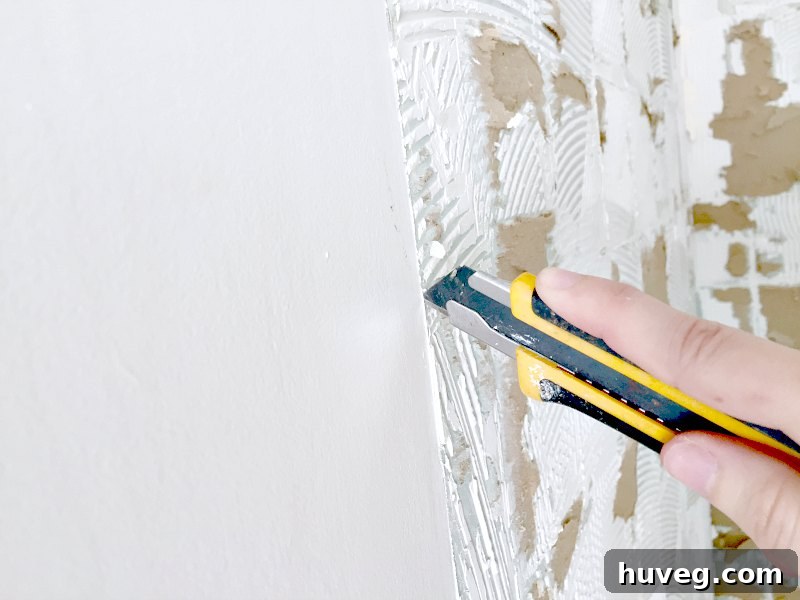
To achieve clean, straight edges for new drywall or backerboard installation, begin by scoring the drywall. Use a heavy-duty utility knife, like one of my favorites, to make a shallow cut along your desired line. Then, deepen this cut with several passes until the drywall weakens sufficiently to snap cleanly. This scoring technique is crucial for precise removal and minimizes unnecessary damage to surrounding areas you wish to keep intact.
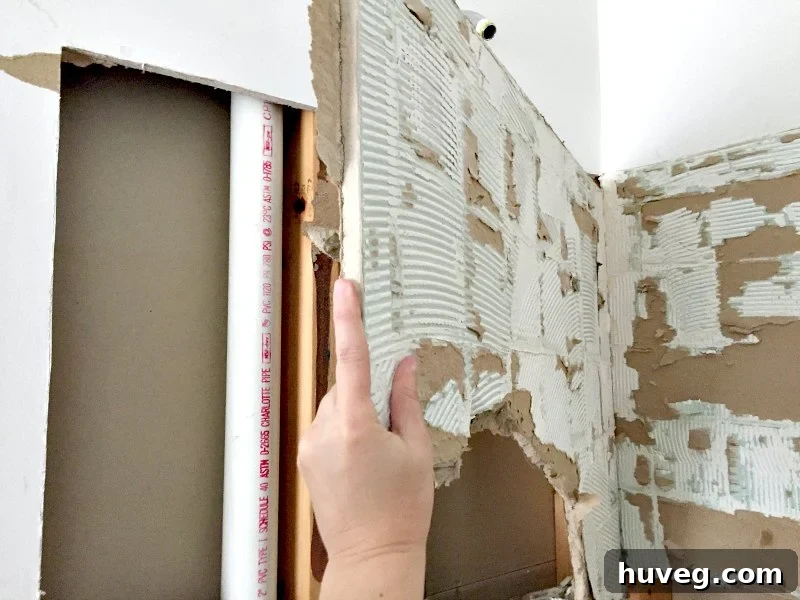
Always be acutely mindful of what lies behind the walls. As I worked on a particularly stubborn section, I discovered ductwork directly behind the drywall. Had I been more aggressive with the hammer, I could have caused significant and costly damage. Before making deep cuts or forceful impacts, take a moment to confirm the presence of pipes, electrical wires, or other utilities. As you progressively weaken each section, the drywall will eventually start to fold away in sizable, manageable pieces, making the removal process much smoother.
Clearing the Canvas: Removing Nails and Screws for a Fresh Start
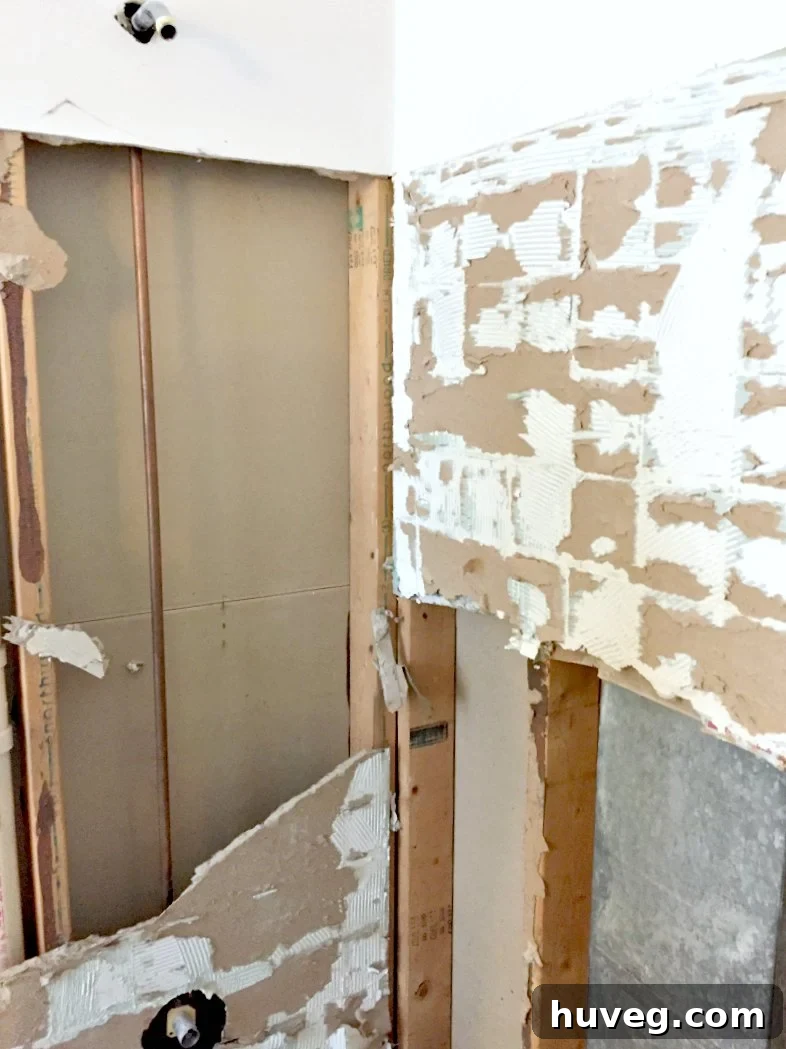
Once the old drywall is gone, you’ll be faced with the exposed studs and an array of fasteners that once held everything together. In my 1980s-era home, nails were the primary choice for securing drywall – a common, albeit somewhat bare-minimum, construction practice of the time. (Those who remember the backyard sinkhole project will recall other interesting construction shortcuts!) It’s imperative to meticulously pry out all these old nails or screws from the studs. A clean, smooth stud surface is essential for the proper installation of new backerboard, ensuring it sits flush and creates a stable foundation for your tiling.
I did leave some nails in place around the bottom perimeter, specifically near the tub. These appeared to be where the original drywaller had rested the panels during installation, inadvertently creating a small, strategic gap between the tub lip and the drywall. This gap, typically concealed by the first row of tile, serves an important function: it helps prevent capillary action, where water could wick up into the drywall from the tub’s edges and corners. My plan was to utilize these existing nails as temporary supports to prop up the new backerboard during its installation, maintaining that crucial gap.
An interesting anomaly I encountered during this phase was the builders’ selective use of glue on the drywall where it contacted some studs, but not others, and often not in the most logical places (e.g., near pipes where nailing might be risky). This seemed quite peculiar, and even after consulting with fellow DIY enthusiasts, no one had a definitive answer. If you happen to know the rationale behind this, I’d love to hear your insights!
The Critical Step: Doing Your Research and Choosing the Right Materials
This section highlights where I nearly made a significant and costly mistake – a testament to the importance of thorough research. Initially, I observed that the drywall I was removing was the moisture-resistant variety, often referred to as “greenboard” due to its distinctive green paper covering. My immediate assumption was to replace it with like-for-like, believing it was the appropriate material for a shower enclosure. I even went as far as installing the new greenboard and taping its seams, confident in my choice.
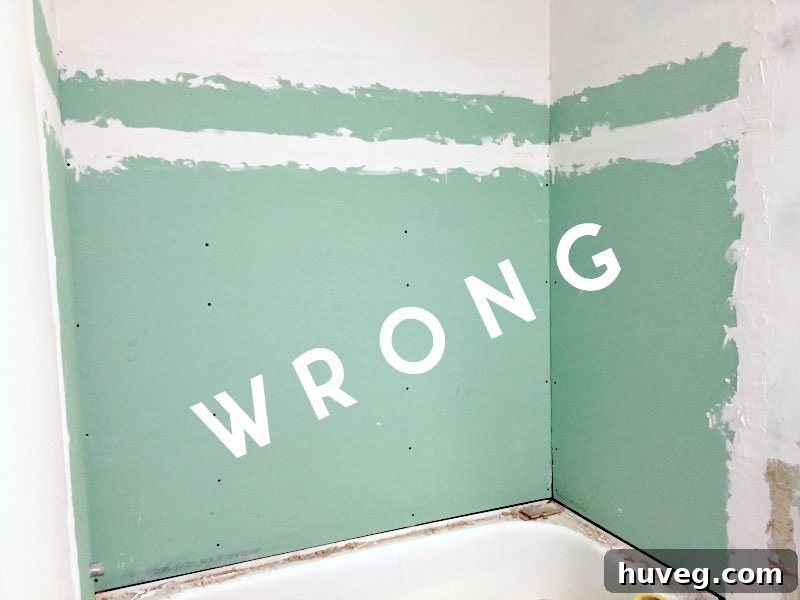
However, my previous exposure to various DIY projects had familiarized me with modern waterproofing materials and systems. After purchasing some, and critically, reading the instructions, I had a significant realization: greenboard is actually considered outdated and, in many regions, no longer meets current building codes for wet areas like showers. While “moisture-resistant,” it is not truly “waterproof” and can still succumb to moisture problems over time, leading to mold, mildew, and structural damage. The paper facing can break down when continuously exposed to water, undermining the tile installation.
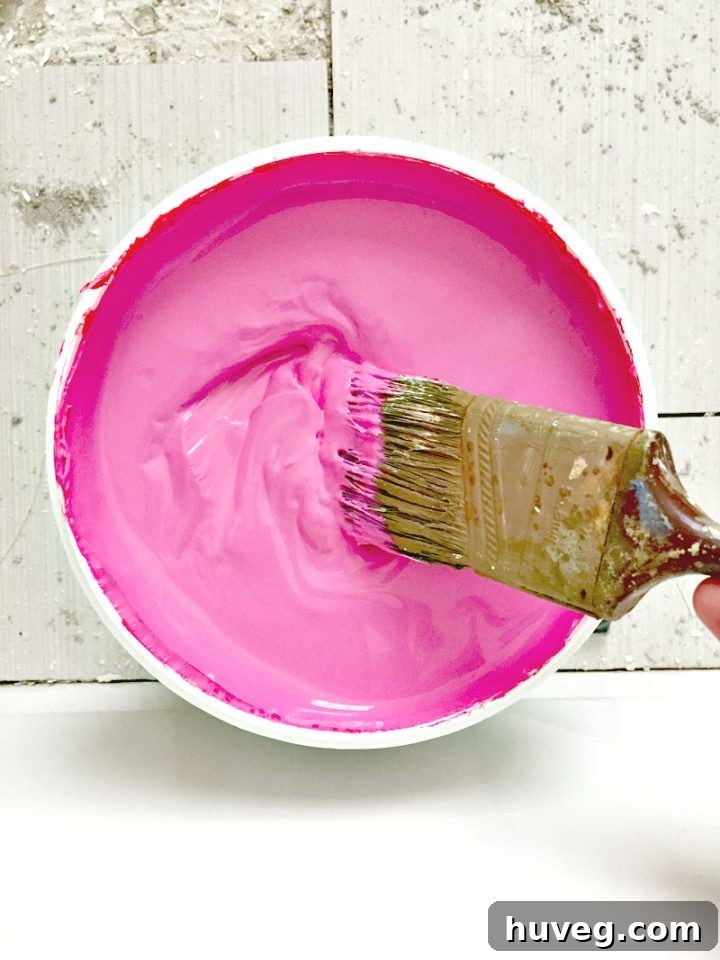
This discovery prompted a flurry of calls to knowledgeable friends and fellow DIYers for advice. The consensus was clear: rip out the newly installed greenboard and replace it with cement backerboard. This was a challenging hiccup, considering backerboard is heavy, cumbersome, and difficult to maneuver and hang. However, catching this mistake before applying any waterproofing or, worse, tiling over it, saved me immense frustration and future repair costs. Cement backerboard provides a far superior, stable, and truly water-resistant substrate for tile in wet areas. Coupled with a proper waterproofing membrane (like RedGard, as seen in the image), it forms an impenetrable barrier against moisture, ensuring the longevity and integrity of your shower for years to come.
Armed with these essential tips, you’re now better prepared to tackle the demolition phase of your shower renovation project. From protecting your existing fixtures to choosing the right materials and, most importantly, prioritizing your safety, these steps will lay a solid foundation for a successful and beautiful new shower. Demolition, when done thoughtfully, isn’t just destruction; it’s the critical first step in creation.
Stay tuned for the next installments of this bathroom overhaul series! We’ll be covering everything from installing new backerboard and mastering waterproofing techniques to the exciting process of tiling itself, complete with the video tutorials I’ve committed to producing (a decision I’m sure I’ll appreciate once the editing is done!). Also, keep an eye out for a post detailing a recent trip that serendipitously inspired my final tile choice. There’s definitely more to come!
Update: The shower is DONE! Want to see the stunning tile I picked and the finished look? Click here for the big reveal!