Demystifying Stair Terminology

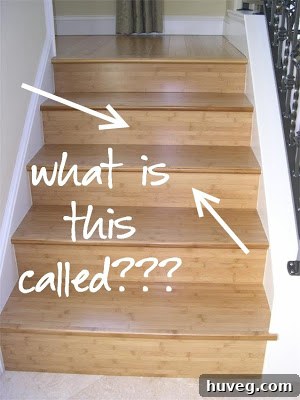
Ever found yourself staring at your stairs, perhaps during a routine cleaning or a spontaneous home improvement brainstorm, wondering what that particular component is called? Or perhaps you’ve been at a home improvement store like Home Depot or Lowe’s, struggling to articulate exactly what you need to a sales associate? You’re not alone. The world of home renovation, especially when it comes to something as fundamental as stairs, often comes with its own unique vocabulary. Navigating this specialized jargon can be daunting, but mastering it is a powerful tool for any DIY enthusiast or homeowner.
Demystifying Stair Anatomy: Your Essential Guide to Understanding Stair Parts and Terminology
Welcome to our comprehensive guide designed to demystify the various components of your staircase. Knowing the correct terminology for stair parts isn’t just about sounding knowledgeable; it’s a practical skill that empowers you to confidently communicate your needs, research solutions, and ultimately, save time and money on your DIY projects. Imagine confidently searching for “stair tread replacement options” or explaining to a contractor that you need new “balusters” for your railing system – it transforms your home improvement journey from a guessing game into a streamlined, efficient process.
This detailed resource aims to be your go-to reference for understanding stair terminology. We’ll delve into each component, providing clear descriptions, illustrative images, and practical insights relevant to real-world home renovation scenarios. Our approach is to go beyond simple definitions, offering context, common uses, material considerations, and tips that resonate with the hands-on DIY enthusiast. From the very basics of a step to the more specialized elements of a balustrade, we’re embarking on a thorough Stairs 101 lesson designed for clarity and ease of understanding.
The Fundamental Elements of Any Staircase Structure
At first glance, stairs might seem straightforward. However, they are marvels of engineering and design, composed of several distinct parts working in harmony to ensure safety, stability, and aesthetic appeal. For most DIY projects, particularly those involving repair, replacement, or cosmetic upgrades, you’ll frequently encounter these three core structural components:
1. The Stair Tread: Your Foot’s Foundation
The stair tread is arguably the most recognizable and essential part of a staircase – it’s the horizontal surface you step on as you ascend or descend. This crucial element bears the brunt of daily foot traffic, making its material, condition, and installation paramount for both safety and durability. Treads are available in a diverse range of materials, each offering unique aesthetics, wear resistance, and maintenance requirements. Common options include solid hardwoods like oak, maple, or cherry for a timeless, classic look; engineered wood for enhanced stability and resistance to warping; durable laminates for cost-effectiveness and easy maintenance; and even carpeted treads for sound dampening, added comfort, and slip resistance. When selecting treads for replacement or a new stair build, consider factors such as slip resistance, ease of cleaning, and how well they integrate with your home’s existing interior design and traffic levels.
When it comes to replacing worn or damaged treads, a common home improvement task, you’ll typically find them in the lumber section of your local hardware or home improvement store. While they are often sold in long, economical 18-foot lengths for larger projects or custom cuts, many stores also conveniently offer shorter 4-foot lengths. These pre-cut sections are incredibly convenient if you only need to replace one or two treads, minimizing material waste and simplifying transport. Always ensure you measure precisely before purchasing, taking into account any nosing or overhangs, and consider buying an extra piece or two for potential future needs or mistakes during cutting.
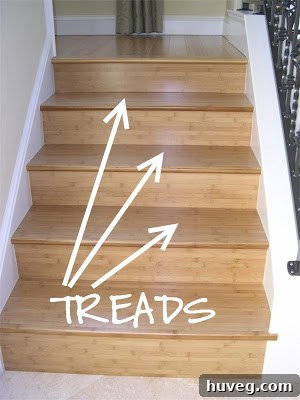
2. The Riser: The Vertical Connection and Decorative Opportunity
The riser is the vertical section of the stairs that connects and supports the front edge of one tread to the back edge of the tread above it. Think of it as the ‘wall’ or face between each step, completing the enclosed structure of a traditional staircase. While its primary function is structural support and forming the enclosed space beneath the tread, preventing objects from falling through, risers also offer significant aesthetic opportunities. Homeowners frequently use risers to add decorative flair through paint, contrasting colors, wallpaper, decorative tiles, or intricate paneling, transforming a purely functional element into a distinct design feature. In more modern or open-concept homes, risers may be omitted entirely, creating “open riser” staircases that offer a contemporary, airy, and minimalist feel. However, for most residential stairs, risers are an integral part of the structure, enhancing the overall rigidity and stability of the staircase.
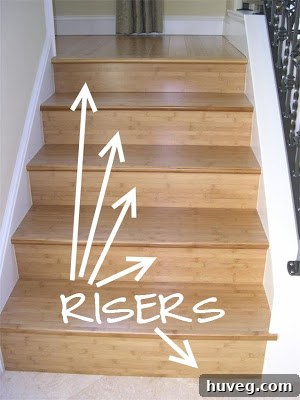
3. The Stringer: The Backbone and Structural Support
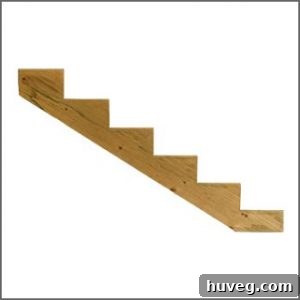
Often unseen but critically important for the entire staircase’s integrity, the stringer (sometimes called a stringboard, stair horse, or stair carriage) is the robust, load-bearing structural piece that supports the treads and risers. These sturdy beams run along each side of the staircase, acting as its foundational backbone, essentially forming the “skeleton” of the entire flight of stairs. Risers are typically screwed or nailed into the stringer, and then the treads are securely attached to the risers and stringers, creating a strong, cohesive unit. Many residential stringers, like those found in older homes, are “notched” or “cut” stringers. This means they are custom-cut in a sawtooth pattern, creating horizontal ledges for the treads and vertical spaces for the risers to fit perfectly, much like how you might draw steps on an Etch-a-Sketch. This precise design ensures both treads and risers are firmly supported, distributing weight evenly and providing unparalleled stability for the entire structure. Stringers are usually crafted from strong, dimensionally stable lumber, such as pressure-treated pine or construction-grade fir, especially when exposed to moisture or significant structural stress. In some cases, a “housed stringer” might be used, where grooves are routed into the stringer’s face to receive the treads and risers, providing a clean, concealed look.
Beyond the Basics: Other Important Stair Components for Function and Style
While treads, risers, and stringers form the core structural elements, several other components contribute significantly to the overall function, safety, and aesthetic appeal of a staircase. Understanding these additional terms will further enhance your DIY vocabulary and improve your project planning capabilities:
4. Stair Nosing: The Overhang for Comfort and Safety
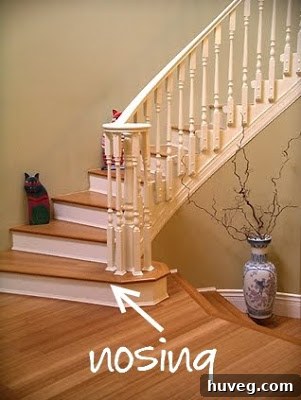
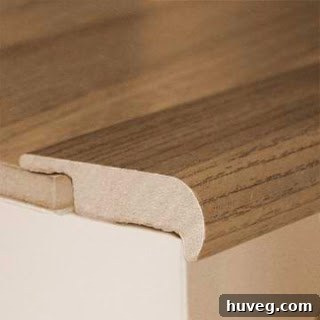
The nosing refers to the finished edge of the stair tread that extends horizontally beyond the face of the riser below it. This slight overhang is far more than just a decorative detail; it serves important functional and safety purposes. A proper nosing provides crucial extra foot room on each step, making climbing and descending more comfortable and secure, and significantly reducing the chance of tripping. It also protects the top edge of the riser from wear and tear, especially from shoe scuffs and impacts. Colloquially, you might think of it as the “lip” of the stair, giving the stairs a distinct profile and adding to their overall visual depth. When installing new flooring on stairs, such as hardwood planks or laminate, specialized pieces often called a bullnose or stair nose molding are required. These transition pieces are specifically designed to seamlessly bridge the gap from the flat flooring surface on the tread to the exposed vertical edge, creating a finished, professional look and ensuring both safety and durability.
5. The Landing: A Pause and Direction Changer
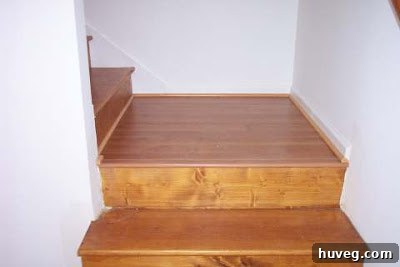
A landing is a flat, intermediate platform or rest area built into a staircase, typically used where the stairs change direction or between floors in a multi-story building. Landings are crucial for ergonomic stair design, serving several key functions: they break up long, continuous flights of stairs, providing a natural place to pause and rest; they facilitate changes in direction (essential for L-shaped, U-shaped, or switchback staircases); and they significantly enhance safety by reducing the overall length of continuous descents, minimizing the impact of a potential fall. In many homes, the term “landing” can also refer to the area at the very top of the stairs, particularly when it leads into a hallway or an open living space. As someone who grew up calling the top area of our stairs “the landing,” I can attest to its common usage, especially when “hallway” doesn’t quite capture the breadth or specific function of the space.
6. Winders: The Space-Saving Curved Steps
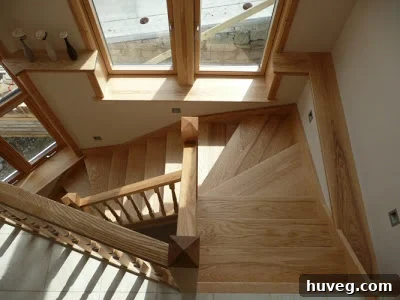
Winders are unique stair treads that are distinctly narrower on one side than the other, forming a fan-like or wedge shape as they curve around a central point. Their primary purpose is to facilitate a change in direction of a staircase without requiring a full, rectangular landing, making them an excellent space-saving solution. This design is particularly valuable in smaller homes, compact multi-story buildings, or tight architectural layouts where a full landing would be impractical. While efficient in terms of footprint, winders can sometimes be perceived as less safe or more challenging to navigate than standard straight steps or a spacious landing, as the varying tread depth can be less intuitive to foot placement. Proper design, consistent dimensions, and adherence to local building codes are crucial to ensure winders are both functional and safe. They commonly appear in spiral staircases, L-shaped, or U-shaped staircases where space optimization is a key design priority.
Expanding Your Stair Vocabulary: The Balustrade System and Trim
Beyond the core steps, the handrail and its supporting elements form another critical system, collectively referred to as the balustrade. This system is essential for safety, providing support and preventing falls, and it also significantly contributes to the overall aesthetic and architectural style of your staircase. Additionally, decorative trim pieces play a role in both protection and finish.
7. Newel Post: The Anchor of the Balustrade
The newel post is the main vertical support post found at the top, bottom, or sometimes at intermediate points on a staircase or landing where the handrail begins or changes direction. It serves as a sturdy anchor for the handrail and often acts as a significant decorative element, setting the tone for the entire balustrade system. Newel posts come in an immense variety of designs, from simple and utilitarian to elaborately turned, carved, or paneled, reflecting different architectural styles and personal tastes. They are absolutely crucial for the stability and rigidity of the handrail, providing the necessary strength to prevent movement.
8. Baluster (or Spindle): The Vertical Guards
Balusters, also commonly known as spindles, are the vertical decorative or functional posts that fill the space between the handrail and the stair treads or landing floor. Their primary purpose is safety: to prevent people (especially children and pets) from falling through the open areas of the balustrade. Building codes universally specify the maximum allowable spacing between balusters to ensure adequate safety (often no more than 4 inches, or 10 cm, to prevent a 4-inch sphere from passing through). Balusters are available in a wide array of materials, including wood (turned, square, custom-shaped), wrought iron, steel, and even glass, allowing for immense customization to match any interior design theme, from traditional to ultra-modern. They are typically secured into the treads (or shoe rail on the landing) and the underside of the handrail.
9. Handrail (or Banister): The Guiding Support
The handrail, often informally called a banister, is the horizontal or sloping rail that you grasp for support as you navigate the stairs. It is securely attached to the newel posts and supported by the balusters. Handrails are indispensable safety features, providing crucial stability and guidance, particularly for those with mobility challenges or when carrying items. They must be installed at a specific height (dictated by local building codes, typically between 34 and 38 inches or 86-96 cm from the nosing of the tread) and be continuous where possible for maximum safety and uninterrupted support. Like other stair components, handrails come in diverse materials and profiles, from classic wooden rails offering ergonomic comfort to sleek metal designs, providing both functional grip and significant aesthetic appeal.
10. Skirtboard (or Kickboard): The Wall Protector and Finisher
The skirtboard, sometimes referred to as a kickboard or stringer trim, is a piece of decorative trim that runs along the wall adjacent to the staircase. It serves a dual purpose: first, it protects the wall from scuffs, impacts, and general wear and tear from shoes, vacuum cleaners, or objects being carried up the stairs. Second, and equally important, it provides a clean, finished appearance where the treads and risers meet the wall, covering any minor imperfections in the wall or stair construction and creating a polished look. Skirtboards can be painted, stained, or left natural to complement the staircase materials and the surrounding room’s decor, adding a refined touch to the overall design of the stairwell.
Maintaining Your Staircase: Tips for Longevity and Safety
Understanding these distinct parts is also key to proper maintenance and ensuring the longevity and safety of your staircase. Regular inspection of treads for excessive wear, risers for cracks or separation, and balustrade components (newel posts, balusters, handrails) for looseness or damage can prevent minor issues from escalating into major, costly repairs. Promptly addressing any loose elements, applying appropriate finishes to protect wood from wear and moisture, and keeping stairs clean and clear of clutter will significantly extend the life and safety of your staircase, protecting both your investment and the well-being of your household members.
Conclusion: Empower Your DIY Journey with Knowledge
There you have it – a comprehensive “Lingo Lesson” on the essential parts of a staircase! Armed with this enhanced knowledge, you’ll no longer feel lost or intimidated in the aisles of your nearest hardware store or confused by complex online DIY tutorials. Instead, you’ll be able to confidently discuss your needs, articulate your vision with precision, and successfully plan and execute your home improvement projects with newfound expertise. From replacing a worn tread to envisioning a complete balustrade overhaul, knowing the anatomy of your stairs is your crucial first step toward becoming a more capable, efficient, and confident DIYer.
So, go ahead and strut through those aisles, because now you know what you’re looking for! You can confidently say, “Thank you for your help, sir, but I know precisely what I need and how to describe it.” Happy renovating!
(Need more DIY help and practical advice for your home improvement projects? Be sure to explore our Lessons Learned page for additional tutorials and valuable insights!)
And a big THANK YOU to the fantastic and inspiring community at Tip Junkie for featuring our content and continuing to empower DIY enthusiasts everywhere! Your support fuels our passion for sharing knowledge.