Unscripted Grooves

Remember the flooring installation conundrum we faced, completely stalled by our enigmatic fireplace? It feels like ages ago, but that particular hurdle was a significant roadblock in our home renovation journey. We were eager to transform our living space, yet the intricate dance of laying new laminate flooring around the existing hearth presented a unique challenge. This wasn’t just about making simple cuts; it required a specialized approach to ensure both aesthetic appeal and structural integrity for our new floors.
Mastering the Fireplace Undercut: A DIY Guide to Seamless Laminate Flooring Installation
The solution to our flooring predicament arrived promptly in the mail: a specialized diamond saw blade. Its arrival on Friday was a turning point, signaling that we could finally re-rent the crucial jamb saw and make significant headway on our floors before the weekend drew to a close. This small but mighty tool held the key to unlocking our progress, transforming what seemed like an insurmountable obstacle into a manageable task. We were ready to tackle the fireplace, armed with the right tools and a renewed sense of determination.
The Fireplace Dilemma: Why Undercutting is a Game-Changer for Flooring
To fully appreciate the genius of the undercut method, it’s essential to understand the traditional challenges posed by a fireplace hearth during flooring installation. Typically, installers are forced to meticulously cut each individual flooring plank to precisely fit around the irregular, often jagged edges of the hearth. This process is not only incredibly time-consuming and labor-intensive but also prone to imperfections, leading to visible gaps or uneven lines that detract from the overall finish. Achieving a perfectly seamless look with this method is notoriously difficult, demanding extreme precision and a high level of skill.
Our strategy, however, was far more elegant: to use a specialized jamb saw to undercut the fireplace hearth. This innovative technique involves creating a shallow, uniform channel beneath the hearth’s edge. By doing so, the new flooring pieces can simply “float” underneath the fireplace, effectively disappearing beneath it. This eliminates the need for intricate cuts around the hearth’s perimeter, resulting in a cleaner, more professional finish that truly integrates the fireplace with the new flooring. The time savings alone make this method invaluable, allowing us to accelerate the entire installation process significantly while achieving superior results.
Essential Tools for a Professional Finish: The Diamond Saw Blade and Jamb Saw
The heart of our solution lay in two critical tools: the diamond saw blade and the jamb saw. The jamb saw itself is a specialized power tool designed to cut horizontally at floor level, perfect for undercutting door jambs, trim, and in our case, masonry hearths. Its low-profile design allows it to make precise cuts flush with the subfloor, creating the ideal void for new flooring. However, a standard blade isn’t sufficient for cutting through hard materials like brick or stone.
This is where the diamond saw blade becomes indispensable. Unlike conventional saw blades, a diamond blade is engineered with industrial diamonds embedded in its cutting edge, making it incredibly effective at slicing through tough materials like concrete, stone, brick, and tile. For our fireplace hearth, which was solid masonry, this diamond blade was not just beneficial but absolutely crucial. It enabled clean, efficient cuts without excessive wear on the blade or undue strain on the saw. Without the correct blade, attempting to undercut the hearth would have been a frustrating, if not impossible, endeavor.
Prepping Your Space: Setting the Stage for Success
Before any power tools were switched on, a thorough preparation of the living room was paramount. This critical phase minimizes potential hazards and streamlines the entire process. Our first step involved meticulously clearing the area. All movable furniture was relocated to another room, creating an unobstructed workspace. For larger, immovable items, we meticulously draped them in plastic sheeting. This wasn’t merely for protection against dust; it also provided a barrier against potential debris and ensured our belongings remained pristine throughout the dusty operation.
Following the furniture protection, a comprehensive cleaning of the entire floor area was performed. We started with a thorough vacuuming, followed by sweeping, to remove any loose dirt, debris, or existing dust. This might seem like an extra step, but a clean subfloor is crucial for the optimal adhesion of underlayment and the smooth installation of laminate planks. Finally, we gathered all necessary protective gear, transforming our living room into a safe, organized, and ready-to-work zone for what we affectionately dubbed our “jamb session.”
Prioritizing Safety: Your Ultimate Guide to Masonry Work Protection
I cannot emphasize enough the absolute necessity of wearing comprehensive protective gear when undertaking any project that involves cutting into masonry. The risks associated with masonry dust and power tools are significant, and neglecting safety can lead to serious, long-term health issues or immediate injuries. Our commitment to safety was unwavering, and it should be yours too.
Respiratory Protection: Safeguarding Your Lungs
Cutting into masonry releases a fine, abrasive dust that often contains crystalline silica. Inhaling this silica dust can lead to serious lung diseases, including silicosis, a debilitating and irreversible condition. A simple dust mask is insufficient. We utilized N95 or P100 respirators, which are specifically designed to filter out fine particulate matter. Ensure your respirator fits snugly to create an effective seal. Stopping periodically to sweep and vacuum helps reduce airborne dust, but continuous respiratory protection is non-negotiable.
Eye Protection: Shielding Your Sight
Any task involving a sharp saw blade and abrasive materials like masonry poses a direct threat to your eyes. Flying dust particles, small chips of stone, or even unexpected fragments can cause severe eye injuries. Standard safety glasses offer some protection, but impact-rated goggles that seal around your eyes provide superior defense against dust infiltration and larger debris. Always ensure your eyewear is clean and clear to maintain optimal visibility throughout the cutting process.
Hearing Protection: Preserving Your Auditory Health
The jamb saw, particularly when cutting through dense masonry, generates an incredibly loud, high-pitched noise. Prolonged exposure to such high decibel levels can lead to permanent hearing damage, including tinnitus or hearing loss. Earplugs or industrial-grade earmuffs are essential for mitigating this risk. Scott, who was operating the saw, wore earplugs, which I’m certain made the experience far more tolerable for him. Don’t underestimate the impact of noise on your hearing; protect it diligently.
General Safety: Gloves and Sturdy Footwear
Beyond the core protections, wearing sturdy work gloves provides a better grip on tools and protects your hands from cuts, abrasions, and splinters. Similarly, closed-toe, sturdy footwear is crucial to protect your feet from falling tools, debris, or accidental slips. Think of safety as an investment; the time and cost are minimal compared to the potential consequences of neglect.
Managing the Mess: Effective Dust Control and Ventilation
Despite all safety precautions, cutting masonry will inevitably produce a substantial amount of dust. Our goal was to contain and minimize its spread as much as possible. Since the cloud of fine masonry dust could easily permeate the entire house, our first strategic move was to immediately turn off the central air conditioning system. This prevents the dust from being drawn into the HVAC ducts and circulated throughout every room, contaminating areas far from the work zone.
Next, we prioritized ventilation. We opened all doors and windows in the immediate vicinity wide, creating maximum airflow. To further aid in expelling the dust, we strategically placed powerful box fans. These fans were positioned to direct the airborne dust directly outside, creating a ‘negative pressure’ environment that pulls dust away from the living space rather than allowing it to settle. Even with these measures, the dust accumulated rapidly. Therefore, we made it a point to periodically stop the cutting process, allowing the dust to settle somewhat, and then thoroughly swept and vacuumed the area before resuming. This proactive approach to dust management is vital for a cleaner workspace and a healthier home environment.
A Productive Diversion: Making the Most of Downtime
While Scott was immersed in the dusty, noisy work of undercutting the fireplace, I found myself with a window of opportunity to tackle other pending tasks. Rather than simply waiting, I decided to make the most of the situation. My loyal companion, Colby, our dog, was also sent outside to enjoy the fresh air and gnaw on some sticks left over from when we trimmed our hedges the previous week. With him happily occupied and needing to be outdoors, it seemed like the perfect moment to address a few quick improvements to our front garden area.
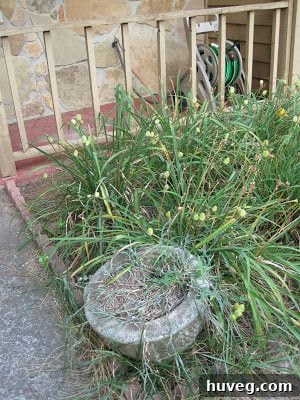
The day lilies, which had offered vibrant blooms earlier in the season, had since left behind dried, unsightly pods. These could be easily removed, tidying up the remaining greenery and encouraging healthier plant growth. I also seized the chance to weed two neglected stone planters that had been left behind by the previous owner. Neither of them housed actual plants yet, but clearing them out was a satisfying step towards envisioning what we’d like to plant by next spring. While I don’t have a clear “after” picture of my quick gardening spree, the image below gives you a sense of the before – the kind of little projects that, when tackled, make a big difference in a home’s curb appeal, even if it’s just a momentary diversion from the main renovation.
The Undercutting Process: Precision with the Jamb Saw
With all the preparations in place, Scott commenced the actual undercutting of the hearth. Despite the specialized nature of the tool and the hardness of the masonry, he managed to complete the initial cuts in approximately an hour. This efficiency was a testament to both the right tools and Scott’s careful approach. Operating the jamb saw requires a steady hand and a keen eye to maintain a consistent depth and a clean, straight line beneath the hearth. The goal is to create a uniform channel that is deep enough to allow the flooring to slide underneath without any obstruction, but not so deep as to compromise the structural integrity of the hearth itself. The diamond blade cut through the brick and mortar with impressive precision, creating the perfect foundation for the next phase of the project.
The Art of Chiseling: Creating the Perfect Gap
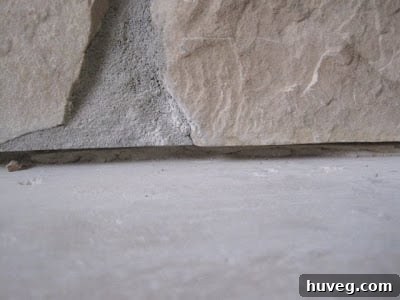
Once the jamb saw had created the initial cut, the next crucial step was to remove the lower section of masonry to form the actual gap for the flooring. Scott initially tried to use a large flathead screwdriver for this task, attempting to pry out the cut sections. While this offered a temporary solution, it quickly became apparent that for efficiency, precision, and ease, a dedicated chiseling tool would be far superior. A flathead screwdriver simply isn’t designed for heavy-duty masonry removal; it lacks the necessary weight, sharpness, and ergonomic design for effective chiseling. Understanding this, we made a mental note to pick up an actual masonry chisel when we returned the jamb saw to the rental store.
Upon acquiring the proper chisel, the process became significantly smoother. Chiseling involves carefully striking the chisel with a hammer, directing its force to break away the cut sections of masonry. This creates the necessary void, ensuring a clean and consistent space for the laminate flooring to slip into. The right tool not only speeds up the work but also reduces the physical strain and improves the quality of the finish.
Navigating Tricky Spots: Tackling Corners and Edges
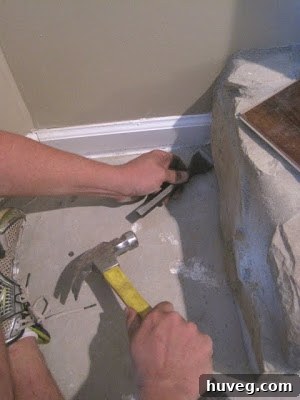
While most of the masonry removal proved to be fairly straightforward, the corners where the hearth met the wall presented a unique challenge. These specific areas required extra time and meticulous attention. The design of the jamb saw, while excellent for straight cuts, made it impossible to reach the very back portions of these corners without risking damage to the adjacent wall baseboards. The saw’s blade and housing simply couldn’t get close enough to the wall at a perfect 90-degree angle to make a clean, continuous cut.
Consequently, Scott had to rely solely on the chiseling tool for these sections. This meant chiseling without the benefit of an initial saw cut to guide the break. It required a more delicate and controlled approach, carefully chipping away at the masonry piece by piece. Patience was key here, as forcing the chisel could lead to unsightly damage to the baseboards or an uneven cut in the hearth itself. This highlighted the importance of having versatile tools and the adaptability to switch techniques when faced with architectural nuances. It’s in these challenging spots that the true craftsmanship of a DIY project often shines through, demanding precision and a methodical approach.
The Crucial Test: Ensuring a Smooth Fit
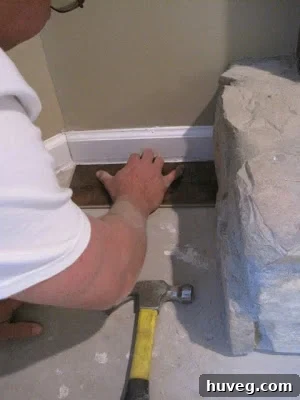
After all the cutting and chiseling was complete, and before laying any actual flooring, Scott performed an incredibly important pre-installation check: a dry fit. He took a scrap piece of laminate flooring and ran it meticulously around the entire perimeter of the undercut hearth. This simple yet crucial step served to identify any areas where the flooring might snag, get blocked, or fit unevenly due to lingering bits of masonry or an insufficient gap.
This quick test, taking only a few minutes, proved invaluable. It allowed us to identify and address any problem areas immediately. A few additional taps with the chisel here, a minor adjustment there, and the path for the laminate was perfectly clear. This proactive measure prevents the frustrating scenario of having to halt installation mid-way, pull up planks, and revisit the chiseling process. It’s a testament to the idea that a small investment of time in preparation and checking can save hours of frustration and rework down the line, ensuring a truly smooth and efficient installation.
Laying the Foundation: Underlayment and First Planks
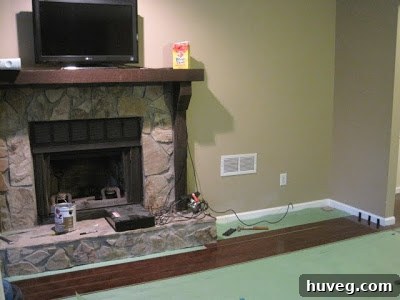
With the hearth successfully undercut and every potential snag eliminated, we moved on to the final stages of preparation before the actual flooring installation could begin. A thorough sweep and vacuuming of the entire living room floor were performed once more, ensuring that no dust or debris remained to interfere with the underlayment or the laminate planks. A clean subfloor is absolutely essential for a successful and durable flooring installation.
Next, we carefully laid down the plastic underlayment. This critical layer serves multiple purposes: primarily, it acts as a moisture barrier, protecting the laminate flooring from any moisture vapor rising from the subfloor. Following the plastic, we installed the foam padding. This padding provides crucial cushioning, enhancing walking comfort, reducing noise transmission, and evening out minor imperfections in the subfloor. With the underlayment and padding meticulously in place, we could finally begin the satisfying process of installing the laminate pieces themselves. The transformation was truly underway!
Looking Ahead: Momentum Towards Completion
By Sunday evening, we had made remarkable progress, transitioning from being completely stalled to having the subfloor prepped and the initial laminate planks laid. This achievement, especially overcoming the fireplace challenge, infused us with renewed energy and excitement. This flooring project has now become our number one priority for the rest of the week, and we are committed to seeing it through to completion.
I am confident that by our next flooring update, we will have a substantial amount of progress to showcase, perhaps even a fully completed floor! The momentum is certainly on our side. Now, if you’ll excuse me, I need to begin organizing our “flooring assembly line” to ensure we get a head start on tomorrow’s work. Be sure to check back tomorrow for another exciting reveal: our guest bedroom transformation awaits!