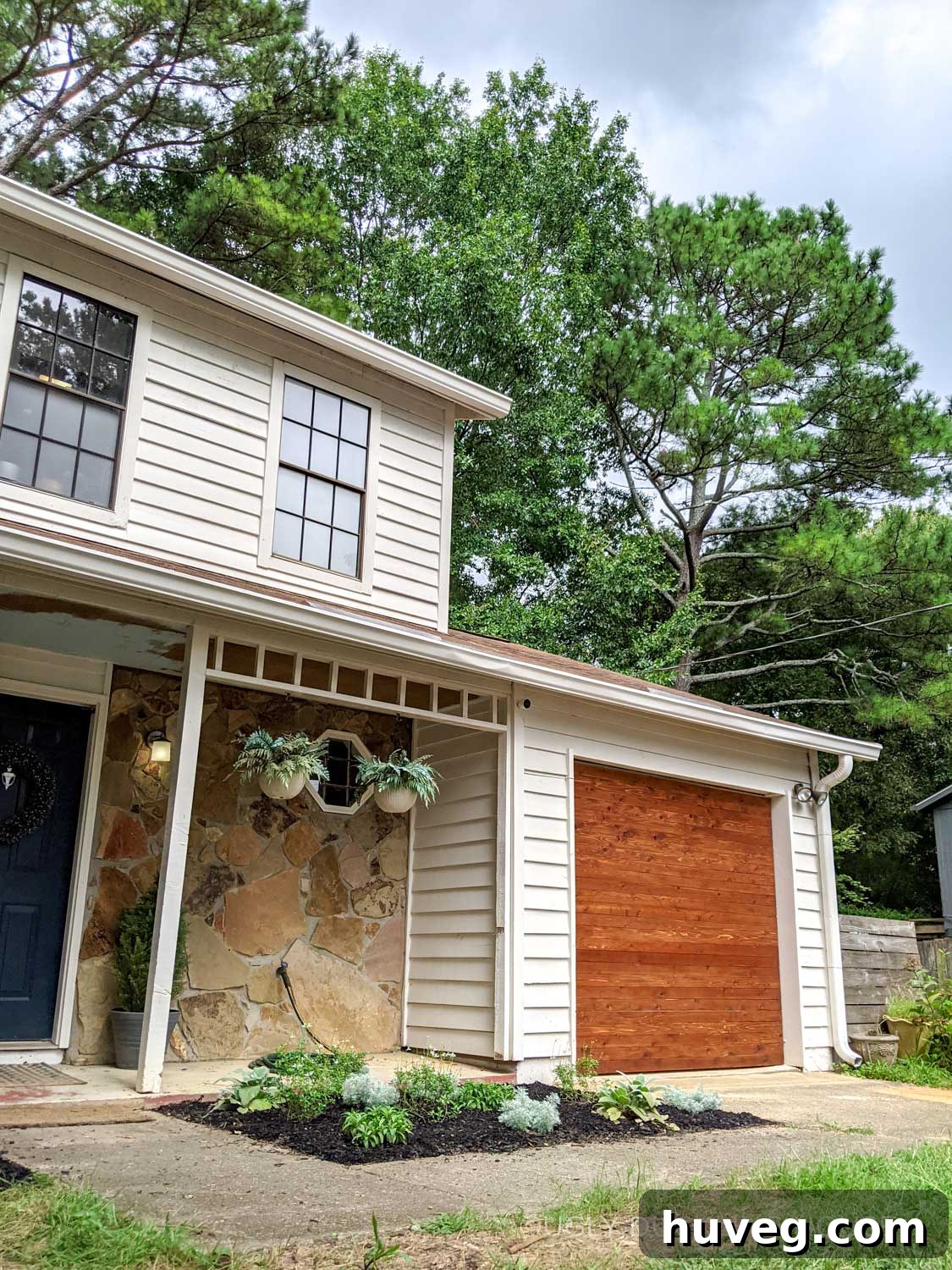
Stunning Cedar Garage Door Makeover

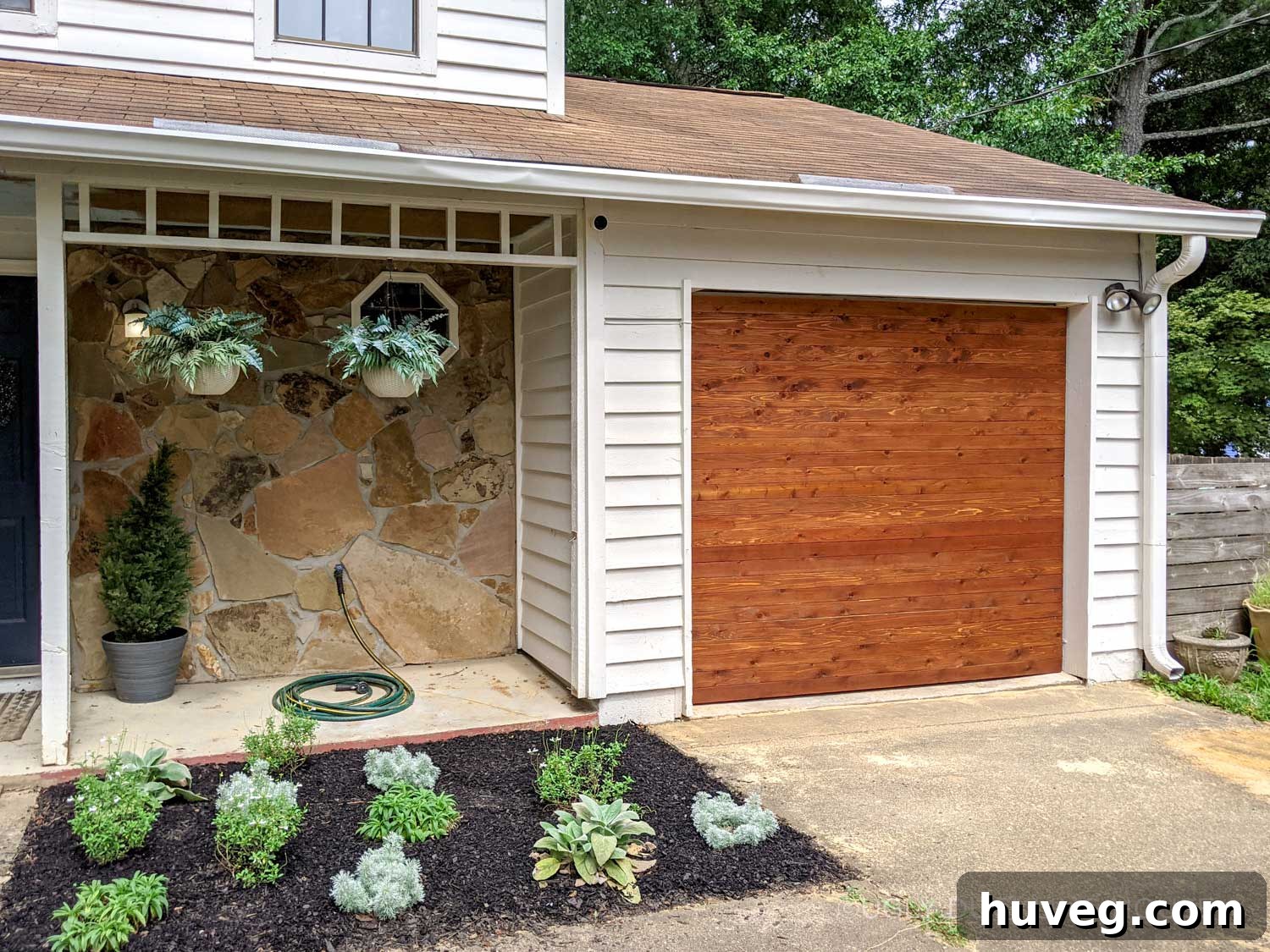
I am absolutely thrilled to share this incredible before-and-after transformation with you today. Not only does it represent the next major reveal in our home’s exterior makeover, but it’s a project where I personally crafted and installed my own tongue and groove boards! The sense of accomplishment is truly empowering; I can’t adequately express the immense pride I feel in having achieved this significant milestone:
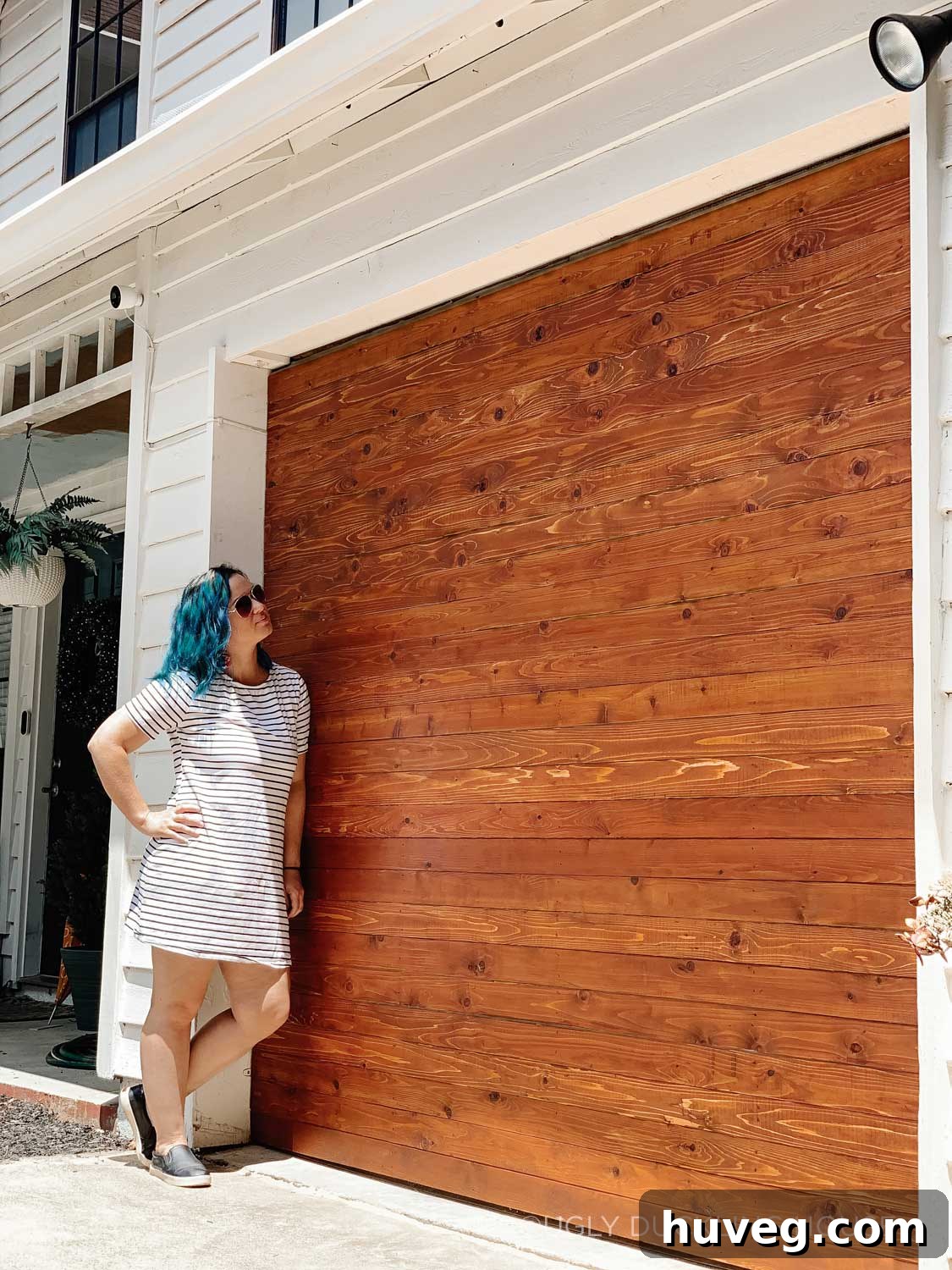
If you’ve ever felt intimidated by power tools or the idea of tackling a major home improvement project, this is the story I want to keep pointing you back to. My journey wasn’t without its challenges; I navigated through multiple plans, each presenting its own set of hurdles. I learned to operate a tool that once seemed daunting, and I wrestled with self-doubt more times than I can count throughout the process. Yet, by persevering, I overcame every obstacle. Sitting here, on the other side of this journey, I genuinely wish for everyone to experience the profound satisfaction I felt when the dust settled, revealing a brand-new garage door that I crafted with my own hands. It’s more than just a door; it’s a testament to determination and the joy of DIY.

Disclosure: This project was sponsored by Cabot Stain. All words and opinions are 100% my own. Hope you enjoy!
The detailed DIY instructions for this ambitious project are extensive and deserve their own dedicated posts, so look out for those soon! For now, let’s dive straight into the most exciting part — the dramatic, transformative before-and-after reveal that truly captures the essence of this renovation!
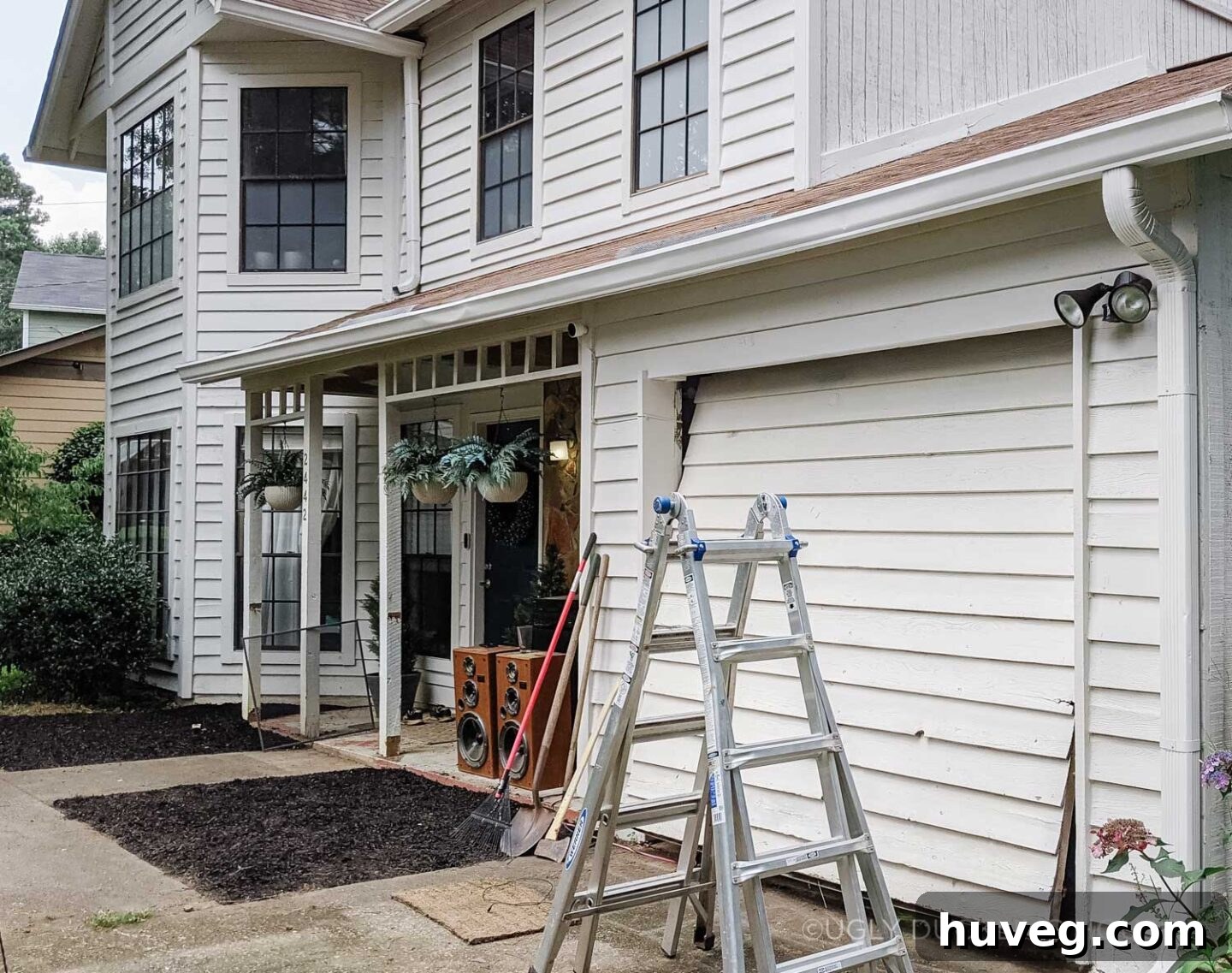
Before: The Uninspired, Matchy-Matchy Cedar Siding
Just a few weeks ago, when I revealed the fresh coat of paint on our house, I promised more exterior transformations were on the horizon. While the exterior painting itself actually wrapped up a couple of months prior, I’ve been quite behind on updating the blog (you might have noticed our new logo and website redesign, which consumed a significant amount of my time outside of baby care!). In fact, I knew I had a deadline to unveil this garage door project, which necessitated getting the house paint post live first to maintain chronological order. During the initial paint job, I specifically instructed the painters to bypass the garage door and front porch areas. This explains any slight inconsistencies in the paintwork there, as I had distinct DIY plans up my sleeve for these spots. And now, I’m thrilled to share the first of these exciting projects!
After: A Renewed Look with Stunning Cedar Tongue and Groove
After navigating a few unexpected twists and turns (more on those below), our garage door project is now almost complete and ready for its grand blog debut:
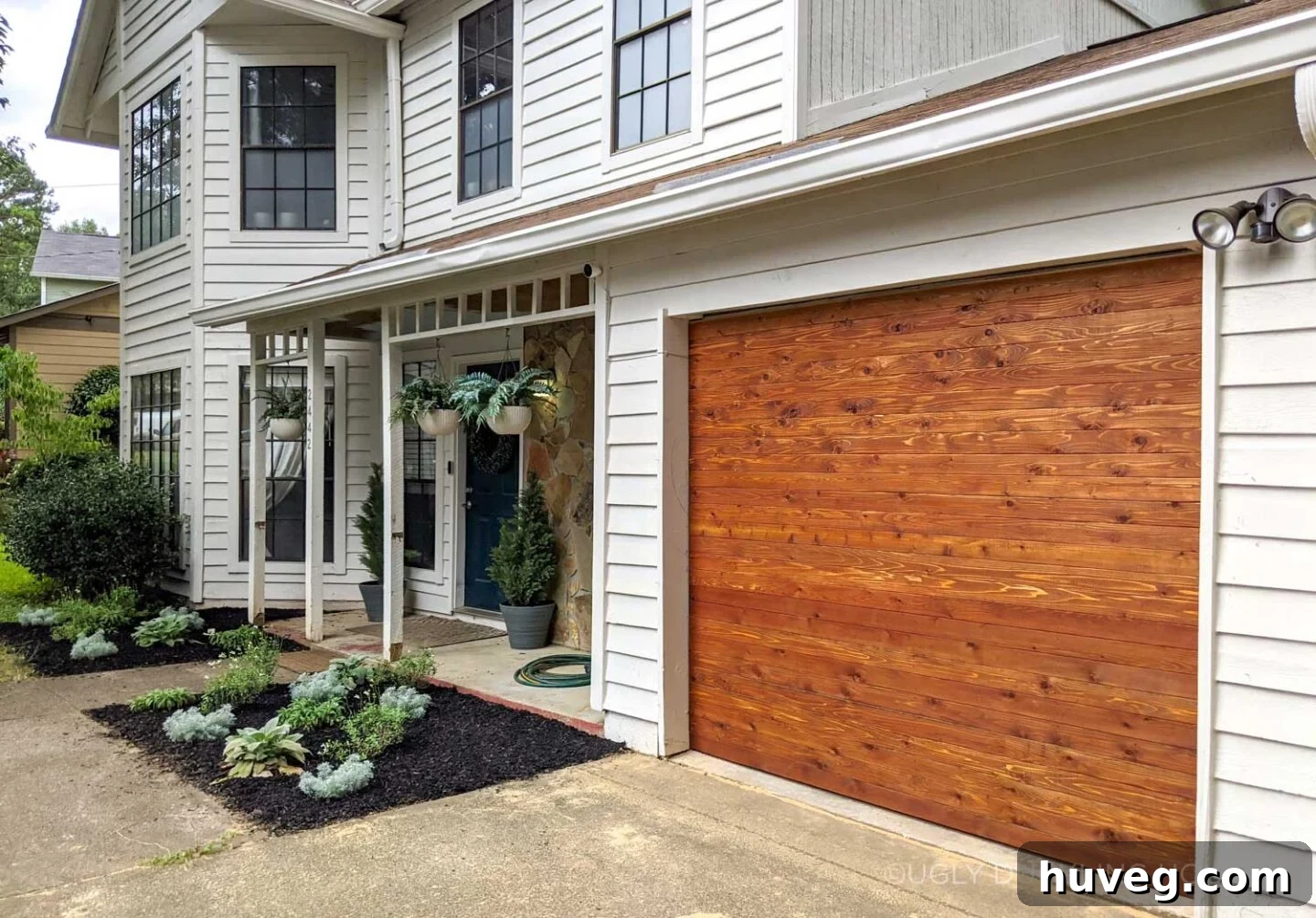
The transformation is truly remarkable, isn’t it? The rich, deep brown hue of the Australian Timber Oil from Cabot that I used elevates the entire freshly painted exterior to an entirely new level of sophistication and warmth. This isn’t just a simple facelift; it’s a complete reimagining of our home’s curb appeal, delivering a visual impact that I’ve been dreaming of for quite some time.
I’ve long envisioned incorporating warm cedar accents into our home’s exterior design. Rather than subtle touches, I decided to make a bold statement by transforming the garage door first. My initial strategy, “Plan A,” involved salvaging and reusing the existing cedar siding that already adorned the garage. The idea was to remove the siding, flip it to its unexposed, aged cedar side, apply a new stain, and then reattach it in a fresh configuration. The painter had assured me the siding was in decent condition and could likely be repurposed. The main task would be to thoroughly remove any paint – whether by sanding the front or utilizing the bare back – to ensure proper adhesion and resistance to temperature and moisture fluctuations.
However, what you won’t easily find online is a tutorial titled “How to remove cedar siding without damaging it.” After extensive searching, I discovered (though not entirely surprised) that most people don’t remove siding with the intention of reinstalling it, so no one has truly bothered to create a guide for it. This insight highlighted a potential pitfall in my initial plan. Fortunately, I will be creating and sharing that precise supplemental information in a separate post, coming directly after this one! Beyond that, I’ll also be detailing several other crucial steps of this entire process in forthcoming articles. I’ll make sure to link them here as they go live, so you can follow along with every aspect of the project:
- Our front garden makeover (from a neglected, weedy patch to a vibrant display of wildflowers, culminating in our beautifully tidy landscaping plan!)
- How to remove cedar siding without damage, for reuse or salvage.
- A comprehensive guide on how to craft your own tongue and groove boards efficiently using a router table.
- A more detailed, step-by-step tutorial outlining the intricate process of creating and installing this custom garage door.
As you can probably imagine, delving into all those details in one sitting would be… a lot. I quickly realized that if I didn’t break down these complex topics, you’d likely still be here reading about my garage door long after your workday had ended. While I know the journey is utterly fascinating, even I have my limits when it comes to blog post length!
How to Revamp a Cedar Garage Door: A Journey of Planning and Persistence
1. Make a Detailed Plan, But Be Prepared to Make Changes (Lots of Them!)
First and foremost, it’s crucial to understand how my initial plans evolved and changed throughout this project. I often feel like this aspect is glossed over in DIY blogs, almost as if every step went precisely as envisioned. I understand the desire to present a flawless tutorial, making it seem like the DIYer magically had all the answers. However, that’s simply not my style. Sharing my genuine process, including the setbacks and adaptations, can be incredibly helpful for those who might feel discouraged. In DIY, we learn, we adapt, and we push forward—sometimes after a bit of colorful language! The most crucial element is that unwavering determination; it’s what ultimately gets the job done, no matter how many detours you take.
PLAN A (Reuse the Existing Siding): My first thought was to salvage and reuse the old cedar siding. However, I wasn’t able to save every piece in good condition, and considering the current high cost of new wood, I realized that mixing old and new planks would likely compromise the uniform, high-quality finish I desired. Furthermore, numerous challenges needed to be addressed: I had to figure out how to rework the wood to ensure it could be mounted flat, rip it down to a narrower width to avoid the “matchy-matchy” look with the adjacent white siding (a task made tricky without a table saw or consistent success with my circular saw for straight cuts), repair splits, meticulously sand off old paint, and fill numerous old nail holes. Investing significant time and effort into this path carried a high risk of failure, potentially leading to wasted resources and the need to purchase new wood anyway. Therefore, I decided to pivot and invest directly in a completely fresh look. Thankfully, I still have a good amount of the old door siding saved, and I’m already brainstorming a new project to put it to good use, so nothing was truly lost!
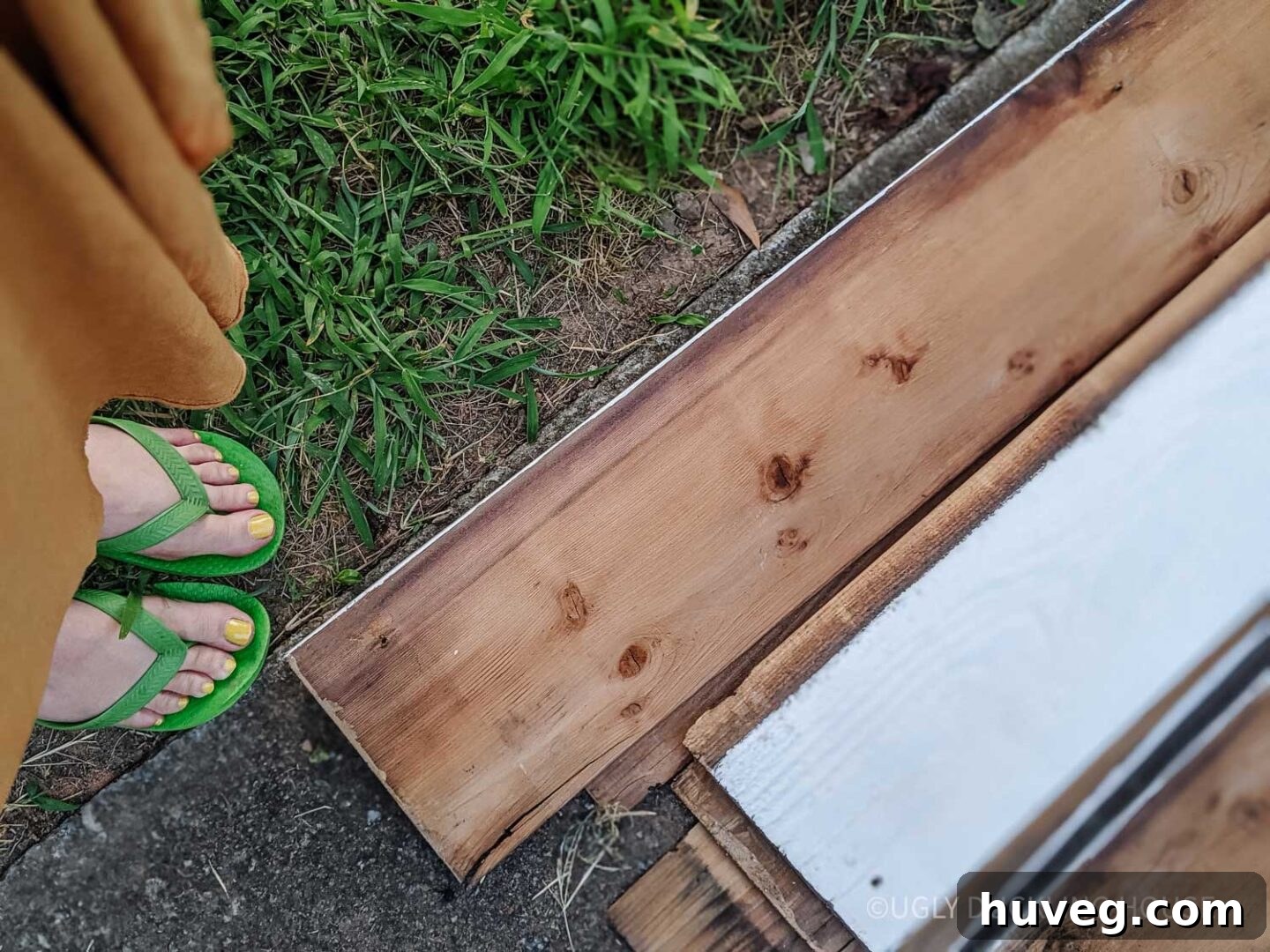
PLAN B (Simple 1×4 Slats): My next idea was to simply stack and attach individual 1×4 cedar slats horizontally. I meticulously calculated the quantity needed and purchased the wood. However, the very next morning, a critical realization hit me: I might be making a common beginner woodworking mistake by neglecting to account for wood movement. A knowledgeable friend confirmed my fears, advising that the 1x material, while seemingly thick enough, could easily dry out and warp significantly under direct sunlight if solely secured with nails. This could quickly lead to a complete disaster, undoing all my hard work. This crucial insight led me to develop a new and more robust solution: employing tongue and groove joinery. This method would ensure each piece remained perfectly aligned and securely interlocked, significantly increasing the long-term durability and stability of the new door. And conveniently, I already owned a router!
PLAN C (Tongue and Groove with Existing Router and New Bit): Confident that a specialized tongue and groove bit would solve my problem, I purchased one, only to discover it didn’t fit the collet of either router I already owned! With limited routing projects under my belt, I also worried about maintaining the steady hand needed to accurately cut so many boards, especially given the potential cost of mistakes requiring extra wood. With my deadline looming and no correctly sized collet available locally, I couldn’t simply run out for a quick fix. Fortunately, as a sponsored project, I could justify the investment in a new tool I’d been wanting for a while: a router table. This purchase not only resolved my immediate problem but also provided the push I needed to acquire a tool that will be invaluable for future projects, like the drawers I’m currently building!
PLAN D (Tongue and Groove with a Brand New Router Table!): After what felt like a million minor setbacks were finally resolved, I set up my woodworking station just outside the garage. Coincidentally, my partner, K, was simultaneously reorganizing and emptying the entire garage so we could finish the walls and establish a proper workshop. There was a slight learning curve to master the precise cuts on the router table, so I diligently practiced on scrap wood until I felt confident. Then, I took the plunge, cutting all my boards: a groove on one long side and a tongue on the other. It was a resounding success! The pieces fit together perfectly flat, creating a sturdy and beautiful panel. What a win!
2. Carefully Remove the Existing Siding
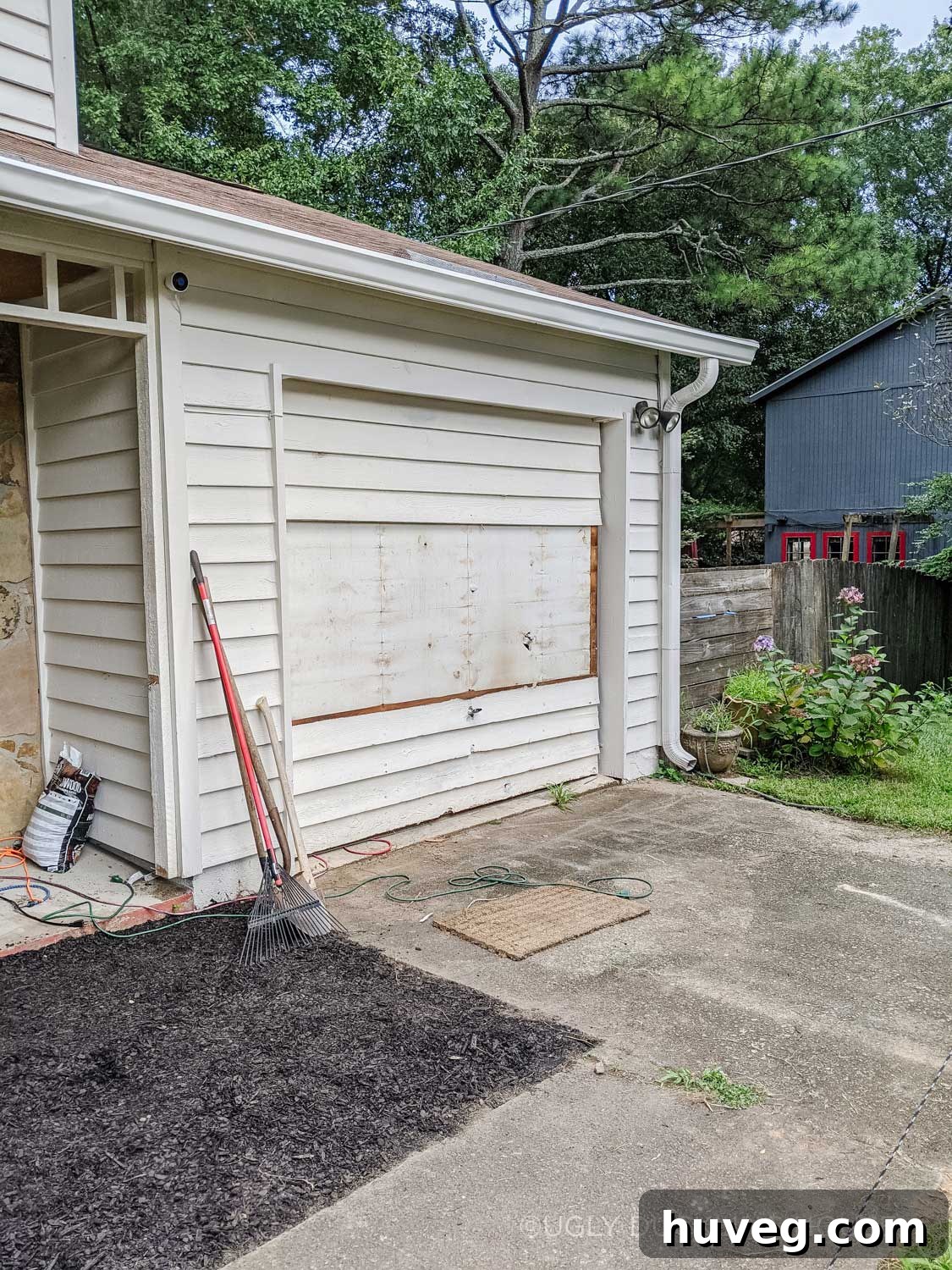
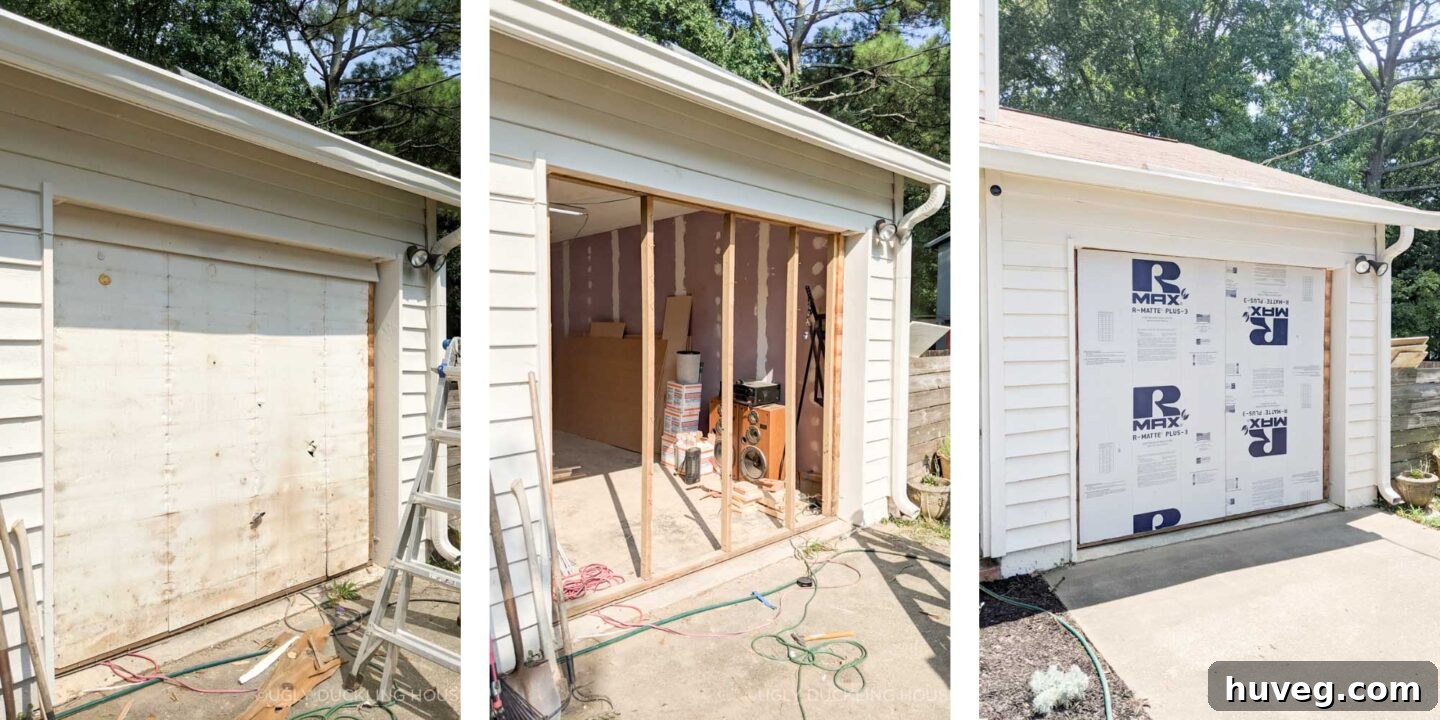
While a dedicated post will cover the intricacies of this step, I discovered that a slow and steady approach was absolutely essential for preserving the underlying structure and minimizing damage. I anticipate questions about why I didn’t start removing siding from the top; the short answer is, I tried! The nails at the top were incredibly stubborn and difficult to access. Starting from the bottom proved to be a much more effective and manageable method for me, allowing for a smoother, less destructive removal process. This step requires patience, as rushing can lead to unnecessary damage to the garage door frame.
3. Replace the Old, Damaged Insulation
During the siding removal process, it became glaringly apparent that the old insulation was in deplorable condition – riddled with gouges, holes, and general wear. For a relatively small additional investment, I decided to completely replace all the insulation and also renew the seals around the sides and bottom of the door. This upgrade wasn’t just aesthetic; it’s a practical enhancement that promises a more comfortable working environment within the garage, especially as we envision it as a future workshop. Though it might be psychosomatic, I genuinely believe I’ve already noticed a more comfortable temperature inside the garage at night (having spent several evenings cleaning up boards in there in preparation for installation!). This simple upgrade makes a significant difference in both comfort and potential energy efficiency.
4. Engage in Some Friendly Rivalry (and Make Fun of Your Opponents)
Oh yes, this entire undertaking was part of an exciting “DIY Duel” challenge alongside two other talented woodworkers on Instagram! If you’re not already familiar with their work, I highly recommend checking out Scott and Stephen. Their participation truly added an extra layer of fun and motivation to this project. With a strict deadline set by Cabot and Minwax, we engaged in a bit of playful “smack talk,” which gave me that much-needed extra “oomph” to ensure I didn’t look foolish when pitted against more experienced woodworkers. Scott and I both tackled outdoor projects, while Stephen focused on an indoor one, showcasing the versatility of stain for both interior and exterior applications. That firm deadline proved to be perhaps the single biggest factor in my resilience, especially when I encountered hiccups that left me feeling defeated more than once. Failure, flailing, or even throwing a hammer at the wall simply weren’t options. I had to pick myself up, re-evaluate, and try again, fueled by the competitive spirit!
And if I do say so myself… I absolutely knocked this challenge out of the park. Sure, an Adirondack chair is nice and all, but let’s be real—my project left them completely in the (saw)dust. 😉
5. Precisely Apply the Tongue and Groove Boards to the Door
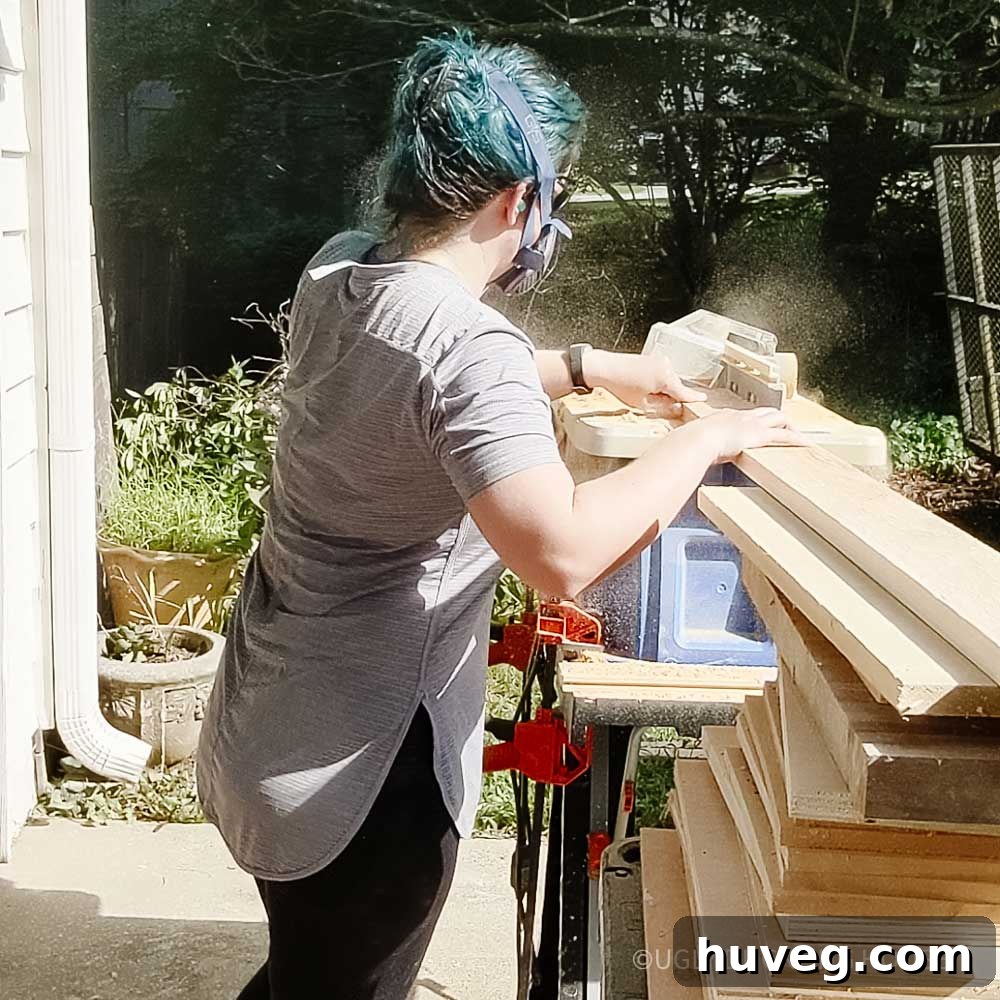
Each individual board was meticulously crafted by running a 1×4 piece of cedar through the router table, first along one long edge to create the groove, and then along the other to form the tongue. Safety is paramount during this step: always wear a dust mask, along with appropriate hearing and eye protection, as the router table kicks up a significant amount of dust very quickly. Taking these precautions ensures a safer and more enjoyable woodworking experience.
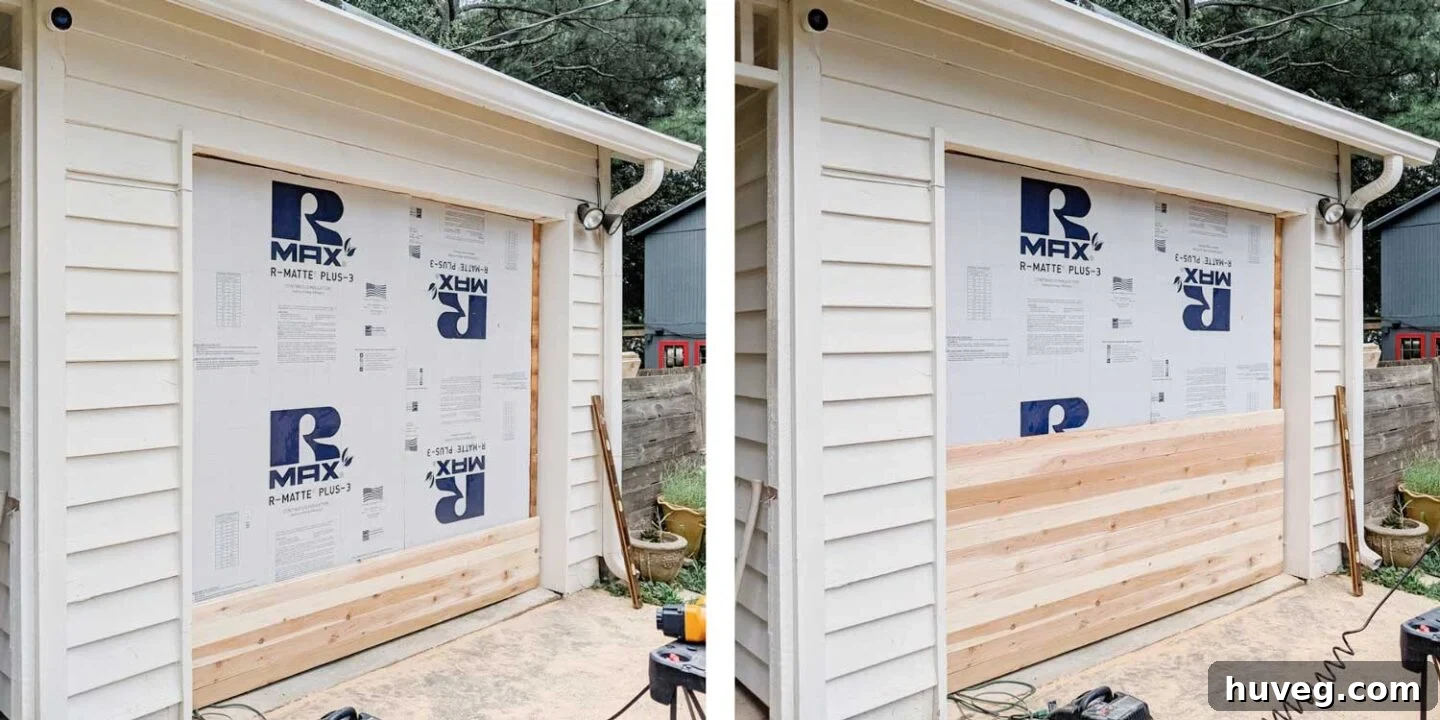
After thoroughly cleaning up the edges of each custom-made board, I began the installation process, tacking each one to the frame of the existing garage door structure. I meticulously checked for level as I progressed, ensuring a consistent and professional appearance. While it’s common practice to toe-nail tongue and groove boards to conceal the nail holes, I found it challenging to achieve a secure enough hold on the initial few boards using this method. Consequently, I decided to face-nail the boards directly into the frame, aligning the nails in a straight line for a cleaner look. Given the specific stain I planned to use, I was confident that these nail holes would be barely visible, if at all, once the finish was applied. This adaptation allowed for a much more secure and stable installation, prioritizing durability without compromising the final aesthetic.
6. Apply the Perfect Protective Stain
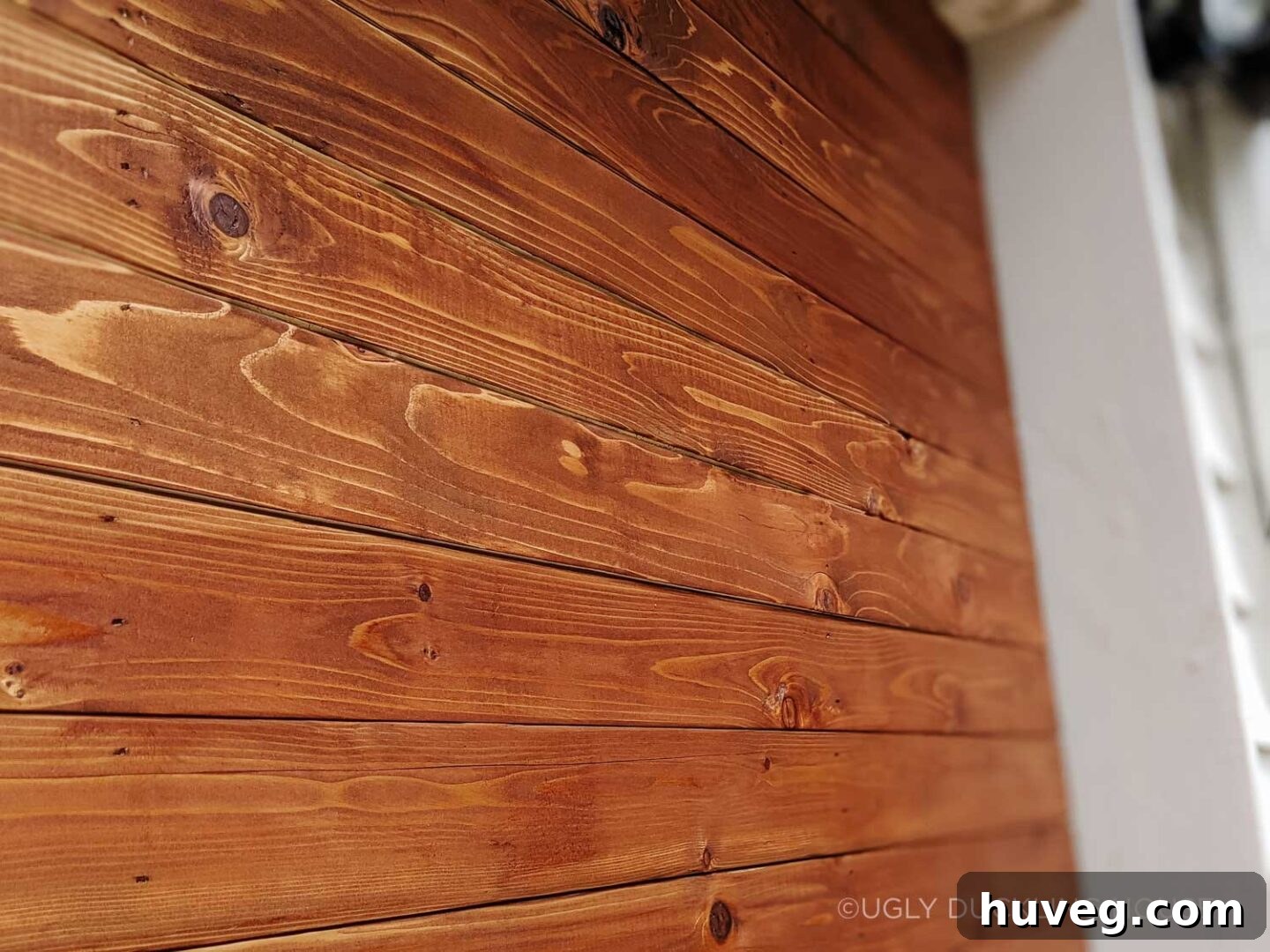
To ensure the new cedar siding would be well-protected and beautifully finished, I opted to treat it with Cabot® Australian Timber Oil®. This premium stain, specifically in the stunning Jarrah Brown shade, offered everything I needed. It required only a single coat to achieve the rich, deep color you see in the photos. More importantly, this oil treatment is expertly formulated to provide exceptional protection against extreme weather exposures and to create a long-lasting, UV-absorbent surface – a crucial feature for a garage door that will undoubtedly face intense sunlight. I typically dislike how outdoor clear coats tend to yellow or gray on cedar over time, so that option was immediately off the table. Furthermore, I knew from experience how easily dirt becomes noticeable on lighter colors, making Jarrah Brown the ideal choice for both aesthetics and practicality. While initially nervous about applying it, as there’s no turning back with stain, the first swipe looked a bit more orange than I expected. I almost second-guessed myself, but within just a few days, the brown tones began to meld beautifully with the natural variations in the cedar, promising an even more exquisite aged look over time! I can hardly wait to use this same stain when I wrap our porch columns and redo the porch ceiling; it’s going to tie the entire exterior together flawlessly.
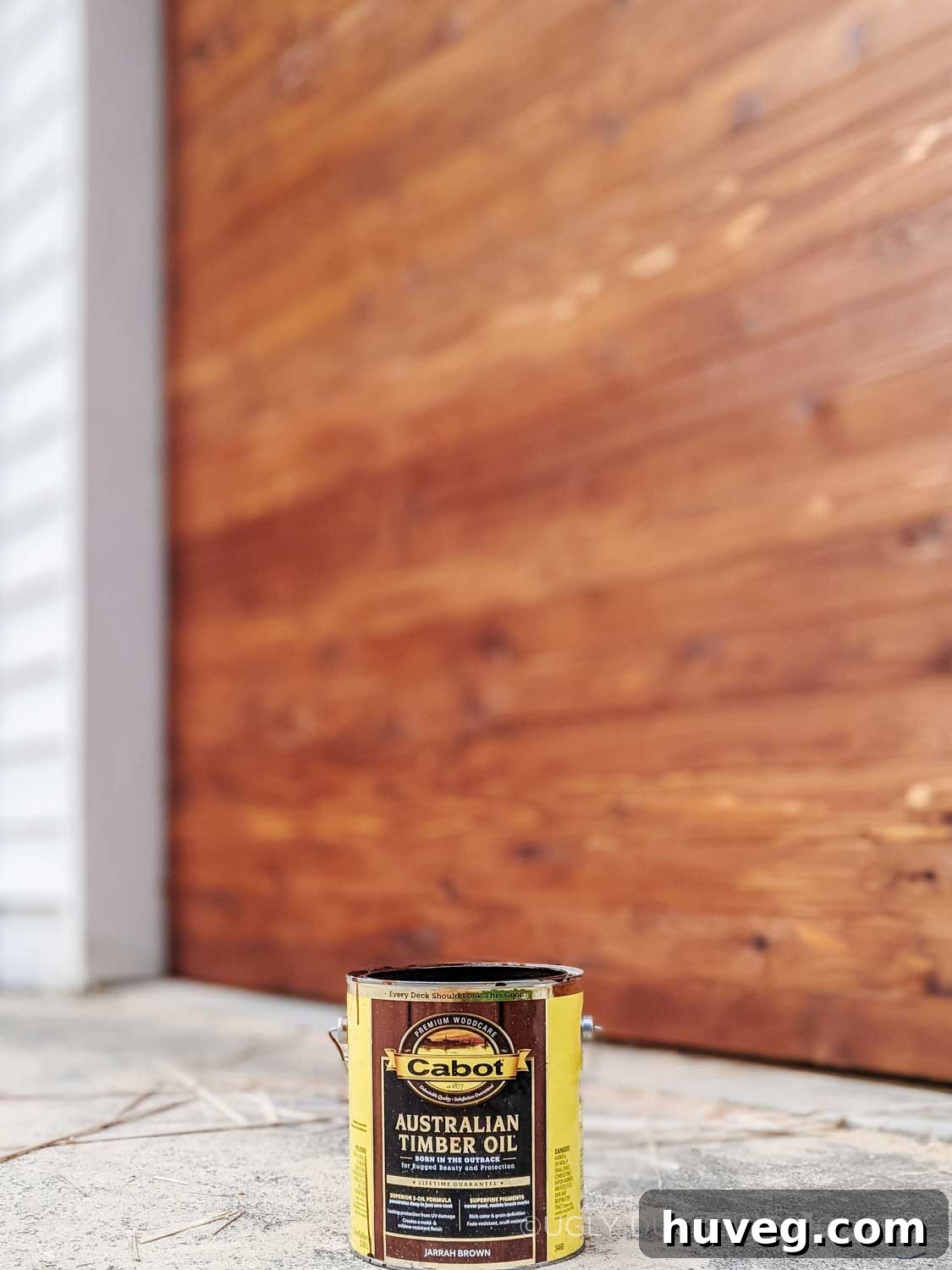
If this project hadn’t been part of a grand reveal with a strict deadline, my preferred approach would have been to apply a thin coat of stain to each board individually before nailing it to the door. This method likely would have ensured better penetration of the stain into the small crevices between the boards where the tongue is slightly exposed. However, if you’re staining all at once, I highly recommend using both a foam pad and a small foam brush to meticulously work the stain into those tight spaces between the boards for complete coverage.
And there you have it! In just a few weekends of dedicated hard work and perseverance, I now have a beautiful, custom-built garage door that dramatically enhances our home’s exterior. The entire house is truly starting to look so elegant and inviting. Our home’s refreshed curb appeal genuinely blows my mind! Is this truly the same house I’ve lived in all these years? Stay tuned for even more exciting transformations and detailed DIY guides as we continue our journey!