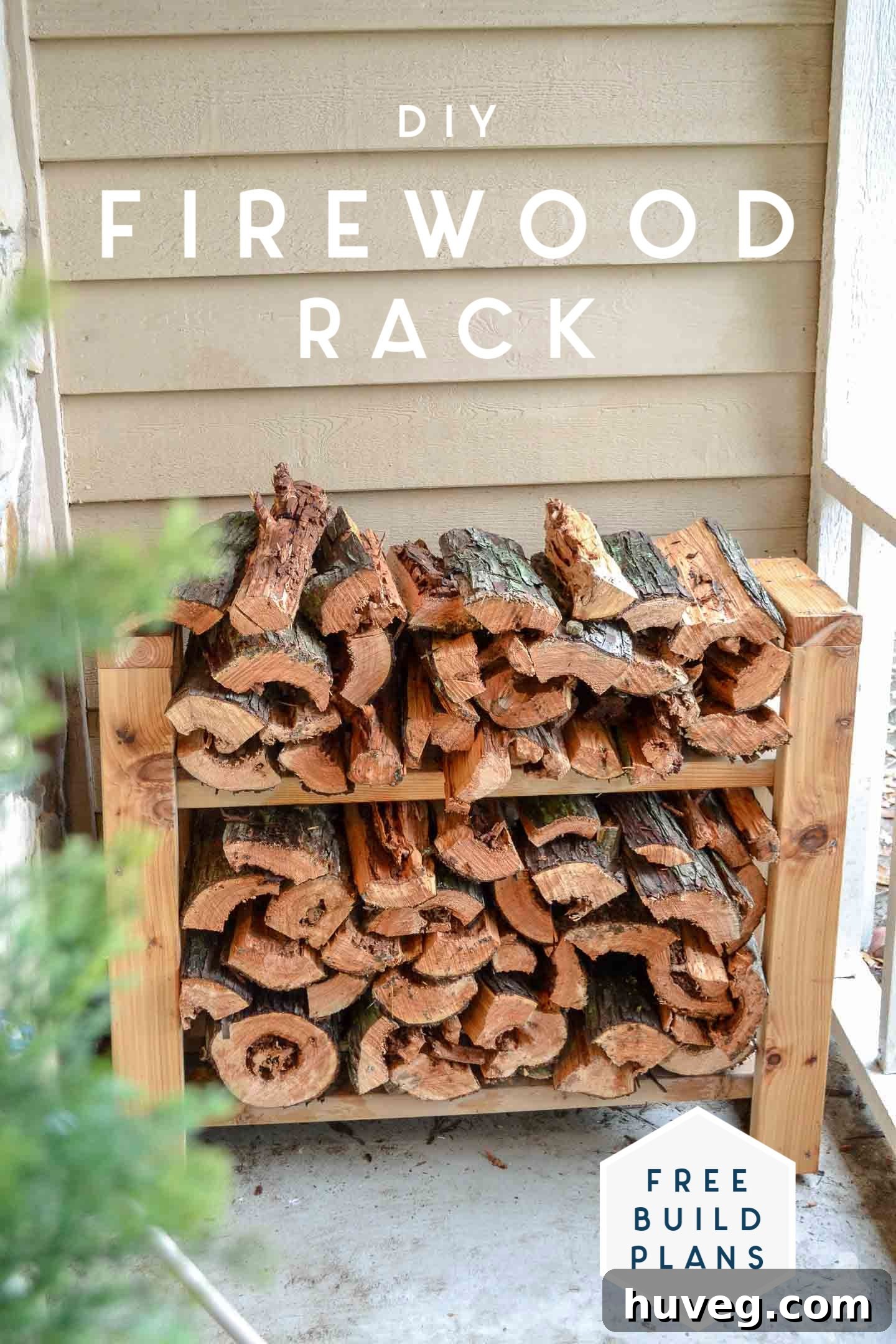
Custom Firewood Rack Free DIY Plans

Welcome to an incredibly simple yet highly functional DIY project! This easy-to-build firewood rack is designed to keep your wood dry, organized, and readily accessible. Whether you’re a seasoned woodworker or picking up tools for the first time, this tutorial, complete with free build plans, will guide you through creating your own sturdy wood storage solution. Say goodbye to messy piles and hello to a neat, efficient way to store your firewood, perfect for your front porch or any outdoor space.
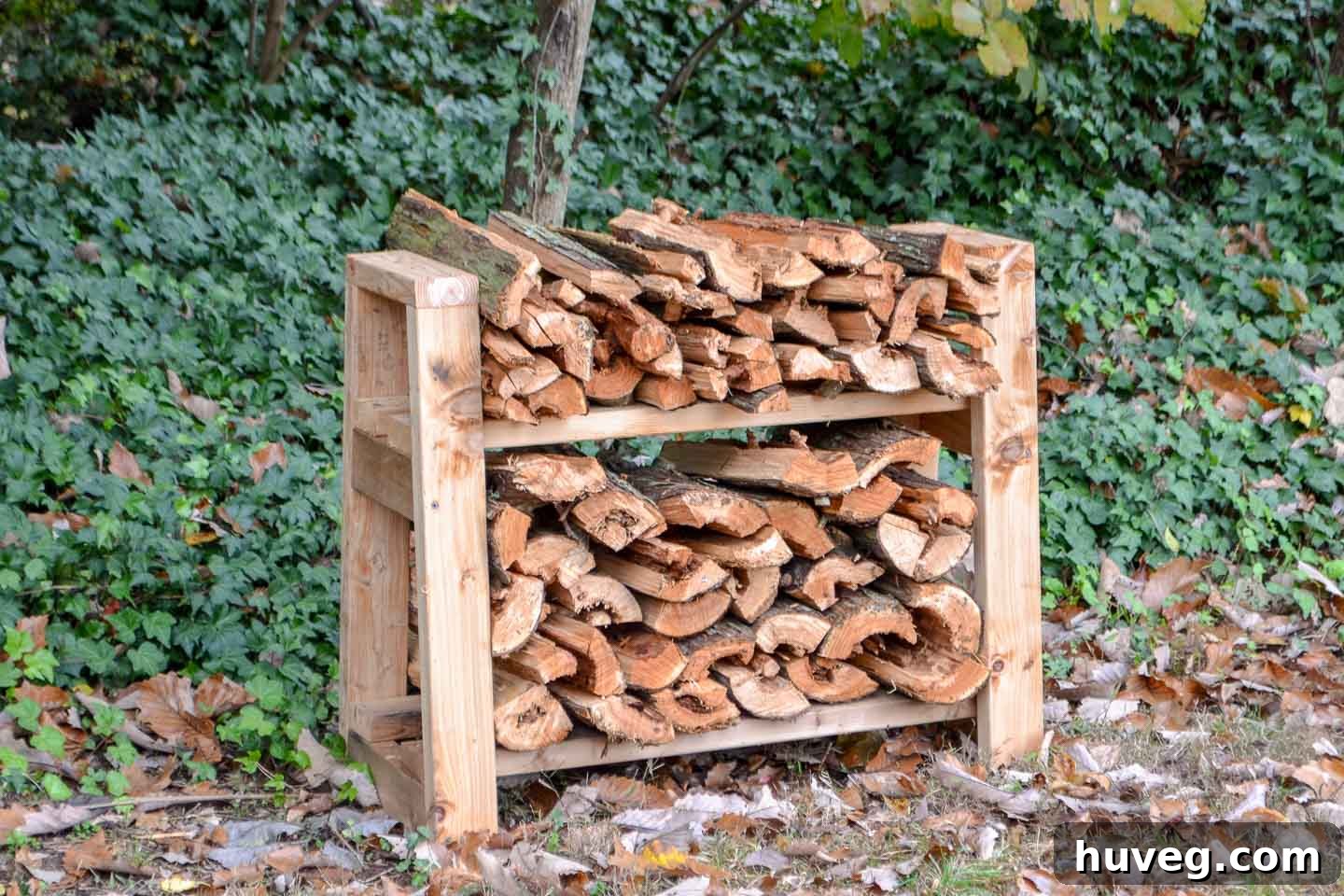
The Genesis of a DIY Firewood Rack: Necessity Meets Ingenuity
The inspiration for this project stemmed from a family trip to my boyfriend K’s childhood home. Following a severe storm, several trees had fallen, posing both a hazard and an opportunity. Rather than letting this valuable wood go to waste (even with a hint of rot), we embarked on a mission to salvage it. My SUV, surprisingly, managed to haul back nearly an entire tree, destined to become our winter firewood supply. This experience underscored the timeless appeal of sourcing your own fuel and the satisfaction of sustainable living.
Upon unloading our substantial haul, a new challenge emerged: proper storage. I quickly realized the critical importance of keeping firewood off the ground to prevent moisture wicking and protect it from pests. A well-designed firewood rack is not just about organization; it’s about preserving the quality of your wood, ensuring it burns efficiently, and prolonging its usability. With winter approaching, a robust outdoor firewood storage solution became an immediate priority. Fortunately, the solution was incredibly straightforward: just three cedar 2x4s were all it took to construct a sturdy and attractive wood rack. This project also serendipitously aligned with my ongoing front porch makeover, adding a functional and aesthetic element to the space.
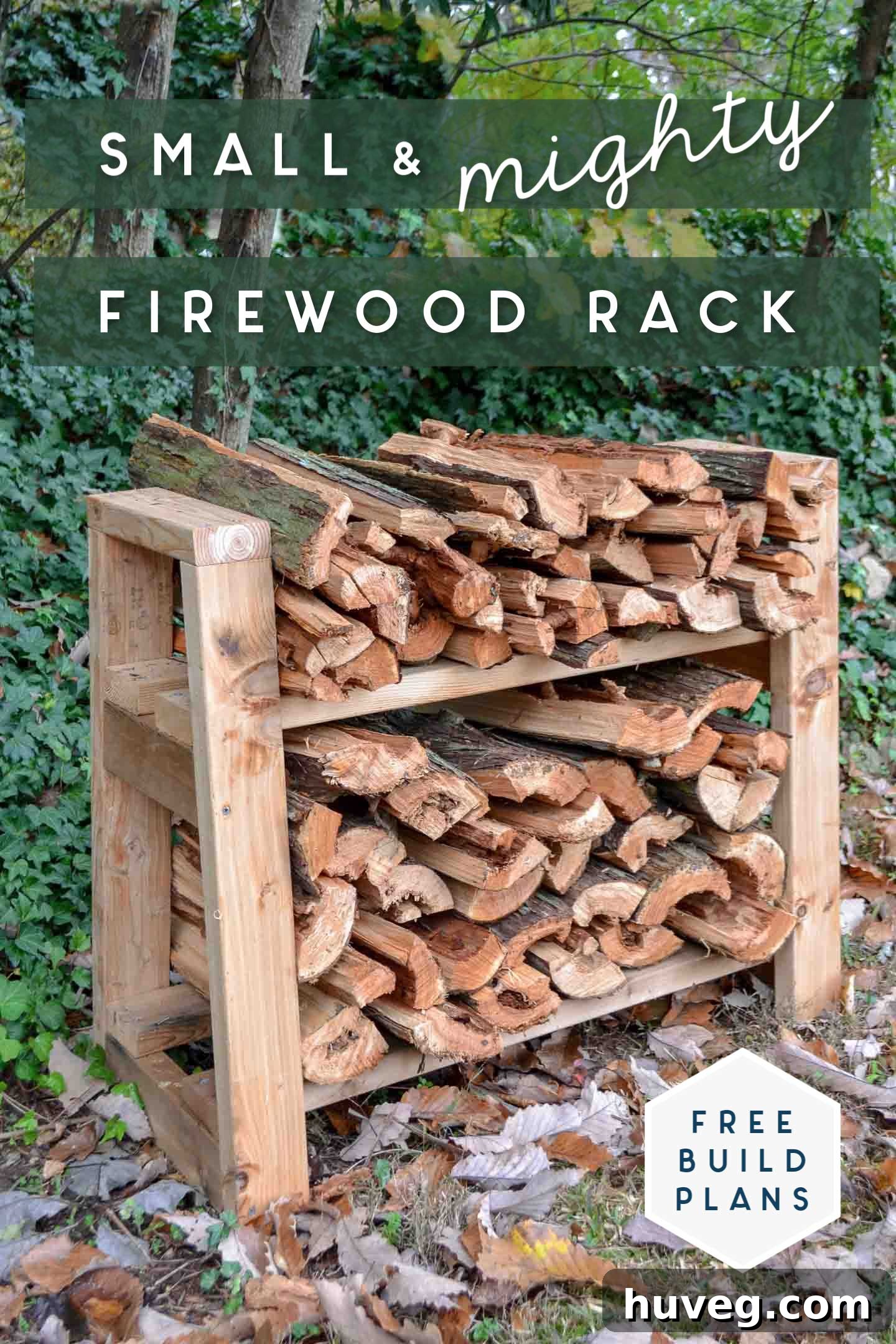
Crafting Your Own Outdoor Firewood Rack: Small Footprint, Big Capacity
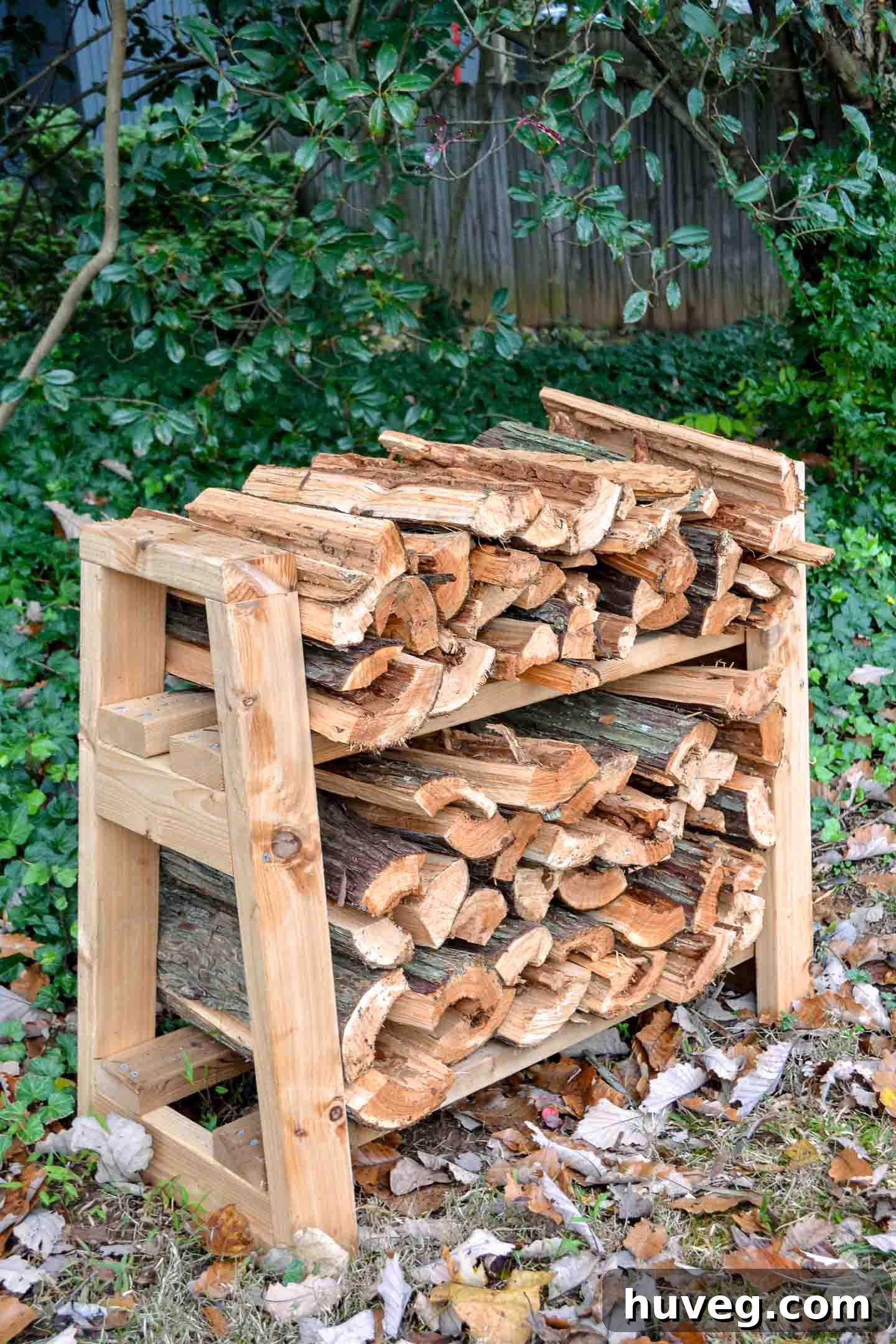
You might be surprised by how much firewood this compact rack can hold. Despite its modest size, it offers significant storage capacity, proving that efficient design doesn’t always require a large footprint. This design is particularly well-suited for a front porch or a smaller patio area where space is at a premium but you still need easy access to your seasoned wood.
This post is designed to be highly actionable, guiding you directly into the step-by-step tutorial. For those who appreciate visual aids or are tackling their first woodworking project, I’ve also captured the assembly process in a speed video. It features some entertaining moments of K and me racing against the sunset to complete the project – spoiler alert: we finished, though we did recruit some extra light from our outdoor light pole planters. Just imagine our spirited banter in the chilly air, and you’ll feel right there with us! You can find a more in-depth version with voice-over instructions and additional tips on my YouTube channel, once the dogs decide to take a break from their barking performances. (Which, incidentally, is a key reason I’m installing sound-reducing drywall in my office and garage—a DIYer’s life is full of related projects!)
For visual guidance on this DIY firewood rack, check out the video on my YouTube channel.
A few quick notes from my own building experience that might help you avoid some pitfalls:
- Precision in Measuring: You’ll notice in the video that I was a bit “lazy” and measured each piece individually rather than devising a jig or system to duplicate my cuts efficiently. This significantly extended the measuring and cutting time. My immediate regret served as a valuable reminder: while it might seem quicker to eyeball or measure on the fly, investing a little extra time in setting up for precision can save a lot of time and frustration in the long run, especially for multiple identical pieces.
- Mastering Bevel Cuts: Another shortcut I took was improvising a bevel cut (an angled cut across the width of the wood) by using a miter cut (an angled cut across the face) on the side of the 2×4. While it worked acceptably for a slight 6° angle, I highly recommend using the correct bevel adjustment on your miter saw for perfect alignment. My “mitered bevels” rarely achieve the flawless fit of a true bevel cut, and for a truly professional finish, precision is key.
For detailed, downloadable plans and exact dimensions to ensure your build is perfectly accurate, simply click here to access them from my comprehensive Woodworking Plans Library. Let’s dive into the step-by-step construction of your new firewood rack!
Access comprehensive plans for this project and more in the Woodworking Plans Library.
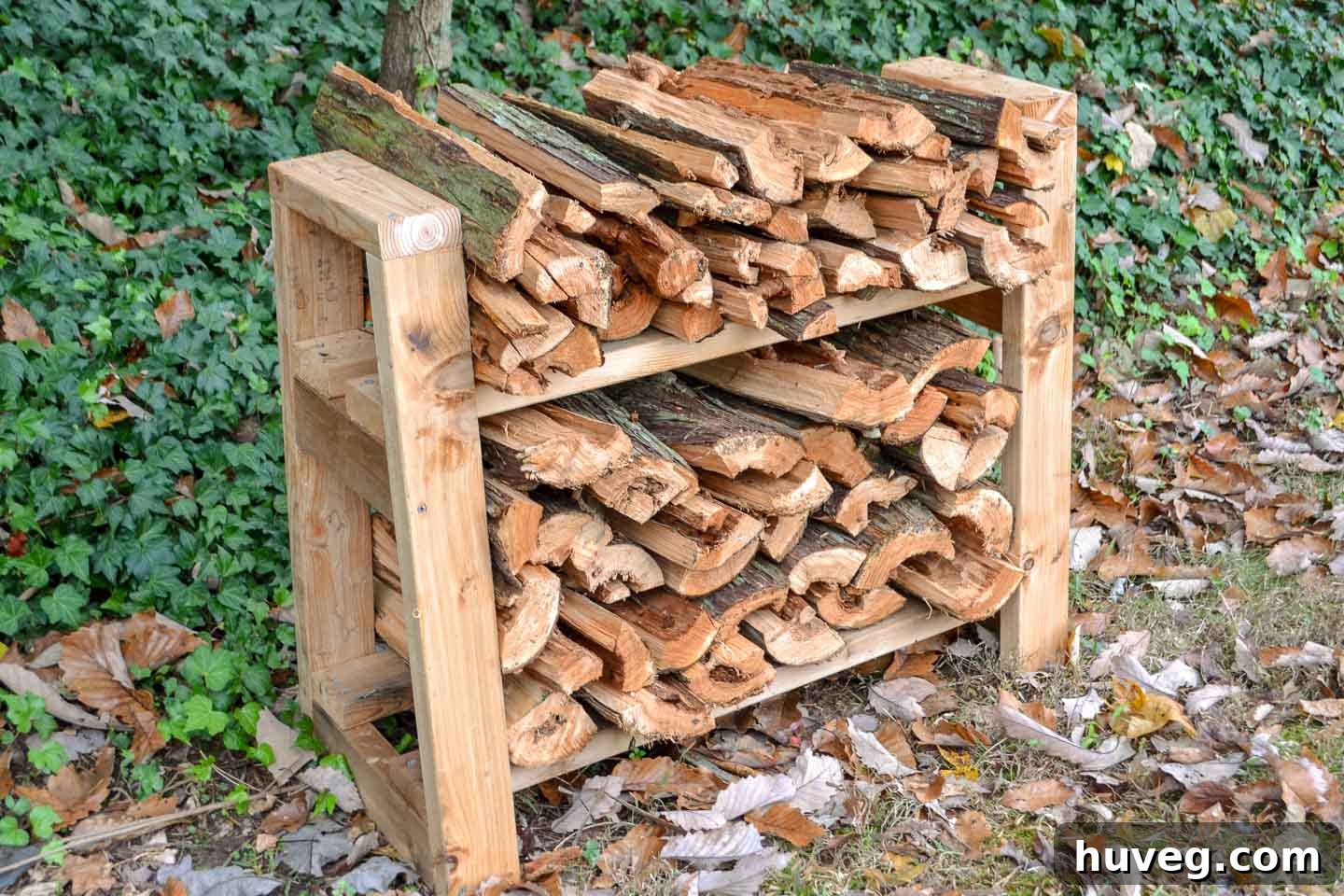
My Front Porch Firewood Storage Rack: A Step-by-Step Construction Guide
Building this firewood rack is a straightforward process, making it an ideal weekend project. Follow these detailed steps to assemble your own durable wood storage solution. The beauty of this design lies in its simplicity and the minimal tools required.
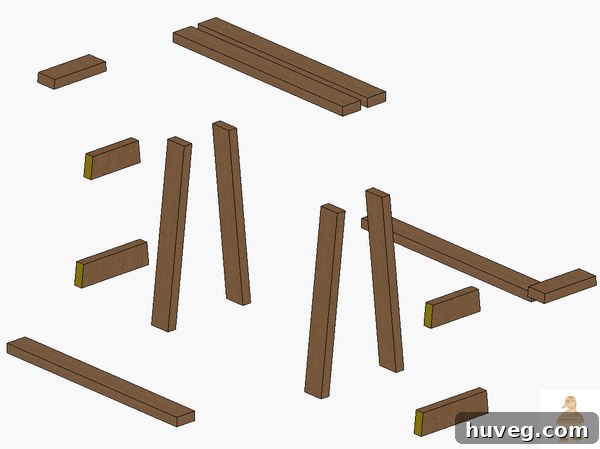
Materials and Tools Needed
Before you begin, gather all your materials and tools to ensure a smooth and efficient building process. Using the right materials, especially cedar for its natural resistance to rot and insects, will ensure your firewood rack lasts for many seasons.
- 2×4 Lumber: (I opted for cedar due to its excellent outdoor durability and natural aesthetic. Cedar is naturally resistant to decay and insect infestations, making it a superior choice for outdoor projects like a firewood rack. Its appealing grain and aroma are added bonuses.)
- Wood Glue: (While I skipped this step in my initial build, I strongly recommend using a good quality exterior wood glue. It significantly enhances the structural integrity of the rack, minimizing any potential wiggle or flex, especially when moving or loading it. The combination of screws and glue creates a much stronger, more rigid bond than screws alone.)
- Miter Saw: (Essential for making precise, clean cuts, particularly the critical 6° bevels and miters. A miter saw allows for accurate angle adjustments, ensuring your pieces fit together perfectly. If you don’t have one, a circular saw with a speed square can work for straight cuts, but angled cuts will be more challenging.)
- Wood Screws: (Choose exterior-grade screws to prevent rust and ensure long-lasting hold, especially if your rack will be exposed to the elements. I recommend screws that are at least 2.5 inches long to provide adequate penetration into the 2x4s.)
- Drill/Driver: (Indispensable for pre-drilling pilot holes to prevent wood splitting and for securely driving the screws. A powerful drill/driver makes assembly quick and effortless. This tool is often on sale, so keep an eye out for deals!)
Precise Cut List for Your Firewood Rack
Accuracy in your cuts is crucial for a stable and well-aligned rack. Double-check your measurements before cutting each piece. Remember my earlier note about being precise – it really pays off here!
- 4 pieces – 36 inches: These will form the top and bottom horizontal shelves, providing the main support for your firewood.
- 4 pieces – 28-1/4 inches with 6° bevel: These are your vertical side supports. The 6-degree bevel cut at both ends ensures they angle slightly outward, creating a stable A-frame like structure and improving weight distribution.
- 2 pieces – 10-1/8 inches with 6° bevel: These pieces will serve as the caps, finishing off the top of each end and adding stability to the structure.
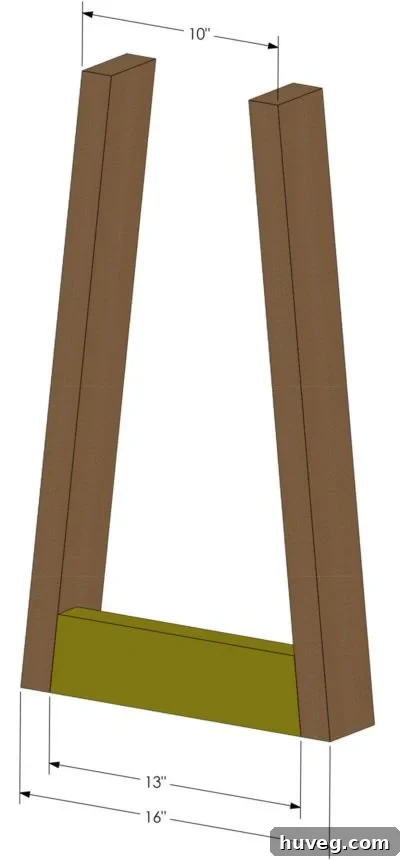
- 2 pieces – 13 inches with 6° miter: These form the bottom connectors, bracing the two sides of the rack together at the base. The 6-degree miter cut ensures a snug fit against the angled vertical supports.
- 2 pieces – 9-1/2 inches with 6° miter: These are your middle bracing pieces, providing additional support and stability to the central part of the rack. Like the bottom connectors, their mitered ends allow them to connect seamlessly to the angled vertical pieces.
With your materials prepped and cuts made, let’s move on to the assembly!
Step 1: Construct the Base Frames. Begin by connecting two vertical uprights to one of the 36-inch bottom pieces using wood screws. Ensure the 6° bevels on the vertical pieces are oriented correctly to create the outward slope. Pre-drill pilot holes to prevent splitting, especially with cedar. Drive screws securely from the bottom piece into the vertical uprights. If using wood glue, apply a generous bead to the mating surfaces before fastening with screws. This creates a much stronger, more durable joint.
Step 2: Install the Middle Supports. Once the first vertical uprights are firmly attached, add the 9-1/2-inch middle bracing piece. Measure precisely 16-1/4 inches up from the bottom of the 36-inch base piece to determine the placement for the bottom edge of this middle support. Alternatively, if it’s easier to measure from the top, place it 12-3/4 inches down from the top edge of the bottom horizontal piece. Secure it with screws into the vertical uprights, again pre-drilling and considering wood glue for added strength.
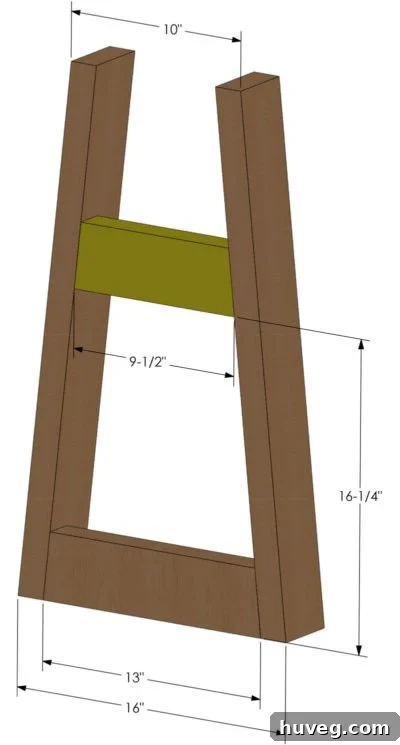
Repeat Steps 1 and 2 to create the second side assembly of your firewood rack. Ensure both side frames are identical for symmetrical construction.
Step 3: Connect the Bottom Rack Pieces. With both side assemblies built, it’s time to join them. Lay one of the 36-inch pieces flat, which will serve as the bottom rack. Position the two side assemblies on top, aligning them with the ends of the 36-inch piece. Screw the 36-inch piece into the bottom brackets of both side assemblies. Ensure the rack is level and square as you make these connections. The 13-inch bottom connectors will further reinforce this section.
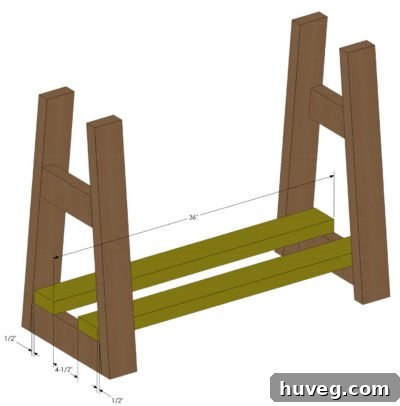
Step 4: Attach the Top Rack Pieces. Mirroring Step 3, take the remaining two 36-inch pieces and attach them to the top brackets of your side assemblies. These will form the upper rack for your firewood. Again, check for alignment and use screws to create a strong connection. At this stage, your firewood rack should start looking like a complete structure, showcasing its practical design.
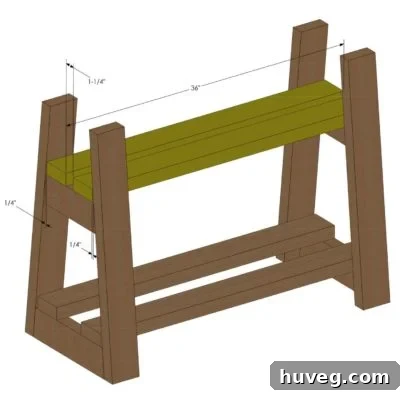
Step 5: Add the Caps. Finally, screw the two 10-1/8-inch cap pieces onto the very top of each end of the rack. These caps provide a finished look, protect the end grain of the vertical pieces from weather, and add an extra layer of structural stability. Ensure they are flush and securely fastened. With these last pieces in place, your DIY firewood rack is now fully assembled and ready for its finishing touches!
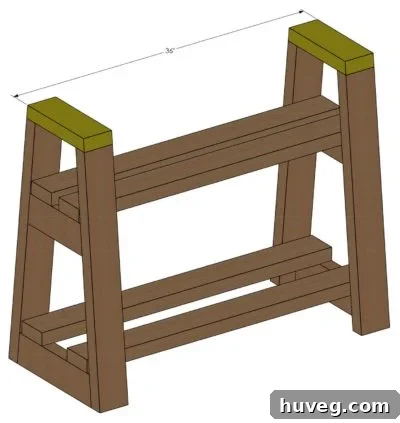
Finishing Your Firewood Rack: Protection and Aesthetics
Once your firewood rack is fully assembled, the final step is to apply a protective finish. Painting or staining the cedar frame is highly recommended, especially if the rack will be exposed to outdoor elements. For exterior use, choose an exterior-grade paint or stain specifically designed to withstand UV rays, moisture, and temperature fluctuations. These finishes not only enhance the aesthetic appeal of your rack but also provide crucial long-term protection against weathering, rot, and insect damage. A good sealant will prolong the life of your rack for many years to come. While I haven’t gotten around to this step myself just yet, it’s definitely on my to-do list once a few other projects are completed!
Optimal Firewood Storage: Short-Term vs. Long-Term Strategies
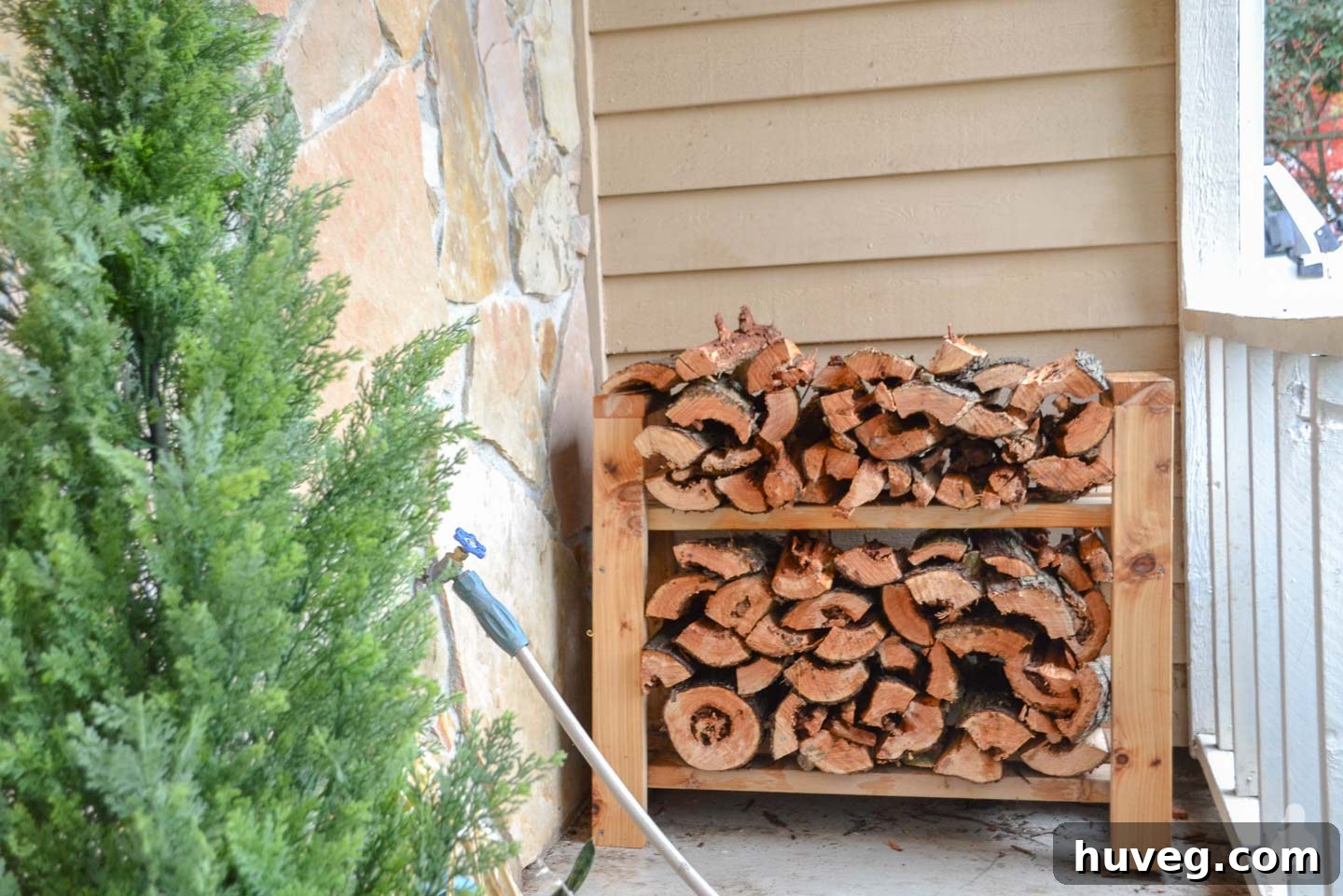
A crucial aspect of firewood management is understanding the difference between short-term and long-term storage, especially when considering a front porch firewood rack. While this smaller, easily accessible rack is perfect for immediate use, general recommendations advise keeping long-term firewood storage solutions further away from your home. This is primarily to mitigate risks associated with pests and fire hazards.
Since this particular stack of wood is intended for quick consumption, using a smaller rack on the front porch is perfectly reasonable for short-term convenience. However, for larger quantities of wood, we plan to build a more substantial wood rack closer to our backyard fire pit. The current front porch rack will eventually find its permanent home against the stone wall, once the festive Christmas decor is put away.
Beyond location, proactive pest management is essential. I’ve been diligent in treating my house and porch for insects as part of routine home maintenance. It’s important to remember that spraying the firewood itself is not recommended due to the fumes it can produce when burned. Elevating your firewood off the ground, as this rack does, is one of the most effective ways to deter pests and prevent moisture absorption. Placing your firewood holder on a concrete slab, such as a patio, further minimizes ground contact and enhances protection.
Related to pest control and overall home upkeep: If you’re interested in learning more about wood-boring insects and how to protect your home, I highly recommend reading this informative post on what to expect during a termite inspection and strategies for preventing infestations around your property. Proper firewood storage is not just about convenience; it’s a key part of maintaining a healthy and safe home environment.
We hope you enjoy building and utilizing your new DIY firewood rack! Don’t forget to share your creations and pin this project for future reference. Happy building, and warm fires!