The Conference Booth That Ate Our House

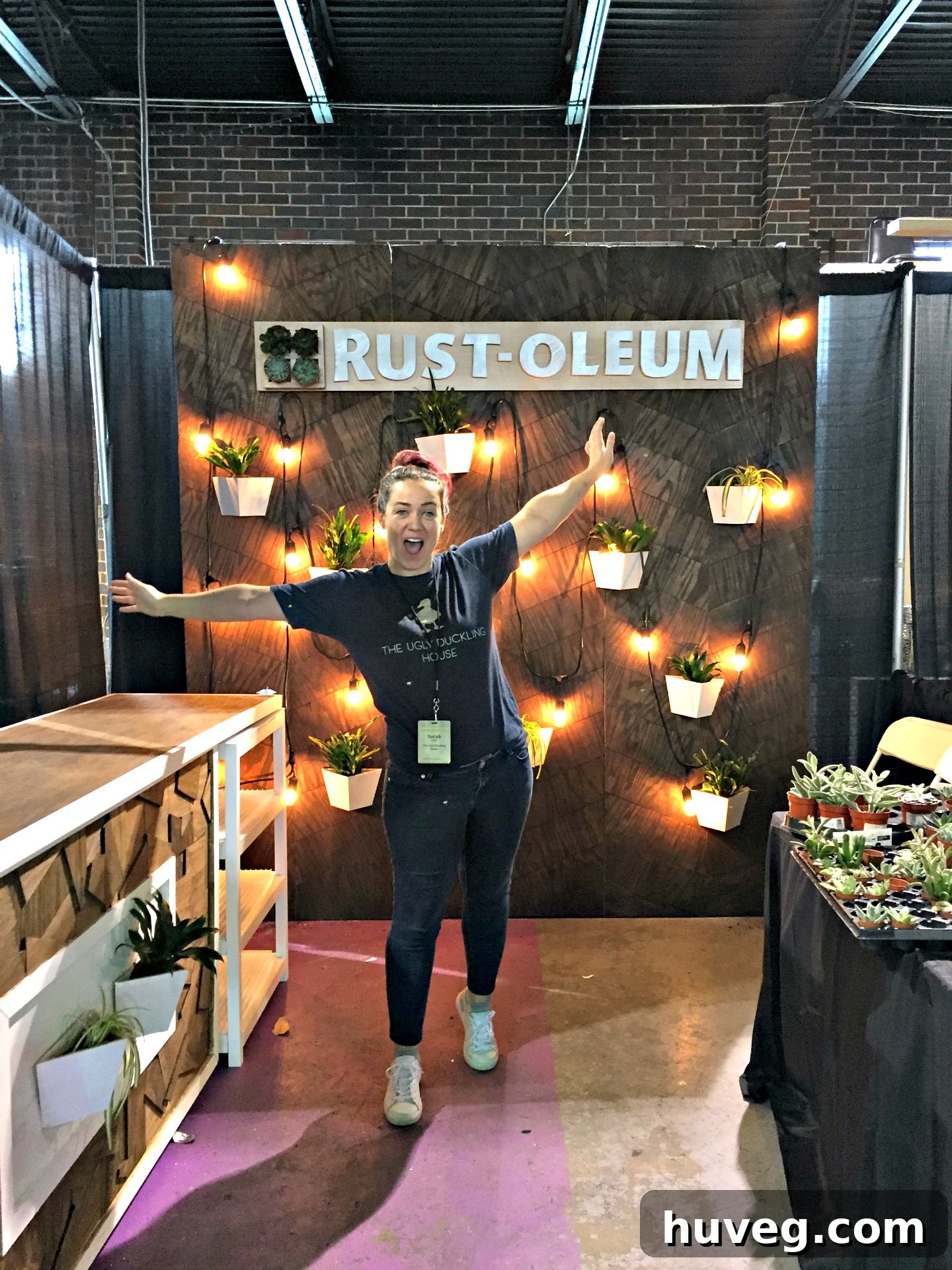
In a world where digital connections often overshadow tangible experiences, the opportunity to bring a brand to life at an event is truly special. Back in February, I had the incredible chance to design and construct a booth for Rust-Oleum at the inaugural Workbench Con. For anyone who’s followed my journey with Ugly Duckling House (UDH), it’s no surprise that this project quickly evolved into an adventure filled with unexpected twists and turns, perfectly encapsulating the spirit of DIY.
My blogiversary, which falls on April 1st, recently marked eight years of chronicling the often-messy, always-rewarding process of DIY home remodeling. From countless individual projects to the overarching narrative of transforming a house into a cherished home, this blog has been a testament to perseverance and passion. It has taken years of dedication to cultivate a living space I truly adore, and there are still many exciting chapters yet to unfold. Alongside this personal journey, I’ve built a business that ignites my passion every single day. Perhaps even more astounding to me, Ugly Duckling House has grown into a recognized brand, earning the attention and collaboration of companies I deeply admire, like Rust-Oleum.
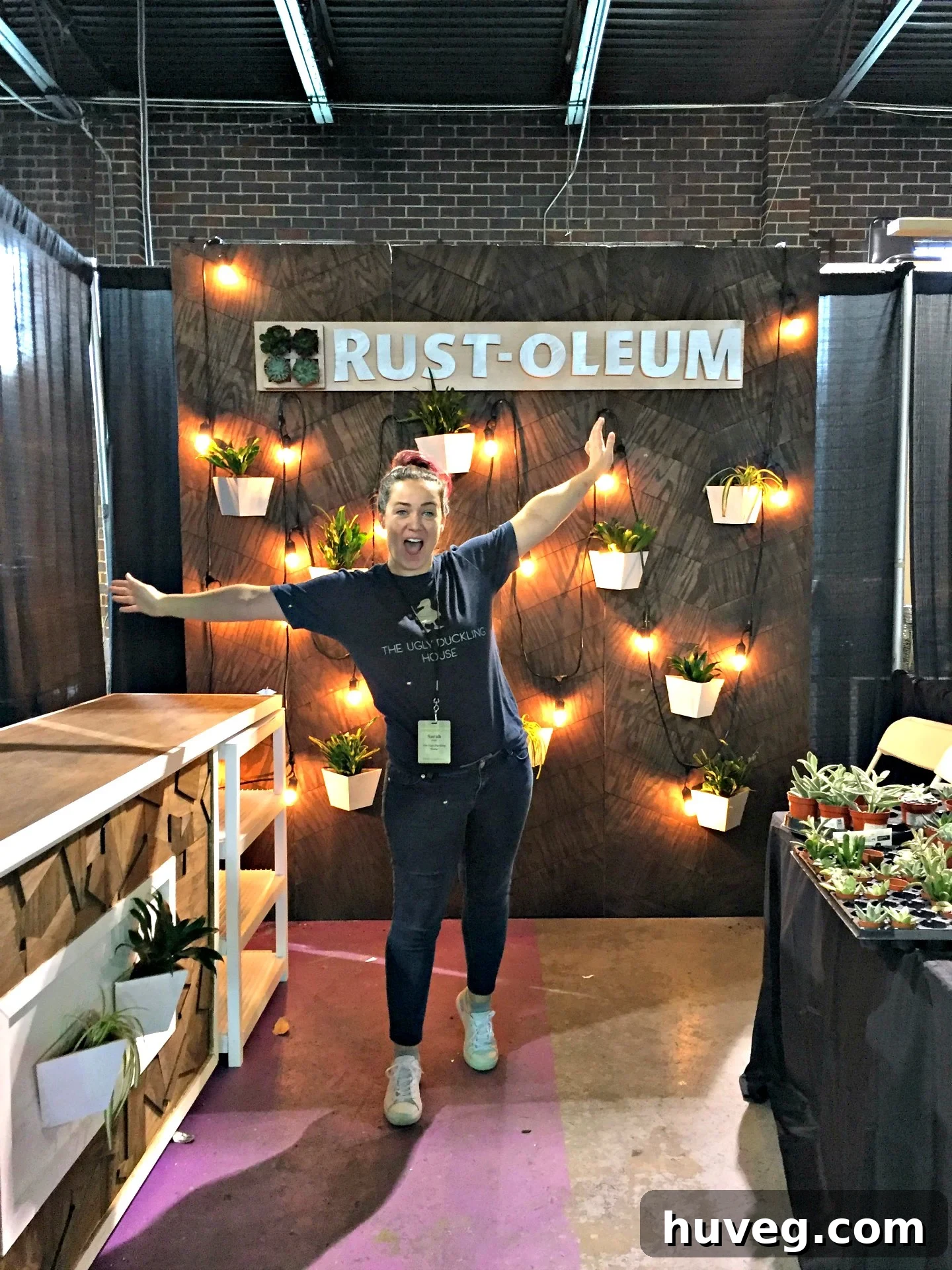
This reality often feels profoundly surreal. Opportunities emerge rapidly, and before you know it, you find yourself agreeing to challenges that push your boundaries, tasks you’ve never attempted before. This project was precisely one of those moments. Suddenly, my home transformed into a makeshift workshop, with a brand booth taking over my kitchen and living room. It was a chaotic, exhilarating experience that undoubtedly left my new roommate wondering what he had gotten himself into with such an adventurous cohabitant.
The Genesis of a Booth: Workbench Con Backstory
Over the winter months, a significant opportunity arose. Rust-Oleum, a brand whose products have been integral to countless DIY projects on my blog – even featured in some of my very first endeavors – extended an invitation. They asked me to design and construct their booth for the inaugural Workbench Con in Atlanta, GA. Many of you are familiar with Haven, a conference I’ve frequently discussed. Workbench Con felt like its dynamic, slightly more rugged counterpart. While Haven primarily caters to bloggers, Workbench Con embraced a broader spectrum of creators, including YouTubers, Instagrammers, and other “makers,” all sharing a deep passion for woodworking and hands-on creation. The atmosphere was distinct, set in a spacious warehouse rather than conventional hotel ballrooms, fostering an environment of raw creativity and genuine craftsmanship.
As this was the first iteration of the conference, there was an element of the unknown regarding what other brands might showcase. My primary reference point was Haven, which meant bringing my absolute best work to the table. I was aware that Rust-Oleum had previously collaborated with bloggers for their conference booths, such as when Bower Power crafted their booth for Haven in 2016. Such an opportunity felt incredibly aspirational, almost beyond reach, so the call from Rust-Oleum was truly a dream come true.
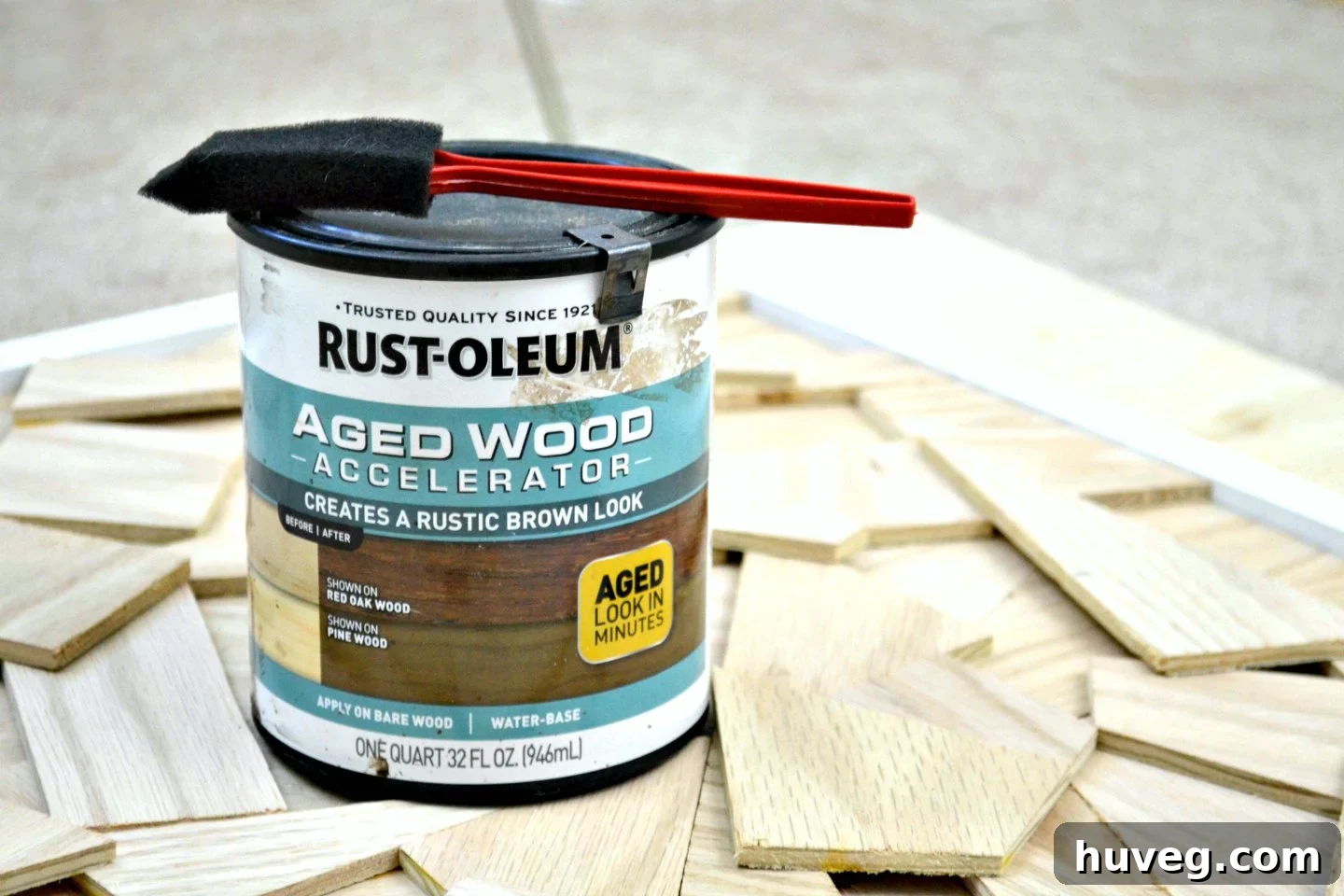
Given my local proximity, they reached out for assistance, sharing their initial ideas. I eagerly responded with my own comprehensive design concept, which, to my delight, they approved! A crucial aspect of my commission involved prominently featuring some of Rust-Oleum’s innovative new products. Among them was an exciting product engineered to chemically replicate the nuanced appearance of aged wood. Setting up the booth, I had the chance to engage with some of the Rust-Oleum representatives – truly brilliant minds in product development – and my inner DIY nerd was absolutely thrilled by their insights. This particular product promised an intriguing aesthetic, a sophisticated twist on traditional wood finishes.
Overcoming the Inner Critic: Rising Above Self-Doubt
As with any venture into uncharted territory, the period leading up to the conference was marked by a relentless battle against self-doubt and imposter syndrome. Faced with an entirely new challenge and unforeseen circumstances, a host of self-sabotaging thoughts began to creep in.
- **Aesthetic Concerns:** My personal style isn’t overtly “farmhouse” or “rustic,” and I worried whether I could infuse my own design sensibility while still delivering a booth that authentically showcased Rust-Oleum’s products in their best light. The primary objective was to make their offerings shine, and I was determined to excel at that. Interestingly, my initial reservations about one of the key products vanished entirely once I started working with it; I now find myself preferring it over conventional wood stain.
- **Skill Intimidation:** The conference’s target audience comprised seasoned woodworking experts. A significant apprehension was whether my self-taught, beginner-to-intermediate DIY skills would stand up to their discerning eyes. The thought of my craftsmanship being critiqued by true masters was daunting.
- **Logistical Fears:** Building furniture meant for transport was a completely novel experience. The fear of the entire structure collapsing before even reaching the venue was a constant companion. I frequently questioned the sanity of agreeing to such an ambitious project.
Despite these anxieties, a potent blend of ambition and perhaps a touch of naive enthusiasm compelled me forward. I said yes, and I said it with immense gratitude. The prospect of tackling something so unique and challenging was simply too compelling to decline. I knew deep down I would forever regret passing up such an incredible learning opportunity. Embracing the challenge, I reasoned, could only lead to growth. As long as I poured my effort into it, I stood to gain invaluable experience and, with luck, the chance to proudly declare, “Look what I made! It’s truly amazing!” from the digital rooftops of my blog.
Proactive Preparation: Battling Fear with Thorough Research
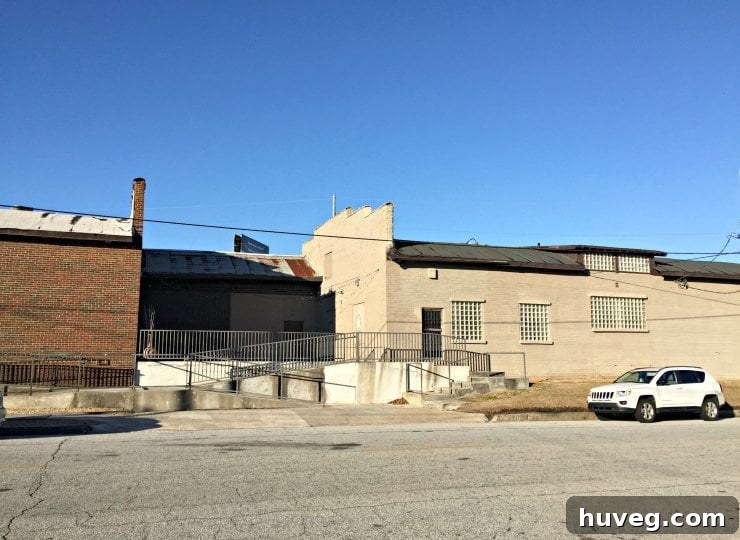
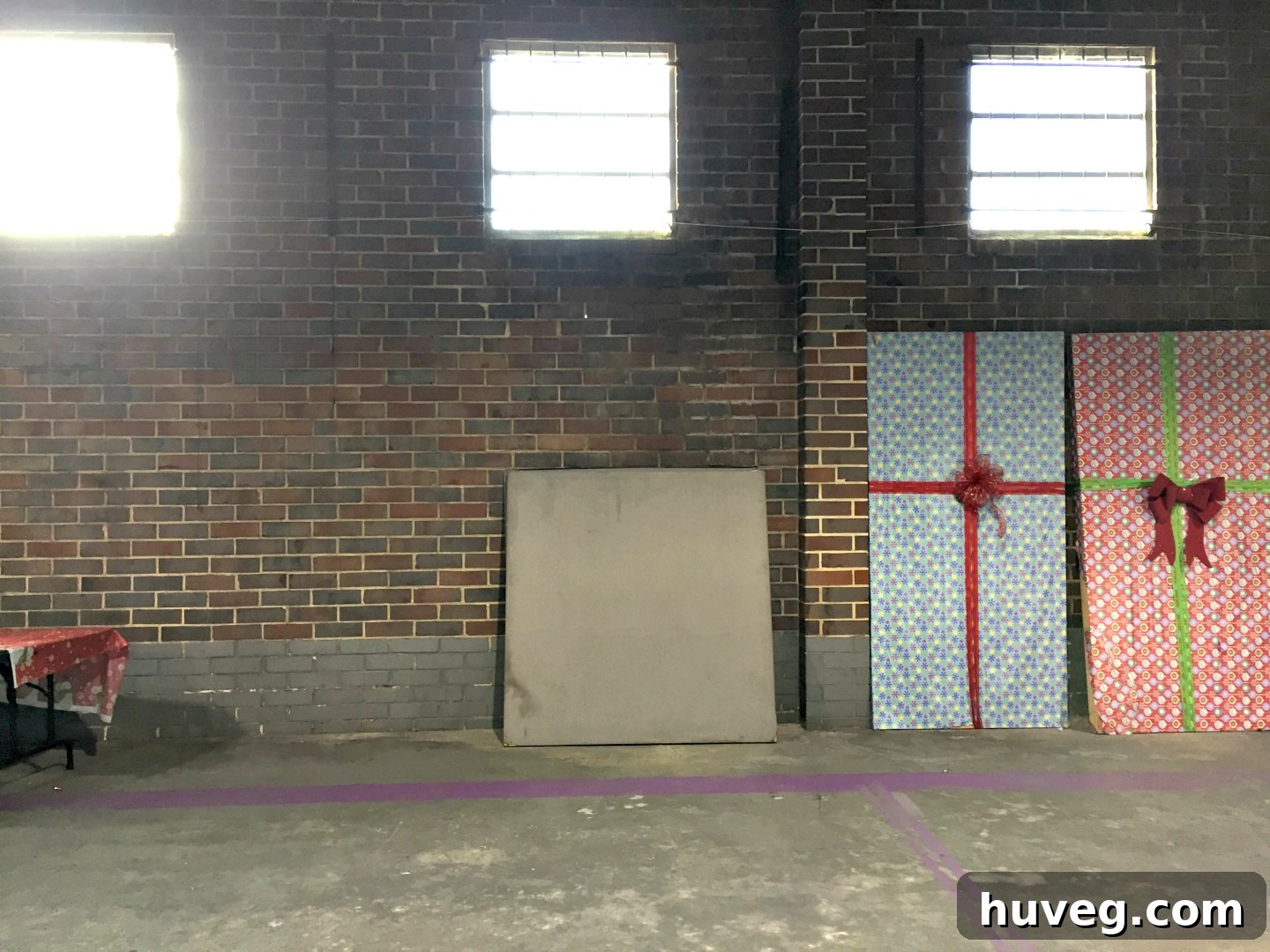
Just as I approach every significant home renovation project, I immediately activated my research mode. This meant leaving no stone unturned in preparing for the Rust-Oleum booth. I contacted the event organizer, seeking a detailed breakdown of expectations and logistical specifics. Crucially, I requested a physical tour of the warehouse venue before the event itself. This allowed me to gain a precise mental image of the space, helping me to conceptualize the booth’s layout and dimensions more effectively.
Beyond logistics, I sought wisdom from those who had walked this path before. I specifically reached out to Katie from Bower Power, a blogger I deeply respect, to gain her invaluable behind-the-scenes perspective from her experience creating a booth for Haven. Our conversation was incredibly fruitful; I furiously jotted down notes, absorbing every piece of advice and insight she offered. Armed with this comprehensive research, I meticulously crafted my game plan, feeling much more prepared to tackle the impending build.
From Planning to Execution: Getting to Work Amidst Challenges
With the plans in place, Rust-Oleum promptly sent a generous shipment of products to my doorstep, forming the essential toolkit for the booth’s creation. My design vision for the booth was multifaceted, incorporating living elements like plants, strategic lighting, and an abundance of rich textures to create an inviting and engaging space. From Rust-Oleum’s diverse product line, I planned to utilize a variety of stains, their innovative wood accelerator product, and an array of vibrant spray paints.
However, the initial phase of my meticulously planned schedule quickly went awry. With only a few weeks remaining until the conference, the weather forecast stubbornly predicted continuous rain leading right up to the event day. For weeks on end, working outdoors – an absolute necessity for proper staining and spray painting – became impossible. My home, already undergoing transitions, offered little reprieve. The kitchen had just received a mini-makeover with new appliances, and the garage was still packed with the old ones awaiting sale. My boyfriend was in the midst of moving his belongings into the house, and we had only just cleared out the guest bedroom for its upcoming renovation. Essentially, I found myself without a dedicated workshop space, and with the uncooperative weather, no viable option for outdoor work. It was a classic “womp-womp” moment of DIY despair.
I held out hope, waiting as long as humanly possible for a break in the weather, praying for a window to stain and paint outside. When that hope proved futile, I made the executive decision: the living room would become my primary construction zone. The show, as they say, must go on, even if it meant transforming my personal space into a bustling, sawdust-filled production studio.
The Living Room Takeover: Crafting the Booth’s Backbone
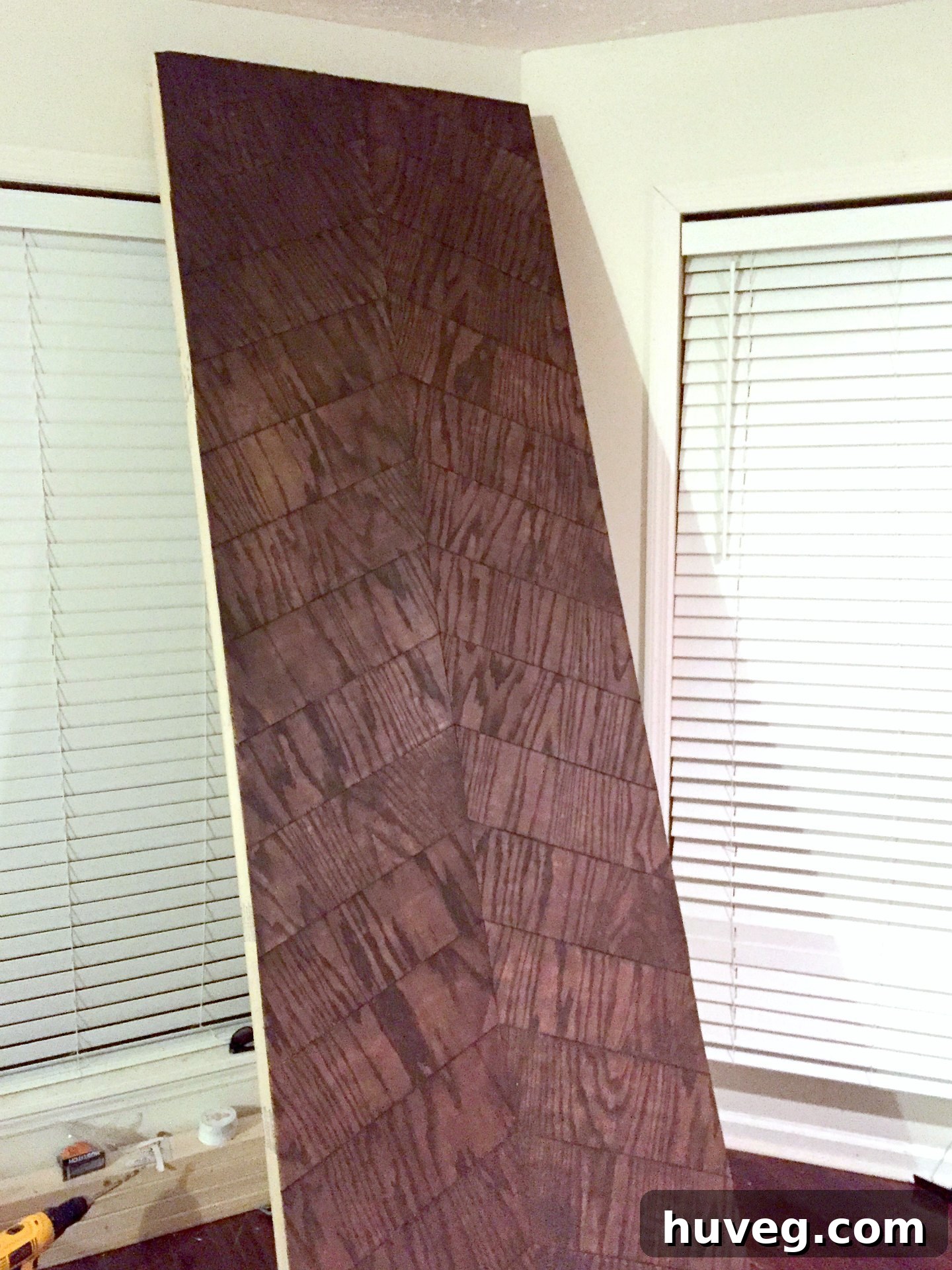
My living room, usually a space for relaxation, quickly transformed into a bustling construction site. I started with the foundational element of the booth’s back wall. My vision was to create a striking chevron pattern, so I began by building robust frames from 2x4s. These frames would serve as the skeleton for the wall panels. Next, I meticulously ripped down large sheets of 1/4″ oak plywood into consistent strips, carefully matching them up to form the distinct chevron design on each individual wall segment. This process required precision, patience, and a surprising amount of spatial planning.
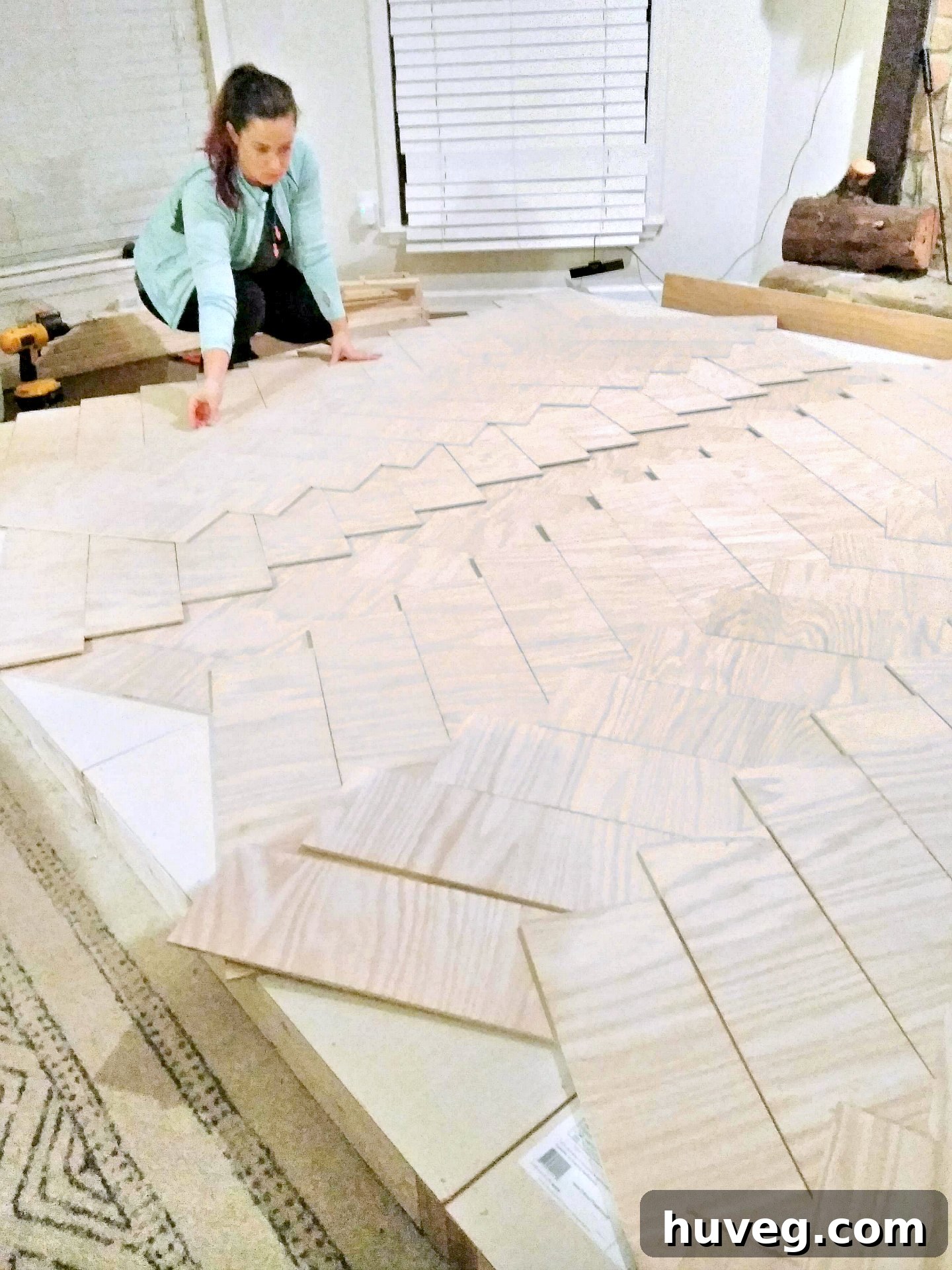
The overarching strategy was to construct the entire booth in modular sections. This approach was critical, not only for ease of assembly but, more importantly, for enabling me to lift and transport each piece into the warehouse myself. With only a day remaining before the conference, the sky finally granted a brief, glorious reprieve from the rain. This precious window allowed me to cut down the overhanging plywood edges on each segment and, crucially, apply the stain to all the panels. It might sound like a simple product endorsement, but a significant reason I frequently choose Rust-Oleum/Varathane stains is their incredibly short dry time. While this specific benefit wasn’t likely the primary engineering intent behind the product, in that critical moment, it made all the difference between finishing the booth on schedule and falling hopelessly behind.
The Kitchen Takeover: Functional Design and Layered Textures
As the living room became completely consumed by the large panels for the back wall, my kitchen gracefully (or perhaps not so gracefully) became the new epicenter of booth construction. Here, I focused on crafting the functional elements: the booth table and its integrated storage solutions. The kitchen island, once a prep surface for meals, transformed into a workbench for cutting, assembling, and finishing these crucial components.

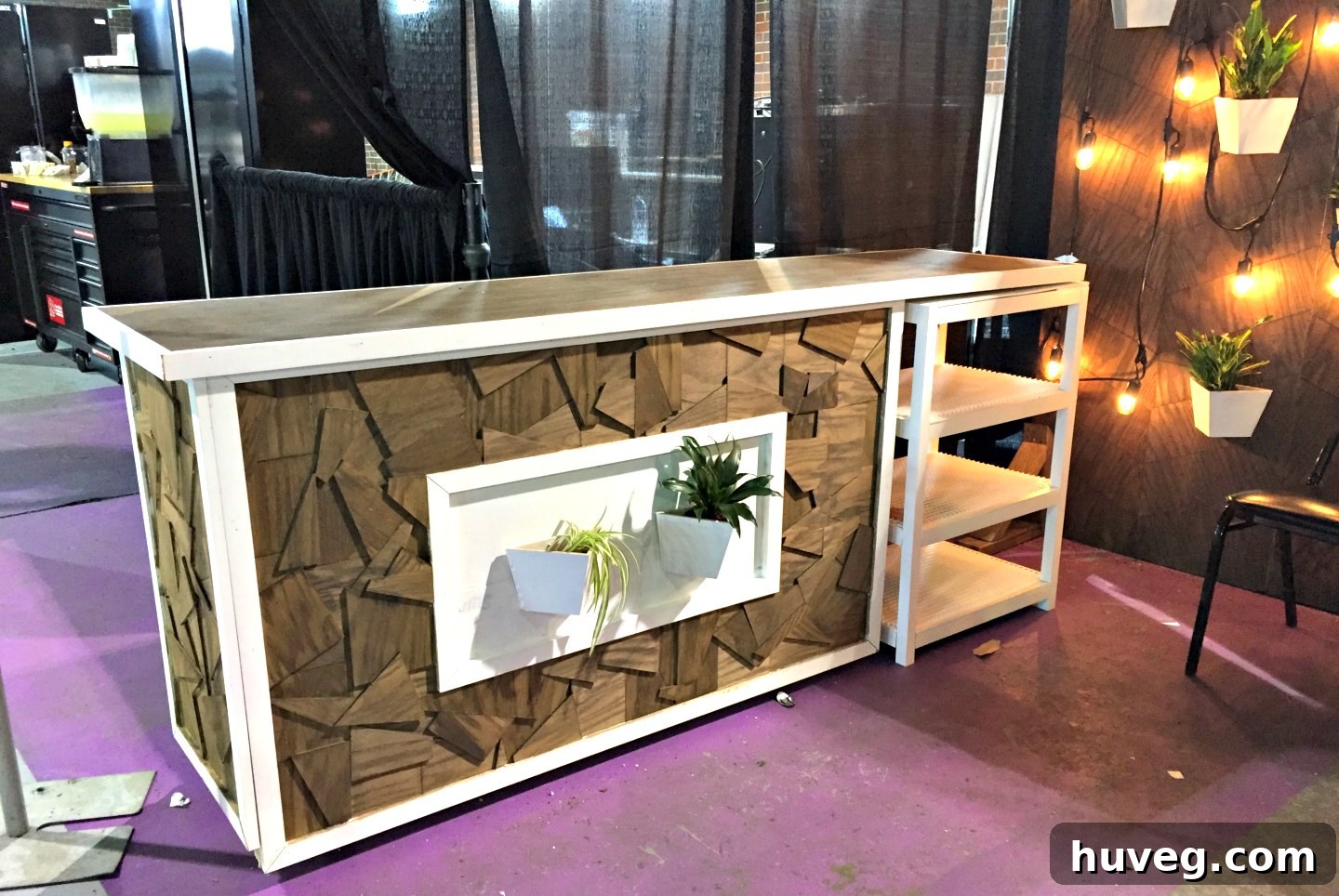
The meticulous process of creating the chevron pattern for the back wall left me with an abundance of plywood cutoffs from the edges of each panel. True to the DIY ethos of minimizing waste, these scraps were too valuable to discard. Instead, I ingeniously repurposed them, tacking them onto the front of the booth table to create a dynamic, layered wood effect. This design choice drew inspiration from the West Elm store in Ponce City Market, one of my favorite local destinations. That store perfectly embodies an industrial-chic aesthetic with its unique blend of exposed materials and sophisticated design, a vibe I aimed to capture in the booth.
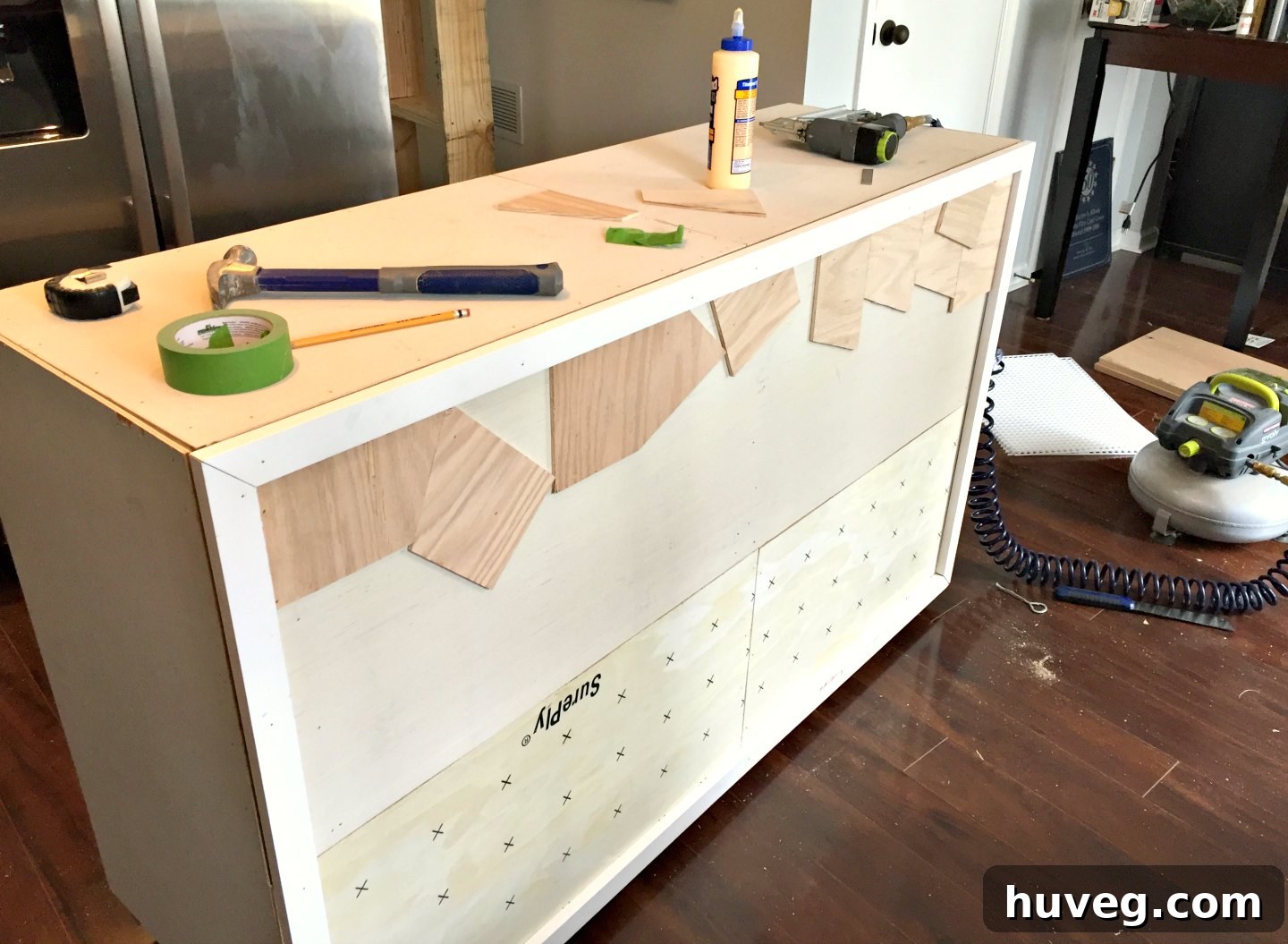
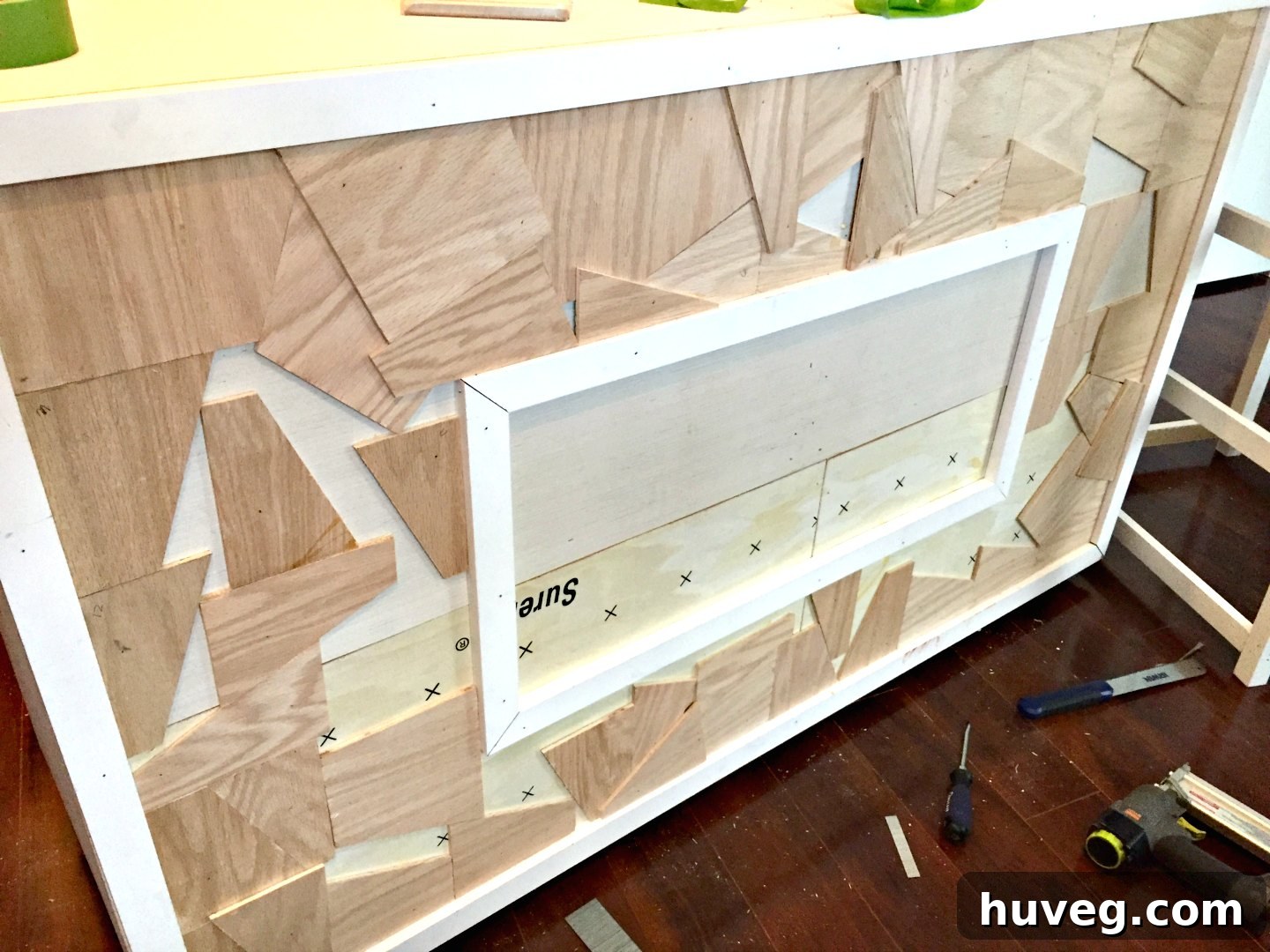
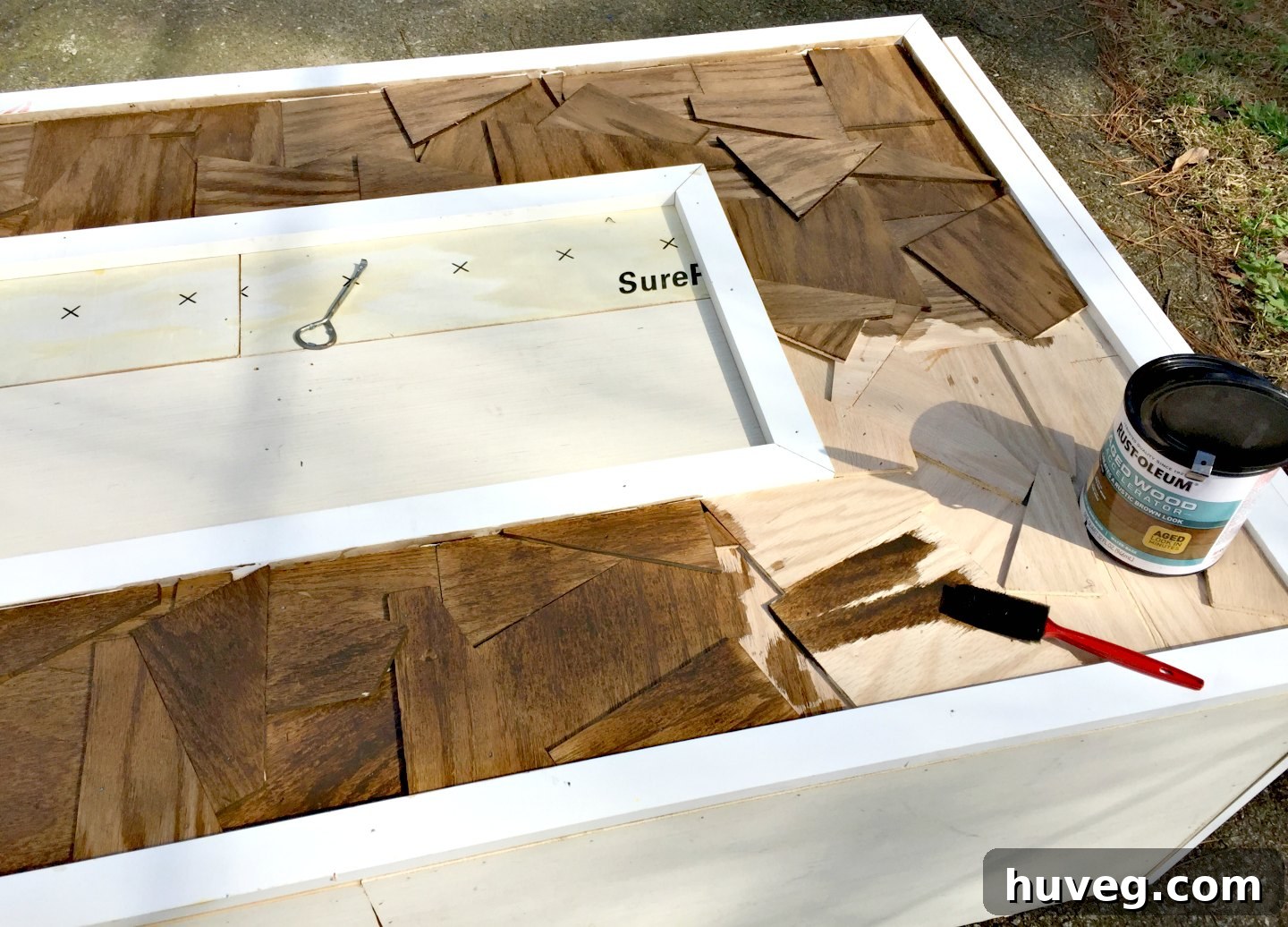
For the top surface and front face of the booth table, I opted for pre-painted MDF to provide a clean, finished trim. The main plywood surfaces, however, were treated with Rust-Oleum’s new aged wood accelerator product. This is where I experienced a genuine and delightful surprise: I absolutely adored the resulting aesthetic! The accelerator, being water-based, applied beautifully, effortlessly penetrating the wood grain even when I had to get a bit messy to reach into all the intricate nooks and crannies of the layered wood design. Unlike traditional stains that require wiping on and off, this product simply needed to be applied and then left to perform its magic. Witnessing the rich, natural color develop as the accelerator worked into the wood grain was truly fascinating and highly satisfying.
The Hallway Takeover: Brand Identity and Living Elements
As the booth components began to take shape in my kitchen and living room, the hallway became the temporary staging area for the smaller, yet equally important, details. For the back wall of the booth, one of my primary tasks was to creatively showcase Rust-Oleum’s extensive line of spray paints. This challenge presented a perfect opportunity to put my new scroll saw, a cherished Christmas gift, to good use. I painstakingly cut out each individual letter of the Rust-Oleum logo, transforming them into distinct wooden pieces. These letters were then spray painted a crisp white, creating a striking contrast against a metallic background.
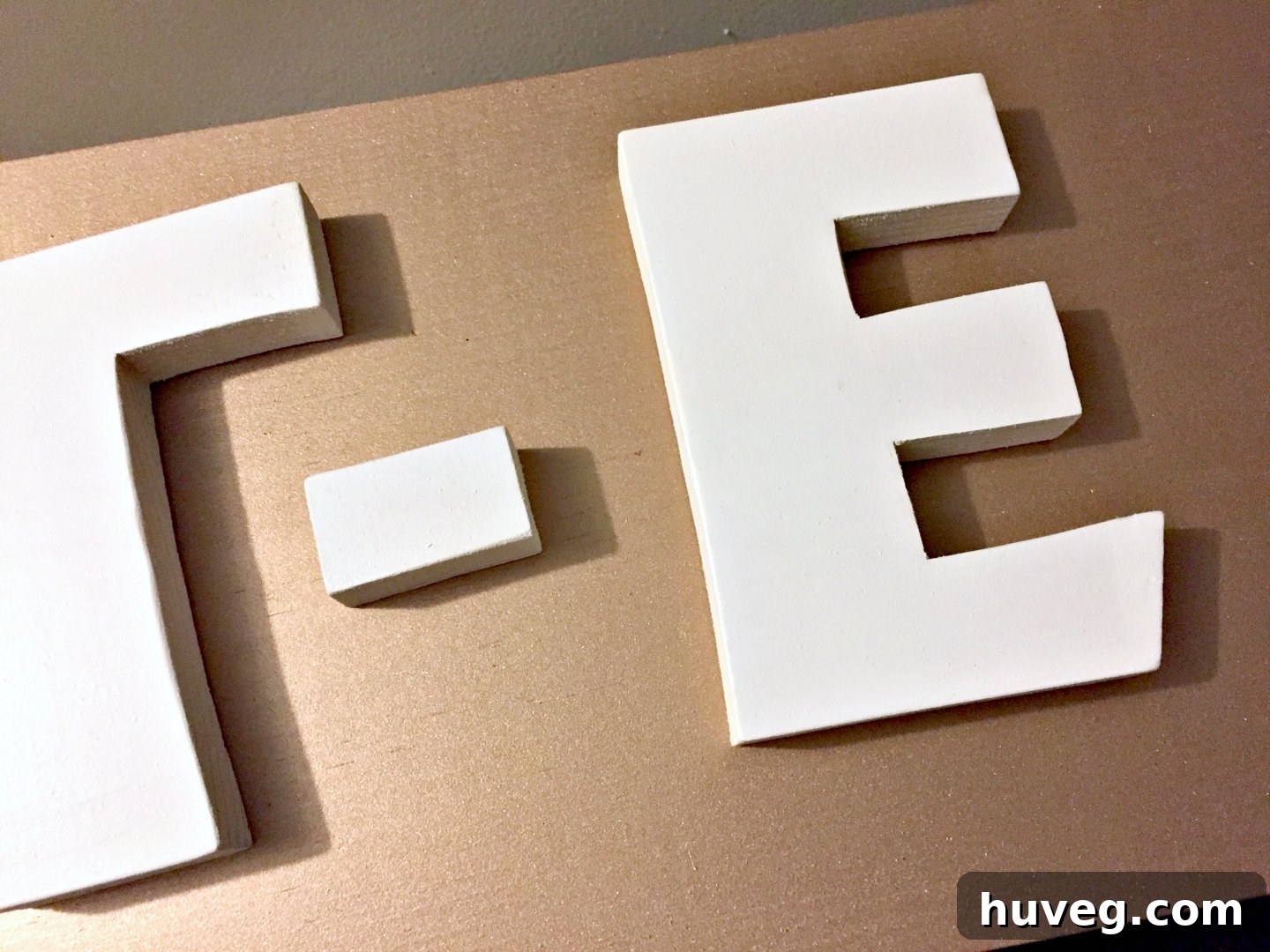
To further integrate the “living element” theme I had envisioned for the booth, I thought it would be a delightful touch to incorporate succulents directly into the square grid design of their logo. These small, resilient plants were carefully placed inside the letter cutouts, ready to be mounted once the entire booth was installed at the conference. There were numerous other small but crucial tasks: converting standard square planters into wall-mounted ones, organizing all the various pieces for quick assembly, and ensuring every detail was perfect for installation day. I truly finished everything by the narrowest of margins. While I am immensely proud of the final outcome and what I managed to accomplish under pressure, a part of me always wishes I could have had more time to refine and enhance every single aspect.
The Unveiling: The Completed Booth at Workbench Con!
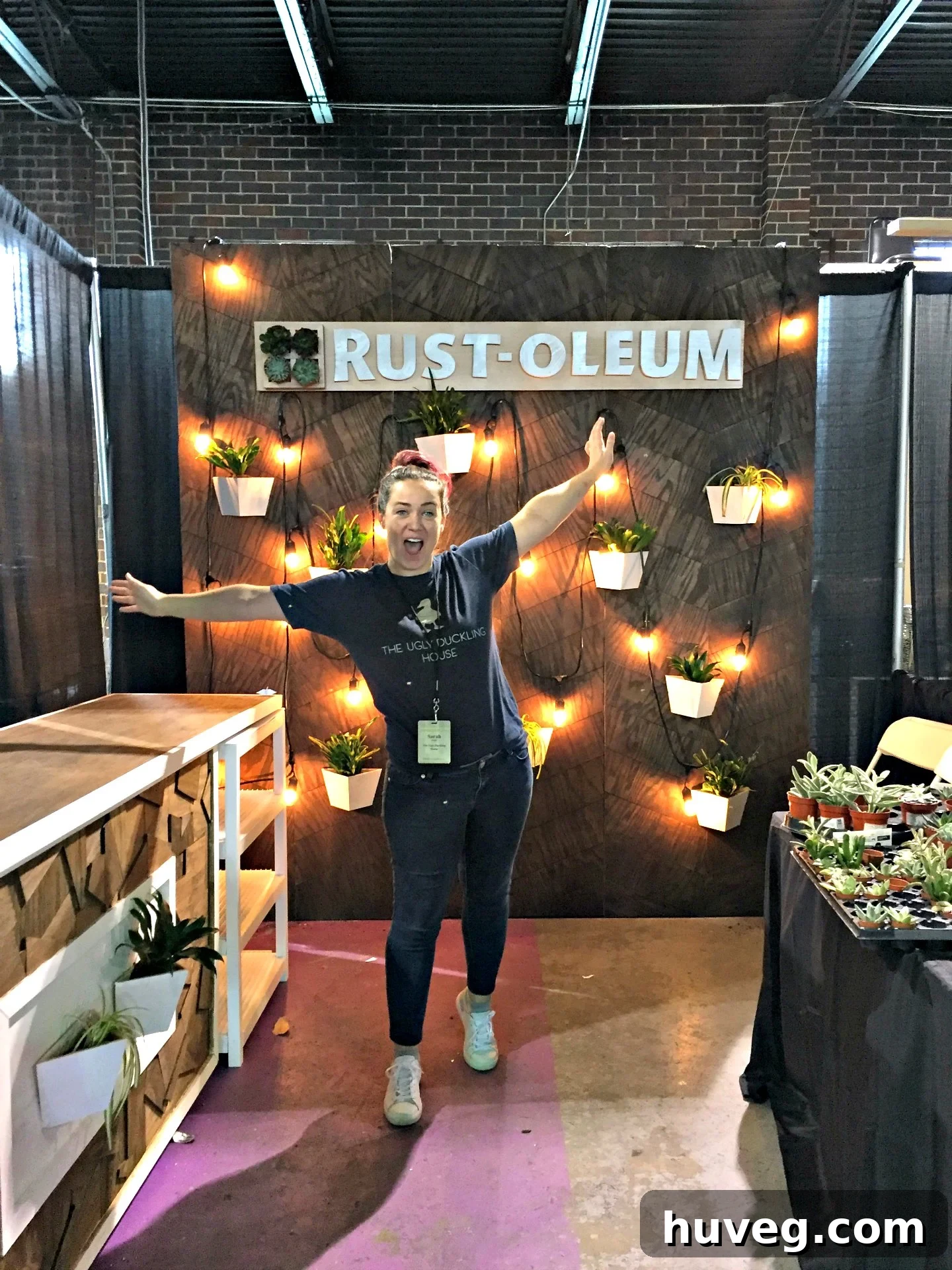
The day of installation was an absolute whirlwind, a mad dash against the clock. It began with the arduous task of loading every single booth component onto a rental truck. My friend, K, had graciously helped me load some of the larger items the night before, but there were still many substantial pieces to tackle on my own the next morning – and then, of course, to unload them all at the venue! Once at the conference, it was a race to wheel everything into my designated booth spot and meticulously set up the entire display. After hours of intense work, the vision finally materialized. And here it is – the Rust-Oleum booth, a culmination of creativity, hard work, and relentless problem-solving!
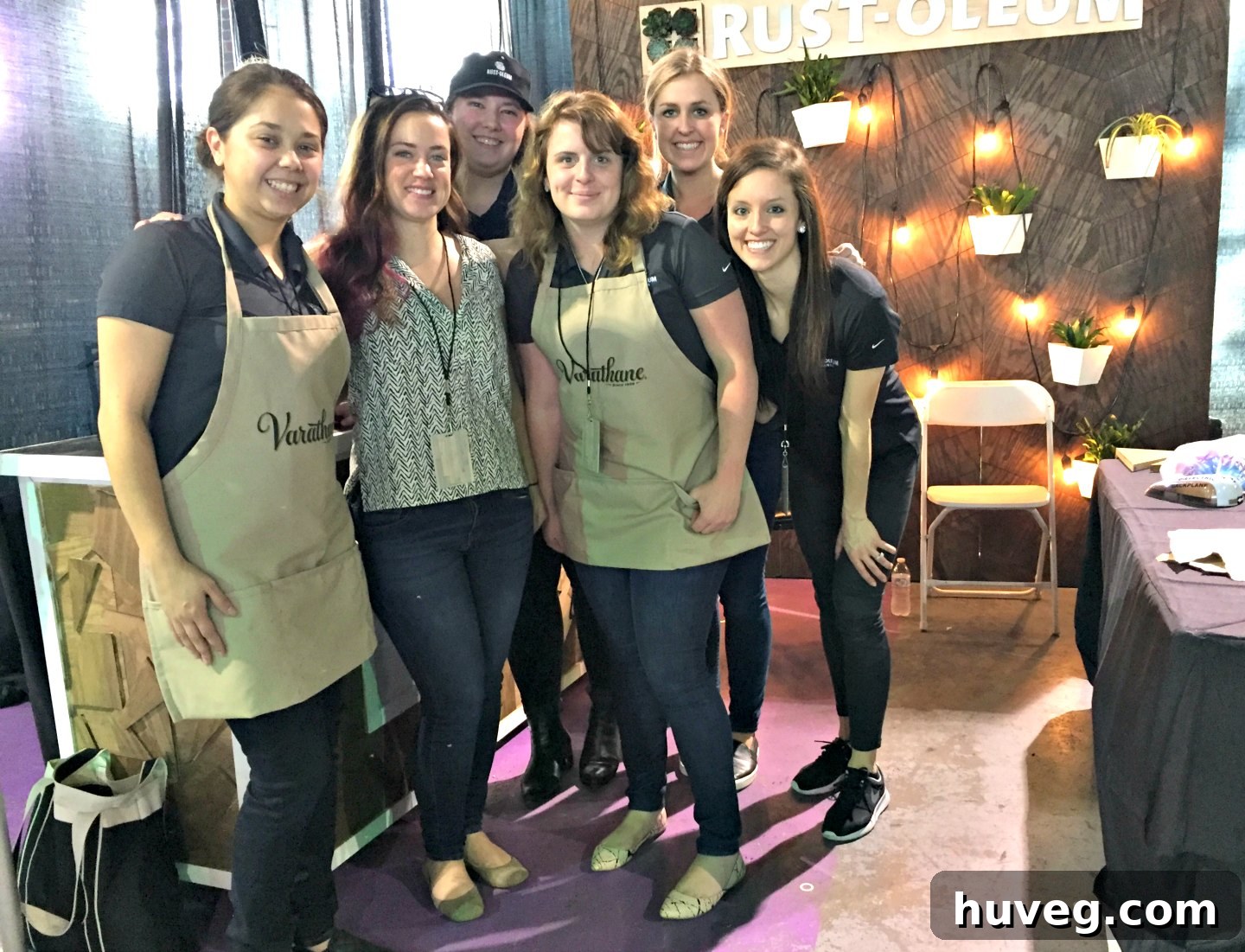
I must extend a special and heartfelt thank you to my incredible friends who stepped in to help me get across the finish line. Charlotte (yes, my friendly Dueling DIY nemesis!), Erin Spain, and Yuni from Love Your Abode arrived at the perfect moment. They initially came by to offer words of encouragement and say hello, but in true DIY fashion, they quickly got roped into helping out – knowing full well that I’d put them to work! Their support, both moral and practical, was invaluable during those final, frantic hours. Thank you, ladies, for being there!
During the conference, I captured a few short video clips, primarily for Instagram stories, which allowed me to later extract a brief montage showcasing the booth in its full glory.
The Unforeseen Twist: The Conference’s Crazy Conclusion
The remainder of the conference flew by in a blur, unfolding much like most engaging industry events do: a vibrant mix of networking with new acquaintances, reconnecting with familiar faces, and absorbing a wealth of new knowledge. It was an exceptionally well-organized and inspiring conference, and I’m already looking forward to attending again in 2019!
A specific component of my agreement with Rust-Oleum involved disassembling the booth after the conference and delivering it to one of their local facilities for future reuse. This requirement was a key factor in my initial modular design, ensuring that the booth could be easily broken down for transport and storage. Immediately following the conference’s closing ceremonies and the distribution of all giveaway prizes, I retrieved my rental truck and headed back to the booth, ready to begin the breakdown. To my utter astonishment, a significant portion of it had already been mysteriously disassembled.
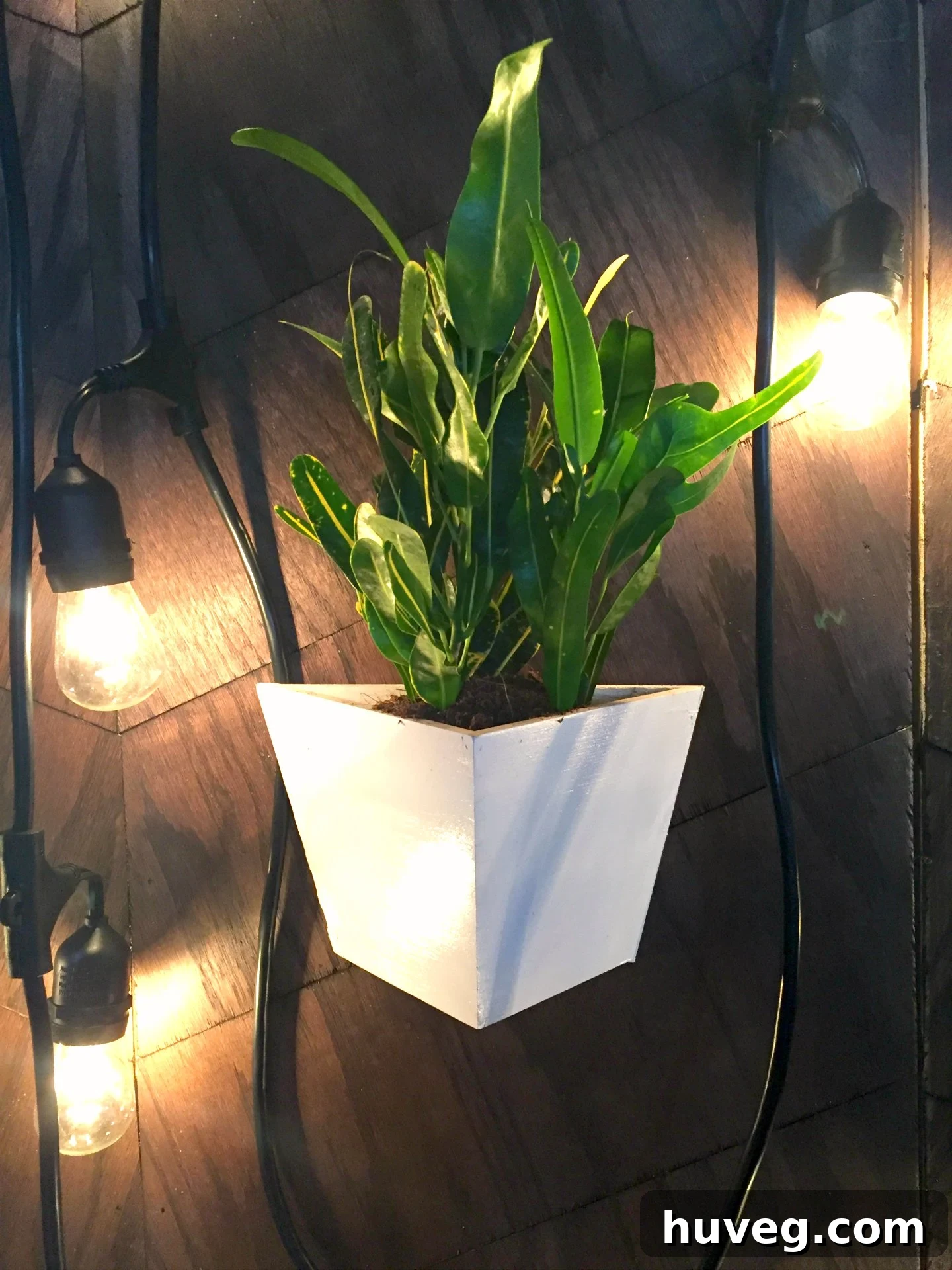
While amusing in retrospect, at that moment, I was gripped by sheer panic. In the chaotic flurry of other brands dismantling *their* booths, a major miscommunication had occurred. Someone had mistakenly conveyed that Rust-Oleum had left their booth behind for the conference crew to handle. In turn, the crew, aiming to lighten their workload, had generously encouraged attendees to take home whatever they pleased from the Rust-Oleum display. Since I had meticulously designed everything to come apart in easily transportable pieces for shipping, I inadvertently made their task even simpler. Consequently, all the carefully selected plants, decorative planters, and smaller ornamental items, including the subtle lighting elements on the back wall, had completely vanished.
I promptly contacted the Rust-Oleum team to inform them of the peculiar turn of events. Later, I even discovered the whereabouts of some of the “liberated” items; one kind conference attendee, after seeing my post on Instagram, sweetly offered to ship back what they had taken, wishing a new happy life to the objects that had unexpectedly embarked on new journeys. I truly believe this is the kind of uniquely absurd situation that only seems to happen to me. Despite the initial panic and logistical headache, I am eternally grateful for this entire experience – even for the wonderfully nutty story it created.
Lasting Inspiration: Two Unique Creations
But, the narrative doesn’t quite conclude with the comical disappearance of booth elements. You might recall my earlier anxieties about my wood carving project for the Wood Art Challenge, fearing it might be a spectacular failure. Well, I still had a substantial amount of scrap plywood leftover from the Rust-Oleum booth construction. Recognizing its potential, I decided it would be perfect for a backup art piece, just in case my carving efforts faltered and I needed an alternative submission for the challenge.
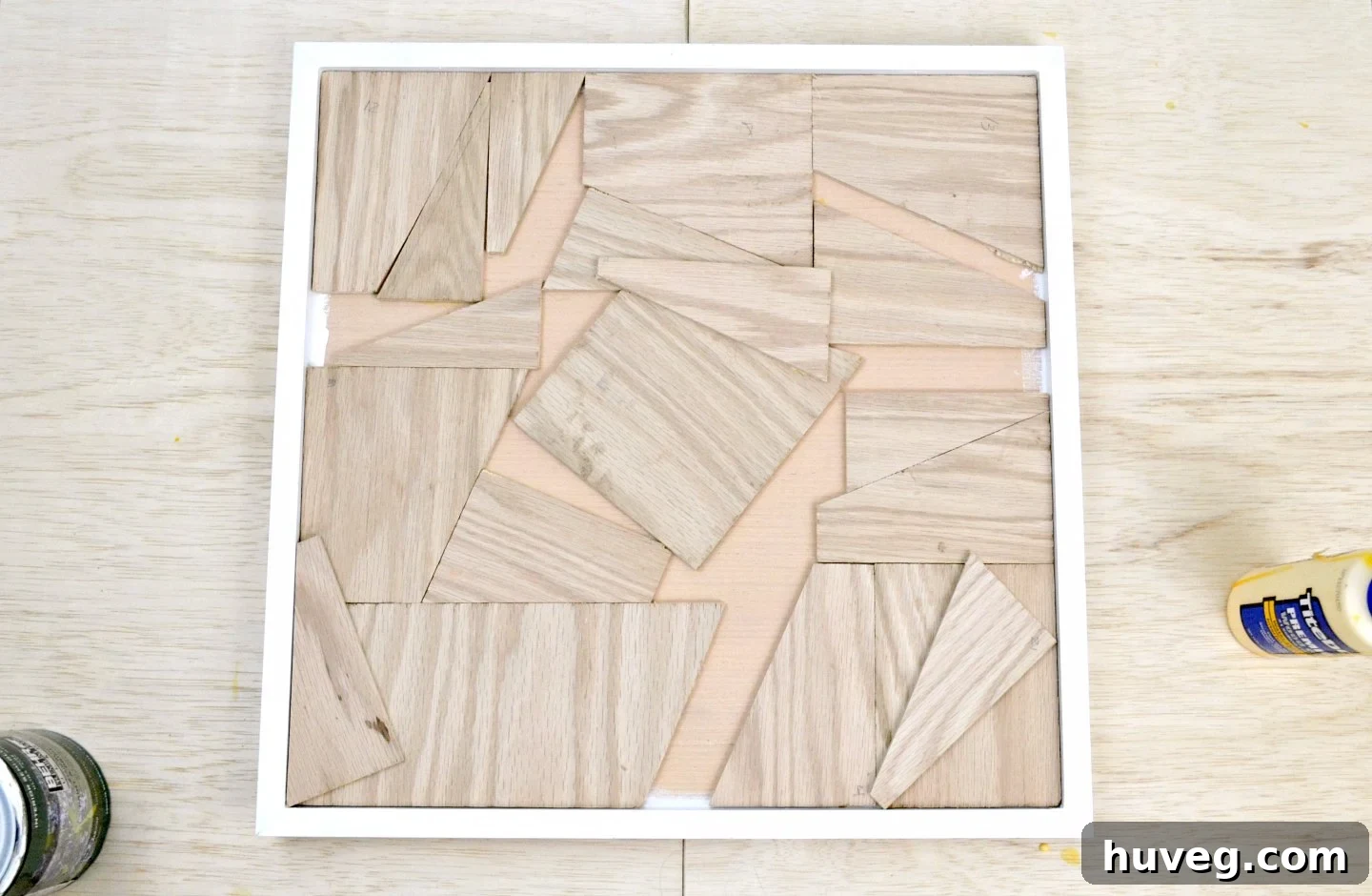
Initially, I had planned to combine this inspired art piece and a brief recap of the conference into a single blog post. However, as you can see, the story of the booth itself became quite extensive! To do justice to both, I decided to split them into separate features. You can discover the details of that captivating second post, all about the DIY air plant wall art, right here. Trust me, you won’t want to miss it – I absolutely adore this new art! It has found its perfect home in my office, adding a touch of natural beauty and personal history to the space.
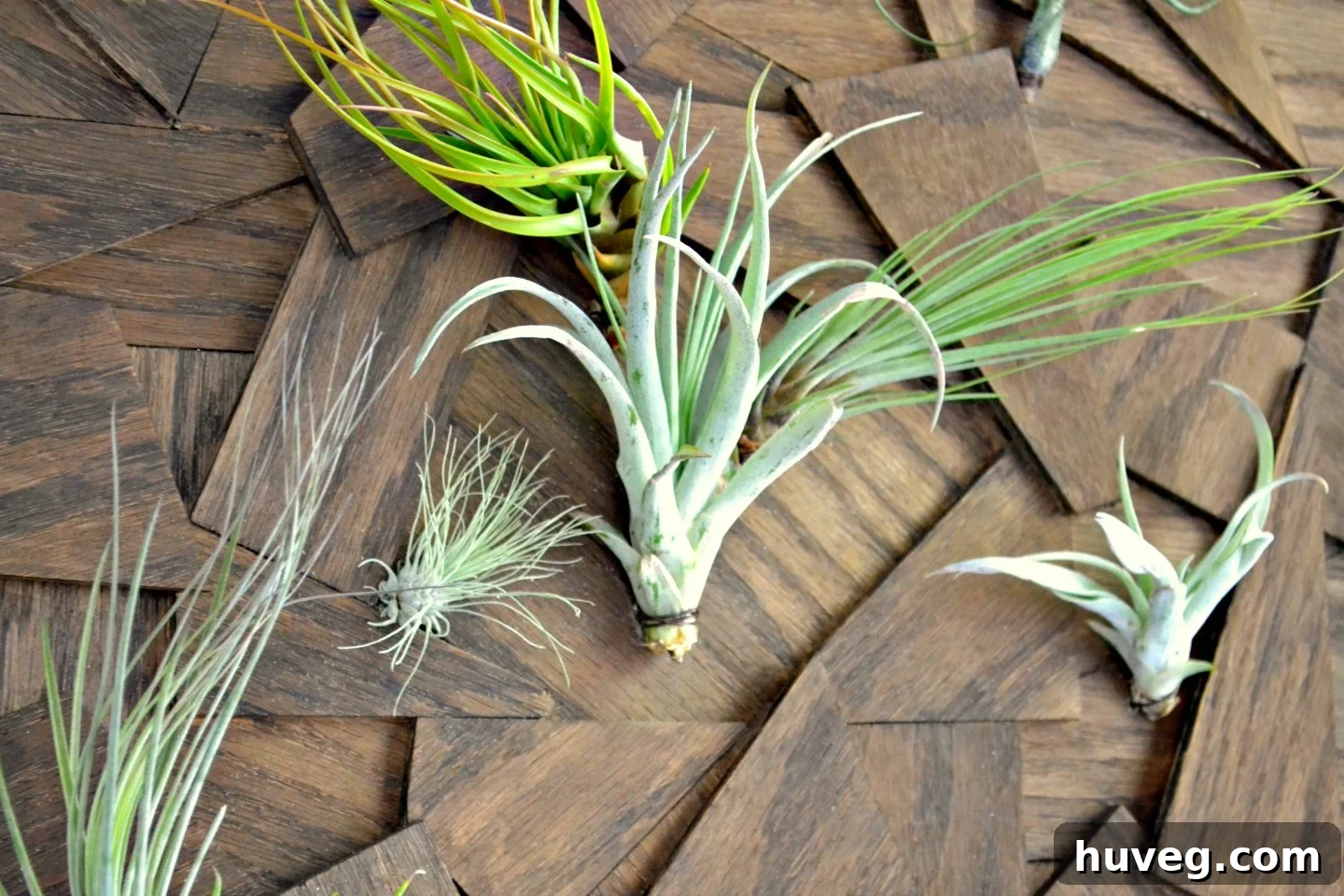
But the inspiration doesn’t stop there! I actually have a *third* related post in the pipeline, also directly inspired by elements from my Rust-Oleum booth. The elegant white planters you saw hanging on the booth’s wall were, in fact, an ingenious Ikea hack. I’m excited to share the full tutorial for those very soon. After making them for the booth, I realized I absolutely needed some for my own home. That project is a little further down on my priority list, however, as I focus on completing more work on my shed. In the meantime, I highly encourage you to click over to the air plant wall art post. I sincerely hope you find as much enjoyment in it as I did in creating it!