What Lies Buried

As the holiday season draws near, the rhythm of home life often shifts, sometimes delaying even the most anticipated updates. My calendar had today earmarked for a deep dive into my moving announcement from earlier this year. Fridays are usually my go-to for sharing more personal anecdotes and behind-the-scenes glimpses. However, after pushing out yesterday’s rather extensive post, my brain cells, particularly those responsible for intricate editing and coherent thought, seem to have taken an early weekend retreat. And honestly, with Friday night calling, a little relaxation is in order. So, while that personal update is drafted, it will need a fresh pair of eyes and a proper polish, likely making its appearance mid-next week.
Despite the slight detour in my publishing schedule, the drive to share the continuous progress around our home remains strong. It’s an ongoing journey filled with countless small victories, many of which don’t quite warrant their own dedicated post until they contribute to a more substantial, impactful reveal. Yet, with Black Friday just around the corner—a truly sacred retail holiday for my family—it feels like the perfect moment to indulge in a bit of tool talk. After all, what better way to approach those ambitious home improvement projects than with the right arsenal of equipment?
Conquering the Great Outdoors: The Never-Ending Battle of Exterior Work
For those who have followed this blog for a while, you’re likely familiar with my candid feelings about exterior work. Progress on the outdoor spaces of our home has often been, shall we say, unhurried. The plain truth is, working on the exterior is a monumental pain. I confess, I have a strong aversion to raking, mowing, and the laborious act of digging. Not to mention the unwelcome encounters with various insects, which invariably find their way into the most inconvenient places. It’s a constant cycle of effort and regrowth; you clear, you tidy, you weed, and then, before you know it, nature reclaims its territory. It’s the outdoor equivalent of making your bed every morning, only for it to be undone by nightfall – a task that, while essential, never truly feels ‘done’.
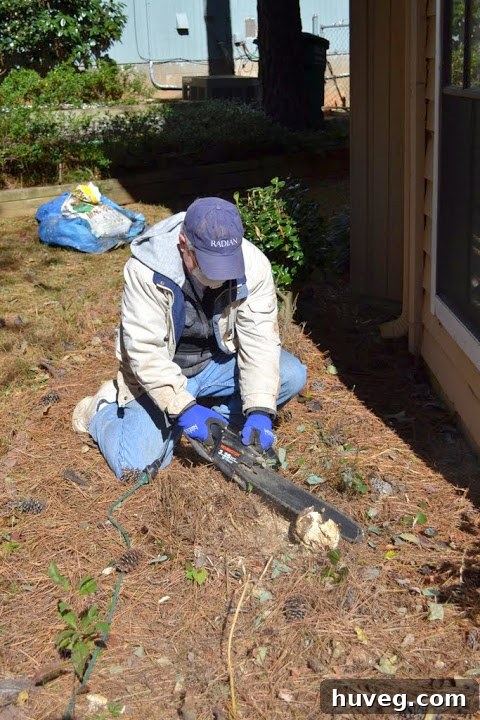
So, when my dad casually mentioned, “Hey, I’m coming over this weekend to tackle those stubborn stumps from the bushes we cut back last year,” my initial reaction was a polite but firm, “Um, sure. That sounds like precisely how I’d love to spend my Sunday afternoon, right after I catch up on my taxes.” Little did I know, this seemingly mundane task was about to become an unexpected adventure, introducing me to a tool that would fundamentally change my perspective on tackling outdoor challenges.
Unearthing the Power of the Mattock: A Gardener’s Best Friend
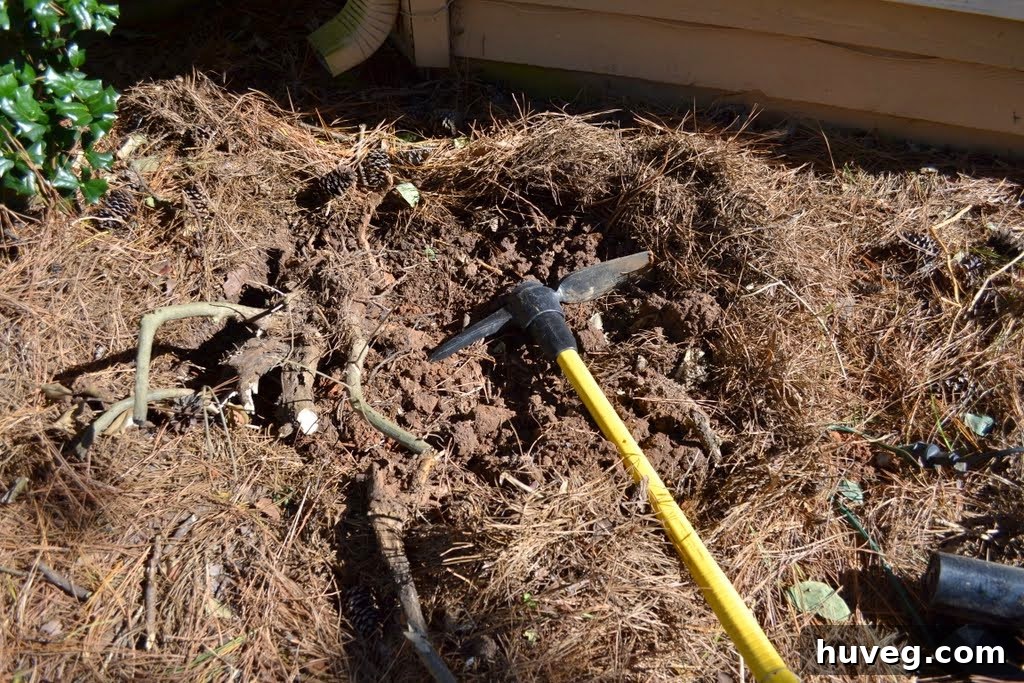
The nifty tool pictured above, which quickly became the star of our weekend project, is called a mattock. For years, I, like many others, had mistakenly referred to this robust implement as a “pickaxe,” only to discover my error. The crucial difference lies in its design: a mattock features a wide, horizontal blade on one end, ideal for chopping and digging, while still retaining the pointed pick on the other for breaking up tough soil. A traditional pickaxe, on the other hand, typically has two pointed ends or a pick and an axe-like blade. This seemingly subtle distinction makes all the difference, especially when dealing with the challenging soil conditions we have here in Georgia, which often consist of a formidable clay mixture.
The mattock slices through hard-packed dirt and stubborn roots with an impressive ease that a regular shovel simply cannot match. It’s a truly exceptional tool for root removal, effortlessly cutting through compacted earth and thick subterranean networks. From now on, I will forever regard this tool as the shovel’s more capable, muscular, and infinitely more efficient older brother. Its ability to make quick work of what would otherwise be back-breaking labor instantly elevated it to an essential item in my gardening arsenal. If you’re tackling any serious landscaping or DIY outdoor projects, this is one investment that will pay dividends in saved effort and frustration.
Transforming the Front Yard: A Mattock’s Debut Performance
Our first mission for the mattock involved two particular bushes at the front of the house. These were casualties of last year’s ambitious chainsaw massacre, where we significantly pruned overgrown foliage. While some plants, like the shiny evergreen holly, rebounded vigorously, these two — which I suspect were a different, less resilient holly species with duller leaves — did not. Their roots were alarmingly close to the house foundation, and their overall hodgepodge appearance meant they never quite contributed to the aesthetic curb appeal. This served as a valuable landscaping lesson: when selecting plants for your front yard, resist the urge to simply pick disparate species you like. Instead, consider how they will grow together to form a cohesive and attractive hedge. Otherwise, be prepared for future homeowners (or your future self) to want to rip out the less attractive or ill-fitting specimens.
Initially, Dad went in with his chainsaw, planning merely to cut the stumps down to ground level and leave the roots to decay naturally. However, as we started digging around the remaining root systems with the mattock, we quickly realized just how effective it was. The combination of the wide blade for severing roots and the pick end for loosening soil made the task surprisingly straightforward. I found myself yanking on what remained of the root systems, watching them lift out of the ground with an ease that felt almost magical. While the looseness of the roots certainly helped, I’m happy to give most of the credit to the powerful mattock and a little bit to my own sheer will!
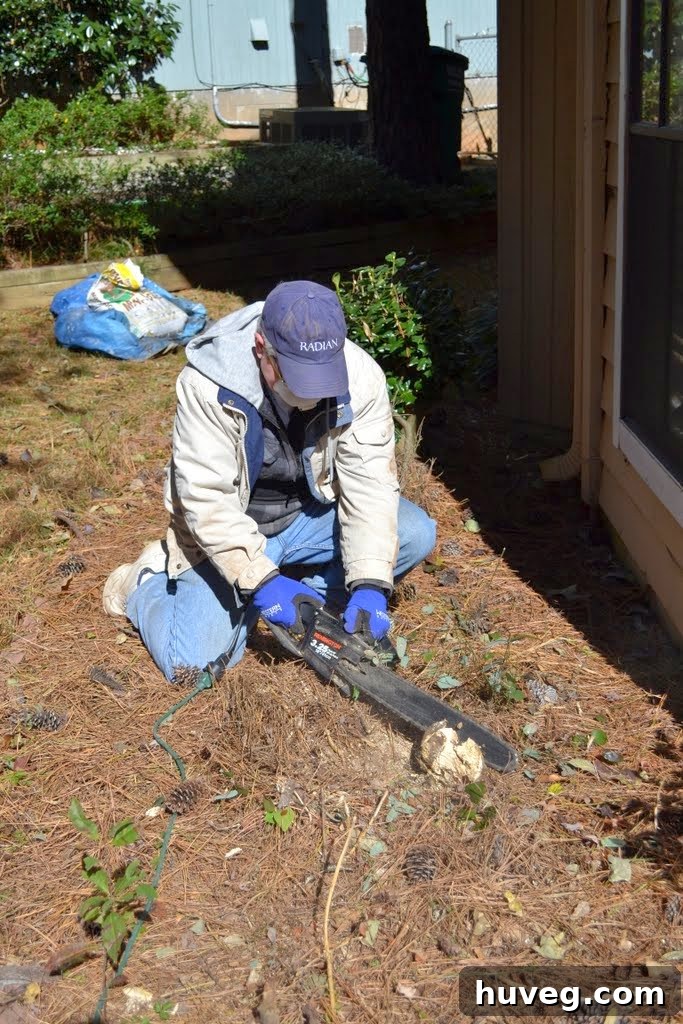
Now that these areas are clear and unencumbered by old, poorly placed roots, my mind is already racing with new landscaping ideas. If we get a few more warm days before winter truly sets in, I’ll be busy planning the next steps. My likely course of action is to plant new, matching shrubs, specifically the same resilient holly species that I do like, but this time, I’ll ensure they are positioned a thoughtful distance away from the house to allow for healthy growth and prevent any future foundation issues. This meticulous root removal not only improves the aesthetics but also safeguards the long-term health of our home’s foundation.
Reclaiming the Garage Side: A Landscape Reboot
Fueled by the newfound momentum and the mattock’s undeniable efficiency, we decided to tackle another notoriously problematic area: the side of the garage. You might recall this space from previous posts – it was an absolute jungle. Just a couple of years ago, it looked like this:
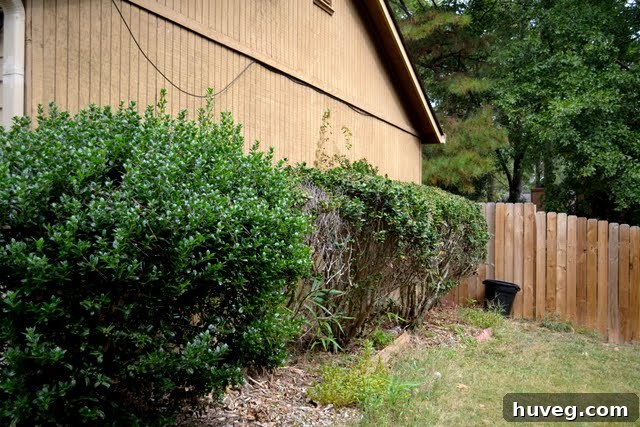
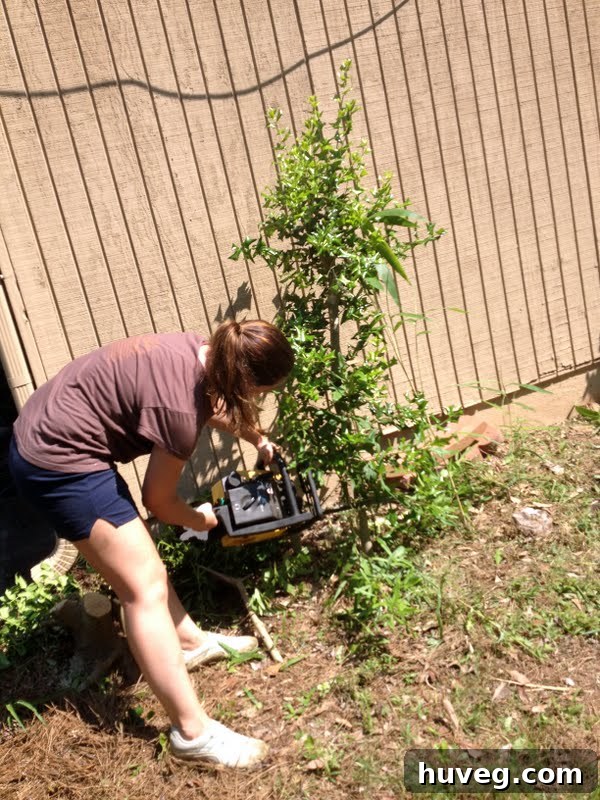
Overgrown, towering, and utterly unkempt, it was a space seemingly designed to harbor gigantic spider nests, sending shivers down my spine just thinking about it. While the photo might present a somewhat flattering angle, the reality was a chaotic mix of completely different species, all growing far too tall to maintain effectively. It was impossible to see what lay beneath them or to assess any potential damage their unchecked growth might be inflicting upon the house. Last year, we attempted to bring some order to the chaos by cutting most of them down to a more manageable size, as detailed in this post. However, these were well-established plants, and a mere shearing didn’t deter most of them. Two were cut down to stumps with the intention of killing them off, but as often happens with tenacious root systems, they proved more resilient than expected.
The core issue remained: every single one of these plants was originally planted far too close to the house for comfort. Many species that would typically grow three feet wide were crammed within twelve inches of the foundation. My goal wasn’t necessarily to eradicate all of them, but rather to give them a comprehensive reboot, encouraging a smaller, more condensed growth pattern. This approach had worked wonders for the camellias in the front yard, and I had similar hopes for these. It’s the landscaping equivalent of “Ctrl+Alt+Delete” – sometimes, a complete system restart is necessary.
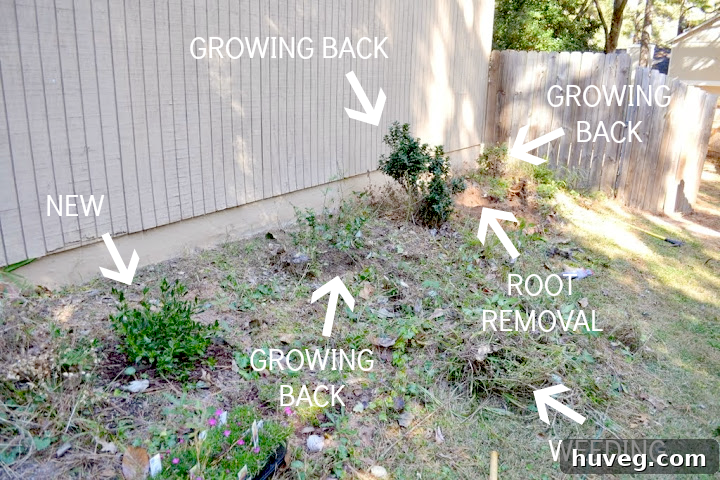
Most of the foliage did return vibrant and lively, albeit significantly reduced in size, setting the stage for a completely new landscaping plan. I’m still meticulously working on a layout that will incorporate more perennial color and strategic planting choices. Landscaping design is certainly not my forte, but I am committed to learning and improving, and I promise a dedicated update on that progress in a future post. Since this current image serves as very much a “before” snapshot, I’ve taken the liberty of labeling it to clearly distinguish between the plants that are slated for removal (“trash”) and those that are staying. It might look a little stark now, but rest assured, this space will soon radiate a more purposeful and aesthetically pleasing design.
The Ultimate Root Battle: A Testament to Tenacity
Among the bushes on the garage side, one particular root proved to be exceptionally stubborn and undeniably needed to go. Its proximity to the house and its close spacing with other well-established bushes made it a prime candidate for complete removal. So, with the mattock firmly in hand, we initiated another digging operation, preparing for what we knew would be a more challenging battle.
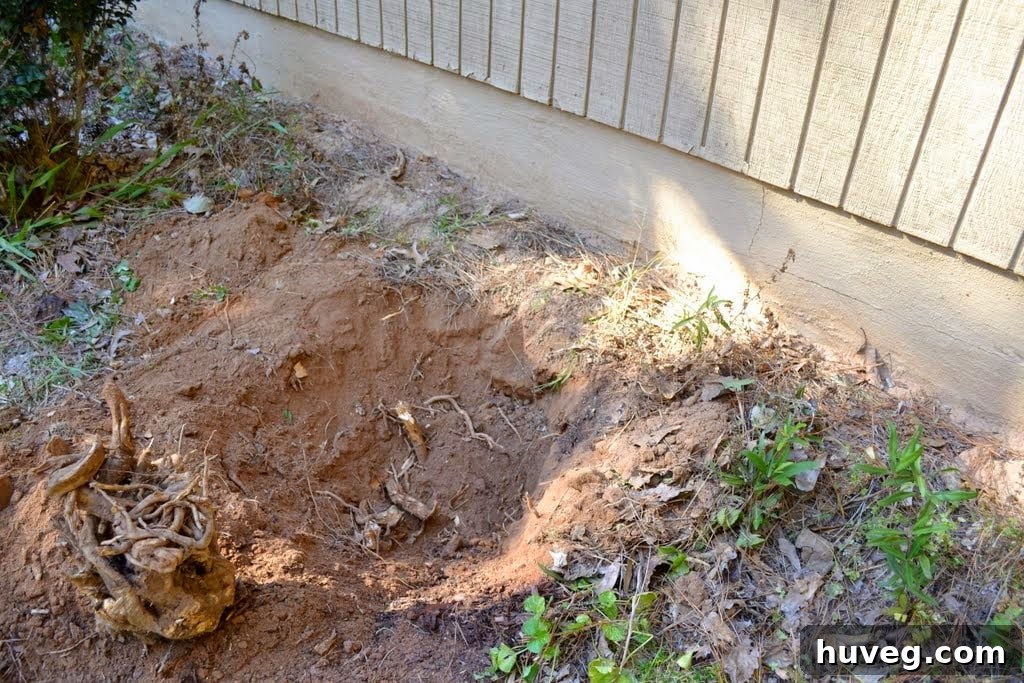
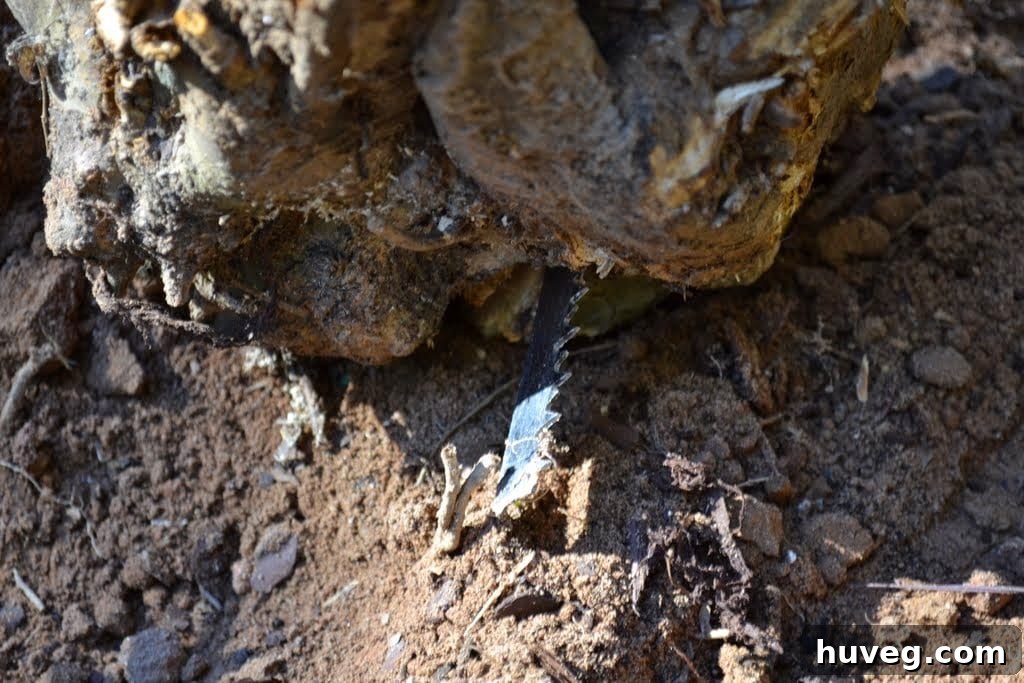
We dug, and we hacked, and we strained. The root, ancient and deeply entrenched, put up a formidable fight. At one point, Dad even lost a blade, a testament to the root’s incredible density and the sheer force required to penetrate it. The process was grueling, demanding both strength and persistence, but our determination to fully clear the area for future landscaping prevailed.
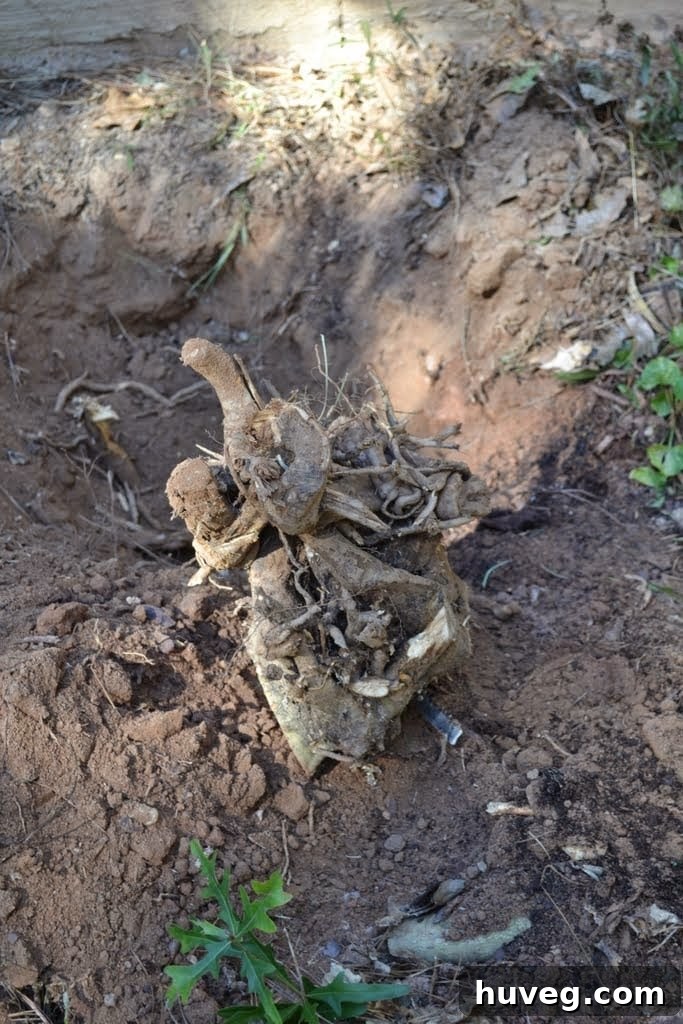
But in the end, we emerged victorious. The massive, convoluted root, once a hidden obstacle, was finally unearthed. It lay before us, a complex network of twisty roots, almost resembling an abstract sculpture carved by nature itself. It was a tangible representation of the earth’s resilience and the arduous effort required to reshape it.
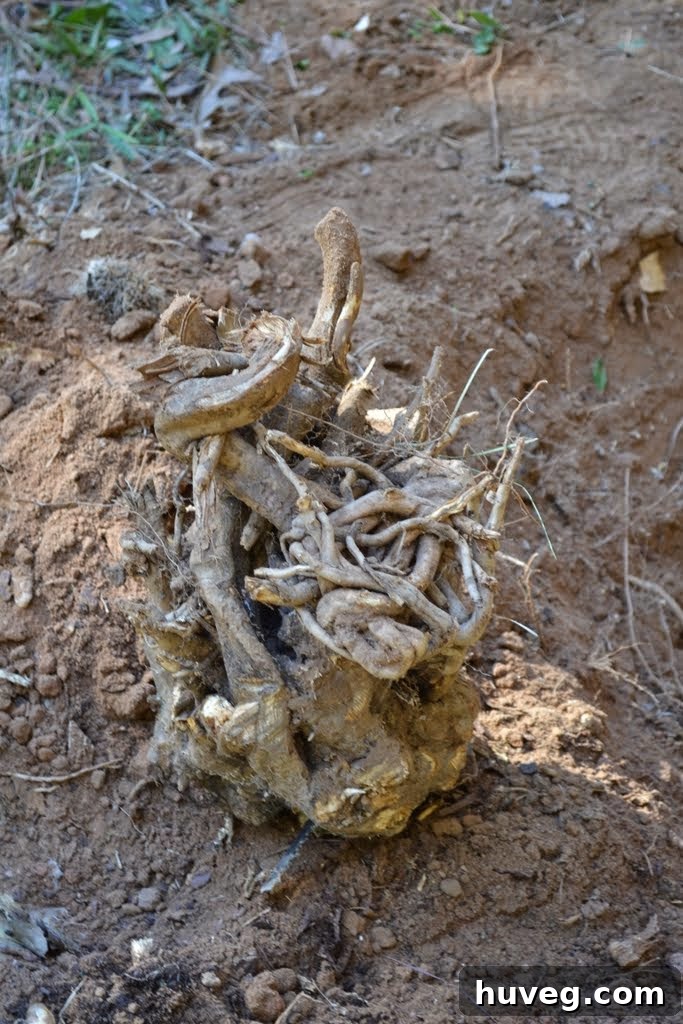
A triumphant sight, that is, if you overlook the sharp, serrated blade still firmly embedded in its bottom, a silent trophy of our battle.
Conclusion: The Mattock – Your Essential Outdoor Companion
The overarching lesson learned from these past few days of intense yard work is crystal clear: when it comes to breaking through hard dirt and tackling stubborn roots, a mattock is unequivocally superior to a standard shovel. This knowledge, hard-won through sweat and a broken blade, will undoubtedly prove invaluable as we move forward with our plans for new plantings and a complete landscaping overhaul. The efficiency and power of this single tool transformed what could have been a weekend of utter frustration into a satisfying, productive experience.
Investing in the right tools can make all the difference in the world of home improvement and gardening. As we head into the season of giving and perhaps, more importantly, the season of Black Friday deals, consider adding a mattock to your wish list if you have any significant outdoor projects on the horizon. It’s a game-changer for anyone looking to reclaim their yard from overgrown roots and compacted soil.
What about you? Are there any home improvement or gardening projects you’re planning to tackle soon? Share your experiences and any essential tools that have made your outdoor work more manageable!