Savvy Savings on Oversized Rugs

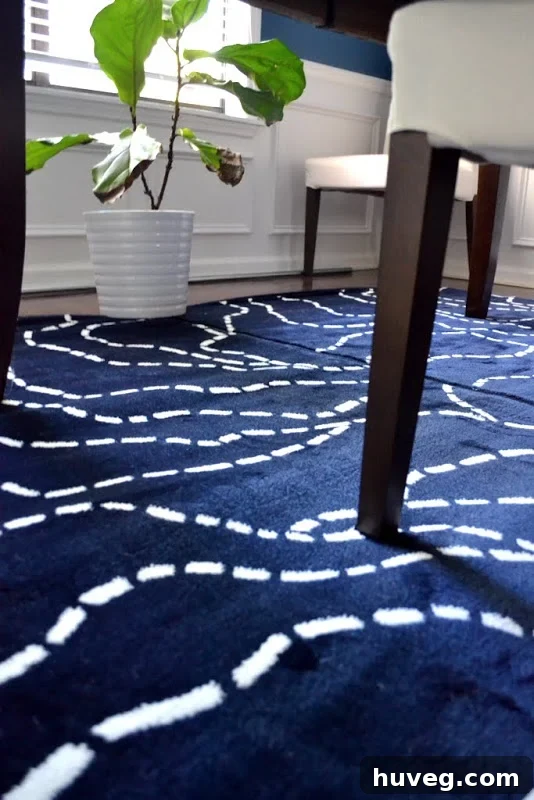
Transforming a living space often begins with the foundation, and in the dining room, that cornerstone is undoubtedly the area rug. In my previous dining room updates, I offered a sneak peek at the new rugs destined for the space, hinting at a creative solution to a common decorating dilemma.
For those who have followed my home improvement journey, you might recall the previous rug that once graced this room. Like many budget-conscious decorators, I initially purchased what I genuinely believed was an adequately sized rug. However, reality quickly set in, revealing a rug that looked disappointingly small and “wimpy” in the expansive dining area, failing to properly ground the furniture or define the space.
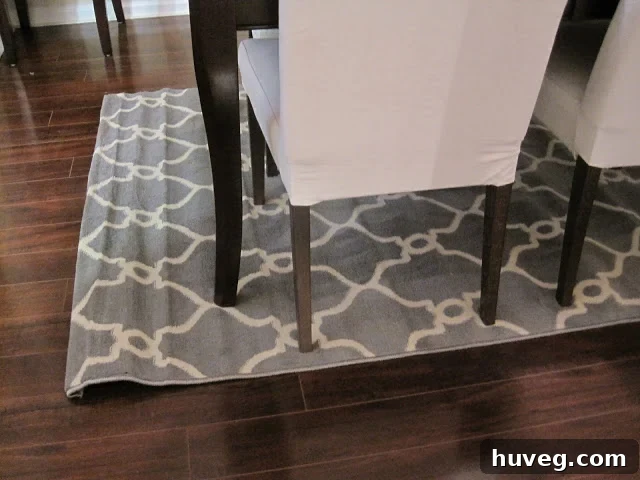
While sticking to a budget remains an unavoidable priority in my decorating endeavors, I’ve since learned a crucial lesson: a standard 5×8 rug simply wasn’t going to cut it for a dining room. Most interior design guidelines advocate for a much larger rug, one spacious enough to allow dining chairs to be pulled out completely and still remain comfortably on the rug. This ensures both aesthetic balance and practical functionality, preventing chairs from catching on the rug’s edge and protecting your flooring beneath.
The realization of needing a larger rug, however, presented a new challenge: the cost. Oversized area rugs, particularly those in sizes like 8×10 or larger, can quickly push well past the $200 mark, often soaring into hundreds or even thousands of dollars. This financial barrier made my quest for a sizable yet budget-friendly option seem daunting. But as any dedicated DIYer knows, where there’s a will, there’s usually a clever, cost-effective way.
The Genius Rug Hack: Achieving an Oversized Look for Less
So, I embarked on a mission to create the illusion of a grand, custom-sized area rug using more affordable materials. The solution? Joining two smaller, inexpensive rugs together to form one large, seamless piece. This “rug hack” is a game-changer for anyone seeking an elegant solution without breaking the bank.
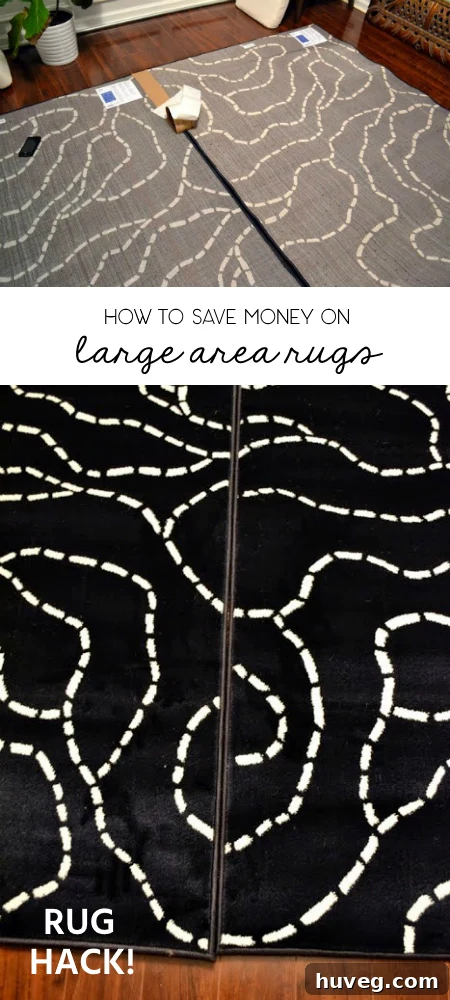
You might find several tutorials online for similar projects, with many suggesting the use of duct tape. However, I opted for a more robust and reliable alternative: no-iron, single-sided carpet seam tape. My primary reason for this choice lies in the superior construction of carpet tape. Unlike typical duct tape, carpet seam tape is engineered with a mesh-like fiber weave. This reinforcement significantly strengthens the tape, ensuring it doesn’t rely solely on the adhesive’s strength, which can be prone to failure when adhering to fabric or rubber rug backings. Furthermore, I vividly recall from my high school pageant days just how incredibly effective and enduringly sticky carpet tape could be! While most carpet tapes are double-sided, specifically designed to join carpet edges directly to the floor, the single-sided version is ideal for this particular project.
Here’s an image of the specific single-sided version I purchased, so you know exactly what to look for when you’re at the hardware store:
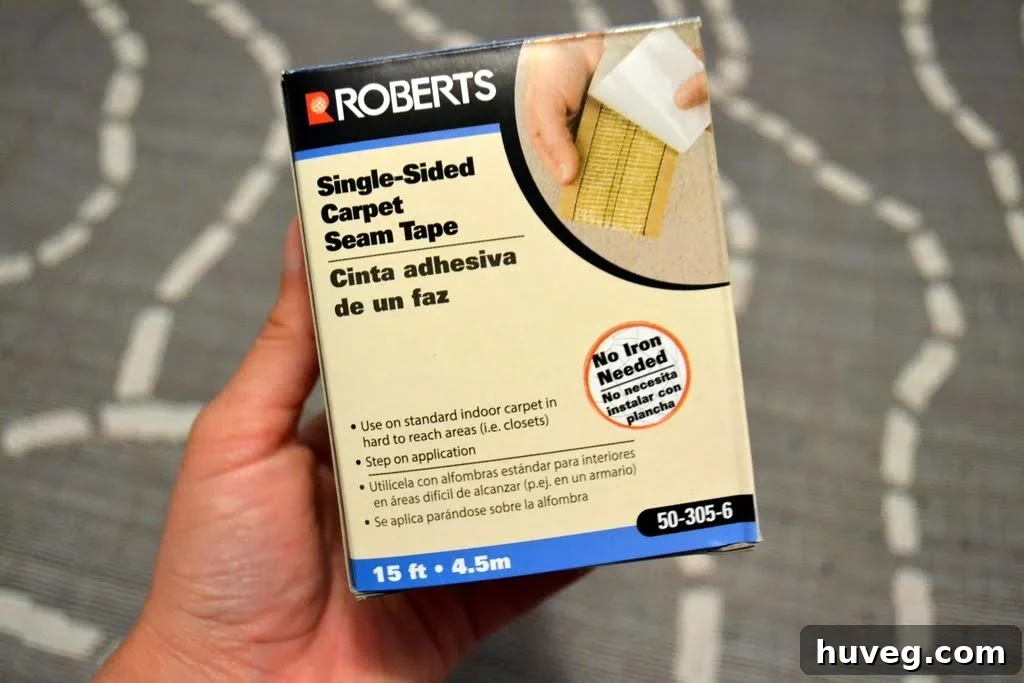
While certain heavy-duty duct tapes might offer some reinforcement, I found them hard to locate during my searches. Most readily available options were either decorative varieties or lacked the robust, reinforced backing that I knew was essential for a lasting bond—a quality that has proven unreliable in my past experiences with general-purpose tapes.
Now, let’s dive into the practical steps of this fantastic DIY rug project. Some of the tutorial photos were taken at night, which inadvertently highlights how dramatically the rug’s appearance can shift under different lighting conditions. Personally, I absolutely adore its rich, dark hue, regardless of the time of day.
What You’ll Need:
- Two (or more) area rugs that, when combined, create the desired large size for your space.
- Single-sided carpet seam tape (ensure it’s designed for permanent seams and is fabric-reinforced).
Step-by-Step Guide to a Seamless DIY Area Rug:
1. Prepare Your Rugs: Lay Flat and Align Backings
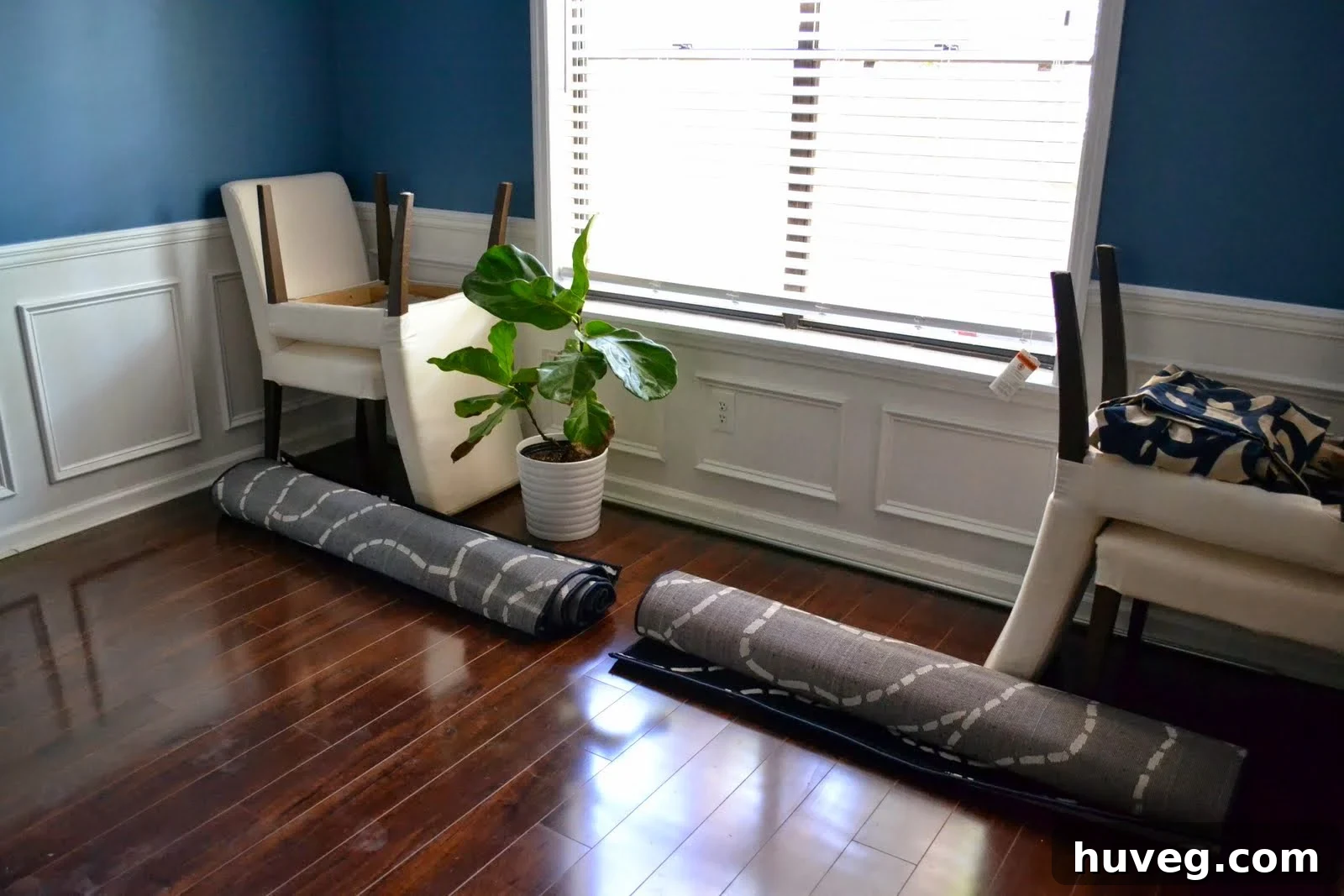
Begin by laying out both rugs, backing-side up, in the area where you intend to tape them. Since rugs that have been rolled and packaged tend to curl, it’s crucial to give them ample time to flatten out completely. This critical preparatory step will ensure that both rugs can be joined perfectly straight along the seam, preventing any frustrating wobbles or misalignments later on. In my eagerness to protect a new rug from dog hair, I didn’t allow quite enough flattening time, which is why you might spot my fiddle leaf fig plant temporarily weighing down one end of the seam in later photos – a testament to the importance of patience here! A perfectly flat surface is key for a truly seamless finish.
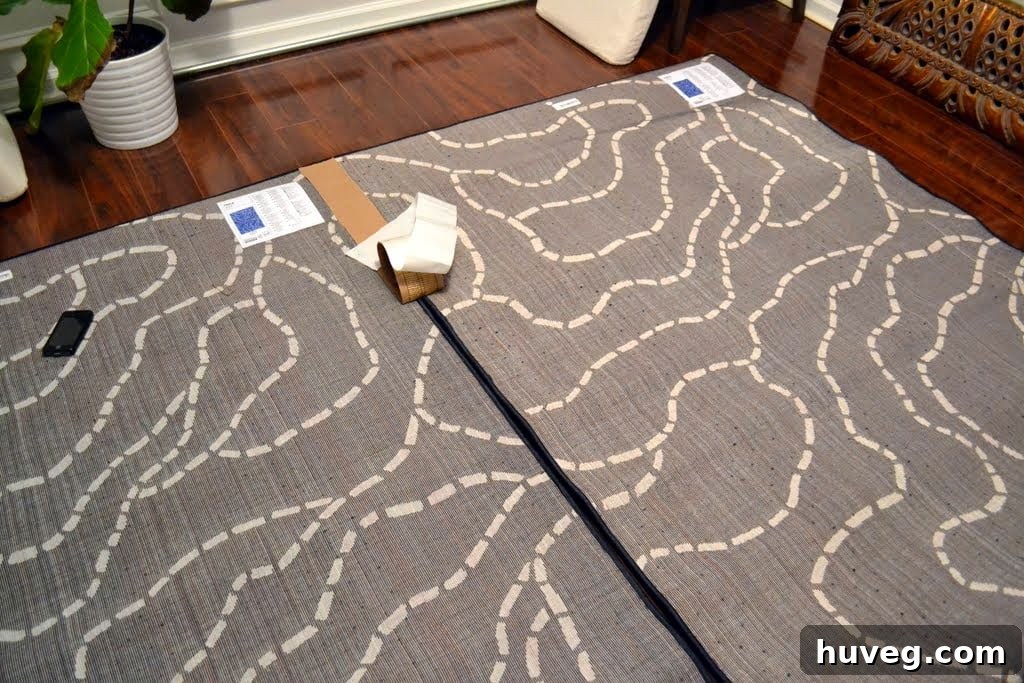
2. Precisely Join the Rugs Along the Seam
Carefully bring the edges of the two rugs together, aligning them along the seam where you plan to apply the tape. It’s best to lay them out fully and assess if the corners and edges match up well. Keep in mind that even if you’ve purchased rugs that are supposedly the same exact dimensions (e.g., 6’5″ long), there might be slight variations in length or width, especially with more affordable options. Gently work with both rugs, making minor adjustments until they appear balanced and evenly aligned from end to end. This meticulous alignment is crucial for the final aesthetic.
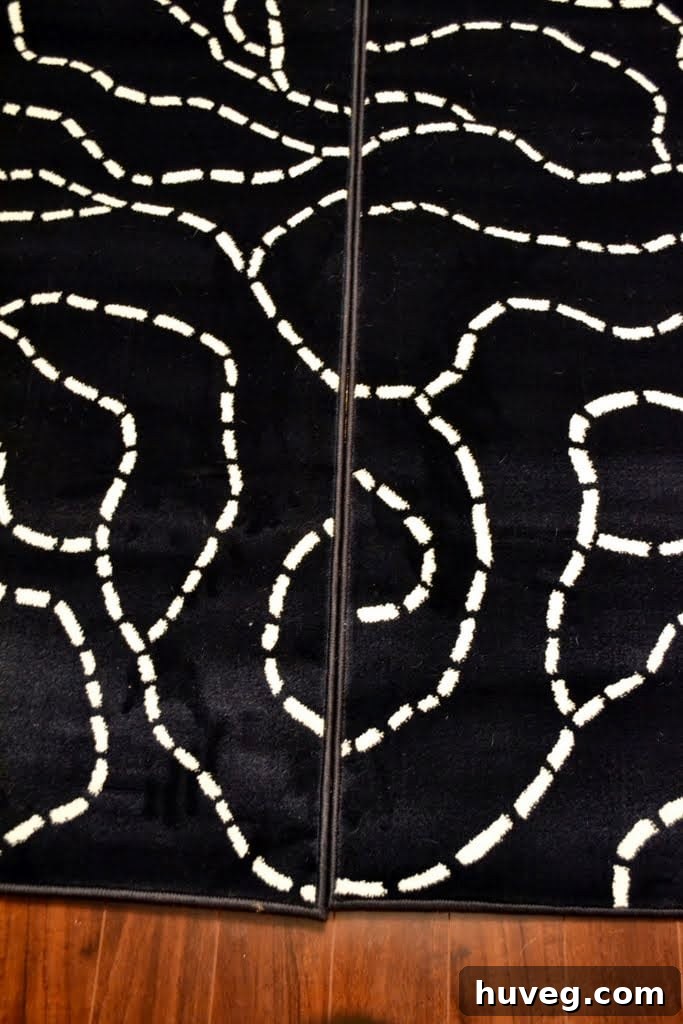
3. Force the Seam Together for an Invisible Finish
While this project is certainly manageable on your own, having an extra set of hands can significantly simplify this step. If you have a helper, instruct them to force the seam of the two rugs together as tightly as humanly possible. Even if the rugs appear to be lying perfectly flush, applying extra pressure ensures there are no tiny gaps. When the rug is eventually flipped over, you absolutely do not want to see any fibers of the carpet tape peeking through the pile. A helper can maintain this tight pressure across the entire seam while you apply the tape. If you’re working solo, simply apply the tape in shorter lengths, consistently joining and pressing the seam together as you progress along the rug’s edge.
4. Apply the Carpet Seam Tape with Firm Pressure
Once the seam is perfectly aligned and pressed tightly, carefully remove the backing from the single-sided carpet tape. Begin applying the tape evenly along the entire length of the seam, pressing down very firmly on both sides of the joined rugs. Carpet tape is renowned for its exceptional stickiness, providing a strong, durable bond. However, it’s generally forgiving enough that if you make a slight mistake, you can gently peel it off and reapply without losing significant adhesive strength, saving you from having to start over with new tape.
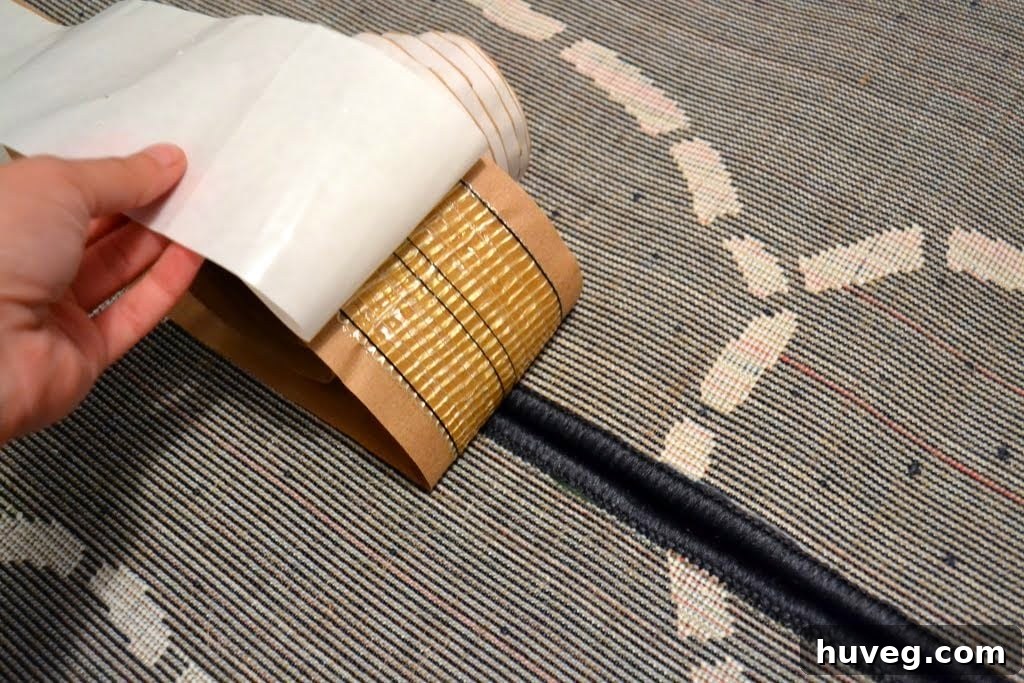
5. Continue Taping Until the Seam is Complete
Repeat steps 3 and 4 systematically until you reach the opposite end of your combined rug. The process is a continuous rhythm: pull or push the seam as tightly as possible, carefully remove the tape backing, firmly press that section of the seam onto the tape, and then repeat the action. Once the entire seam is taped, trim any excess tape neatly. For context, if you’re joining two standard 5×8 (or similarly sized) rugs, a single roll of good quality single-sided carpet seam tape should be sufficient to create one large, seamlessly joined rug.
6. Secure the Seam: The “Pro” Mashing Technique
Finally, carefully flip the newly joined rug over so the pile side is facing up. Now comes the often-recommended “pro” technique for securing the seam: walk all over it! Use your feet to firmly mash and press down along the entire length of the seam. This action helps to activate the adhesive, pushing it deeper into the rug backings and ensuring maximum bond strength. This step is so effective, it’s often explicitly mentioned in the instructions on carpet tape packaging.
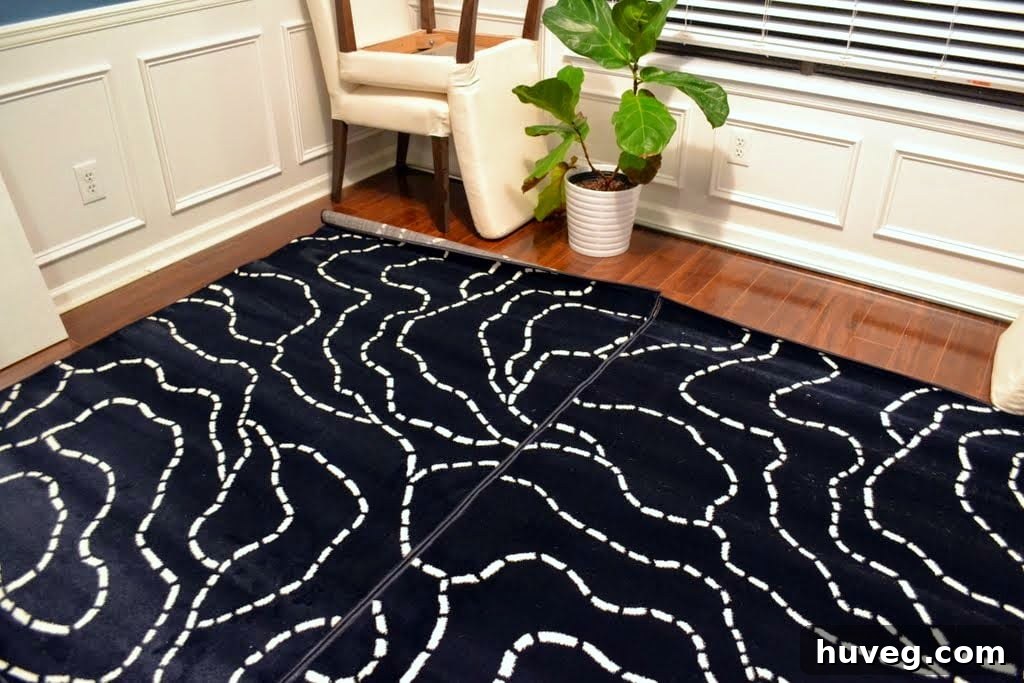
The Impact of a Large Rug: Cost Savings and Stunning Results
The two rugs I used for this project (FERLE, from Ikea, though now discontinued) were incredibly affordable at just $29.99 each. When factoring in the cost of the single-sided carpet seam tape, my total expenditure for this impressive, oversized rug came in at approximately $65. This is an incredible saving compared to purchasing a pre-made large area rug of comparable quality and size, which could easily cost several hundreds of dollars.
The resulting seam runs discreetly directly under the dining table. The combined rug now offers ample clearance on all sides, allowing the chairs to be pulled out comfortably and still remain fully on the rug. Furthermore, a small, consistent strip of the hardwood flooring is visible around all edges, creating a balanced and intentional look for the entire dining area. I couldn’t be more thrilled with the outcome. Here’s a glimpse of the finished rug in daylight, with the dining table and chairs in place, showcasing its true splendor:
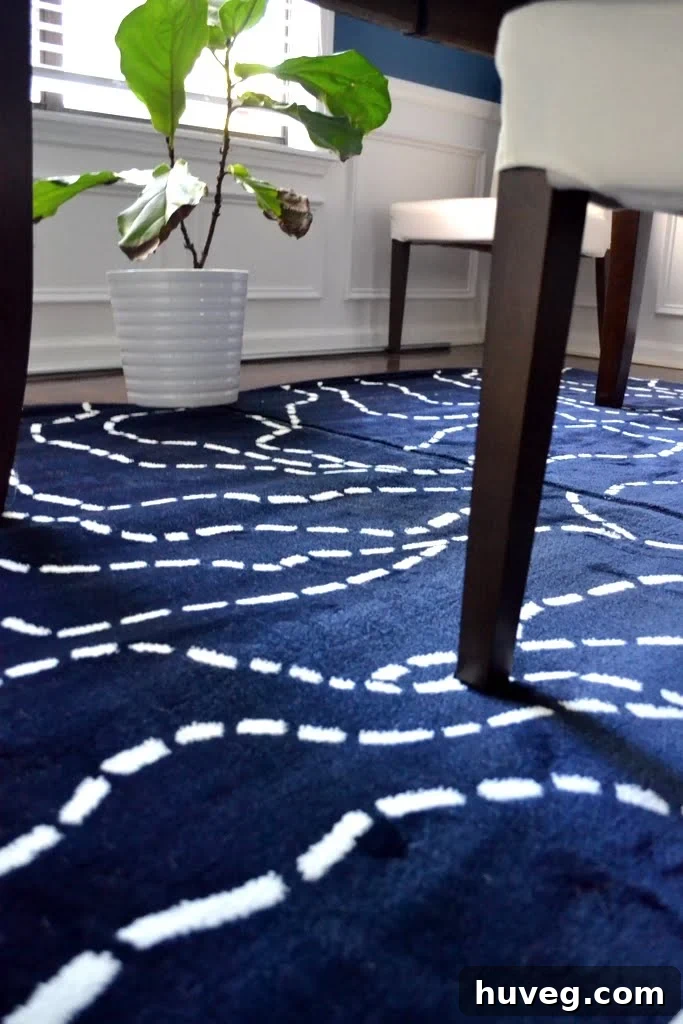
While I’m still in the process of perfecting a few decorative elements in the room, the image below beautifully illustrates just how remarkably inconspicuous the seam is when viewed in person, rather than through the focused lens of a camera. This is truly one of those DIY projects where guests will likely never even notice the clever trick behind your beautifully appointed space—and that’s precisely the goal!
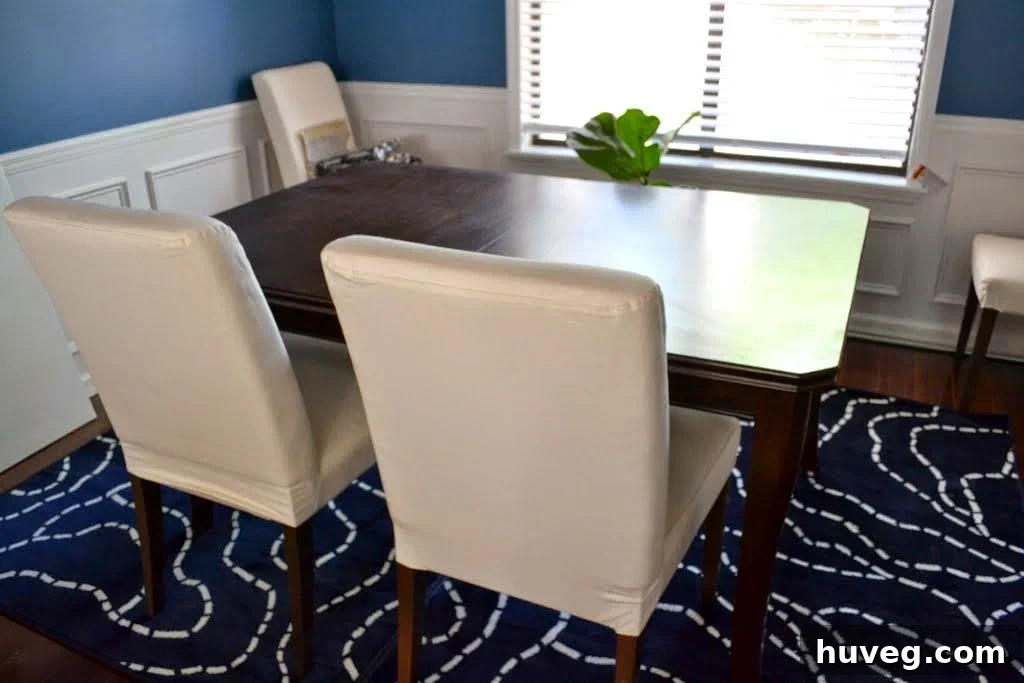
It appears this room is finally reclaiming its identity as a welcoming and elegant dining room, wouldn’t you agree? With just a few more decorative projects on the horizon—think curtains, updated lighting, and some carefully selected art—this space will be officially completed in no time.
Or perhaps, in what I affectionately call “Sarah time,” about six months from now. Just kidding… I hope!