Handcrafted Wooden Sofa Sidekick

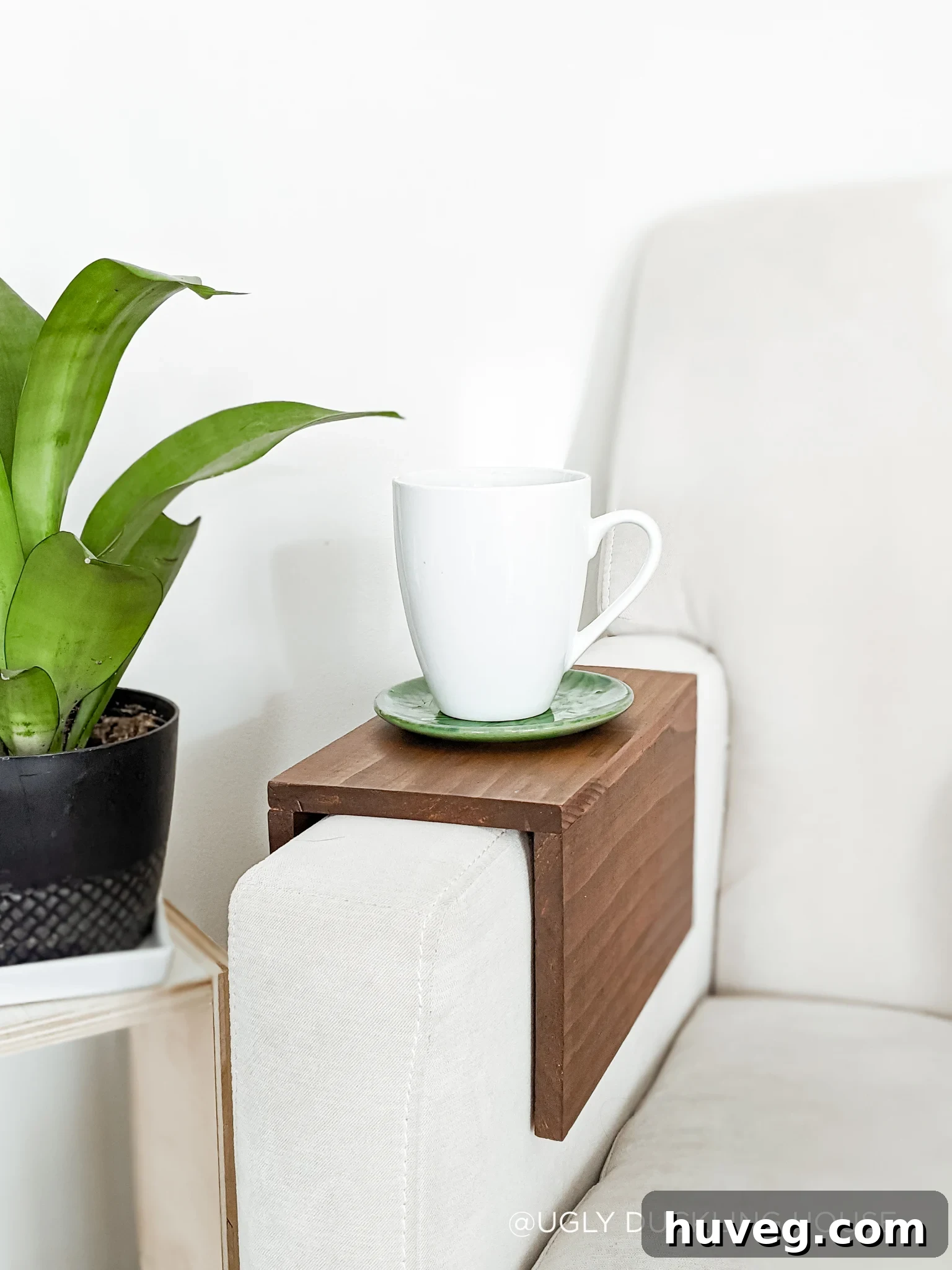
Tired of searching for a safe spot to set your drink, remote, or snack while relaxing on your sofa? Say goodbye to spills and precarious balancing acts with this incredibly practical and stylish solution! This quick and easy DIY armrest tray table is designed to fit perfectly over the arm of your sofa, couch, or favorite armchair, offering a stable and convenient surface right where you need it most. It’s an ideal project for beginners in woodworking and a fantastic way to utilize leftover materials, making it a truly rewarding and budget-friendly home improvement.
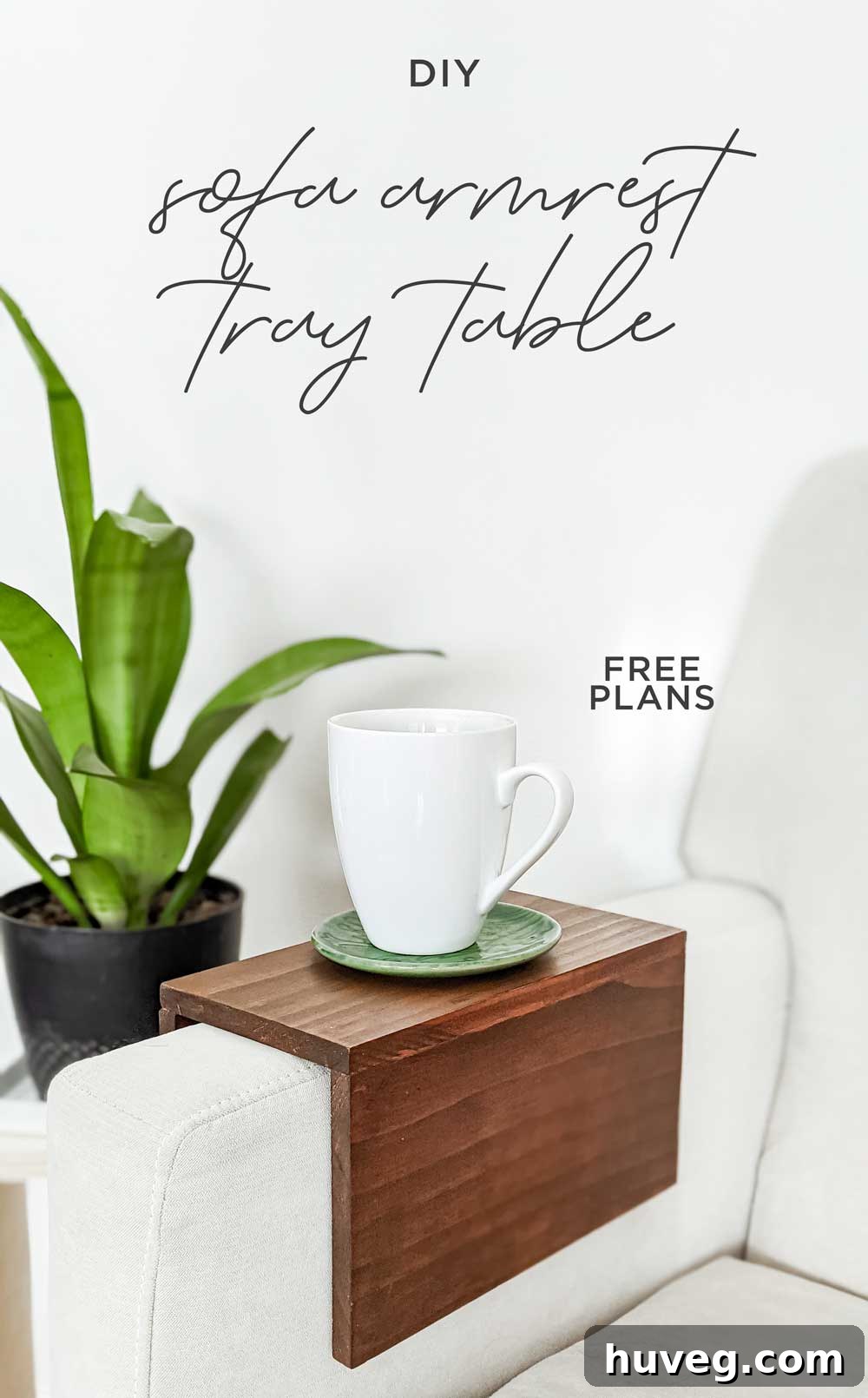
The inspiration for this project, often referred to as a wooden couch sleeve or sofa arm table, stemmed from a common household need and a desire to make practical use of readily available materials. While on a recent trip to the hardware store for some wood stain, I spotted slim pine boards that seemed destined for this exact purpose. These boards were just the right length to be cut into thirds, providing the perfect starting point for what quickly became one of my favorite scrap wood projects to date.
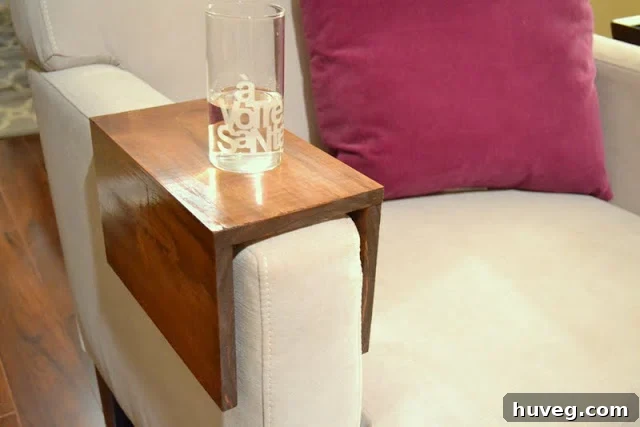
Why You Need a DIY Sofa Armrest Tray Table
A DIY sofa armrest tray table is more than just a decorative piece; it’s a game-changer for anyone who loves to relax on their couch. Here’s why this project is a must-try for enhancing your living space:
- Space-Saving: Unlike bulky traditional side tables that consume valuable floor space, this ingenious armrest caddy sits directly on your sofa arm. This makes it an ideal solution for smaller living areas, apartments, or any room where maximizing space is a priority.
- Convenience at Your Fingertips: Imagine having your essentials—a refreshing drink, the television remote, your phone, or a captivating book—all within easy reach. No more stretching awkwardly or risking accidental spills by placing items precariously on cushions.
- Protects Upholstery: Actively safeguard your beloved furniture from unsightly condensation rings, drips, or accidental spills. The stable, dedicated wooden surface of your armrest tray table acts as an effective drink holder for your sofa, prolonging the life and pristine condition of your upholstery.
- Infinitely Customizable: This project offers an exciting canvas for personalization. Match it seamlessly to your existing decor with your choice of wood species, stain color, paint finish, or even by adding unique features like carved recesses or phone slots.
- Budget-Friendly: Often constructed from scrap wood or inexpensive timber, this DIY armrest tray table is remarkably economical compared to purchasing specialized furniture items. It’s a smart way to add functionality without breaking the bank.
- Beginner-Friendly Woodworking: With its straightforward cuts and simple assembly process, this project is perfect for those new to woodworking. It requires only basic tools and techniques, promising a high sense of accomplishment for novice DIYers.
Materials & Tools for Your DIY Armrest Tray Table
Gathering all your materials and tools beforehand will ensure a smooth and efficient building process, allowing you to focus on the craft. One of the many advantages of this project is its flexibility – you can often utilize items you already have on hand or find inexpensive options at your local hardware store, making it a truly accessible DIY.
- Wood of your choice: This is a fantastic opportunity to breathe new life into scrap wood pieces from previous projects, making your armrest tray table sustainable and even more cost-effective. Pine is a popular choice for its affordability, lightweight nature, and ease of cutting, sanding, and staining. However, if you prefer greater durability and a more premium aesthetic, hardwoods like oak, maple, or walnut can also be used.
- Wood glue: A high-quality wood adhesive is absolutely crucial for ensuring the structural integrity and longevity of your tray table. Look for a strong PVA wood glue that offers a robust bond.
- Pencil: An indispensable tool for precise measurements and clearly marking your cut lines before you begin sawing.
- Miter saw or table saw: These power tools are essential for making accurate, straight, and clean cuts on your wooden planks. A miter saw excels at cross-cuts (cutting across the width of a board), while a table saw is ideal for ripping boards to specific widths. If you don’t own these, many lumber yards or hardware stores offer cutting services for a small fee.
- Orbital sander: For achieving a smooth, professional finish that is crucial for a surface that will be frequently touched. An orbital sander significantly speeds up the sanding process compared to hand sanding.
- Sandpaper: You’ll need a selection of grits. Start with a coarser grit (e.g., 80 or 100) to quickly remove imperfections and shape the wood, then progress to finer grits (e.g., 180 or 220) for a silky-smooth, ready-for-finish surface.
- Measuring tape: Accuracy is paramount in woodworking. A reliable measuring tape ensures all your pieces fit together perfectly.
- Safety gear: Always prioritize your safety when working with power tools and finishes. This non-negotiable kit includes safety glasses to shield your eyes from debris, hearing protection to guard against loud machinery noise, and a breathing mask, particularly when sanding or applying stains, to prevent inhaling dust and harmful fumes.
- Wood stain & polyurethane (poly): Or another sealant of your choice. The stain adds color and depth to the wood, enhancing its natural beauty. The polyurethane or clear coat provides a durable, protective layer against moisture, scratches, and daily wear. Consider a stain color that harmonizes with your existing decor. This particular stain is a personal favorite for its beautiful, rich finish.
- Clamps: Indispensable for holding your wooden pieces securely together while the wood glue cures and dries. Clamps ensure a tight fit and a strong, lasting bond, which is fundamental to the stability of your armrest tray table.
How to Make This Sofa Armrest Tray Table in 3 Easy Steps
Crafting your very own sofa armrest tray table is an immensely satisfying process that can be broken down into three straightforward and manageable steps. Even if you’re a novice in the world of woodworking, these detailed instructions will guide you confidently toward a successful and rewarding outcome, resulting in a functional and stylish addition to your living space.
1. Measure and Cut Pieces
Accurate measurement is the absolute cornerstone of this project, ensuring a perfect fit and a professional appearance for your armrest caddy. Begin by meticulously measuring the exact width of your sofa or chair armrest using your measuring tape. This critical measurement will directly determine the inner width of your U-shaped tray table. To ensure an easy yet snug fit that can be placed and removed without struggle, add approximately a quarter of an inch (around 6mm) to this measurement. This slight allowance is crucial to prevent the tray from being too tight or difficult to slide over the arm. Next, you’ll need to determine the overall length of the top piece of your tray table. This length should be the armrest width (including the quarter-inch allowance) plus the combined thickness of the two side slats. For instance, if your armrest is 8 inches wide and your side slats are each 3/4 inch thick, your top piece should be approximately 8 + 0.25 + 0.75 + 0.75 = 9.75 inches long. The two side slats themselves should be cut to a length that allows them to extend down the sides of the armrest by a few inches, providing sufficient stability without touching the floor.
Once your measurements are precise and marked clearly with your pencil, it’s time to make your cuts. Use either a miter saw or a table saw to achieve clean, straight cuts on your chosen wood pieces. Precision here contributes significantly to the final look and ease of assembly. Always remember to prioritize safety above all else: wear your safety glasses and hearing protection, ensure your hands are clear of the blade’s path, and follow all manufacturer guidelines for operating your power tools. A good rule of thumb in woodworking is to “measure twice, cut once” to avoid errors and wasted material.
2. Secure Pieces Together
With all your wooden components precisely cut, it’s time for the exciting assembly phase. This step transforms your individual planks into the functional U-shaped armrest tray table. Begin by applying an even, thin layer of high-quality wood glue to the edges where the two side pieces will meet the underside of the top piece. Ensure thorough coverage for a strong bond, but be careful not to apply an excessive amount, as too much glue will squeeze out and create a messy cleanup. Carefully position the two side planks, standing them upright, onto the marked edges of the top piece, aligning them perfectly to form the desired U-shape that will snugly cradle your sofa arm. Once the pieces are aligned, immediately use several clamps to hold them firmly in place. Apply enough pressure to ensure a tight, gap-free bond, but avoid over-tightening, which could potentially dent or damage the wood. Any excess glue that squeezes out should be promptly wiped away with a clean, damp cloth before it dries, as dried glue can be difficult to sand and can interfere with the final finish.
Allow the glued assembly to dry completely according to the specific wood glue manufacturer’s instructions. This usually requires several hours, but for maximum strength and durability, extending the drying time, perhaps overnight, is always recommended. While optional, some DIYers might choose to reinforce the glue joint by adding a few small pin nails or staples. These can help hold the pieces while the glue sets, though for a properly clamped and dried joint, wood glue alone provides an incredibly strong and lasting bond, as proven by the long-term stability of the tray tables made for this project.
3. Sand, Stain, and Protect
The final crucial step involves refining the aesthetics and providing lasting protection for your newly constructed armrest tray table. Begin by thoroughly sanding all surfaces of the assembled piece. Start with a medium-grit sandpaper (typically around 120-150 grit) to effectively smooth out any minor imperfections, rough edges, saw marks, or residual dried glue. Once these initial flaws are addressed, transition to a finer grit sandpaper (180-220 grit) to achieve a remarkably silky-smooth finish that will be pleasant to the touch. Pay particular attention to all edges and corners, as these areas are frequently handled. After completing your sanding, it is absolutely essential to wipe down the entire piece with a clean, slightly damp cloth, followed by a dry cloth, to remove all traces of sawdust before you apply any finish. This ensures proper adhesion and a blemish-free appearance.
Once the wood is perfectly clean and dry, it’s time to apply your chosen wood stain. Follow the manufacturer’s instructions carefully for the best results, which typically involve applying the stain evenly with a cloth or brush and then wiping off any excess after a few minutes to achieve your desired color intensity. Allow the stain to dry completely, which can take several hours depending on the product and environmental conditions. Finally, apply a protective topcoat such as polyurethane (poly), lacquer, or a clear varnish. This protective layer will seal the wood, providing a durable, water-resistant surface that is easy to clean and effectively guards against spills, scratches, and daily wear and tear. Apply two to three thin coats, allowing each coat to dry thoroughly according to product instructions. For an exceptionally smooth and professional finish, lightly sand with a very fine-grit sandpaper (around 220-320 grit) between coats, then wipe clean before applying the next layer. This meticulous finishing process not only enhances the natural beauty of the wood but also ensures your DIY armrest tray table will withstand years of regular use, maintaining its functionality and aesthetic appeal.
Customization Options for Your Perfect Couch Caddy
One of the greatest joys and advantages of undertaking a DIY project like this is the boundless freedom to customize it to your exact preferences, aesthetic desires, and functional needs. While the basic U-shape design is wonderfully functional on its own, there are myriad ways to enhance and personalize your armrest tray table, making it a truly unique piece:
- Refined Edge Treatments: Elevate the look and feel of your tray table by using a router to create elegant chamfered or rounded-over edges. This not only provides a softer, more professional appearance but also helps prevent dings and splinters, making it more comfortable to use.
- Integrated Drink Security: For ultimate stability and spill prevention, consider routing out a precise round circle or carving a square recess on the top surface. This creates a dedicated, secure spot for your coffee mug, glass, or water bottle, significantly minimizing the risk of accidental tipping.
- Smart Tech Slots: Design and add a thin, shallow slot for your smartphone or tablet, allowing it to stand upright and easily accessible. For added convenience, you could even route a small channel or drill a discrete hole for a charging cord, effectively transforming your armrest into a convenient, clutter-free charging station.
- Remote Control and Organizer Pockets: Keep your living room essentials neatly organized by attaching a small wooden box or even a stylish fabric pocket to the side of your tray table. This is perfect for stashing remote controls, reading glasses, or other small items that often go missing in couch cushions.
- Unique Wood Combinations and Patterns: Unleash your creativity by experimenting with different types of wood for the top and side pieces. This could create a stunning contrasting effect, intricate patterns through marquetry, or a charming mosaic look. Utilizing reclaimed wood can also infuse your piece with character, history, and a rustic charm.
- Personalized Finishing Touches: Beyond traditional wood stains, the finishing possibilities are vast. You could paint your tray table to perfectly match your room’s existing color scheme, apply a distressed finish for a popular vintage or shabby-chic aesthetic, or even use a clear epoxy coating for an ultra-durable, high-gloss surface that truly stands out.
- Enhanced Stability with Non-Slip Features: For superior grip and to prevent any sliding on smoother armrests, consider adding self-adhesive felt pads, thin strips of rubber, or even small silicone feet to the underside of the side slats. This not only secures the tray but also protects your furniture from scratches.
These extensive customization options ensure that you can tailor your armrest tray table precisely for relaxing, working, or anything else you might need, making it an incredibly versatile and truly indispensable addition to your living space. The paramount feature remains its remarkable ease of use and the fact that it ingeniously requires no extra floor space, unlike a traditional, bulky side table.
This entire project is remarkably quick to set up, often requiring less than ten minutes for the cutting and initial gluing phases. The majority of the project time is dedicated to patiently waiting for the wood glue, stain, and protective polyurethane coats to dry and cure properly. Therefore, always be sure to consult and adhere to the specific instructions provided on the back of your product cans for accurate drying times to ensure the best results and durability. I was so delighted with the functionality and aesthetic of the first armrest caddy I made that I immediately crafted a second one for my living room, and my dad has been persistently asking me to make some for his own home ever since! While square armrests are undoubtedly the most ideal and straightforward fit for this particular design, it can theoretically function quite well for even rounded couch arms, provided that the side pieces are cut long enough to ensure sufficient stability and a secure grip on top of the armrest. Indeed, I’ve even observed attractive rounded versions of these sofa arm tables available for sale online, particularly on artisan marketplaces like Etsy, showcasing the design’s adaptability.
Please enable JavaScript in your browser settings to view personalized shopping content and recommendations. Alternatively, you can often find a wide array of unique, handcrafted armrest tray tables and couch sleeves on artisan platforms like Etsy, if you prefer to purchase rather than DIY.
While I admittedly picked up a perfectly good, new board specifically for the initial creation of this project, meaning it wasn’t strictly a “scrap wood project” in that specific instance, the inherent beauty and cleverness of this design lie in its perfect suitability for utilizing smaller, leftover pieces of timber from other, larger woodworking endeavors. In that sense, it truly embodies the spirit of scrap wood repurposing. This particular endeavor is undoubtedly a “pin-spired” project, as I first stumbled upon the brilliant concept and enthusiastically pinned the original idea several months prior to embarking on my own version. My motivation to go ahead and finally complete this project was further significantly amplified after seeing other fantastic interpretations, such as the impressive version generously shared by Merrypad. It’s truly fascinating to observe how a single, clever idea can organically spark so much creativity and inspire so many personalized variations across the DIY community!
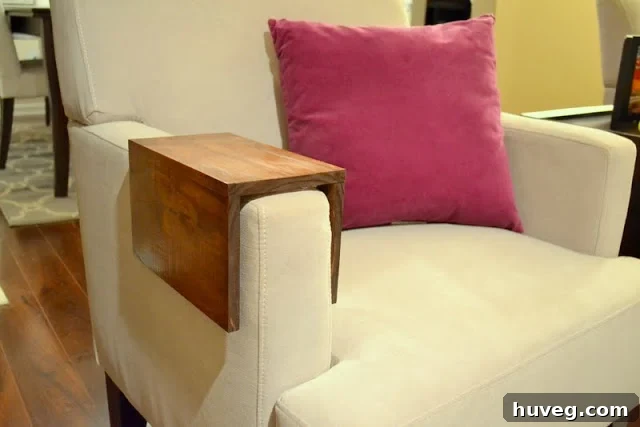
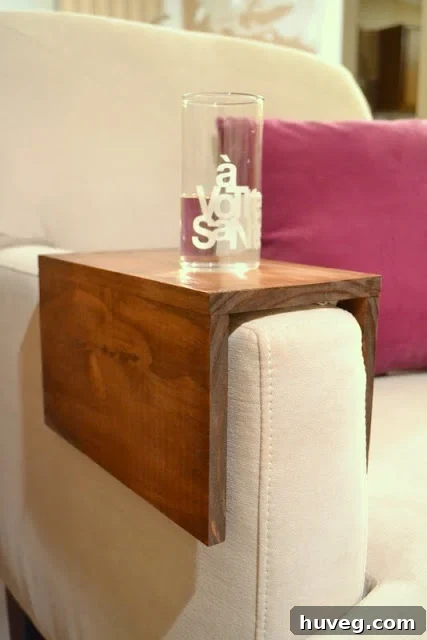
Ultimately, whether you choose to call it a couch arm table, a wooden sofa armrest table, a couch sleeve, or simply a convenient drink rest – the precise nomenclature matters significantly less than the incredible utility and practical benefit it consistently provides! This project stands as a testament to the powerful principle that often, the most straightforward and simple ideas can yield the most useful, long-lasting, and highly satisfying results in home improvement.
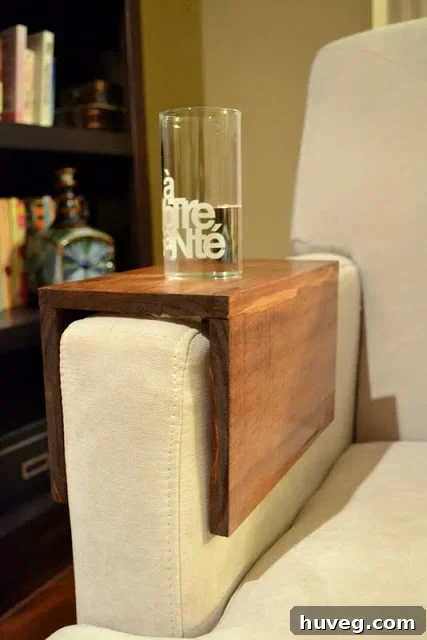
And its remarkable usefulness has truly stood the test of time, proving its enduring value! Here’s an updated picture from 2016 of my living space, clearly showcasing that these custom-made armrest tray tables are still very much a beloved and frequently utilized part of my home setup. Whether they’re holding a steaming morning cup of coffee to kickstart the day or a relaxing evening glass of wine to unwind, their sheer convenience and unwavering functionality are simply unmatched. They seamlessly integrate into the rhythm of daily life, consistently proving to be one of those small, seemingly minor DIY projects that ends up making a profoundly significant difference in comfort and practicality.
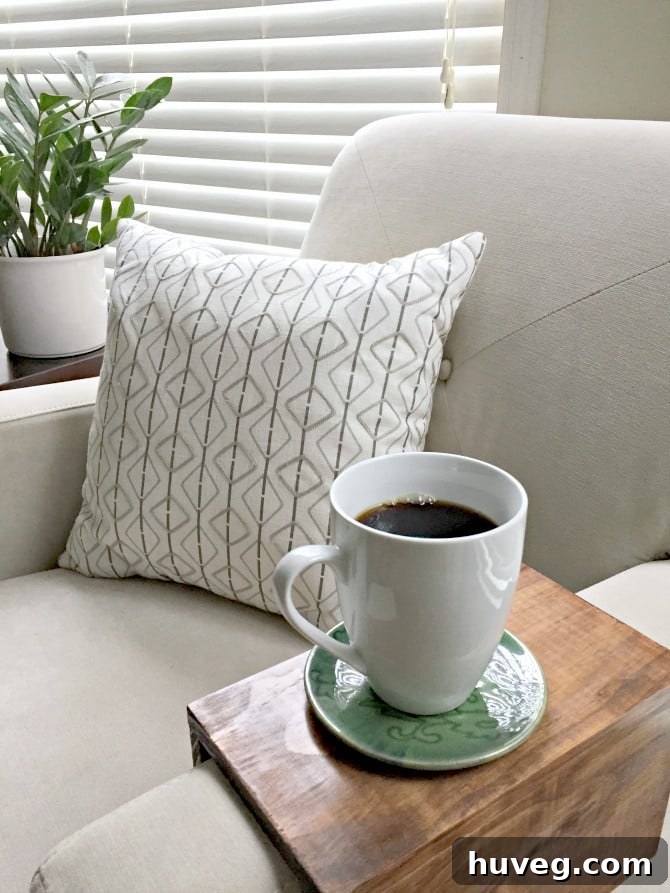
A common and excellent question that has frequently arisen since this project was originally posted is whether scrap plywood can be effectively used as an alternative to solid wood. Absolutely! Plywood can indeed be a fantastic and practical alternative, especially if you happen to have suitable pieces readily available from other construction or crafting projects. However, there is one crucial consideration when opting for plywood, particularly for a surface that will routinely hold beverages: the importance of sealing it exceptionally well. Plywood layers are inherently more susceptible to moisture absorption than solid wood. If not properly and thoroughly sealed, prolonged exposure to moisture (from spills, condensation, or humidity) can cause the layers to swell, warp, and even delaminate over time. This would unfortunately undermine the very purpose of this simple design, which relies on a flat, stable, and durable surface. Therefore, if you choose to utilize plywood, ensure you invest extra care and attention in the sealing and finishing steps to guarantee its longevity and functionality!
Want More DIY Inspiration? Discover the Power of Scrap Wood!
Don’t let those valuable cutoffs and smaller remnants from bigger woodworking projects and various home DIYs go to waste! Scrap wood is a true treasure trove of untapped potential, offering an endless array of opportunities to create functional, decorative, and thoughtfully crafted items. Repurposing these materials not only offers significant cost savings but also contributes meaningfully to more sustainable and environmentally conscious crafting practices. From heartfelt handmade gifts to unique and eye-catching home décor accents, the possibilities are genuinely only limited by the depths of your imagination and creativity. Check out these additional creative ideas below that make excellent and inspiring use of scrap wood. Simply click on the image or the corresponding link to be taken directly to the full tutorial and unleash your inner DIYer!
More Scrap Wood Ideas
SEE ALL
-
DIY K-Cup Holder | How to Stain Wood with Fire!
-
Murphy Bed Nook Reveal!
-
How to Build a Concrete Form for an Outdoor Pad
-
Scrap Wood Wall Art
-
DIY Bathroom Deodorizer
-
“Thank You” Doorbell Sign