Get Your Sliding Glass Door Gliding Again

We’ve all been there: that one persistent home repair or maintenance task that constantly irks you, yet somehow manages to slip to the bottom of your to-do list. You tell yourself you’ll get to it “someday,” but “someday” turns into weeks, then months, and before you know it, you’re still grappling with the same aggravating problem. For me, that recurring frustration centered around my sliding glass door – a gateway to the outdoors that had become more of a wrestling match than a smooth transition.
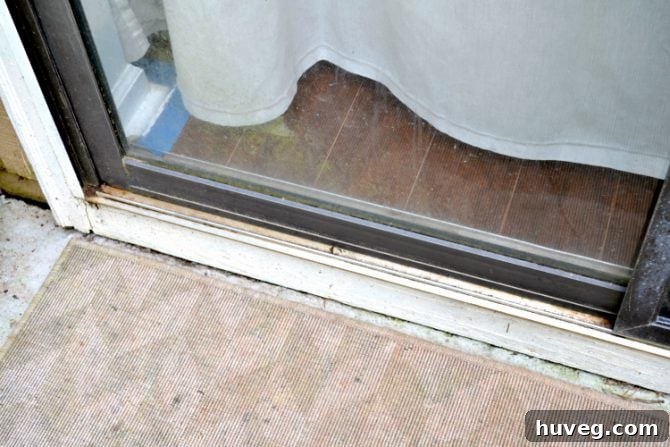
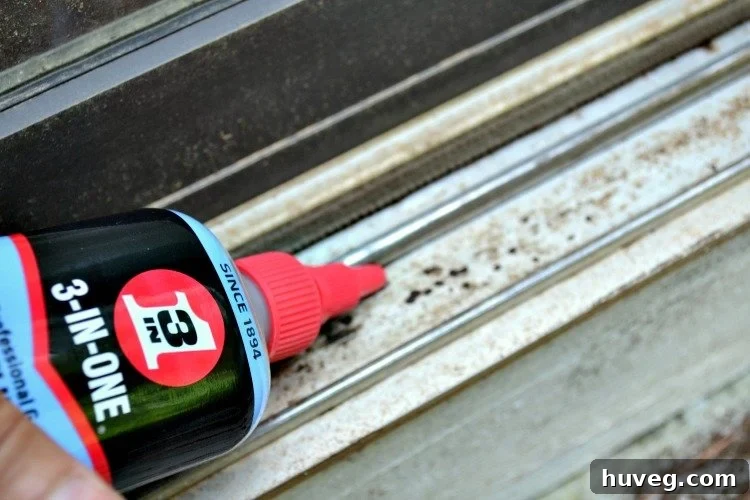
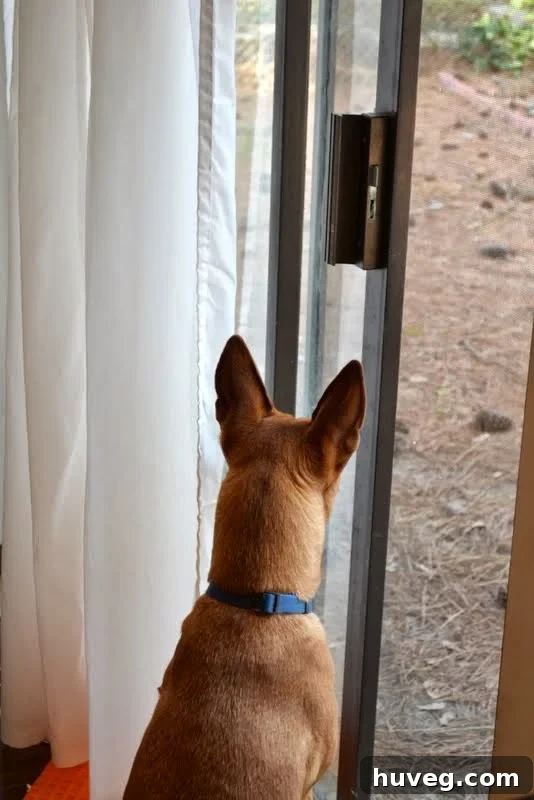
Every single time my dog, Charlie, needed to go outside, the door would resist. It wasn’t just a minor snag; it was a full-blown battle of wills against an immovable object. Over the years, the once-smooth track had become a graveyard for all sorts of debris: rust from previous neglect, layers of accumulated dirt and grime, stubborn sludge, a surprising amount of dog hair, and even the occasional elaborate spider web. It was a testament to neglect, a slow but steady decline into dysfunction.
My initial reaction, like many homeowners, was to mentally classify it as a major, expensive problem requiring professional replacement. The thought alone was enough to make me push it to the furthest reaches of my mind. So, I adopted a less-than-ideal workaround: I’d simply yank harder. A lot harder. The routine became: yank, Charlie out, yank, Charlie in. This aggressive approach rarely yielded positive results. Sometimes, by sheer luck, the door would grudgingly slide a little smoother on the next pull. More often, it would stick even more, or worse, come partially off its track, escalating the problem for the next round. This inefficient and increasingly frustrating cycle continued for far too long, a true example of how we often tolerate discomfort rather than tackle a seemingly daunting task.
Why Sliding Glass Doors Get Stuck (And Why You Should Fix Them)
A sticky sliding glass door is more than just an annoyance; it’s a common issue stemming from several factors, all of which can be addressed with proper maintenance. The primary culprits are usually dirt and debris accumulation in the track, corrosion or rust, and a lack of proper lubrication for the rollers or the track itself. Over time, dust, pet hair, leaves, and other outdoor elements combine with moisture to form a thick, resistant grime that impedes the door’s movement. This creates friction, making the door drag, squeak, or completely seize up.
Ignoring a sticky door isn’t just about enduring inconvenience; it can lead to more significant problems. Constant force on the door can damage the rollers, bend the track, or even warp the door frame, leading to costly repairs down the line. Furthermore, a door that doesn’t close properly compromises your home’s energy efficiency, allowing drafts and increasing heating or cooling costs. It can also be a safety hazard, as a stuck door prevents quick exits during emergencies and can be a security vulnerability if it doesn’t latch securely.
The good news is that most sticking issues don’t require professional intervention or a costly door replacement. Often, the solution is a simple, quick, and affordable DIY fix that anyone can do. Had I known my particular door dilemma could be resolved in literally five minutes, I would have tackled it ages ago, saving myself countless moments of frustration and unnecessary strain.
My motivation to finally address this issue received an unexpected boost when the makers of WD-40 reached out to collaborate on a sponsored project. As a dedicated DIYer, WD-40 products are practically a staple in my toolkit, so the partnership felt perfectly natural. Among the items they sent, one product immediately caught my eye as the potential hero for my stubborn sliding door: 3-in-ONE Pneumatic Tool Oil.
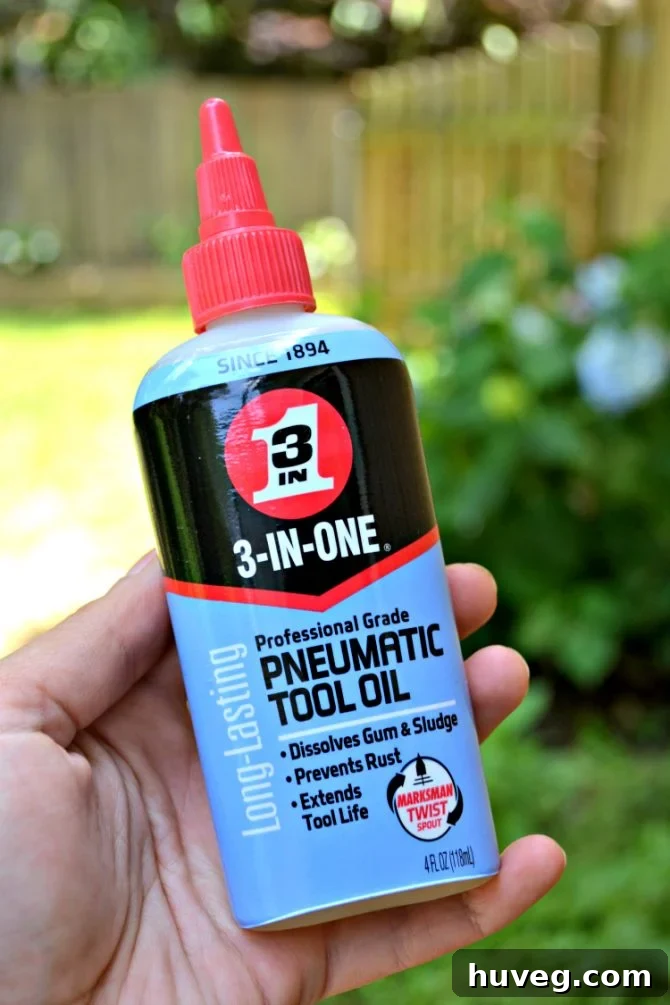
The label promised a solution: “Dissolves gum and sludge? Prevents rust? Waterproof?” These were precisely the properties needed to tackle the years of accumulated gunk and impending corrosion that plagued my door track. It was clear that this specialized oil, typically used for lubricating pneumatic tools like nail guns, had the ideal characteristics – resisting rust, preventing corrosion, and stopping gumming up – to restore smooth operation to my sliding glass door. While 3-in-ONE also offers a general “multi-purpose” oil, this specific pneumatic tool oil proved to be an exceptional choice for this project due to its robust protective qualities.
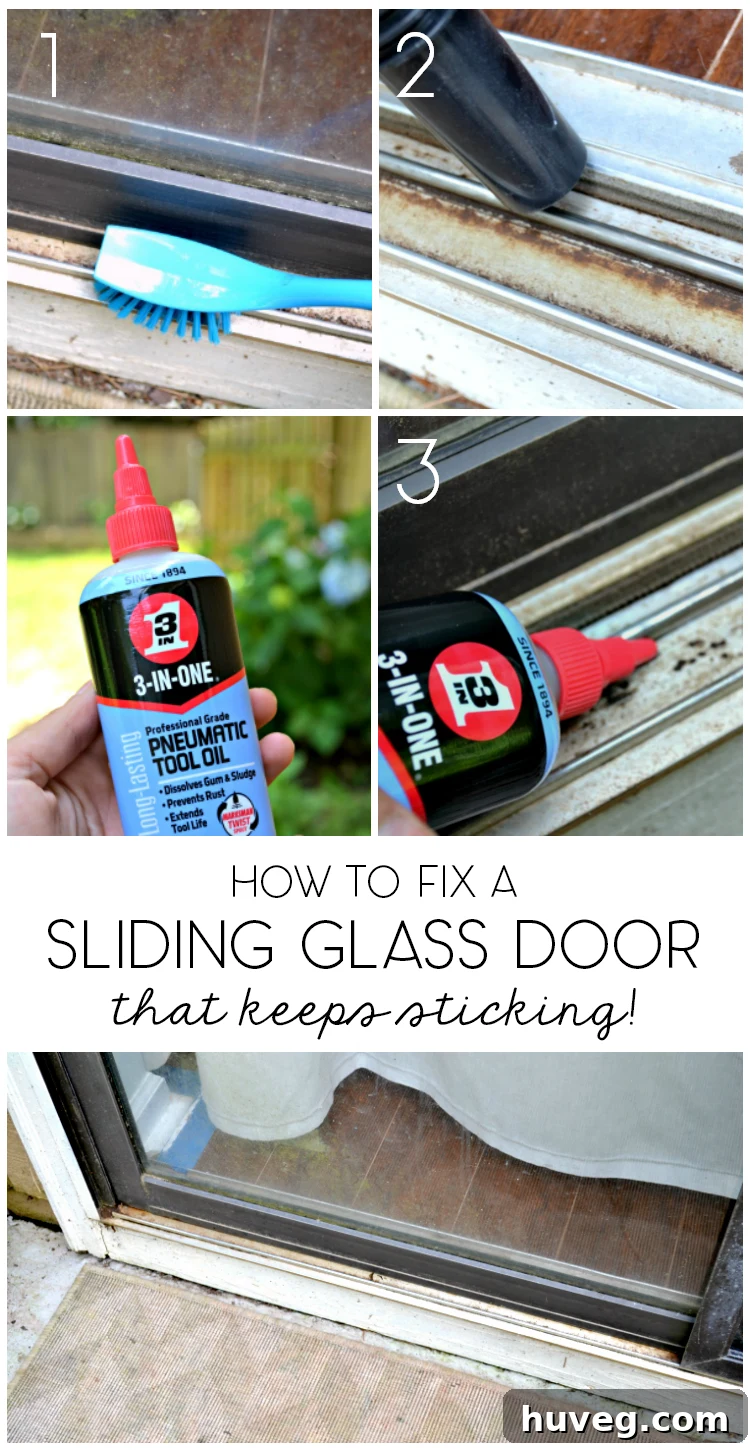
How to Fix a Sticky Sliding Glass Door: A Simple 3-Step Process
This repair is incredibly straightforward and requires minimal tools, making it accessible for any homeowner. Before you begin, ensure the area around the door is clear, and if your door feels particularly heavy or unstable, consider having a helper on hand, especially when moving it along the track during cleaning.
What You’ll Need:
- Inexpensive Scrub Brush: A stiff-bristled brush is essential for dislodging stubborn grime. I found a simple one at IKEA for a dollar or two, but an old toothbrush or a grout brush can also work effectively for getting into tight spaces.
- Shop Vac: A compact shop vacuum is ideal for quickly sucking up the loosened dirt and debris. Its strong suction and various attachments make it perfect for confined areas like door tracks. A regular household vacuum with a crevice tool can be a suitable alternative.
- 3-in-ONE Pneumatic Tool Oil: This specialized oil is designed to dissolve gum and sludge, prevent rust, and offer waterproofing, making it an excellent lubricant for door tracks. Its protective qualities ensure long-lasting smoothness.
Step 1: Thoroughly Scrub the Sliding Door Track

The first and most crucial step is to meticulously clean the track. Begin by taking your scrub brush and giving the entire length of the sliding door track a vigorous scrubbing. Don’t just focus on the visible surface; make sure to brush down both sides of the track’s ridges, as well as digging into the bottom channel where dirt tends to accumulate most densely. To ensure you access every part of the track, move the door along its path:
- Slide the door fully open to expose the track beneath the closed panel, then scrub that section.
- Slide the door back to its closed position to expose the previously covered section of the track, and scrub there.
- Repeat this process several times, moving the door back and forth, until you’ve thoroughly loosened all the dirt, grime, and debris along the entire length of the track. You’ll be surprised how much gunk comes out! The goal here is to dislodge everything that’s causing friction.
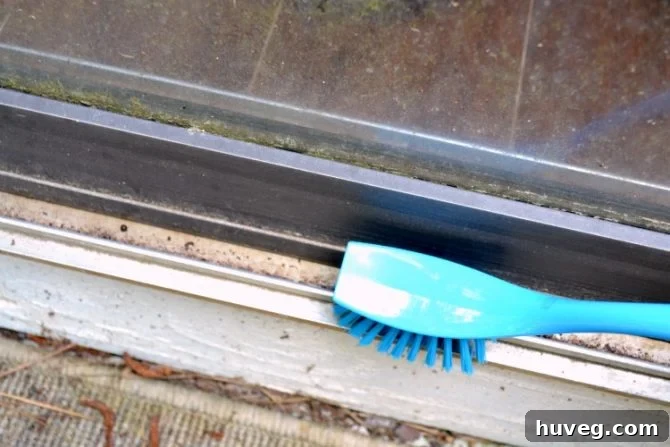
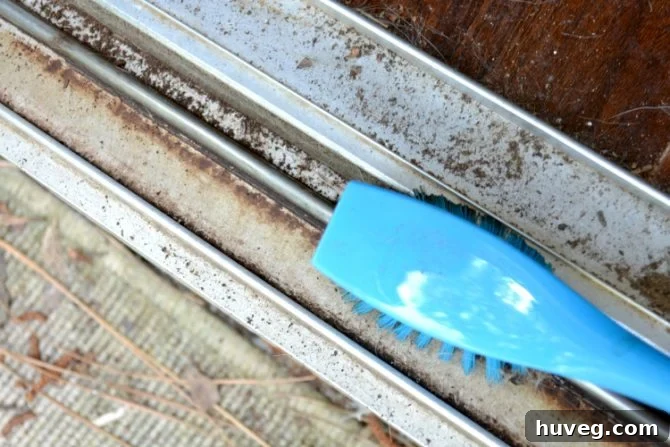
Continue scrubbing until you feel confident that all the embedded dirt, pet hair, dust bunnies, and whatever else has found its way into the track is loose and ready for removal.
Step 2: Vacuum Up All Loose Debris

Once you’ve loosened all the grime, it’s time to remove it completely. Use your shop vac (or regular vacuum with a crevice tool) to thoroughly vacuum up all the loose dirt, dust, and debris from the track. This step is critical; merely scrubbing isn’t enough if the debris remains in the track. Focus on extracting every particle, moving the vacuum nozzle along the entire length of the track, ensuring you get into the corners and crevices. In my case, this involved vacuuming up not just dirt, but also stubborn spider webs, pine straw, and copious amounts of dog hair. Removing these contaminants completely is key to a lasting fix. This meticulous cleanup will not only make the track look cleaner but will also allow you to assess if you’ve truly removed all the friction-causing elements, or if further scrubbing is needed.
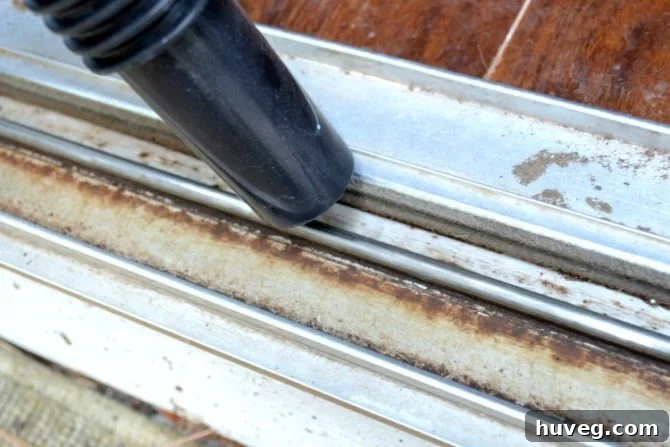
Even at this stage, with just a clean track, you’ll likely notice a significant improvement in the door’s movement. However, to ensure lasting smoothness and protection against future sticking, a little lubrication is in order.
Step 3: Lubricate the Track with 3-in-ONE Oil

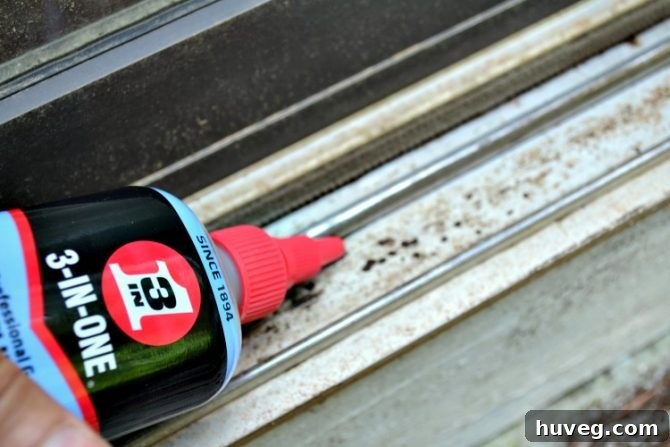
Finally, it’s time to apply the lubricant. Carefully squirt a thin, even bead of 3-in-ONE Pneumatic Tool Oil along the entire clean track. You don’t need a lot; a little bit of this powerful oil goes a long way. Once the oil is applied, move the sliding door back and forth along the track, similar to how you did during the scrubbing phase. This action serves several purposes:
- It helps to evenly distribute the lubricant across the entire track surface.
- It allows the door’s rollers to pick up the oil and spread it into the harder-to-reach areas where the primary friction occurs.
- The movement helps work the oil into any remaining tiny crevices, ensuring comprehensive lubrication.
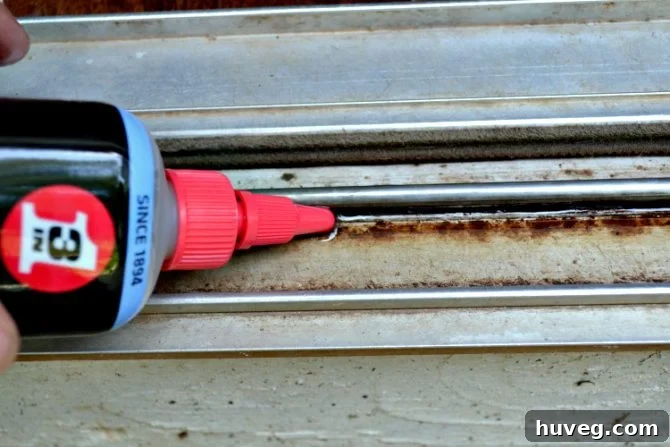
You should immediately feel the difference: the door will glide smoothly, quietly, and effortlessly. This simple application of lubricant not only reduces existing friction but also helps prevent future rust and gumming up, thanks to the oil’s protective properties.
The Impact: A Small Effort, A Big Difference
This entire process took me all of five minutes, yet the transformation was monumental. The incessant struggle to let Charlie in and out, which she demands “all the time,” was instantly replaced by a smooth, easy glide. It was truly a night-and-day difference in my daily routine, proving that sometimes the biggest household headaches have the simplest solutions. If only combating her nonstop shedding or the dirt she tracks in were as easy as this quick fix!
Beyond the Door: Essential Tool Maintenance Tips
Since this project is so quick, it’s the perfect opportunity to extend your maintenance efforts to your tools. Oiling your tools, particularly those with moving parts like pneumatic nail guns, is often an overlooked aspect of tool care, but it’s vital for their longevity and performance. I, too, am guilty of neglecting this task, but with several upcoming projects planned for the summer, proper tool maintenance is at the forefront of my mind.
Regularly applying a product like 3-in-ONE oil to your power tools, hinges, and even chainsaw blades helps to:
- Prevent Rust and Corrosion: Moisture and humidity are the enemies of metal tools. A thin coat of oil acts as a barrier, protecting against rust and oxidation.
- Reduce Friction and Wear: Lubricating moving parts ensures they operate smoothly, reducing wear and tear and extending the tool’s lifespan.
- Improve Performance: Well-maintained tools perform more efficiently and reliably, making your DIY projects easier and more enjoyable.
- Dissolve Gunk: The oil can help break down sticky residues or build-up that might impede movement.
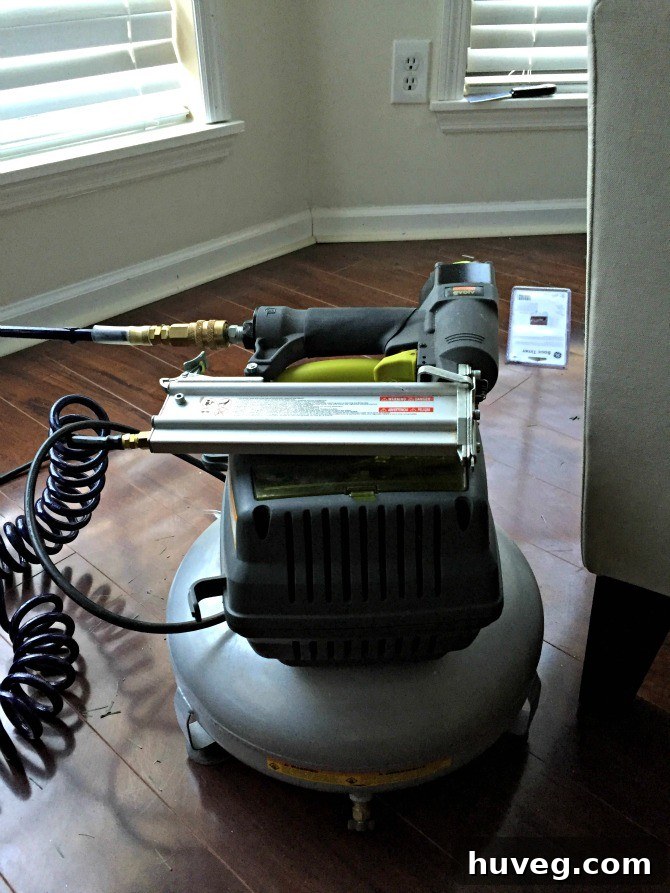
A single bottle of 3-in-ONE oil lasts a surprisingly long time because only a small amount is needed for effective lubrication. So, as long as you don’t misplace it in a cluttered garage (ahem, speaking from experience!), one bottle can serve you through hundreds of projects, making it a truly cost-effective investment in your home and your tools. This quick fix, both for your door and your tools, offers incredible value for such minimal effort.
Disclosure: This post was sponsored by 3-in-ONE Oil, but all opinions expressed are 100% my own, based on genuine experience and satisfaction with the product.