Geometric Hexagon Plant Display with Matching Stand

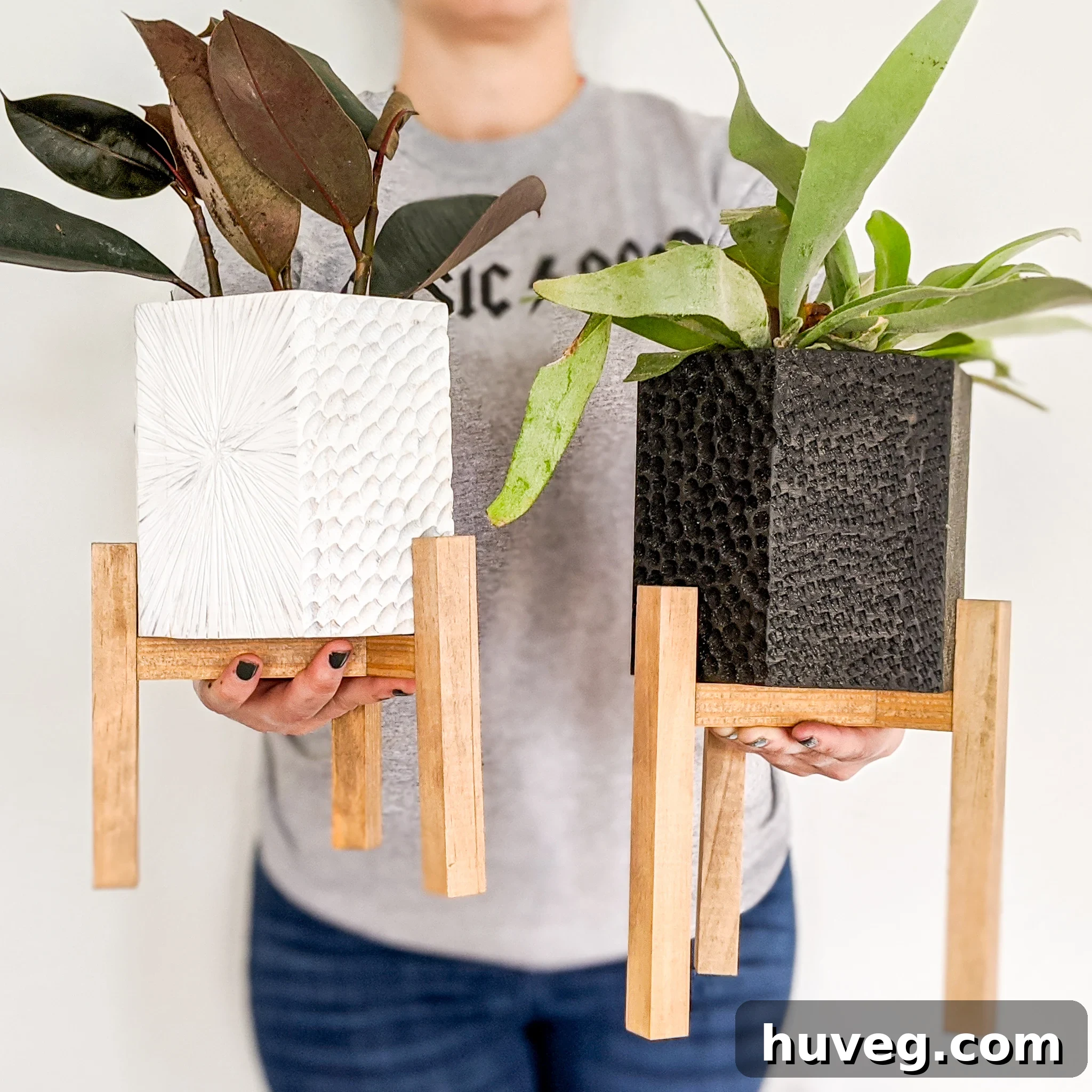
Welcome to a journey where creativity meets craftsmanship, transforming simple wood pieces into captivating home decor. My latest passion project revolves around custom carvings on small wooden items, and I’m thrilled to share how I created these stunning hexagonal planters, each adorned with a unique carved design. As an added bonus, and thanks to the inspiring #BuildatHome challenge, I also crafted complementary plant stands that beautifully elevate these pieces. Get ready to dive into the full how-to guide, complete with a comprehensive video tutorial, below!

Embracing the modern way of learning, you have the flexibility to watch the detailed timelapse video of this project, offering a visual walkthrough of every step. Alternatively, if you prefer a textual guide, simply continue scrolling down for the complete materials list and exhaustive step-by-step instructions. We’ve updated the tutorial with a brand new, high-quality video, now available on YouTube, ensuring you have the clearest possible guidance. Plus, stay tuned, as detailed plans for both the planters and the stands will be released very soon!
Watch the full DIY Carved Hex Planters and Plant Stands tutorial here!
Help me reach 25k subscribers and join our thriving DIY community!
Essential Materials & Tools for Your DIY Project
Gathering the right materials and tools is the first crucial step to ensure a smooth and successful project. Below is a comprehensive list of everything you’ll need to create your own carved hex planters and stylish plant stands. Remember, proper safety gear is non-negotiable when working with power tools.
- Hex Planters: 1/2″ x 6″ x 6ft poplar board (one board per planter) – Poplar is an excellent choice for carving due to its consistent grain.
- Plant Stands: 1 inch wooden dowel (one dowel per stand) – Opt for a sturdy hardwood dowel for durability.
- Pencil – For marking cuts and carving guides.
- Miter Saw – Essential for precise angled cuts.
- Orbital Sander – For achieving a smooth, professional finish.
- Assorted Sandpaper – Various grits (e.g., 120, 180, 220) for progressive smoothing.
- Measuring Tape – Accuracy is key, even when “eyeballing” some elements.
- Safety Gear: Protect yourself!
- Safety Glasses – To shield your eyes from debris.
- Hearing Protection – Essential when using loud power tools.
- Breathing Mask – To protect against wood dust and fumes from finishes.
- Wood Stain (e.g., Ebony) – To enhance wood grain and add depth.
- Spray Paint (e.g., White) – For a modern, opaque finish.
- Wood Clamps – To secure pieces during gluing and carving.
- Die Grinder + Carving Burrs (Harbor Freight or similar) – For creating deep textures and unique patterns.
- Dremel Rotary Tool – Ideal for finer details and intricate carvings.
- Saburr Tooth 1/8″ Shank Sphere (coarse) – A fantastic bit for aggressive wood removal and shaping.
- Strong Wood Glue – For durable, lasting bonds.
- Ryobi 23-gauge Pin Nailer – To hold pieces in place while glue dries (optional but highly recommended).
- Garden Seal (or similar waterproof sealer) – Crucial for protecting the inside of your planter from moisture.
Turn on your JavaScript to view content
Crafting Your Custom Carved Wooden Planters: A Step-by-Step Guide
Embarking on the creation of these carved hex planters was an incredibly rewarding experience! I experimented with two distinct finishes – a crisp white spray paint and a rich, dark ebony stain – because I simply couldn’t decide which aesthetic I preferred. To this day, the choice remains difficult, a testament to the versatility of these designs.

However, I’m particularly enamored with the dark stain finish. It has a magical way of enhancing the carved textures, making every ripple and groove stand out with remarkable depth and character. Furthermore, a darker stain is excellent for subtly camouflaging any minor “burned” textures that can sometimes occur when using certain carving bits – a common learning curve in wood carving. Each new bit and technique presents an opportunity for growth, and I’m continually refining my approach to minimize these occurrences. If you’re new to texture carving, I highly recommend practicing on a scrap piece of wood first. This allows you to get a feel for the tool’s pressure, experiment with different patterns, and build confidence before working on your final project.

- Precision Cutting for the Hexagon: Begin by setting your miter saw to a precise 30° angle. From your 1/2″ thick poplar board, cut six individual pieces, each measuring 3″ along its longest side. When cut at this angle, each piece will naturally form a trapezoidal shape, perfect for assembling into a hexagon. This hexagonal shape is not only aesthetically pleasing but also a sturdy base for your plant.
- Assembling the Hexagonal Body: With your six trapezoidal pieces ready, apply a generous amount of wood glue to the angled edges. Carefully tack all six sides together in a spiral formation, ensuring the narrow side of each trapezoid faces outwards to create the clean hexagonal exterior. A pin nailer is incredibly useful here for holding the pieces firmly in place while the glue sets. Allow the glue to dry and fully cure according to the manufacturer’s instructions before proceeding, as this ensures the structural integrity of your planter.
- Smooth and Flawless Finish: Once the glue has completely dried, you might notice small gaps or imperfections where the pieces meet. Use wood filler to carefully fill these, then sand each side of the hexagon smooth with an orbital sander and progressively finer grits of sandpaper. This step is crucial for achieving a professional and polished appearance, especially if you plan to paint your planter.
- Unleashing Your Carving Creativity: Now for the exciting part – carving! Securely clamp the assembled hexagon to a stable, flat surface that allows for easy maneuvering. Using either a Dremel, a die grinder, or a combination of both (with various burrs and bits like the Saburr Tooth sphere), begin carving textures into all six sides. This is where you can truly experiment and let your artistic vision shine. Don’t be afraid to try different pressures, patterns, and depths. The goal is to create a unique, tactile surface that reflects your personal style.
- Crafting the Planter Bottom: Place the finished hex planter body onto a piece of scrap wood and carefully trace its bottom perimeter. To ensure a perfect fit later, mark one specific edge on the inside of the planter and its corresponding side on the traced bottom piece. This will help you align them correctly during assembly. Use your miter saw to cut out this hexagonal bottom piece. Once cut, glue and tack it firmly into place at the base of your planter.
- Finishing Touches: Sand, Stain, or Paint: Give the entire planter one final light sanding to prepare the surface for its chosen finish. Then, decide on your desired aesthetic: either apply a rich wood stain to highlight the grain and carved textures, or use spray paint for a uniform, vibrant, or minimalist look. Apply multiple thin coats for the best results, sanding lightly between coats if necessary.
- Essential Sealing for Longevity: To protect your wooden planter from moisture damage and prolong its life, apply a waterproof sealer to the entire inside surface. Products like Garden Seal are ideal for this purpose, creating a barrier against water from your plants.
- Liner Installation: To prevent soil and water from directly contacting the sealed wood, fit the planter with a plastic liner. Many gardeners opt for simple plastic pots or nursery liners. If the liner has a small lip that interferes with the aesthetic, you can carefully trim it off for a cleaner fit.
- Stabilizing the Inner Pot: If your chosen plastic liner or inner pot is too short and creates an unstable setup, simply add some scrap wood pieces to the bottom of the hex planter. This will elevate the inner pot, providing better stability and ensuring your plant sits at the desired height.
- Display with Style: Finally, place your beautifully carved planter onto its custom plant stand (the making of which is detailed below!). This not only elevates your plant literally but also adds another layer of design interest to your home decor.

Designing and Building Your Elegant Triangle Plant Stands

I was deep into the planter project when Sam from DIY Huntress extended an exciting invitation: the #BuildatHome challenge. This initiative brought together a community of bloggers and YouTubers with a single, inspiring goal: to create something beautiful and functional solely from existing scrap wood, without any trips to the hardware store for new supplies. It’s an incredible exercise in creative problem-solving, especially when you find yourself in a creative slump. I highly recommend giving this “use-what-you-got” approach a try the next time you’re feeling uninspired!
I spent several days brainstorming various scrap wood ideas, many of which unfortunately required more time than I had available for the challenge (more on those ambitious projects another time!). Then, a brilliant idea struck: using a simple square one-inch dowel, I conceived and executed these elegant plant stands in just a single day. The beauty of these stands lies in their simplicity and the freedom they offer in design.

Perhaps surprisingly, I used absolutely NO precise measurements for these stands! My approach was intuitive: I first eyeballed the length of the underside piece using the bottom of the hexagonal planter as a rough guide. My initial assumption was to cut each piece at a 30-degree angle, then test their fit. This method allows for a high degree of customization; you can easily adjust the size of the central triangle (the support for the planter) to make it larger or smaller, thereby altering the overall footprint and support for planters of various sizes. This “no-measure” technique encourages a more organic, free-form approach to design, proving that not every project needs exacting blueprints to be successful and charming.
- Cutting the Triangular Base Pieces: Take your wooden dowel and cut three identical pieces. Each piece should have one end cut at a 30° angle. The length of these pieces will determine the width of your triangular base. Remember, you can adjust this length to make your stand wider or narrower.
- Preparing the Legs: Next, cut three more pieces of dowel, all to the same length, to serve as the legs for your stand. This is where you can truly personalize the height of your plant stand – make them taller for a dramatic display or shorter for a subtle lift.
- Pre-Finishing for a Cleaner Look: I opted to sand and stain each individual piece before assembly. This ensures a more uniform finish, especially in tight corners that might be difficult to reach after gluing. A key tip: avoid staining the angled ends of the dowel pieces that will be glued together. The raw wood provides a stronger bonding surface for the glue, ensuring a more durable joint.
- Assembling the Triangular Base: Apply wood glue to the unstained angled ends of your three base pieces. Arrange them to form a triangular spiral shape, as depicted in the photo. Before the glue completely sets, make any final adjustments to the overall size of the central triangle to best fit your planter. Once satisfied with the fit, use a few small nails or a pin nailer to tack the pieces in place while the glue dries and cures fully.
- Attaching the Legs: With the triangular base solidified, it’s time to add the legs. Apply wood glue to one end of each leg. Position them strategically on the underside of the triangular base. Again, no strict measuring here – I simply marked spots where I felt they looked best, ensuring they were equidistant and that all legs were of the same length to prevent wobbling. Secure each leg with a pin nailer for added stability while the glue dries.
As you might observe in the accompanying video and images, my “no-measure” approach does result in a stand that isn’t always super snug with the planter. However, for me, this isn’t a significant concern. While I certainly could have prioritized a more exact fit, a little bit of slackness doesn’t detract from the overall aesthetic or functionality. In fact, this slight flexibility offers an advantage: these versatile plant stands can easily accommodate other planters of varying sizes in the future, extending their utility and value.
I’m diligently working on creating detailed, free plans for both of these projects, and they should be uploaded to my plans library very soon (my aim is this weekend!). We’re currently making tremendous progress on our guest bedroom and primary bedroom closet designs, and I’m eager to transition into those exciting builds before our momentum wanes! Once the plans are live, I’ll update this post with direct links for easy access. In the meantime, I encourage you to explore other incredible creations from the #BuildatHome challenge by clicking on the links below. You might discover some entirely new accounts and fantastic sources of inspiration, as I’ve had the pleasure of collaborating with some amazing creators for the first time on this challenge!
- Plywood Key Holder — DIY Huntress
- DIY Toy Car Ramp — Anika’s DIY Life
- Small Space Hall Tree — Pneumatic Addict
- Scrap Wood Toilet Paper Holder — Walkers Woodworks
- DIY Desk Topper Shelf — Jaime Costiglio
- Scrap Wood Toy Dinosaur — Lazy Guy DIY
- Marble Solitaire Game — 3×3 Custom
- DIY Storage Bins— Eye in the Detail
- Magic Golf Ball Cube — Penalty Box Woodshop
- Colorful Wooden Cooler Box — At Charlotte’s House
- Live Edge Dovetailed Japanese Toolbox — Cowdog Craftworks
- DIY Quote Bookends — Never Skip Brunch
- DIY Scrap Wood Project — Addicted 2 DIY
- Build at Home Scrap Wood Challenge — Jen Woodhouse
If you loved this project and found it inspiring, please consider sharing it with your friends and fellow DIY enthusiasts! Your support helps us continue creating exciting content. Happy building, and don’t forget to save this idea for later!
