DIY K-Cup Holder: How to Fire-Stain Wood

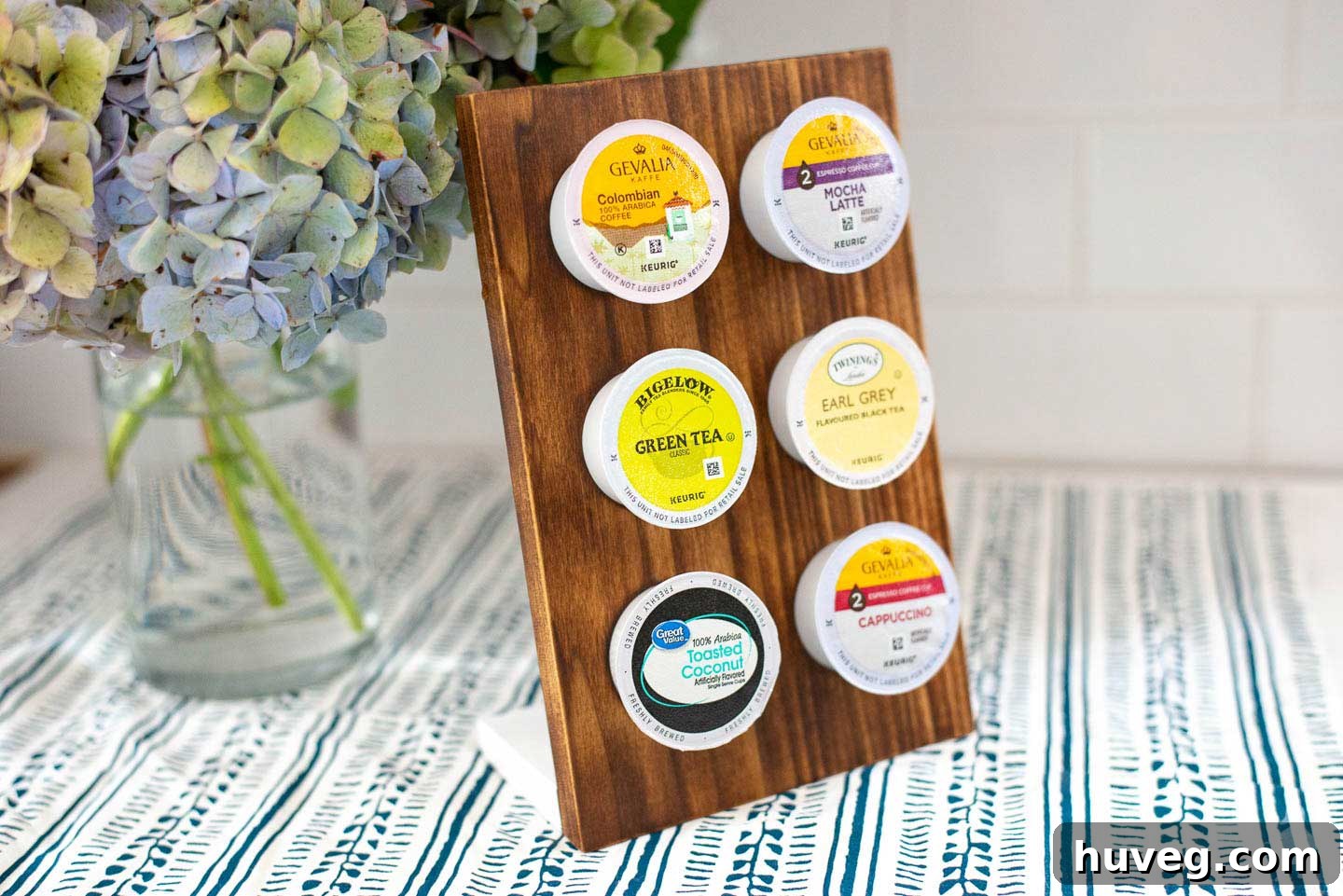
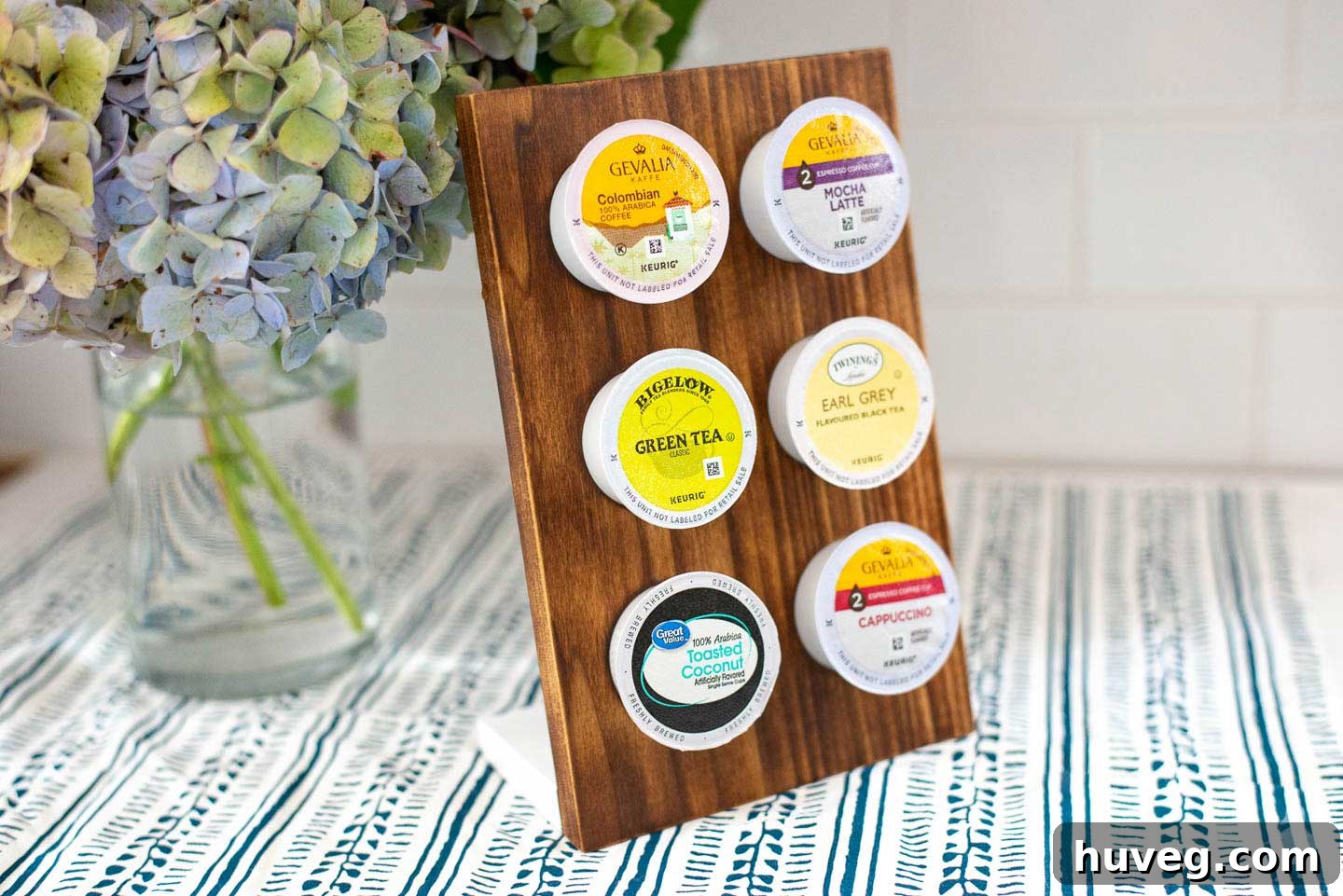
Unlock the potential of your kitchen’s limited counter space or elevate your guest bedroom’s hospitality with this charming DIY K-cup holder. Crafted from humble scrap wood, this project isn’t just about organization; it’s a testament to creative reuse and unique finishing techniques. Forget traditional stains – we’re diving into the ancient art of wood burning to give this piece a truly distinctive look, turning ordinary poplar into something extraordinary. Ready to transform your coffee station with a project that’s both practical and stylish?
I have a passion for repurposing scrap wood to enhance my home’s organization and aesthetics. From streamlining my utensil drawer to creating a more robust magnetic bottle opener, these small projects consistently deliver big impact. This K-cup holder follows suit, but with a captivating twist: the wood isn’t stained in the conventional sense. Instead, I employed the power of fire to achieve a rich, dark finish on this piece of poplar, a technique that adds depth and character without a drop of traditional stain. Below, you’ll discover the full step-by-step tutorial on how to master this incredible method yourself.
This project is proudly sponsored by Bernzomatic, a brand that empowers DIYers to tackle innovative projects with confidence.
For years, my kitchen has hosted a reliable coffee maker right next to the fridge. While I appreciate the convenience of K-cups, my work-from-home routine typically involves brewing an entire pot, allowing for endless refills throughout the day. However, my partner, K, is a devoted Keurig enthusiast. His knack for discovering and revitalizing old cameras and electronics from Goodwill led to an unexpected kitchen addition: a second coffee maker. It quickly found its place after he moved in, making our kitchen a dual-coffee zone.

A long-term plan is in motion to relocate the Keurig to the guest bedroom once our Murphy bed built-ins are completed. This versatile space will serve as K’s home office and a welcoming retreat for guests, making a dedicated K-cup holder an essential addition. While I envision a more elaborate K-cup storage solution in the future, I wanted to start with a compact and elegant design that could be easily replicated and fit seamlessly into any decor. This mini coffee pod holder is that perfect starting point, combining functionality with a touch of DIY flair.
Crafting Your Custom Mini Coffee Pod Holder: A Step-by-Step Guide
Creating this compact K-cup holder is a rewarding project that combines basic woodworking skills with an exciting finishing technique. Here’s everything you’ll need to get started, along with detailed instructions to guide you through each phase of the build.
Materials & Tools You’ll Need:
- 1/2″ x 6″ Poplar Wood: I utilized a scrap piece, demonstrating the project’s budget-friendly nature. You’ll need approximately 12 inches in total length. Poplar is excellent for this project due to its smooth grain, which beautifully showcases the wood-burning effect.
- Miter Saw: Essential for making precise, angled cuts that allow the holder to lean back gracefully. Accuracy here is key to a professional finish.
- Pencil: For marking all your cuts and drill points with precision.
- Drill Press (Optional but Recommended): A drill press ensures perfectly perpendicular holes, crucial for the K-cups to sit properly. If you don’t have one, don’t worry – I’ll share tips for achieving clean holes with a standard drill below.
- Handheld Drill: Necessary even if you use a drill press, for pre-drilling pilot holes.
- Small Drill Bit: Any small bit will do for creating pilot holes, ensuring your larger Forstner bit stays centered.
- 1 5/8″ Forstner Bit: This specialized bit creates clean, flat-bottomed holes, ideal for K-cup pods. The size is carefully chosen to cradle the conical shape of the pods securely without letting them fall through.
- Wood Glue: For a strong, lasting bond between the two wooden pieces.
- Bernzomatic MAP-PRO Torch Kit (Project Sponsor): The star of our unique finishing technique. This high-heat torch is key to achieving the beautiful charred effect. Always follow safety guidelines when using a torch.
- Sandpaper &Tack Cloth: Essential for smoothing the wood and preparing it for finishing, as well as cleaning up after torching.
- Wipe-on Polyurethane: To seal and protect the torched wood, enhancing its durability and bringing out the rich grain.
- White Paint (Craft Paint is Fine): For a clean, contrasting finish on the back and base of the holder.
- Paint Brush: For applying paint and polyurethane evenly.
Precise Angled Cuts for a Stable Design
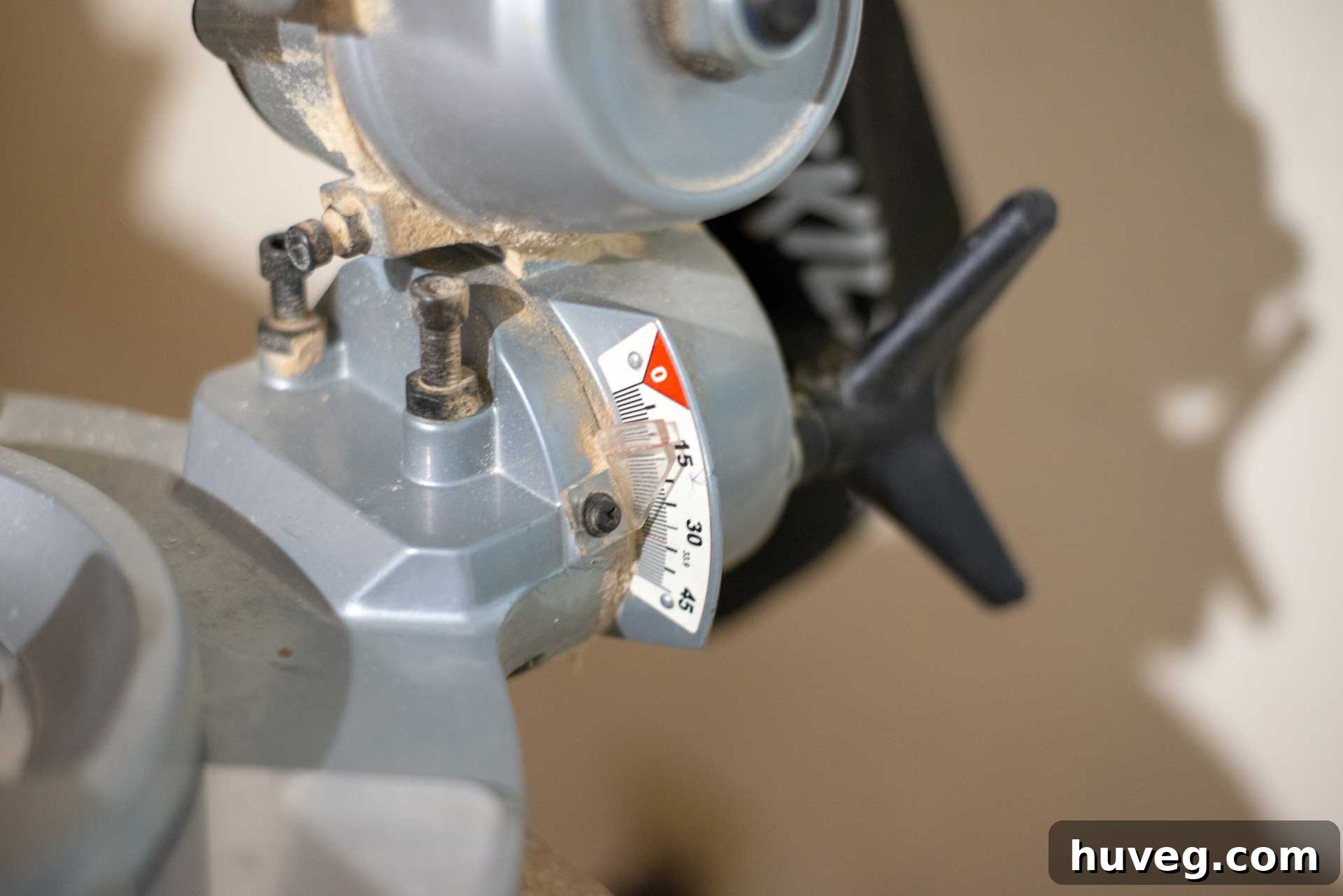
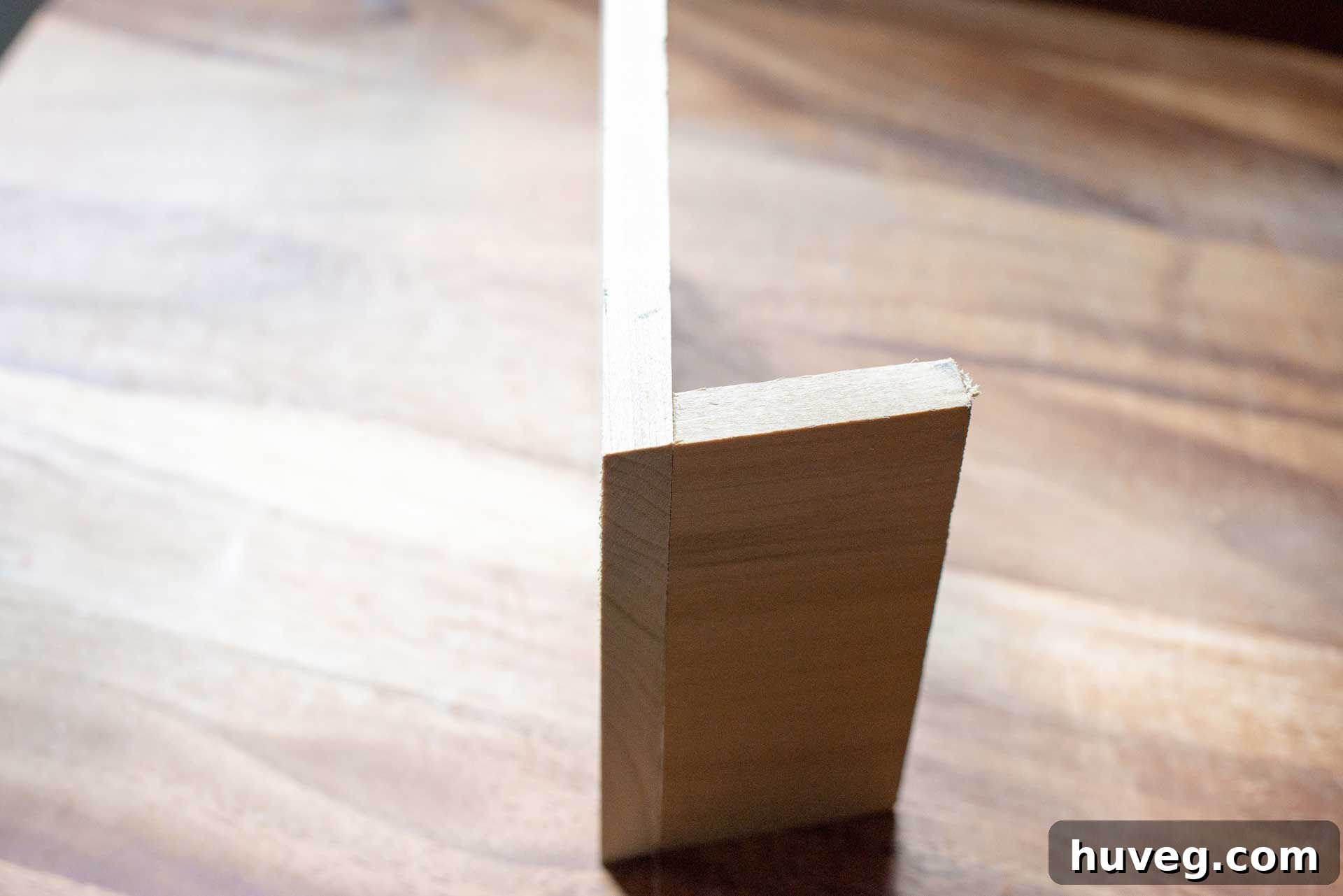
The foundation of this K-cup holder’s sleek design lies in its angled cuts. Inspired by an excellent tutorial from Bower Power, I set my miter saw’s bevel to 12 degrees. This specific angle is crucial, ensuring the holder leans back just enough for easy access to the K-cups and stable placement on your counter. To refine this further, I cut both the base and the bottom of the front piece at this angle. This careful consideration guarantees that when glued together, the assembly rests perfectly flat and stable on any surface.
Cutting the Front Piece and Bottom Angles:
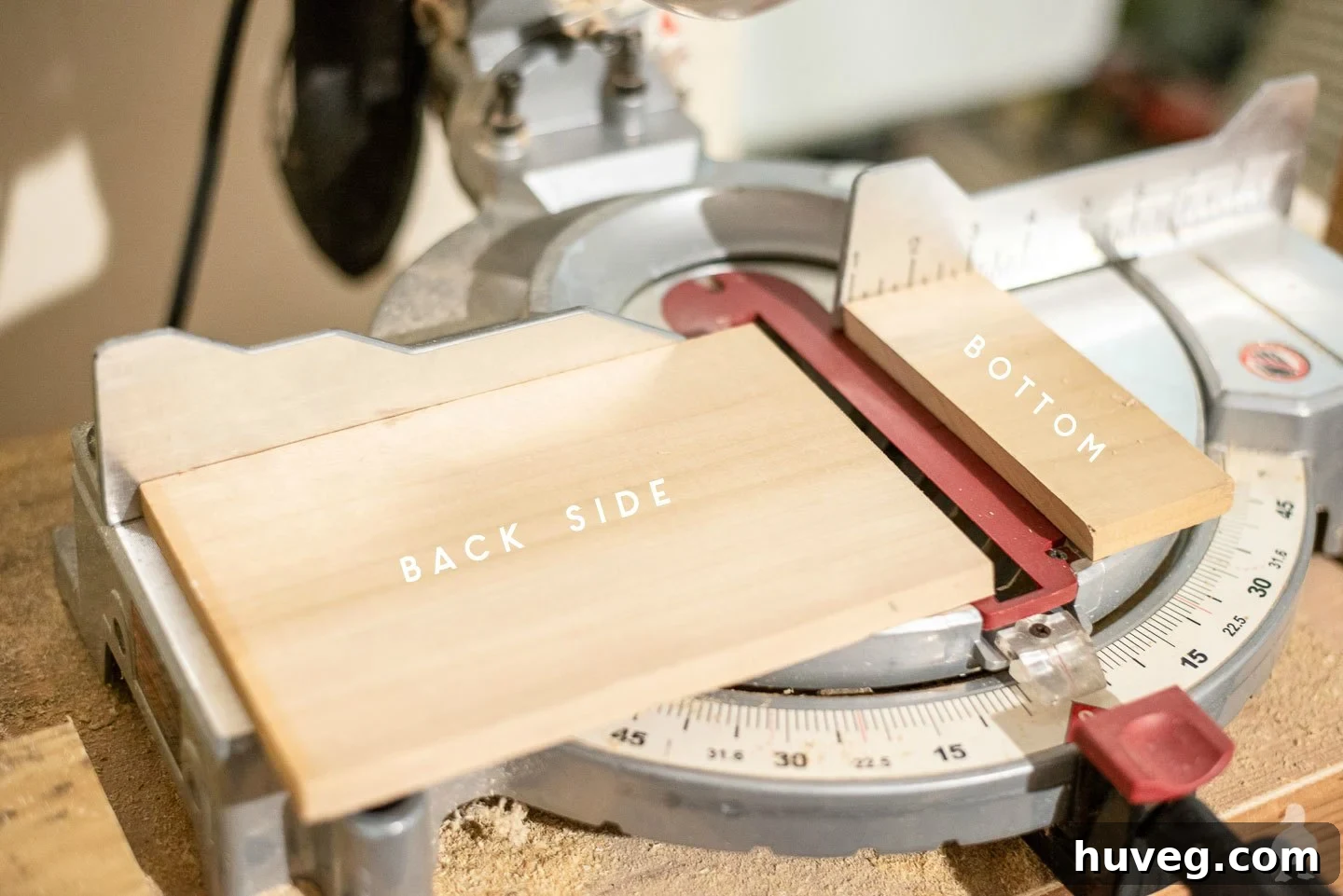
- For the Front Piece: Cut this piece to be 8 1/2″ long on its longest edge (the front). Set your miter saw to a 12-degree angle. The cut should be made so that the front side is longer than the back side, creating a forward lean.
- For the Bottom Piece: Cut this piece to be 2 1/2″ long on its longest edge (the bottom). Again, use a 12-degree angle, but ensure the cut is made so the bottom edge is longer than the top edge. This creates the flush mating surface for the front piece.
For a clear illustration of how these angles perfectly align, examine the closeup image below. This shows the seamless joint created by the 12-degree cuts on both pieces:
Important: Do not glue the pieces together yet! Drilling the K-cup holes is significantly easier and more accurate when the front piece is flat and separate. To ensure perfect spacing, I used an actual K-cup as a template. A 1/2-inch spacing guideline proved ideal for all measurements: from the top edge to the first K-cup, between K-cups, and from the sides and bottom. This consistent spacing creates a balanced and functional design.
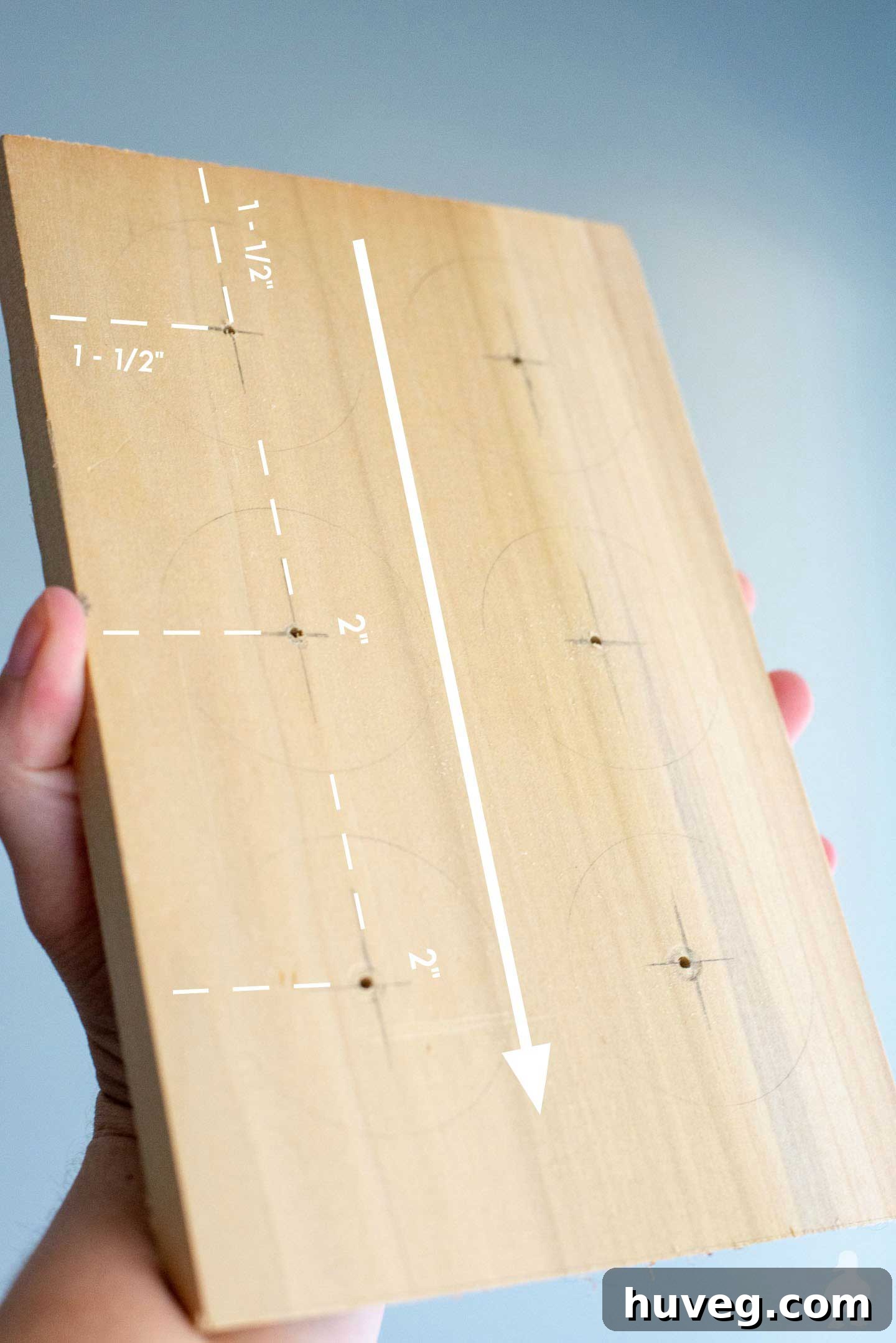
Measuring Center Marks for K-Cup Holes:
Accurate marking is paramount for a professional-looking K-cup holder. Start your measurements from the top edge of your front piece:
- ROW 1: Measure 1 1/2″ down from the top edge, and 1 1/2″ in from both the right and left sides. Mark these two points.
- ROW 2: From the center marks of ROW 1, measure down an additional 2″. Maintain the 1 1/2″ distance from the sides. Mark these two points.
- ROW 3: From the center marks of ROW 2, measure down another 2″. Again, keep the 1 1/2″ distance from the sides. Mark these final two points.
You’ll notice this spacing results in a slightly wider bottom margin than the 1/2-inch used elsewhere. This intentional design choice makes it easier to retrieve the bottom row of K-cups. If you prefer a more uniform look, you can trim a small amount off the bottom of the front piece to adjust this margin. Once all cross points are marked, use your small drill bit to create shallow pilot holes at each center point. These will serve as guides for your larger Forstner bit, ensuring precise placement.
Drilling K-Cup Holes: Achieving Clean, Tear-Out Free Results
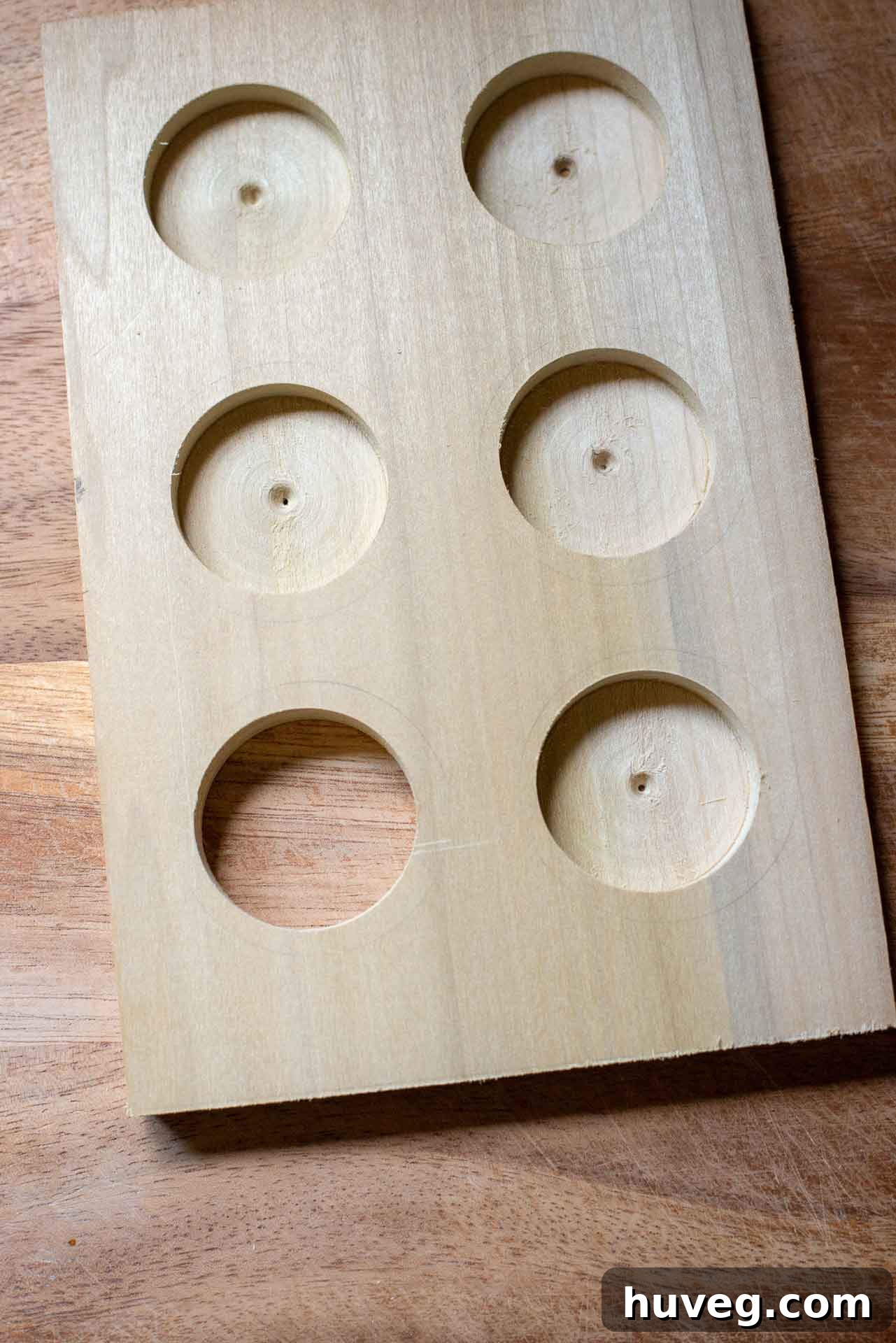
While a standard handheld drill can certainly be used, a drill press offers unmatched precision, allowing you to clamp the wood securely and ensure perfectly perpendicular holes. For this project, I used my dad’s old drill press, which made the task a breeze. The 1 5/8″ Forstner bit is ideal because K-cups have a conical shape, wider at the top and narrower at the bottom. This specific bit size creates a hole that cradles the K-cup securely at its midpoint, preventing it from slipping through either the front or the back.
To prevent unsightly tear-out on the back of your wood, employ a technique called “drilling halfway.” Start by drilling about halfway through the front of the wood at each marked center point. Then, flip the piece over, align your Forstner bit with the pilot holes you pre-drilled in the previous step, and drill the rest of the way through. This method creates exceptionally clean holes on both sides, giving your K-cup holder a polished, professional finish.
Assembly and the “Fire Stain” Technique: How to Stain Wood with a Bernzomatic Torch
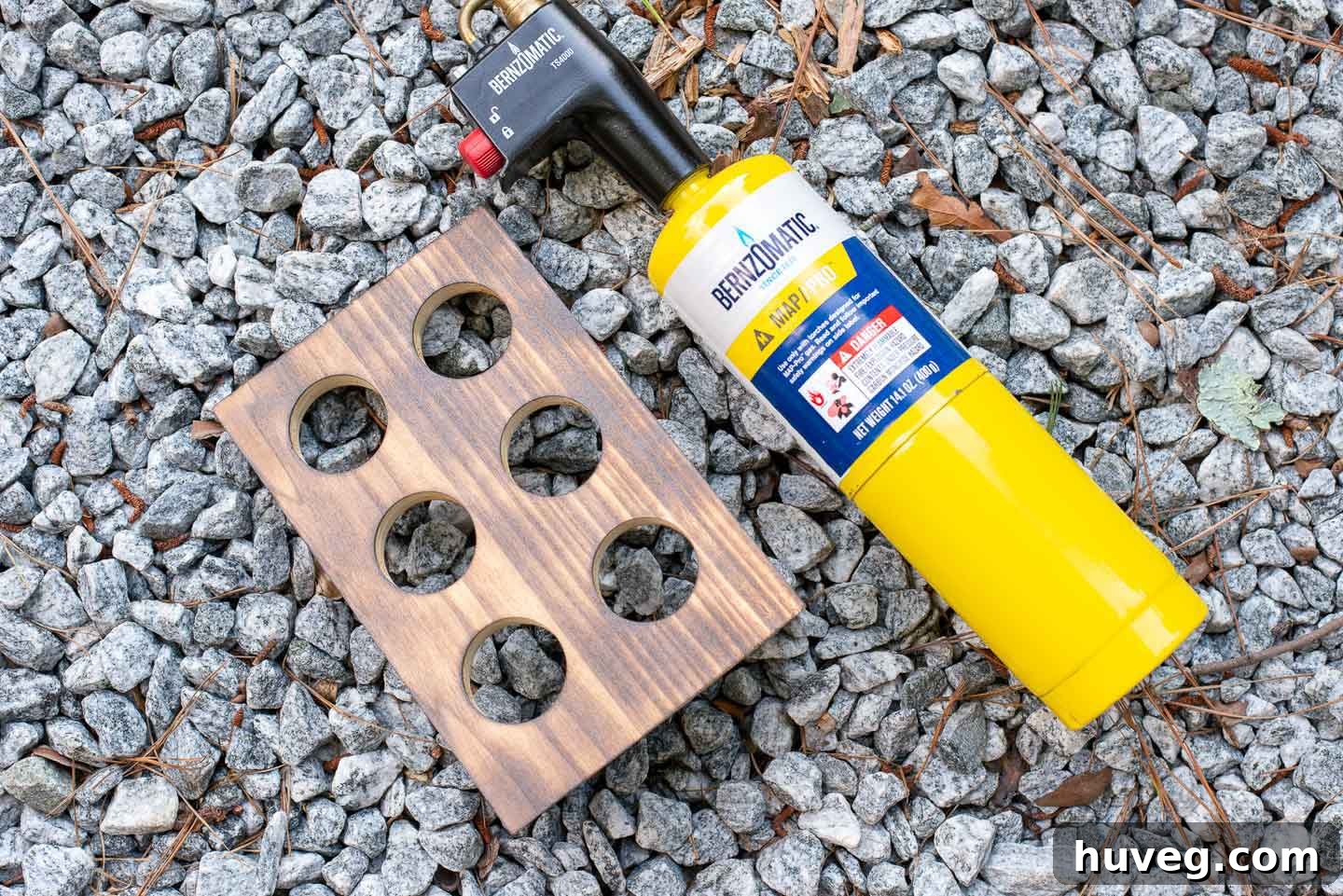
With the K-cup holes perfectly drilled, it’s time for assembly and the exhilarating step of wood burning. As a sponsored partner with Bernzomatic, I’ve had the opportunity to experiment with their high-heat torches on various projects, and this K-cup holder proved to be the perfect canvas for trying out wood burning as a “staining” method. This technique, also known as Shou Sugi Ban, is not only visually striking but also adds a layer of natural protection to the wood.
I opted to glue the front and bottom pieces together before torching, and it worked out beautifully. Apply a generous, even layer of wood glue to the angled edges, press the pieces firmly together, and clamp them securely. Allow the glue to dry completely according to the manufacturer’s instructions. When it came to torching, I exercised extreme caution around the glue joint. Direct and prolonged heat on the glue could weaken the bond and cause the pieces to separate. While carefully avoiding the joint, I noticed a slight curl in the shorter back piece at one point, but once it cooled, the wood straightened out perfectly, demonstrating its resilience.
Achieving a Faux Zebrawood Effect with Fire
The straight grain of the poplar wood presented an exciting opportunity: to attempt a faux Zebrawood effect. Zebrawood is a highly prized, often expensive, and exotic wood species known for its distinctive dark stripes against a lighter background. My goal was to use the torch to selectively darken the wood grain, mimicking those natural patterns. This technique requires a steady hand and consistent heat application to ensure an even burn along the length of the grain. Splotchy burn marks are a clear indicator of uneven heat, so practice on a scrap piece first if you’re new to wood burning.
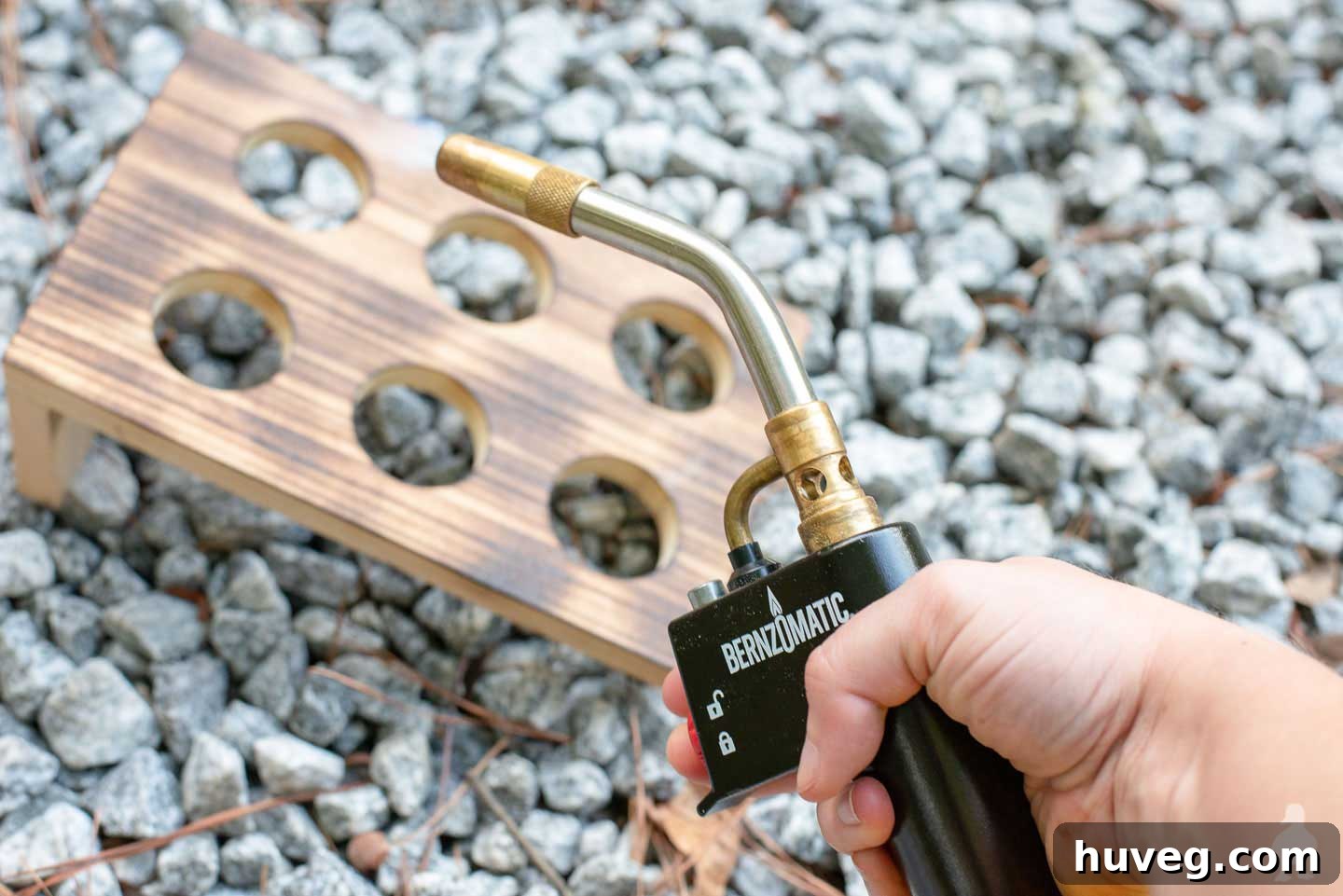
Once the wood burning was complete, I allowed the piece to cool completely before moving on. The next step involved a thorough sanding to remove any loose char and smooth the surface, followed by a wipe-down with a tack cloth to ensure it was free of dust. To create a striking contrast, I painted the back and bottom sections of the K-cup holder with several coats of crisp white paint. For the torched front, I applied multiple coats of wipe-on polyurethane. This not only protects the wood but also deepens the rich color of the burn, making the grain truly pop. Once everything was dry, it was time to load up the K-cups!
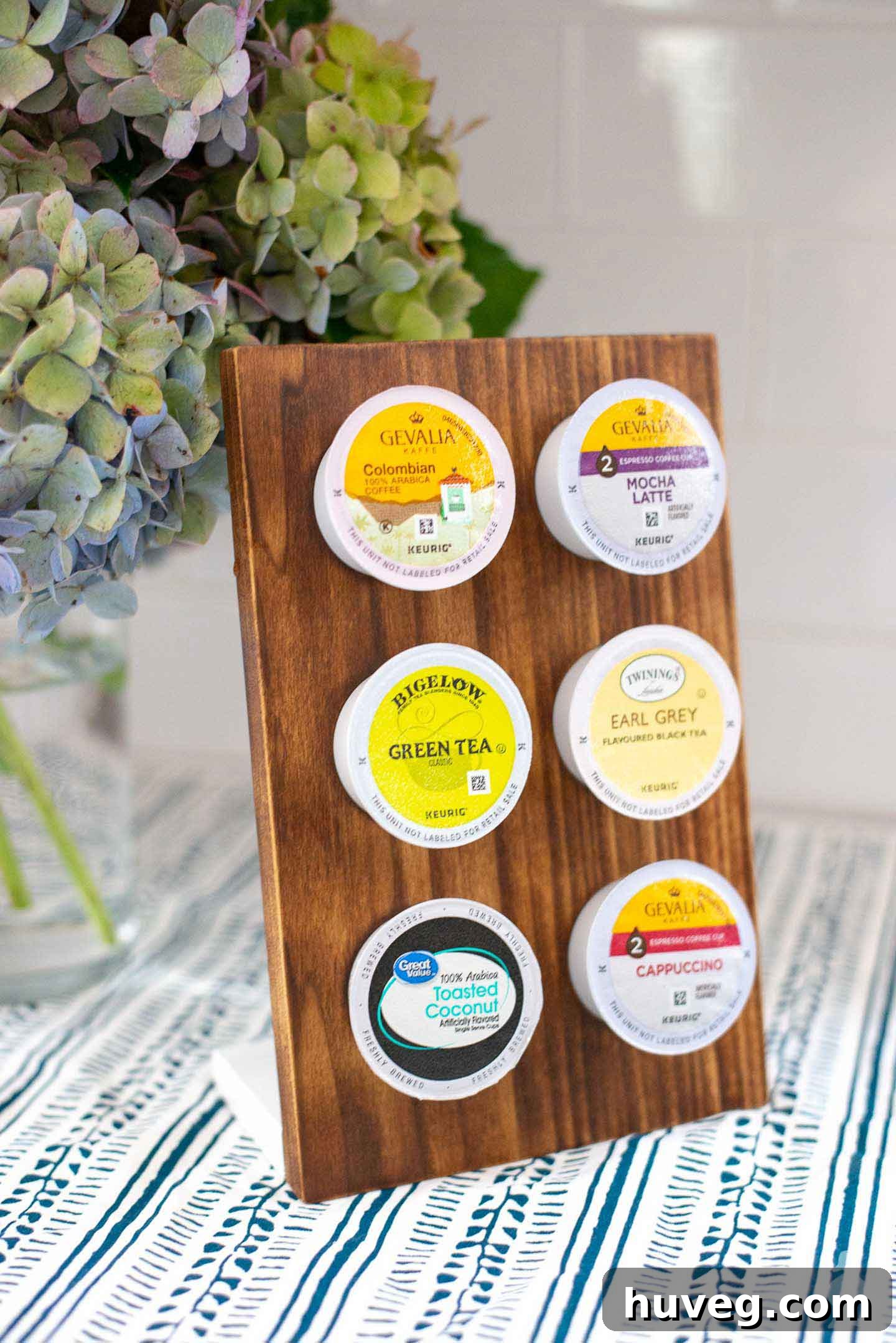
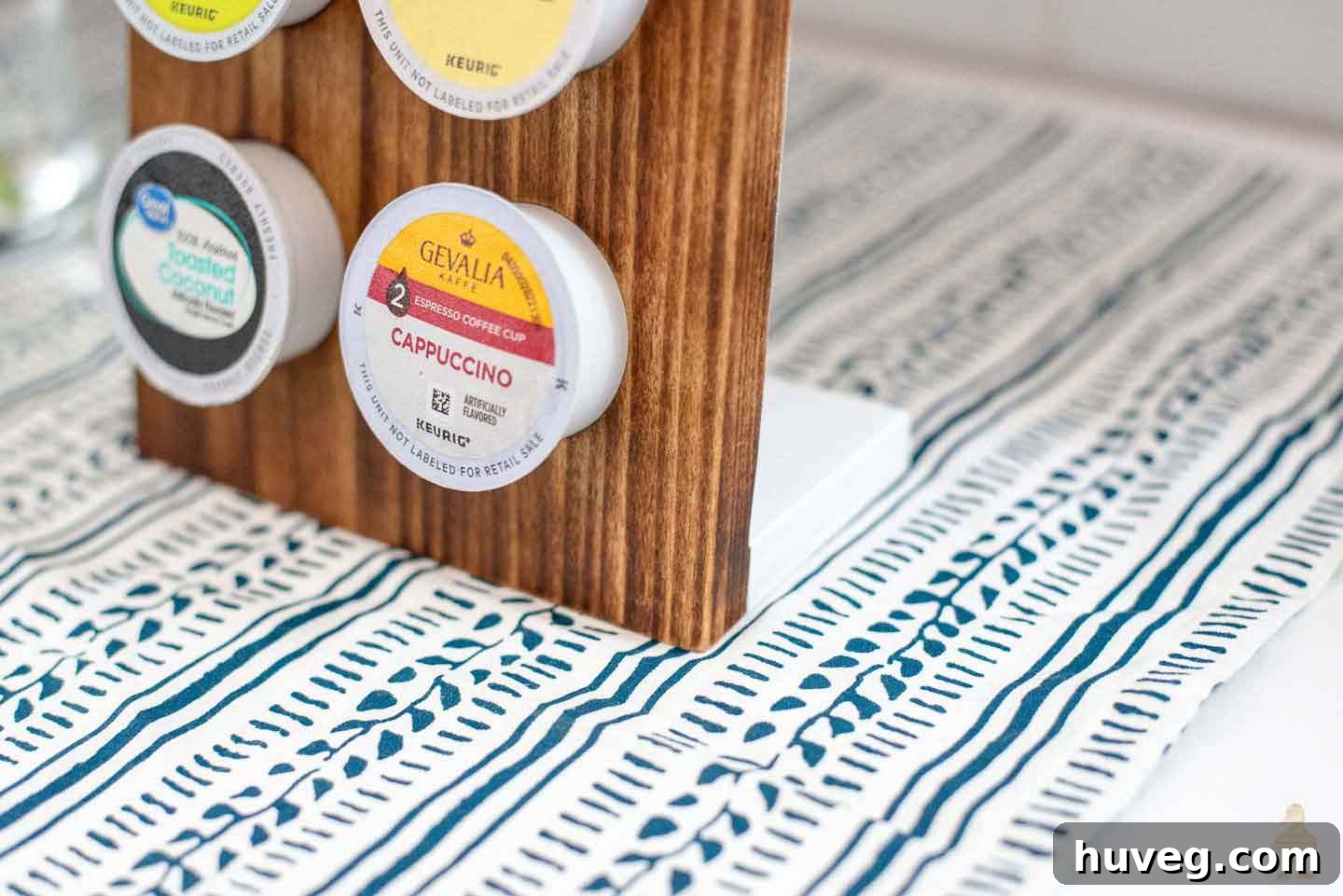
This little K-cup holder has already proven its worth. When K’s brother visited mid-week, I knew my usual late-morning coffee routine wouldn’t align with his early starts. Leaving this convenient holder on the counter meant he could easily grab a K-cup and brew his own coffee without any fuss. Its compact size ensures it takes up minimal counter space, making it easy to use and then tuck away when not needed.

Without a doubt, my favorite aspect of this project is the way the heat treatment dramatically enhanced the wood grain, creating a beautiful, stripey effect reminiscent of much more expensive woods. It’s a truly unique finish that sparks conversation. Would you consider using fire to “stain” your next woodworking project? It’s an incredibly rewarding technique that yields stunning results.
A Note on Shou Sugi Ban: This wood burning technique is closely related to shou sugi ban, an ancient Japanese method of preserving wood by charring its surface. The process not only darkens the wood but also makes it more durable and resistant to insects and rot. I previously explored shou sugi ban earlier this year while creating a s’mores tray for outdoor entertaining. The beauty of this technique is its versatility; you can even add traditional stain on top of the charred surface for additional color variations. It’s remarkable how much character and a high-end look it lends to common, inexpensive wood species!
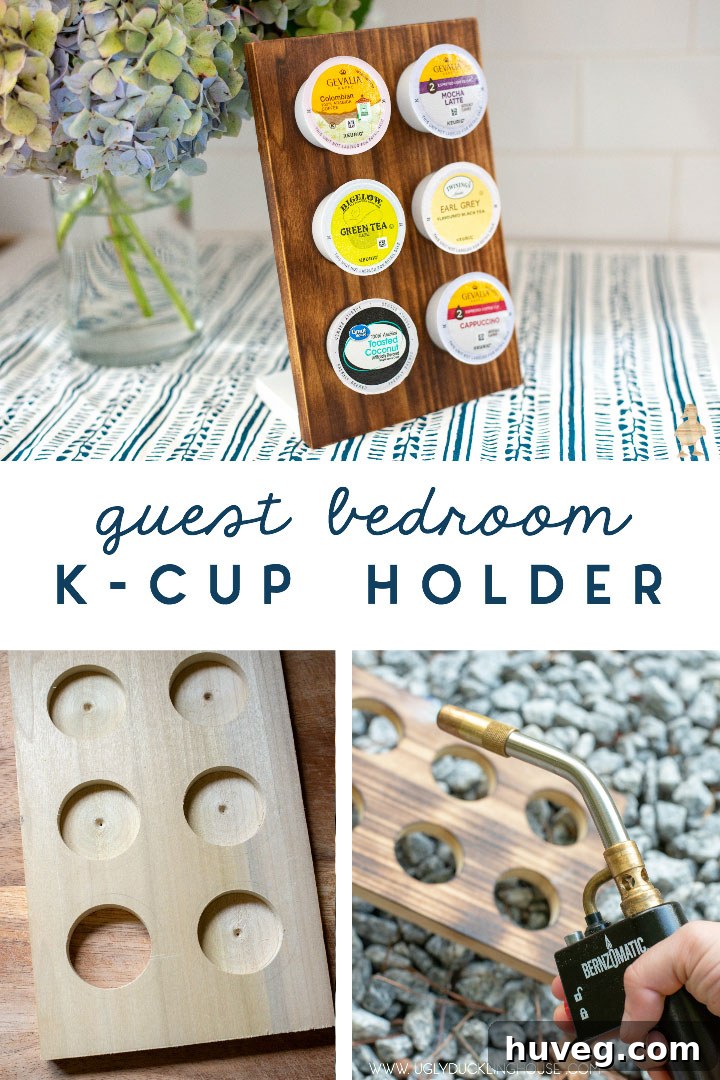
Loved this project? Don’t forget to pin it for later and inspire others to try this unique DIY!
Discover More Creative Scrap Wood Ideas
EXPLORE ALL PROJECTS
Never let those valuable offcuts from larger woodworking projects or home renovations go to waste! Scrap wood is a hidden treasure, perfect for countless creative endeavors. Dive into these ideas to see how you can transform leftover pieces into beautiful gifts, practical decor, and much more, adding a personal touch to your home without breaking the bank.
-
DIY Wooden Couch Sleeve
-
Mini Garden Deck | Scrap Deck Boards Made Useful
-
How to Frame a Round Mirror – No Fancy Tools
-
“Thank You” Doorbell Sign
-
DIY Firewood Rack | Free Plans
-
How to Build a Concrete Form for an Outdoor Pad