Conquer the Canvas: 10 Pro Painting Hacks

Welcome to the ultimate guide for transforming your home with a flawless paint job! After nearly a decade of navigating the world of DIY projects, tackling countless walls, and refining my techniques, I’ve distilled my most valuable insights into this comprehensive list. Whether you’re refreshing a single room or embarking on a full home makeover, these tips and techniques are designed to help you achieve professional-quality results on your walls, trim, and more.
My journey into painting began early, rooted in a household where professional painters were an unheard-of luxury. Interior painting was always a family affair, a hands-on learning experience that taught me everything from meticulously matching wallpaper samples to paint colors to the critical importance of proper wallpaper removal – a lesson painfully underscored by a disastrous powder room attempt! I even recall a playful (and quickly reprimanded!) incident where I tried to paint “hi mom” on a hallway wall, oblivious to the fact that such an amateur move could mar the final finish. If only I had known these expert tips back then, my youthful pranks might have taken a less noticeable form!
The Unrivaled Value of a Superior Paint Job
Often perceived as a foundational DIY skill, painting holds surprising depth. While it’s accessible to beginners, the distinction between an amateur effort and a truly polished finish lies in the mastery of specific techniques and a finely-tuned process. Just as any craftsman hones their trade, a professional painter elevates their skill through dedication and practice. Having acquired my own home and accumulated extensive practical experience, I’ve learned to approach painting with greater precision, efficiency, and a refined understanding of what it takes to achieve excellence.
This guide is crafted for everyone, from those just dipping their toes into the DIY world to seasoned homeowners looking to elevate their craft. My goal is to empower you to tackle virtually any painting project with confidence, ensuring results that you’ll be proud of for years to come. While I admit this guide is long overdue, the timeless nature of these tips makes it better late than never! Let’s dive into the essential principles of Painting 101 Basics and unlock the secrets to painting like a pro.
Your DIY Guide to Paint Like a Pro: 10 Essential Tips for Flawless Finishes
1. Master the Art of Choosing the Right Paint Sheen
Selecting the perfect paint involves more than just picking a color and buying enough gallons. The finish, or “sheen,” is a crucial element that profoundly impacts your paint’s appearance, durability, and overall performance. While you might be accustomed to the general rule of using flat or eggshell for walls and semi-gloss for trim, understanding the “why” behind these choices is key to making informed decisions for your specific needs.
Each level of sheen—flat, eggshell, satin, semi-gloss, and high gloss—reflects light differently. Flat (or flat enamel) offers the most matte finish, absorbing light to create a soft, non-reflective look. Moving up the scale, each subsequent sheen offers incrementally more reflectivity, culminating in the dazzling, mirror-like finish of high gloss. The more reflective a finish, the more “glamorous” and elegant it can appear, making it ideal for highlighting architectural details like intricate molding and trim. Higher sheens are also inherently more resistant to dirt, stains, and scuffs, which is why they are commonly found in high-traffic areas such as hallways, kitchens, and bathrooms, where frequent cleaning is necessary.
However, increased reflectivity comes with a significant drawback: glossier paints mercilessly reveal every minor imperfection, from small dents and dings to patched areas and uneven surfaces. This makes flatter paints a much more forgiving choice for older walls that have seen their share of repairs and touch-ups. Achieving a smooth, brushstroke-free finish with high-sheen paints also requires more coats and a greater degree of patience and precision. My personal preference for walls is “flat enamel,” a superb compromise that sits comfortably between flat and eggshell. It offers just enough sheen to be easily wipeable without accentuating wall imperfections, though its availability can vary across different paint lines. Fortunately, many paint manufacturers are now developing flatter paints that boast enhanced cleanability, making scuff marks and minor blemishes a thing of the past with just a magic eraser. For trim and interior doors, I consistently opt for semi-gloss, reserving the highest gloss finish exclusively for exterior elements like the front door, where maximum durability and visual impact are desired.
2. Always Have Your Paint Shaken at the Store
It’s common knowledge that newly mixed paint needs a good shake to blend the color. But even if you’re purchasing a pre-mixed color straight off the shelf, such as a pure white (a common choice for many projects), it’s highly advisable to ask the store to shake the can for you before you take it home. Over time, paint components can separate, with pigments settling at the bottom. A thorough shake at the store ensures that all tints are evenly redistributed and any separation that occurred during storage is completely blended. This step guarantees a consistent color and finish throughout your project. While the store shaking is a great start, always take an extra moment to stir the paint thoroughly at home before each use to maintain optimal consistency and prevent any further settling.
3. NEVER Skip Testing Paint Samples
The temptation to bypass the “test pot” stage and jump straight to buying a gallon of your chosen color is understandable. It seems like an extra expense and a waste of time to buy small samples, bring them home, and test them on your walls before returning to the store. However, the more walls I paint, the more I realize that investing in test pots is an indispensable step. Unless you are absolutely certain about a tried-and-true color that you’ve used and loved in your home before, you can never truly predict how a paint color will appear under your home’s unique lighting conditions. I’ve personally experienced the disappointment of trying whites that other bloggers raved about, only to find them too yellow in my space. Blacks can unexpectedly lean navy, and seemingly neutral grays can reveal strong purple undertones. Skipping this step often leads to buyer’s remorse, especially when you later see a beautiful paint color in someone else’s home and wonder what could have been. Investing a little time and money upfront for paint samples cultivates confidence in your color choice, ensuring you’ll love your walls for years to come rather than staring at a color you’re only “meh” about.
4. Experiment with a Hint of Gray or Beige for Sophisticated Hues
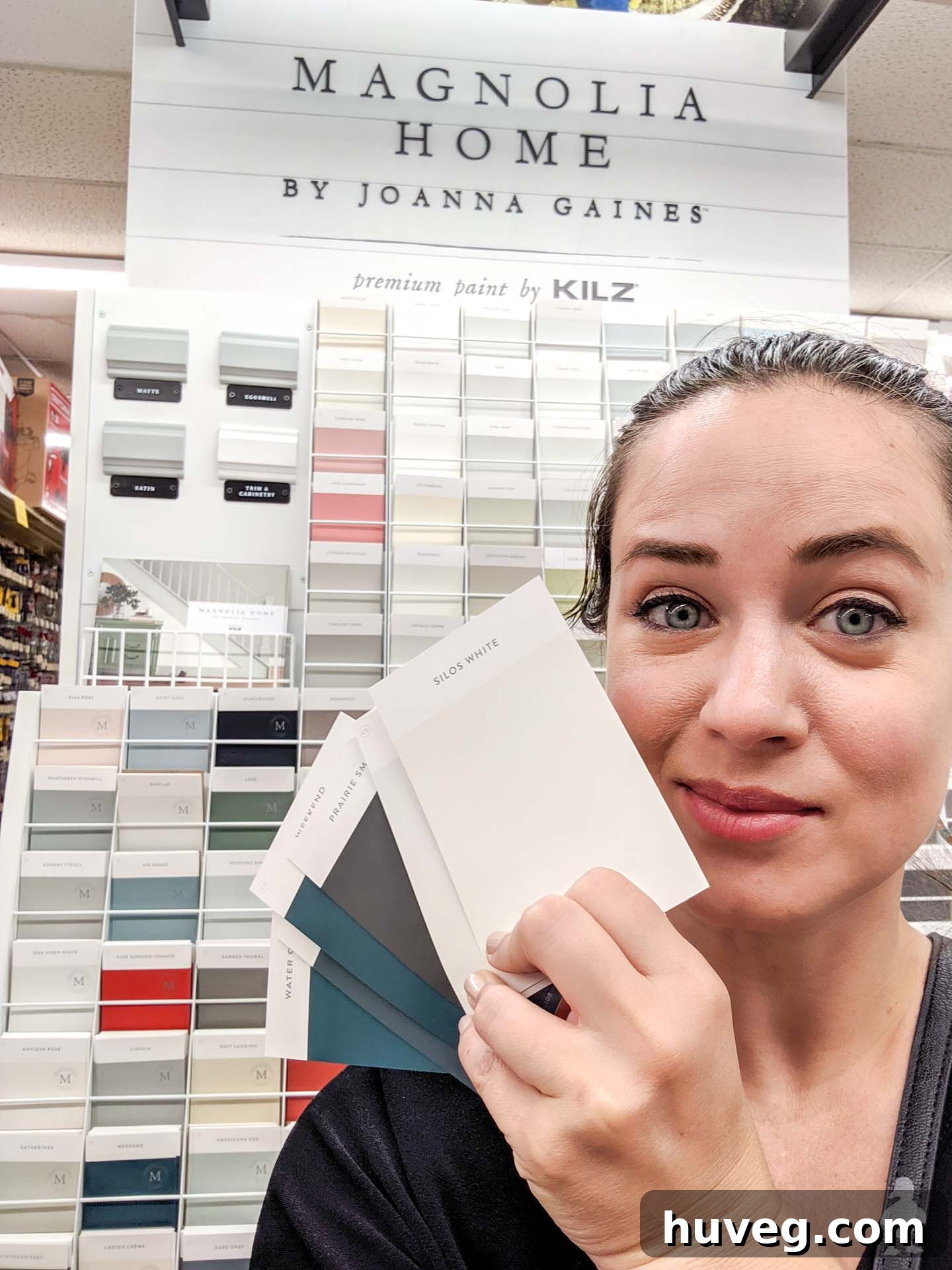
This subtle yet powerful tip has been incredibly valuable since my early blogging days! While bold color choices, such as the vibrant hue I used in my dining room, can be incredibly rewarding, those accustomed to neutral palettes might find themselves in for a shock with a highly saturated color once it’s applied to an entire wall. What looks fantastic on a tiny swatch can quickly become overwhelming when spread across a large surface. The consequence of such a misstep often means doubling your paint costs to correct the color or enduring years of regret. If you’re teetering on the edge of boldness, consider opting for the same general color but with a subtle infusion of gray or beige in the tint. This “step-down” approach introduces a sophisticated desaturation, making the color softer, more subdued, and significantly easier to integrate into rooms adjacent to more neutral spaces. It makes a world of difference in creating a harmonious flow throughout your home. I recently discovered the Magnolia Home paint line at Ace Hardware, and I was particularly impressed by how many of their colorful tones perfectly embody this tip. I took home several test pots of colors like “Secondhand Find” and “Weekend” to try for my primary bedroom feature wall, and the nuanced tones were simply exquisite.
5. Diligently Patch, Sand, Prime, and Clean Your Walls
Achieving a truly professional paint job begins long before you even open a can of paint. The adage “clean walls are smooth walls” rings true, and since paint has an uncanny ability to highlight even the smallest imperfections, neglecting proper wall preparation is a gamble you’re almost guaranteed to lose. Speaking from years of experience, the effort I invested in repairing my walls after removing old wallpaper years ago was never wasted. Each step – patching, sanding, priming, and cleaning – plays a critical role in creating a flawless foundation for your paint.
- Patching: Fills holes, cracks, and dents, ensuring a uniform surface.
- Sanding: Smooths patched areas, removes rough spots, and helps new paint adhere better.
- Priming: Creates an even base for new paint, blocks old colors or stains, and often reduces the number of paint coats needed.
- Cleaning: Removes dust, grime, and cobwebs that could compromise paint adhesion and finish.
During a recent trip to Ace Hardware for supplies, I discovered an innovative “Patch-n-Paint” product. This all-in-one solution not only fills holes effectively but also features a built-in spatula tool for smoothing the repair before it dries, eliminating the need for separate tools. Its formula is often self-priming, saving an additional step. If I weren’t using such a convenient product, I would employ my grandfather’s timeless trick: a slightly damp sponge can beautifully smooth out drywall compound or spackle before it dries, virtually eliminating the need for arduous sanding.
Speaking of priming, it’s an especially crucial step when making a drastic color change on your walls. I’ve found that it’s both faster and more cost-effective to prime the walls, especially if you have the primer tinted to match your new paint color. Tinted primer provides better coverage, helps to block out the old color more effectively, and significantly reduces the number of paint coats required, ultimately saving you money since a gallon of tinted primer is typically less expensive than a gallon of paint.
6. Master the Art of “Cutting In” for Crisp Edges
While I’ve dedicated a separate, more in-depth tutorial to the technique of “cutting in,” it’s a fundamental skill every DIY painter should master. “Cutting in” refers to the precise painting of edges—corners, around trim, and along the ceiling line—areas where a roller simply isn’t effective. Learning to achieve clean, straight lines without the aid of painter’s tape can take a bit of practice, but perfecting the technique of carefully pushing paint into these edges has been one of the most transformative skills I’ve acquired since I started blogging.
The benefits are manifold: it saves considerable time by eliminating the tedious process of taping and untaping, it saves money by removing the need to purchase painter’s tape, and most importantly, it yields superior results. This is particularly true for older homes with charmingly uneven walls, where trim, ceilings, and corners are rarely perfectly straight. I’ve learned that choosing the right brush is paramount for control. I highly recommend a short-handled, angled brush with a comfortable rubber grip. The Wooster brush pictured here is my absolute favorite, renowned for its precision and ease of use, and is readily available at your local Ace Hardware store. A crucial tip within a tip: when dipping your paintbrush into the paint, never submerge it more than halfway up the bristles. Avoid dipping all the way to the metal ferrule, as this can cause paint to accumulate and become gunky, leading to drips and making cleanup significantly more challenging.
7. Always Pour Paint into a Secondary Container
Dipping your paintbrush or roller directly into the original can of paint carries a high risk of contamination. Imagine stray pet hair, dust particles, or even a stubborn cobweb from that “clean” corner of the wall inadvertently falling into your pristine paint supply. Over time, this can lead to an accumulation of debris that compromises the smooth finish of your walls and makes future paint jobs problematic. To mitigate this, it’s always best practice to pour only the amount of paint you anticipate needing for your current project into a secondary container, such as a roller tray or a handheld paint pail. For this purpose, I am a huge fan of Handy Paint Pails, which are conveniently available at Ace Hardware. These pails are ingeniously designed with a comfortable handle for easy portability and a built-in magnet to secure your brush when you need both hands free (a lifesaver when working on a ladder). They also accommodate disposable liners, making cleanup incredibly quick and mess-free. This simple step protects your main paint supply, keeping it clean and ready for future touch-ups or projects.
8. De-Lint Your Brand New Roller Cover
After meticulously completing all the preparation work outlined in tip #5, the last thing you want is for stray lint to end up embedded in your freshly painted walls. New roller covers, especially those fresh out of the packaging, often shed loose fibers that can transfer directly to your paint job, creating an undesirable fuzzy texture. To prevent this common issue, simply wrap some painter’s tape (or even masking tape) around the entire surface of your brand new roller cover. Press the tape firmly, then peel it off to remove any excess lint or loose fibers. Repeat this process a few times until no more lint comes off on the tape. This quick and easy step ensures a perfectly smooth finish on your walls, free from unsightly debris.
9. Employ the “W” or “N” Rolling Technique for Even Coverage
Achieving a seamless, streak-free paint job with a roller requires a specific technique. Instead of applying paint in straight, overlapping lines, work in manageable 5 to 10-foot sections and apply the paint using a “W” or “N” pattern. Start by loading your roller with paint and applying it to the wall in a large “W” or “N” shape within your designated section. Once the pattern is laid down, go back and fill in the unpainted areas by rolling horizontally and vertically, lightly overlapping the “W” or “N” strokes. This method ensures that the entire area you are working on stays wet, allowing the paint to blend smoothly and preventing “flashing”—a common issue where areas that have started to dry are re-rolled, leading to noticeable stripe marks or inconsistent sheen, especially with glossier paints. This technique is precisely why I prioritize painting walls as continuous units rather than attempting to paint entire rooms in one go. Paint looks best when applied in a continuous wet edge, allowed to dry completely, and then followed by a second coat using the same meticulous approach.
10. Opt for a Foam Roller for Ultra-Smooth Surfaces Like Cabinets and Doors
Just as with any DIY project, using the right tools is paramount to achieving professional-looking results. When painting exceptionally smooth surfaces such as interior doors and cabinets, a foam roller is almost always my tool of choice. While I sometimes use a paint sprayer for outdoor projects, I generally prefer to paint interior doors without removing them from their hinges to minimize extensive prep work. Foam rollers are superior for these applications because they leave behind a remarkably smooth, virtually texture-free finish, minimizing the appearance of roller marks or brush strokes that traditional napped rollers might leave. Even with foam rollers, it’s still important to de-lint them (following tip #8) just as you would a regular roller cover to ensure no stray particles mar your smooth finish. Here’s an important tip within a tip: if you plan on de-linting your foam rollers with tape, invest in good quality foam rollers. Cheaper foam rollers are often more fragile and prone to tearing or falling apart when tape is applied and peeled off, which defeats the purpose of creating a smooth finish.
There you have it—my top 10 essential tips for achieving a professional-quality paint job in your own home! While I could easily expand this list with many more insights (and indeed, I’ve woven a few smaller bonus tips throughout these ten), I believe a focused list provides a strong foundation for any DIY painter. I’m confident that by implementing these strategies, you’ll see a remarkable improvement in your painting projects. Rest assured, I’ll continue to refine and add to this guide as I discover new techniques and tools, so do check back in the future for even more valuable advice. And of course, I always love learning from your experiences; please feel free to share your own favorite painting tips and tricks in the comments below!
Don’t forget to pin this comprehensive guide to save it for your next painting adventure!