Sticky Mayhem

The Unsung Hero of Home Improvement: Mastering Subfloor Preparation and Caulking for Flawless Floors
Embarking on a home improvement journey often means embracing the unexpected. While the glossy “after” photos are what we all strive for, the path to achieving them is frequently paved with dust, grime, and the occasional unforeseen challenge. Many DIY enthusiasts, myself included, aren’t afraid of rolling up their sleeves and getting their hands dirty – especially when the reward is a dramatic transformation and the satisfaction of a job well done. Sometimes, getting messy isn’t just part of the process; it’s an essential step in overcoming obstacles, much like our recent downstairs flooring preparation.
The Critical Foundation: Why Subfloor Preparation Matters for Your New Floors
Before any beautiful new flooring can be laid, whether it’s elegant laminate, luxurious vinyl, or plush carpet, the subfloor beneath it requires meticulous attention. This often-overlooked stage, known as subfloor preparation, is arguably the most crucial step for the longevity and aesthetic appeal of your new floors. Skipping or rushing this foundational work can lead to a host of problems down the line, from uneven surfaces and squeaky spots to, most critically, moisture damage.
Beyond the Surface: The Importance of a Solid Base
A properly prepared subfloor ensures a perfectly flat and stable base for your new flooring. This means thoroughly cleaning, repairing any damage, and addressing any irregularities. In our case, after the satisfying (and somewhat dusty) task of ripping out the old carpet, we were left with a bare subfloor that needed more than just a sweep. We swept up years of accumulated dust and grime, revealing the true canvas for our upcoming laminate flooring installation.
Battling Moisture: Protecting Your Investment with a Reliable Barrier
One of the biggest threats to any new flooring, especially moisture-sensitive options like laminate, is humidity and water penetration. Moisture can seep in from various sources – through the foundation, from spills, or even from changes in ambient humidity. This is where strategic sealing becomes vital. It was during this phase that I discovered an old, unopened tube of concrete-specific caulk in the garage. I suspect it was a relic from my dad’s paint supply box when we first moved in, having been overlooked until now. My immediate thought was to create an added layer of protection: run a bead of caulk along the baseboards where the subfloor meets the trim. This isn’t just a minor detail; it’s a proactive step to create a robust moisture barrier, safeguarding the new laminate from potential issues. While it might sound like a simple theory, in the world of DIY, being overly cautious often pays dividends in peace of mind and floor longevity.
Unveiling the Power of Caulk in Flooring Prep and Home Renovation
Caulk, often seen as a minor finishing touch, plays a monumental role in home renovation, especially in subfloor preparation. Its primary function is to seal gaps, preventing air, dust, and, most importantly for flooring, moisture from penetrating unwanted areas. Understanding the different types and their applications is key to a successful project.
A Protective Seal: Bridging the Gap Between Subfloor and Trim
The gap between your subfloor and baseboards, though seemingly insignificant, can be a gateway for moisture. By applying a continuous bead of caulk in this transitional area, you effectively create a seal. This not only prevents ambient moisture from creeping under your laminate but also helps to minimize drafts and dust accumulation. For a homeowner committed to ensuring their new flooring stands the test of time, this small act of caulking provides a significant layer of protection and structural integrity.
The Right Tool for the Job: Choosing Your Caulk
While I serendipitously stumbled upon concrete caulk, knowing the different types can save you time and ensure optimal results for various projects. Generally, caulk falls into categories like:
- Acrylic Latex Caulk (Painter’s Caulk): Water-based, easy to clean, paintable, and ideal for interior gaps that won’t experience much movement. Good for trim, baseboards, and small cracks in drywall.
- Silicone Caulk: Highly flexible, waterproof, and resistant to extreme temperatures. Perfect for bathrooms, kitchens, windows, and outdoor applications. It’s not typically paintable, which is an important consideration.
- Polyurethane Caulk: Extremely durable and flexible, suitable for sealing large gaps and joints that experience a lot of movement, often used for exterior applications or concrete.
- Specialty Caulks: Like the concrete caulk I found, these are formulated for specific materials or conditions (e.g., roofing caulk, fire-rated caulk, adhesive caulk). The concrete caulk, with its robust properties, was surprisingly well-suited for our subfloor sealing project, offering superior adhesion and moisture resistance where it met the baseboards.
My decision to use the concrete caulk along the baseboards, while somewhat intuitive at the time, was a sound one. Its robust nature would provide a durable and effective moisture barrier, offering peace of mind for our new laminate.
The Art of Application: A Smooth Start to Caulking
The first evening of our caulking endeavor went remarkably smoothly. With a fresh tube and a steady hand, applying a consistent bead along the baseboards felt almost therapeutic. For those new to caulking, here are a few tips for a pristine application:
- Preparation: Ensure the surface is clean, dry, and free of old caulk or debris.
- Cut the Tip: Cut the nozzle at a 45-degree angle, making a small opening. You can always cut more, but you can’t un-cut it!
- Load the Gun: Insert the caulk tube into a reliable caulk gun.
- Apply a Consistent Bead: Hold the gun at a 45-degree angle, squeeze the trigger with steady pressure, and pull the gun smoothly along the gap. Aim for an even, unbroken line.
- Smooth the Bead: Immediately after application, use a wet finger, caulk tool, or damp cloth to smooth the bead, pushing the caulk into the gap and creating a clean finish.
This initial success reinforced the feeling that our flooring project was on track, building momentum and confidence for the tasks ahead. (Bah dum bum).
When DIY Takes an Unexpected Turn: The Caulk Gun Conundrum
However, the smooth sailing didn’t last. The second night presented an entirely different set of challenges. Try as I might, squeezing the caulk gun’s trigger yielded little to no result. Only a minuscule amount of caulk would emerge, making the process incredibly slow and frustrating. I’d noticed the concrete caulk was slightly thicker than the standard acrylic latex caulk I’d used for our windows, but this level of resistance was far beyond normal. It felt like an uphill battle to complete even a few feet of our living room. Something was clearly amiss.
The Pressure Problem: Diagnosing the Issue with the Caulk Gun
A caulk gun relies on consistent internal pressure to push the sealant out of the nozzle. When this pressure is compromised, the caulk simply won’t flow correctly. My immediate thought was that the caulk itself was too thick or perhaps had partially cured inside the tube. However, after struggling for what felt like an eternity, I finally noticed the real culprit.
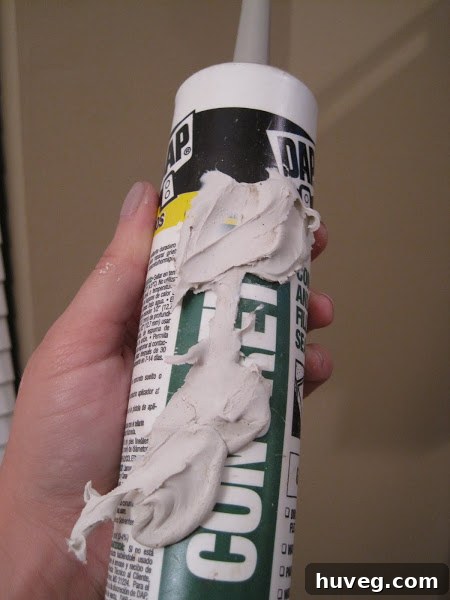
The moment of truth: discovering the unexpected leak.
A Closer Look: The Cracked Tube Revelation
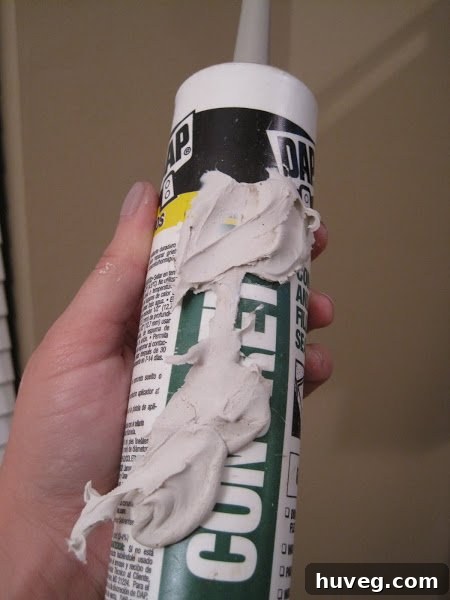
As it turned out, the tube itself was compromised. The time spent in our hot Georgia garage (where temperatures had soared to a scorching 105-degree heat index for weeks) likely caused a small crack to form on the side of the plastic tube. Alternatively, it might have been dropped at some point, causing a hairline fracture. When placed into the caulk gun, the immense pressure applied by the trigger exacerbated this flaw, widening the hole. Instead of the caulk neatly exiting the tip, it was now spilling out from the side, creating a gooey, internal mess within the gun. I probably would have noticed this sooner, but the crack was conveniently facing inward, concealed by the gun’s mechanism.
This incident highlighted a crucial DIY lesson: always inspect your materials thoroughly, especially those stored in less-than-ideal conditions. Extreme temperatures can severely affect product integrity, leading to unexpected failures.
Embracing Imperfection: Ingenious Solutions in the Face of Mess
So, what does a determined DIYer do when faced with a messy, unexpected obstacle, especially when free (or already acquired) materials are involved? In my case, I chose to pivot. I was already using my fingers to smooth out the caulk lines – a common practice for achieving a neat finish. So, why not embrace the spill? The oozing caulk from the side of the broken tube became an additional resource.
From Frustration to Resourcefulness: The Hands-On Approach
Instead of discarding the broken tube, I strategically managed the leak. I started using the expelled caulk, scooping it with my fingers and applying it directly to the gap. It wasn’t the most elegant solution, nor the cleanest, but it was effective. This hands-on, slightly unconventional method allowed me to continue sealing the remaining sections of the subfloor, albeit at a slower, messier pace. This kind of adaptability is a hallmark of successful DIY projects – finding creative ways to use what you have, even when things don’t go according to plan.
The Bigger Picture: Progress Over Perfection
Of course, this approach had its minor casualties. My manicure, which was already sporting a somewhat dull grayish-purple polish, took a significant hit. But in the grand scheme of things, a ruined manicure is a small price to pay for progress. Every bead of caulk, however it was applied, brought us one step closer to laying down our beautiful new floors. The satisfaction of moving forward, of actively making tangible progress on a significant home improvement project, far outweighed any temporary inconvenience.
Lessons Learned and Paving the Way Forward
This unexpected caulk challenge reinforced several important lessons, building upon our previous caulking experiences. These aren’t just about caulk; they’re broader principles applicable to almost any DIY endeavor:
- Tools Matter: A caulk gun is indispensable for efficient application. While I managed without a properly functioning one in the end, it was far from ideal. Using the right tools, and ensuring they are in good condition, streamlines any task.
- Resourcefulness is Key: Don’t dismiss “free” or existing materials. Even a broken tube of caulk, initially a frustrating setback, can be repurposed or adapted to complete the job. It’s about creative problem-solving and making the most of what you have.
- Inspect Your Materials: Cracks, dents, or other damage can compromise the integrity of your supplies and tools. Always check tubes, cans, and equipment before starting a project, especially if they’ve been stored for a while or exposed to extreme conditions like Georgia’s summer heat.
- Embrace the Mess: DIY can be messy, and sometimes, a little grime is unavoidable. While a fresh manicure might suffer, the satisfaction of a completed project and the tangible results far outweigh the temporary inconvenience. Your hands will recover, but your new floors will last!
Essential Caulking Tips for Every DIYer
Beyond the immediate lessons from our flooring prep, here are some general tips to ensure your caulking projects are always a success:
Preparation is Key for a Professional Finish
- Clean Surfaces: Always ensure the area you are caulking is free of dust, grease, old caulk, or peeling paint. A clean surface provides the best adhesion. Use a utility knife or a specialized caulk removal tool if necessary.
- Masking Tape for Crisp Lines: For truly straight and clean lines, apply masking tape along both sides of the joint, leaving only the gap exposed. Apply the caulk, smooth it, and then carefully remove the tape before the caulk skins over.
- Practice Makes Perfect: If you’re new to caulking, practice on a scrap piece of wood or cardboard to get a feel for the gun’s pressure and the speed at which you need to move.
Proper Storage and Handling Extends Material Life
- Store Properly: Store caulk tubes in a cool, dry place. Extreme temperatures, especially heat, can cause the caulk to harden prematurely or, as I experienced, compromise the tube’s integrity.
- Seal Opened Tubes: After use, seal the tip of an opened caulk tube to prevent air from drying out the remaining caulk. You can use a nail, a screw, a wine cork, or specialized caulk caps.
Cleanup and Maintenance for Lasting Results
- Clean Tools Immediately: Clean your caulk gun and smoothing tools immediately after use with the appropriate solvent (water for latex, mineral spirits for silicone/oil-based).
- Ventilation: Always ensure good ventilation when working with caulk, especially solvent-based types, and follow manufacturer safety guidelines.
Ultimately, every scrape, every smudge, and every unexpected repair contributed to the overall journey of transforming our home. The floors are coming, and with each completed step, the vision becomes clearer. It’s a reminder that true home improvement isn’t just about the final outcome; it’s about the lessons learned, the problems solved, and the satisfaction of building something with your own hands, even if those hands get a little gooey along the way.