DIY Floating Deck Stage Two: Frame Assembly and Waterproofing

Embarking on a DIY project like building a backyard floating deck is an incredibly rewarding experience, transforming your outdoor living space into a functional and inviting oasis. This comprehensive guide, part of my ongoing series, covers the crucial details of constructing a durable and long-lasting ground-level deck, with a particular focus on the essential role of ground contact lumber. Whether you’re a seasoned DIY enthusiast or tackling your first major outdoor build, understanding the right materials and construction techniques is paramount. Follow along as we delve into the specifics, ensuring your deck stands the test of time and environmental elements.
- Part 1: Planning & Layout
- Part 2: Framing & Moisture Protection (you are here!)
- Part 3: Decking Installation
- Part 4: Trimming the Deck Edge & Finishing Touches
- Part 5: Landscaping Around Your New Deck
- Part 6: DIY Light Pole Planters
- Part 7: The Grand Reveal & Celebration
Welcome back, DIYers! After a brief hiatus, I’m thrilled to share the next installment of our floating deck construction journey. In this post, we’ll dive deep into the hands-on process of building the deck’s robust frame, ensuring proper elevation, and, most importantly, implementing critical waterproofing and moisture protection strategies. This stage is where your detailed planning truly comes to life, laying the foundation for a beautiful and resilient outdoor living space.
As you may recall from Part 1: Planning & Layout, we meticulously designed the overall structure, made crucial material decisions, and researched potential challenges. With the blueprint in hand and lessons learned, it’s now time to transform those plans into a tangible structure.
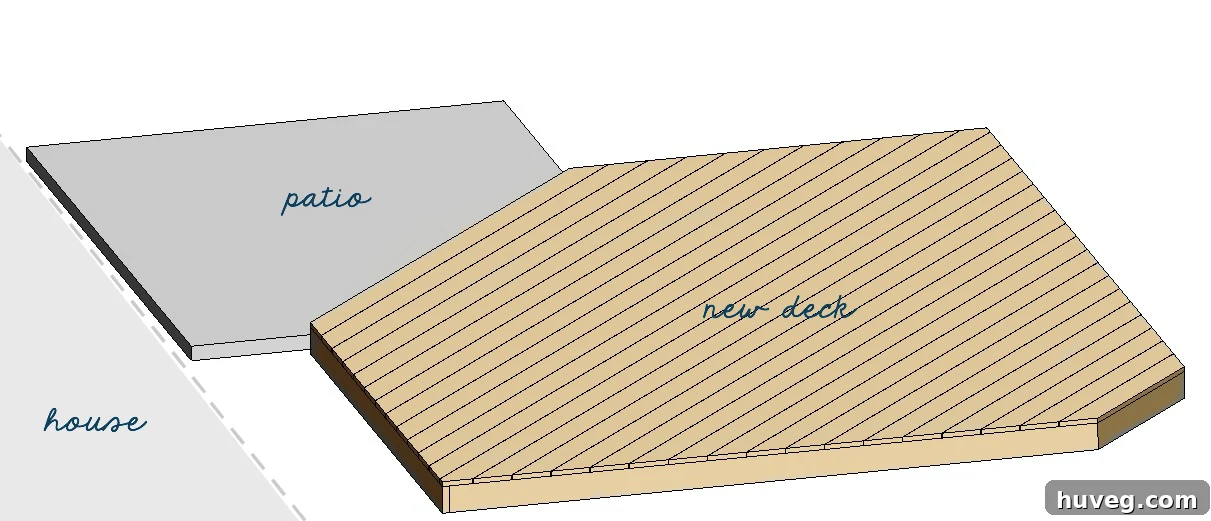
Once the comprehensive plan was finalized and materials were on site, the real work began. This stage involves precision, careful measurement, and a good understanding of structural integrity. Let’s get into the nitty-gritty of building the frame for your backyard retreat.
Essential Tools and Materials for Floating Deck Construction
Having the right tools and materials is crucial for an efficient and successful build. Investing in quality items will not only make the process smoother but also contribute to the deck’s longevity. Here’s a detailed list of what you’ll need for your DIY floating deck project:
- Miter Saw: Indispensable for making accurate, repeatable cuts for framing lumber. A good miter saw ensures precise angles and square ends, which are vital for a strong frame.
- Cordless Drill & Impact Driver: These powerhouses will be your best friends for driving screws quickly and efficiently. The drill is great for pre-drilling pilot holes, while the impact driver handles heavy-duty fastening without stripping screws.
- Assorted Drill Bits: Essential for creating pilot holes, especially when working with dense pressure-treated lumber, to prevent splitting.
- GRK 2 1/2-inch Screws: High-quality exterior-grade screws designed for deck construction, offering superior holding power and corrosion resistance.
- GRK 3 1/8-inch Screws: Longer structural screws for heavier connections, ensuring the frame’s stability.
- GRK 4-inch Structural Screws: For critical structural connections where maximum strength is required.
- 4-ft Level: Absolutely vital for ensuring your deck frame is perfectly level (or sloped appropriately for drainage). A longer level provides greater accuracy.
- Ground Contact Lumber: Specifically 2x6s, 2x4s, and 1x4s. This is non-negotiable for ground-level decks due to its enhanced protection against rot and insects (more on this below).
- Composite Shims: Ideal for fine-tuning the level of your deck frame, especially when building over uneven ground or existing concrete. They are moisture-resistant and durable.
- 3 3/4″ Concrete Screws (Tapcon style): Required for securely attaching wood sleepers to a concrete patio.
- Hammer Drill: Essential for drilling into concrete. If you don’t own one, an adapter kit can allow your impact driver to function as a light-duty hammer drill.
- Deck Blocks: Pre-formed concrete blocks that serve as foundational supports for floating decks, keeping wood off the ground and aiding in leveling.
- Landscape Fabric: Used underneath the deck to prevent weed growth and provide a clean base for gravel.
- Gravel: Provides drainage, stabilizes deck blocks, and helps prevent moisture buildup under the deck.
- Shovel or Mattock: For excavating and leveling the ground where deck blocks will sit.
- Stainless Steel Brackets /Joist Hangers: For reinforcing joist-to-rim joist connections, particularly for added stability and structural integrity, though their use for ground-level decks should be considered carefully regarding direct ground exposure.
Understanding Ground Contact Lumber: A Critical Choice for Longevity
One of the most significant lessons I learned during the planning phase was the absolute necessity of using Ground Contact (GC) lumber for virtually the entire deck project. Traditional “pressure-treated” (PT) wood has long been the standard for outdoor projects, but thanks to evolving industry guidelines and a partnership with resources like Wood Its Real, I discovered the updated recommendations that are crucial for truly durable builds.
While all outdoor wood benefits from preservative treatments, Ground Contact lumber offers a higher concentration of these chemicals. This increased protection is vital because wood in direct contact with the ground, or in environments where moisture is constantly present, faces an accelerated risk of decay from fungi, insects, and other organisms. Since 2016, building codes and best practices have emphasized these distinctions, ensuring that your investment in a deck lasts for decades, not just years.
You’ll need GC lumber in several common scenarios that go beyond just direct soil contact:
- Direct Soil, Vegetation, or Debris Contact: Any wood component that will rest directly on or be buried in soil, or is surrounded by leaves, mulch, or other organic matter that retains moisture.
- Poor Air Circulation: If the underside of the deck, or areas between decking boards, lacks adequate ventilation, moisture can accumulate and lead to decay. GC lumber provides extra defense in these stagnant conditions.
- Close Proximity to Ground: Wood components installed less than six inches above the ground, especially when supported by treated wood or concrete without a robust moisture-transferring barrier.
- Contact with Decaying Material: If new wood will touch existing material that already shows signs of rot, it’s best to use GC lumber to prevent the spread of decay.
- Frequent Wetting: In environments where wood is frequently exposed to water (e.g., splash zones, poorly draining areas) and doesn’t have sufficient time to dry out naturally.
- Tropical or High-Humidity Climates: Regions with consistently high humidity and warmth create ideal conditions for fungal growth, making GC lumber a wise choice.
Considering that a floating deck inherently sits low to the ground and often involves contact with the soil or a concrete patio, it became abundantly clear that my project met multiple criteria for Ground Contact lumber. When sourcing your materials, you might find varying stock levels at different retailers. While some stores might offer a mix of “Above Ground” and “Ground Contact” lumber, others, like my local Home Depot, have largely transitioned to stocking GC lumber almost exclusively, which simplifies the choice for consumers and ensures better protection for most outdoor projects.
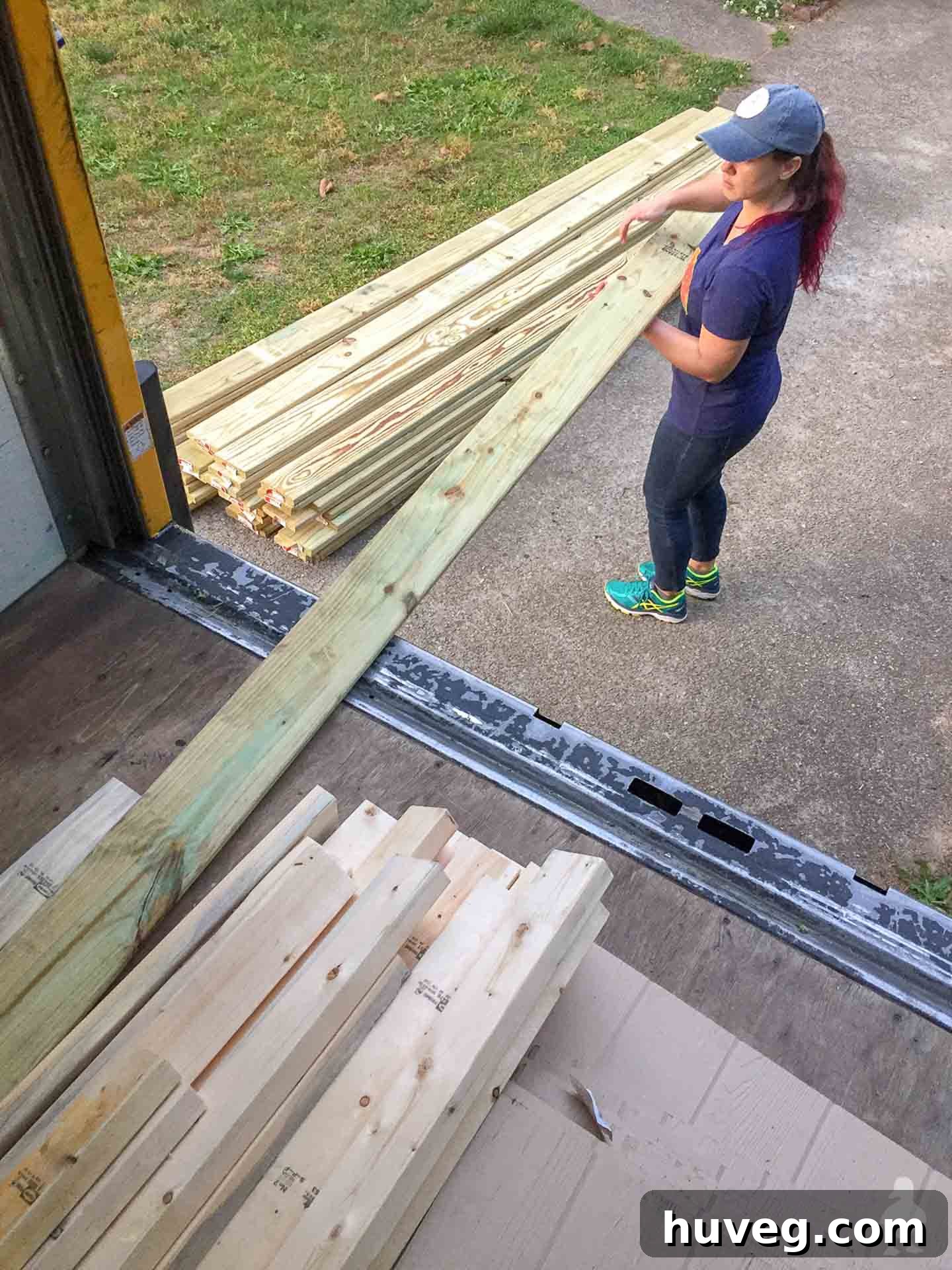
Constructing a Solid Floating Deck Frame
With the right materials on hand, the next step is to assemble the backbone of your deck: the frame. This structure dictates the overall shape, stability, and longevity of your floating deck. Precision at this stage is crucial for a professional-looking and safe finished product.
Building the Outer Frame: Setting the Perimeter
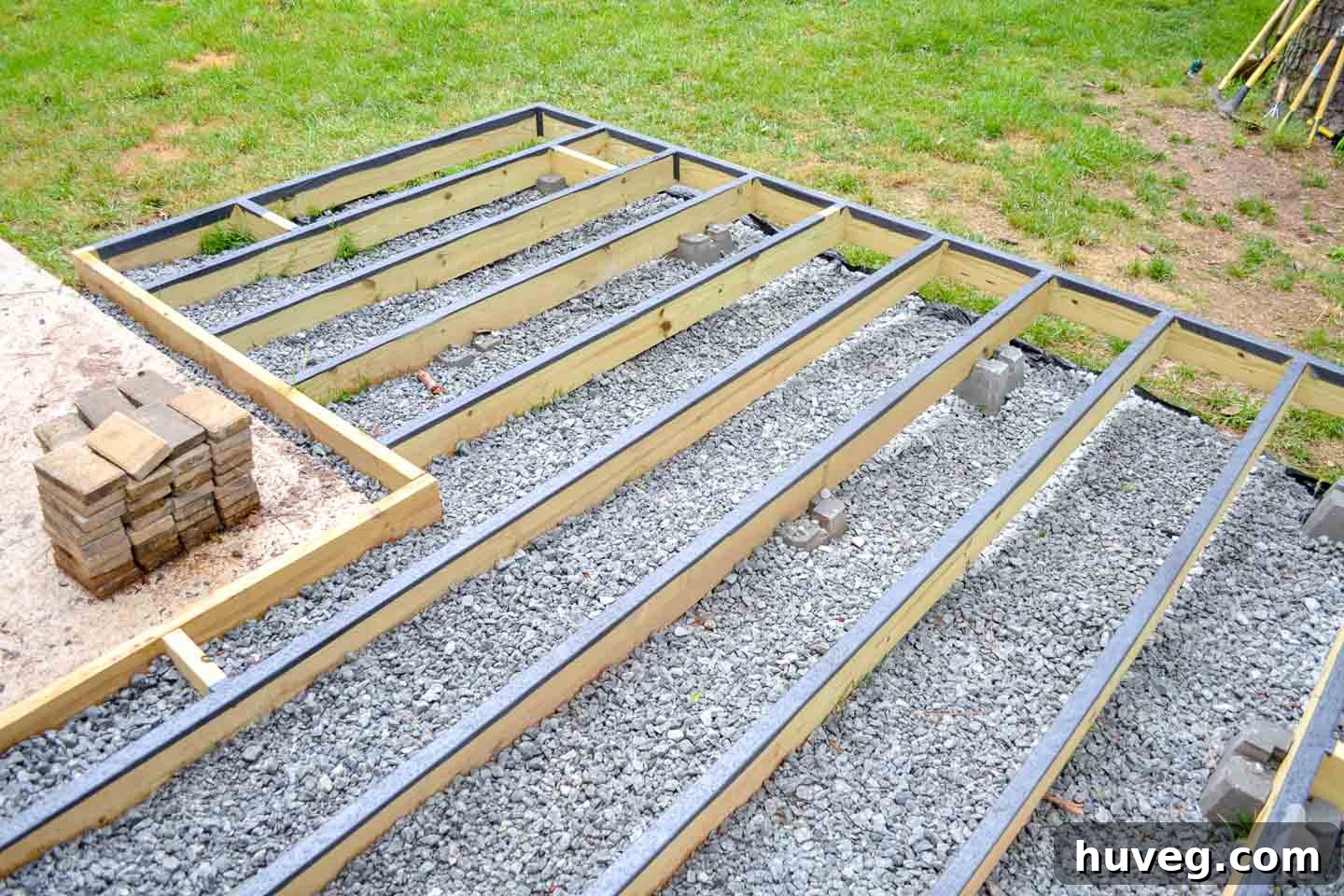
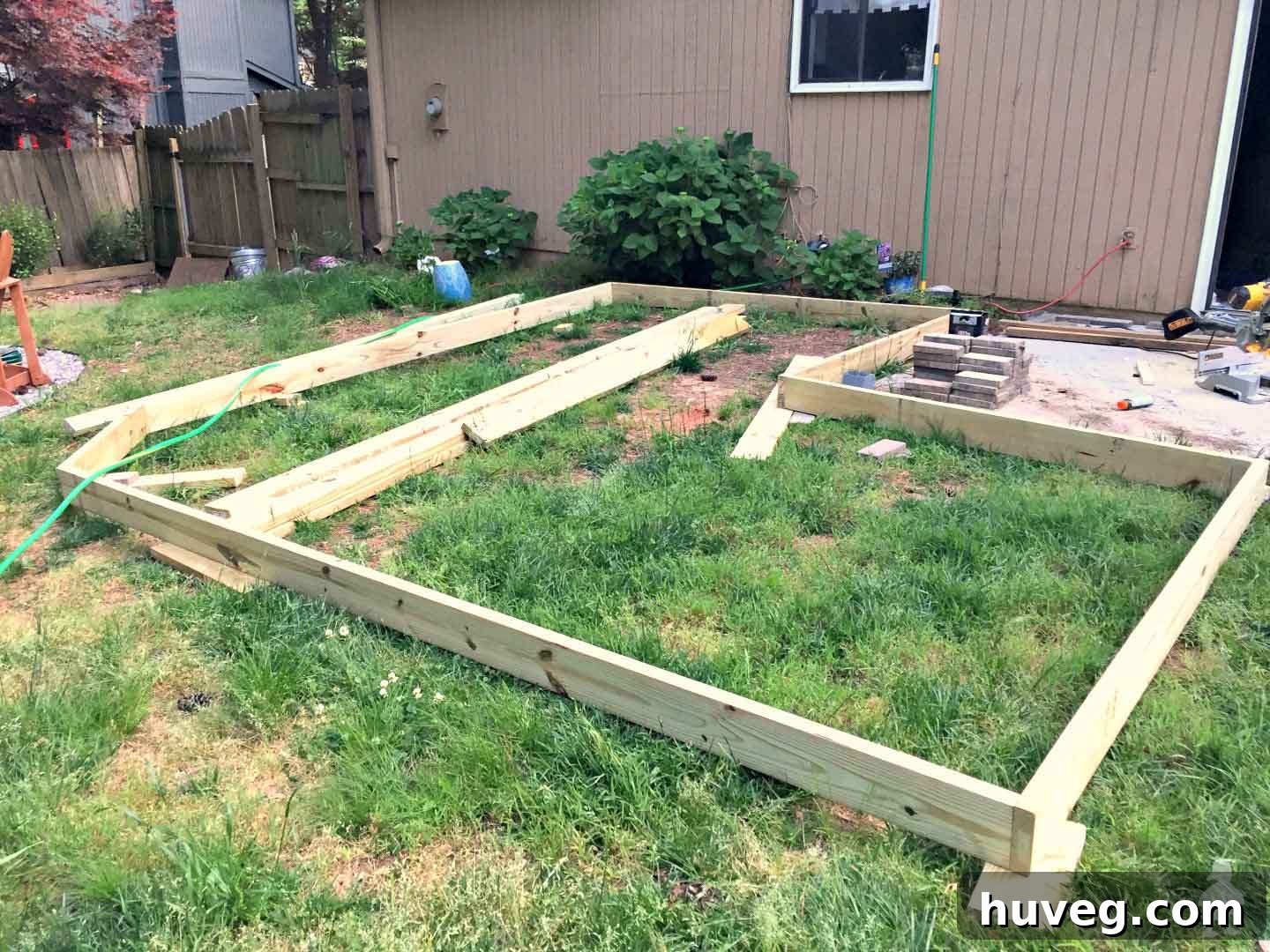
I began the construction process by cutting and assembling the outer frame. While some might prefer to lay out deck blocks first, I found it more intuitive to build the perimeter and then position the supports. This approach allowed me to ensure the overall dimensions were correct and square before integrating the foundation elements.
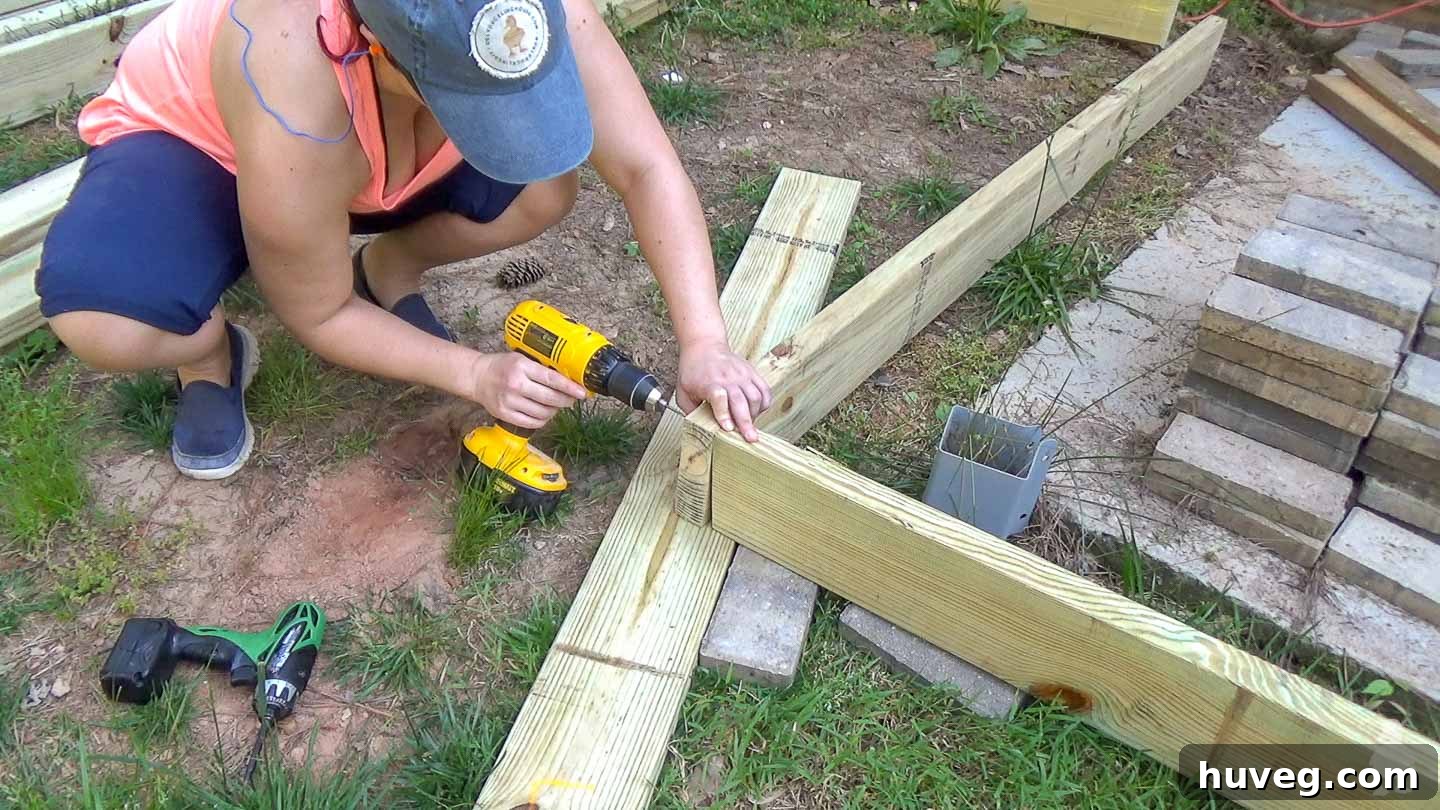
For the outer frame, I initially pre-drilled each hole and used standard exterior screws. However, I quickly realized this was a time-consuming step. A valuable tip: invest in high-quality exterior-grade screws that are self-tapping and don’t require pre-drilling for most applications. Brands like GRK are designed for this purpose, saving you significant time and effort. Just like with Ground Contact lumber, spending a little more on superior fasteners translates to a stronger, more efficient build and avoids unnecessary frustration.
Elevating and Leveling the Frame for Stability
After the outer frame was screwed together, it still lacked rigidity. To maintain its squareness during further construction, I temporarily reinforced the corners with scrap lumber braces. These temporary supports were crucial for holding the frame’s geometry until the internal joists and permanent supports were in place, at which point they could be removed.
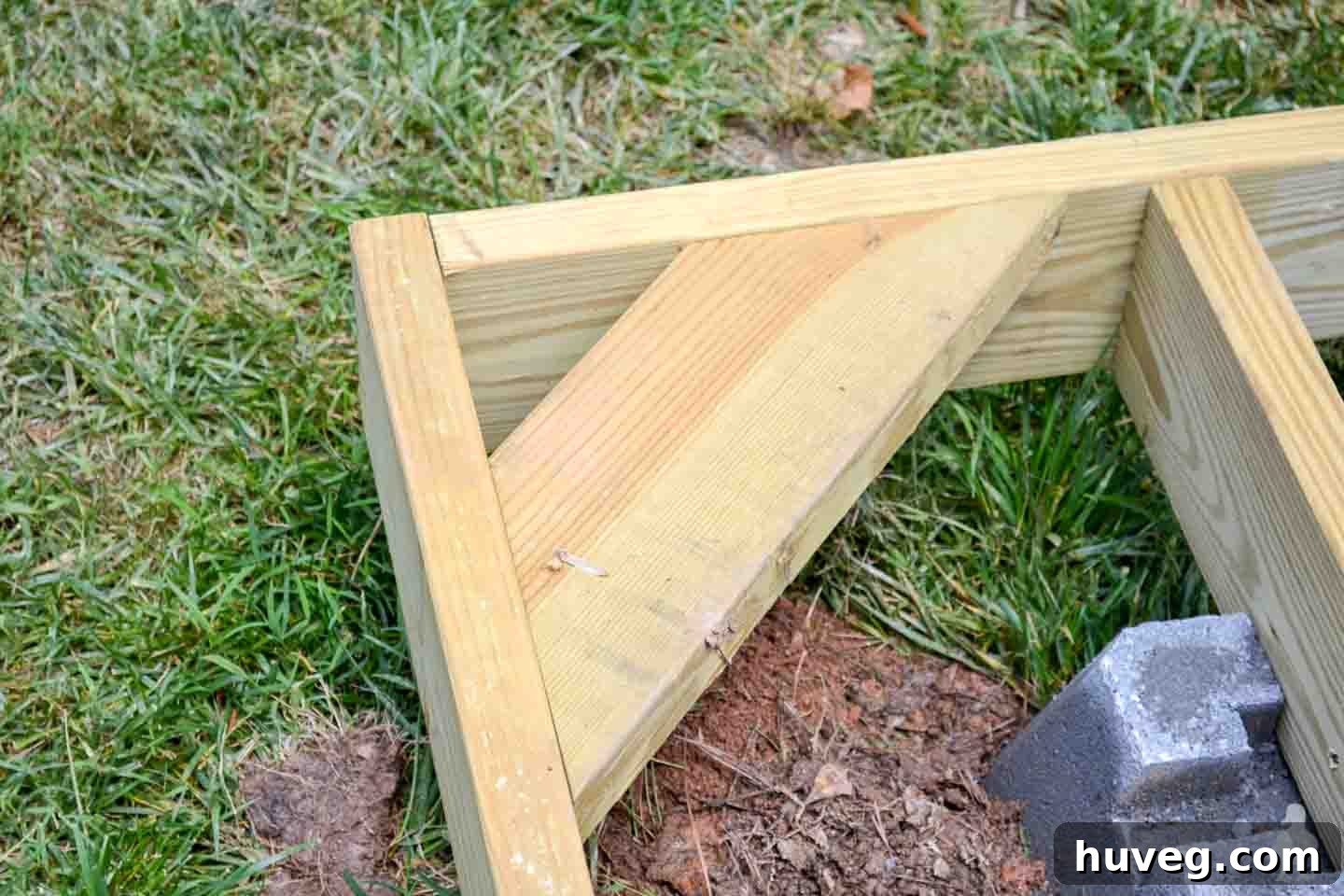
Next, I lifted the frame using scrap lumber and my trusted 4-foot level. While a deck might appear perfectly level, it’s essential to incorporate a very slight slope (typically 1/8 to 1/4 inch per foot) for proper water runoff. This prevents standing water, which can accelerate wear and tear. I used the existing patio as a reference, noting its slight natural slope, and aimed to replicate that subtle incline in the deck frame to ensure effective drainage away from the house and structure.
Precisely Spacing Out Deck Joists and Supports
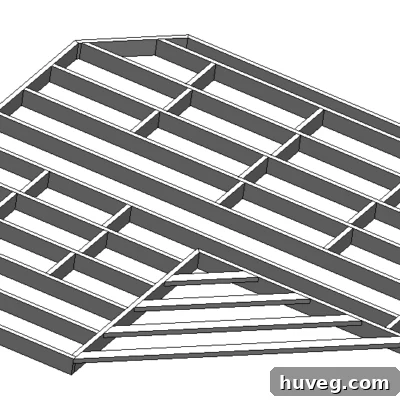
With the outer frame stable and elevated, the next step involved installing the internal joists. I marked every 16 inches on center along the long sides of the frame and then inserted 2x6s at these points. This 16-inch spacing is a standard for deck construction, ensuring adequate support for the decking boards and preventing sagging. For longer spans where my 12-foot boards weren’t sufficient, I added intermediate blocking a few feet from the end to provide a solid connection point for the abutting joists. Having an extra set of hands for this stage, especially when maneuvering long pieces of lumber, can make a significant difference.
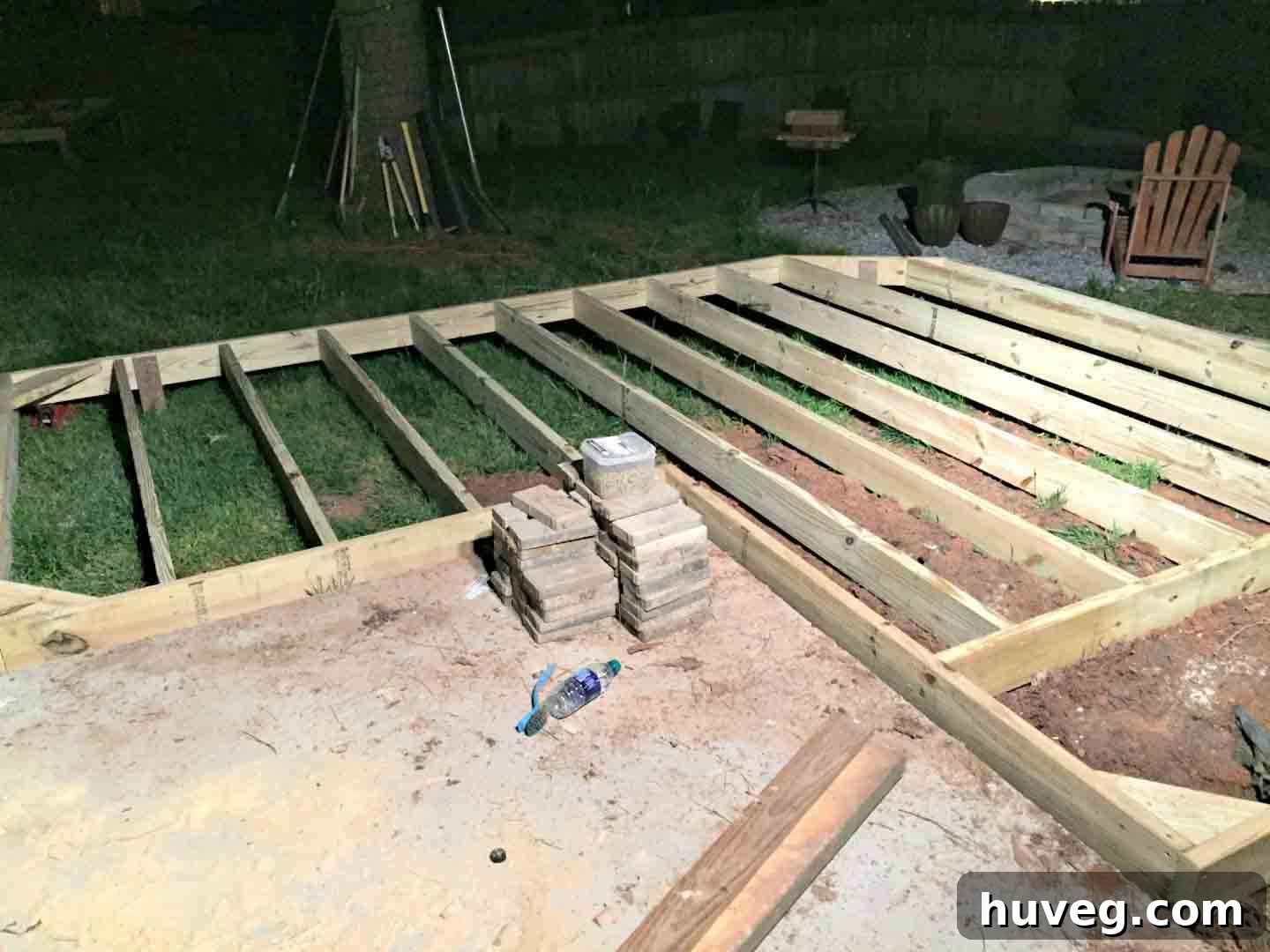
For all corner connections and in areas where a 4×4 post was used to elevate a section of the deck, I used self-tapping structural screws. I learned from earlier steps and opted for fasteners that eliminated the need for pre-drilling, streamlining the process. For the remaining joist connections, I used self-tapping 3 1/8-inch fasteners, again emphasizing efficiency and durability. Additionally, where I felt it was applicable and sufficiently elevated from direct ground exposure, I added stainless steel brackets or joist hangers to further reinforce the connections. While these hangers provide excellent structural support, it’s always wise to avoid them in areas of constant direct ground contact unless they are specifically rated for such conditions, to prevent moisture accumulation.
Note: As a DIY enthusiast and not a professional contractor, I always recommend homeowners undertake thorough research and, if uncertain, consult with a qualified structural engineer or local building inspector. While this ground-level deck is designed for stability and durability, large construction projects always benefit from multiple perspectives and adherence to local building codes. This guide reflects my personal experience and research, but every build site is unique. Always prioritize safety and structural integrity.
Advanced Moisture Management and “Waterproofing” Your Deck
When it comes to outdoor wood structures, the real enemy isn’t just rain, but persistent moisture that can lead to rot, mold, and decay. “Waterproofing” a deck is less about creating an impenetrable seal and more about implementing effective moisture barriers and drainage solutions to help the wood dry out quickly and thoroughly. While rot is a natural process for organic materials, our goal is to significantly slow it down. A multi-pronged approach offers the best protection:
- Utilizing Ground Contact Lumber: As discussed, this is the first line of defense for any wood component within six inches of the ground or in direct contact with concrete or soil. ✔️
- Installing Landscape Fabric and Gravel Underneath: This critical step promotes drainage, suppresses weeds, and creates a clean, dry environment beneath the deck. ✔️
- Sealing Cut Ends of Joists and Beams: While not initially captured in a photo, applying an end-grain wood preservative or sealant to all freshly cut ends of pressure-treated lumber helps prevent moisture absorption, which is often where decay begins.
- Applying Flashing Tape to the Frame: This protective membrane creates a barrier between the deck boards and the top of the joists, preventing water from pooling in these vulnerable areas and wicking into the wood. ✔️
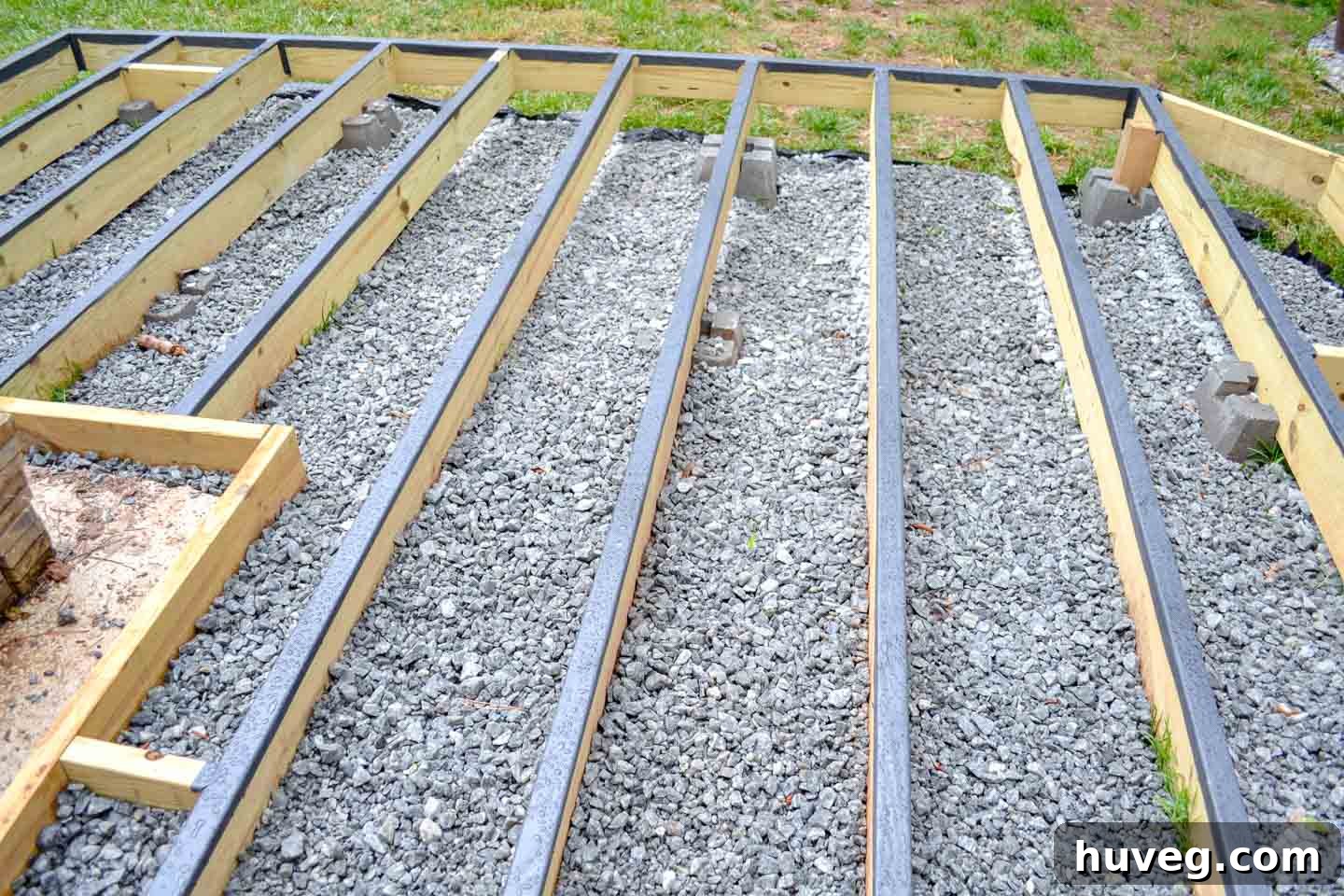
After carefully positioning the deck blocks and ensuring they were properly seated in excavated areas, we created a protective bed using landscape fabric and a layer of gravel. My partner, K, handled much of the heavy lifting for the gravel, ensuring a consistent layer across the entire footprint of the deck. This gravel bed not only facilitates excellent drainage but also prevents vegetation from growing up through the deck, further minimizing moisture contact with the wood structure. We later thinned out some of the gravel to use for an adjacent shed, but the principle of robust drainage beneath the deck remained paramount.
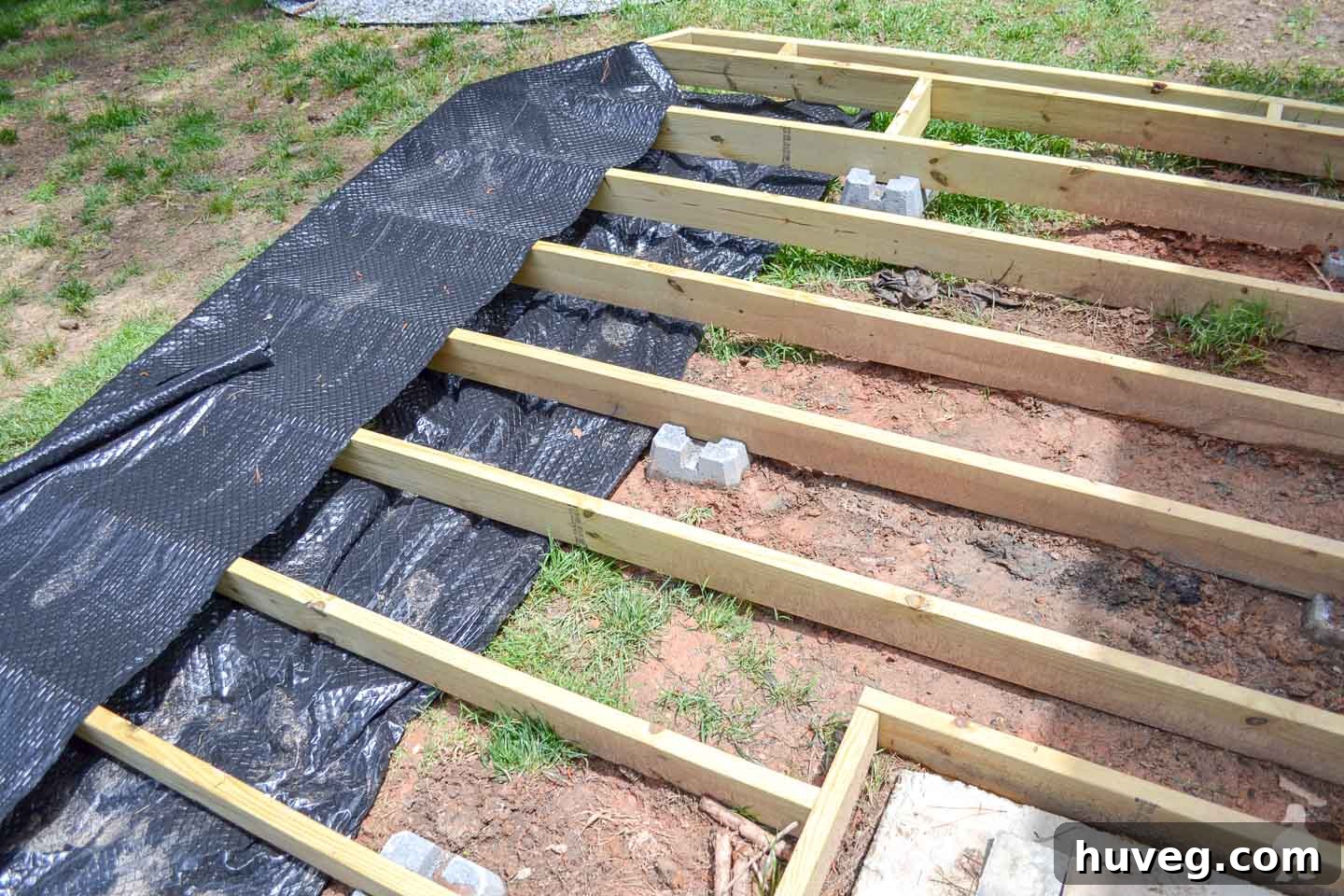
With the landscape and drainage layer complete, I turned my attention to adding more structural braces to reinforce the frame, particularly in areas that would experience greater loads or stress. Following this, I began the application of flashing tape – a critical step for long-term moisture protection.
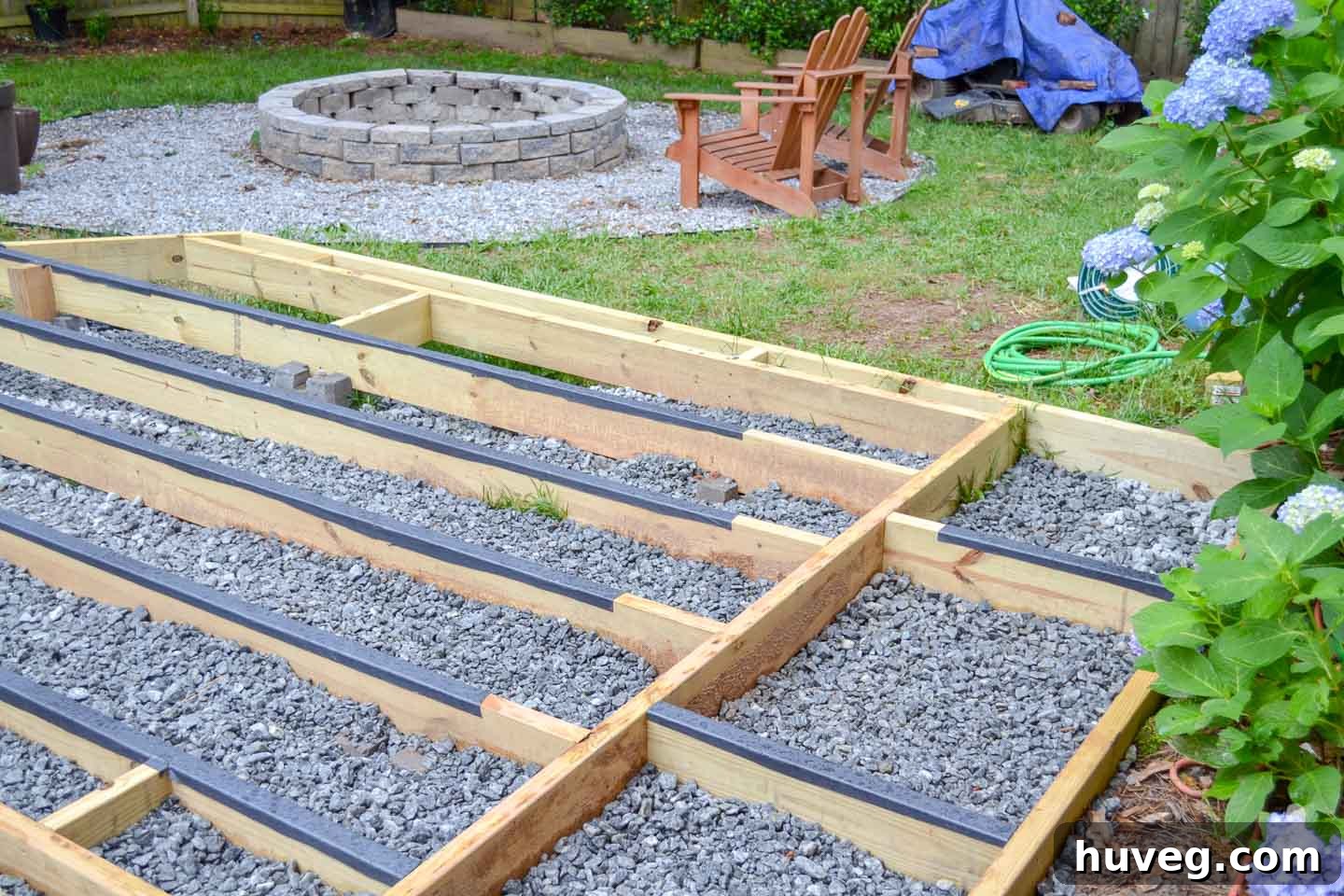
For flashing tape to adhere properly and effectively, the wood surface must be clean and dry. This proved to be a challenging task, as spring in Georgia often brought unpredictable weather patterns – days of threatening rain, intermittent showers, or sudden scorching sun. Planning outdoor projects around such volatile conditions required flexibility and patience.
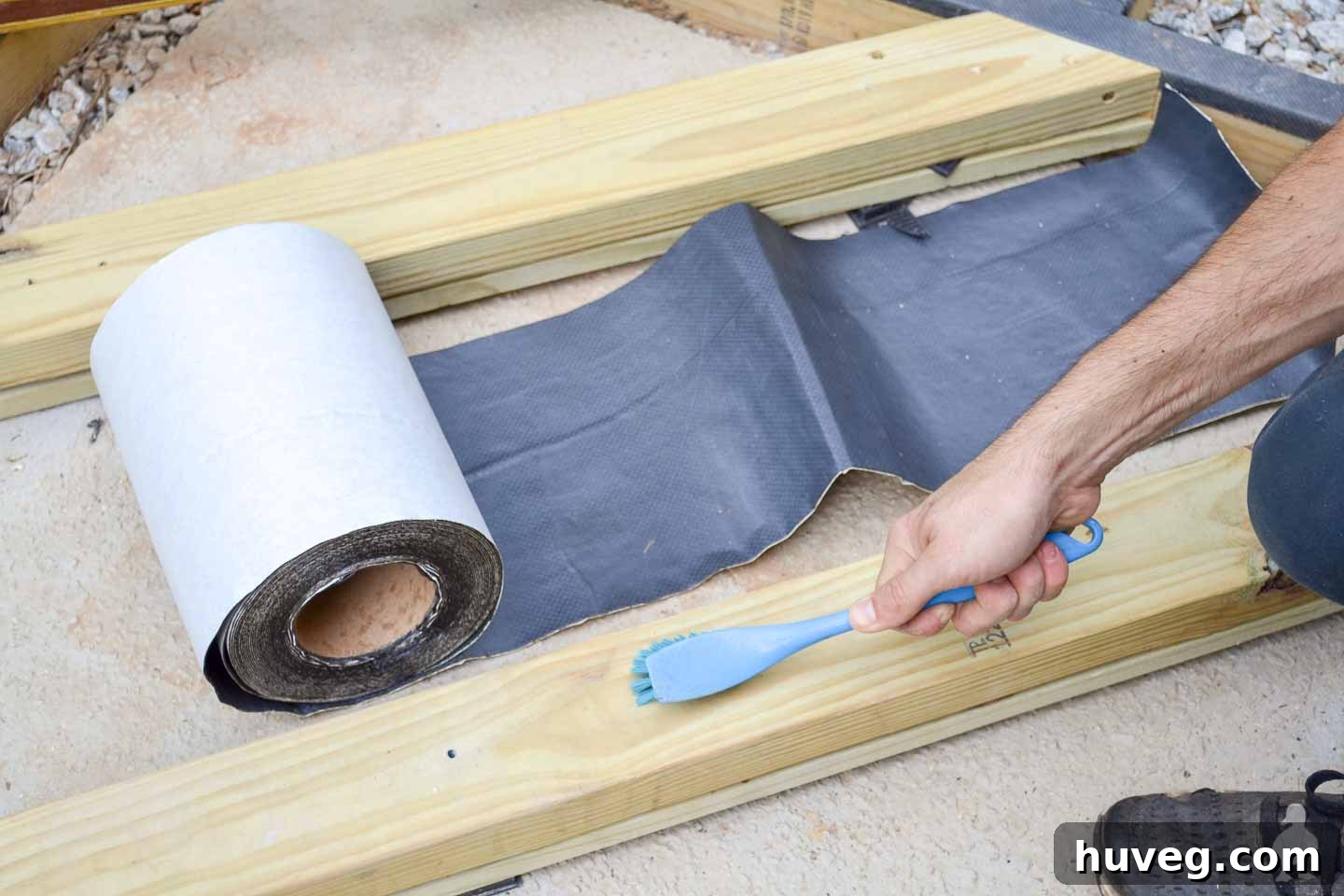
Whenever rain caused dirt to splash onto the lumber, we had to wait for the wood to thoroughly dry before cleaning the surface. A simple, inexpensive dish brush, previously repurposed for other outdoor tasks, proved highly effective at quickly removing any accumulated dirt or debris, ensuring optimal adhesion for the flashing tape.
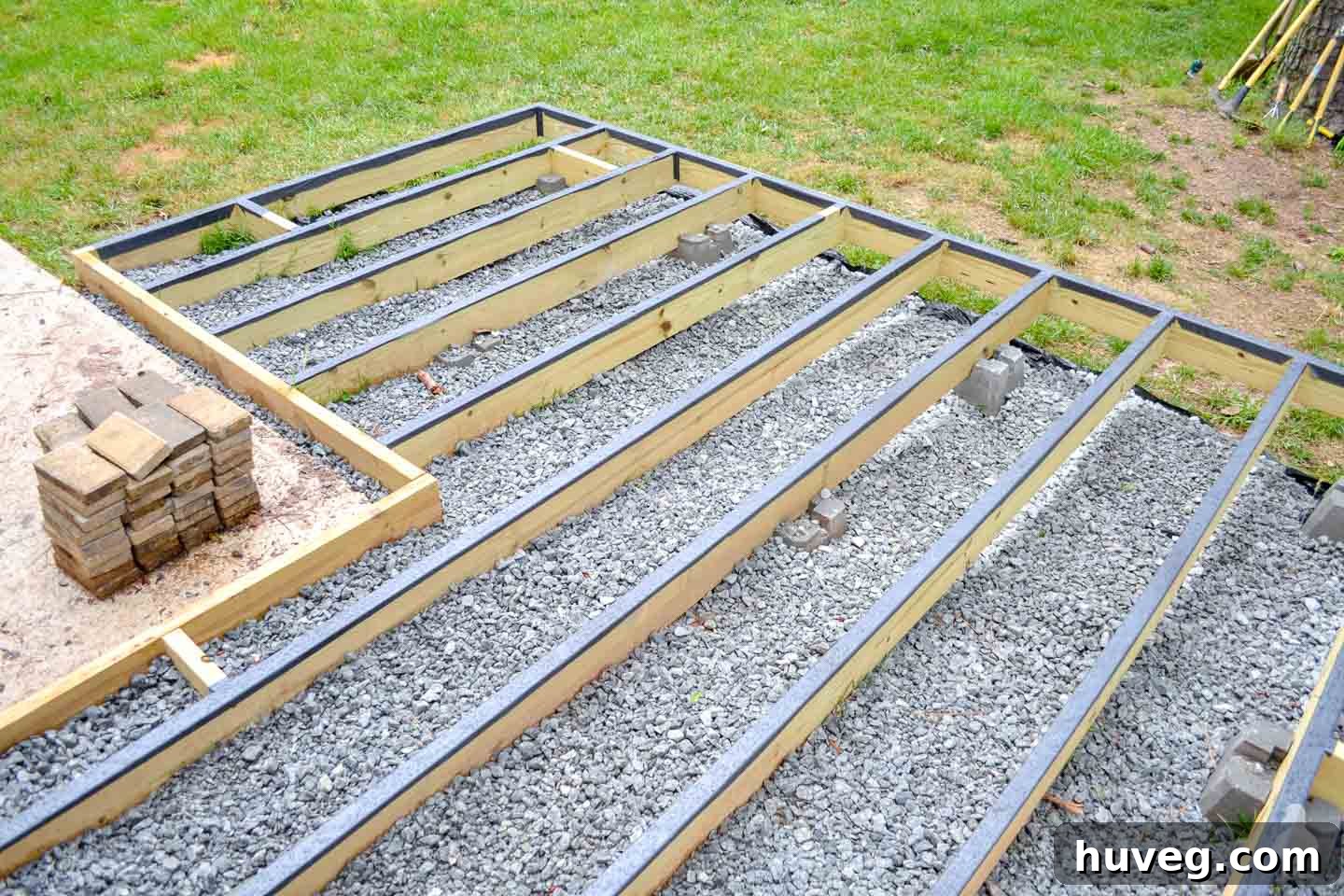
The intermittent weather necessitated a flexible approach to the construction sequence. We often found ourselves juggling tasks – spreading gravel, applying flashing tape, and installing additional cross-braces between joists – seizing any dry window to accomplish whatever step was most feasible at that moment. This adaptability is often key to successfully completing large outdoor DIY projects.
Seamlessly Integrating a Deck Over an Existing Concrete Patio
One of the more complex aspects of this floating deck build was integrating a section over an existing concrete patio. My research led me to proven techniques, particularly those highlighted by resources like Family Handyman, which advocated for the use of wood “sleepers” screwed directly into the concrete. Once these sleepers were securely fastened and aligned with the main deck frame, they would provide a continuous and level surface for the decking boards.
A critical consideration when building over concrete is managing moisture and ensuring proper drainage. I proactively designed the new frame to maintain a deliberate gap between its outer perimeter and the existing patio’s edges. This gap was filled with gravel, further enhancing drainage. Additionally, we drilled a dedicated drainage hole in one corner of the patio and fitted it with a plastic pipe. This foresight not only ensures water runoff but also provides a potential conduit for future electrical wiring out into the yard – a “plan-ahead” feature for potential future enhancements.
My research consistently highlighted the importance of a moisture barrier between any wood component and the concrete patio. While I initially sought a thin composite trim product for this purpose, the thinnest option I could find proved too thick to align the 2×4 sleepers with the rest of the deck frame. The perfect solution, it turned out, was readily available: plastic shims.
To achieve the desired height and provide a robust moisture barrier, I strategically stacked 2x4s on top of 1x4s (both Ground Contact lumber, naturally!) and cut them to length, including precise 45-degree angles where necessary. The plastic shims then allowed for meticulous elevation adjustments, ensuring a perfect match with the main deck frame’s height.
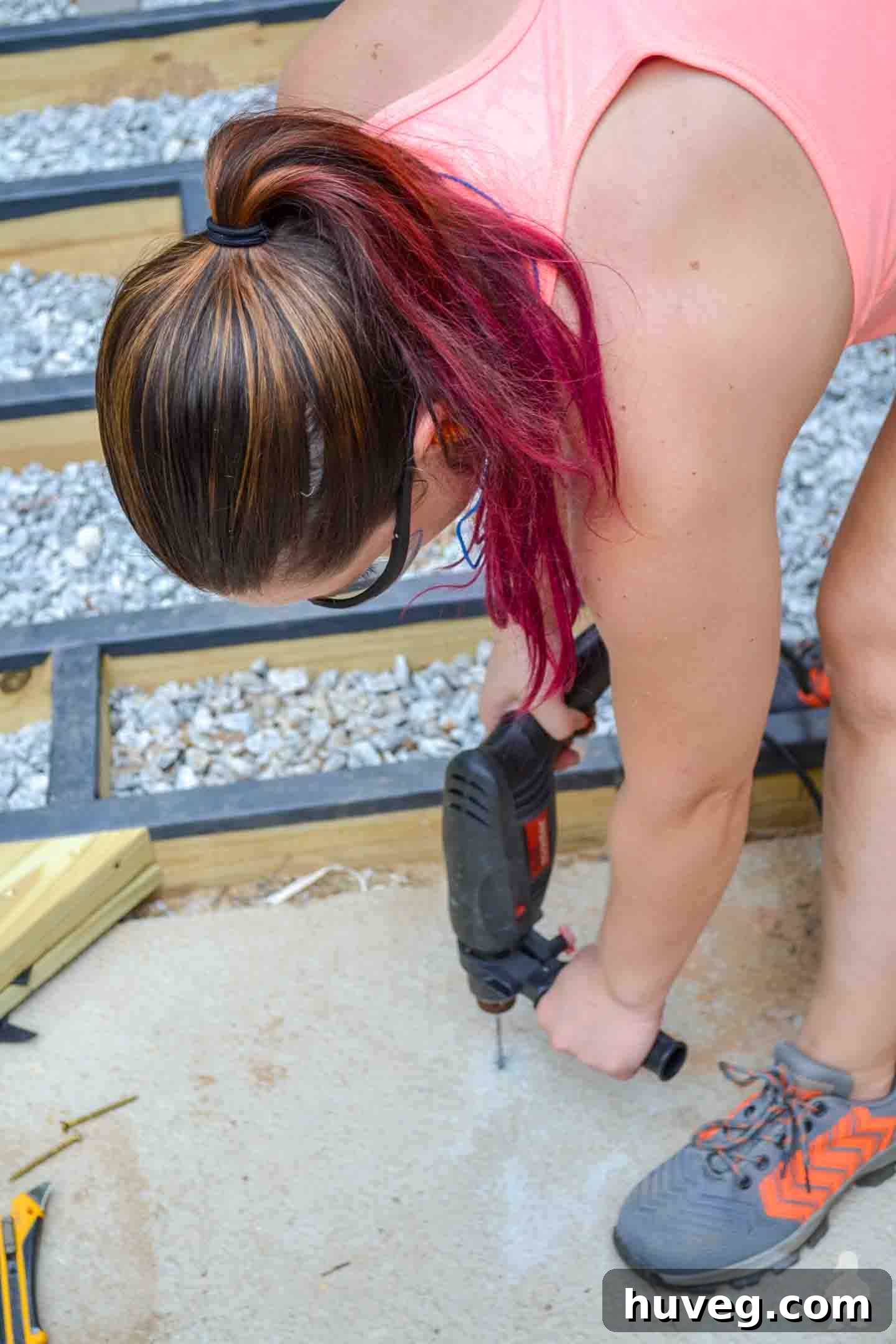
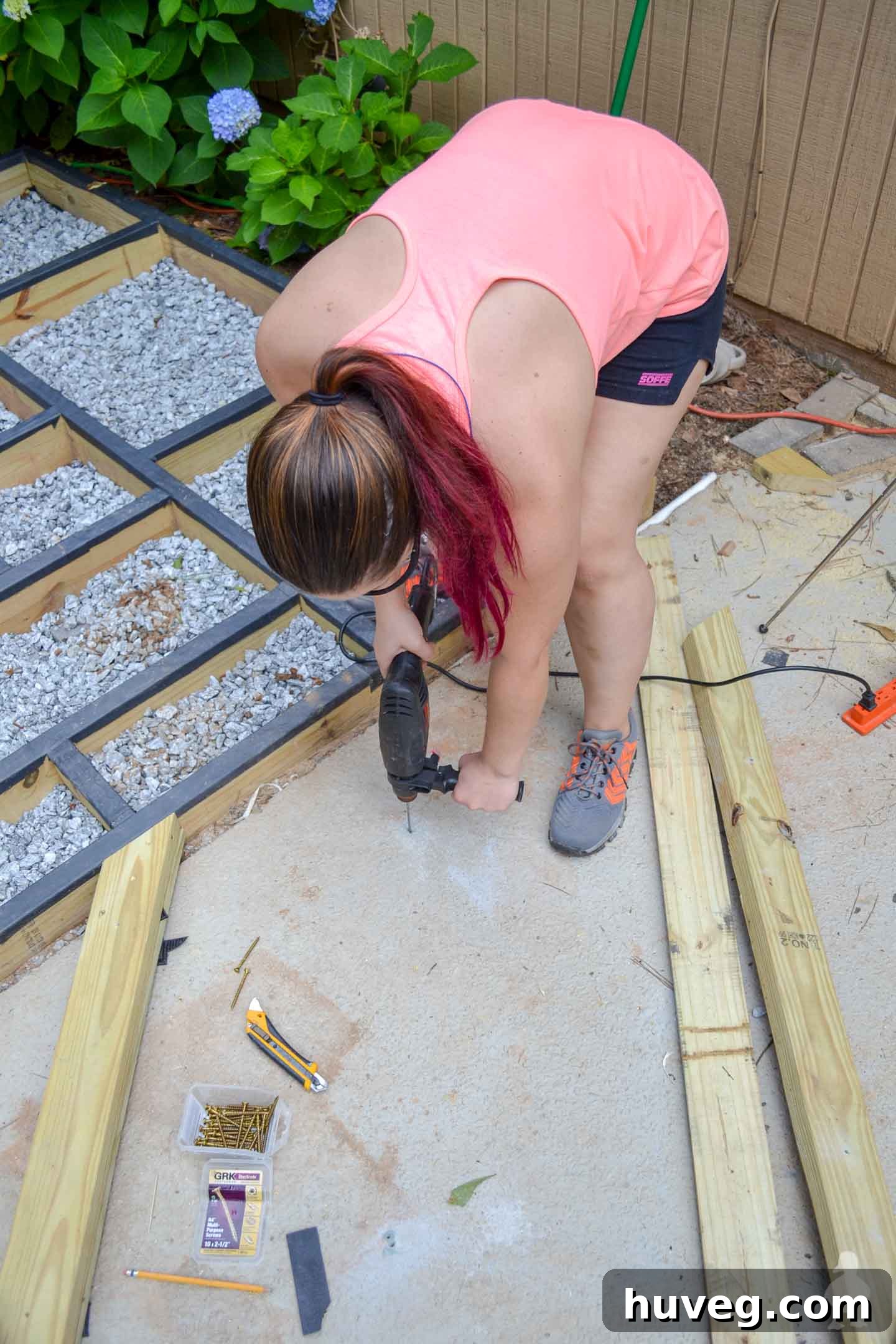
The process of drilling into concrete requires a specialized tool: a hammer drill paired with a masonry drill bit (often supplied with concrete screws). I developed a systematic approach for precise alignment: first, I positioned the 1×4 sleeper, marked screw locations every two feet, and pre-drilled through the wood with a standard drill bit. Then, using the masonry bit, I drilled through the pre-drilled wood hole and into the concrete patio. This effectively marked the exact spot for the concrete screw, allowing me to then remove the wood and complete the deeper concrete drilling with just the hammer drill.
Pro Tip for Concrete Drilling: Drill in short bursts and slightly deeper than the length of your screw. Periodically withdraw the drill bit to clear dust from the hole. Drilling a bit deeper ensures that residual dust at the bottom of the hole won’t prevent the screw from seating fully and securely.
Once the 1×4 sleepers and supporting plastic shims were securely fastened to the patio, the 2x4s were stacked on top and screwed into the 1x4s, completing the sleeper assembly.
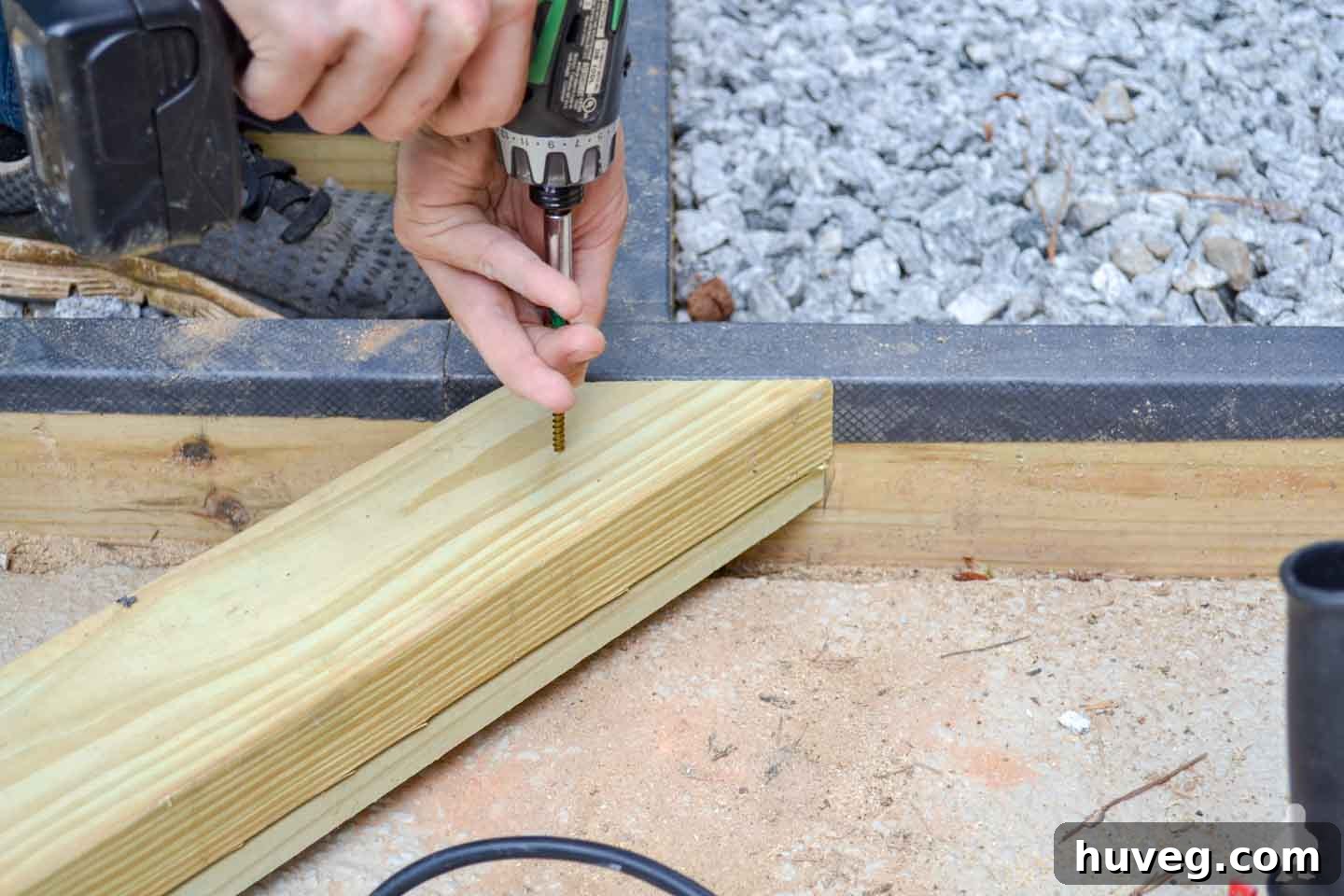
In certain areas, multiple shims were necessary to achieve the exact height. The overarching objective was precise alignment between the patio sleepers and the main deck frame, creating a perfectly continuous surface for the decking.
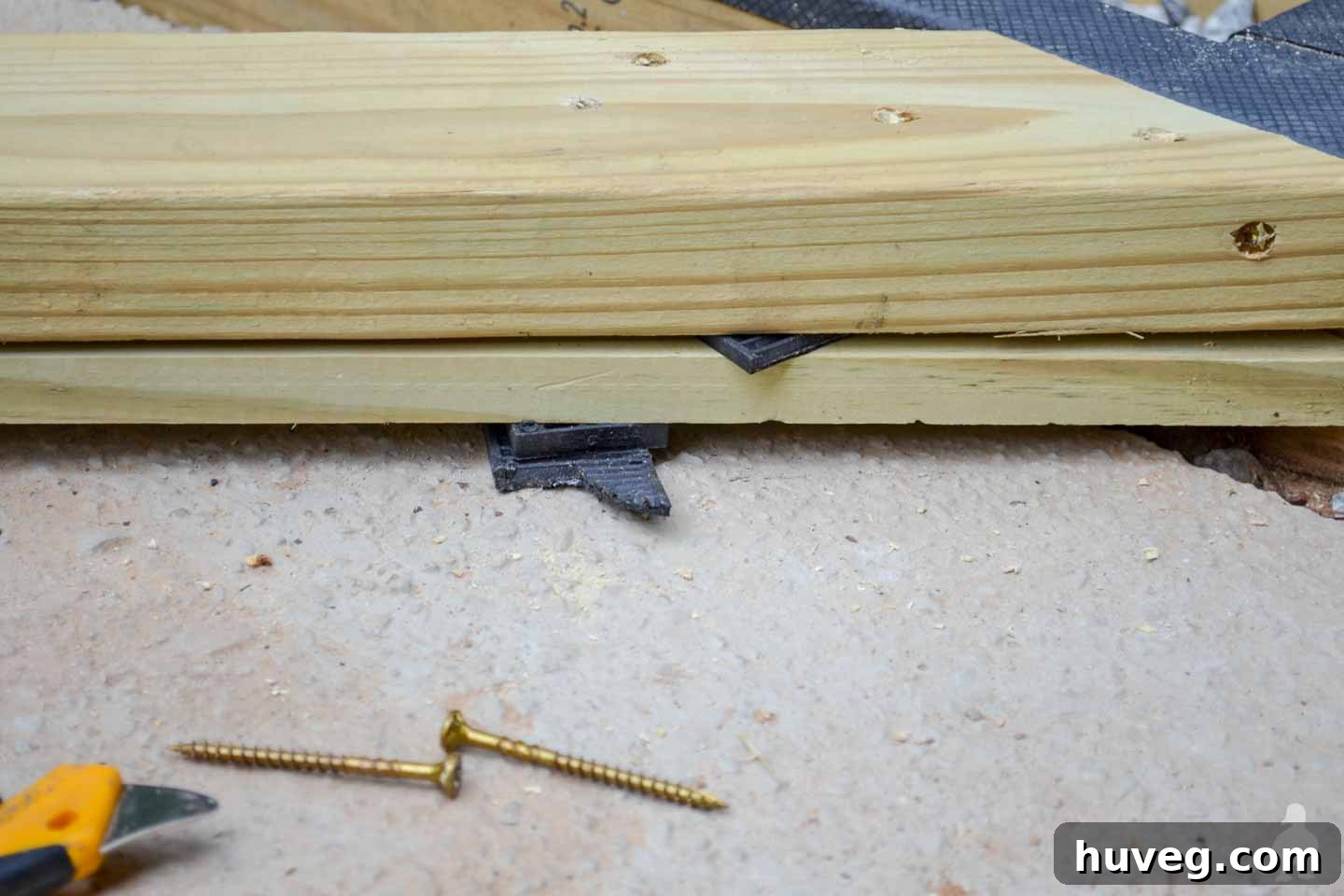
You can observe in the image below my initial attempt to use cut composite trim as spacers. While the idea was sound, the material simply didn’t provide the necessary flexibility for precise height matching. Lesson learned, and I now have a long piece of plastic trim to creatively incorporate into another project – perhaps a kitchen hack!
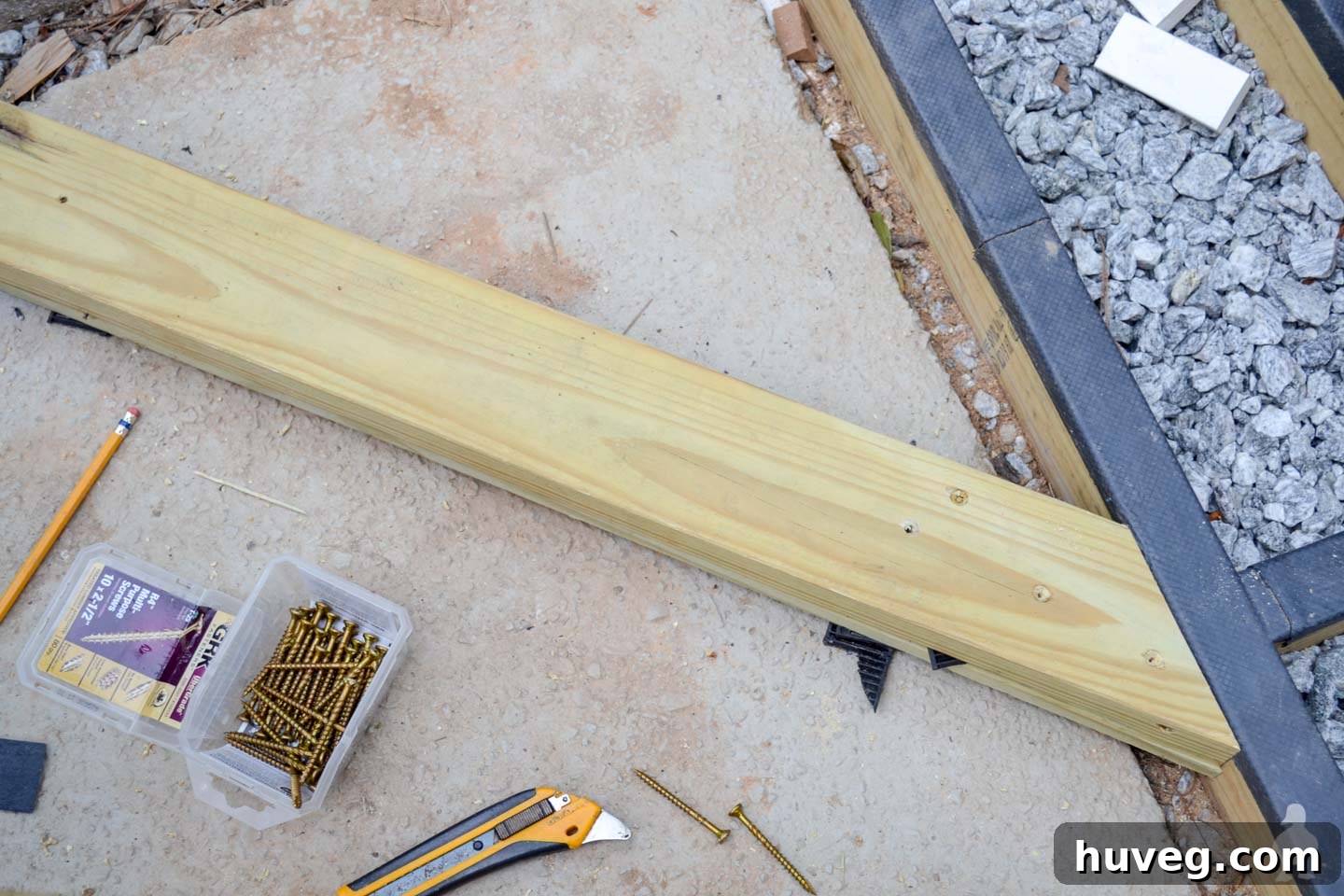
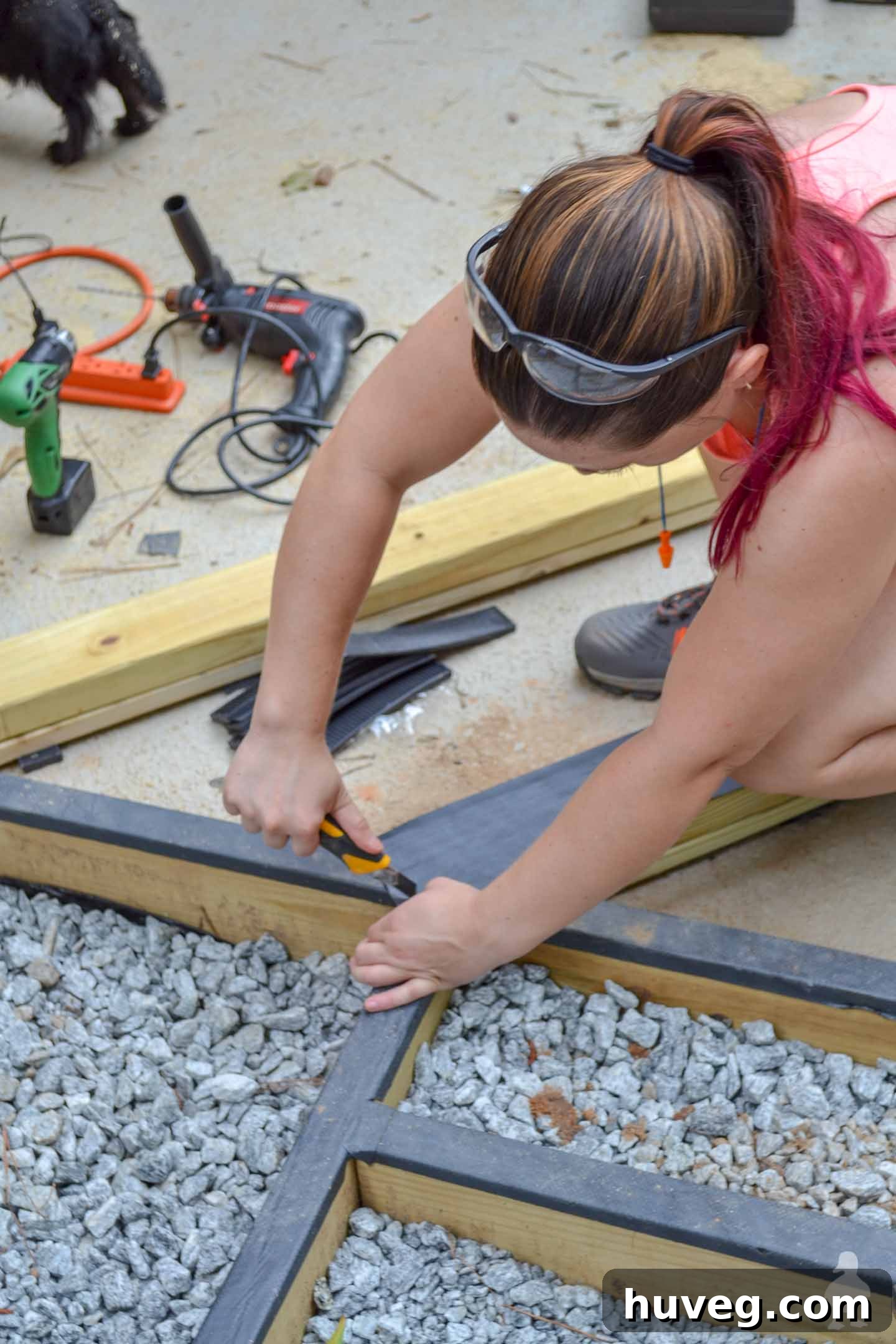
Once all the concrete sleepers were securely in place and leveled, another layer of flashing tape was applied over them. For these wider boards, I cut the flashing tape roll in half, rather than thirds, ensuring complete coverage and protection across the entire width of the sleepers.
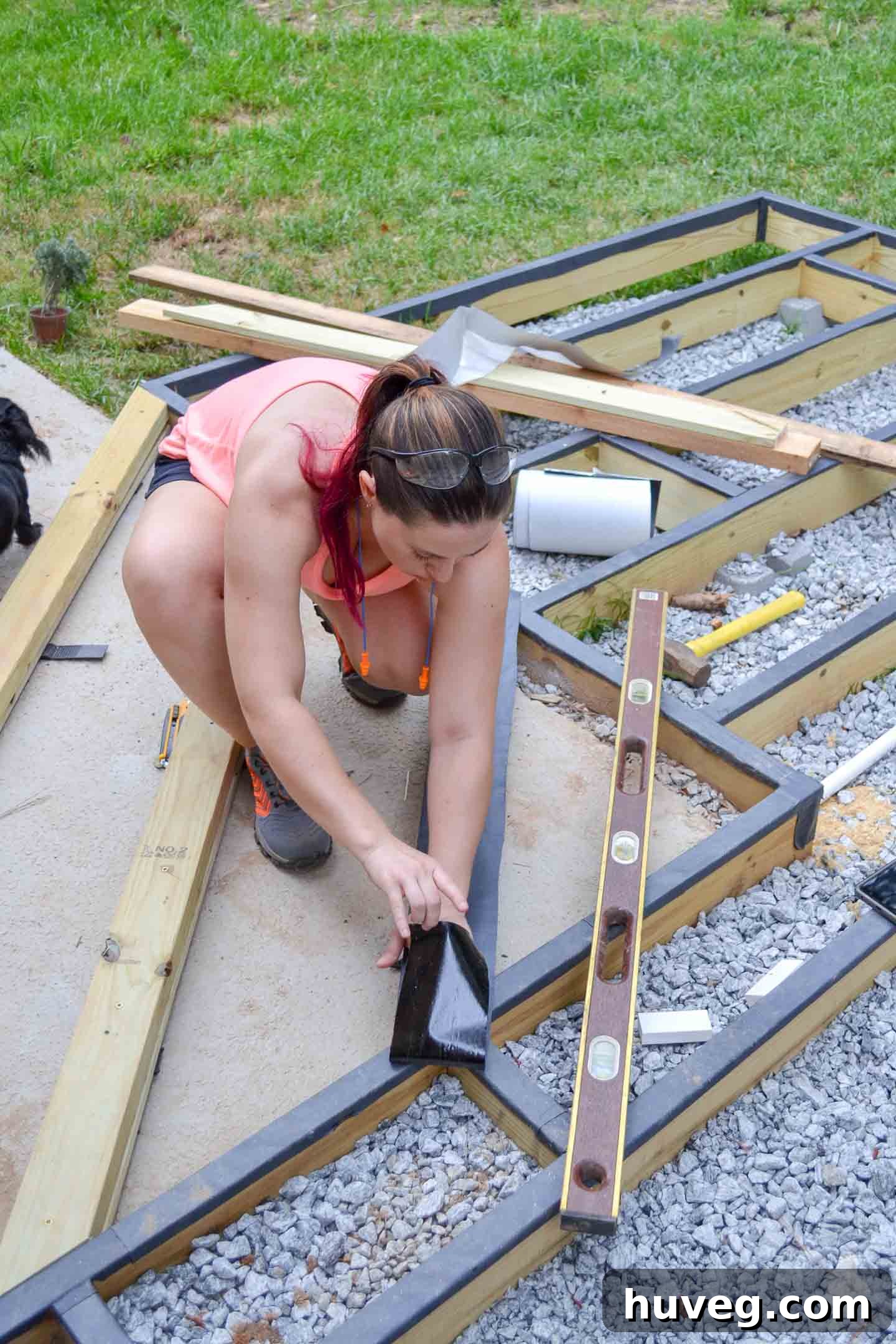
I also took the extra step of wrapping flashing tape around corners and over any joints or screw holes where I suspected moisture could potentially penetrate. This meticulous attention to detail at every potential entry point for water significantly enhances the deck’s overall moisture resistance and extends its lifespan.
And with that, the complex but crucial stage of framing and moisture protection was complete! The deck now boasts a solid, level, and well-protected foundation, ready for the next exciting phase: adding the decking boards. In the upcoming post in this series, I’ll walk you through the entire decking installation process, including a clever tool that made spacing boards a breeze. While laying the decking diagonally required a little extra effort, the final aesthetic impact is, in my opinion, absolutely worth it!
Watch the Video Guide
For a visual walkthrough of these steps, be sure to check out the accompanying video. It offers practical demonstrations and tips that complement this written guide.
Subscribe to my YouTube channel for more DIY tutorials!

Thank you for following along on this DIY floating deck adventure! I hope this detailed guide on framing and moisture management has been incredibly helpful. If you found value in this post, please consider subscribing for future updates, so you don’t miss the next stage of our deck build. There will be a few other exciting DIY projects interspersed with the deck series, offering a welcome break from what has felt like an all-encompassing deck focus for the past month! Stay tuned for more transformations and practical tips.
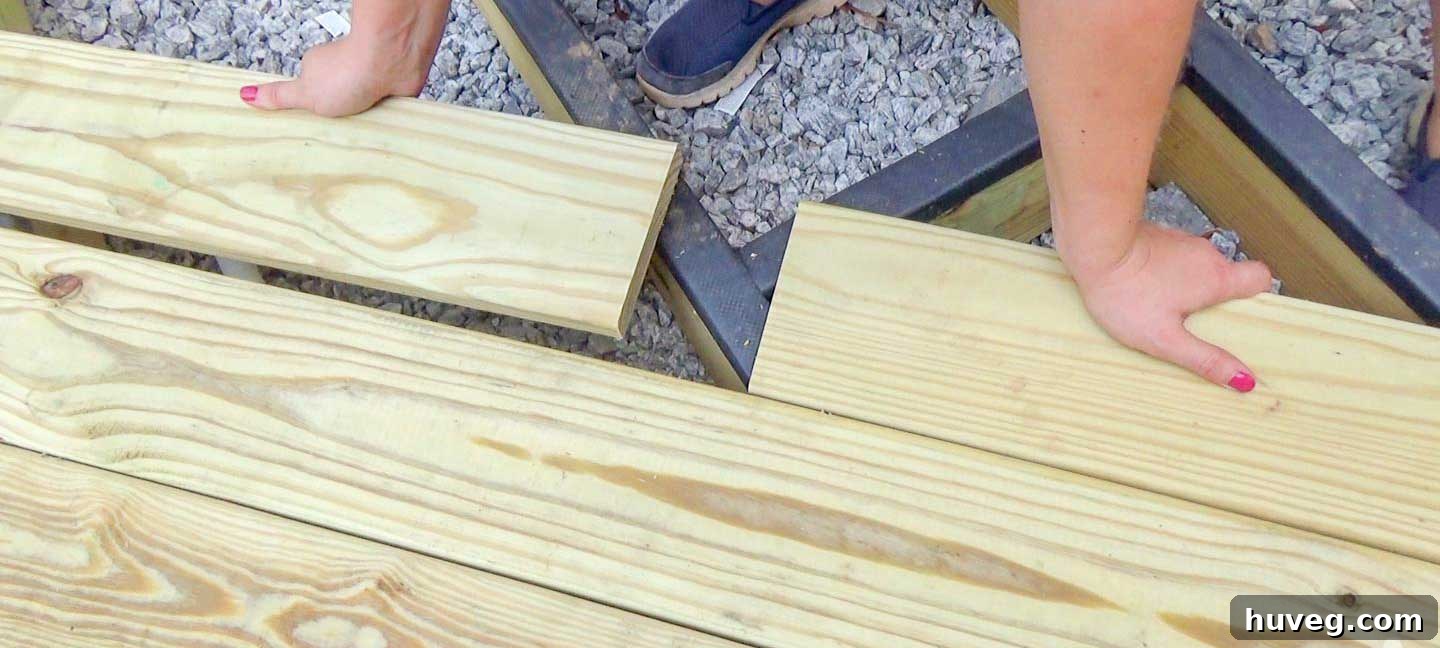
DIY Floating Deck Series