From Sketchpad to Icon: The Logo Creator’s Quest

The Unseen Battle: Mastering Your Own Logo and Website Redesign Journey
Ah, logos. For anyone deeply immersed in the intricate world of design, witnessing the seamless integration of a meticulously crafted logo and a cohesive website design can be an incredibly satisfying experience. It’s that magical moment when a brand’s identity truly comes alive, resonating with its audience. However, even seasoned design professionals often face their ultimate test: becoming their own client. Lately, I’ve found myself embroiled in a design dilemma, navigating the complexities of a new blog design with the most challenging client imaginable – myself. The ongoing struggle to finalize my own blog’s logo and overall redesign has proven to be a profound lesson in patience, self-criticism, and the often-unpredictable nature of the creative process.
Indeed, the client I’m referring to is none other than the person writing this very article. I’ve become my own most demanding, indecisive, and, at times, infuriating client. This personal odyssey through a complete blog overhaul has offered a unique, candid perspective on the design process, revealing both its inherent joys and its unexpected frustrations. It’s a journey many creative professionals can relate to – the paradox of effortlessly designing for others, yet struggling to apply the same principles to one’s own vision.
From Self-Taught to Sweet Theory Designs: My Web Design Genesis
For several months now, my primary professional focus has been the ambitious task of designing a fresh new look for this very blog. Many of you, my loyal long-time readers, will recall that for the past few years, I’ve been diligently crafting bespoke blogs and small business websites for a select clientele under the banner of Sweet Theory Designs. My entry into this dynamic field was entirely self-taught, a journey paved with countless hours spent experimenting, learning, and, frankly, breaking my own site more times than I care to admit. Each broken piece, however, was a crucial, hands-on lesson, deepening my understanding of the intricate mechanics of web development and design.
Through what felt like a series of serendipitous, if not entirely random, events (as I previously detailed in a prior rambling post), Sweet Theory Designs (SWTD) was conceptualized and born. Interestingly, I made the conscious choice to add the “W” into SWTD, a decision that, in hindsight, perhaps didn’t fully consider the resulting initials – a minor oversight in the grand scheme of brand naming, I suppose! Nevertheless, teaching myself the nuances of coding, graphic design, and web architecture evolved into an activity I genuinely enjoy and find profoundly rewarding. The logical next step was to extend these newfound skills to others, helping them translate their unique visions into compelling, functional online presences that truly reflect their brand. Due to my busy schedule, I currently limit myself to one or two clients at a time, allowing me to dedicate ample focus and creativity to each project. The transformative process of taking abstract ideas and molding them into a tangible design that perfectly encapsulates a client’s personality and brand essence is incredibly gratifying. That pivotal moment when all the elements align and truly “click” into a cohesive, impactful design remains one of my absolute favorite aspects of this profession.
Yet, as I’ve candidly confessed, reaching that elusive “click” moment for my own new blog design has proven to be an unexpected uphill battle, testing my resolve and pushing my creative boundaries.
The Enduring Challenge: Crafting the Perfect Logo for Your Brand
For me, the technical aspects of web development – the intricate layout adjustments, customizing templates and plugins, and fine-tuning site functionality – are the truly enjoyable parts. These are the tasks where I feel most at ease, where my problem-solving skills shine, and where creativity flows freely. The element that consistently presents the greatest challenge, however, is the logo. It is, without a doubt, a critical component, serving as the visual cornerstone of the entire site’s design and brand identity. A logo is far more than just a decorative image; it’s the immediate, memorable face of your brand, instantly communicating your values, style, and unique selling proposition to your audience. Its impact on brand recognition and recall cannot be overstated.
Because the logo has been the most time-consuming hurdle in this personal redesign project, I’ve often found myself gravitating towards the more “fun” web development tasks while patiently awaiting that elusive spark of logo inspiration. When inspiration finally does strike, it often arrives as a small, nascent idea – perhaps a particular texture, a unique color palette, or a striking typographic direction. My process then involves rigorously exploring this idea from multiple angles, testing its viability, scalability, and aesthetic appeal across various mock-ups. Sometimes, I sense I’m on the verge of a breakthrough, feeling that “it’s almost there.” At other times, the creative block becomes so pervasive that the only effective solution is to step away from the computer entirely. A brief respite, perhaps to engage in a completely different creative outlet like painting or simply taking a walk, helps to reset my mind and restore a much-needed sense of productivity. This cyclical pattern of intense focus, creative frustration, and eventual breakthrough is an inherent, albeit sometimes challenging, part of the design journey, especially when the stakes are personal.
The Iterative Nature of Design: An Analogy to Interior Decorating
The logo design process, much like designing an entire room or any creative endeavor, is fundamentally iterative. You introduce an element, evaluate its impact on the overall composition, perhaps remove or modify another, and continuously refine until all components coalesce into a harmonious, functional, and aesthetically pleasing whole. Expecting immediate perfection is not only unrealistic but also counterproductive to the natural ebb and flow of creative thought. The most effective approach is to embrace this fluid, experimental process, allowing one idea to naturally lead to the next, fostering an organic evolution of the design. This “go with the flow” mentality, coupled with a willingness to experiment and iterate, is essential for navigating the often-winding path to a truly successful and resonant design outcome.
Admittedly, this particular redesign is taking me considerably longer than previous iterations. This is primarily because I am committing to a completely new font scheme and aiming for a radically cleaner, more stripped-down layout. While I have tweaked my logo a few times in the past, most of those initial evolutions were settled relatively quickly, typically within the first year of establishing “The Ugly Duckling House” blog. These early changes were often minor refinements, building upon an existing foundation rather than a complete overhaul.
Tracing Brand History: The Evolution of My Blog’s Logo
Reviewing the historical progression of my blog’s logo offers a fascinating glimpse into the evolution of my personal brand, design philosophy, and even the maturity of my aesthetic sensibilities. Each iteration represented a conscious step forward, adapting to changing design trends and a refined vision for the site’s identity. This visual journey underscores that branding is rarely a static endeavor but rather a dynamic, living process.
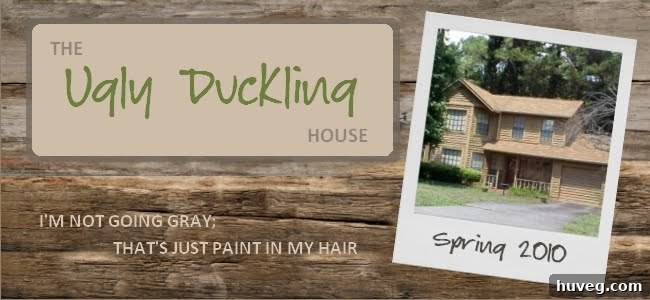
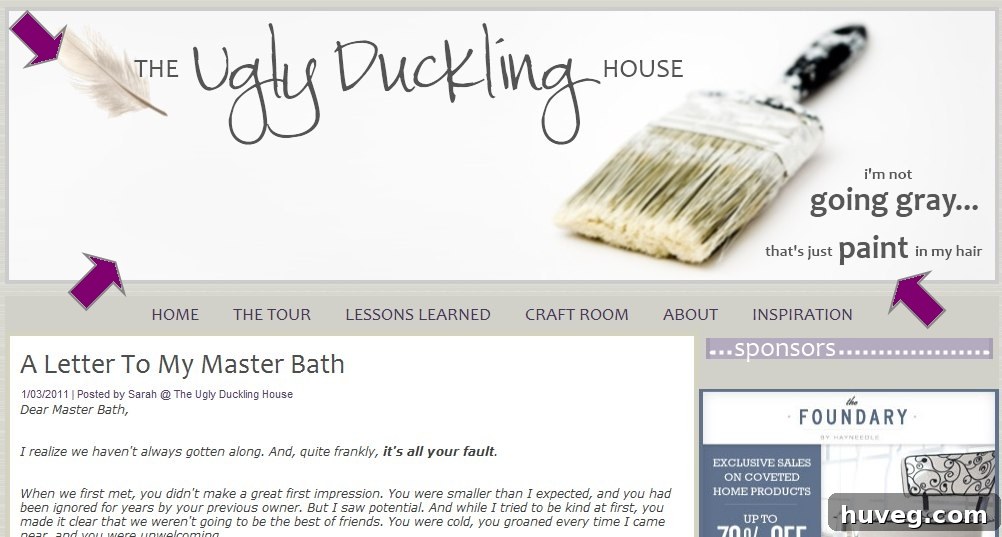
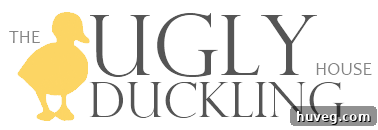
The most significant tweak to the core visual identity occurred when I thoughtfully modified the outline of the duckling itself. This updated duckling motif, which remains largely what it looks like today, became a stable and satisfying element that I was content to retain for an extended period. It struck the right balance between distinctiveness and simplicity. Despite numerous subsequent layout changes to the overall blog, adapting to new technologies and aesthetic preferences, the core logo itself persevered as a consistent brand anchor, providing continuity amidst evolving design trends.
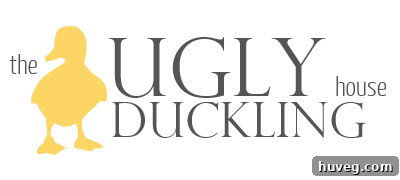
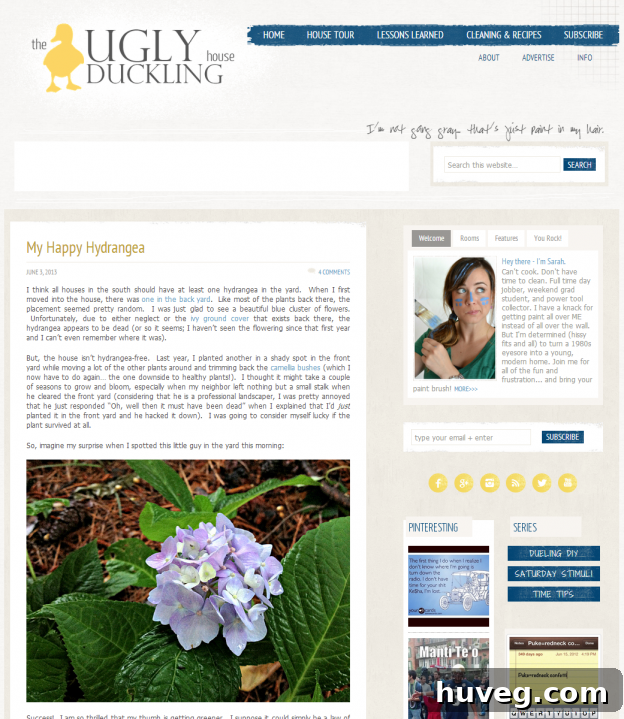
This year, however, the desire for a truly transformative change became undeniable. The vision for the new blog is something significantly cleaner, fresher, and more contemporary – a true reflection of evolving design sensibilities and the blog’s refined direction. After grappling with this design for over six months, I decided it would be insightful and perhaps even reassuring to invite you, my esteemed readers, behind the curtain. This transparency offers a candid, unfiltered look at the often-unseen realities of the design process – a journey that is both exhilaratingly fun and, at times, profoundly infuriating. It’s a testament to the fact that even for professionals, creative work often involves more struggle than glamour.
Behind the Brand: My Logo Design Process Unveiled for Success
While every designer naturally cultivates their unique workflow, my personal logo design process, whether for a client or for my own brand, typically follows a consistent, structured methodology. This systematic approach helps in navigating the inherent complexities of creative development and ensuring a strategic outcome.
1. Defining Brand Identity: Keywords, Values, and Core Inspiration
The foundational and arguably most crucial step in any logo design, or redesign, is the meticulous identification of keywords that authentically resonate with the brand’s core identity. This isn’t merely about surface-level adjectives; it encompasses a holistic understanding of the brand’s personality, its unique value proposition, target audience, and overarching message. I delve into potential color palettes, descriptive terms that evoke the desired feeling (e.g., “rustic,” “minimalist,” “vibrant,” “authoritative,” “playful”), and even elements from other successful websites or logos that I find particularly inspiring. These diverse sources – from competitor analysis to abstract concepts – serve as a crucial wellspring of initial inspiration, shaping the conceptual direction and ensuring the design is strategically aligned with brand goals.
2. Strategic Retention: Honoring or Evolving Legacy Elements
When embarking on a logo redesign, a critical early decision involves assessing whether any existing elements of the original brand identity should be carried forward. This strategic choice is vital for balancing familiarity and continuity with fresh innovation. It determines how much of the existing brand equity will be retained. In my current endeavor for “The Ugly Duckling House,” I’ve made the conscious decision to retain two key elements: the distinctive yellow hue and the familiar outline of the duckling. These elements are integral to the established identity of the blog and resonate with its long-time audience. However, beyond these chosen anchors, every other aspect of the logo is considered “fair game” for complete reimagination, offering immense creative freedom for modernization and a refreshed aesthetic.
3. Sketching the Vision: Layout, User Experience, and Spatial Planning
While some web designers might consider this step premature in the logo design phase, I find immense value in sketching out the overall layout and user experience (UX) I envision for the entire website. This isn’t about pixel-perfect precision; rather, it’s about mapping out the spatial relationships and visual hierarchy, particularly for the crucial header area where the logo will reside. Understanding the general dimensions and contextual environment in which the logo needs to fit is paramount for its ultimate success and integration. For instance, my new layout is designed to comfortably accommodate a squarish or horizontally oriented logo. Conversely, a logo that is excessively tall would appear disproportionate and out of place when juxtaposed with other essential header elements, such as social media icons, primary navigation menus, or a search bar. This holistic approach ensures the logo integrates seamlessly into the broader site architecture, enhancing overall user experience and visual balance.
4. The Voice of the Brand: Thoughtful Font Selection and Typography
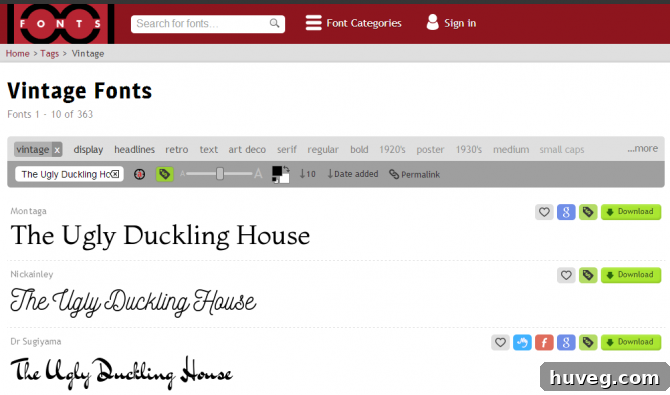
With a clear understanding of the logo’s intended dimensions and contextual placement (though nothing is irrevocably set in stone at this stage), the next crucial step is selecting appropriate fonts. Font choice is not merely an aesthetic decision; it’s a powerful tool for conveying brand personality, establishing tone, and enhancing readability. I meticulously choose a few fonts that align perfectly with the keywords and brand attributes identified in step one. For client projects, I primarily leverage Google Web Fonts due to their extensive library, high quality, and license-free usage, ensuring accessibility and compliance. Additionally, I frequently explore the “free for commercial use” fonts available on platforms like 1001 Fonts, appreciating their well-organized category structure which significantly streamlines the discovery process. Experimenting with different font pairings, weights, and letter-spacing can dramatically alter the perception of a logo, making this phase both challenging and creatively stimulating as it gives voice to the brand.
5. Iteration and Refinement: The Continuous Cycle of Creative Evolution
Finally, the most dynamic, hands-on, and often longest phase of the process begins: actively playing with the design elements. This involves an endless cycle of resizing components, repositioning textual and graphical elements, adding new graphical motifs, subtracting unnecessary details, and experimenting with various color combinations and shades. The process is inherently iterative: create, evaluate, refine, repeat, and refine again. This continuous experimentation, often involving multiple drafts and mock-ups, persists until that pivotal moment when I genuinely feel that I’ve “got something” – a design that truly resonates, feels inherently right, and effectively communicates the brand message with clarity and impact. As I’m currently experiencing firsthand, this phase can feel truly endless, demanding immense patience, resilience, and an unwavering commitment to achieving creative perfection. It’s in this crucible of repeated adjustments, critical self-evaluation, and persistent refinement that a truly compelling and enduring logo ultimately emerges.
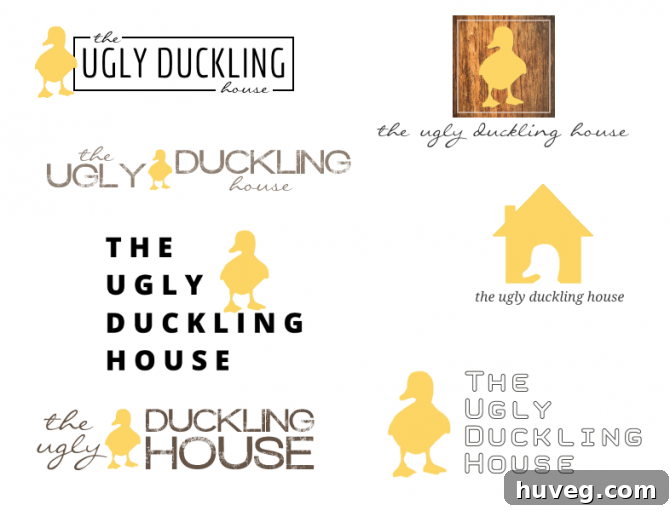
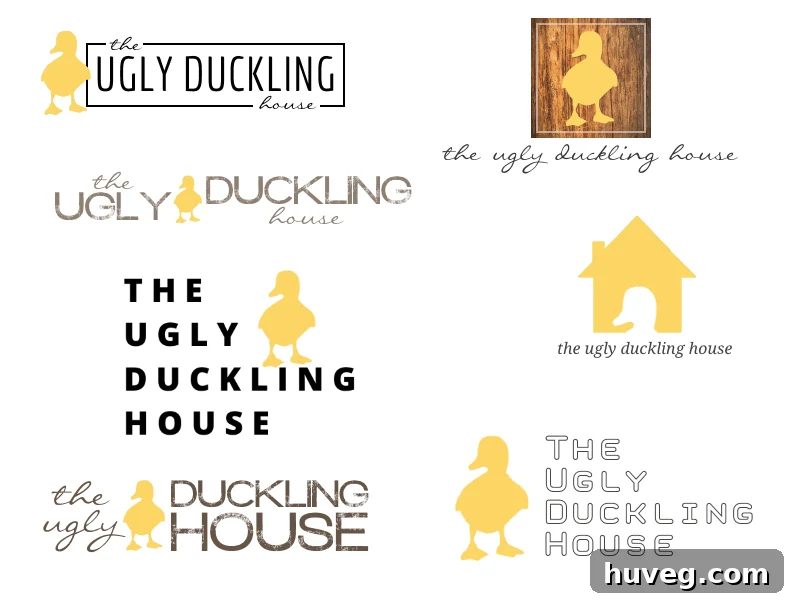
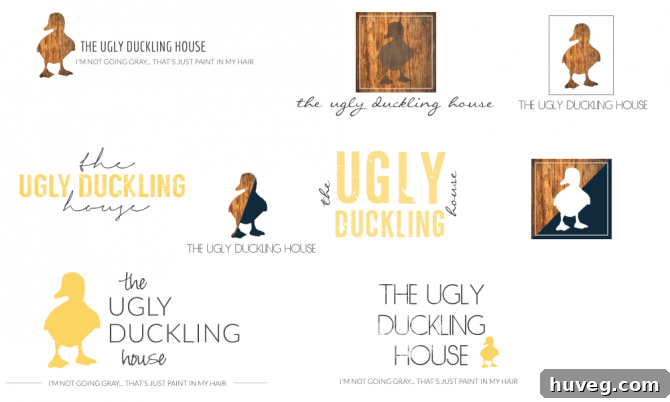
As these myriad iterations strikingly illustrate, the brainstorming and development phase for a logo can lead in countless, sometimes unexpected, directions. I anticipate that it will still be another month or two before I reach a point of satisfactory completion, where I can confidently put an end to the endless tinkering and declare the new logo ready. However, despite the ongoing challenges and occasional creative blocks, I feel an undeniable sense of progress, inching closer to that satisfying moment when every element finally aligns and truly “clicks” into place. It’s important to remember that design, at its core, is a deeply subjective art. This inherent subjectivity means that polling for public opinion, while often tempting and informative, doesn’t necessarily yield a definitive “right” answer. For this reason, I won’t be asking for your votes on these concepts; ultimately, I plan to trust my gut feeling and professional intuition on the final direction. So there you have it – a frank, transparent, and in-depth glimpse into the dynamic, sometimes tumultuous, but always rewarding process unfolding behind the scenes of this blog’s ambitious redesign.
I trust you all had a wonderful weekend filled with inspiration. Your regularly (or at least semi-regularly) scheduled DIY content will resume bright and early tomorrow!