Customizable Garage Wall System

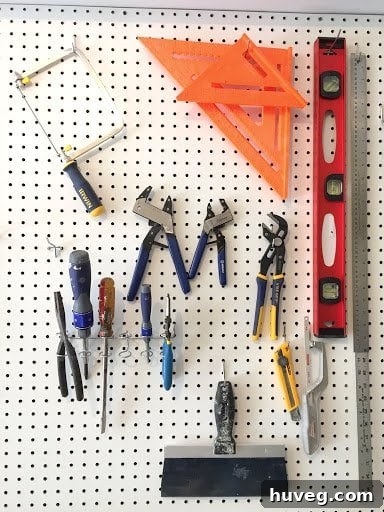
Transforming a cluttered, single-car garage into a highly organized and functional workshop doesn’t have to be a daunting task. In fact, with thoughtful planning and a commitment to smart storage solutions, you can dramatically improve your workspace, even if it’s compact. Recently, I embarked on just such a journey, converting my own cramped garage into an efficient DIY haven. While there are many exciting plans still in the pipeline for various sections of this evolving space, two significant milestones have already been achieved: the installation of a practical DIY lumber rack on the right side, and the creation of a brand-new, space-saving pegboard storage wall on the left. This post delves into the design and execution of this versatile pegboard system, offering insights for anyone looking to optimize their garage’s potential.
Fair warning: this article is packed with illustrative photos to guide you through every step of this exciting transformation!
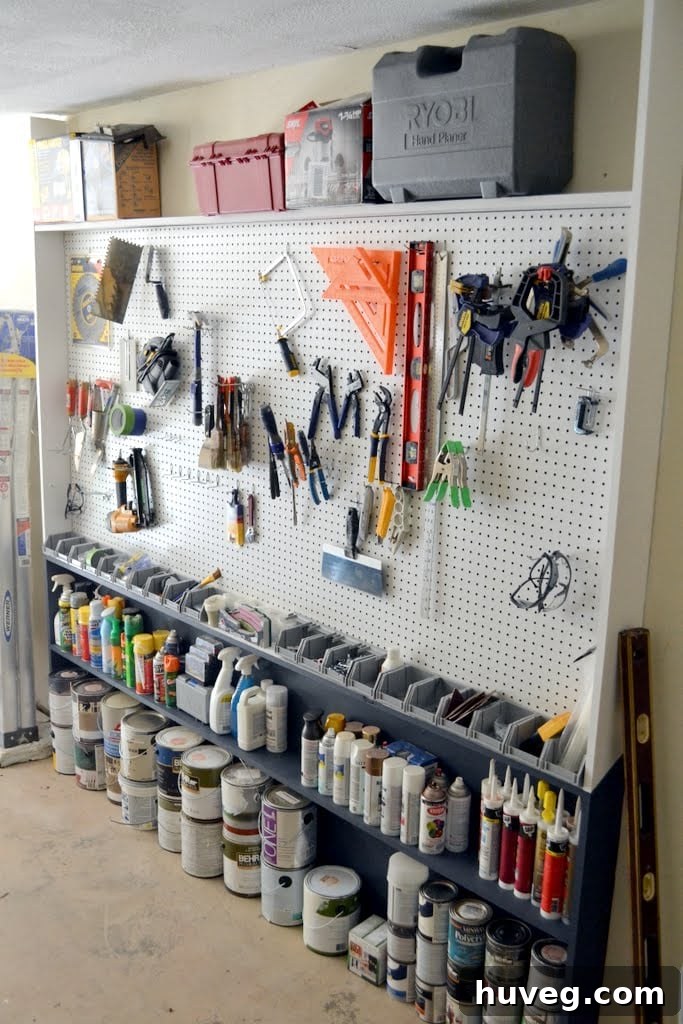
Maximizing Space in a Small Garage: The Pegboard Solution
Before diving into the construction details, let’s explore the rationale behind opting for a narrow pegboard wall. Like many DIY enthusiasts, I dream of outfitting every available inch of my garage floor space for various projects, be it building, painting, or repairs. However, this isn’t my “forever home.” This crucial consideration influences every home improvement decision, as I aim to enhance the property’s functionality without hindering its future resale value. A potential buyer might still want to utilize the garage for its primary purpose: housing a car.
Despite being long enough to accommodate a small nook at the back, near the water heater, my garage offers less than 10 feet in total width. This severely limits the types of permanent fixtures I can install along the walls. Any storage solution must be either exceptionally narrow or easily movable, like my handy DIY work table on wheels. Installing wider, fixed elements such as traditional cabinets could necessitate their removal before listing the house for sale, creating unnecessary work and expense down the line. While customizing a home to personal needs is often encouraged, I prioritize flexibility, especially knowing a move could be just a few years away. This foresight led me on a quest for narrow, adaptable organization plans.
My search for space-efficient garage organization had been ongoing, with limited success, until I discovered this brilliantly simple pegboard idea from The Creativity Exchange. I meticulously adapted their design to perfectly fit my garage’s unique dimensions and my specific needs, ensuring it could be built using standard 8-foot boards and, remarkably, without requiring a single cut. This streamlined approach not only simplified the construction process but also minimized material waste, making it an incredibly efficient and budget-friendly project.
Essential Materials for Your DIY Pegboard Storage Wall
Building this robust and versatile pegboard wall is surprisingly affordable and requires only a few key materials. Here’s a detailed breakdown of what you’ll need to gather:
What you need:
- 1 – 4′ x 8′ pre-primed white pegboard
- 5 – 1″ x 6″ x 8′ pine boards
- 6 – 1″ x 2″ x 8′ furring strips
Total estimated cost: a mere $62.94!
The structural integrity of this entire unit relies on a series of 1×2 furring strips. For those unfamiliar, “furring strips” are essentially inexpensive 1×2 boards, typically found in a dedicated section of most home improvement stores, often distinct from the higher-grade project boards. In my experience, they’re usually in the adjacent aisle towards the back. While a premium pine board of the same dimensions might cost several dollars, an 8-foot 1×2 furring strip can be purchased for under a dollar (around 98 cents). While it often requires sifting through the pile to find boards that are perfectly straight enough for a project, the substantial cost savings make the effort entirely worthwhile. Plus, once the project is complete, these hidden supports are completely out of sight, contributing to a clean and professional finish without breaking the bank.
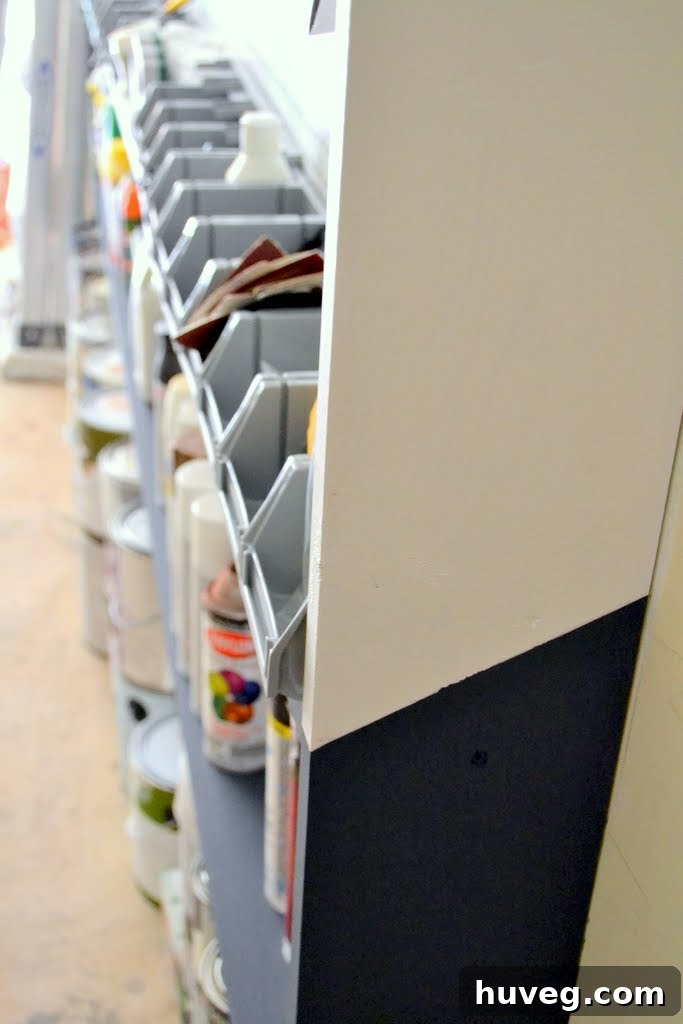
This clever design incorporates two main usable shelves to store a variety of essential building supplies, such as spray bottles, aerosol cans, and caulk tubes. Below these, ample space is reserved for paint cans, while an additional shelf at the very top provides convenient storage for less frequently used tools and hardware cases. To ensure optimal functionality and accessibility, the spacing of each shelf was carefully determined by simply measuring the height of the tallest items intended for that section. For instance, the lower area accommodates two gallons or three quarts of paint stacked vertically on the floor, while the shelf above is perfectly sized for caulk tubes, ensuring every item has its dedicated spot.
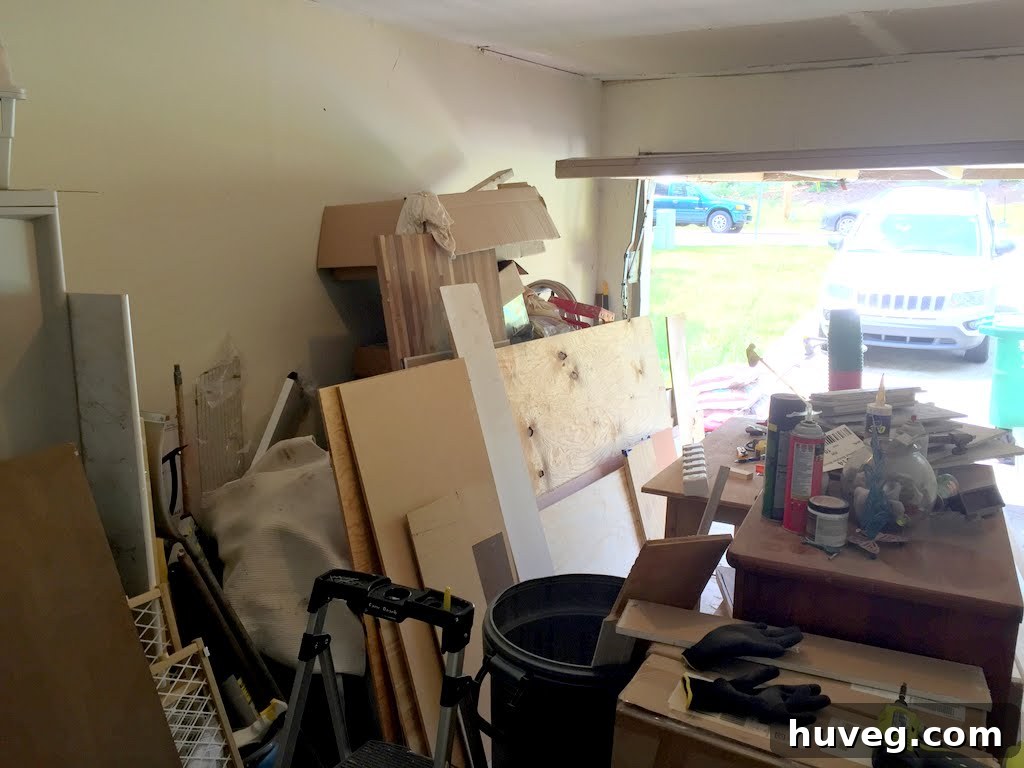
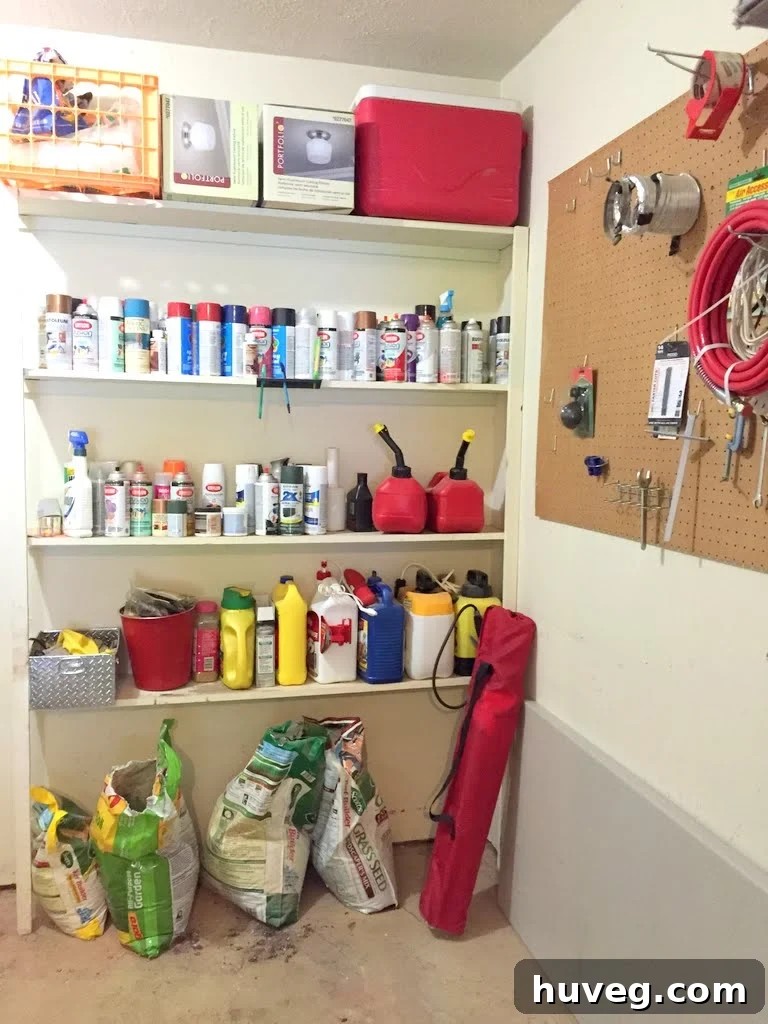
The journey to this organized space actually began a few weeks prior, when my garage presented a far less inviting scene. Thankfully, those days of disarray are long behind us, as depicted in the transformation from this initial state to the current, much-improved workshop:
Step-by-Step Installation: Building Your Pegboard Wall
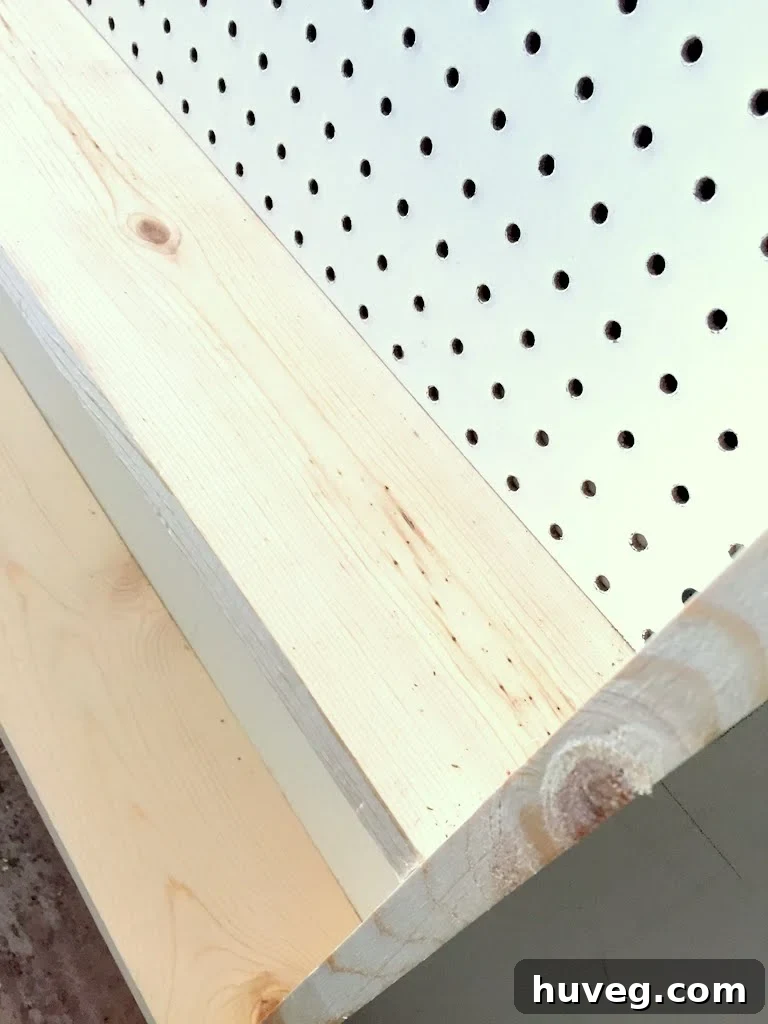
Constructing this sturdy pegboard wall involves a few straightforward steps, ensuring both durability and functionality. Once the furring strips are securely screwed into the wall studs, the 1×6 boards are installed on top, allowing the furring strips to bear the weight effectively. The vertical side supports, also 1×6 boards, are screwed and nailed into place, specifically into the horizontal 1x6s, guaranteeing a perfectly secure framework. Cyndy’s original tutorial provides an excellent explanation of her initial design, which I then modified slightly for my specific space. Make sure to consult her guide for the foundational understanding, then refer to my modifications below for this cut-free version.
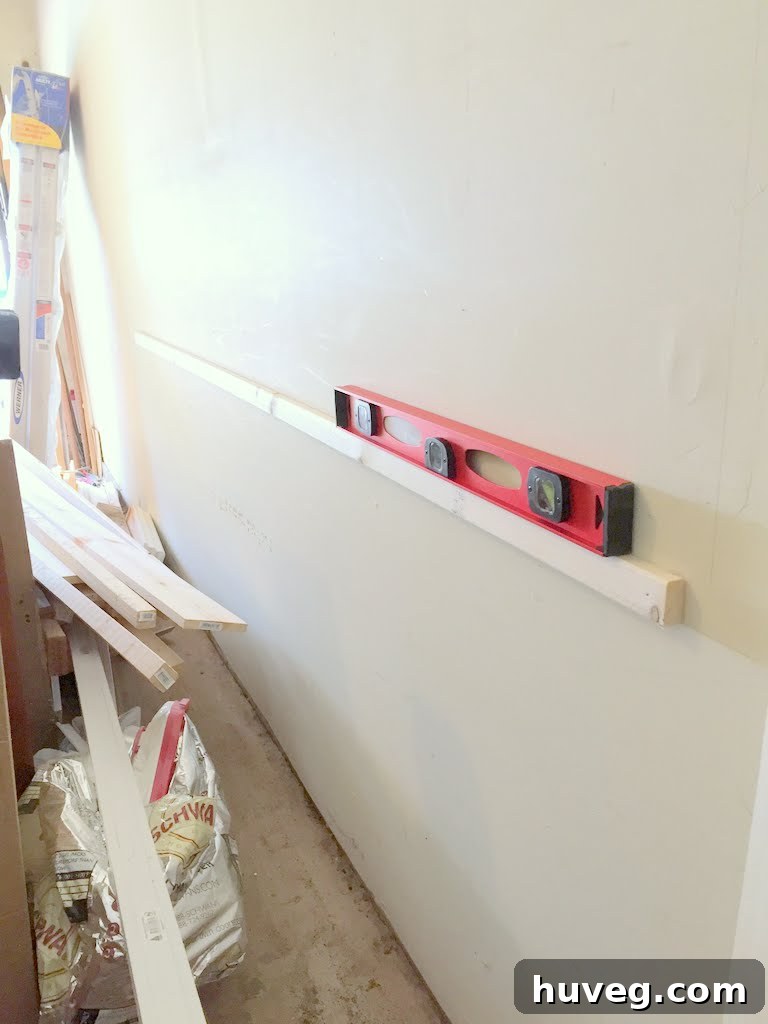
- Establish the First Shelf Support: Begin by installing the first horizontal furring strip. This will serve as the primary support for your first shelf directly beneath the pegboard. Ensure it is securely screwed into the wall studs for maximum stability. In my garage, this strip was placed approximately 30 inches from the floor, a height chosen for specific reasons that will be revealed as the full workshop project unfolds.
- Add the Shelf Base: Once the furring strip is in place, position a 1×6 board directly on top of it. This 1×6 board forms the flat surface of your first shelf.
- Erect Vertical Supports: Install two 1×6 boards vertically on each side, screwing them into the horizontal 1x6s to create an ‘H’ shape. While checking for level is essential at this stage, do not permanently secure the very top of these vertical boards just yet. This temporary flexibility will allow for minor adjustments when you add the top shelf and the pegboard itself.
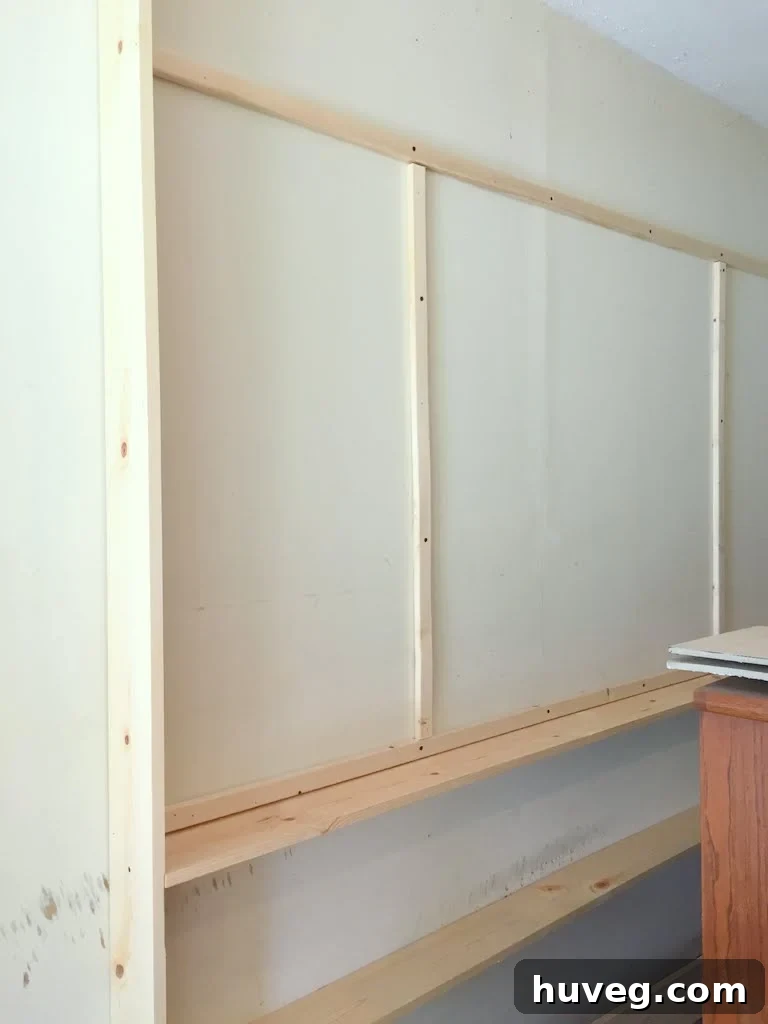
- Construct the Pegboard Grid: Create a robust 4′ x 8′ rectangular grid using additional furring strips. This grid will provide ample support for the pegboard. Include two evenly spaced strips running vertically through the middle of the rectangle (refer to the accompanying image for visual guidance). It is absolutely crucial to screw these strips into wall studs whenever possible. A wall laden with tools could easily become a scene from “America’s Funniest Home Videos” if it were to pull free from drywall alone, not to mention the potential safety hazard.
- Install the Lower Shelf Support: About 12 inches below the first furring strip you installed (roughly the height of a caulk tube plus a couple of inches for clearance), add another furring strip. This will create the foundational support for your second, lower shelf.
- Add Upper and Lower Shelf Boards: Now, place a 1×6 board on the top furring strip to complete the upper shelf. Similarly, attach a 1×6 board to the lower furring strip support to finalize your bottom shelf.
- Attach the Pegboard: Carefully align the 4′ x 8′ pre-primed pegboard with your constructed furring strip grid. Screw the pegboard into the furring strips, utilizing the existing holes in the pegboard. This technique makes the screws virtually disappear, contributing to a clean and professional appearance.
- Final Securement: With the pegboard in place, securely fasten the vertical side 1x6s using screws and a nail gun. This step ensures the entire structure is rigid and ready for use.
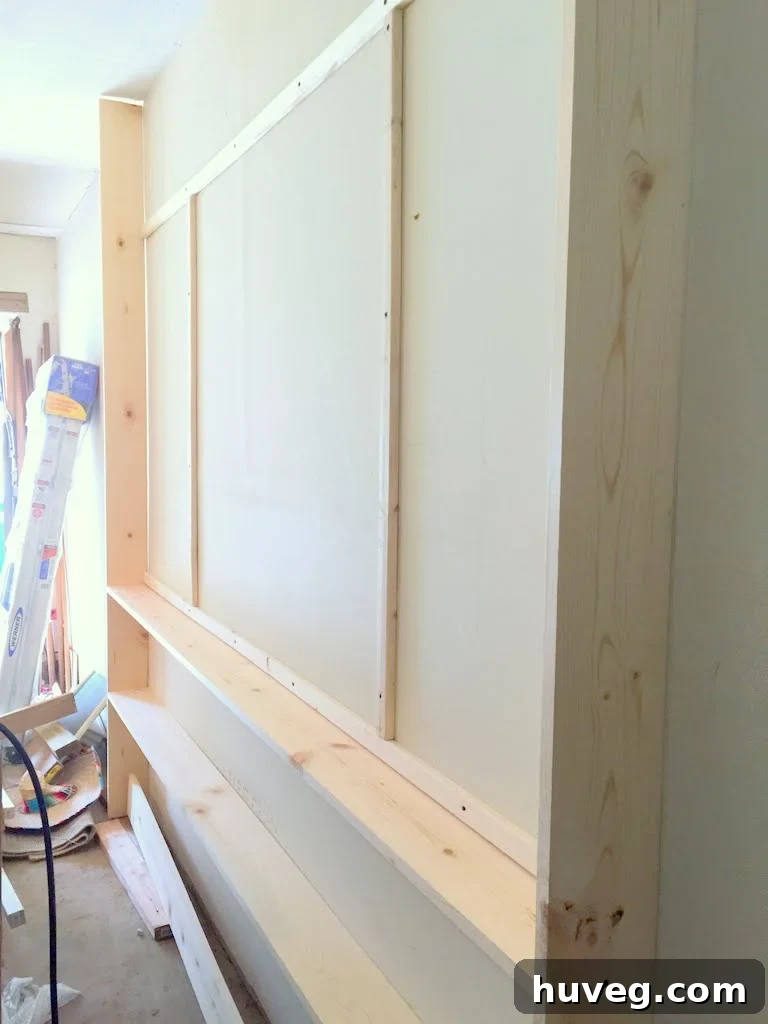
And just like that, the core structure is complete!
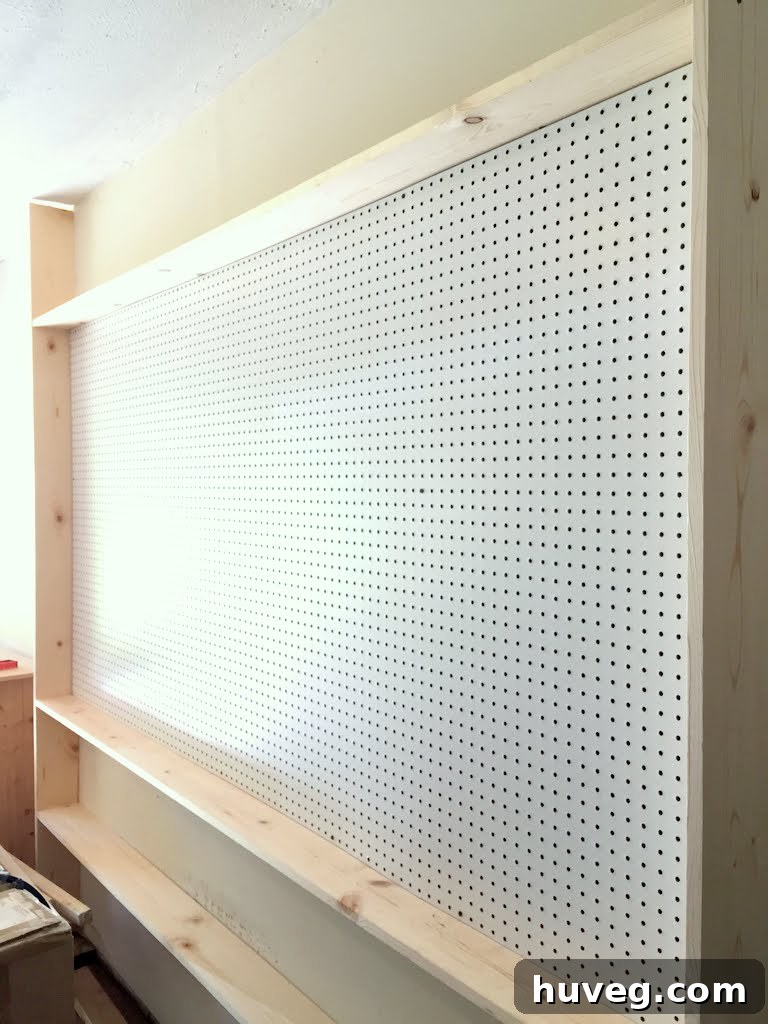
Adding Personality: Painting and Finishing Touches
With the physical structure of the pegboard wall firmly in place, the next exciting step is to add prime and paint, giving your new storage system a personalized touch. For this project, I utilized leftover paint from my office renovation, featuring a custom white paint match complemented by Benjamin Moore’s elegant Hale Navy. To infuse a bit of character and visual interest, I opted to tape off the division between the two colors at a dynamic angle on each side. This subtle design choice creates a more refined aesthetic, departing from the typical straight line and adding a bespoke feel to the workshop space.
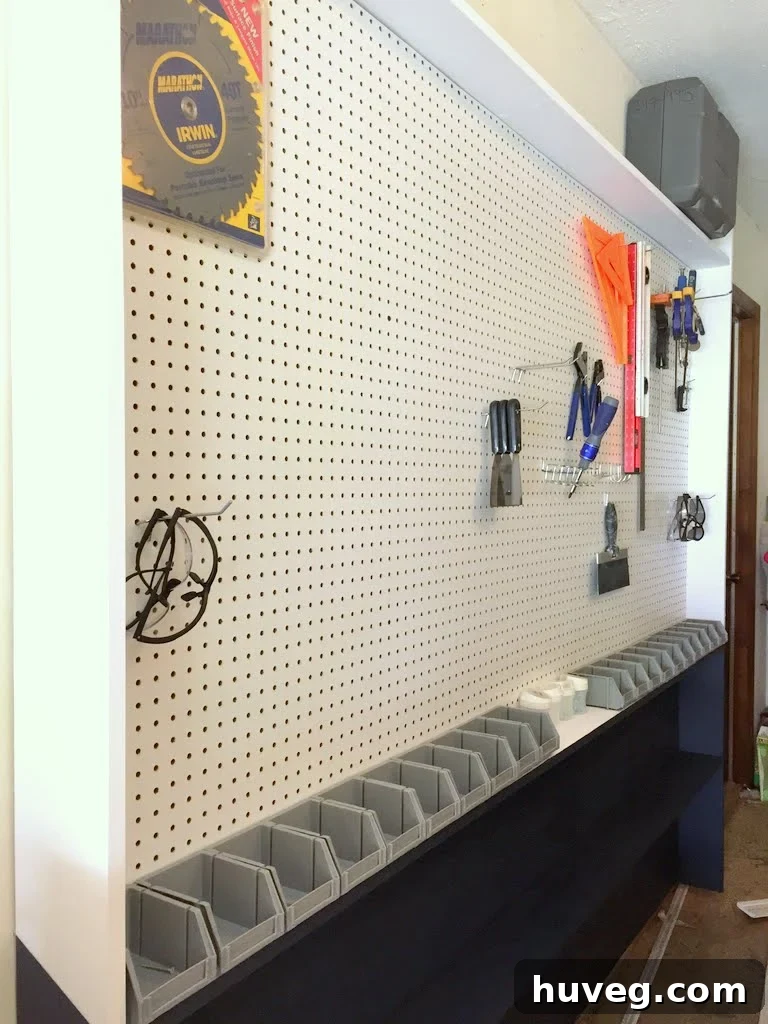
Optimizing Your New Storage: Loading Up the Pegboard Wall
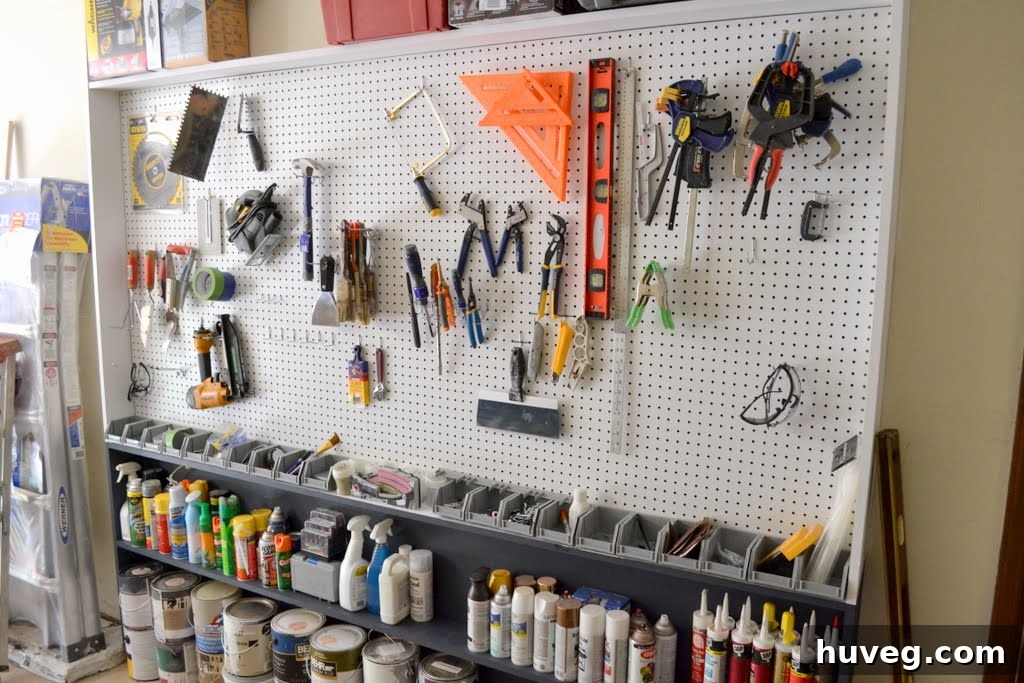
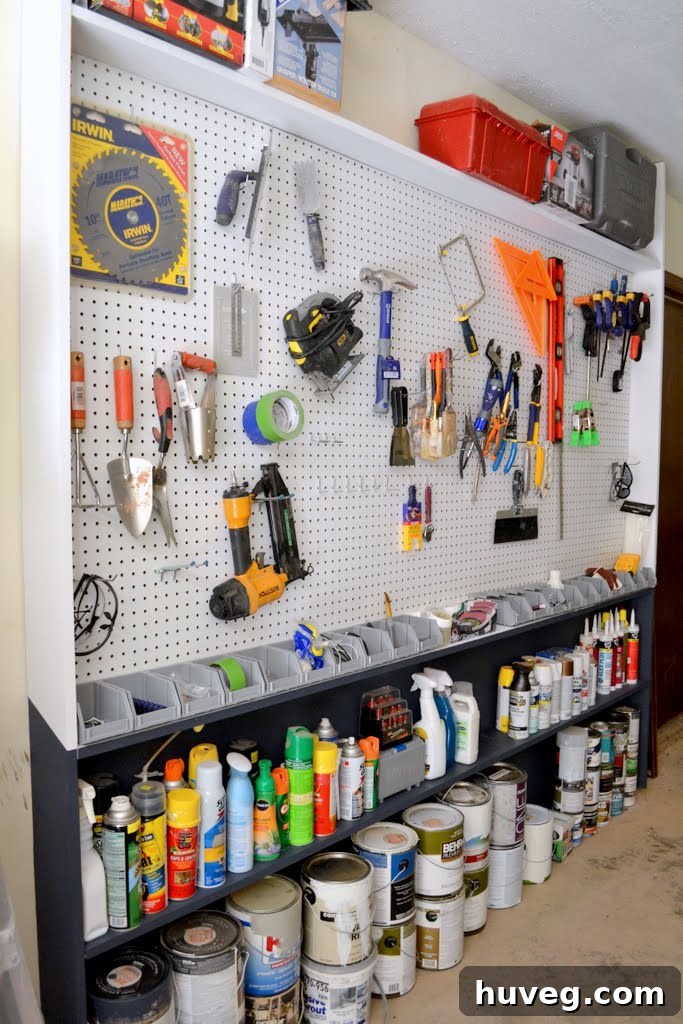
Once the paint dried, the real fun began: populating the pegboard wall with all the tools that had previously been misplaced and subsequently rediscovered during the extensive garage cleanup project. Now, paint cans comfortably sit on the floor, while virtually everything else finds its dedicated spot on a shelf or neatly hung on the pegboard using various hooks. This system transforms chaotic clutter into an intuitive, accessible display of every essential tool and supply.
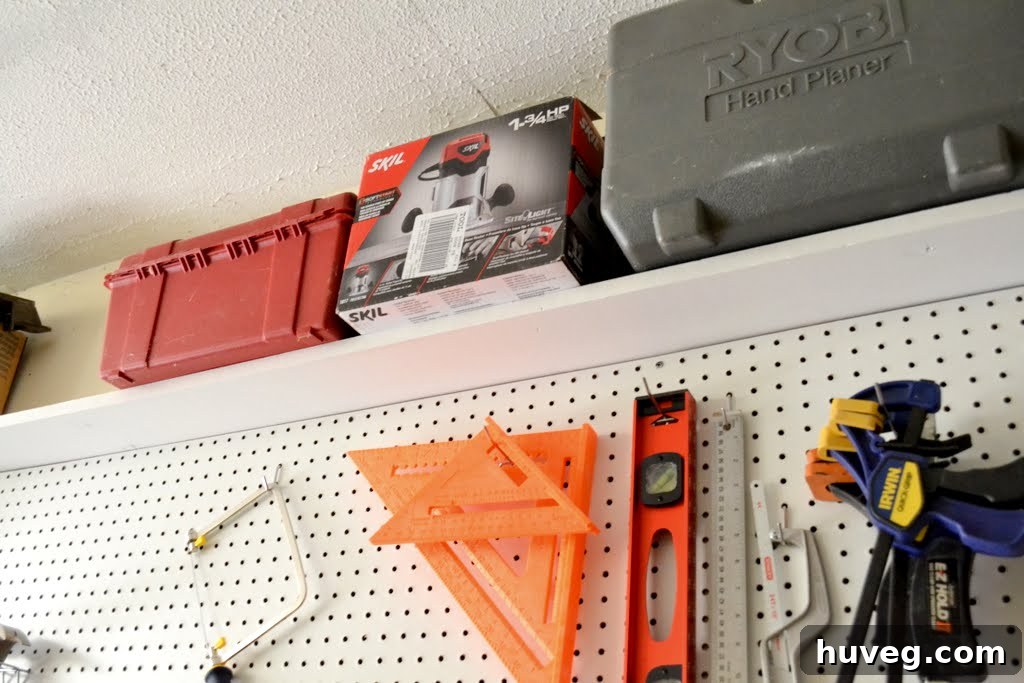
Unlike the inspiration pegboard wall, a deliberate design choice was made to keep the top shelf without a retaining lip. This thoughtful modification allows for the effortless stacking of various tool cases and storage boxes, keeping them neatly out of the way. Crucially, since the height of this shelf is strategically positioned above the typical height of a parked car, it ensures absolutely no interference should the garage ever be used for its original purpose again, reinforcing the goal of versatile, future-proof storage.
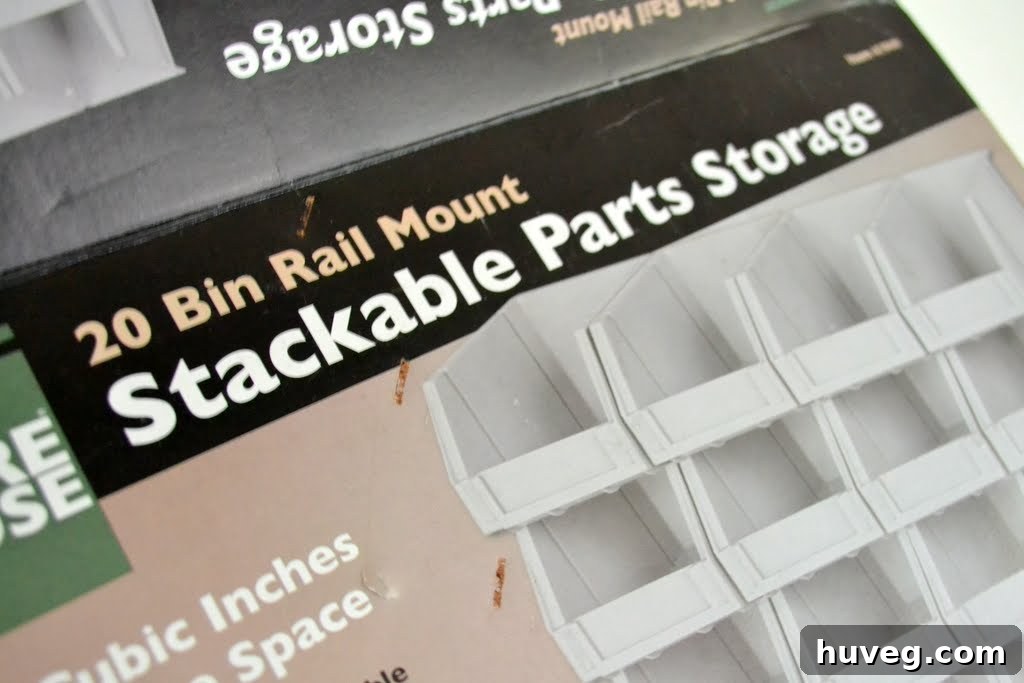
For organizing smaller items, I recently discovered a fantastic solution: these gray bins, originally part of a stackable container system from Harbor Freight, priced at just $14.99. Rather than using them as a single unit, I separated the bins to maximize storage flexibility along the pegboard shelf. Each bin features a small lip along its back, designed to hook securely into a plastic rail mount. Once the rail was screwed into place, the bins simply click in, remaining perfectly stable without any sliding, providing an ideal home for tiny essentials.
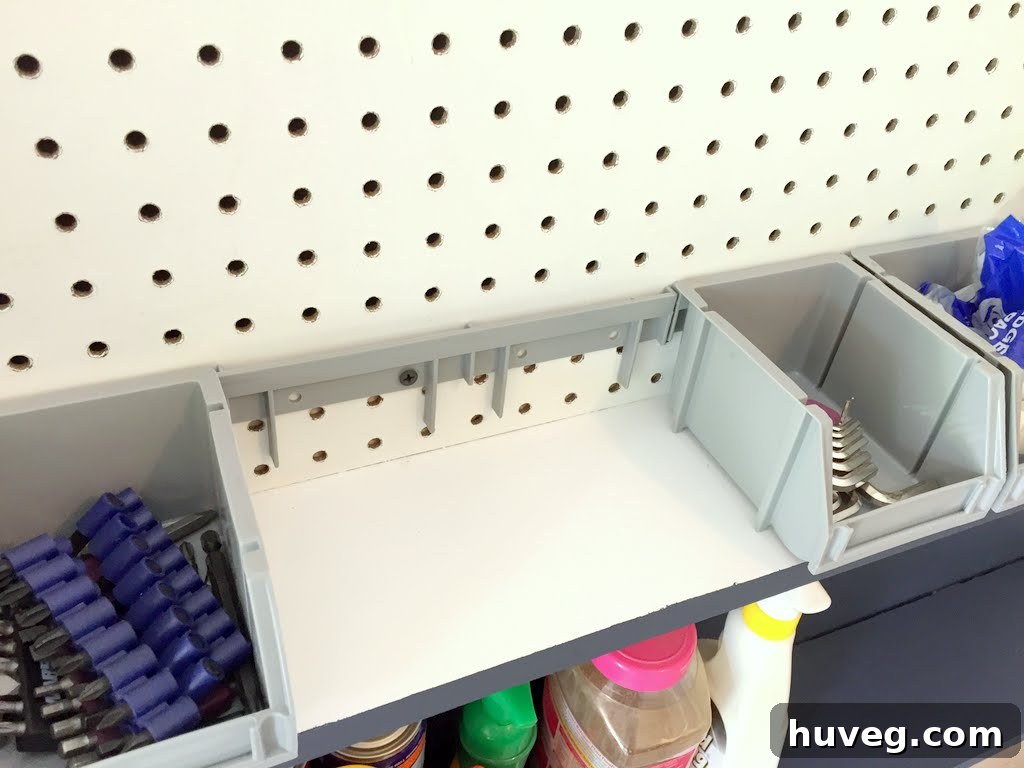
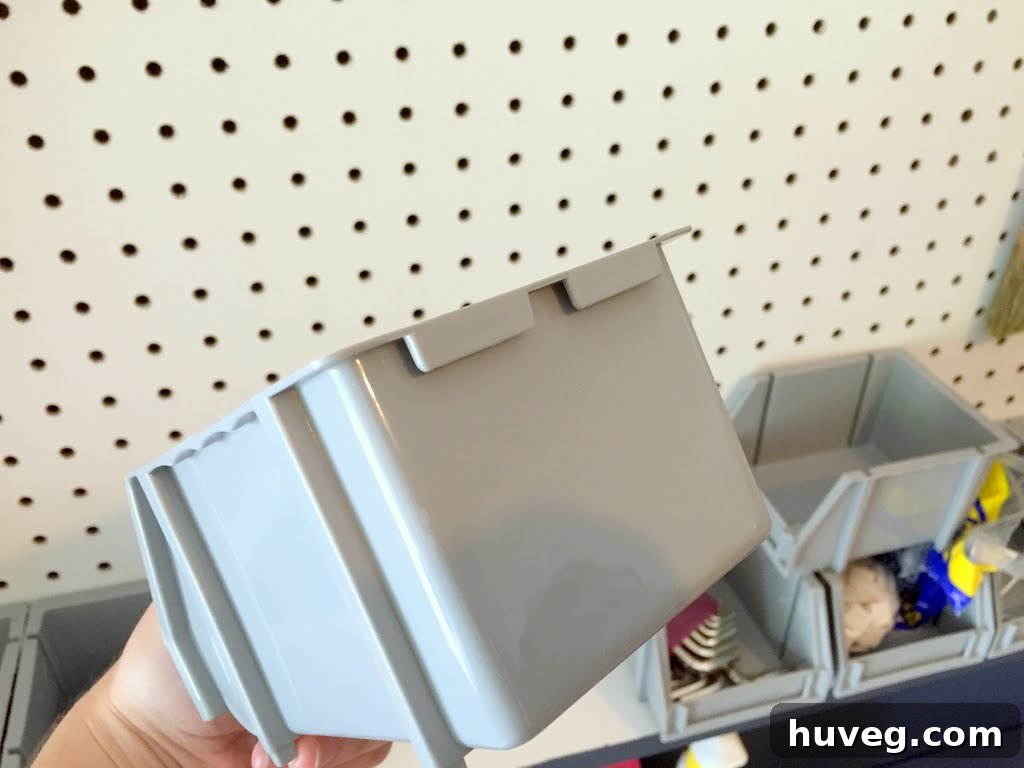
While this system isn’t yet as perfectly organized as I envision it will eventually be (hence the current lack of labels on the bins), it proved incredibly valuable during the initial garage cleanup. It offered an immediate, accessible home for miscellaneous screws, drill bits, nails, spacers, and countless other tiny items that previously contributed to the general clutter. The ability to quickly sort and store these small parts instantly made the workshop feel more manageable and functional.
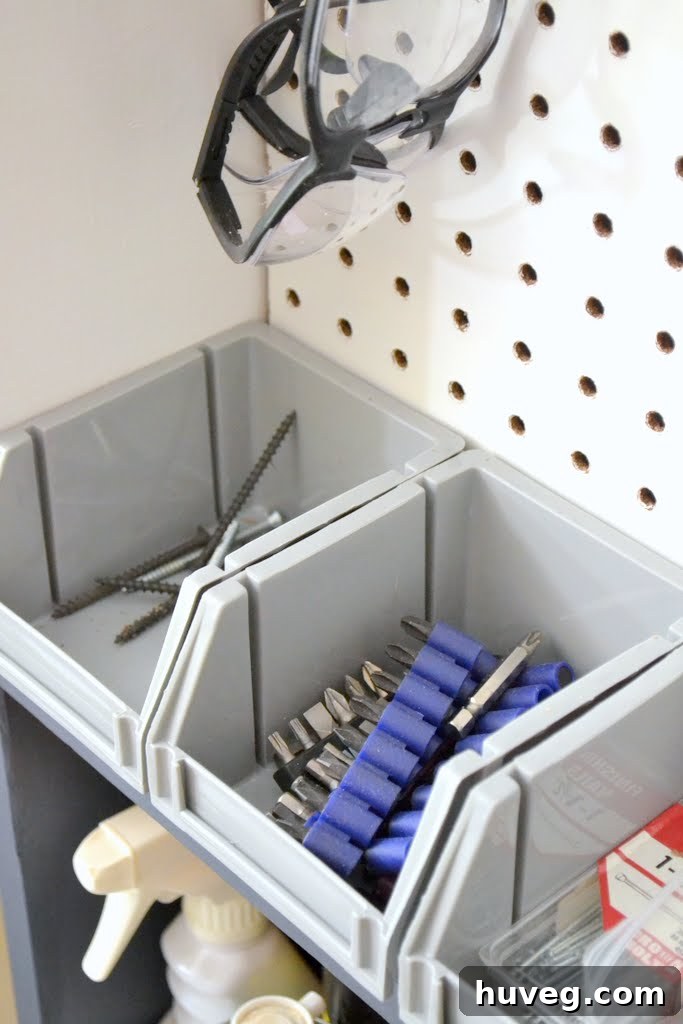
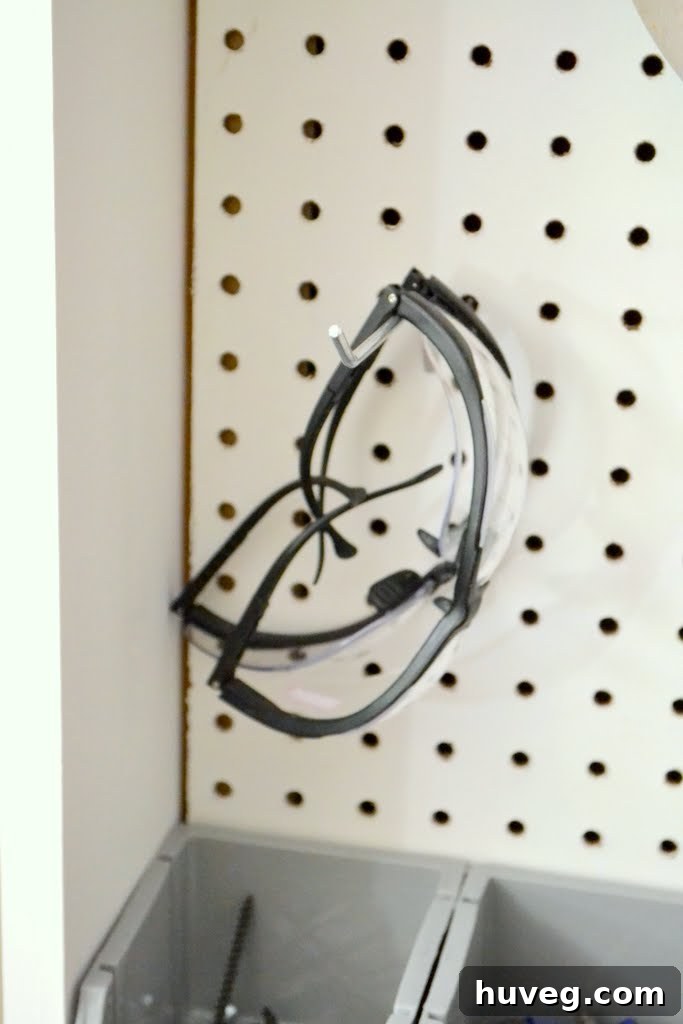
One particularly useful organizational idea I’m eager to share involves eye protection. I’ve strategically placed a hook at either end of the pegboard wall, serving two key purposes. Firstly, as someone who collects a significant amount of eyewear (often picking up at least two free pairs annually from attending the Haven conference), having ample hanging space is essential. Secondly, this dual placement ensures that a pair of safety glasses is always within easy reach, whether I’m heading out the garage door to start a project or returning into the house after finishing one. This simple yet effective setup has already proven incredibly handy, fostering better safety habits in the workshop.
The strategic inclusion of pegboard shelves also played a pivotal role in quickly transforming the previously underutilized back nook into a highly functional space dedicated to gardening supplies and spray paint. This instantly created a dedicated zone for these items, exemplifying the “snowball effect” of effective organization – one well-planned storage solution often sparks a chain reaction of increased tidiness and efficiency throughout the entire space.
Future Enhancements and the Impact of Organization
While the pegboard wall has brought immense order, the workshop transformation is an ongoing process. I haven’t yet installed anything on the exterior sides of the main structure, but future plans include adding larger hooks. These will be perfect for hanging bulkier items like extension cords and my grandfather’s cherished old wooden level, which you might have spotted in a few of these photos, waiting for its rightful display spot. This continuous evolution ensures the space remains adaptable to my evolving project needs.
Thanks to these dedicated weeks of effort, the UDH workshop is now significantly safer, with far fewer tripping hazards. Finding the right tool or supply is no longer a scavenger hunt, and every item has a designated place to return to once a task is complete. There are still more projects earmarked for completion in the garage, but with this major organizational hurdle overcome, I truly feel like the entire house has room to breathe again. This revitalized workspace not only enhances productivity but also brings a profound sense of calm and order to my home.
More Garage Workshop Ideas
EXPLORE ALL GARAGE PROJECTS
Discover how to create your ideal garage workshop with budget-friendly organization ideas and comprehensive guides.
-
Cedar Garage Door Reveal! (Before and After)
-
My One-Car Garage Workshop Plan
-
How to Add Sound Dampening without Removing Drywall
-
Marking The Studs
-
An LED Lighting Upgrade in the Garage
-
Tip: How to Secure Loose Pegboard Hooks