Homemade Stay-Put Dog Dish

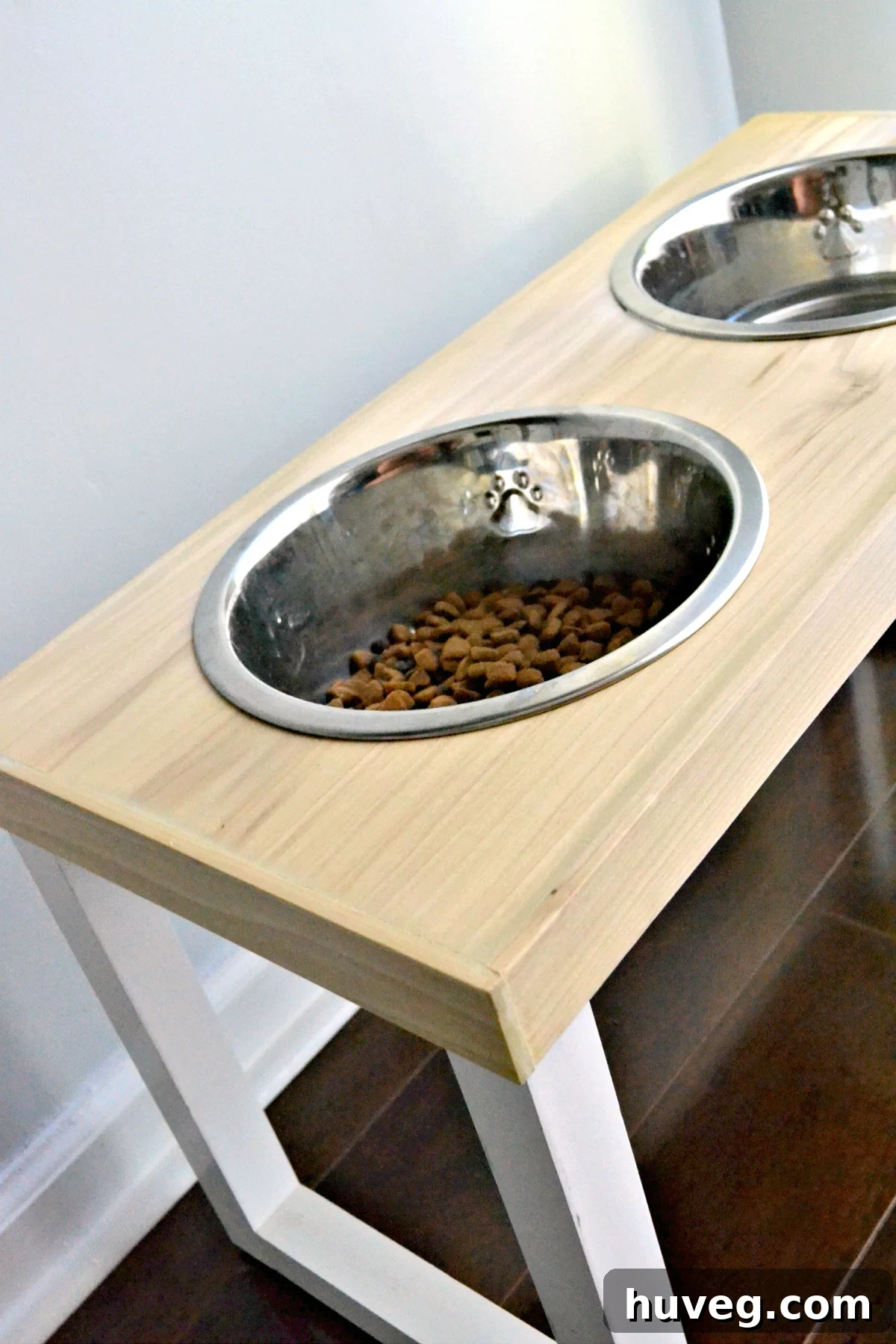
I am a compensated 3M-sponsored blogger. Opinions are my own and additional products used in the project were selected by me.
For years, the chaotic scene around our dog’s food and water bowls has been a source of daily frustration. Like many pet owners, I’ve dreamt of a cleaner, more organized feeding solution. The ideal vision involved a stylish, elevated dog bowl holder – a bespoke creation designed not just for aesthetics but to actively prevent our mischievous pup from turning mealtime into a messy disaster. This project wasn’t just about building a stand; it was about reclaiming our floor space and our sanity from strewn kibble and water puddles.
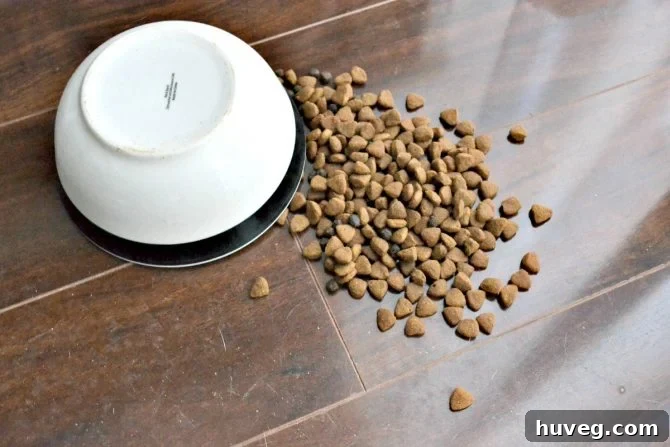
Our beloved Charlie, since her puppy days, has honed a unique talent: flipping her food bowl with an almost professional flair. She seems to derive endless amusement from my exasperation as kibble scatters across the floor. We experimented with countless dog dish options – heavy ceramic bowls, rubber-bottomed dishes, and even basic stainless steel versions – but none offered a truly reliable, no-slip solution. Each attempt inevitably led to the same outcome: bowls sliding, food spilling, and the joy of a clean floor becoming a fleeting memory.
One memorable incident involved a ceramic cereal bowl, repurposed in desperation, being chased across the kitchen floor, ultimately chipping against the wall. This proved that a standard bowl simply wouldn’t cut it. My next attempt with new stainless steel dog bowls was slightly better, but their light weight made them all too easy for Charlie to send flying. It became clear that to truly solve our messy dog dish dilemma, I needed to address the root cause: an unsecured, easily movable feeding station. A DIY approach felt like the only way to achieve the perfect, customized result.
The solution began to crystallize: a custom-built DIY dog feeder, strategically designed with sturdy feet and a stable structure that would resist pushing and tipping. Beyond resolving the mess, I knew that a raised dog bowl holder offered significant health benefits for pets. Elevated feeders are often recommended to help dogs eat at a more comfortable height, potentially slowing down their eating pace and aiding digestion. For older dogs or those with joint issues, an elevated feeder can reduce strain on their neck and joints. For Charlie, and for us, this no-slip dog feeder was shaping up to be a multi-faceted win, addressing behavioral issues, health considerations, and aesthetic desires all in one elegant package.
With a clear vision for the design and function, I embarked on the planning phase. I carefully considered the dimensions, the type of wood, and the overall look that would integrate seamlessly with our home decor. After thoughtful deliberation, a trip to the local hardware store armed me with all the necessary supplies to bring my DIY non-slip feeder to life. The anticipation of a clean, calm mealtime environment was incredibly motivating.
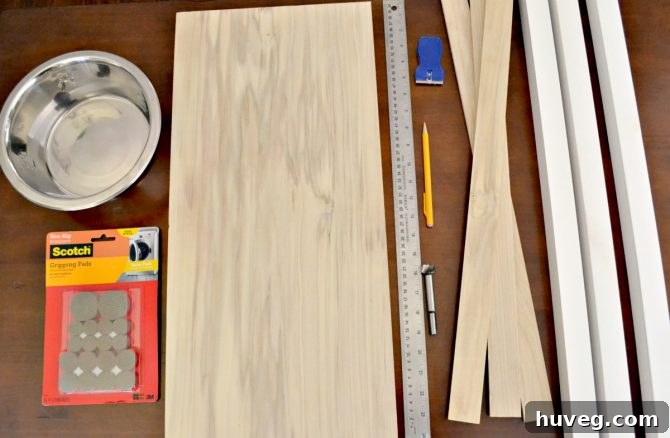
Essential Materials for Your DIY No-Slip Dog Feeder
Crafting a functional and beautiful elevated pet feeder requires a thoughtful selection of materials. Here’s a comprehensive list of what you’ll need for this rewarding project, allowing for some personalization based on your dog’s size and your aesthetic preferences:
- 12″ x 24″ Poplar Board: This will form the top surface of your feeder, holding the bowls. Poplar is an excellent choice for its smooth grain, ease of working, and ability to take stains and paints beautifully.
- 3 – Poplar Strips: These strips are used to create attractive trim around the edges of the top board, giving the feeder a more finished and polished look.
- 3 – Pre-Primed Stair Balusters: These will serve as the legs for your elevated feeder. Using pre-primed balusters saves a step in the finishing process if you plan to paint them white, as I did.
- Straight Ruler & Measuring Tape: Precision is key for accurate cuts and perfectly spaced bowl openings.
- 2 – Dog Food Bowls with a Lip Edge: Opt for sturdy bowls, ideally stainless steel, with a distinct lip. This lip is crucial for them to rest securely within the cutouts. I found that large-sized bowls worked well for Charlie.
- Pencil: For marking cuts, tracing bowl outlines, and making design adjustments.
- Razorblade Scraper: Essential for cleanly removing any stickers or labels from your new wood, ensuring a smooth surface for finishing.
- 1/2″ Forstner Bit: This specialized drill bit creates clean, flat-bottomed holes, perfect for drilling pilot holes before using a jigsaw. A spade bit can be a suitable alternative if a Forstner bit isn’t available.
- Jigsaw: Your primary tool for cutting the circular openings for the dog bowls. Ensure you have a wood-cutting blade for clean results.
- Clamps: Indispensable for holding pieces securely in place while glue dries, ensuring strong, stable joints.
- Sandpaper: Various grits (e.g., 120, 220) will be needed for smoothing edges, preparing surfaces for finishing, and blending wood filler.
- Wood Glue: A strong wood adhesive is vital for securing all structural components of your feeder.
- Wood Putty/Filler: Used to fill any small gaps, nail holes, or imperfections, creating a flawless surface.
- Wood Stain (Optional) and a High-Performance Polyurethane: If you desire a natural wood finish, a stain will enhance the grain. A durable, water-based polyurethane is essential for protecting the wood from moisture and spills, especially important for a pet feeding station.
- (Sponsor) Scotch® Non-slip Gripping Pads: The secret weapon for ensuring your feeder stays firmly in place, preventing any unwanted sliding or tipping.
It’s important to remember that this project is highly customizable. Your dog’s size, breed, and age will dictate the ideal height for their elevated feeder. Therefore, I won’t be providing a rigid cut list. Instead, I encourage you to measure your own dog to determine the optimal height, ensuring they can eat comfortably without straining their neck. Resources like this guide can help you figure out the correct height. For aesthetic balance, I ripped my main board down to about 10.5 inches wide, creating a proportionate design without excessive wood in front or behind the bowls. Feel free to adjust these dimensions to perfectly suit your pet and your personal taste!
1. Crafting the Perfect Bowl Openings in the Feeder Top
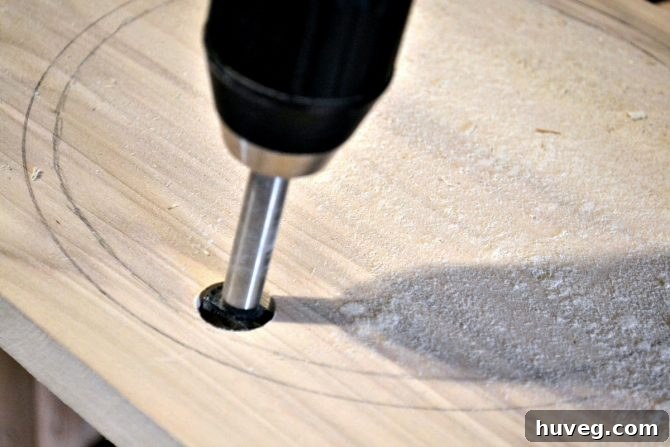
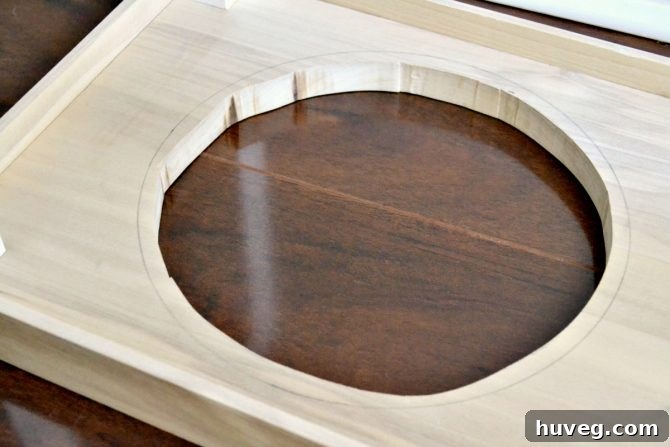
The first critical step in building your custom dog feeder is precisely cutting the openings for the bowls into the top board. To achieve this, begin by flipping your chosen poplar board to its underside. Carefully position your two dog bowls on the board, ensuring they are evenly spaced from each other and from the edges of the board. This meticulous spacing is key to a balanced and aesthetically pleasing finished product. Using a pencil, trace around the outer lip of each bowl. This initial trace provides a reference point for where the bowls will eventually sit.
Next, you’ll need to hand-draw a new, slightly smaller circle inside each of your traced outlines. This inner circle represents the actual cut line, providing enough of an edge for the bowl’s lip to rest securely on, preventing it from falling through. This step requires a steady hand and a keen eye for detail, especially if you, like me, appreciate a touch of perfectionism. Remember, the goal is for the bowls to fit snugly and be held firmly in place by their lips.
Once your patterns are sketched, it’s time to drill. A Forstner bit is ideal for creating a clean pilot hole within the area you plan to cut out. This pilot hole provides a starting point for your jigsaw blade. If you don’t have a Forstner bit, a spade bit can serve a similar purpose. After drilling, carefully insert your jigsaw blade into the pilot hole and begin cutting along your inner pencil line. Take your time, moving slowly and steadily to ensure as smooth a cut as possible. While absolute perfection isn’t strictly necessary – a slight wobble won’t affect functionality – a cleaner cut will make subsequent sanding much easier.
2. Assembling the Legs and Finishing the Edges
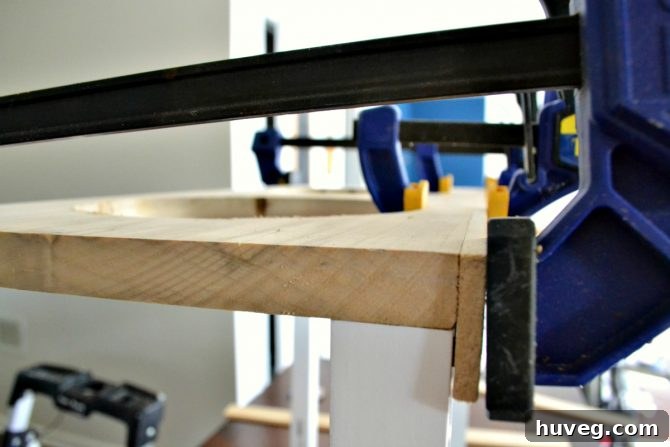
With the top of your raised dog feeder now cut and ready, the next phase involves building its supportive structure: the legs and the decorative edges. I found my kitchen tabletop to be an excellent work surface for this project; its level plane and ample space allowed me to easily assemble and let components cure. This step transforms a simple board into a functional piece of pet furniture.
First, turn your attention to the pre-primed stair balusters that will form the legs. Using your measurements for your specific dog’s height, carefully cut the balusters. For Charlie, legs around 15 inches proved ideal. Once cut, apply a generous but even layer of wood glue to the top ends of the balusters and position them securely onto the underside of your feeder top. Ensure they are placed symmetrically and firmly. Use clamps to hold them in place while the glue sets, ensuring a strong and stable bond. Allowing ample drying time here is crucial for the structural integrity of the feeder.
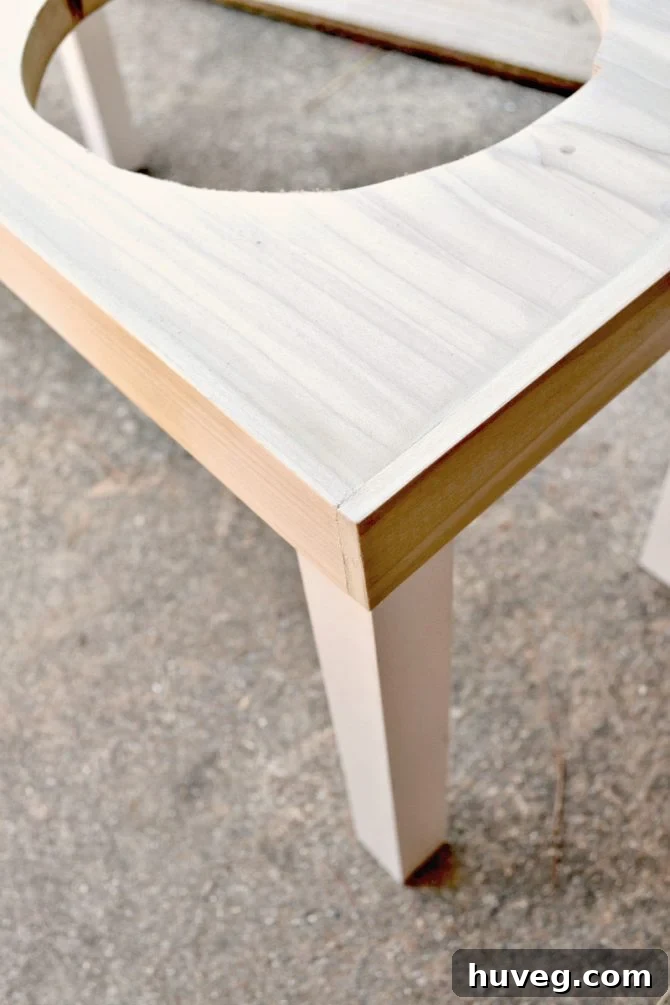
Once the glue holding the legs is completely dry, flip the entire assembly right-side up. Now, it’s time to add those finishing touches that elevate the feeder’s appearance. Take your poplar strips and cut them to length to create a frame around all four sides of the top board. Apply wood glue to the edges of the top board and firmly attach these strips. Again, utilize clamps to hold these strips securely in place while the glue dries. These strips not only add a refined, “dressed-up” look to the feeder but also provide a subtle reinforcement to the edges of the top. The result is a more polished, furniture-like piece that blends seamlessly with your home decor, looking anything but homemade. See? Pretty, and practical!
3. Finishing Touches: Filling, Sanding, and Protecting Your Dog Dish Holder
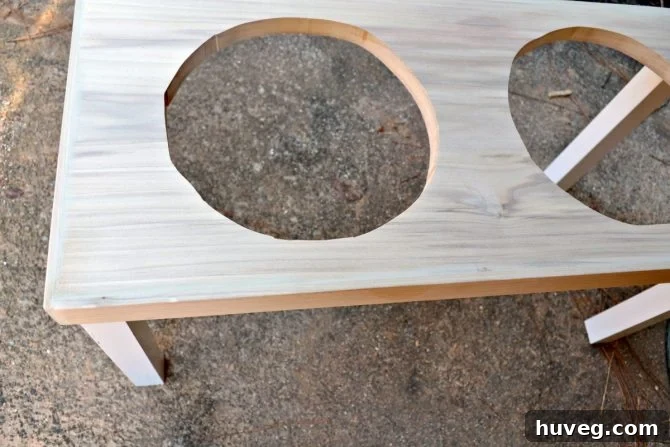
Achieving a professional, furniture-grade finish is all about the details in this stage. My goal was for the top surface of the dog dish feeder to be incredibly smooth and appear seamlessly finished. To accomplish this, I carefully applied a small amount of wood filler to any tiny gaps or imperfections that remained where the edge pieces met the main top board. Once the wood filler was dry, I meticulously sanded the entire top surface, starting with a coarser grit (like 120) to smooth out any significant discrepancies, and then moving to a finer grit (like 220) to achieve a buttery-smooth finish. This step is crucial for both aesthetics and ensuring a pleasant tactile experience.
When it came to the pre-primed legs, I confess to a touch of laziness – they looked perfectly fine as they were, so I opted not to paint them. However, for the top of the feeder, applying a protective finish was non-negotiable. I chose a high-performance, water-based polyurethane. This not only helped to subtly bring out and enhance the natural grain of the poplar wood but, more importantly, it provided a robust protective layer. Considering that dog feeders are prone to slobbery water bowl abuse and food spills, this poly coat is an excellent idea, especially if your dog tends to be a messy drinker. It creates a durable, easy-to-clean surface that will stand up to daily use and moisture exposure.
Initially, I hadn’t planned for them, but later in the project, I decided to add crosspieces between the bottom left and right legs. These were primarily added for aesthetic reasons, giving the feeder a more substantial, almost mid-century modern look, as you can see in the photos below. They also offer a subtle increase in stability, bracing the legs further. You certainly can choose to leave your raised dog dish without this addition for a simpler look, or you can cut more lengths from your balusters to create these stylish side elements, customizing the feeder to your exact design preference.
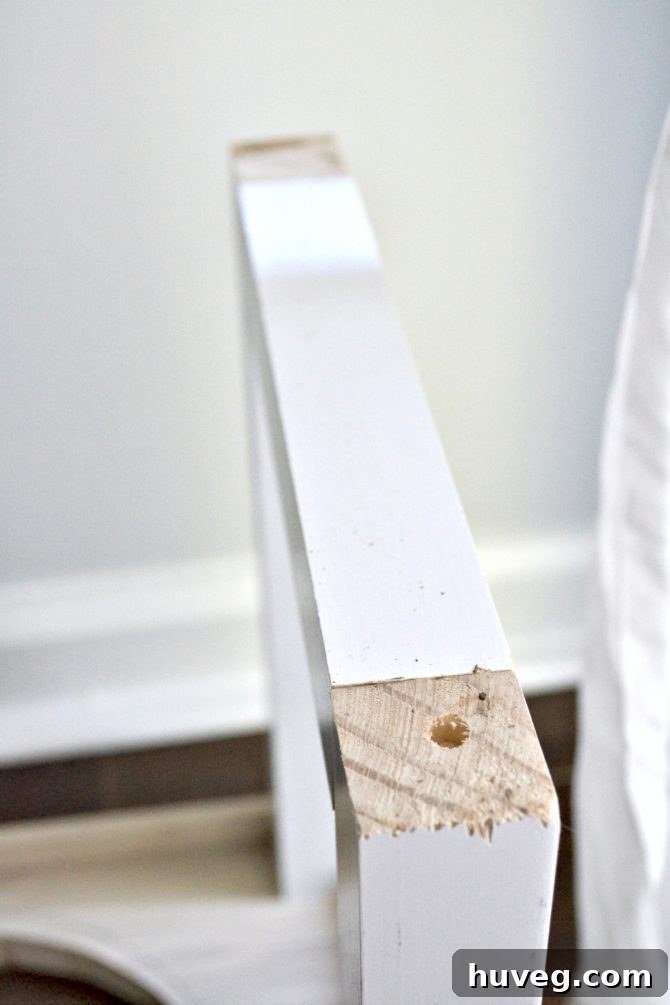
4. Securing Your Feeder: The Non-Slip Advantage with Gripping Pads
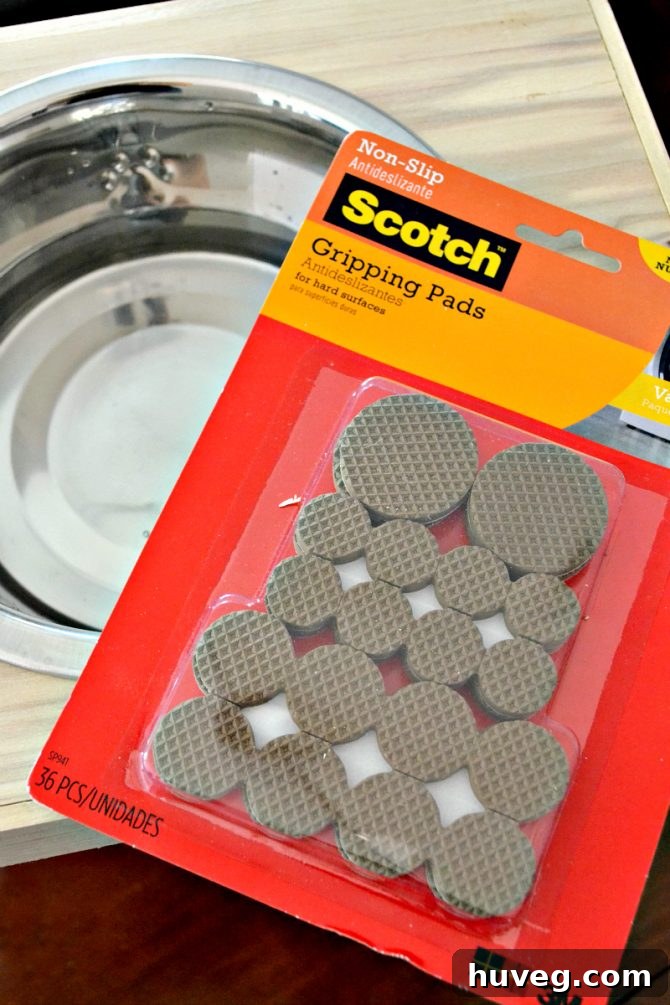
The entire premise of this project was to finally put an end to Charlie’s infamous habit of pushing her dog dishes across the floor, scattering food and spilling water. This is precisely why I was thrilled to partner with Scotch® Brand for this crucial final step. The Scotch® Gripping Pads were the perfect, innovative solution for stabilizing the base of the feeder and ensuring it remained steadfast, even against the most enthusiastic eater or an overzealous pooch intent on turning mealtime into a game. I had initially anticipated needing the largest size of gripping pads for maximum adherence, but to my pleasant surprise, the medium ones proved more than adequate, offering exceptional grip without being overly conspicuous.
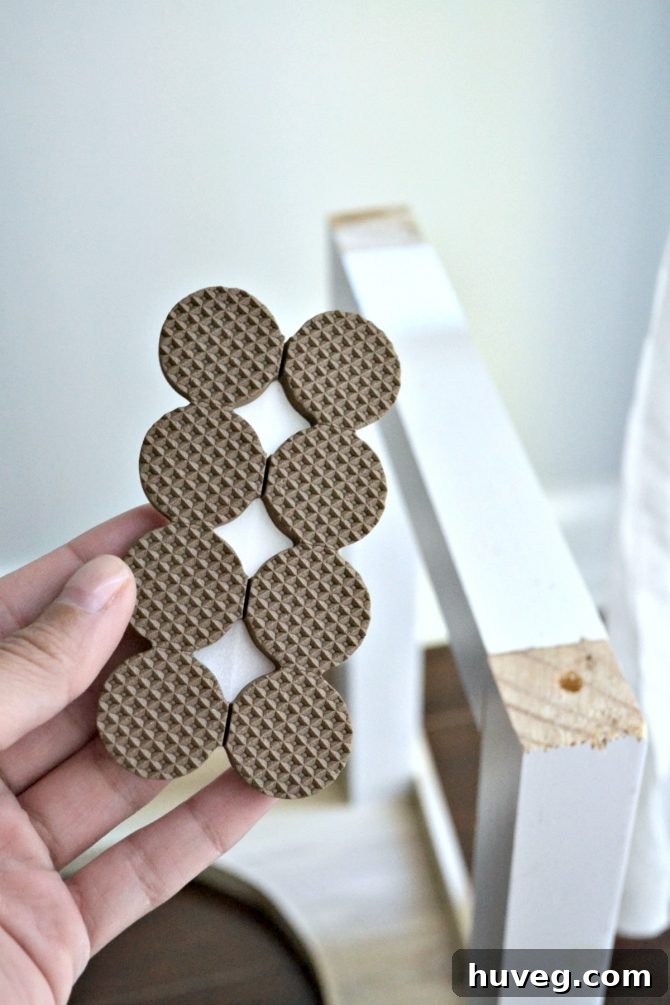
The convenience of Scotch® Gripping Pads lies in their design. They come in a pack, allowing for easy separation and quick application. I strategically applied them to the bottom of the feeder’s legs and also along the middle support crosspieces on both sides. This distributed application ensures maximum surface contact with the floor, creating a formidable barrier against sliding. The self-adhesive backing makes them incredibly simple to use—just peel and stick. And, should you find yourself with extra pads after this project, rest assured, their versatility means you’ll discover countless other uses for them around the house, from securing small appliances to preventing furniture from scratching floors.
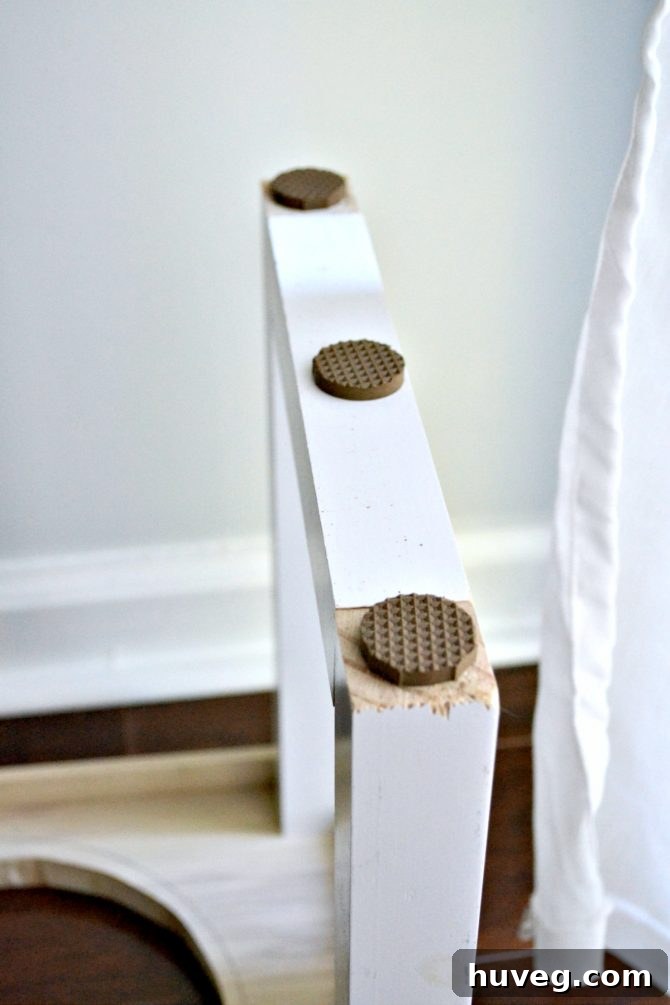
In total, I utilized six Scotch® Gripping Pads for this elevated dog feeder project, applying two to each of the main legs and one to each of the aesthetic crosspieces. This strategic placement provided robust stability. I still have a few pads remaining, which I’ll keep handy in case future adjustments are needed or if I embark on another project requiring superior non-slip properties. This small but significant addition is what truly transforms the feeder from a mere stand into a reliable, no-slip pet feeding station.
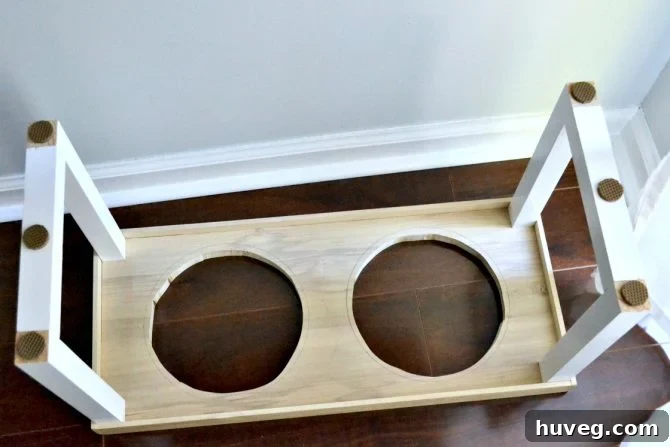
5. The No-Slip Dog Dish Feeder: Mission Accomplished!
With all the components carefully assembled, glued, sanded, sealed, and secured, the DIY dog dish feeder is finally complete! Once the final finishes are dry and cured, it’s ready to be put into service, promising a much-needed reprieve from the daily furball messes and food-flipping antics. The transformation is remarkable; this no-slip dog feeder turned out incredibly well, exceeding my expectations. Its polished appearance elevates the entire feeding area, while its robust construction and non-slip pads effectively keep the dog food mess at bay. It’s not just a functional item; it’s a beautiful piece of pet furniture.
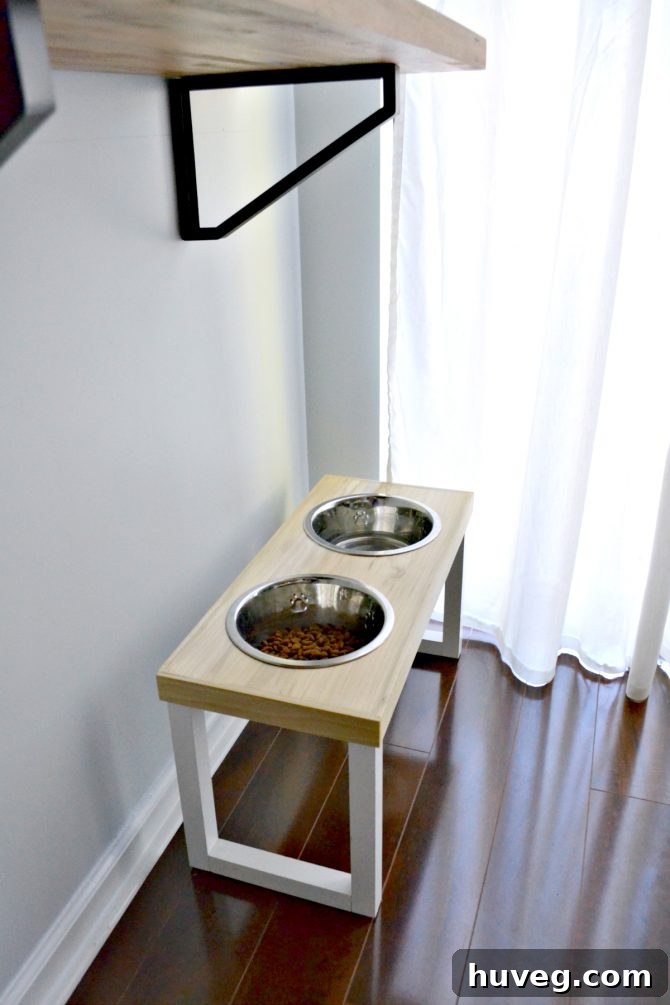
From the front, you can truly appreciate the clean lines and the thoughtful design:
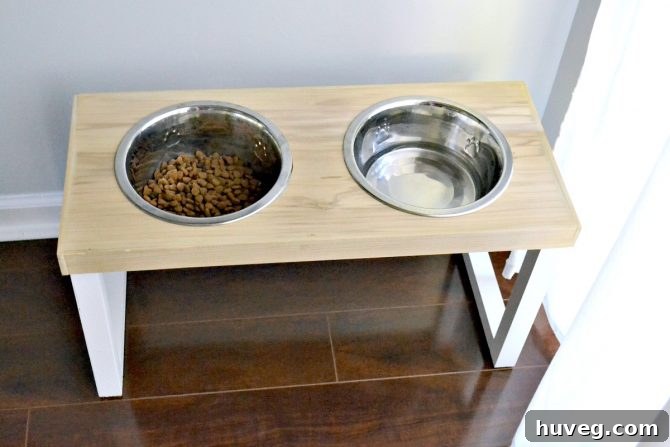
And from the side, the subtle elegance of the wood grain and the sturdy legs are evident (because every angle deserves admiration!):
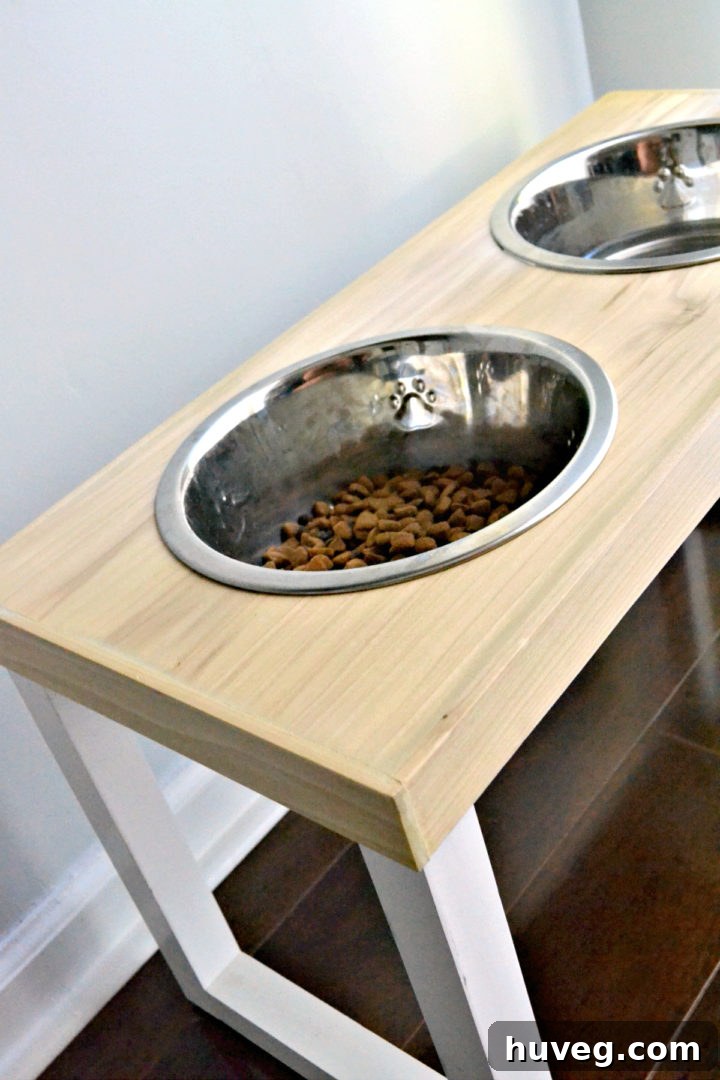
It was a truly beautiful day outside when I finished this project, having already spent time working on the bar area in the kitchen. I temporarily placed the brand-new dog food stand near the sliding glass door for a quick photo session and to observe Charlie’s initial reaction. While this isn’t its permanent home, Charlie was immediately intrigued by her new, sophisticated dining area. The best part? Since its introduction, she has been eating from her elevated feeder without a single tipping incident. This DIY project has genuinely transformed her mealtime routine and, consequently, our home environment.
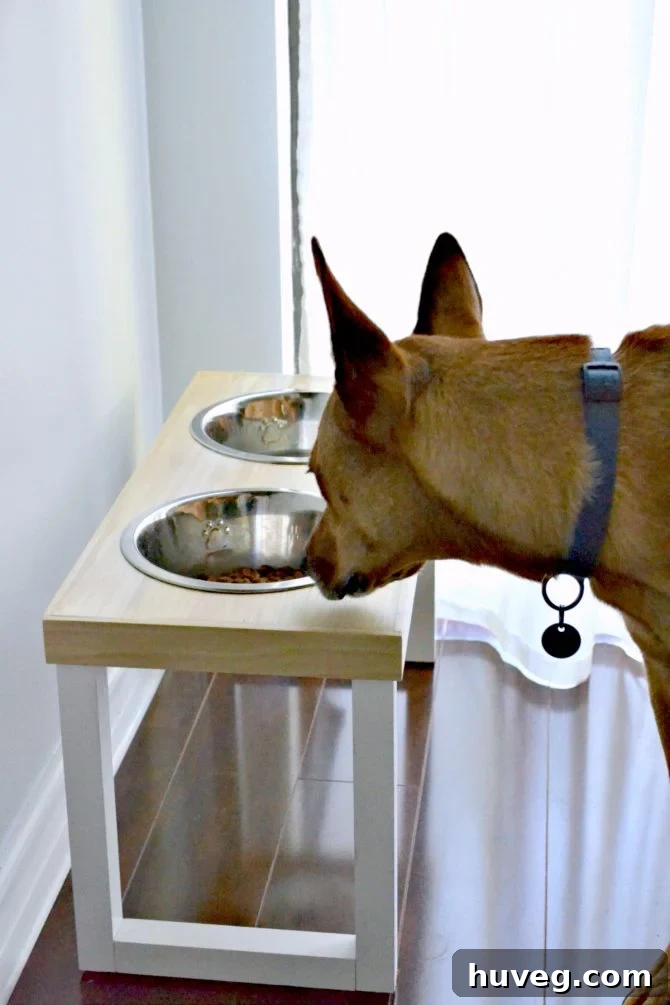
Yay for happy endings and functional DIY solutions!
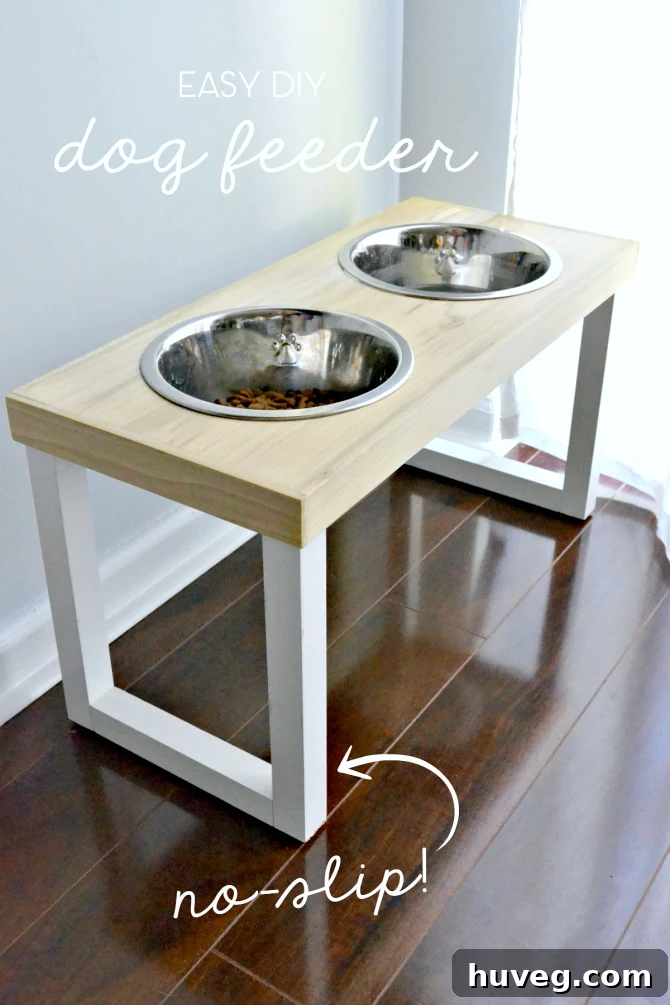
Project created by Sarah Fogle of The Ugly Duckling House for Scotch® Mounting and Fastening