Resin Art Transformation: Achieve a Diamond-Like Gloss

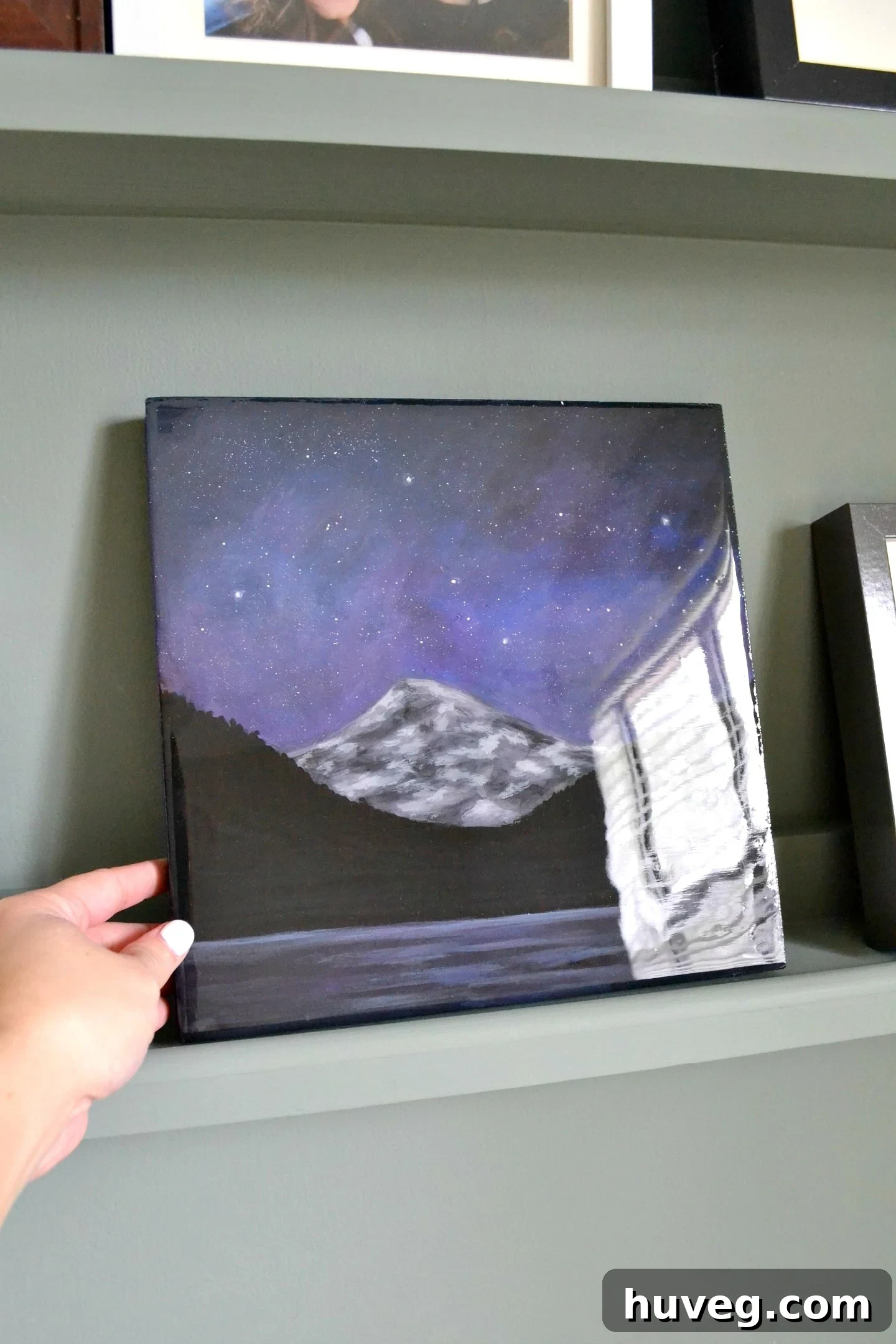
Welcome to part two of our comprehensive series on crafting custom artwork! In part one, we guided you through the exciting process of creating a unique night sky mountain painting using simple acrylic techniques. Today, we’re elevating that artwork to a professional, gallery-worthy standard by sealing it with epoxy resin. This crucial step not only provides a stunning, high-gloss finish but also offers unparalleled protection, preserving your artistic creation for years to come. If you’re ready to transform your painting with a durable, crystal-clear coat, and even have a little fun with fire, you’ve come to the right place! This beginner-friendly tutorial will cover everything you need to know for a flawless resin finish.
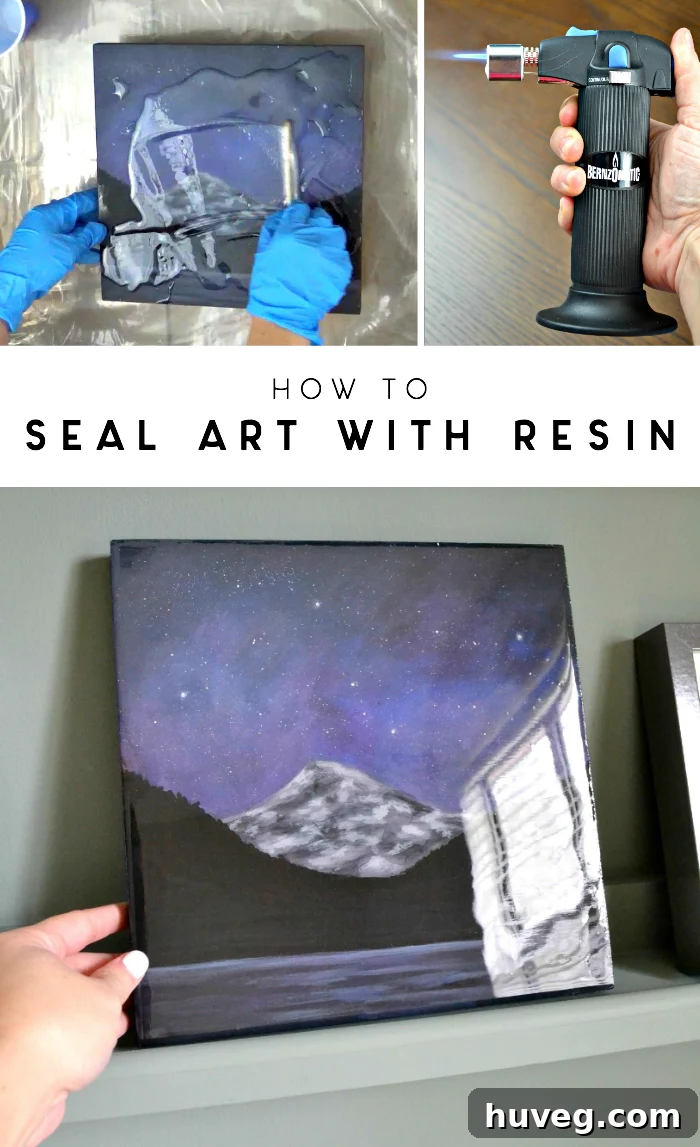
This post was sponsored by Bernzomatic.
Why Seal Art with Epoxy Resin? Unveiling the Benefits of a High-Gloss Finish
While traditional framing with glass or plexiglass offers a degree of protection, sealing your artwork with epoxy resin presents a superior and increasingly popular alternative. This modern technique not only enhances the visual appeal of your piece but also provides robust, long-lasting preservation. Here’s why artists and DIY enthusiasts are increasingly turning to resin for their creations:
- Unmatched Protection: Epoxy resin creates a hard, durable shield over your artwork, effectively protecting it from dust, grime, moisture, UV damage, and minor scratches. Unlike glass, which can shatter, cured resin is essentially a solid plastic layer, offering superior impact resistance. This means your cherished artwork is safeguarded against environmental factors that can degrade paints and canvases over time.
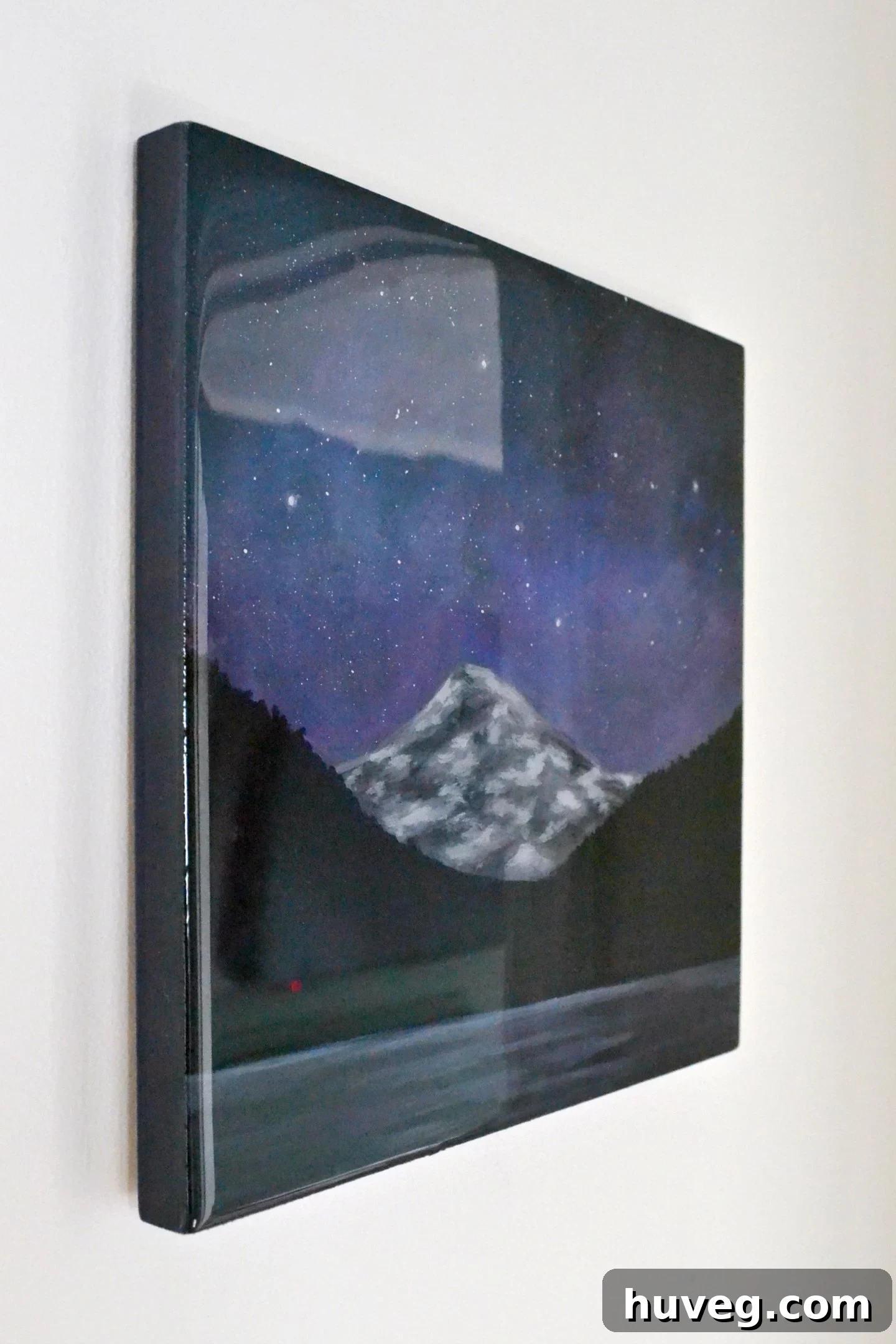
- Seamless, Integrated Finish: One of the most compelling advantages of resin is that it becomes an integral part of the artwork. There’s no separation or gap between the painting and the protective layer, which eliminates reflections and allows viewers to experience the art directly, as if viewing it under a perfectly smooth, liquid glass surface. This integrated finish gives your art a truly professional and high-end appearance.
- Enhanced Vibrancy and Depth: Resin possesses incredible optical clarity, which has a remarkable effect on the colors beneath. It intensifies pigments, making colors appear richer, deeper, and more vibrant. The high-gloss sheen also adds a sense of depth and dimension, bringing out intricate details and brushstrokes that might otherwise be less noticeable. It’s like putting your artwork under a magnifying glass of brilliance.
- Modern Aesthetic Appeal: A resin finish instantly elevates the aesthetic of any artwork, giving it a contemporary and sophisticated feel. Whether it’s a painting, a mixed-media piece, or even a photograph, the glossy, glass-like surface provides a sleek, modern look that complements a wide range of interior designs. This striking finish makes your art stand out, adding a luxurious touch to any space.
- The Element of Fun (and Fire!): Let’s be honest, there’s a certain undeniable thrill in using a micro torch to perfect your artwork. This unique aspect of the resin application process not only serves a practical purpose (removing bubbles) but also adds an exciting, almost alchemical, dimension to your DIY art project. It’s a rewarding experience that combines craftsmanship with a touch of spectacle.
Initially, I was introduced to epoxy art through woodworkers and crafters, marveling at their stunning, perfectly clear finishes. When I discovered that specialized art-safe epoxy resins were available, formulated specifically to seal and protect paintings without yellowing, I knew I had to try it. This project presented the perfect opportunity for a beginner like me to dive into the world of epoxy resin, and I quickly realized why it’s become a favorite among DIY enthusiasts. Once you experience the transformative power of resin, you’ll be eager to explore its endless possibilities!
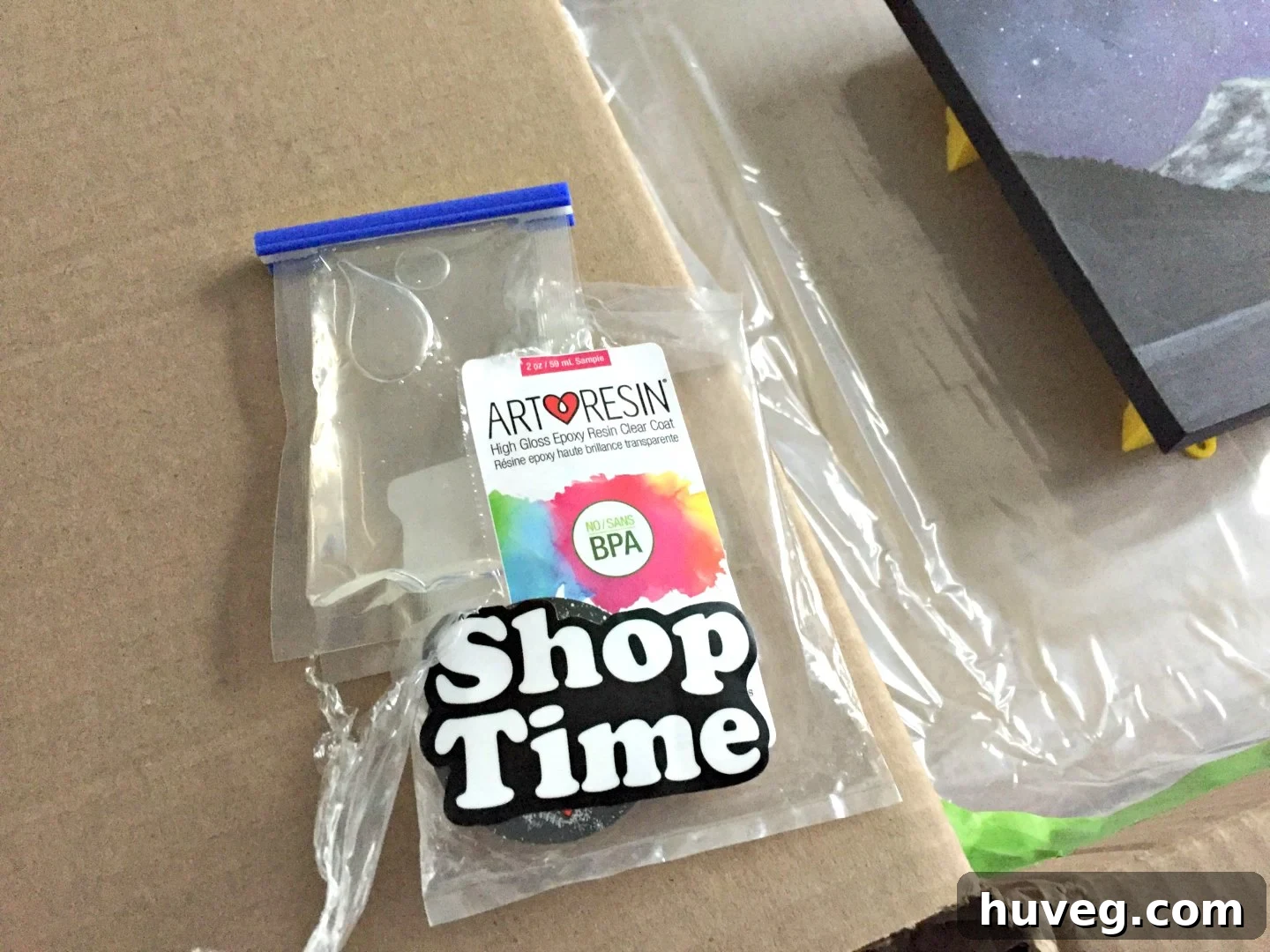
The product I used for this tutorial is a premium, art-specific epoxy resin. It’s designed to be self-leveling, ensuring a smooth, even coat without much effort. Crucially, it’s non-yellowing, meaning your art will retain its pristine clarity over time, unlike some general-purpose resins. It’s also formulated to be non-toxic, providing a safer user experience when handled correctly. This particular sample was perfect for my 10×10 canvas, providing just the right amount for a generous, protective layer.
How to Seal Art with Epoxy Resin: A Step-by-Step Guide for Beginners
Sealing your artwork with resin is a rewarding process that yields stunning results, but proper preparation and careful execution are key. Before you begin, gather all your supplies and ensure your workspace is ready. Once the mixing starts, the clock is ticking, so thorough preparation is non-negotiable!
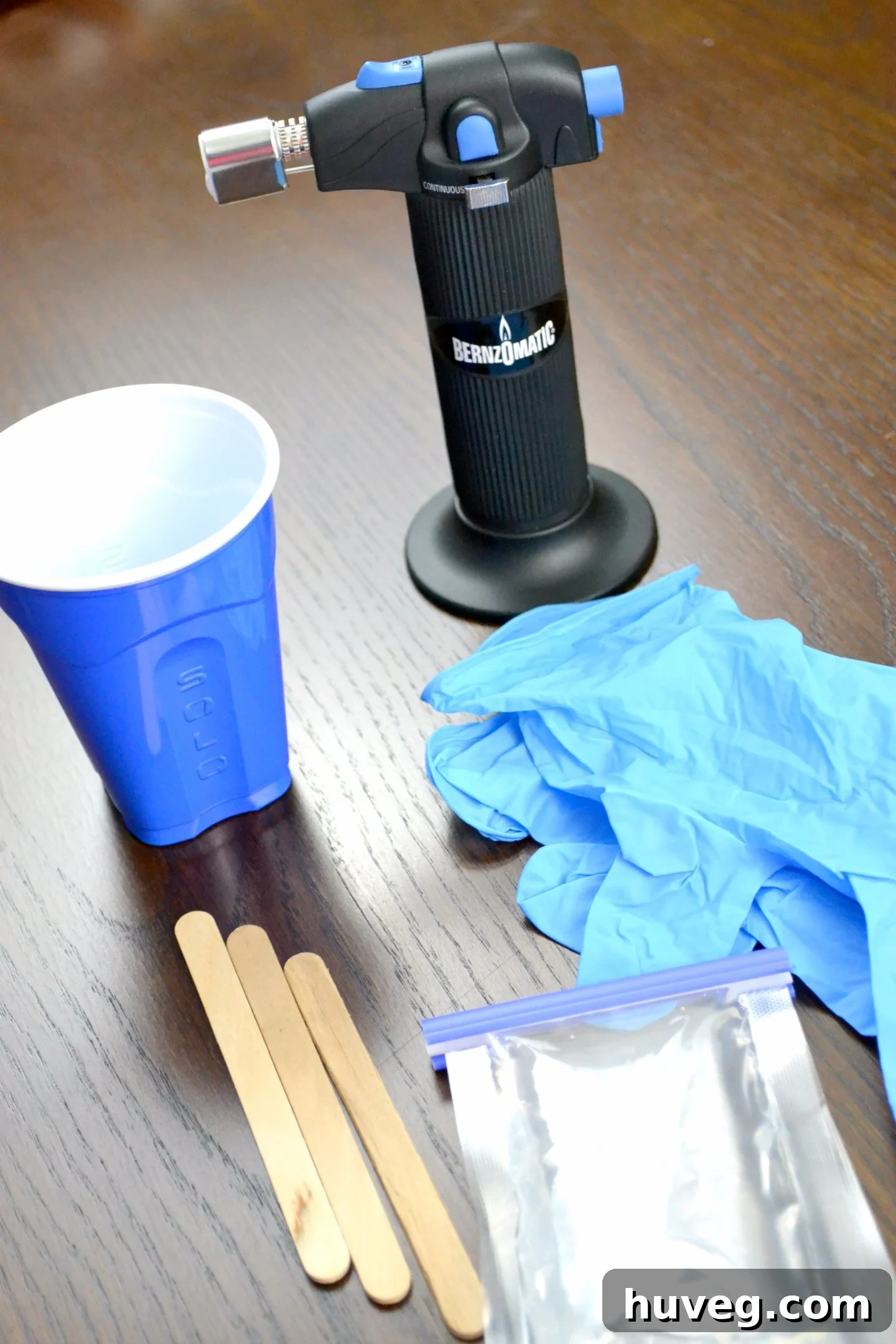
Materials Needed for Sealing Your Art with Epoxy Resin:
- Cardboard Box: Choose one large enough to comfortably enclose your artwork on all sides when elevated. This will serve as a dust cover during the crucial curing stage.
- Plastic Lining: Old garbage bags, drop cloths, or even large plastic sheeting will work. This protects your cardboard box and workspace from resin drips, making cleanup much easier.
- Paint Pyramids: These small, elevated supports allow resin to drip freely from the edges of your artwork without sticking to the surface beneath. Four equally tall lids (like spray paint caps) can be a DIY alternative, but dedicated paint pyramids are highly recommended for stability and reusability.
- Painter’s Tape or Masking Tape: For securing your plastic lining within the cardboard box, ensuring it doesn’t shift during the process.
- Disposable Mixing Cups: Look for cups with clear measurement markings. Precise measurement of resin and hardener is paramount for a proper cure, and disposable cups simplify cleanup.
- Jumbo Craft Sticks: Ideal for thoroughly mixing the resin and hardener, and for spreading the resin over your artwork. Larger sticks make mixing more efficient and reduce direct contact with the resin.
- Bernzomatic ST2200T Butane Micro Torch: Essential for efficiently popping air bubbles and achieving a perfectly smooth, glass-like finish.
- Disposable Gloves: Crucial for protecting your skin from resin contact throughout the entire process.
- Clear Gloss Epoxy Resin: Ensure you use an art-specific, non-yellowing formula for the best results and longevity of your artwork.
- Breathing Mask/Respirator: Non-negotiable for protecting your respiratory system from resin fumes.
Step 1: Prepare Your Immaculate Workspace
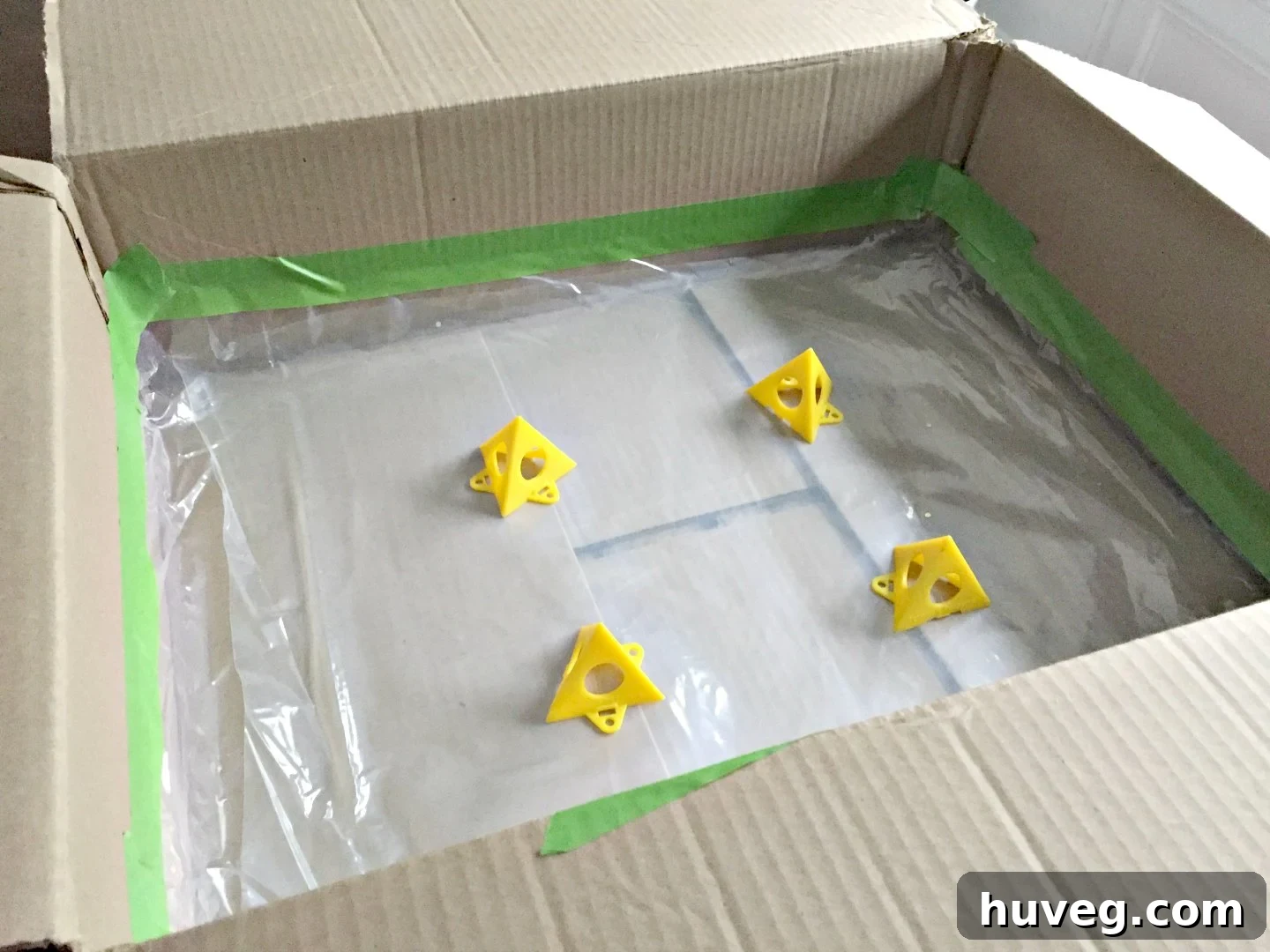
The foundation of a perfect resin finish begins with an impeccably prepared workspace. Start by lining your chosen cardboard box with plastic sheeting, ensuring all sides and the bottom are completely covered. Secure the plastic with painter’s tape so it remains taut and won’t shift during your project. Place this lined box on a perfectly level surface; use a spirit level to verify. Leveling is critical because resin is self-leveling, and any tilt in your surface will cause the resin to pool unevenly. Finally, position your paint pyramids centrally within the box. These will elevate your artwork, allowing excess resin to drip off cleanly without pooling underneath. The box itself, especially one with flaps, will serve as an invaluable dust cover, preventing airborne particles from settling into your curing resin – a common cause of imperfections.
Step 2: Position Your Artwork for Optimal Resin Flow
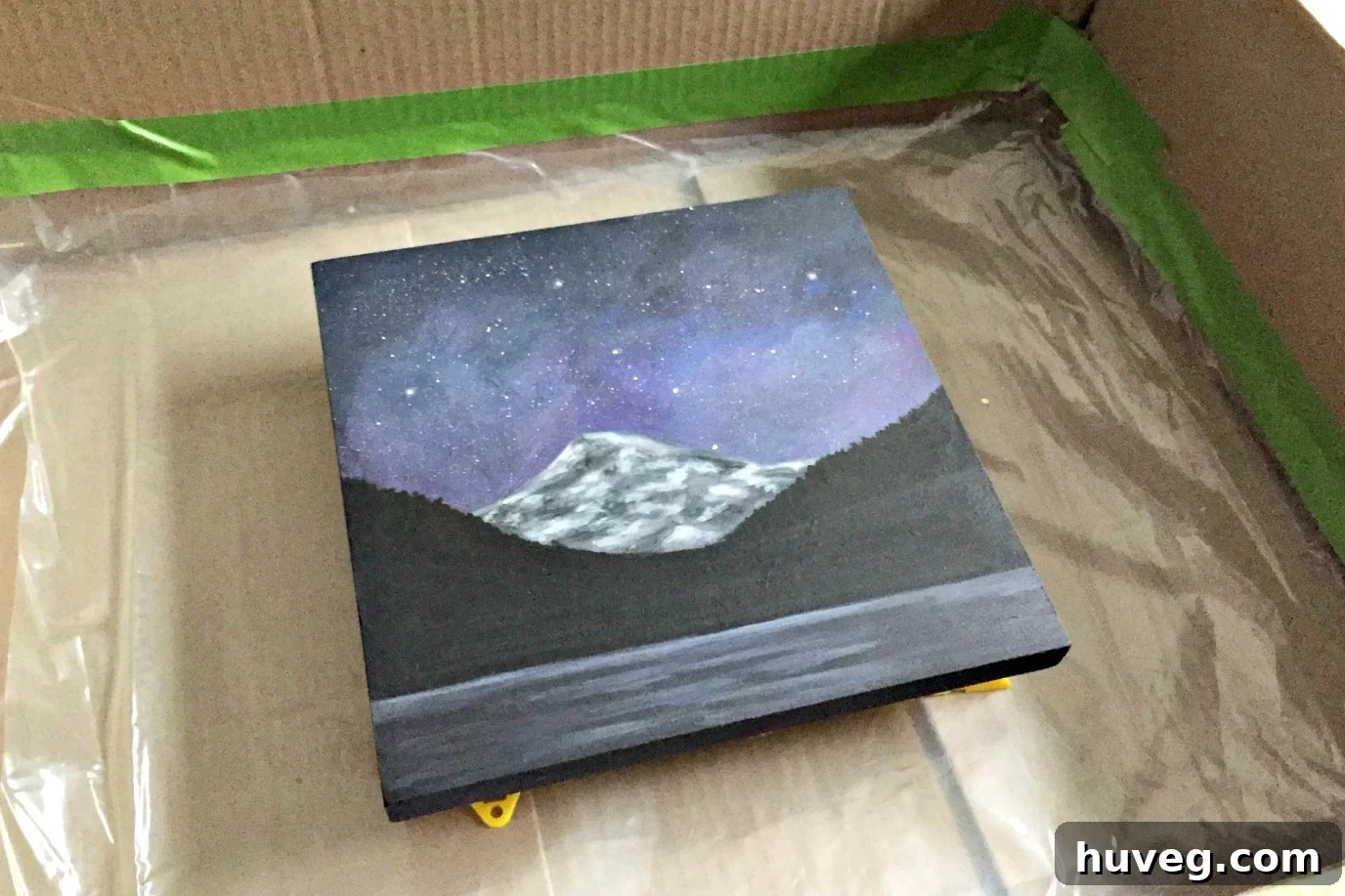
Carefully place your artwork onto the paint pyramids within your prepared box. Before proceeding, double-check that your art piece is perfectly level. Even though the resin is self-leveling, a tilted canvas will cause the resin to migrate and cure thicker on one side, leading to an uneven coat. Ensure there’s ample space around all edges of your artwork for you to work comfortably and for any resin drips to fall freely. Also, confirm that the cardboard box can be closed without any part of its interior touching the surface of your canvas once the resin is poured. Any contact during the curing process will mar your finish. It’s also a good practice to lightly clean the surface of your painting with a soft, lint-free cloth just before this step to remove any lingering dust or debris.
Step 3: Accurately Mix Your Epoxy Resin – Precision is Key!
This is arguably the most critical step for a successful resin project. Epoxy resin consists of two parts: a resin and a hardener, which chemically react when mixed. Most art resins require a 1:1 ratio, but always consult your specific product’s instructions as ratios can vary. Precision here is paramount; even a slight deviation can lead to improper curing, resulting in tacky spots, cloudiness, or a soft finish. If you’re unsure about the exact quantity of resin needed for your project, a helpful online resin calculator can provide an accurate estimate. For my 10×10 canvas, I calculated needing 3 ounces but mixed a total of 4 ounces (2 ounces of resin and 2 ounces of hardener) to ensure I had a comfortable excess.
Once you’ve donned your protective gloves, carefully measure and pour both components into a disposable mixing cup. Now, for the crucial part: stir vigorously for a full three minutes. And we mean *three whole minutes*. Set a timer on your phone and scrape the sides and bottom of the cup thoroughly as you mix. Undermixing is the most common mistake for beginners and can result in soft, uncured areas on your artwork. You’ll notice the mixture may become slightly warm during stirring; this is a normal exothermic chemical reaction. While stirring, avoid whipping air into the mixture excessively, but focus on comprehensive blending. At this stage, some artists choose to add pigment powders, dyes, or glitter for unique visual effects; however, for a clear protective coat, no additives are necessary.
Step 4: Pour and Evenly Spread the Clear Resin Coat
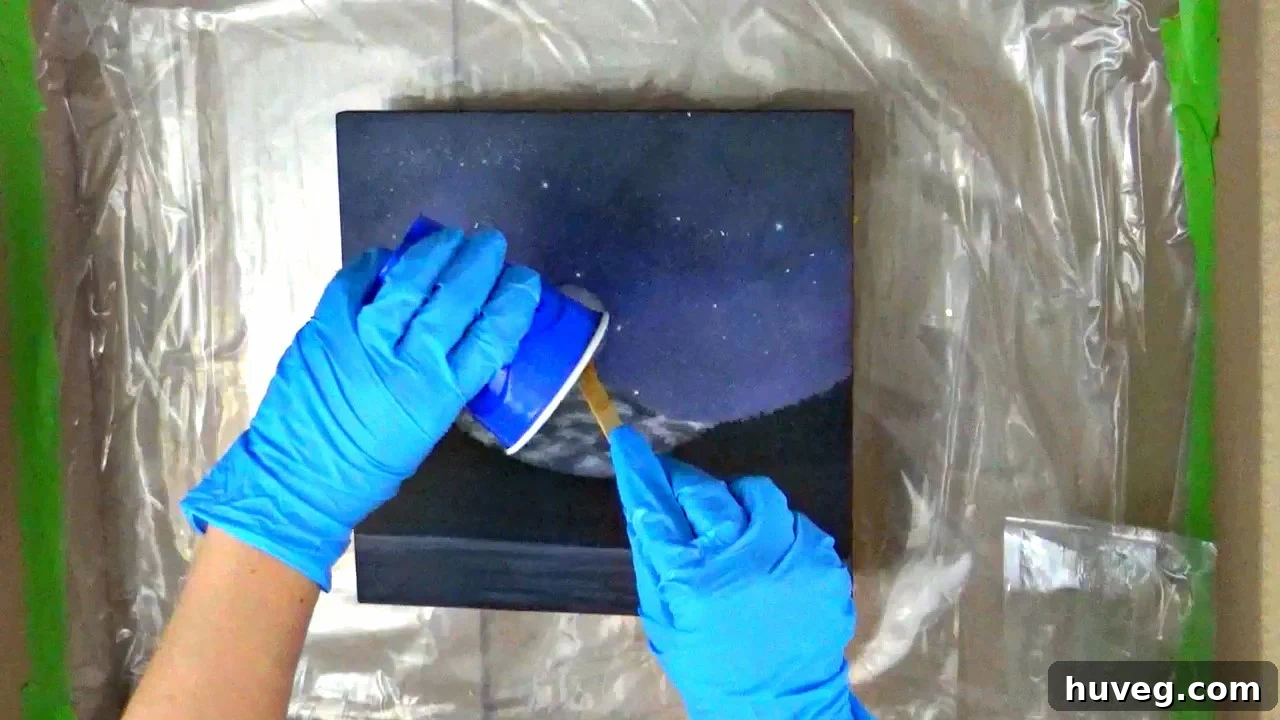
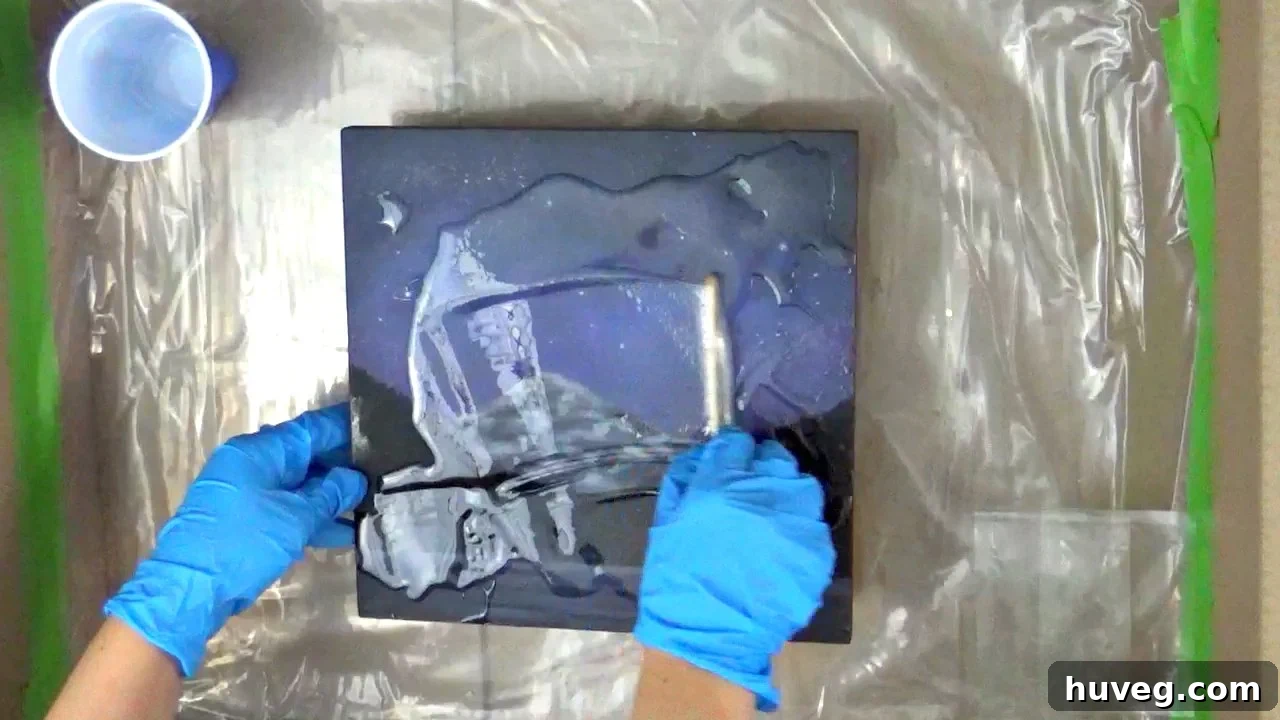
With your resin perfectly mixed, it’s time for the exciting pour! Take a deep breath and confidently pour the entire contents of your mixing cup onto the center of your artwork. Don’t worry if it looks thick, blobby, or full of tiny air bubbles at first – we’ll address those shortly. Using one of your jumbo craft sticks, gently guide the resin across the entire surface of your artwork, ensuring it reaches all edges. Allow the resin to naturally flow and self-level, but assist it in covering every inch. Extend the resin over the sides of your canvas as well, gently spreading it down the edges to create a seamless, wrapped look. You have approximately 45 minutes of working time (also known as “pot life”) before the resin starts to thicken and cure, so work deliberately but efficiently. You’ll notice some drips forming along the bottom edges of your canvas; this is normal and means you have good coverage.
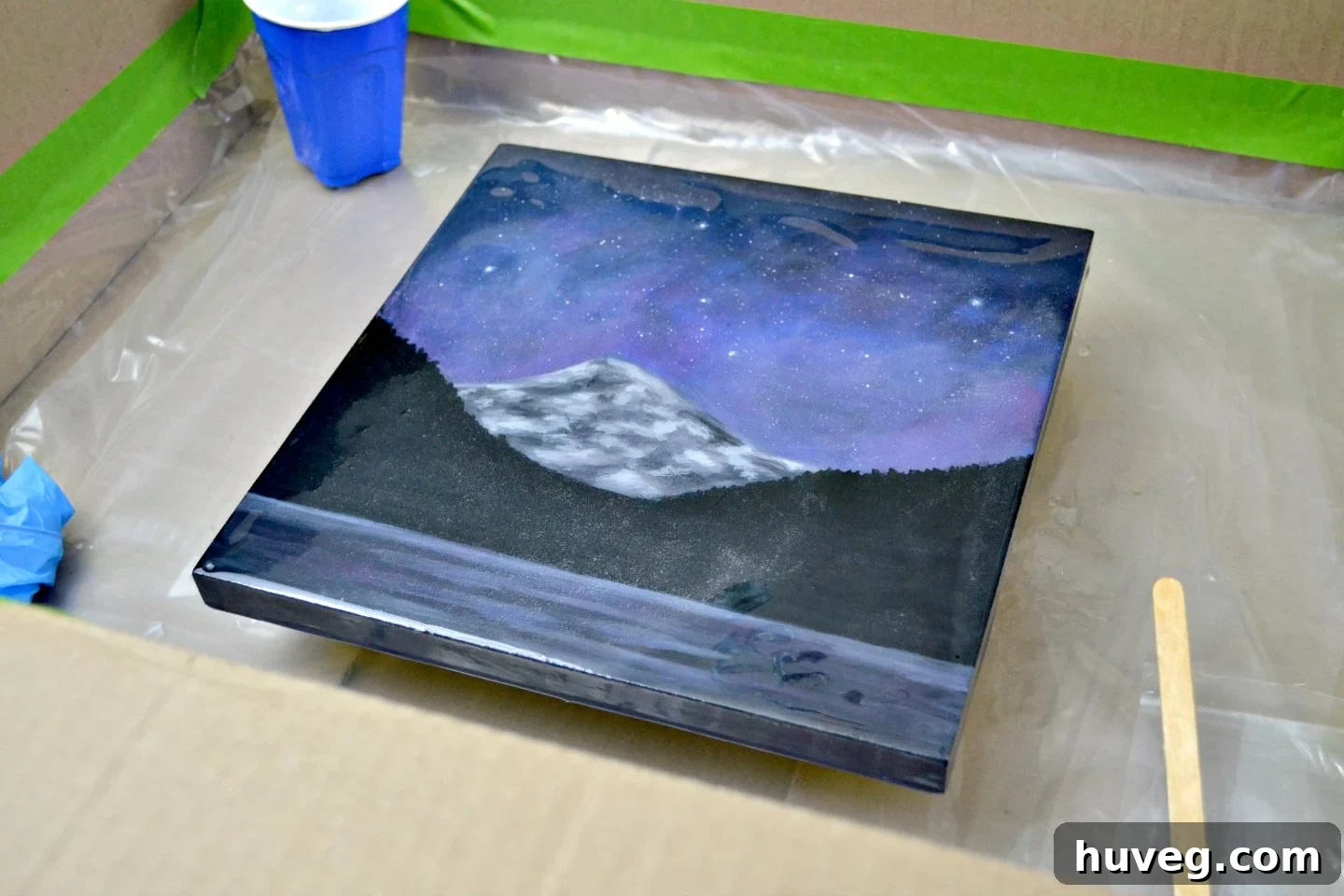
Step 5: Eliminate Air Bubbles for a Flawless, High-Gloss Finish
After pouring, you’ll likely observe numerous tiny air bubbles trapped within the resin, especially if you stirred vigorously or if your canvas texture held air. While some resin instructions suggest simply “blowing” on the surface, this method is largely ineffective for significant bubble removal and risks introducing dust or lint. The most effective and satisfying way to achieve a perfectly smooth, glass-like finish is by using a micro torch or heat gun.
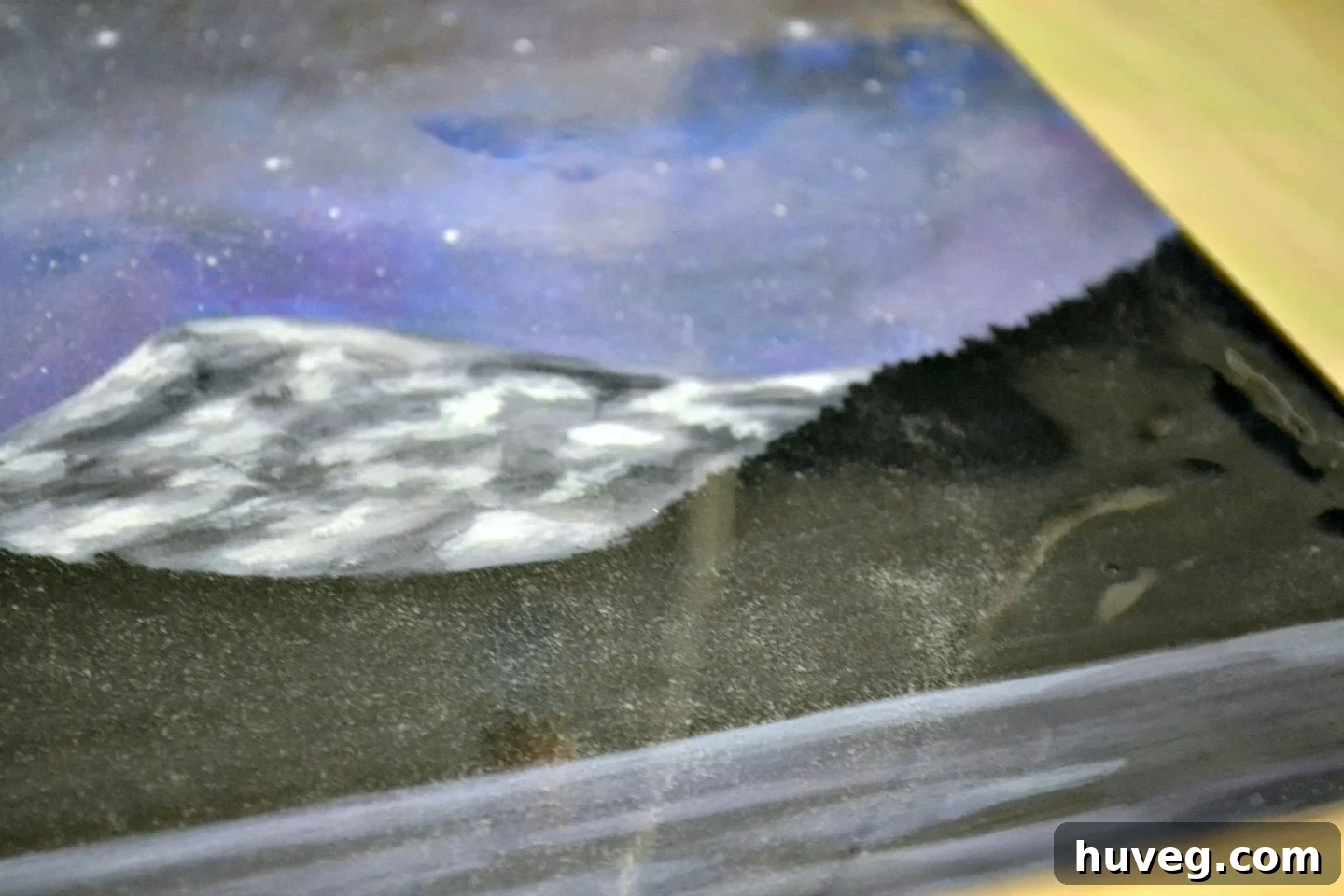
For this project, I used a Bernzomatic ST2200T Butane Micro Torch, which made quick work of the bubbles. Light the torch and, keeping it moving continuously, pass the flame swiftly and evenly over the entire resin surface. Do not hold the flame in one spot for too long, as this can scorch the resin or your artwork. The heat from the torch works by temporarily lowering the viscosity of the resin, allowing the trapped air bubbles to rise to the surface and pop. It’s a fascinating chemical reaction to witness, as the surface transforms from bumpy to perfectly smooth right before your eyes. Check your artwork from different angles under a good light source to ensure you haven’t missed any stubborn bubbles. Repeat this process as needed within your resin’s working time until the surface is crystal clear.
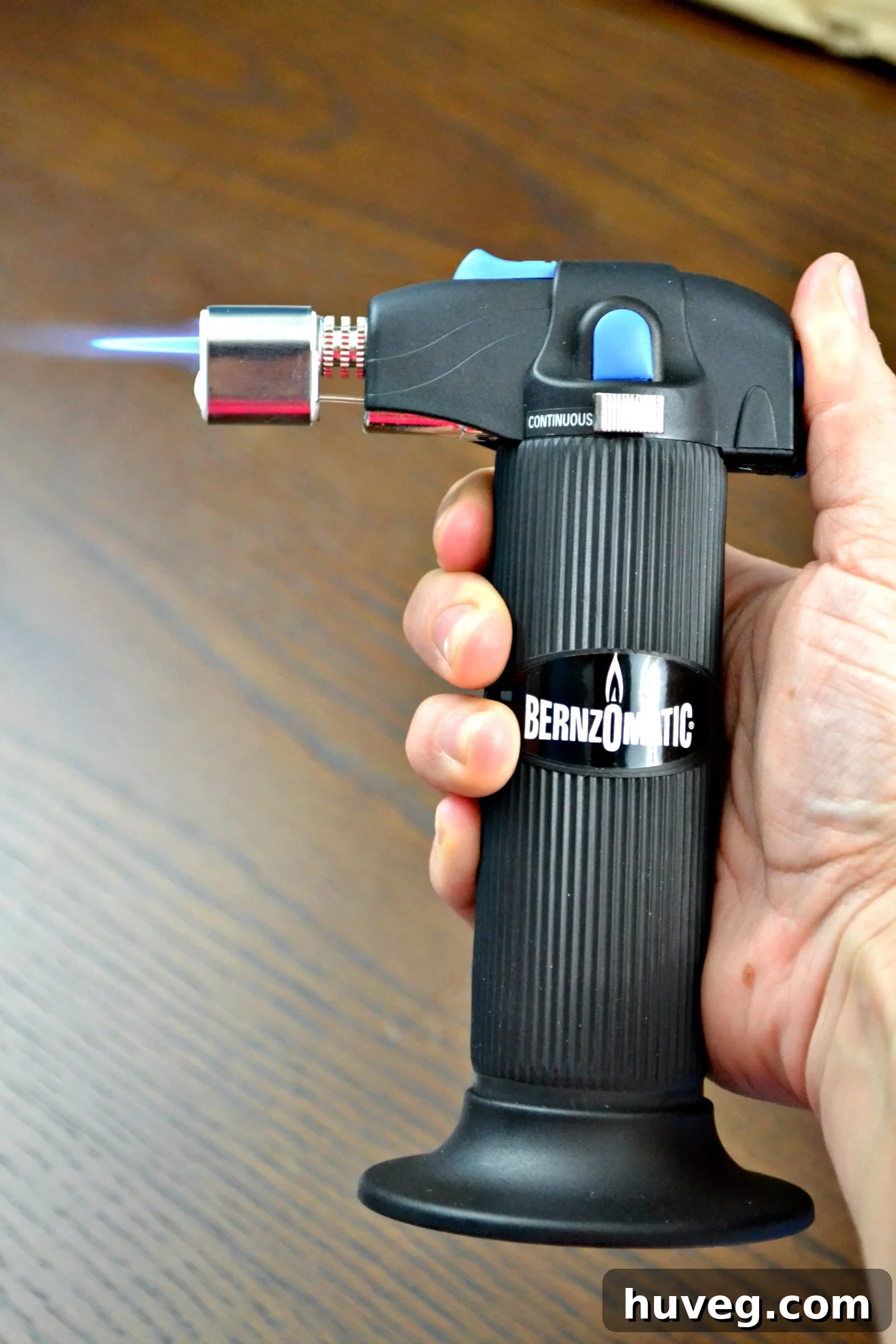
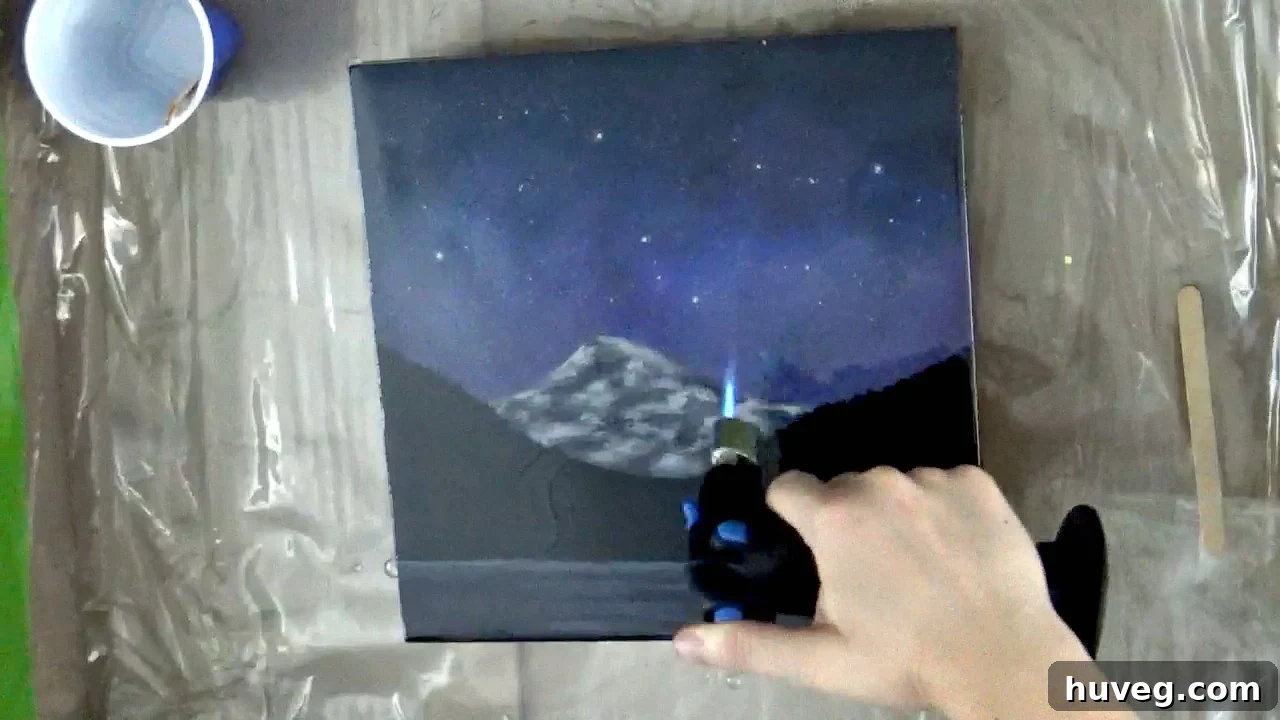
The transformation after using the torch is truly remarkable. All that remains visible are the intricate brush strokes of the painting beneath, now magnified and protected by a flawless, glass-like layer. This step is not just functional; it’s incredibly satisfying and truly elevates the ‘wow’ factor of your finished piece.
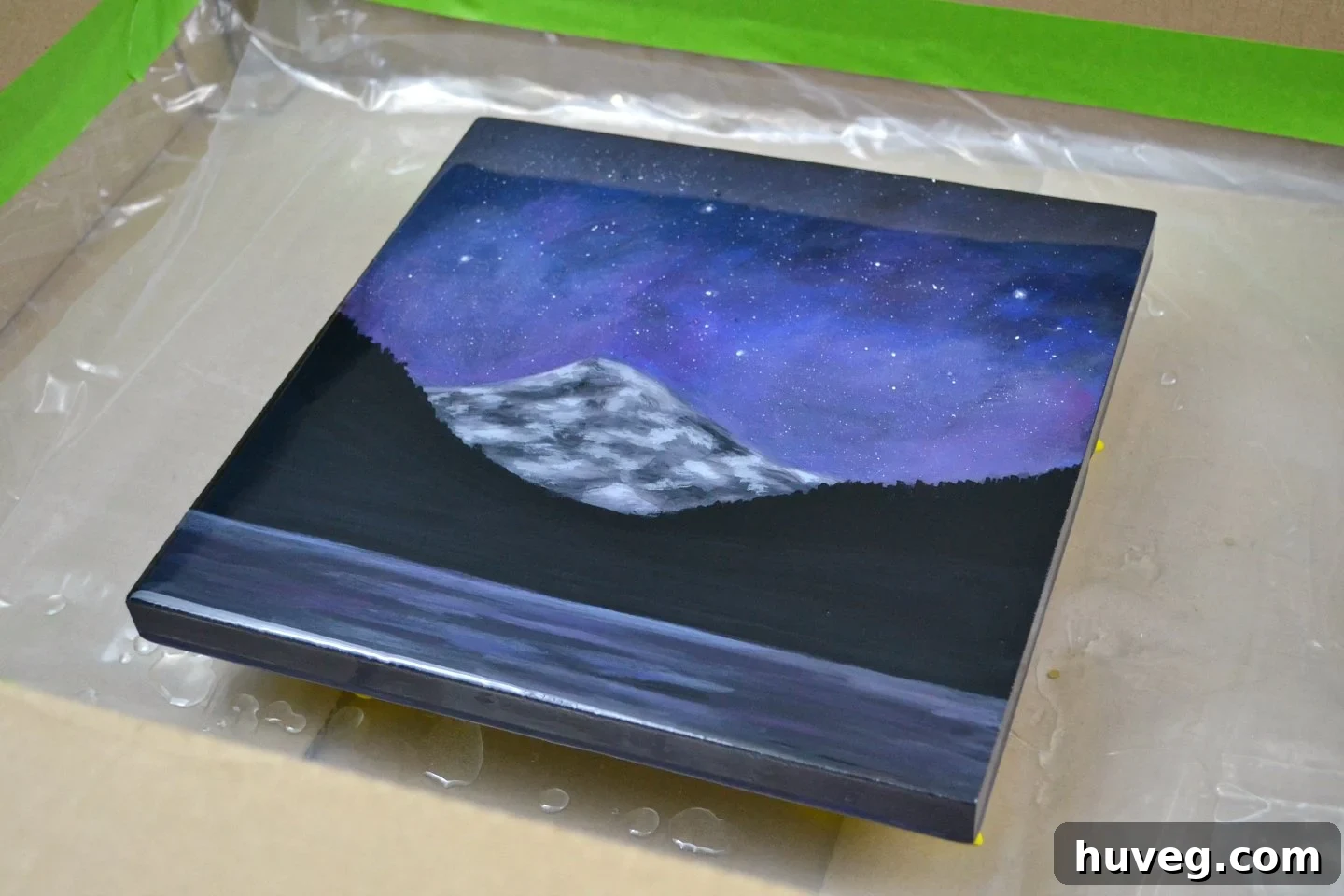
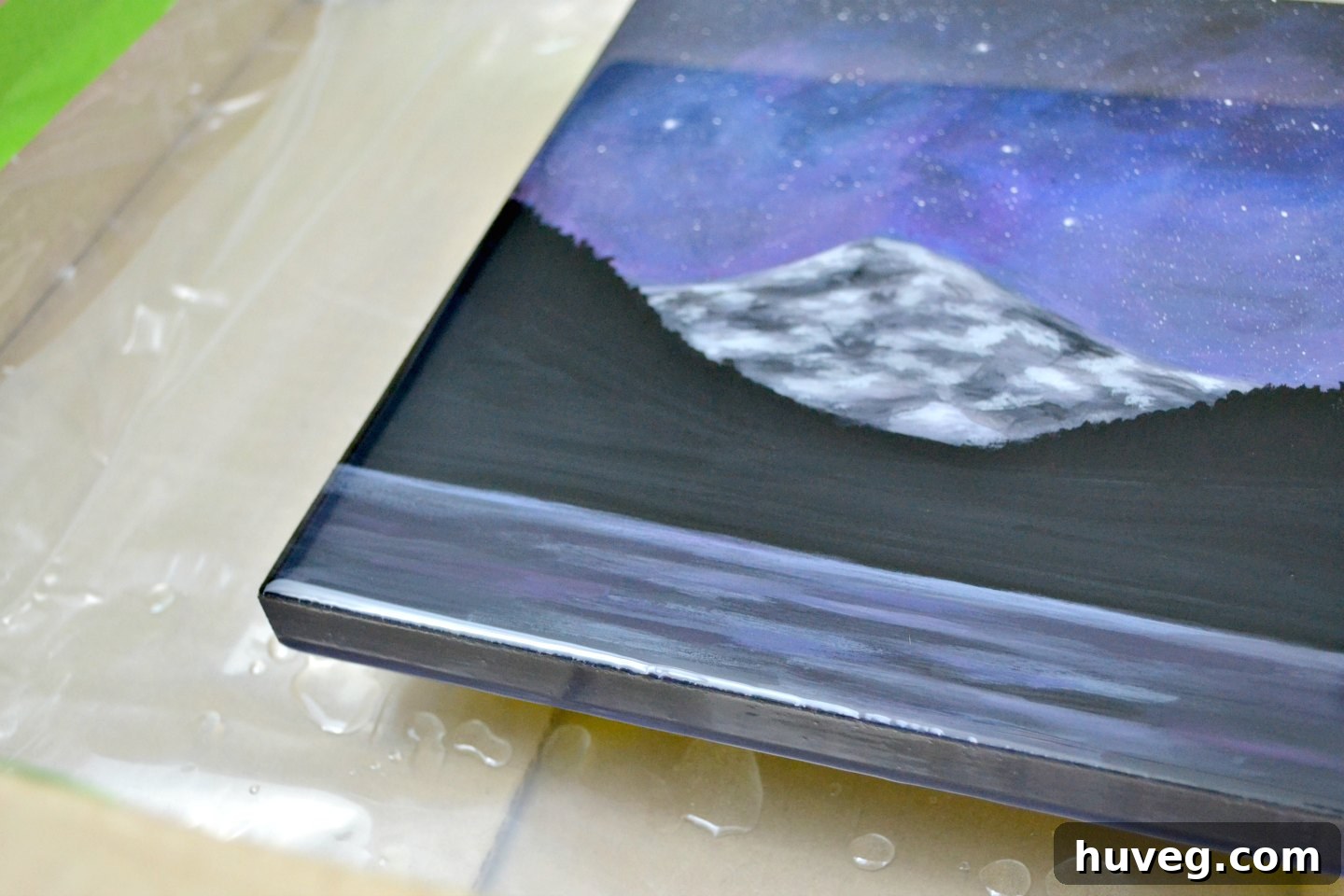
The vibrancy of the colors after the resin application is simply breathtaking. The artwork seems to come alive with an almost wet, glossy sheen that intensifies every hue and detail. It’s a moment of pure creative satisfaction.
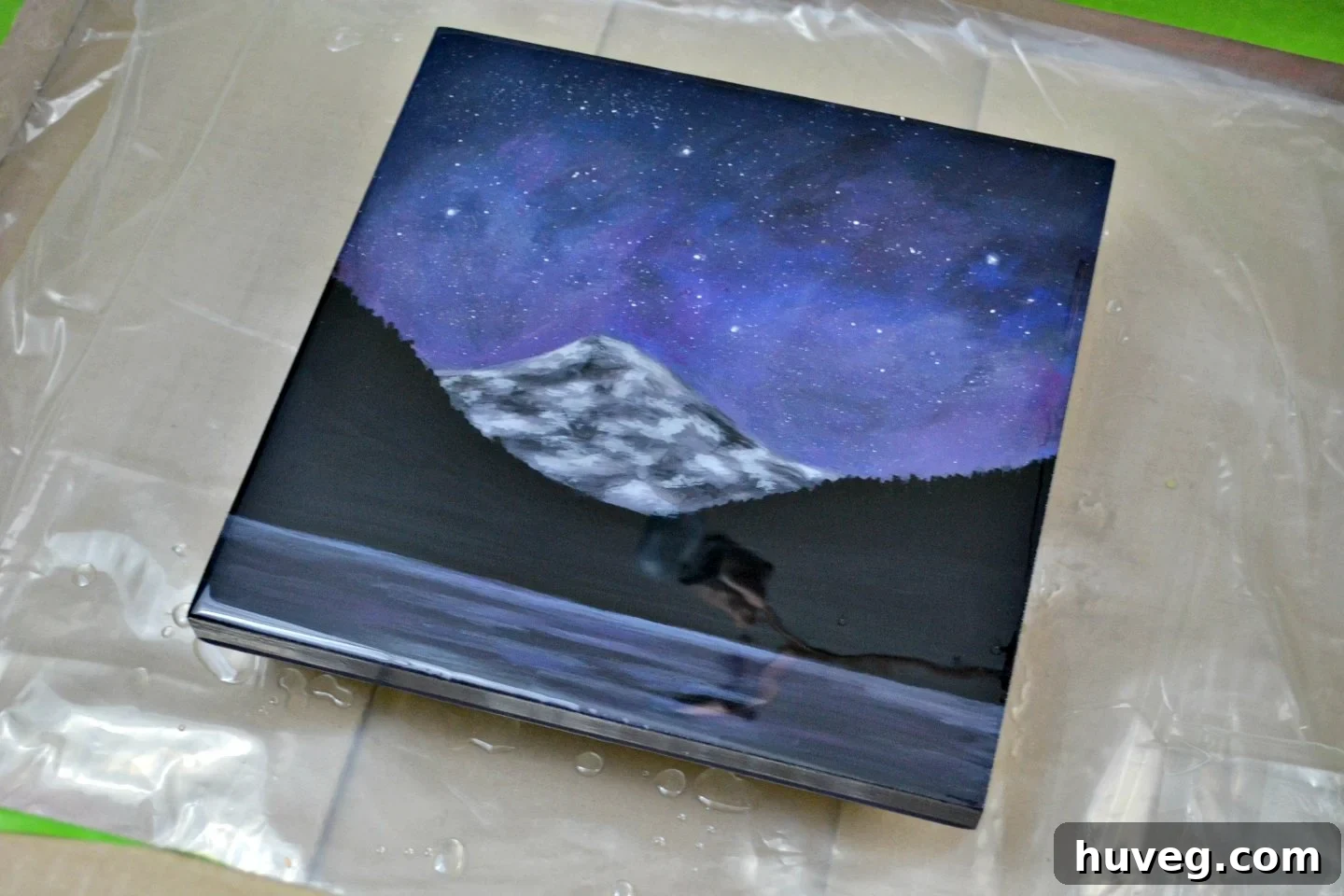
Step 6: Cover and Let Your Artwork Cure undisturbed
Once you’ve achieved a perfectly smooth, bubble-free surface, the final critical step is to protect your artwork as it cures. Gently fold the flaps of your cardboard box over the art piece, creating an enclosed environment. Be extremely careful to ensure no part of the box or any other object touches the wet resin surface. If your box has seams or gaps, consider draping an additional sheet of plastic over the entire setup for extra protection. This sealed box acts as a barrier, shielding the resin from dust particles, pet hair, insects, and other airborne contaminants that could settle and mar the pristine finish during the curing process. Resin typically cures to a touch-dry state in about 24 hours, but a full, hard cure can take up to 72 hours, depending on the specific product and environmental conditions (temperature and humidity play a significant role). It’s always best to leave it undisturbed for the maximum recommended time to ensure optimal hardness and durability. For instance, I strategically planned this project just before leaving town, ensuring it had several days to cure completely without any accidental interference.
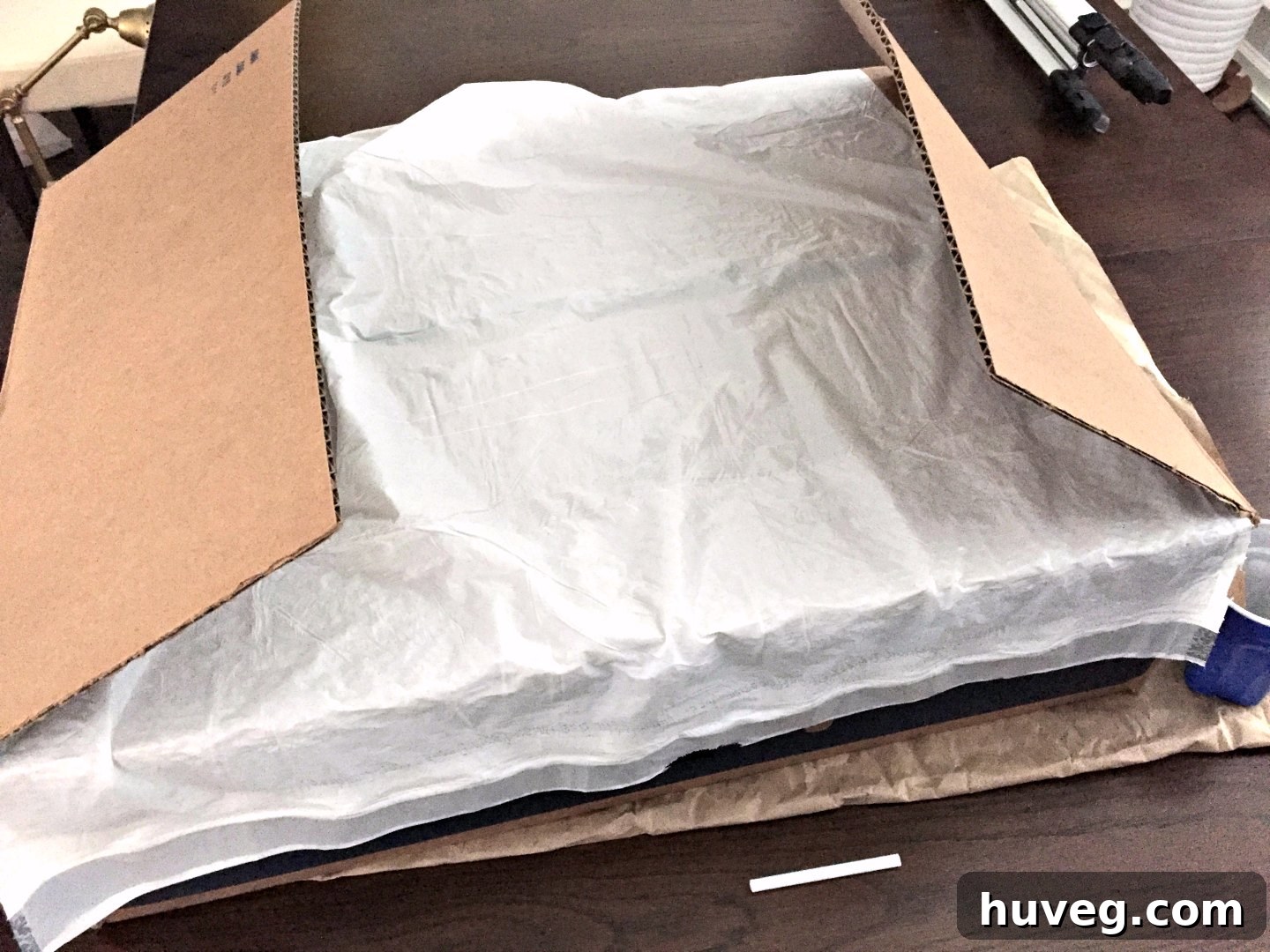
Step 7: Unwrap Your Masterpiece and Revel in the High-Gloss Finish!
After the recommended curing time, the moment of truth arrives! Carefully unwrap your artwork, and prepare to be amazed by the transformation. Your painting, once a simple canvas, will now boast a stunning, high-gloss, crystal-clear protective layer that looks and feels like glass. The colors will appear incredibly vibrant, and the depth of the artwork will be enhanced like never before. I immediately placed my newly sealed piece alongside other art on the picture ledges in my guest bedroom, and the difference was astonishing. The resin not only provides superior protection against wear and tear but also eliminates the need for glass, simplifying future framing choices.
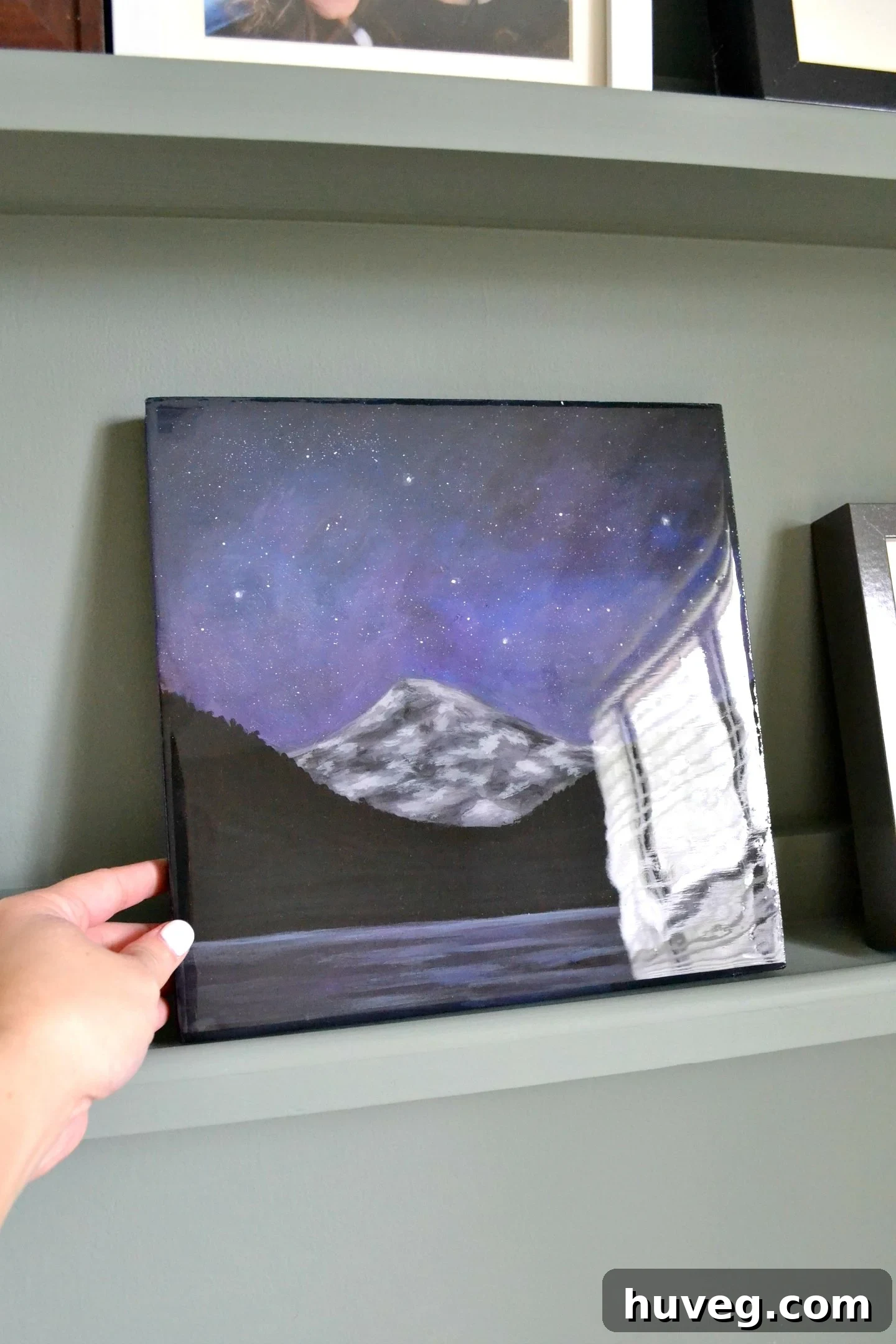
While the resin offers a sleek, modern, frameless look, I still believe a frame can add a final touch of elegance and permanence to wall-hung art. This resin-sealed piece is now ready for its custom frame, which we will explore in detail in part 3 of this series. Stay tuned to discover how to perfectly frame your resin-sealed artwork for a truly complete and polished presentation.
Frequently Asked Questions About Sealing Art with Epoxy Resin
For those new to epoxy resin, a few common questions often arise:
Q: Will epoxy resin yellow over time?
A: High-quality, art-specific epoxy resins are formulated with UV stabilizers to be non-yellowing. However, lower-grade or general-purpose resins might yellow, especially with prolonged exposure to sunlight. Always choose a product specifically labeled “art resin” or “non-yellowing” for best results.
Q: What if my resin cures sticky or tacky?
A: A sticky or tacky finish is almost always a result of improper mixing or incorrect ratios. Ensure you measure precisely and stir thoroughly for the recommended time (usually 3 minutes). Environmental factors like low temperature or high humidity can also affect curing; make sure your workspace is within the recommended temperature range.
Q: Can I apply resin over any type of paint?
A: Epoxy resin generally works well over acrylics and oils, but it’s crucial to ensure the artwork is completely dry and fully cured before applying resin. For oils, this can take several months. Always do a small test patch if you’re unsure, especially with unique paint types or mixed media.
Q: How do I clean my resin-sealed artwork?
A: Once fully cured, resin is very durable and easy to clean. Simply use a soft, lint-free cloth with a mild cleaner (like glass cleaner or water) to wipe away dust or smudges. Avoid abrasive cleaners or harsh chemicals, which could dull the finish.
Q: Can I add a second coat of resin?
A: Yes, you can typically apply a second coat of resin after the first coat has cured to a touch-dry state (usually 4-24 hours). Ensure the surface is clean and free of dust before applying the new layer for a seamless bond. A light sanding with fine-grit sandpaper may be recommended by some manufacturers for optimal adhesion, but check your product’s instructions.
This project was an incredibly satisfying dive into the world of epoxy resin, demonstrating how this versatile material can dramatically enhance and protect your artwork. I’ve seen mesmerizing art videos where creators mix vibrant pigments directly into the resin, pouring it to create swirling, liquid masterpieces. Perhaps those advanced techniques will be our next adventure! For now, enjoy your beautifully sealed and protected artwork.
Disclosure: This is a sponsored post for Bernzomatic. As a Bernzomatic Torch Bearer, I was provided complimentary torches and was compensated for my time and efforts. I was not told what to write. All opinions are my own. I am very picky about the brands I work with, and loved working on this project!