Sprouting My First Veggie Patch

How to Start Seeds Indoors: Your Essential Guide to a Thriving Vegetable Garden from the Comfort of Your Home
Once upon a time, my relationship with plants was, shall we say, complicated. My green thumb was more of a “brown thumb,” famous for its remarkable ability to turn vibrant greenery into wilting disappointment. But guess what? That era is officially over! I’ve embarked on my very first vegetable garden journey, starting seeds indoors, nurturing them in a cozy greenhouse, and now, they’re ready for their grand debut outside.
The experience of buying these tiny seeds felt like discovering a whole new side of myself. Could it be true? Me, the notorious plant killer, investing time and resources into growing something that I actually expect to harvest and eat? My past self would certainly be chuckling in disbelief.
Transparency Note: This post may contain affiliate links, meaning I might earn a small commission if you make a purchase through my recommendations. Rest assured, this doesn’t affect your purchase price. For more details, please see my disclaimer page.
Why Embrace Indoor Seed Starting for Your Vegetable Garden?
Starting seeds indoors is more than just a fun project; it’s a strategic move for any aspiring gardener, especially for those of us who live in regions with shorter growing seasons or unpredictable weather. This particular adventure began largely thanks to K, who had been advocating for a backyard vegetable patch for over a year. We decided to place it next to our soon-to-be-built shed (more on that exciting project later!). Following K’s experienced advice, we ordered a variety of seeds and opted to kickstart over half of them indoors using a convenient pre-made greenhouse kit.
The benefits of starting seeds indoors are numerous and compelling:
- Extend Your Growing Season: By starting seeds inside a few weeks or even months before the last frost date, you give your plants a significant head start. This means earlier harvests and potentially multiple crop cycles in areas with longer summers.
- Protect Young Plants: Delicate seedlings are vulnerable to harsh weather conditions, pests, and diseases when planted directly outdoors. Indoor starting provides a controlled, safe environment for them to establish strong roots and healthy initial growth.
- Cost-Effective: Buying seed packets is significantly cheaper than purchasing individual starter plants from a nursery. With indoor seed starting, you can grow a larger variety of plants for a fraction of the cost.
- Greater Variety: Nurseries often have a limited selection of plant varieties. When starting from seed, you gain access to an incredible array of heirloom, organic, and unique vegetable and herb varieties that you might not find locally.
- Improved Germination Rates: Greenhouse kits and controlled indoor environments provide optimal conditions (temperature, humidity, light) for seeds to sprout successfully, leading to higher germination rates compared to direct sowing outdoors.
- Personal Satisfaction: There’s immense joy and a real sense of accomplishment in watching tiny seeds transform into robust seedlings under your care. For a former “plant killer” like me, it was incredibly motivating and kept the excitement for spring alive during the last few weeks of cold weather!
Timing is Everything: When to Start Seeds Indoors
While the beauty of indoor seed starting allows for an earlier jump on the season, precise timing is still crucial. Planting too early can result in leggy, overgrown seedlings before outdoor conditions are favorable. Planting too late might negate the benefits of starting indoors.
K, with his extensive home gardening experience, was a valuable resource. If you don’t have an expert on hand, don’t worry! The Farmer’s Almanac offers an invaluable chart that provides specific seed-starting dates tailored to your local area’s last frost date. Simply input your zip code to get a customized schedule for a wide range of vegetables and herbs.
Generally, most vegetables benefit from being started indoors 4-8 weeks before your region’s average last frost date. Always check the specific recommendations on your seed packets, as these can vary even within the same plant family. For example, slow-growing plants like peppers and onions might need 8-12 weeks, while faster growers like lettuce might only need 3-4 weeks.
Which Seeds to Start Indoors, and Which to Avoid?
As my indoor greenhouse filled up with a vibrant mix of tomatoes, peppers, and various herbs, we intentionally set aside a few types of seeds for direct outdoor planting. Some vegetables simply don’t appreciate the disturbance of transplanting and thrive best when sown directly into the garden soil once the weather warms.
You should generally avoid starting these vegetables indoors and opt for direct outdoor sowing:
Beans, Beets, Carrots, Corn, Okra, Onions, Parsnips, Peas, Potatoes, Radishes, Spinach, Turnips
Some plants, like cucumbers, are a bit of a gray area. While it’s perfectly fine to start cucumber seeds indoors as seedlings, we decided to plant ours directly outside this time. The reason for avoiding indoor starts for the above list is primarily due to their root systems. Many develop taproots or delicate root structures that can be easily damaged during transplanting, causing significant stress and hindering their growth.
Setting Up Your Indoor Seed Starting System: The Essentials
The entire process of setting up our indoor greenhouse was surprisingly straightforward and incredibly rewarding. We used one large greenhouse kit for the vegetables and a smaller one for herbs, envisioning a small, aromatic selection near the kitchen window. Each kit came equipped with a sturdy plastic tray, a clear humidity dome lid, and compressed peat pellets designed to expand when hydrated and provide an ideal medium for seed germination.
Beyond the kit itself, here are some essential materials you’ll want to have on hand for successful indoor seed starting:
- Seed Starting Mix: While peat pellets are convenient, if you’re using traditional trays, a sterile, lightweight seed starting mix is crucial. It provides excellent drainage and aeration, prevents diseases, and is specifically formulated for delicate seedlings. Avoid using regular garden soil, which can be too heavy and contain weed seeds or pathogens.
- Grow Lights: This is arguably the most critical component for healthy indoor seedlings. Natural light from a windowsill, while helpful, is often insufficient, leading to “leggy” (tall, thin, weak) plants stretching for light. Invest in a good quality grow light (LED, fluorescent, or even incandescent for warmth) and set it on a timer for 12-16 hours a day. Position the light just a few inches above your seedlings, adjusting it as they grow.
- Heat Mat: Many seeds benefit from bottom heat to encourage faster and more uniform germination. A seedling heat mat placed under your seed trays can maintain an ideal soil temperature, mimicking natural spring warmth.
- Misting Bottle or Watering Can with Fine Rose: Gentle watering is key to avoid disturbing tiny seeds or drowning delicate seedlings. A mister bottle is excellent for keeping the surface moist, while a watering can with a fine rose allows for precise, gentle watering once seedlings emerge.
- Plant Labels: Trust me, you’ll think you remember what you planted where, but you won’t! Clear, waterproof labels are indispensable for tracking varieties and planting dates.
- Small Fan: A gentle breeze from a small fan helps strengthen seedling stems and improves air circulation, which can prevent fungal diseases like “damping-off.”
The Step-by-Step Magic of Sowing Seeds
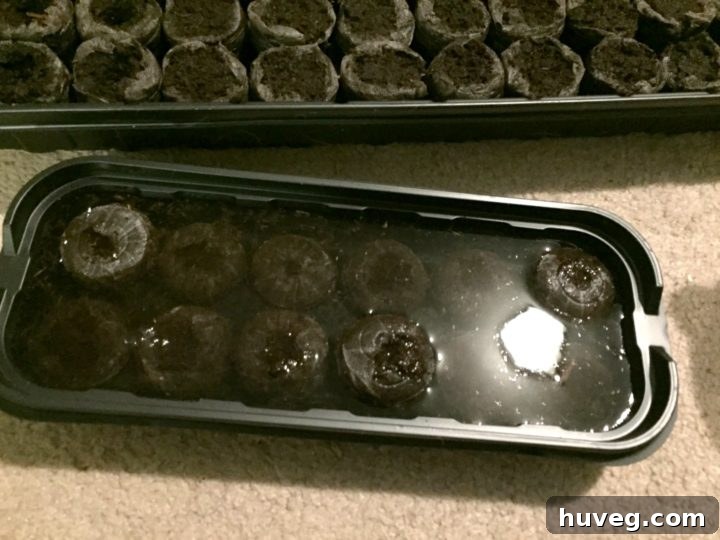
Watching the peat pellets come to life with warm water was genuinely captivating. We used a measuring cup to add the specified amount of warm water (lukewarm is best, not hot), and within seconds, the compressed pellets expanded into rich, moist soil ready for planting. The transformation from compact disc to fluffy soil is quite a sight!
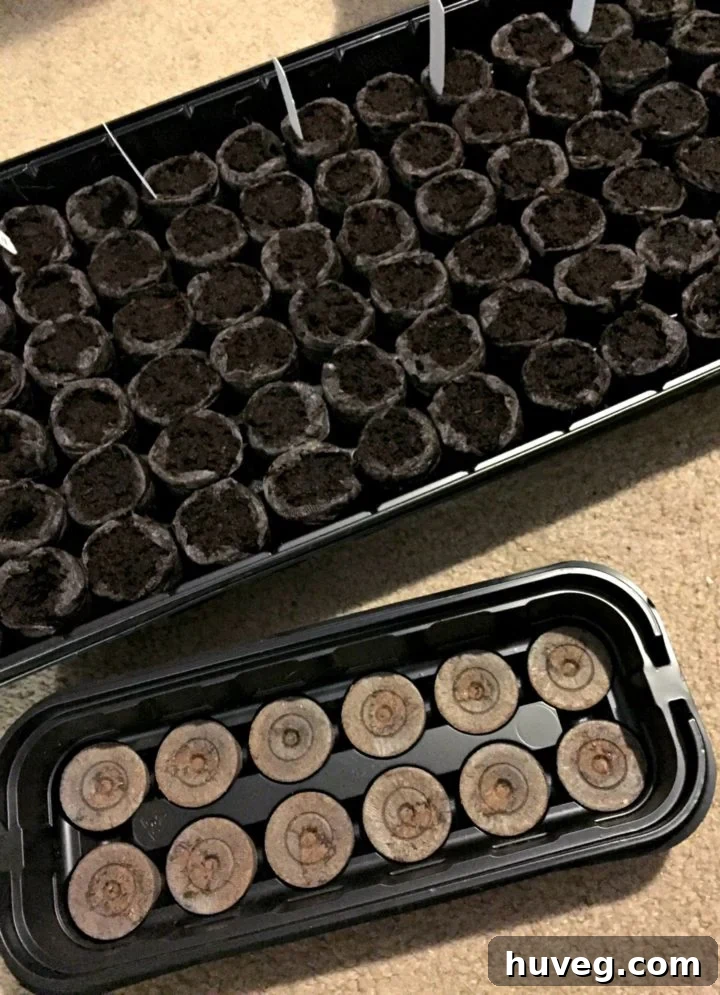
Please excuse the less-than-ideal nighttime carpet photos; I truly underestimated how fascinating this part of the process would be until it was too late to get better shots!
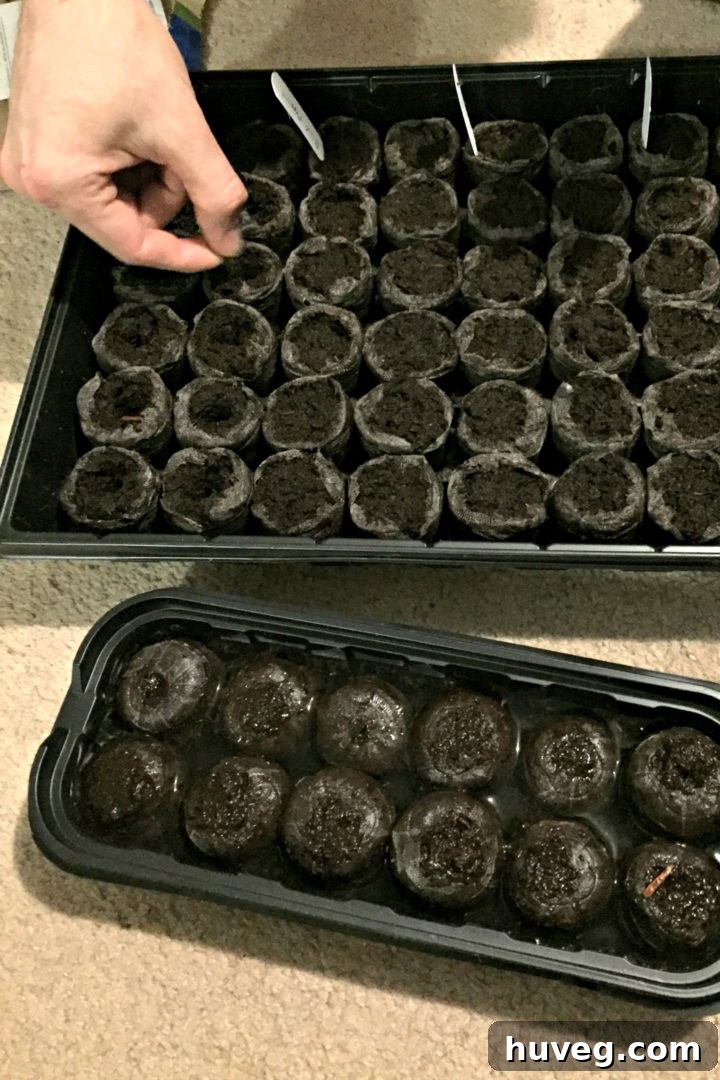
Once the pellets were fully hydrated, I took on the task of gently breaking open the top mesh of each pod to expose more of the growing medium. K, being the meticulous one, then carefully planted the seeds. He’s a bit of a perfectionist, ensuring each seed was placed at the precise depth recommended on the packet – a level of detail I confess I might have approached with a slightly more “artistic interpretation.” But hey, the results speak for themselves!
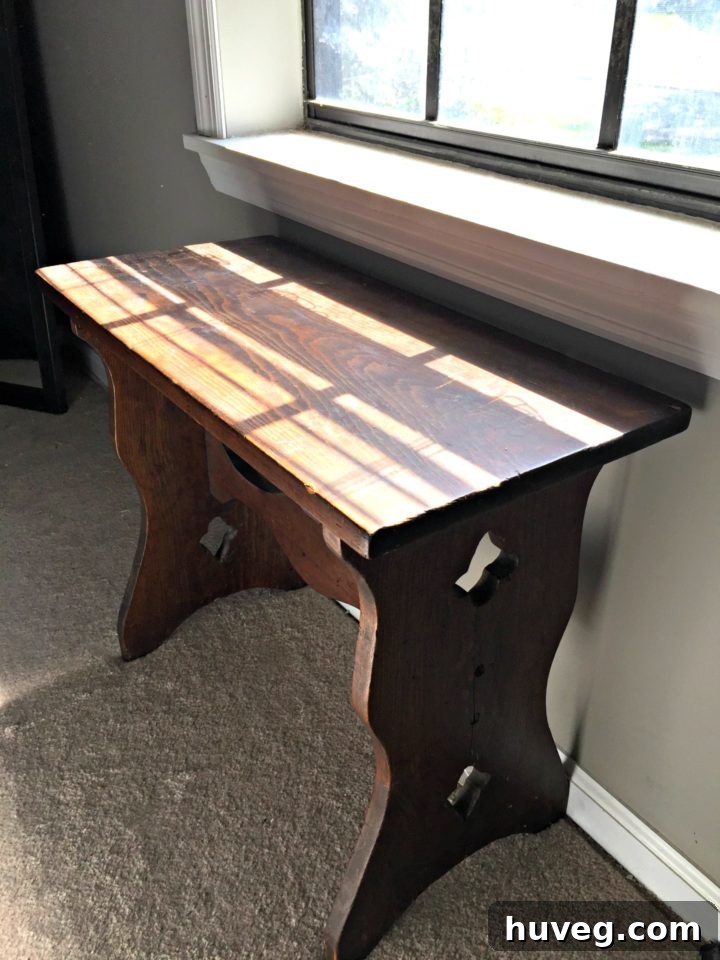
With our guest bedroom undergoing a remodel, furniture was temporarily displaced, which actually worked in our favor. An old bench that usually resided in the entryway found a perfect temporary home upstairs in the primary bedroom hallway. It was just the right height to sit directly under a large windowsill, providing ample natural light for our growing seedlings.
The Thrill of Seedling Growth!
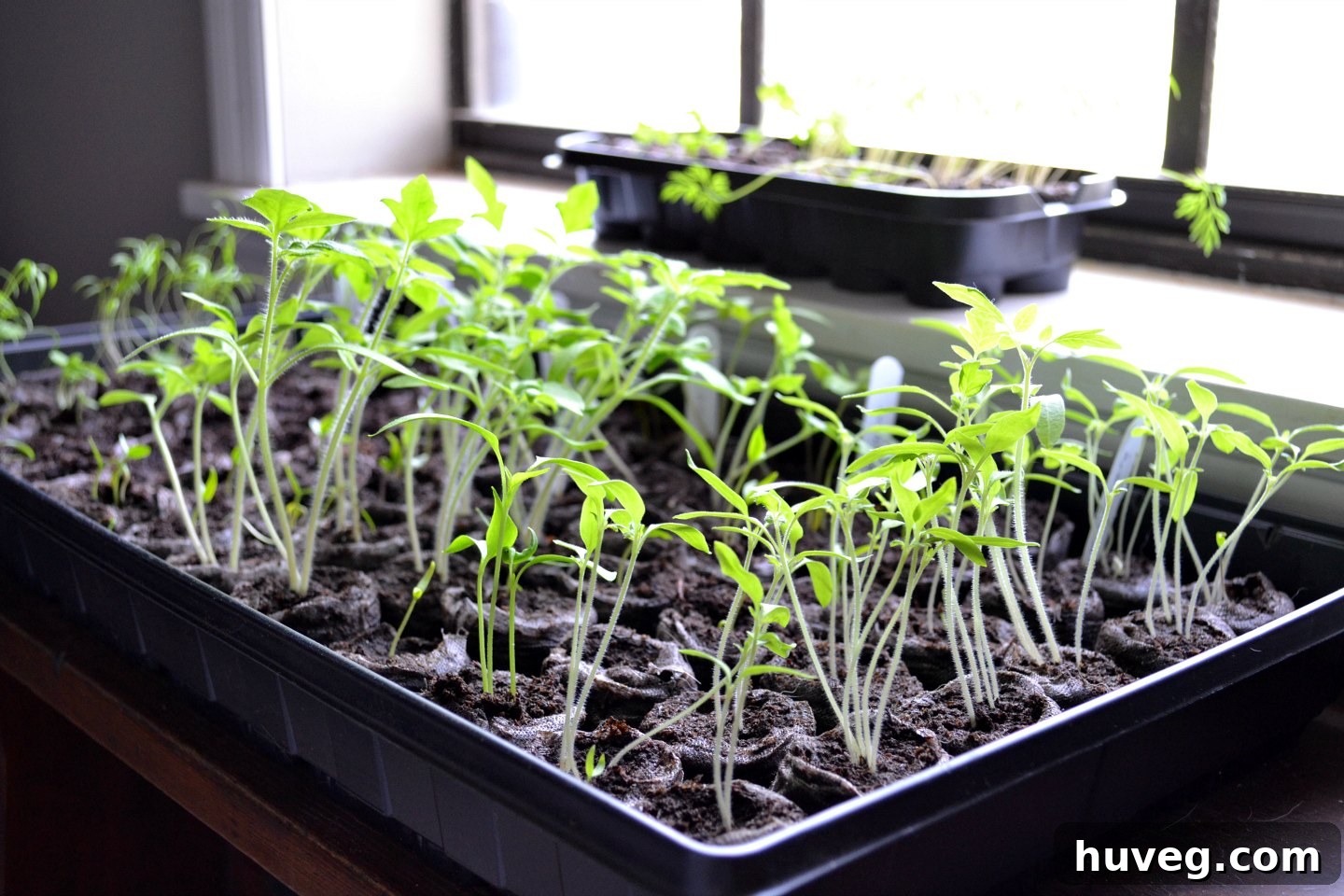
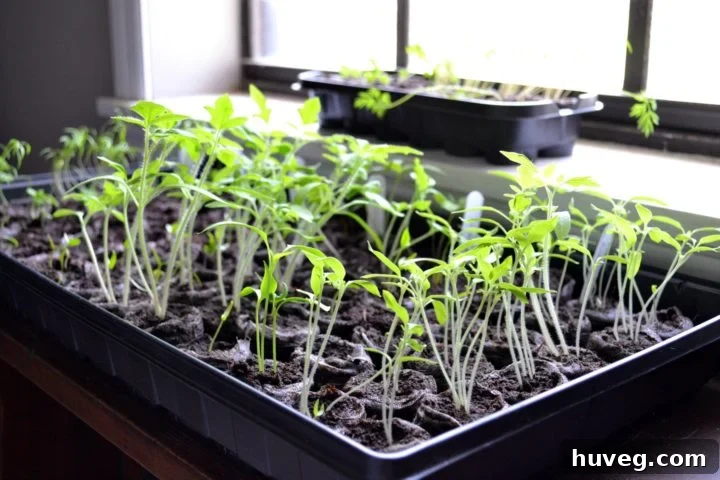
The speed at which the first sprouts emerged was truly astonishing – just a few days, it seemed. I swear I blinked, and suddenly, tiny green shoots were pushing their way through the soil, eager to greet the light.
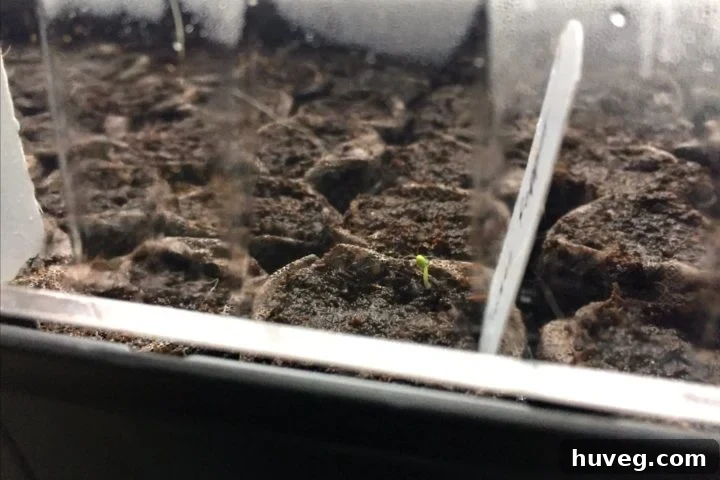
Before long, our indoor greenhouse was a bustling nursery, teeming with miniature plant life!
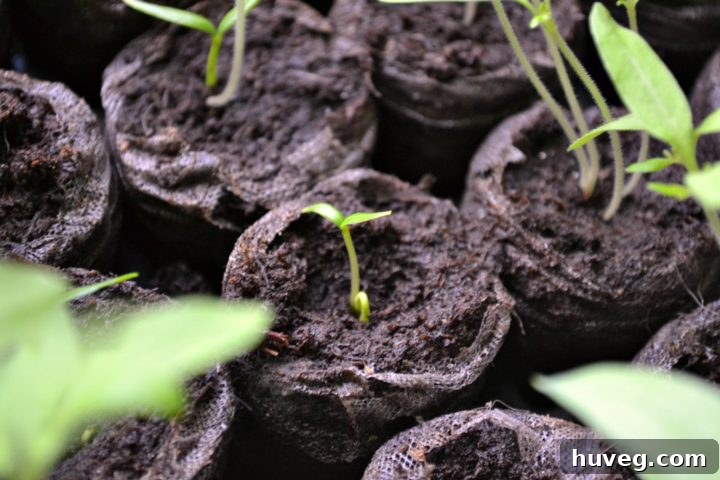
I found myself checking on them daily, captivated by each new seedling that popped up. The peppers were the initial trailblazers, but the tomatoes quickly caught up, showcasing vigorous growth. The delicate dill and fragrant basil seemed to sneak in when I wasn’t looking, adding to the lush green carpet.
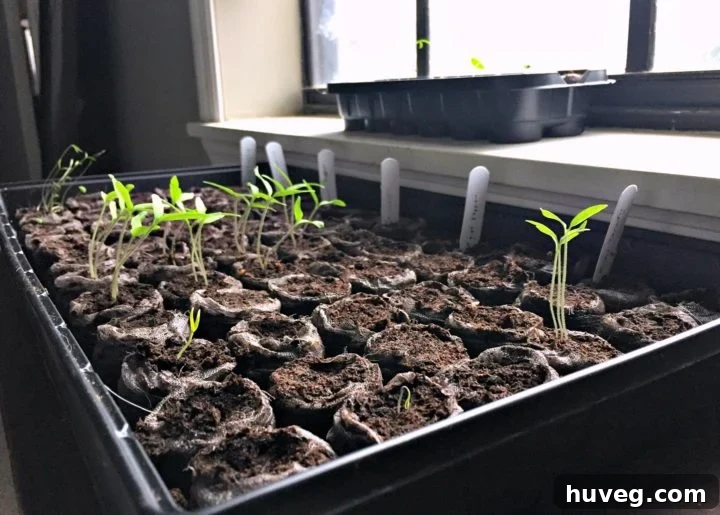
My strategy was to wait until a significant number of seedlings had emerged and grown substantially before tackling the construction of the outdoor garden beds. (Finally, a task where I felt more confident, thanks to past projects like these gardenia beds!). This allowed me to focus on other indoor DIY projects while the seedlings matured.
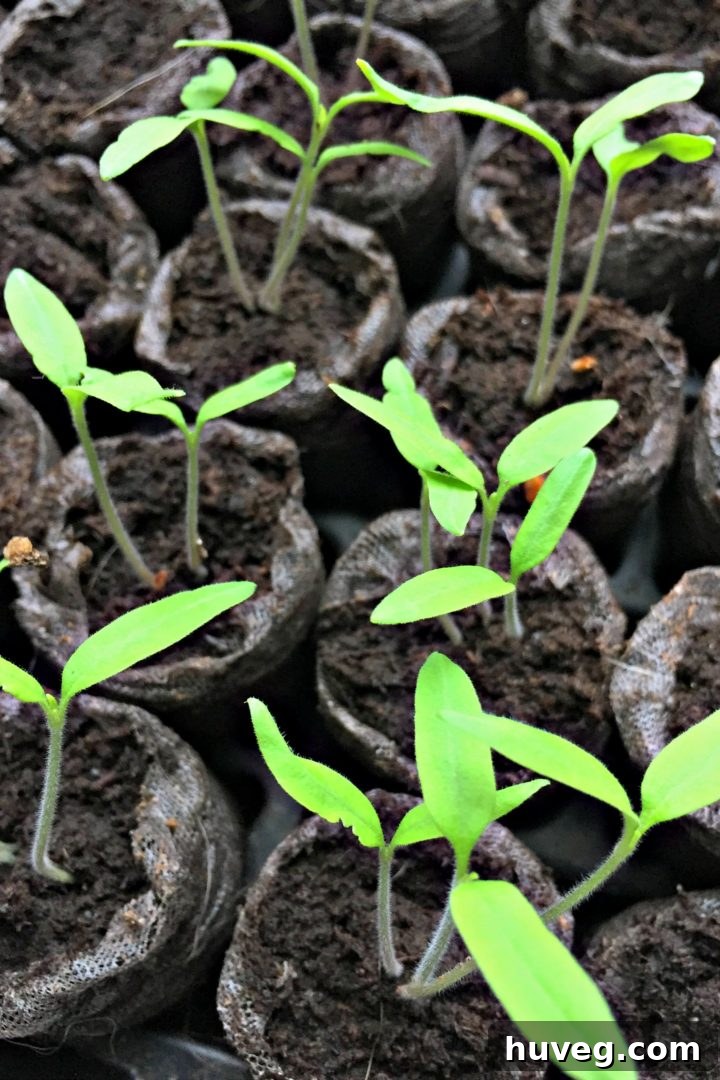
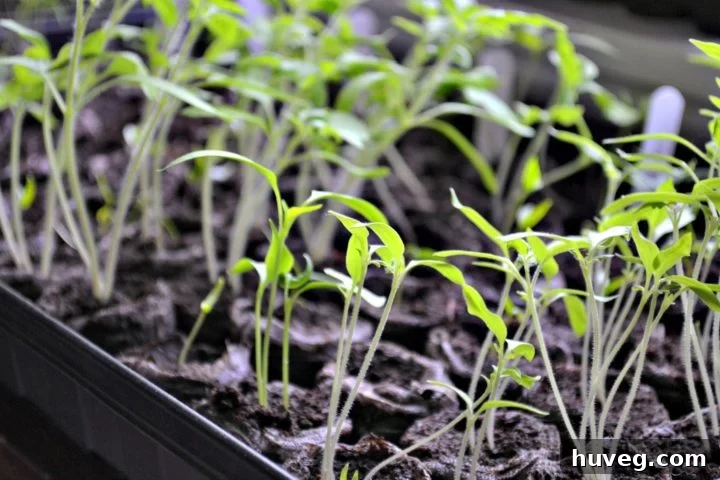
Tomatoes, peppers, and dill – oh my, what a delicious promise for the future!
Preparing for the Great Outdoors: When and How to Transplant Seedlings
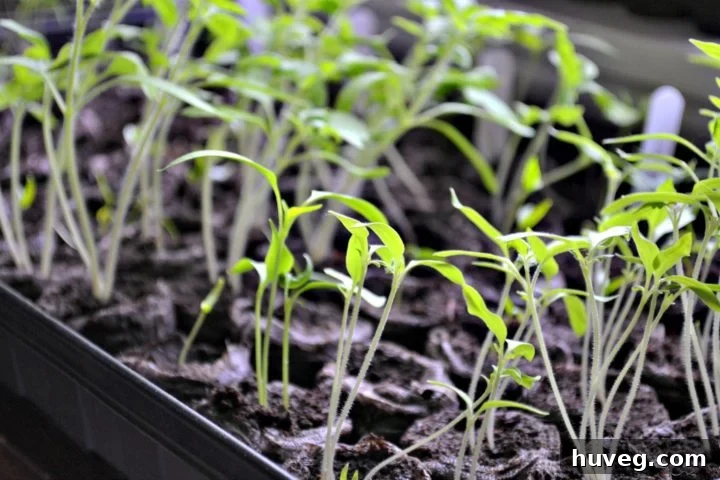
The pictures clearly show the incredible growth spurt our seedlings experienced. It wasn’t just the robust stems and expanding leaves; a significant indicator that it was time to move came from their roots. They had begun to enthusiastically peek out from the sides and bottoms of the peat pellets, a sure sign they were ready for more space and nutrients.
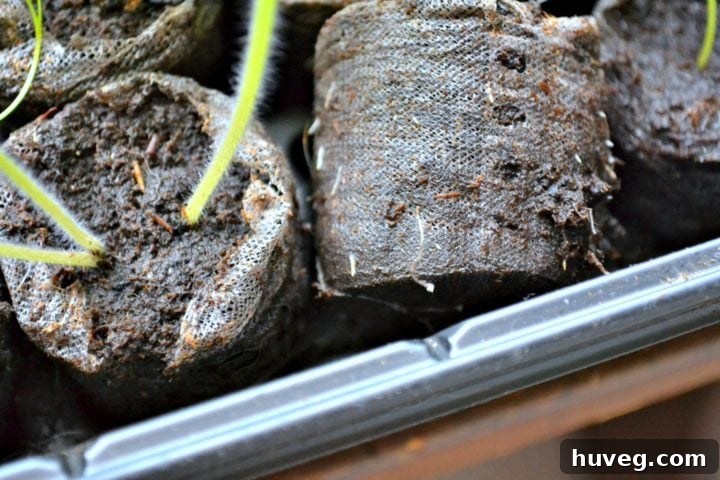
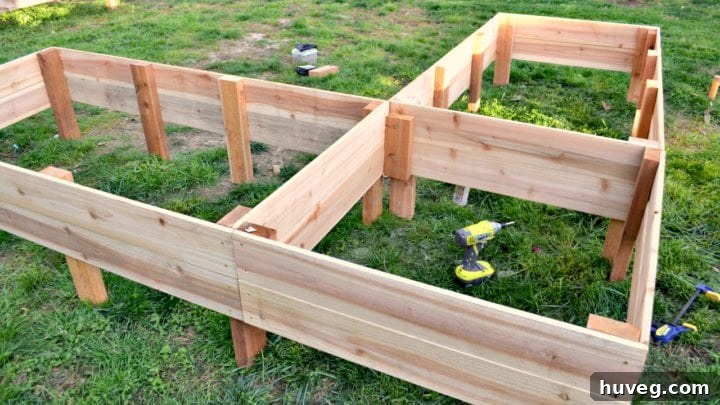
Those adventurous roots were the definitive signal that procrastination on the outdoor vegetable garden beds was no longer an option! I quickly embarked on building the new beds, and while it was a bit rushed, I promise to share all the detailed steps in a separate tutorial soon.
Crucial Step: Hardening Off Your Seedlings
Before your precious seedlings make the permanent move outdoors, there’s a vital transition period known as “hardening off.” This process gradually acclimates your indoor-grown plants to the harsher outdoor conditions – fluctuating temperatures, direct sunlight, wind, and rain – preventing transplant shock. Skipping this step can severely stunt growth or even kill your plants.
Here’s how to harden off your seedlings:
- Start Gradually: About 7-14 days before transplanting, begin by placing your seedlings in a sheltered outdoor spot for just a few hours a day. Choose an area that’s shaded and protected from strong winds.
- Increase Exposure: Each day, gradually increase the amount of time your seedlings spend outdoors and expose them to slightly more sunlight and wind.
- Monitor Conditions: Bring them indoors if there’s a risk of frost, heavy rain, or strong winds.
- Reduce Watering: Slightly reduce watering during the hardening-off period to encourage stronger root development, but don’t let them completely dry out.
- Nighttime Acclimation: Towards the end of the hardening-off period, if temperatures are consistently above 50°F (10°C), you can leave them out overnight.
Once your seedlings have successfully completed the hardening-off process, they will be robust and ready to thrive in your outdoor garden beds. Carefully remove them from their starter cells, gently loosen any root-bound systems, and plant them at the appropriate spacing in their new home. Water them thoroughly after transplanting to help them settle in.
Follow for more gardening videos on YouTube!
There’s still much to do, including planting the outdoor-specific seeds and constructing a separate trellis bed for the cucumbers to prevent them from overwhelming other plants. I have a clear vision for how that will complement the L-shaped bed, and I’m hoping to have everything constructed and planted by this weekend!
Are you cultivating your own garden this year? Are there any other first-time gardeners like me out there? What wonderful plants are you planning to grow?