Mission Imperative

Embarking on a DIY Bathroom Transformation: The Quest for Perfectly Smooth Walls
There’s a unique satisfaction that comes from tackling a home renovation project yourself, especially when it involves transforming a crucial space like the bathroom. After a period of careful planning and gathering my resources, I’ve renewed my energy and dive headfirst into my bathroom wall smoothing project. This isn’t just about covering up old surfaces; it’s about creating a pristine canvas for the exciting design elements yet to come. The journey to flawlessly smooth walls, ready for their grand reveal, has truly begun, and I’ve even called in reinforcements to ensure every step is executed with precision.
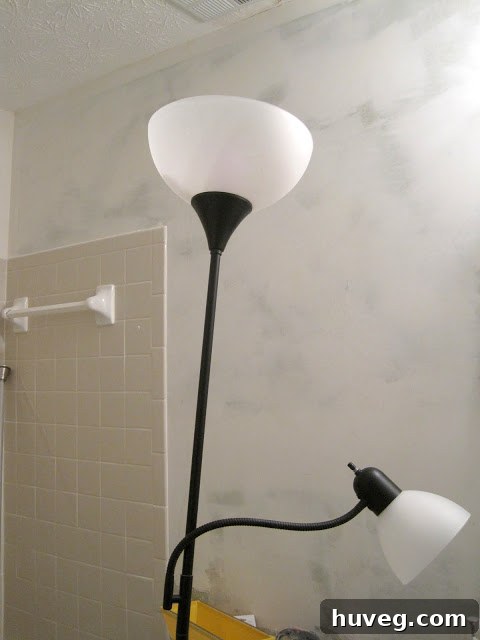
One of the first lessons in any DIY project is the importance of proper lighting. It’s an often-overlooked detail that can significantly impact the quality of your work. While modern flashlights are convenient, I’ve found that old (and delightfully crooked) lamps make for much better skim coating assistants. Unlike flashlights, which require a hand to hold them, these trusty lamps offer steady, hands-free illumination, allowing me to fully concentrate on the delicate task of smoothing. This small adjustment has made a world of difference, highlighting every subtle imperfection and guiding my trowel with greater accuracy.
Please forgive me if the colors in these accompanying photos are a little off; the conditions during my late-night work sessions were far from ideal. Between exhaustion from a long day and a persistent thunderstorm threatening to cut my work short – nothing says “sleepy Sarah” like no light and no TV – getting perfect lighting for photography wasn’t my top priority. My focus was purely on the task at hand: achieving that coveted smooth finish. Despite the challenging circumstances, the progress made was undeniable, transforming a once uneven surface into something truly remarkable.
Mastering the Art of Skim Coating: A Path to Perfection
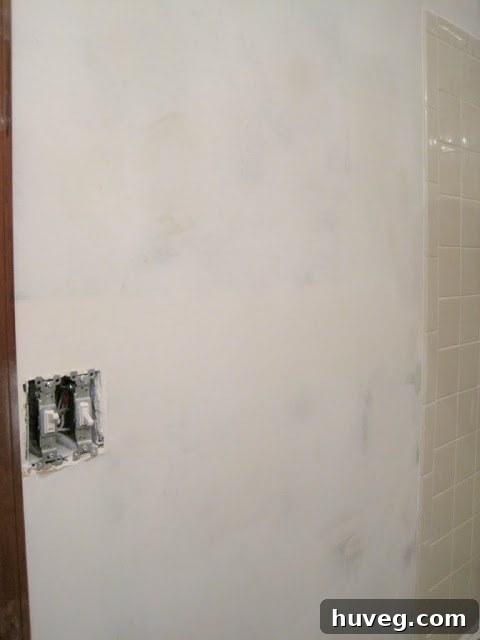
Skim coating is a technique used to create a smooth, uniform surface on walls that have minor imperfections, texture, or damage. It involves applying one or more thin layers of joint compound over the entire wall surface. While the first coat aims to cover the broadest area and fill significant gaps, the subsequent coats are about refinement and achieving that glass-like finish. After several evenings of dedicated effort, I can now confidently declare a significant milestone: I have successfully smoothed and perfected a substantial section of this crucial bathroom wall. This particular stretch of wall, once riddled with minor inconsistencies, now boasts a pristine surface, ready for the next exciting stage of the renovation.
You might wonder if perfecting just one section of a wall is enough of an accomplishment to warrant an entire blog post. For many DIY enthusiasts, every inch of progress is a victory, and I certainly find immense satisfaction in seeing tangible results. However, beyond the visible improvement, I’m eager to share a specific tool that has dramatically accelerated my progress and elevated the quality of my work. This discovery has been a game-changer, proving that sometimes the most effective solutions come from unexpected places. It’s a testament to the fact that innovation, even in the simplest forms, can make complex tasks much more manageable and efficient.
The Unexpected Hero: My Secret Weapon for Seamless Walls
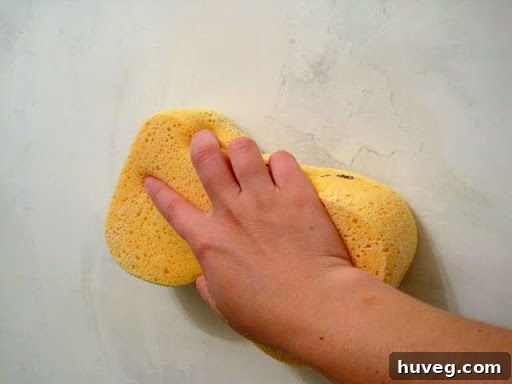
In the world of home improvement, sometimes the most effective tools aren’t the ones specifically designed for the job at hand, but rather ingenious adaptations. My secret weapon in achieving such rapid progress is a simple, yet remarkably effective, sponge. Interestingly, this sponge is actually made for tile and grout work. While I anticipate I can certainly reuse it for its intended purpose when the time comes for tiling, its true brilliance lies in its unexpected application to wall smoothing. The sheer size and unique texture of this sponge are precisely what’s getting the job done so quickly and efficiently right now, far exceeding the performance of traditional sanding blocks for this particular stage.
The Sponge Technique: Revolutionizing Joint Compound Finishing
The conventional wisdom for achieving perfectly smooth walls typically involves applying joint compound, letting it fully dry, and then dry sanding it smooth. This process, while effective, can be incredibly time-consuming, messy, and often requires multiple rounds of application and sanding. However, for the second coating of joint compound, especially when you’re primarily focusing on identifying and correcting minor surface imperfections such as pits, pockmarking, gouges, or grooves that might become glaringly obvious after painting, this sponge technique offers a superior alternative.
The beauty of using this specific tile and grout sponge for the second pass is its ability to perform a kind of “wet sanding” or gentle smoothing immediately after applying the compound. This means I don’t have to wait for the mud to completely cure and harden before addressing any remaining imperfections. Instead, I can work with the slightly damp compound, using the sponge to feather out edges, fill tiny holes, and smooth out any visible lines or textures. This significantly accelerates the workflow compared to waiting for complete dryness and then enduring the dusty, laborious process of dry sanding.
By using the sponge, I can quickly identify and remediate any subtle flaws. The dampness helps to blend the compound seamlessly into the existing surface, creating an incredibly uniform finish. This method is not only faster but also much cleaner, eliminating the fine dust clouds typically associated with extensive dry sanding. The efficiency gained is remarkable: I was able to complete an entire portion of a wall, achieving a near-perfect smooth finish, all within a single evening. This innovative approach has proven invaluable, saving both time and effort, and bringing me closer to my perfectly prepped bathroom walls with unprecedented speed.
Why This Wall Matters: Deadlines and Dazzling Designs
You might be curious as to why this particular section of wall holds such importance, warranting dedicated attention and a detailed recount of its transformation. Beyond the inherent satisfaction of a job well done, this wall is a pivotal element in a larger design vision for the bathroom. Its flawless surface is absolutely critical for what comes next, something truly exciting that I can’t wait to unveil. Come next week, I’ll be thrilled to show you precisely what’s going to adorn this freshly smoothed canvas – and I promise, it’s going to be a very colorful and vibrant addition that will completely redefine the space.
The emphasis on speed and precision with this wall stems from an external factor: I have a firm deadline that absolutely must be met. This isn’t just a casual renovation; it’s part of a larger timeline, and every step, especially critical preparation like this, needs to be completed pronto. The pressure of the deadline, combined with the anticipation of the colorful element, serves as a powerful motivator, driving me to achieve perfection without delay.
With the smoothing phase successfully completed, the next crucial steps in this bathroom wall project are priming and painting. These stages are where the true aesthetic transformation takes place, sealing the hard work of preparation and bringing color and life into the space. I’ve already meticulously picked out both the primer and the paint colors, carefully considering how they will complement the upcoming “colorful addition” and the overall ambiance I envision for the bathroom. Choosing the right primer is essential for creating a uniform base, ensuring paint adhesion, and making the final color truly pop. As for the paint, I’ve opted for a shade that promises to enhance the vibrant design element, creating a harmonious and inviting atmosphere. The anticipation is building, and I’m just about to head off to the store to gather these final crucial supplies. Be right back – the finishing touches are almost within reach!
The Last Mile: Priming, Painting, and the Grand Reveal
Having dedicated significant time and effort to achieving these flawlessly smooth walls, the upcoming priming and painting stages represent the culmination of meticulous preparation. The choice of primer is not merely an afterthought; it’s a critical component in ensuring the longevity and vibrancy of the paint finish. A high-quality primer will seal the joint compound, prevent inconsistencies in absorption, and provide an optimal surface for the topcoat, guaranteeing that the chosen paint color appears true and brilliant. Without proper priming, even the most expensive paint can look uneven or less vibrant than intended.
The selection of paint color and finish has also been a thoughtful process. Considering the “colorful addition” that will soon grace this wall, I’ve opted for a paint that will either subtly complement or provide a striking contrast, enhancing the overall design impact. Beyond aesthetics, the type of paint finish (e.g., eggshell, satin, semi-gloss) is important for a bathroom, where moisture resistance and durability are key. I’ve chosen a paint that is not only visually appealing but also robust enough to withstand the humidity and daily wear and tear of a bathroom environment, ensuring that the smooth walls remain beautiful for years to come.
This entire DIY journey, from the initial rough surfaces to the current state of polished readiness, has reinforced the immense satisfaction that comes from personal involvement in home renovation. It’s more than just saving money; it’s about the pride of craftsmanship, the development of new skills, and the joy of seeing a vision come to life through your own hands. As I head to the store to collect the primer and paint, there’s an undeniable buzz of excitement. The bathroom transformation is nearing its completion, and the grand reveal of this perfectly prepped and soon-to-be-painted wall, adorned with its vibrant new feature, is just around the corner. Stay tuned for the exciting update!